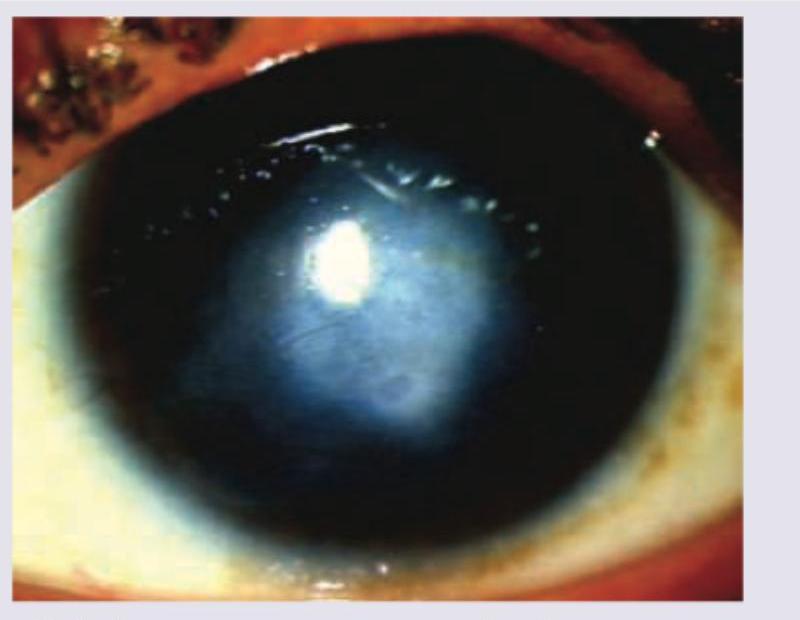
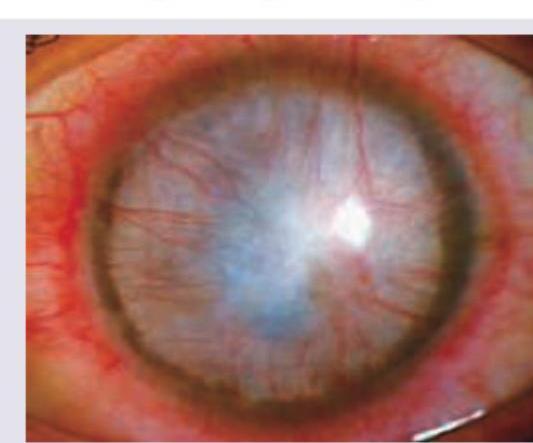
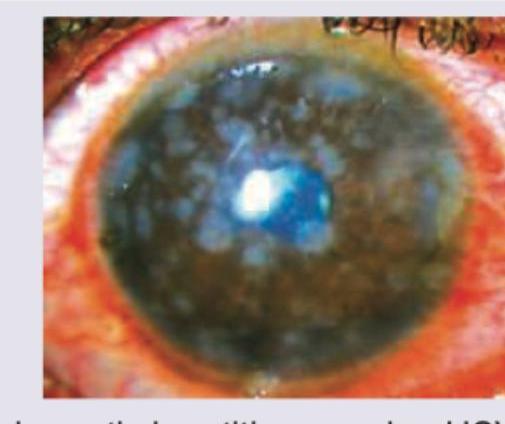
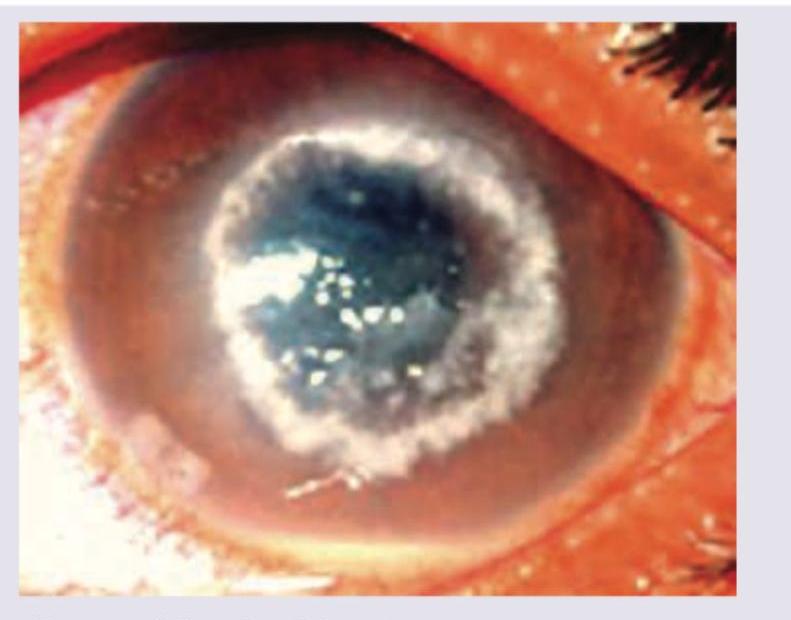
Which of the following is not a cause for interstitial keratitis?
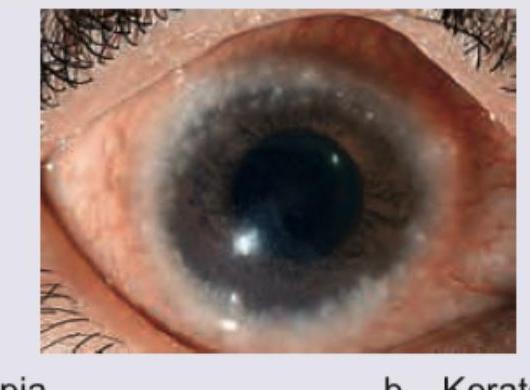
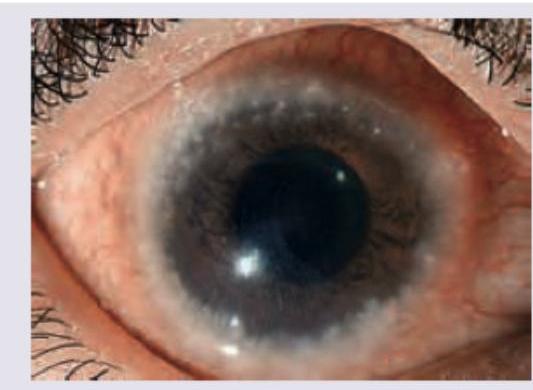
Band-shaped keratopathy is caused by deposition of which substance?
Which organism can penetrate a normal cornea?
The corneal transparency is maintained by –
Which of the following statements about band-shaped keratopathy is true?
In Herpes zoster keratitis, which of the following clinical presentations is LEAST likely to occur?
Important in Herpes simplex involvement of the eye are all EXCEPT:
Which is the metabolically active layer of the cornea?
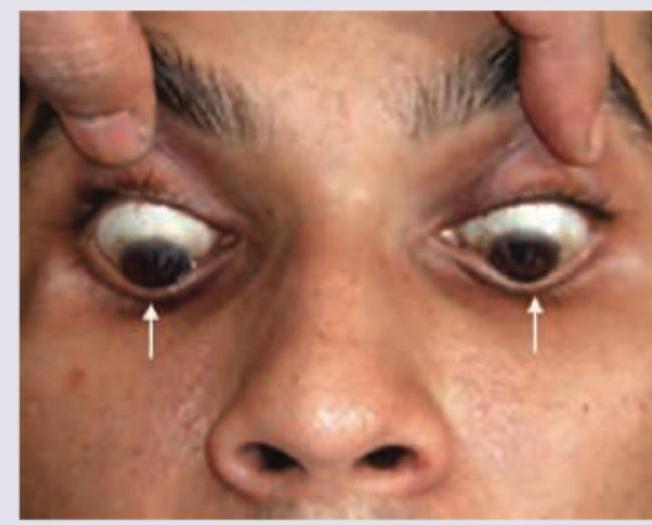
A 20-year-old male presents with sudden onset left eye pain and vision loss. Examination reveals a hazy left cornea. Upon looking down, a bulge is noted in the lower eyelid. Retinoscopy demonstrates a scissoring reflex and a positive oil drop sign in both eyes. What is the diagnosis?
Posterior polymorphous dystrophy is characterized by which of the following?
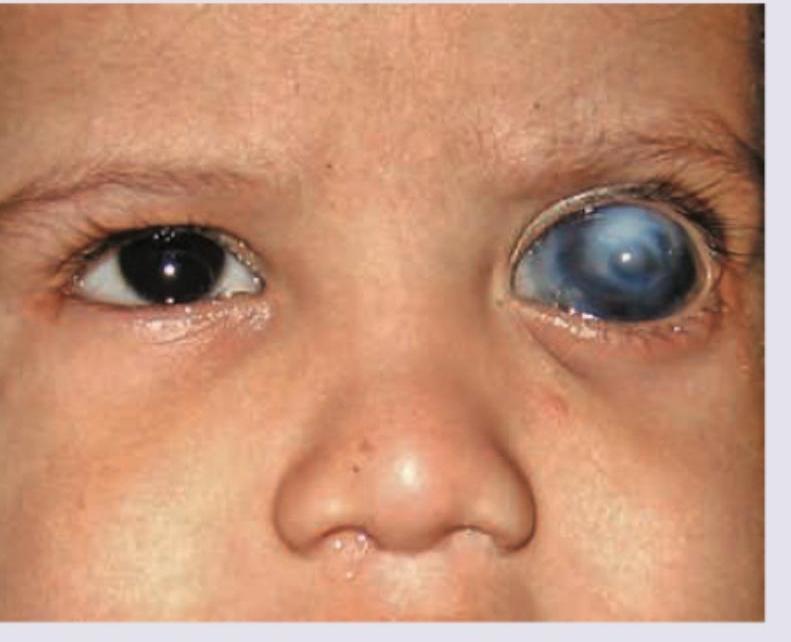
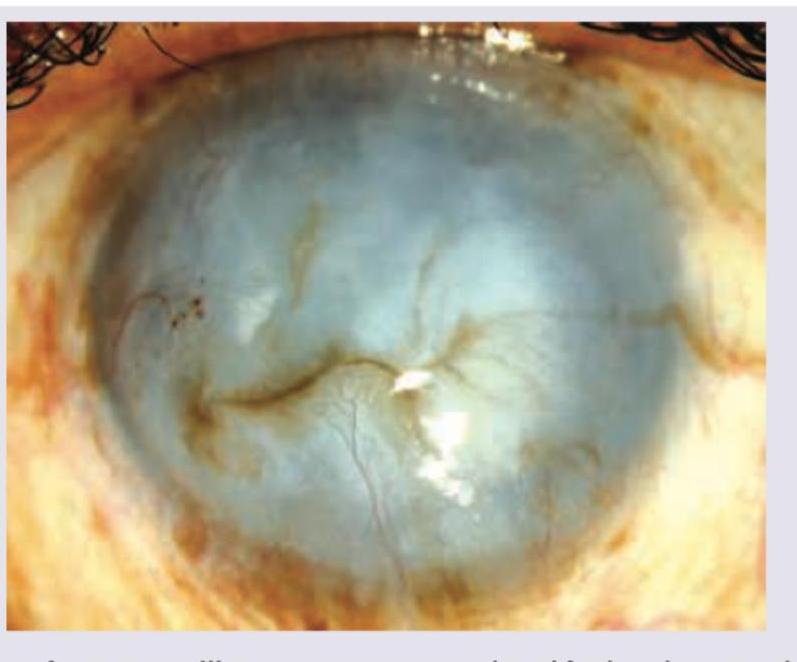
Explanation: **Explanation:** **Interstitial Keratitis (IK)** is a chronic non-ulcerative inflammation of the corneal stroma, characterized by cellular infiltration and vascularization (neovascularization) without primary involvement of the epithelium or endothelium. It is primarily an **immune-mediated (Type IV hypersensitivity)** response to a systemic infection rather than a direct invasion by the pathogen. **Why Pneumococcus is the correct answer:** * **Pneumococcus (*Streptococcus pneumoniae*)** is a pyogenic bacterium that typically causes **acute bacterial keratitis** (hypopyon ulcers). It leads to rapid tissue destruction, suppuration, and ulceration of the corneal epithelium. It does not trigger the chronic, immune-mediated stromal inflammation characteristic of Interstitial Keratitis. **Why the other options are incorrect:** * **Syphilis:** The most common cause of IK. Congenital syphilis typically presents with bilateral IK (often part of Hutchinson’s triad), while acquired syphilis usually presents unilaterally. * **Tuberculosis:** A well-known cause of IK, usually presenting as a unilateral, peripheral sectoral inflammation. * **Leprosy:** Chronic infection by *Mycobacterium leprae* can lead to IK, often associated with thickened corneal nerves and avascular keratitis. **High-Yield Clinical Pearls for NEET-PG:** * **Hutchinson’s Triad:** Interstitial keratitis, Hutchinson’s teeth (notched incisors), and 8th nerve deafness. * **Salmon Patch Appearance:** A characteristic clinical sign of the active stage of syphilitic IK, caused by intense deep vascularization in the stroma. * **Ghost Vessels:** After the inflammation subsides, the cleared vessels remain as empty channels in the stroma, visible on slit-lamp examination. * **Other Causes:** Cogan syndrome (IK + vestibuloauditory symptoms), Sarcoidosis, and viral infections (HSV, VZV, Mumps).
Explanation: **Explanation:** **Band-shaped Keratopathy (BSK)** is a degenerative condition characterized by the deposition of **calcium salts** (specifically hydroxyapatite) in the sub-epithelial layers of the cornea, primarily the **Bowman’s membrane**. **Why Calcium is correct:** The deposition occurs due to the precipitation of calcium salts in the interpalpebral fissure. This area is prone to CO₂ loss and subsequent localized increase in pH (alkalinity), which favors calcium precipitation. It typically presents as a horizontal "band" with a characteristic "Swiss-cheese appearance" due to holes where corneal nerves penetrate the Bowman’s layer. **Why other options are incorrect:** * **Amyloid:** Associated with Lattice corneal dystrophy or secondary localized amyloidosis, not BSK. * **Monosaccharide:** Not a standard corneal deposit. However, glucose metabolism issues relate to diabetic keratopathy, which involves basement membrane thickening, not band formation. * **Lipid:** Lipid keratopathy involves the deposition of fats (cholesterol/phospholipids), usually secondary to chronic inflammation or vascularization (e.g., Arcus senilis). **High-Yield Clinical Pearls for NEET-PG:** * **Etiology:** Most commonly caused by chronic intraocular inflammation (**Chronic Uveitis**, especially in **Juvenile Idiopathic Arthritis**). Other causes include hypercalcemia (Hyperparathyroidism), chronic exposure to mercury/preservatives, and end-stage eye disease (Phthisis bulbi). * **Clinical Feature:** Starts at the periphery (limbus) but is separated by a **clear zone** of cornea. * **Treatment of Choice:** Chelation using **EDTA (Ethylenediamine tetraacetic acid)** followed by superficial keratectomy.
Explanation: **Explanation:** The corneal epithelium acts as a formidable mechanical barrier against most pathogens. Most bacteria require a pre-existing epithelial defect (trauma, contact lens wear, or dry eye) to initiate an infection. However, a select group of organisms possesses specific virulence factors (proteolytic enzymes) that allow them to penetrate an **intact/normal corneal epithelium.** **Why Neisseria gonorrhoeae is correct:** *Neisseria gonorrhoeae* is the classic example of a pathogen capable of invading a healthy cornea. It can cause hyperacute purulent conjunctivitis, which rapidly progresses to corneal perforation if not treated aggressively. Other organisms with this unique capability include *Corynebacterium diphtheriae*, *Listeria monocytogenes*, and *Haemophilus aegyptius*. **Analysis of Incorrect Options:** * **Neisseria meningitidis:** While it belongs to the same genus, it is a rare cause of primary keratitis and typically does not exhibit the same aggressive epithelial penetration as *N. gonorrhoeae*. * **Mycobacterium tuberculosis & Mycobacterium leprae:** These organisms generally involve the cornea through secondary immune-mediated responses (e.g., interstitial keratitis or phlyctenular keratoconjunctivitis) or chronic contiguous spread, rather than direct penetration of a healthy epithelium. **NEET-PG High-Yield Pearls:** * **Mnemonic for organisms penetrating intact cornea:** "**CHNL**" (**C**orynebacterium, **H**aemophilus, **N**eisseria, **L**isteria). Some also include *Shigella*. * *N. gonorrhoeae* keratitis is a **medical emergency**; it can lead to corneal melting and perforation within 24–48 hours. * The most common cause of bacterial corneal ulcers overall is *Staphylococcus aureus*, but it **cannot** penetrate a healthy cornea. * Among fungi, *Fusarium* is known for its ability to penetrate deep into the stroma and even through an intact Descemet’s membrane.
Explanation: The maintenance of corneal transparency is a complex physiological process, but the **corneal endothelium** is the most critical layer for this function. ### Why Endothelium is the Correct Answer The cornea is naturally prone to swelling (edema) because it absorbs water from the aqueous humor. To remain transparent, the cornea must stay in a state of **relative dehydration (deturgescence)**. The endothelium achieves this through two mechanisms: 1. **Metabolic Pump:** An active **Na⁺/K⁺-ATPase pump** that constantly moves ions (and consequently water) out of the stroma and back into the aqueous humor. 2. **Barrier Function:** Leaky apical junctions that allow nutrients to enter the stroma while limiting excessive fluid influx. ### Why Other Options are Incorrect * **Keratocytes (A):** These are specialized fibroblasts in the stroma. While they maintain the collagen matrix, they do not actively regulate hydration. * **Bowman’s Membrane (B):** This is an acellular, condensed layer of collagen. It provides structural integrity but does not possess metabolic activity to maintain transparency. * **Descemet’s Membrane (C):** This is the basement membrane of the endothelium. While it is tough and resistant to trauma/enzymes, it acts only as a physical scaffold, not a physiological pump. ### High-Yield Clinical Pearls for NEET-PG * **Maurice’s Theory:** Transparency is maintained by the lattice-like arrangement of collagen fibrils (spaced less than half a wavelength of light apart). * **Critical Cell Count:** Normal endothelial cell count is **2500–3000 cells/mm²**. If the count falls below **500 cells/mm²**, the pump fails, leading to corneal edema and loss of transparency (Bullous Keratopathy). * **Regeneration:** Unlike the epithelium, the human endothelium **does not regenerate**. It heals by the enlargement and migration of existing cells (pleomorphism and polymegethism). * **Specular Microscopy:** The gold standard investigation to evaluate endothelial cell health.
Explanation: **Band-shaped Keratopathy (BSK)** is a degenerative condition characterized by the deposition of **calcium salts** (hydroxyapatite) in the subepithelial layers, specifically the **Bowman’s membrane**, the anterior stroma, and the epithelial basement membrane. ### **Explanation of Options:** * **Option D (Correct):** BSK is associated with systemic conditions that cause **hypercalcemia**, such as **sarcoidosis**, hyperparathyroidism, vitamin D toxicity, and milk-alkali syndrome. Chronic ocular inflammation (like juvenile idiopathic arthritis-associated uveitis) and long-term exposure to mercurial preservatives are also common causes. * **Option A & B (Incorrect):** The hallmark of BSK is the deposition of **calcium**, not iron. Furthermore, this deposition occurs primarily in the **Bowman’s membrane**, not the Descemet’s membrane. (Note: Iron deposition in the cornea is seen in conditions like Fleischer rings in keratoconus or Hudson-Stahli lines). * **Option C (Incorrect):** Since the deposits are calcium-based, the treatment of choice is **chelation using EDTA** (Ethylenediamine tetraacetic acid), a calcium-chelating agent, followed by mechanical scraping (debridement). ### **High-Yield Clinical Pearls for NEET-PG:** * **Morphology:** It typically starts at the periphery (3 and 9 o’clock positions) and progresses centrally as a horizontal "band." * **Lucent Zones:** A characteristic feature is the presence of **clear "holes"** within the calcium plaque, which represent areas where corneal nerves pierce the Bowman’s membrane. * **Clear Margin:** There is always a distinct **clear zone** between the peripheral edge of the calcification and the limbus (due to the absence of Bowman's membrane at the limbus). * **Most Common Ocular Cause:** Chronic uveitis (especially in children with JIA).
Explanation: **Explanation:** In **Herpes Zoster Ophthalmicus (HZO)**, the virus (Varicella-Zoster) affects the ophthalmic division of the trigeminal nerve. While it can involve almost every layer of the eye, the question asks for the **least likely** presentation among the options provided. **1. Why Sclerokeratitis is the correct answer:** While HZO can cause scleritis and keratitis independently, **Sclerokeratitis** (inflammation of the sclera that spreads to involve the adjacent cornea) is a relatively rare complication compared to the direct corneal and uveal manifestations. In the context of NEET-PG, HZO is classically associated with epithelial, stromal, and endothelial involvement rather than primary scleral-driven corneal disease. **2. Analysis of other options:** * **Pseudodendritic Keratitis (A):** This is a hallmark of HZO. Unlike the true dendrites of Herpes Simplex (HSV), these are elevated, stuck-on lesions without terminal bulbs and do not stain well with fluorescein. * **Anterior Uveitis with Endothelial Keratitis (B):** HZO frequently causes a hypertensive anterior uveitis (due to vasculitis) often accompanied by inflammation of the corneal endothelium. * **Endothelitis (D):** This is a common manifestation where the virus triggers an immune response at the endothelial level, leading to localized corneal edema and Keratic Precipitates (KPs). **Clinical Pearls for NEET-PG:** * **Hutchinson’s Sign:** Vesicles on the tip of the nose (involvement of the nasociliary nerve) strongly predict ocular involvement. * **HSV vs. HZO Dendrite:** HSV has **true dendrites** (central ulceration, terminal bulbs); HZO has **pseudodendrites** (tapered ends, no terminal bulbs). * **Treatment:** Oral Acyclovir (800 mg 5 times daily) is the mainstay for HZO, which is double the dose used for HSV. * **Neurotrophic Keratopathy:** A common late complication due to loss of corneal sensations.
Explanation: **Explanation:** Herpes Simplex Virus (HSV) keratitis is a leading cause of corneal blindness. The correct answer is **Purulent discharge**, as this is a hallmark of **bacterial conjunctivitis/keratitis**, not viral infections. Viral infections typically present with watery (serous) discharge. **Why the other options are characteristic of HSV:** * **Type of lesion (Option A):** HSV is famous for its specific morphological patterns. The most common is the **dendritic ulcer** (linear, branching with terminal bulbs), which stains with Fluorescein. If treated with steroids, it can enlarge into a **geographic ulcer**. * **Corneal anaesthesia (Option B):** HSV is a neurotropic virus that resides in the trigeminal ganglion. Its replication leads to the destruction of corneal nerve endings, resulting in **marked corneal hypoesthesia or anesthesia**. This is a classic diagnostic sign. * **Iridocyclitis (Option C):** HSV can cause secondary anterior uveitis (iridocyclitis) either through direct viral invasion or an immunologic reaction. It is often associated with high intraocular pressure (hypertensive uveitis). **High-Yield Clinical Pearls for NEET-PG:** * **Staining:** The floor of the dendritic ulcer stains with **Fluorescein**, while the virus-laden cells at the margins (terminal bulbs) stain with **Rose Bengal**. * **Treatment:** Topical **Acyclovir (3%)** or Ganciclovir gel is the gold standard. **Steroids are strictly contraindicated** in epithelial (dendritic) keratitis as they promote viral replication, leading to geographic ulcers. * **Recurrence:** HSV remains latent in the **Trigeminal (V) ganglion**. * **Disciform Keratitis:** This is a type of stromal involvement characterized by a central, disc-shaped area of corneal edema, thought to be a Type IV hypersensitivity reaction.
Explanation: **Explanation:** The cornea is a multi-layered, transparent structure that serves as the eye's primary refractive surface. Metabolic activity in the cornea is primarily driven by the need for continuous cellular turnover and the maintenance of transparency through active transport. **Why the Epithelium is the Correct Answer:** The **Epithelium** is the most metabolically active layer because it is a highly cellular, stratified squamous non-keratinized layer that undergoes constant regeneration (every 7–10 days). It contains high concentrations of glycogen and enzymes required for aerobic and anaerobic glycolysis. It acts as a significant metabolic pump and a barrier, requiring constant ATP to maintain cellular junctions and surface integrity. **Analysis of Incorrect Options:** * **Stroma:** While the stroma makes up 90% of the corneal thickness, it is relatively hypocellular, consisting mainly of collagen fibrils and keratocytes. Its metabolic rate is significantly lower than that of the epithelium or endothelium. * **Descemet’s Membrane:** This is a true basement membrane (secreted by the endothelium). It is an acellular, elastic structure and is metabolically inactive. * **Note on Endothelium:** Although not an option here, the **Endothelium** is also highly metabolically active due to the "Na+/K+ ATPase pumps" required to maintain corneal dehydration (deturgescence). However, in the context of general cellular turnover and glucose consumption, the **Epithelium** is often cited as the most active. **NEET-PG High-Yield Pearls:** * **Source of Nutrition:** The cornea receives glucose primarily from the **aqueous humor**, while oxygen is derived from the **atmospheric air** (dissolved in tear film) and the limbal capillaries. * **Transparency:** Maintained by the "Lattice Theory" of Maurice (uniform collagen diameter and spacing) and the state of relative dehydration (deturgescence). * **Nerve Supply:** The cornea is the most sensitive tissue in the body, supplied by the **long ciliary nerves** (branch of Ophthalmic division of Trigeminal nerve).
Explanation: **Explanation:** The clinical presentation is a classic case of **Keratoconus**, a non-inflammatory, progressive thinning and ectasia of the central or paracentral cornea. **Why Keratoconus is correct:** * **Munson’s Sign:** The "bulge in the lower eyelid upon looking down" is a pathognomonic sign caused by the cone-shaped cornea indenting the lid. * **Oil Drop Sign:** Seen on distant direct ophthalmoscopy, this represents the conical protrusion. * **Scissoring Reflex:** Observed during retinoscopy due to irregular astigmatism. * **Acute Hydrops:** The "sudden onset pain and vision loss with a hazy cornea" indicates a rupture in **Descemet’s membrane**, leading to stromal edema (Acute Hydrops), a known complication of keratoconus. **Why other options are incorrect:** * **Corneal Dystrophy:** These are typically bilateral, symmetrical, and slowly progressive without the specific conical bulging or Munson’s sign. * **Pathological Myopia:** While it causes vision loss and high refractive error, it involves posterior segment changes (e.g., Fuchs' spot, staphyloma) rather than corneal ectasia or Munson's sign. * **Keratoglobus:** This involves hemispherical protrusion and thinning of the *entire* cornea from limbus to limbus, rather than a localized cone. It rarely presents with acute hydrops. **High-Yield Clinical Pearls for NEET-PG:** * **Fleischer’s Ring:** Iron deposition at the base of the cone (best seen with Cobalt blue filter). * **Vogt’s Striae:** Vertical stress lines in the deep stroma. * **Rizutti’s Sign:** Conical reflection on the nasal cornea when light is shone from the temporal side. * **Management:** Early stages use spectacles/RGP lenses; **Collagen Cross-linking (CXL/C3R)** stops progression; Keratoplasty is for advanced cases. *Note: Steroids are contraindicated in acute hydrops.*
Explanation: **Explanation:** **Posterior Polymorphous Dystrophy (PPMD)** is a rare, usually autosomal dominant, bilateral corneal dystrophy affecting the corneal endothelium and Descemet membrane. **Why Corectopia is Correct:** The hallmark of PPMD is the transformation of corneal endothelial cells into "epithelial-like" cells. These abnormal cells have a migratory property; they can grow across the trabecular meshwork and onto the surface of the iris. As these membranes contract, they pull the iris, leading to **corectopia** (displacement of the pupil), ectropion uveae, and peripheral anterior synechiae (PAS). This mechanism is similar to that seen in Iridocorneal Endothelial (ICE) syndrome. **Analysis of Incorrect Options:** * **B. Autosomal recessive inheritance:** PPMD is typically inherited in an **Autosomal Dominant** pattern (linked to mutations in *ZEB1*, *COL8A2*, or *OVOL2* genes). * **C. Blindness in over 90% of sufferers:** Most patients are asymptomatic and the condition is often stable. Only a small percentage develop significant corneal edema or secondary glaucoma leading to severe vision loss. * **D. Treatment with lamellar corneal grafts:** While severe cases require surgery, the standard is **Penetrating Keratoplasty (PK)** or **Endothelial Keratoplasty (DSEK/DMEK)**. Simple lamellar grafts (which replace only the stroma) do not address the underlying endothelial pathology. **High-Yield Clinical Pearls for NEET-PG:** * **Vesicular lesions:** Characterized by "railroad track" or "snail track" opacities on the posterior cornea. * **Glaucoma:** Occurs in ~15% of cases due to membrane overgrowth in the angle. * **Differential Diagnosis:** Must be distinguished from **ICE Syndrome** (which is unilateral and non-hereditary) and **CHED** (Congenital Hereditary Endothelial Dystrophy).
Corneal Anatomy and Physiology
Practice Questions
Bacterial Keratitis
Practice Questions
Viral Keratitis
Practice Questions
Fungal Keratitis
Practice Questions
Protozoan Keratitis
Practice Questions
Corneal Degenerations
Practice Questions
Corneal Dystrophies
Practice Questions
Keratoconus and Ectatic Disorders
Practice Questions
Corneal Transplantation
Practice Questions
Corneal Topography and Imaging
Practice Questions
Dry Eye Disease
Practice Questions
Corneal Trauma
Practice Questions
Get full access to all questions, explanations, and performance tracking.
Start For Free