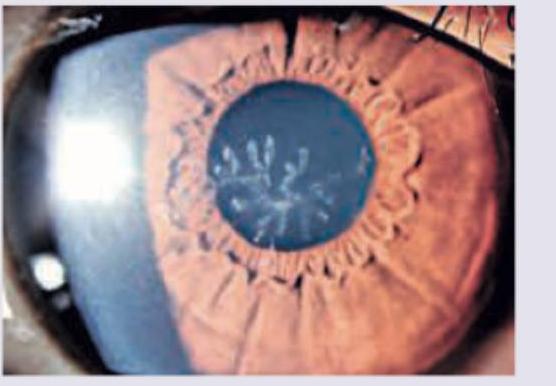
Which of the following stains is used in granular dystrophy of the cornea?
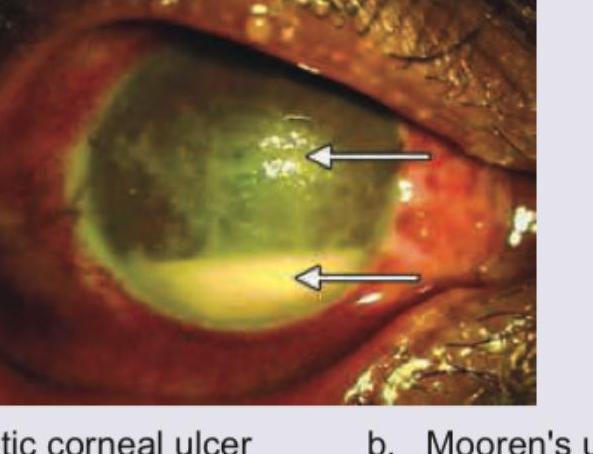
Ulcus serpens is caused by which organism?
Hutchinson's rule is related to which of the following conditions?
True about Fuchs endothelial dystrophy are all except?
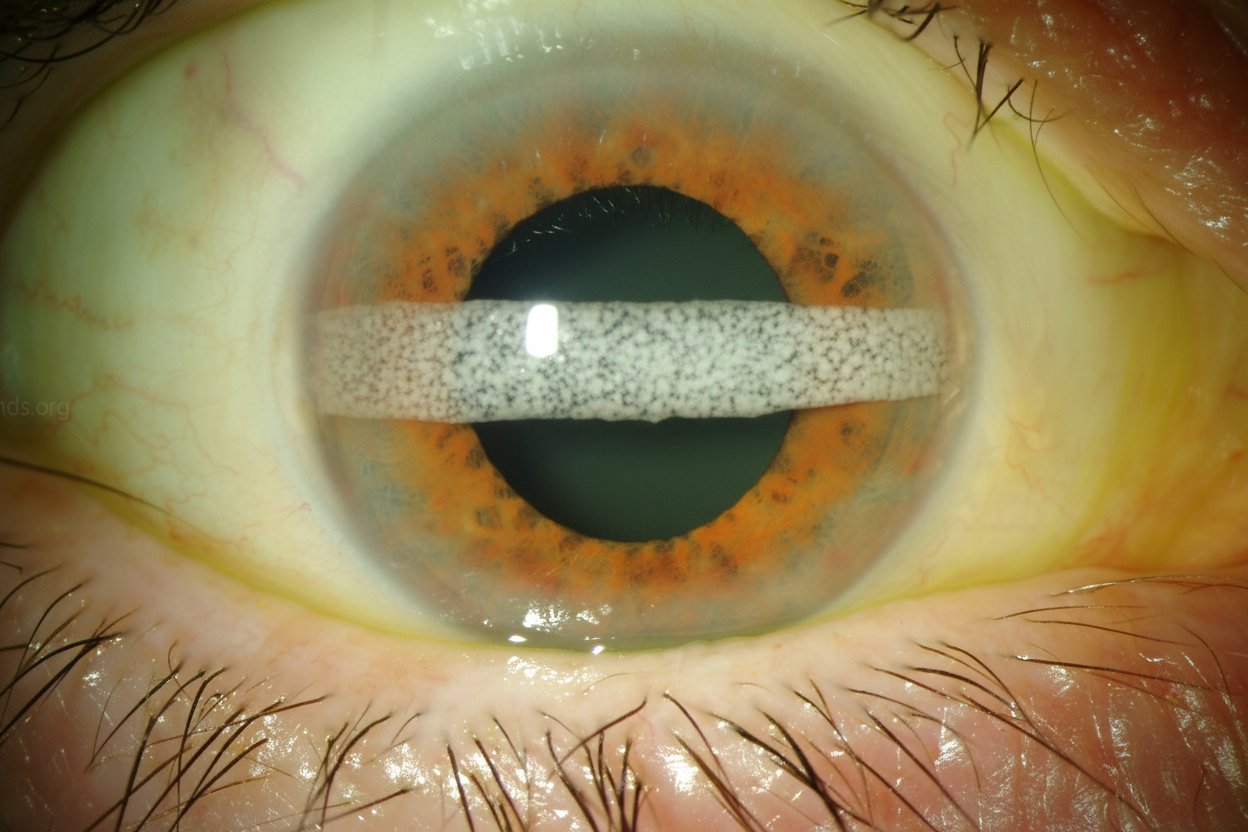
Band-shaped keratopathy is typically seen in which of the following conditions?
Type IV hypersensitivity to Mycobacterium tuberculosis antigen may manifest as:
A 33-year-old man presents with pain and watering of the eyes. On examination, there is a 3x2 mm greyish-white corneal ulcer with indistinct, elevated margins. The lesion is surrounded by feathery, finger-like infiltration into the adjacent corneal stroma. Minimal hypopyon is also observed. Based on the information provided, what should microbiological investigation be directed against?
Band shaped keratopathy is typically seen in which of the following conditions?
What is the normal endothelial cell density in the cornea required to maintain transparency?
Corneal transparency is due to all of the following EXCEPT:
Explanation: **Explanation:** Corneal dystrophies are a high-yield topic for NEET-PG, often tested through the association of specific deposits with their respective histological stains. **1. Why Masson’s Trichrome is Correct:** **Granular Dystrophy** is characterized by the deposition of **hyaline material** in the superficial stroma. On histopathology, these deposits appear as bright red granules when stained with **Masson’s Trichrome**. This is the gold-standard stain for identifying hyaline in corneal tissue. **2. Analysis of Incorrect Options:** * **A. Congo-red:** This is the specific stain for **Lattice Dystrophy**, which involves the deposition of **amyloid**. Under polarized light, Congo-red stained amyloid shows a characteristic "apple-green birefringence." * **C. Colloidal Iron:** This (along with Alcian Blue) is used to stain **Macular Dystrophy**, which involves the deposition of **Acid Mucopolysaccharides (Glycosaminoglycans)**. * **D. PAS (Periodic Acid-Schiff):** While PAS stains basement membranes and certain carbohydrates, it is not the primary diagnostic stain for Granular Dystrophy. It is more commonly associated with fungal filaments or Descemet’s membrane pathology. **3. High-Yield Clinical Pearls (Mnemonic: "Marilyn Monroe Got Hers"):** To remember the associations for NEET-PG, use this classic mnemonic: * **M**acular – **M**ucopolysaccharide – **A**lcian Blue/Colloidal Iron (**M.A.**) * **G**ranular – **H**yaline – **M**asson’s Trichrome (**G.H.M.**) * **L**attice – **A**myloid – **C**ongo Red (**L.A.C.**) **Additional Fact:** Granular Dystrophy is an **Autosomal Dominant** condition (TGFBI gene mutation) and typically presents with "crumb-like" opacities with clear spaces in between.
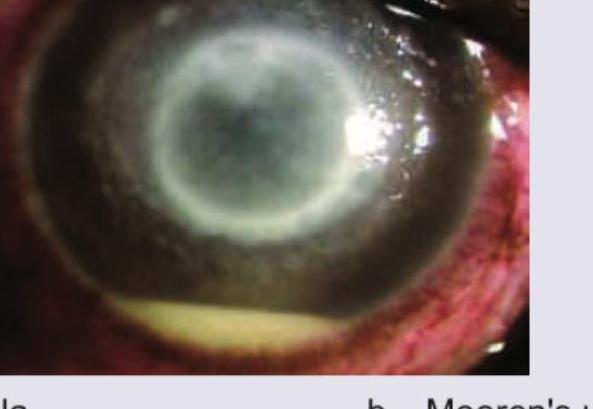
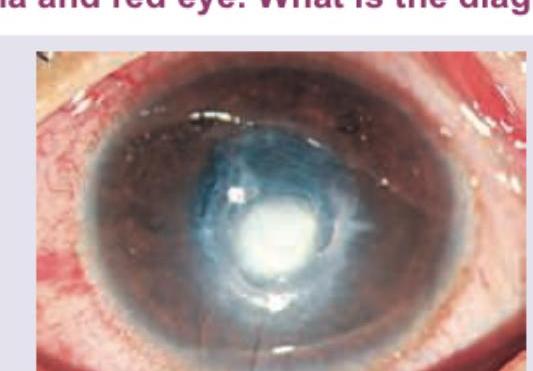
Explanation: **Explanation:** **Ulcus Serpens** (also known as Hypopyon Corneal Ulcer) is a clinical entity characterized by a rapidly spreading, greyish-white disc-shaped ulcer. 1. **Why Pneumococcus is correct:** The classic causative organism for Ulcus Serpens is **Streptococcus pneumoniae (Pneumococcus)**. The term "serpens" refers to its tendency to creep across the cornea. It typically occurs following a minor corneal abrasion, often involving organic matter. The hallmark of this condition is a prominent **hypopyon** (pus in the anterior chamber) which is sterile because the toxins, not the bacteria themselves, penetrate the intact Descemet’s membrane. 2. **Why other options are incorrect:** * **Pseudomonas:** While it causes the most fulminant and destructive corneal ulcers (often associated with contact lens wear), it produces a characteristic greenish-blue discharge and rapid liquefactive necrosis, but it is not termed "Ulcus Serpens." * **Gonococcus:** *Neisseria gonorrhoeae* is unique because it can penetrate a **pre-existing intact corneal epithelium**, but it typically causes hyperacute purulent conjunctivitis rather than a creeping "serpens" ulcer. **High-Yield Clinical Pearls for NEET-PG:** * **Source of Infection:** The most common source of Pneumococcus in these cases is **Chronic Dacryocystitis** (the lacrimal sac acts as a reservoir). Always check the patency of the lacrimal passages (Syringing) in cases of hypopyon ulcers. * **Characteristics:** The ulcer has a "leading edge" (active infiltration) and a "trailing edge" (healing zone). * **Sterile Hypopyon:** In bacterial ulcers, the hypopyon is usually sterile; in fungal ulcers (e.g., Aspergillus), the hypopyon may contain fungal hyphae.
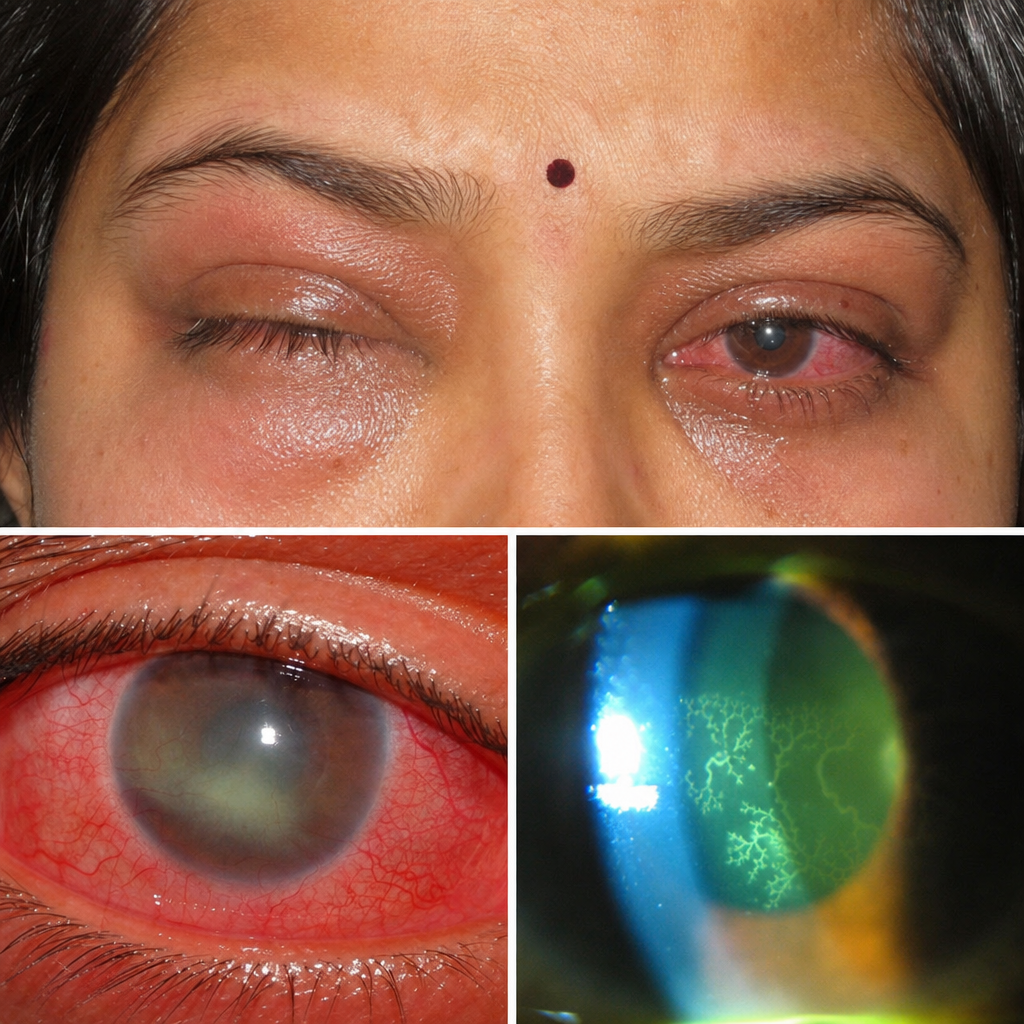
Explanation: **Explanation:** **Hutchinson’s Rule** is a clinical sign used to predict ocular involvement in **Herpes Zoster Ophthalmicus (HZO)**. It states that if the tip, side, or root of the nose is involved with herpetic vesicles, there is a high probability (approx. 75%) of subsequent ocular inflammation. **1. Why Option C is Correct:** The rule is based on the anatomy of the **Nasociliary nerve**, which is a branch of the Ophthalmic division (V1) of the Trigeminal nerve. The nasociliary nerve provides sensory innervation to both the **eyeball** (via long and short ciliary nerves) and the **skin of the tip of the nose** (via the external nasal nerve). Therefore, cutaneous lesions on the nose indicate that the nasociliary nerve is involved, making intraocular inflammation (keratitis, uveitis) highly likely. **2. Why Other Options are Incorrect:** * **Option A (Herpes Simplex Keratitis):** While caused by a related virus, HSV typically presents with dendritic ulcers and does not follow the dermatomal distribution or the specific nasociliary pattern associated with Hutchinson’s rule. * **Option B (Mycotic Keratitis):** This is a fungal infection usually following trauma with vegetative matter. It presents with feathery margins and satellite lesions, unrelated to viral dermatomal patterns. **High-Yield Clinical Pearls for NEET-PG:** * **Pseudodendrite:** HZO causes "pseudodendrites" (stuck-on appearance, no terminal bulbs), unlike the true dendrites of HSV. * **Most common ocular complication of HZO:** Anterior Uveitis. * **Treatment:** Oral Acyclovir (800 mg 5x daily for 7–10 days) started within 72 hours of rash onset. * **Note:** Hutchinson’s rule is not absolute; ocular involvement can occur even if the nose is spared (approx. 30% risk).
Explanation: **Explanation:** Fuchs Endothelial Corneal Dystrophy (FECD) is a progressive, hereditary disorder characterized by the primary loss of corneal endothelial cells. **Why Option B is the Correct Answer (The "Except"):** While FECD is a **bilateral** condition, it is characteristically **asymmetrical**. Although both eyes are affected, one eye typically shows more advanced progression or severe edema than the other. In NEET-PG, distinguishing between "bilateral and symmetrical" (typical of most dystrophies) and "bilateral but asymmetrical" (typical of Fuchs) is a high-yield point. **Analysis of Other Options:** * **Option A:** FECD shows a strong female predilection (3:1 ratio) and typically manifests in the 5th to 6th decades of life (elderly). * **Option C:** **Cornea guttata** (beaten metal appearance) is the hallmark clinical sign. These are drop-like excrescences of Descemet’s membrane resulting from endothelial dysfunction. * **Option D:** Patients often complain of **early morning blurring and halos**. This occurs because the eyelids are closed during sleep, preventing tear evaporation and increasing corneal hypoxia, which worsens stromal edema. Vision improves throughout the day as evaporation reduces the swelling. **High-Yield Clinical Pearls for NEET-PG:** * **Inheritance:** Autosomal Dominant (most common). * **Pathophysiology:** Loss of Na+/K+ ATPase pumps in the endothelium leads to stromal and epithelial edema. * **Stages:** Starts with Guttata $\rightarrow$ Stromal Edema $\rightarrow$ Bullous Keratopathy $\rightarrow$ Corneal Scarring. * **Management:** Hypertonic saline (5% NaCl) drops/ointment; definitive treatment is Keratoplasty (DMEK/DSAEK are preferred over PK).
Explanation: **Explanation:** **Band-shaped Keratopathy (BSK)** is characterized by the horizontal deposition of calcium salts (hydroxyapatite) in the sub-epithelial layers, specifically the **Bowman’s membrane**, the anterior stroma, and the epithelial basement membrane. **Why Juvenile Rheumatoid Arthritis (JRA) is correct:** JRA (specifically the pauciarticular type) is the most common systemic cause of **chronic non-granulomatous uveitis** in children. Chronic intraocular inflammation leads to changes in the pH of the aqueous humor and a breakdown of the blood-aqueous barrier, promoting the precipitation of calcium in the interpalpebral fissure of the cornea. This classic triad—**Chronic Iridocyclitis, Band-shaped Keratopathy, and Complicated Cataract**—is a high-yield association for JRA. **Why other options are incorrect:** * **Rheumatoid Arthritis (RA):** While RA is a common cause of ocular manifestations, it typically presents with **Scleritis, Episcleritis, or Peripheral Ulcerative Keratitis (PUK)**. It does not characteristically cause the chronic uveitis required to trigger BSK. * **SLE and DLE:** These connective tissue disorders are more frequently associated with **Keratoconjunctivitis Sicca (Dry Eye)** or retinal vasculitis rather than calcium deposition in the cornea. **Clinical Pearls for NEET-PG:** * **Appearance:** BSK starts at the periphery (3 and 9 o'clock positions) with a characteristic **"Swiss-cheese appearance"** due to clear areas where nerves pierce the Bowman’s membrane. * **Other Causes:** Hypercalcemia (Hyperparathyroidism), chronic renal failure, and long-term exposure to mercury-containing drops (Thimerosal). * **Treatment:** The treatment of choice is **chelation** using **1.5% Disodium EDTA** after removing the corneal epithelium.
Explanation: **Explanation:** **Phlyctenular Keratoconjunctivitis** is a localized, non-infectious, inflammatory response of the corneal or conjunctival epithelium. It is a classic example of a **Type IV (Delayed-type) Hypersensitivity reaction** to endogenous microbial proteins. Historically and most commonly in developing countries, the inciting antigen is **Mycobacterium tuberculosis** (Tuberculoprotein). In developed nations, *Staphylococcus aureus* (cell wall proteins) is the more frequent trigger. **Why the other options are incorrect:** * **Marginal Keratitis:** This is a **Type III Hypersensitivity reaction** (immune-complex mediated) triggered by staphylococcal exotoxins and enzymes, typically associated with chronic blepharitis. * **Giant Cell Arteritis (GCA) & Polyarteritis Nodosa (PAN):** These are systemic vasculitides. While GCA involves granulomatous inflammation (Type IV), and PAN involves immune complexes (Type III), neither is a primary corneal manifestation of tuberculosis antigen hypersensitivity. **Clinical Pearls for NEET-PG:** * **The Phlycten:** Characterized as a small, pinkish-white nodule surrounded by a zone of hyperemia, usually near the limbus. * **Fascicular Ulcer:** A specific type of phlyctenular ulcer that migrates from the limbus toward the center of the cornea, carrying a leash of vessels behind it. * **Symptoms:** Intense photophobia, lacrimation, and blepharospasm (especially in the corneal variety). * **Management:** Topical steroids for the ocular lesion; however, a systemic workup (Mantoux test, Chest X-ray) is mandatory to rule out active tuberculosis.
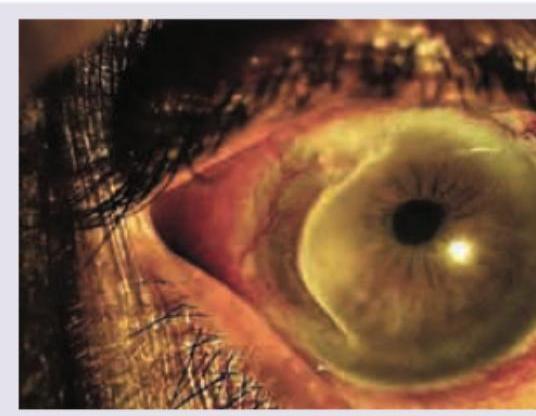
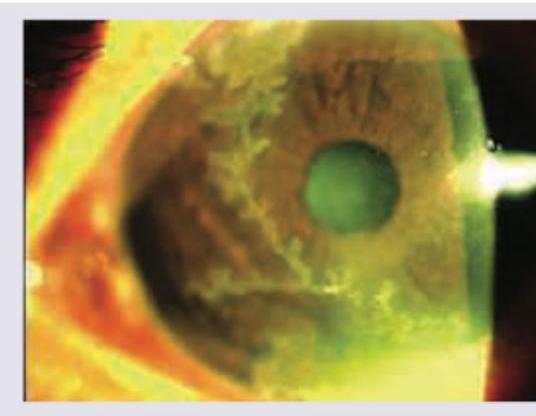
Explanation: **Explanation:** The clinical presentation is classic for **Fungal Keratitis (Keratomycosis)**. The diagnosis is clinched by the presence of a greyish-white ulcer with **indistinct, elevated margins** and characteristic **feathery, finger-like infiltrates** (satellite lesions) extending into the stroma. These features are pathognomonic for filamentous fungi, of which **Aspergillus spp.** and *Fusarium* are the most common causative agents. The presence of a "sterile" hypopyon is also frequently seen in fungal infections due to the penetration of toxins into the anterior chamber. **Analysis of Incorrect Options:** * **B. Pseudomonas spp.:** Bacterial ulcers typically present with a rapid onset, a "soupy" or liquefied appearance, and often a greenish-yellow discharge. They lack the dry, feathery borders seen here. * **C. Herpes simplex virus:** Dendritic or geographic ulcers are characteristic of HSV. These are epithelial defects with terminal bulbs and do not typically present with stromal feathery infiltrates unless there is secondary disciform keratitis. * **D. Acanthamoeba spp.:** This is usually associated with contact lens wear and presents with excruciating pain out of proportion to clinical signs, often showing a characteristic **ring-shaped infiltrate**. **High-Yield Clinical Pearls for NEET-PG:** * **Risk Factor:** History of trauma with **vegetative matter** (e.g., a branch or leaf) is the most common predisposing factor for fungal keratitis. * **Microbiology:** Gold standard investigation is corneal scraping for **KOH mount** (shows hyphae) and culture on **Sabouraud’s Dextrose Agar (SDA)**. * **Treatment:** Topical **Natamycin (5%)** is the drug of choice for filamentous fungi like Aspergillus. Amphotericin B is preferred for *Candida*.
Explanation: **Explanation:** **Band-Shaped Keratopathy (BSK)** is a degenerative condition characterized by the deposition of **calcium salts** (hydroxyapatite) in the subepithelial layers, specifically the **Bowman’s membrane**, the anterior stroma, and the epithelial basement membrane. **Why Chronic Uveitis is the Correct Answer:** Chronic intraocular inflammation, particularly **Chronic Uveitis**, is the most common local cause of BSK. In children, it is classically associated with **Juvenile Idiopathic Arthritis (JIA)**-associated uveitis. The underlying mechanism involves a change in local pH and chronic inflammation, which promotes the precipitation of calcium salts in the interpalpebral fissure (the area of the cornea exposed between the lids). **Analysis of Incorrect Options:** * **Rheumatoid Arthritis (B):** While RA is associated with ocular manifestations like episcleritis, scleritis, and Peripheral Ulcerative Keratitis (PUK), it does not typically cause BSK unless it leads to secondary chronic uveitis or severe dry eye. * **Systemic Lupus Erythematosus (C) & Discoid Lupus (D):** These are autoimmune connective tissue diseases that more commonly cause dry eye (keratoconjunctivitis sicca) or retinal vascular changes. They are not classic primary causes of calcium deposition in the cornea. **High-Yield Clinical Pearls for NEET-PG:** * **Appearance:** BSK presents as a horizontal "band" in the interpalpebral area with characteristic **"Swiss-cheese" holes** (representing areas where corneal nerves pierce the Bowman’s membrane). * **Etiology Mnemonic:** Remember **"Calcium, Chronic, Chemistry"**: 1. **Hypercalcemia:** Hyperparathyroidism, Vitamin D toxicity, Milk-alkali syndrome. 2. **Chronic Ocular Disease:** Chronic uveitis (most common), Phthisis bulbi, Silicone oil in the anterior chamber. 3. **Chemistry:** Chronic exposure to mercury or fumes. * **Treatment of Choice:** Chelation using **EDTA (Ethylenediamine tetraacetic acid)** after removing the corneal epithelium.
Explanation: **Explanation:** The corneal endothelium is a single layer of non-regenerative cells responsible for maintaining **corneal deturgescence** (a state of relative dehydration). It achieves this through an active "bicarbonate pump" mechanism and a leaky barrier function, preventing the corneal stroma from swelling with aqueous humor. **Why 500 cells/mm² is correct:** In a healthy young adult, the normal endothelial cell density (ECD) is approximately **2,500 to 3,000 cells/mm²**. As we age, or due to trauma/surgery, this density decreases. The **critical threshold** required to maintain the physiological pump function is roughly **500 cells/mm²**. Below this level, the pump can no longer compensate for the influx of fluid, leading to stromal edema, loss of transparency, and bullous keratopathy. **Analysis of Incorrect Options:** * **A & B (300 & 400 cells/mm²):** These values are well below the functional threshold. At these densities, the cornea is almost certainly decompensated and opaque. * **D (600 cells/mm²):** While a cornea with 600 cells/mm² may still be clear, it is dangerously close to the "failing point." Standard ophthalmic teaching and surgical guidelines (like those for cataract surgery) define 500 cells/mm² as the definitive lower limit for transparency. **High-Yield Clinical Pearls for NEET-PG:** * **Specular Microscopy:** The gold standard investigation to measure ECD and assess cell morphology. * **Polymegathism & Pleomorphism:** An increase in variation of cell *size* and *shape* (loss of hexagonality), respectively; these are early signs of endothelial stress before cell count drops. * **Pachymetry:** Used to measure corneal thickness; a thickening cornea indicates endothelial pump failure. * **Fuchs' Endothelial Dystrophy:** A classic condition leading to progressive endothelial cell loss and "beaten metal" appearance (Guttae).
Explanation: **Explanation:** Corneal transparency is a complex physiological state maintained by the structural arrangement of its components and active metabolic processes. **Why "Hypercellular stroma" is the correct answer:** The corneal stroma is actually **hypocellular** (relatively cell-poor). It consists primarily of collagen fibrils and extracellular matrix, with keratocytes making up only about 2-3% of the stromal volume. **Hypercellularity** (an increase in cells) or the infiltration of inflammatory cells (leukocytes) would cause light scattering and result in corneal opacity. **Analysis of other options:** * **Na+–K+ pump:** Located in the corneal endothelium, this active pump mechanism constantly moves ions (and consequently water) out of the stroma into the aqueous humor. This maintains the cornea in a state of **relative dehydration** (deturgescence), which is vital for clarity. * **Normal intraocular pressure (IOP):** Normal IOP is essential to provide the necessary pressure gradient for the endothelial pump to function. High IOP (as seen in acute glaucoma) can overwhelm the pump, leading to epithelial edema and "steamy" cornea. * **Peculiar arrangement of lamellae:** According to **Maurice’s Lattice Theory**, collagen fibrils in the stroma are of uniform diameter and are arranged in a regular lattice pattern with a separation distance of less than half the wavelength of light. This allows for destructive interference of scattered light, maintaining transparency. **High-Yield Clinical Pearls for NEET-PG:** * **Maurice’s Theory:** Applies to the regular arrangement of stromal fibrils. * **Goldman’s Theory:** Suggests transparency is possible even with irregular fibrils if they are small and closely packed (explains transparency in the sclera of some species). * **Corneal Hydration:** The cornea is 78% water. Any increase beyond this leads to edema and loss of transparency. * **Crystallins:** The presence of water-soluble proteins (crystallins) within keratocytes also helps reduce light scattering.
Corneal Anatomy and Physiology
Practice Questions
Bacterial Keratitis
Practice Questions
Viral Keratitis
Practice Questions
Fungal Keratitis
Practice Questions
Protozoan Keratitis
Practice Questions
Corneal Degenerations
Practice Questions
Corneal Dystrophies
Practice Questions
Keratoconus and Ectatic Disorders
Practice Questions
Corneal Transplantation
Practice Questions
Corneal Topography and Imaging
Practice Questions
Dry Eye Disease
Practice Questions
Corneal Trauma
Practice Questions
Get full access to all questions, explanations, and performance tracking.
Start For Free