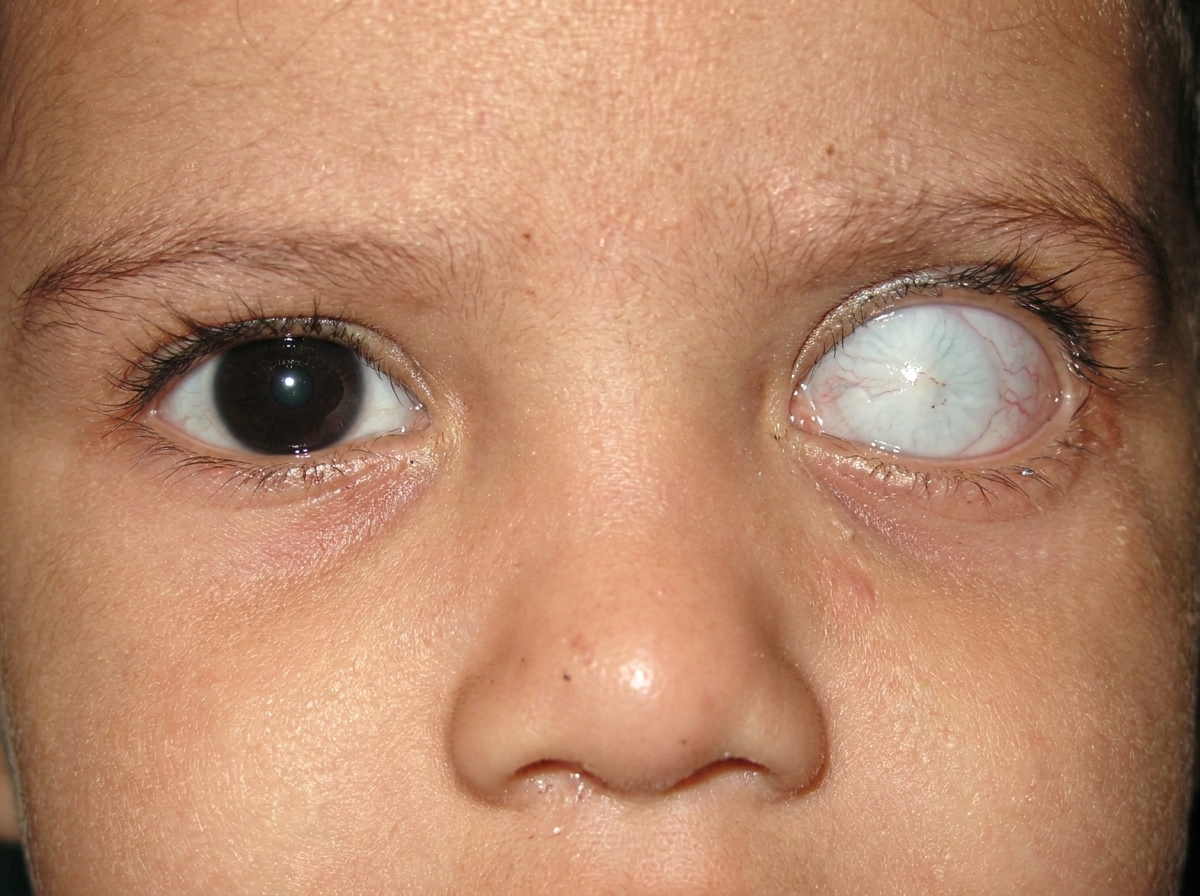
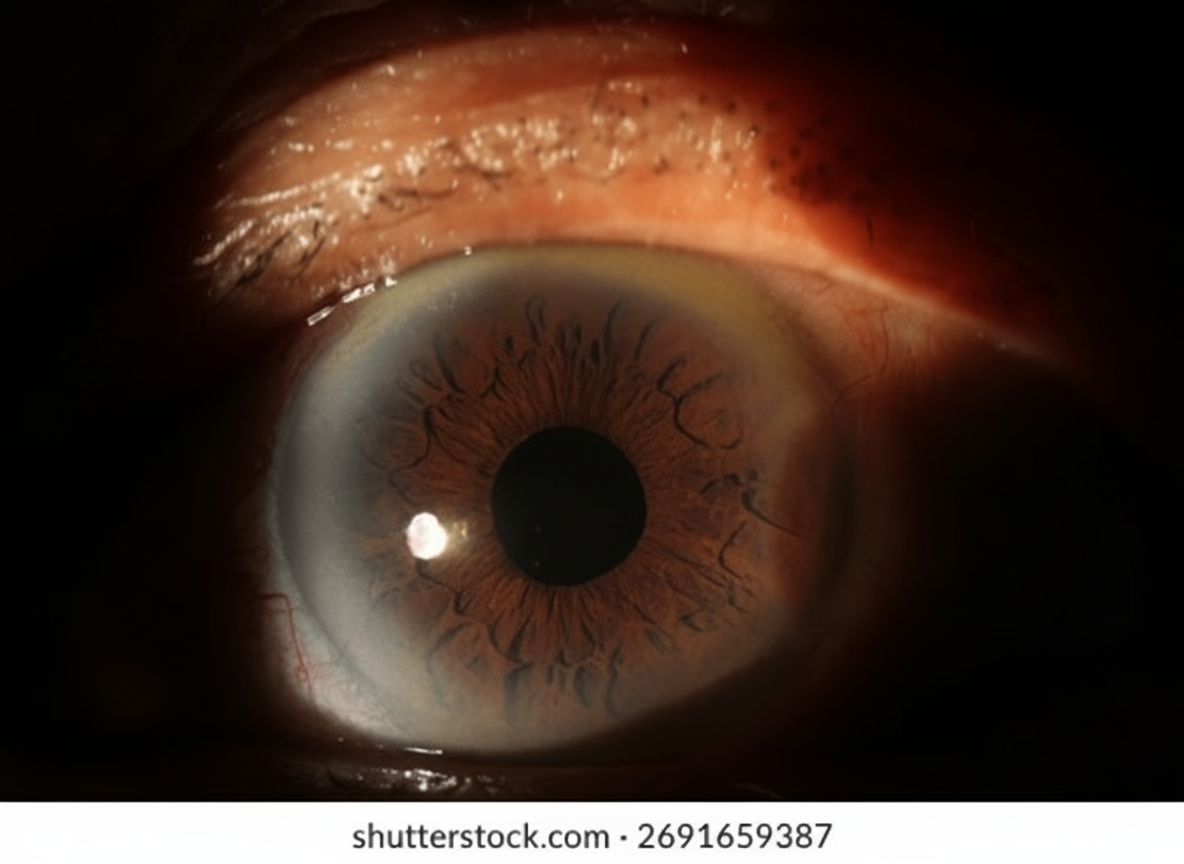
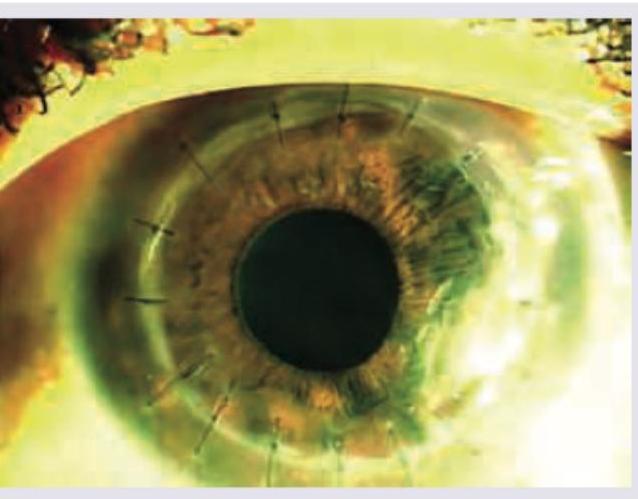
All are causes of a non-healing corneal ulcer except?
In pterygium, which layer of the cornea is most commonly involved?
A soft contact lens wearer developed pain and itching of the eye and showed a reticular pattern on the corneal epithelium. What is the likely cause of these symptoms?
Keratic precipitates are found on which layer of the cornea?
Wilson's disease is characterized by all of the following EXCEPT:
Fascicular ulcer is seen in which of the following conditions?
In Herpes zoster keratitis, which of the following occurs?
What are the characteristic features of a fungal corneal ulcer?
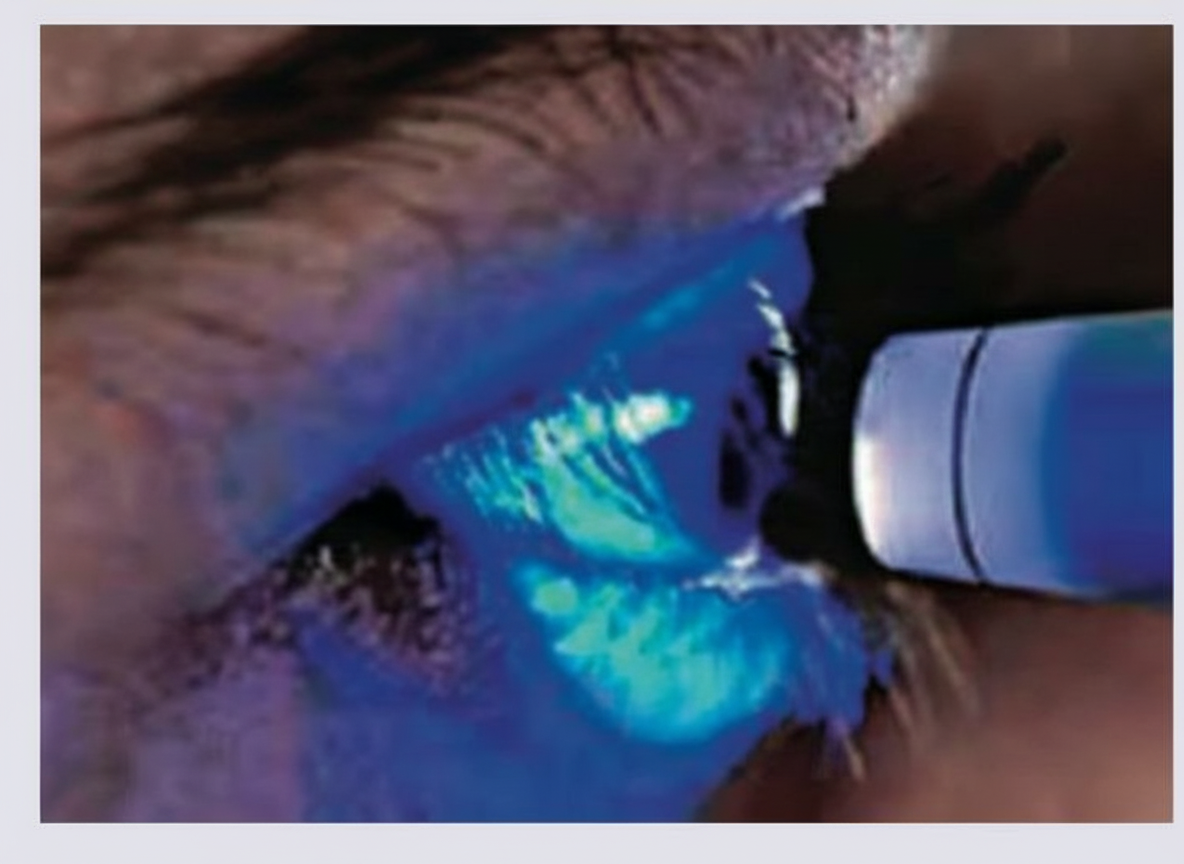
What is the characteristic color of fluorescein staining in a corneal ulcer?
Which of the following are features of a fungal corneal ulcer?
Explanation: **Explanation:** A non-healing (indolent) corneal ulcer is one that fails to show signs of healing despite appropriate antimicrobial therapy. The management of such cases requires identifying and treating the underlying systemic or local factors that impede epithelialization. **Why "Associated Iridocyclitis" is the correct answer:** Iridocyclitis (anterior uveitis) is a **common clinical feature** of almost all significant corneal ulcers due to the diffusion of toxins into the anterior chamber. It is a *consequence* of the ulcer, not a cause of delayed healing. In fact, treating the associated iridocyclitis with cycloplegics (like Atropine) is a standard part of the management to reduce pain and prevent synechiae. **Analysis of Incorrect Options (Causes of Non-healing Ulcers):** * **Raised Intraocular Pressure (A):** Increased IOP causes mechanical stress on the corneal endothelium and stroma, leading to corneal edema. This interferes with the migration and adhesion of the epithelial basement membrane, preventing the ulcer from healing. * **Chronic Dacryocystitis (C):** This is a classic "high-yield" cause. The lacrimal sac acts as a reservoir for bacteria (commonly *S. pneumoniae*), leading to a constant "rain of infection" onto the cornea, causing recurrence or non-healing. * **Diabetes Mellitus (D):** Systemic conditions like DM impair healing through peripheral neuropathy (decreased corneal sensation/neurotrophic effect) and impaired microcirculation and immune response. **Clinical Pearls for NEET-PG:** * **Most common cause of a non-healing ulcer:** Local factors like Chronic Dacryocystitis or Lagophthalmos. * **Rule of thumb:** Always check the patency of the lacrimal passages (Syringing) in any patient with a corneal ulcer. * **Other causes:** Vitamin A deficiency, Neurotrophic keratitis (CN V palsy), and Corticosteroid abuse.
Explanation: ### Explanation **Correct Answer: C. Bowman’s layer** **Mechanism and Pathophysiology:** A pterygium is a triangular, fibrovascular proliferation of the subconjunctival tissue that encroaches onto the cornea. The hallmark of its progression is the **destruction of Bowman’s layer**. The pathological process involves elastotic degeneration of the collagen fibers. As the pterygium advances, it invades and replaces the superficial stroma and Bowman's membrane, which is why surgical excision often leaves a permanent corneal scar at the site. **Analysis of Incorrect Options:** * **A. Epithelium:** While the epithelium covers the pterygium, it is not the primary site of structural involvement or destruction. The pathology originates beneath the epithelium. * **B. Endothelium:** This is the innermost layer of the cornea. Pterygium is a superficial ocular surface disorder and does not extend to the deep posterior layers. * **D. Descemet’s membrane:** Similar to the endothelium, this is a deep layer. Pterygium is limited to the anterior corneal layers (Epithelium, Bowman’s, and superficial Stroma). **Clinical Pearls for NEET-PG:** * **Stocker’s Line:** An iron deposit (hemosiderin) seen on the corneal epithelium at the leading edge (head) of a stable pterygium. * **Fuchs’ Flecks:** Small, greyish-white opacities seen at the advancing edge, representing precursors to progression. * **Etiology:** Strongly associated with chronic **UV-B exposure** and dry, dusty environments. * **Treatment of Choice:** Surgical excision with **Limbal Conjunctival Autograft (CAG)** is the gold standard to minimize recurrence. * **Recurrence:** The most common complication after simple "bare sclera" excision. Mitomycin-C is sometimes used as an adjuvant to prevent this.
Explanation: ### Explanation **Correct Answer: B. Acanthamoeba infection** The clinical presentation of a **soft contact lens wearer** presenting with severe pain and a **reticular (radial) pattern** on the cornea is a classic description of **Acanthamoeba keratitis**. The "reticular pattern" refers to **radial keratoneuritis**, which is the infiltration of the corneal nerves by the *Acanthamoeba* trophozoites. This involvement of the nerves explains why the pain is often **disproportionate** to the clinical signs (severe pain despite minimal initial findings). Contact lens wear, especially with poor hygiene or use of tap water, is the most significant risk factor. **Why other options are incorrect:** * **Corneal dystrophy (A):** These are typically bilateral, symmetrical, and slowly progressive genetic conditions. They do not present with acute pain or itching associated with contact lens use. * **Pseudomonas infection (C):** While common in contact lens wearers, *Pseudomonas* causes a rapidly progressing suppurative ulcer with a characteristic **greenish-yellow discharge** and a large hypopyon, rather than a radial nerve pattern. * **Viral keratitis (D):** Herpes Simplex Keratitis typically presents with a **dendritic ulcer** (linear branching with terminal bulbs) and decreased corneal sensations, rather than the intense pain of radial keratoneuritis. **High-Yield Clinical Pearls for NEET-PG:** * **Pathognomonic Sign:** Radial keratoneuritis (radial perineural infiltrates). * **Late Sign:** Ring-shaped stromal infiltrate. * **Diagnosis:** Culture on **Non-nutrient agar with E. coli overlay**. * **Stains:** Calcofluor white (fluorescent) or Periodic acid-Schiff (PAS). * **Treatment:** Topical biguanides (PHMB 0.02%) or Diamidines (Propamidine/Brolene).
Explanation: **Explanation:** **Keratic Precipitates (KPs)** are inflammatory cellular deposits found on the **posterior surface of the cornea**, specifically on the **Endothelium**. 1. **Why Endothelium is correct:** KPs are a hallmark sign of anterior uveitis (iridocyclitis). When the iris and ciliary body are inflamed, inflammatory cells (leukocytes) are released into the aqueous humor. Due to convection currents in the anterior chamber and the gravity-driven "Arlt’s triangle" distribution, these cells adhere to the sticky, damaged endothelial cells of the cornea. 2. **Why other options are incorrect:** * **Epithelium:** This is the outermost layer. While it can show edema or ulcers, KPs are internal deposits. * **Stroma:** This is the thickest middle layer. Inflammation here is termed *keratitis*, not KPs. * **Bowman’s Membrane:** This is a thin acellular layer below the epithelium; it does not host inflammatory deposits from the aqueous humor. **Clinical Pearls for NEET-PG:** * **Mutton-fat KPs:** Large, greasy-looking clusters made of epithelioid cells and macrophages. They are pathognomonic for **Granulomatous Uveitis** (e.g., Sarcoidosis, TB, Syphilis). * **Small/Fine KPs:** Composed of neutrophils and lymphocytes; typically seen in **Non-granulomatous Uveitis**. * **Arlt’s Triangle:** The classic wedge-shaped distribution of KPs on the inferior cornea due to convection currents. * **Krukenberg’s Spindle:** Pigment deposits on the endothelium (seen in Pigment Dispersion Syndrome), which should not be confused with inflammatory KPs.
Explanation: **Explanation:** Wilson’s disease (Hepatolenticular degeneration) is an autosomal recessive disorder of copper metabolism caused by a mutation in the **ATP7B gene**. This results in decreased biliary excretion of copper and its subsequent deposition in various organs, primarily the liver, brain, and eyes. **Why Glaucoma is the correct answer:** Glaucoma is **not** a characteristic feature of Wilson’s disease. While copper deposits in various ocular structures, it does not typically obstruct aqueous outflow or cause optic nerve damage leading to glaucoma. **Analysis of other options:** * **Kayser-Fleischer (KF) Ring:** This is the hallmark ocular sign. It consists of golden-brown or greenish-brown copper deposits in the **Descemet’s membrane** of the peripheral cornea. It is present in 95% of patients with neurological symptoms. * **Sunflower Cataract:** This occurs due to copper deposition in the **anterior lens capsule**. It appears as a central disc with radiating petal-like spokes. Unlike senile cataracts, it rarely impairs vision significantly. * **Nystagmus:** Wilson’s disease involves the basal ganglia and cerebellum. Neurological involvement can manifest as various movement disorders, including tremors, ataxia, and occasionally nystagmus or ocular motility disturbances. **High-Yield Clinical Pearls for NEET-PG:** * **KF Ring Location:** Starts at the 12 o’clock and 6 o’clock positions before becoming circumferential. * **Reversibility:** Both KF rings and Sunflower cataracts may disappear with systemic chelation therapy (e.g., D-penicillamine). * **Diagnosis:** Best visualized using a **Slit-lamp examination**; it may be invisible to the naked eye in early stages. * **Systemic Triad:** Liver cirrhosis, Basal ganglia degeneration, and KF ring.
Explanation: ### Explanation **Phlyctenular keratitis** is the correct answer because a **fascicular ulcer** is its most characteristic clinical manifestation. #### 1. Why Phlyctenular Keratitis is Correct Phlyctenular keratoconjunctivitis is a delayed hypersensitivity reaction (Type IV) to endogenous bacterial proteins, most commonly **Tuberculosis** (in developing countries) or **Staphylococcus** (in developed countries). * **Mechanism of Fascicular Ulcer:** A phlycten (a small greyish nodule) starts at the limbus and migrates towards the center of the cornea. As it moves, it carries a "leash" of superficial blood vessels behind it. The leading edge remains an active ulcer while the trailing edge heals, resulting in a **serpiginous, wandering ulcer** with a characteristic vascular leash. It typically does not perforate but leaves a permanent superficial opacity (nebula). #### 2. Why Other Options are Incorrect * **Rosacea Keratitis:** Characteristically presents with peripheral corneal vascularization, marginal infiltrates, and spade-shaped scarring. It is associated with acne rosacea of the face. * **Riboflavin (Vitamin B2) Deficiency:** Classically associated with **circumcorneal vascularization** (neovascularization) and angular stomatitis, but it does not produce a migrating fascicular ulcer. #### 3. High-Yield Clinical Pearls for NEET-PG * **Etiology:** Always look for "History of TB" or "Positive Mantoux test" in the clinical vignette. * **Symptoms:** Intense photophobia is a hallmark when the cornea is involved. * **Treatment:** Topical steroids are the mainstay to control the hypersensitivity reaction, along with treating the underlying cause (e.g., ATT for TB or lid hygiene for Staph). * **Differential Diagnosis:** Do not confuse the vascular leash of a fascicular ulcer with a **Pannus** (seen in Trachoma), which is inflammatory vascularization usually limited to the upper quadrant.
Explanation: **Explanation:** **Herpes Zoster Ophthalmicus (HZO)** is caused by the reactivation of the Varicella-Zoster virus in the trigeminal ganglion. While it can cause various corneal manifestations, **Sclerokeratitis** is a classic, severe complication specifically associated with the chronic phase of the disease. 1. **Why Sclerokeratitis is the Correct Answer:** In HZO, the inflammation often extends beyond the cornea to involve the adjacent sclera. Sclerokeratitis occurs in approximately 1% of cases, characterized by peripheral corneal infiltration adjacent to an area of scleritis. It is an immune-mediated response rather than direct viral replication, often leading to peripheral corneal thinning and vascularization. 2. **Analysis of Incorrect Options:** * **Pseudodendritic keratitis (Option A):** While HZO *does* cause pseudodendrites, they are peripheral, elevated, and lack terminal bulbs (unlike the true dendrites of HSV). However, in the context of standard NEET-PG questioning, sclerokeratitis is often highlighted as a more distinct, severe inflammatory feature of Zoster. * **Punctate keratitis (Option B):** This is a non-specific finding seen in the early stages of many viral infections and is not the defining characteristic of HZO. * **Endothelitis (Option C):** While it can occur (disciform keratitis), it is more classically associated with Herpes Simplex Virus (HSV) rather than being the hallmark of HZO. **High-Yield Clinical Pearls for NEET-PG:** * **Hutchinson’s Sign:** Vesicles on the tip or side of the nose (involvement of the nasociliary nerve) strongly predict ocular involvement. * **Pseudodendrites vs. True Dendrites:** HZO pseudodendrites are "stuck-on" mucous plaques that stain poorly with fluorescein, whereas HSV dendrites have a central ulceration and terminal bulbs. * **Neurotrophic Keratopathy:** A common late complication due to corneal anesthesia. * **Treatment:** Oral Acyclovir (800 mg 5 times daily) is the mainstay, initiated within 72 hours of rash onset.
Explanation: **Explanation:** Fungal corneal ulcers (keratomycosis) typically present with distinct clinical features that differentiate them from bacterial ulcers. The correct answer is **Dry ulcer** because fungal lesions are characterized by a firm, elevated, and leathery texture. Unlike the "wet" or melting appearance of bacterial ulcers, fungal hyphae infiltrate the stroma without producing the same level of liquefactive necrosis, leading to a **dry, grayish-white appearance**. **Analysis of Options:** * **A. Symptoms disproportionate to signs:** This is a classic feature of **Acanthamoeba keratitis**, where the patient experiences excruciating pain despite minimal clinical findings. In fungal ulcers, the opposite is often true: signs are often more prominent than symptoms (the patient may feel relatively comfortable despite a large ulcer). * **C. Diffuse corneal edema:** While some edema may occur, it is not a "characteristic" diagnostic feature. Fungal ulcers are more specifically known for **Feathered margins**, **Satellite lesions**, and an **Immune ring (Wessely ring)**. * **D. All of the above:** Incorrect, as options A and C are not primary characteristics of fungal keratitis. **NEET-PG High-Yield Pearls:** * **Etiology:** Most common cause in India is *Aspergillus* (filamentous); *Candida* is more common in pre-existing ocular surface disease. * **Risk Factor:** Trauma with **vegetative matter** (e.g., a branch or leaf). * **Clinical Signs:** Look for "Fixed Hypopyon" (thick, non-mobile) and "Endothelial plaques." * **Diagnosis:** **KOH mount** (10-20%) is the fastest bedside test; **Sabouraud’s Dextrose Agar (SDA)** is the gold standard culture medium. * **Treatment:** Topical **Natamycin (5%)** is the drug of choice for filamentous fungi. Avoid topical steroids as they worsen the infection.
Explanation: **Explanation:** **Mechanism of Staining:** Sodium Fluorescein is a vital dye used to assess corneal integrity. It is **water-soluble** and cannot penetrate the intact, lipid-rich corneal epithelium. In a corneal ulcer, the epithelium is breached, exposing the underlying **corneal stroma**. The dye dissolves into the stromal fluid, and when viewed under a **cobalt blue light**, it fluoresces a brilliant **apple-green** color. **Analysis of Options:** * **D. Green (Correct):** This is the characteristic color of fluorescence. The dye absorbs blue light (wavelength ~490 nm) and emits a longer wavelength in the green spectrum (~525 nm). * **A. Yellow:** While the fluorescein strip or concentrated drops appear orange-yellow to the naked eye, the diagnostic "staining" refers to the fluorescence seen under blue light, which is green. * **B. & C. Blue/Royal Blue:** These represent the color of the **filter** (Cobalt blue) used on the slit lamp to excite the dye, not the color of the stain itself. **Clinical Pearls for NEET-PG:** * **Seidel’s Test:** Used to detect aqueous leakage (e.g., globe perforation). A positive test shows a "streaming" of clear aqueous fluid through the green fluorescein. * **Dendritic Ulcers:** Fluorescein stains the **bed** of the ulcer (where cells are missing), while Rose Bengal or Lissamine Green stains the **devitalized cells** at the margins. * **Contact Lenses:** Fluorescein should be avoided with soft contact lenses as it permanently stains them. * **Jones Test:** Uses fluorescein to check the patency of the nasolacrimal duct.
Explanation: **Explanation:** Fungal corneal ulcers (keratomycosis), most commonly caused by *Aspergillus*, *Fusarium*, or *Candida*, present with distinct clinical features due to the slow-growing nature of fungi and the host's inflammatory response. **Why "Hyphenated margins" is correct:** Fungal hyphae tend to infiltrate the corneal stroma by spreading horizontally and vertically. This creates irregular, feathery, or **hyphenated margins** around the main ulcer. Other characteristic features include a **dry, leathery appearance**, **satellite lesions** (small infiltrates away from the main ulcer), and a **fixed hypopyon** (which is often sterile but thick and non-mobile). **Analysis of Incorrect Options:** * **A. Symptoms more than signs:** This is a hallmark of **Acanthamoeba keratitis**, where the pain is excruciating and out of proportion to the clinical findings. In fungal ulcers, signs are often more prominent than symptoms (the patient may feel relatively comfortable despite a large ulcer). * **B. Dry ulcer:** While fungal ulcers are indeed "dry" and "leathery," this option is less specific than "hyphenated margins" in the context of classic board-style questions. However, in some contexts, this is a feature; but hyphenated margins are the pathognomonic clinical sign. * **C. Diffuse corneal edema:** This is more characteristic of **Bacterial ulcers** or acute glaucoma. Fungal ulcers typically have localized edema around the infiltrate rather than diffuse edema. **High-Yield Clinical Pearls for NEET-PG:** * **History:** Often follows trauma with **vegetative matter** (e.g., a branch or leaf). * **Immune Ring:** A Wessely immune ring may be seen (host response to fungal antigens). * **Diagnosis:** Gold standard is **Sabouraud’s Dextrose Agar (SDA)**; KOH mount shows hyphae. * **Treatment:** Topical **Natamycin** (5%) is the drug of choice for filamentous fungi; Amphotericin B for *Candida*. Avoid steroids.
Corneal Anatomy and Physiology
Practice Questions
Bacterial Keratitis
Practice Questions
Viral Keratitis
Practice Questions
Fungal Keratitis
Practice Questions
Protozoan Keratitis
Practice Questions
Corneal Degenerations
Practice Questions
Corneal Dystrophies
Practice Questions
Keratoconus and Ectatic Disorders
Practice Questions
Corneal Transplantation
Practice Questions
Corneal Topography and Imaging
Practice Questions
Dry Eye Disease
Practice Questions
Corneal Trauma
Practice Questions
Get full access to all questions, explanations, and performance tracking.
Start For Free