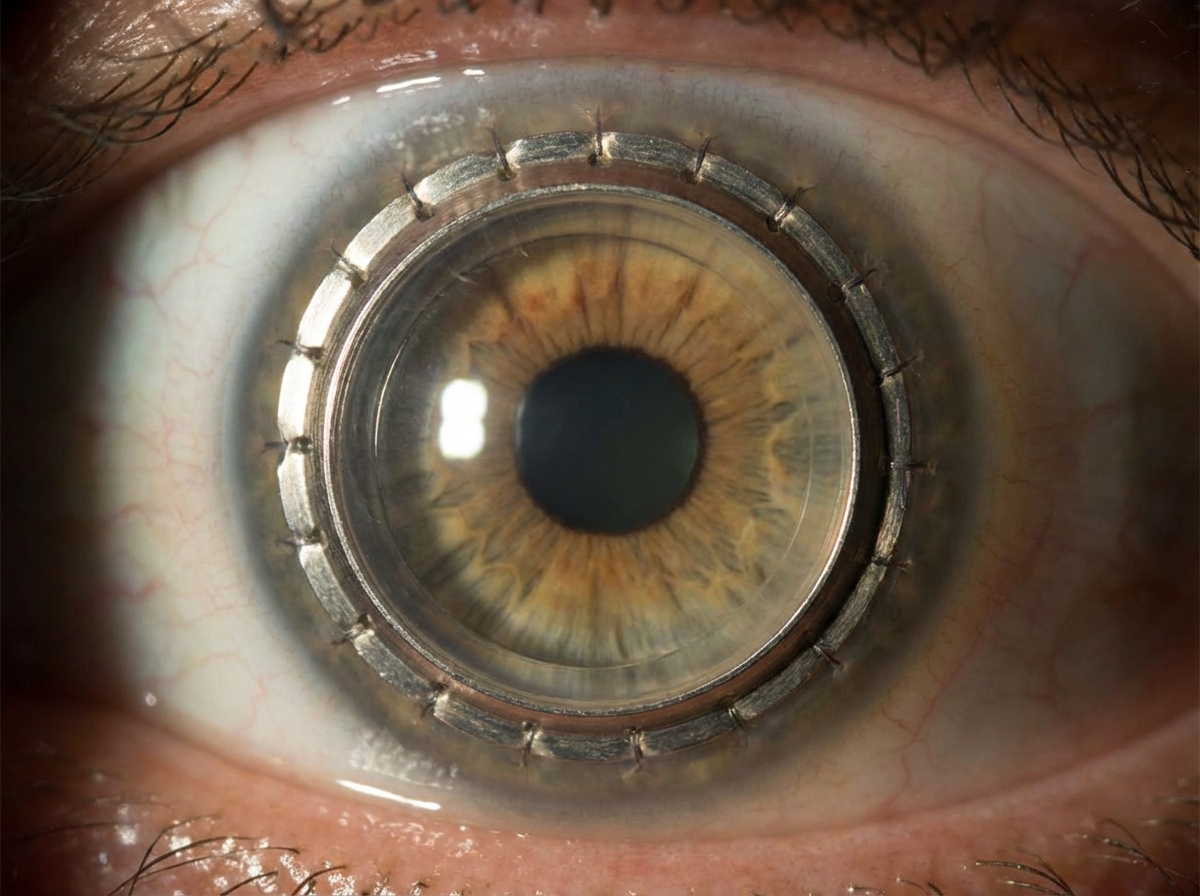
Which of the following statements is true regarding Acanthamoeba keratitis?
Recurrent corneal erosion is commonly seen in which of the following conditions?
Intrastromal corneal ring segments (Intacs) are used in all conditions EXCEPT?
Which bacteria can penetrate an intact cornea?
The "Ferry line" is found in which ocular structure?
Which of the following statements is NOT true about corneal opacity?
Which of the following type of corneal degeneration is associated with calcific changes in the Bowman's membrane with a characteristic Swiss cheese pattern?
Keratoconus is associated with all the following conditions except:
What is the normal endothelial cell count in the cornea?
Corneal deturgescence is maintained by which structure?
Explanation: ### Explanation **Correct Option: D** *Acanthamoeba* is a **free-living amoeba** (protozoa) found ubiquitously in soil, fresh water, and air. Humans are "accidental hosts." The organism completes its life cycle (alternating between an active **trophozoite** and a resilient **double-walled cyst**) entirely in the environment. It does not require a human or animal host for replication or maturation, making it an opportunistic pathogen rather than an obligate parasite. **Analysis of Incorrect Options:** * **Option A:** For isolation, corneal scrapings must be cultured on **Non-nutrient agar (NNA) enriched with *E. coli***. The amoebae feed on the bacteria, creating visible "tracks" on the agar. Standard nutrient agar does not support its growth. * **Option B:** *Acanthamoeba* is a **protozoan**, not a helminth. While its habitat is indeed soil and water, the biological classification in the option is incorrect. * **Option C:** While *Acanthamoeba* keratitis is classically associated with **contact lens wearers** (80% of cases) who have healthy immune systems, it can certainly occur in immunocompromised individuals. In fact, in severely immunocompromised patients, it can cause disseminated disease or Granulomatous Amoebic Encephalitis (GAE). **High-Yield Clinical Pearls for NEET-PG:** * **Risk Factors:** Contact lens use (especially washing lenses with tap water), swimming with lenses, or minor trauma with soil/water exposure. * **Clinical Feature:** Characterized by **pain out of proportion** to clinical signs. * **Pathognomonic Sign:** **Radial Keratoneuritis** (infiltration along corneal nerves). Late stages show a **Ring Infiltrate**. * **Diagnosis:** Confirmed by **Calcofluor White stain** (fluoresces cysts) or confocal microscopy. * **Treatment:** Topical biguanides (**PHMB 0.02%** or **Chlorhexidine**) and diamidines (Propamidine/Brolene).
Explanation: **Explanation:** **Recurrent Corneal Erosion (RCE)** is a clinical syndrome characterized by repeated episodes of spontaneous breakdown of the corneal epithelium. The underlying pathophysiology involves **defective basement membrane adhesion**, where the hemidesmosomes fail to anchor the epithelium to the underlying Bowman’s layer. 1. **Why Corneal Dystrophy is Correct:** RCE is most strongly associated with **Anterior Basement Membrane Dystrophy (ABMD)**, also known as Map-Dot-Fingerprint dystrophy. In this condition, the basement membrane is redundant and multi-layered, leading to weak epithelial attachment. Other dystrophies, such as **Reis-Bücklers** and **Lattice dystrophy**, are also high-yield causes of RCE. 2. **Why Other Options are Incorrect:** * **Keratoglobus & Keratoconus:** These are non-inflammatory ectatic disorders characterized by thinning and protrusion of the corneal stroma. While they can lead to corneal scarring or hydrops (rupture of Descemet’s membrane), they do not typically cause recurrent epithelial erosions. * **Peutz-Jeghers Syndrome:** This is an autosomal dominant gastrointestinal polyposis syndrome associated with mucocutaneous hyperpigmentation. It has no clinical association with corneal pathology. **Clinical Pearls for NEET-PG:** * **Most common cause of RCE:** Fingernail injury or organic trauma (mechanical) is the most common cause overall, but among the options provided, **Corneal Dystrophy** is the primary systemic/genetic association. * **Classic Presentation:** Sudden onset of sharp pain, photophobia, and lacrimation, typically occurring **early in the morning** upon opening the eyes (as the eyelid pulls off the loosely adherent epithelium). * **Treatment:** Acute management involves lubricants and bandage contact lenses; definitive treatment may include **Phototherapeutic Keratectomy (PTK)** or anterior stromal puncture.
Explanation: **Explanation:** Intrastromal Corneal Ring Segments (ICRS), commonly known by the brand name **Intacs**, are PMMA (polymethylmethacrylate) micro-inserts placed into the peripheral corneal stroma. Their primary mechanism is to create an "arc-shortening" effect, which flattens the central cornea. **Why "Irregular Astigmatism" is the correct answer:** While Intacs can help regularize a cone in keratoconus, they are **not** indicated for the treatment of generalized irregular astigmatism (especially that caused by corneal scarring or trauma). In fact, the presence of central corneal scarring or severe irregular astigmatism is a **contraindication** for Intacs, as the rings cannot reshape a scarred or non-compliant stromal bed effectively. **Analysis of Incorrect Options:** * **Post-LASIK Keratectasia:** Intacs are a standard treatment to provide structural support and flatten the cornea in cases where the cornea has thinned and bulged following refractive surgery. * **Keratoconus:** This is the most common indication. Intacs are used in mild-to-moderate cases (with clear centers) to flatten the cone, improve visual acuity, and potentially defer the need for a corneal transplant. * **Low Myopia:** Intacs were originally FDA-approved for the correction of low myopia (-1.00 to -3.00 Diopters) in patients with healthy corneas. **High-Yield Clinical Pearls for NEET-PG:** * **Mechanism:** They act as "passive spacers" that flatten the central cornea without removing tissue (unlike LASIK). * **Reversibility:** A key advantage of Intacs is that they are removable and exchangeable. * **Prerequisite:** The central cornea must be **clear** (no scarring) for Intacs to be effective. * **Placement:** They are inserted at approximately **80% depth** of the corneal stroma.
Explanation: **Explanation:** The corneal epithelium acts as a formidable mechanical barrier against most pathogens. Most bacteria require a pre-existing epithelial defect (trauma, contact lens wear, or dry eye) to initiate an infection. However, a select group of highly virulent organisms possesses the enzymatic machinery to penetrate a completely **intact corneal epithelium**. **1. Why Corynebacterium is Correct:** *Corynebacterium diphtheriae* is one of the classic organisms capable of invading an intact cornea. It produces potent exotoxins and enzymes that breach the epithelial surface, often leading to membranous conjunctivitis and rapid corneal ulceration. **2. Analysis of Incorrect Options:** * **Pneumococcus (Streptococcus pneumoniae):** While it is a common cause of hypopyon corneal ulcers (Ulcus Serpens), it typically requires a breach in the epithelium to cause infection. * **Moraxella:** This organism usually affects debilitated or alcoholic patients and typically requires a compromised ocular surface. * **E. coli:** As a gram-negative rod, it is an opportunistic pathogen that does not possess the specific invasive mechanisms to penetrate healthy, intact corneal tissue. **3. High-Yield Clinical Pearls for NEET-PG:** To remember the organisms that can penetrate an intact cornea, use the mnemonic **"CHLNS"** (pronounced "CHANS"): * **C** – *Corynebacterium diphtheriae* * **H** – *Haemophilus aegyptius* (and *H. influenzae*) * **L** – *Listeria monocytogenes* * **N** – *Neisseria gonorrhoeae* and *Neisseria meningitidis* * **S** – *Shigella* species **Key Fact:** *Neisseria gonorrhoeae* is particularly dangerous as it can cause hyperacute purulent conjunctivitis leading to rapid corneal perforation if not treated aggressively. Always look for these specific organisms in "all of the following except" type questions regarding corneal penetration.
Explanation: **Explanation:** The **Ferry line** is a corneal epithelial iron line that occurs at the leading edge of a **filtering bleb** following glaucoma surgery (Trabeculectomy). Since a filtering bleb is a sub-conjunctival elevation typically created over the **Sclera**, the line is clinically associated with this site. **Understanding Iron Lines:** Iron lines (hemosiderin deposits) in the corneal epithelium occur wherever there is an irregularity in the corneal surface that causes tear film pooling and stagnation. * **Option A (Head of Pterygium):** The iron line found at the leading edge (head) of a pterygium is called **Stocker’s line**. * **Option B (Base of Keratoconus):** The iron line found at the base of the cone in keratoconus is called **Fleischer’s ring**. * **Option D (Eyelid):** There are no specific eponymous iron lines associated with the eyelid. **High-Yield Clinical Pearls for NEET-PG:** To master corneal iron lines, remember this "Cheat Sheet": 1. **Ferry’s Line:** Edge of a filtering bleb (Sclera). 2. **Stocker’s Line:** Head of a Pterygium. 3. **Fleischer’s Ring:** Base of the cone in Keratoconus (Best seen with a cobalt blue filter). 4. **Hudson-Stahli Line:** Horizontal line at the junction of the upper 2/3 and lower 1/3 of the cornea (associated with physiological aging). 5. **Rosemsil-Khodadoust Line:** Seen in chronic epithelial edema.
Explanation: ### Explanation **1. Why Option C is the Correct Answer (The False Statement):** In corneal optics, the **nature** of the opacity is often more significant than its density. A **nebula** is a faint, diffuse opacity that allows some light to pass through. However, this light is **irregularly refracted (scattered)**, leading to significant irregular astigmatism and a "dazzling" effect. This causes more visual morbidity than a **dense leucoma**, which is completely opaque and blocks light entirely. If a leucoma is strictly localized (especially if not covering the entire pupil), the remaining clear cornea allows for a sharper image, whereas a nebula creates a blurred, distorted image across the entire visual axis. **2. Analysis of Other Options:** * **Option A (True):** **Anterior Staphyloma** occurs after a total corneal perforation. The iris becomes plastered to the back of the thinned, scarred corneal tissue (ectatic cicatrix), which then bulges forward due to intraocular pressure. * **Option B (True):** **Adherent Leucoma** is formed when a corneal ulcer perforates and the iris becomes incarcerated in the resulting scar tissue during the healing process. * **Option D (True):** **Bowman’s membrane** does not regenerate. Any injury or ulceration that penetrates beyond this layer results in permanent scarring (opacity), ranging from nebula to leucoma. **3. Clinical Pearls for NEET-PG:** * **Grading of Opacities:** * **Nebula:** Faint, iris details easily visible. * **Macula:** Semi-translucent, iris details seen with difficulty. * **Leucoma:** Totally opaque, iris details not visible. * **Visual Impact:** A central nebula often causes more "visual disability" (due to glare and irregular astigmatism) than a peripheral leucoma. * **Treatment:** Optical iridectomy can be performed for central leucomas, while keratoplasty is the definitive treatment for extensive opacities.
Explanation: **Explanation:** **Band Keratopathy (BK)** is a chronic degenerative condition characterized by the deposition of **calcium salts** (hydroxyapatite) in the subepithelial layers, specifically the **Bowman’s membrane**, the anterior stroma, and the epithelial basement membrane. The "Swiss cheese" appearance is a classic histopathological and clinical hallmark. This occurs because small clear holes are seen within the calcified band, representing the areas where **nerve canals** penetrate the Bowman’s membrane. The calcification typically starts at the periphery (3 and 9 o'clock positions) and progresses centrally as a horizontal band across the interpalpebral fissure. **Why other options are incorrect:** * **Arcus senilis:** This is the most common peripheral corneal degeneration, caused by **lipid (cholesterol) deposition** in the stroma. It does not involve calcification or the Bowman’s membrane. * **Spheroid degeneration:** Also known as Climatic Droplet Keratopathy, it involves the deposition of **hyaline-like proteinaceous material** (amber-colored granules) in the superficial stroma, typically due to UV exposure. * **Salzmann’s degeneration:** Characterized by bluish-white **hyaline nodules** located anterior to the Bowman’s membrane, usually occurring in eyes with chronic keratitis. **High-Yield Clinical Pearls for NEET-PG:** * **Etiology:** Associated with chronic intraocular inflammation (Uveitis—especially in JIA), ocular trauma, or systemic hypercalcemia (e.g., hyperparathyroidism, Vitamin D toxicity, Sarcoidosis). * **Treatment:** The gold standard is **Chelation therapy** using **EDTA** (Ethylenediamine tetraacetic acid) after removing the overlying epithelium. * **Location:** It is strictly limited to the **interpalpebral area**, with a characteristic clear zone between the limbus and the calcification.
Explanation: **Explanation:** Keratoconus is a non-inflammatory, progressive thinning and cone-like ectasia of the cornea. It is strongly associated with systemic conditions involving **connective tissue disorders** and those predisposed to **chronic eye rubbing**. **1. Why Usher Syndrome is the Correct Answer:** Usher syndrome is a genetic disorder characterized by **sensorineural hearing loss** and **Retinitis Pigmentosa (RP)**. While it is a significant ophthalmic condition, it has no established clinical association with Keratoconus. Therefore, it is the "except" in this list. **2. Analysis of Incorrect Options (Associated Conditions):** * **Down’s Syndrome:** This is the most common chromosomal association. Approximately 5-15% of patients with Down’s syndrome develop keratoconus, likely due to structural collagen abnormalities and frequent eye rubbing. * **Ehlers–Danlos Syndrome (EDS):** As a systemic collagen disorder (Type VI specifically), EDS leads to increased corneal fragility and thinning, directly predisposing the patient to ectatic disorders like keratoconus. * **Marfan Syndrome:** Another connective tissue disorder (fibrillin-1 mutation) where keratoconus is a recognized ocular manifestation, alongside ectopia lentis. **Clinical Pearls for NEET-PG:** * **Mnemonic for Keratoconus Associations:** **"T-DOME"** * **T:** Turner syndrome * **D:** Down’s syndrome * **O:** Osteogenesis imperfecta * **M:** Marfan syndrome * **E:** Ehlers–Danlos syndrome / Atopic Eczema * **Key Signs:** Munson’s sign (indentation of lower lid on downgaze), Fleischer’s ring (iron deposition), and Vogt’s striae (vertical stress lines). * **Management:** Collagen Cross-linking (CXL/C3R) is the gold standard to stop progression; Penetrating Keratoplasty is for advanced cases.
Explanation: **Explanation:** The corneal endothelium is a single layer of hexagonal cells responsible for maintaining corneal transparency through its "pump-leak" mechanism. In a healthy young adult, the normal endothelial cell density (ECD) typically ranges between **2500 and 3000 cells/sq.mm**. These cells do not regenerate; instead, they compensate for cell loss by stretching and increasing in size (polymegathism). * **Option D (Correct):** 2500–3000 cells/sq.mm is the physiological standard for healthy adults. * **Option C (2000–2500):** This range is often seen in older adults. There is a physiological decline in cell count of approximately 0.6% per year throughout life. * **Option B (1500–2000):** This represents a moderate decrease, often seen post-intraocular surgery or in early corneal dystrophies. * **Option A (500–1000):** This is a critical zone. When the count falls below the **"Critical Threshold" of 500 cells/sq.mm**, the pump mechanism fails, leading to irreversible corneal edema and bullous keratopathy. **High-Yield Clinical Pearls for NEET-PG:** 1. **Specular Microscopy:** The gold standard investigation to measure endothelial cell count and morphology. 2. **Pleomorphism:** Variation in cell shape (loss of hexagonality); an early sign of endothelial stress. 3. **Polymegathism:** Variation in cell size. 4. **Fuchs’ Endothelial Dystrophy:** A common condition leading to progressive loss of these cells, characterized by "beaten metal" appearance (Guttae). 5. **Surgical Clearance:** Surgeons generally prefer a count >1500 cells/sq.mm before proceeding with elective cataract surgery (Phacoemulsification) to ensure post-operative corneal clarity.
Explanation: **Explanation:** Corneal transparency is primarily dependent on **corneal deturgescence**, a physiological state where the corneal stroma is kept in a relatively dehydrated state (78% water content). **Why Endothelium is correct:** The **corneal endothelium** is the most vital layer for maintaining this balance. It functions via two mechanisms: 1. **Physical Barrier:** It acts as a semi-permeable barrier to the aqueous humor. 2. **Active "Pump" Mechanism:** This is the most critical factor. The endothelium contains **Na⁺/K⁺ ATPase pumps** that actively transport ions from the stroma into the aqueous humor. Water follows these ions osmotically, effectively "pumping" excess fluid out of the stroma to prevent edema. **Why other options are incorrect:** * **Epithelium:** While the epithelium acts as a highly resistant physical barrier to tears (due to tight junctions), it lacks the active pumping capacity of the endothelium. It is secondary in importance to deturgescence. * **Stroma:** The stroma actually has a natural tendency to swell (swelling pressure) due to the hydrophilic nature of its glycosaminoglycans (GAGs). It is the *subject* of deturgescence, not the maintainer. * **Descemet’s Membrane:** This is a basement membrane and acts only as a structural support; it has no active physiological role in fluid transport. **High-Yield Clinical Pearls for NEET-PG:** * **Critical Cell Count:** Normal endothelial cell count is 2500–3000 cells/mm². If the count falls below **500 cells/mm²**, the pump fails, leading to corneal edema (Bullous Keratopathy). * **Maurice Theory:** States that corneal transparency is due to the uniform diameter and lattice-like arrangement of collagen fibrils (separated by less than half the wavelength of light). * **Fuchs’ Endothelial Dystrophy:** A classic condition where the pump fails, leading to morning blurring of vision due to nocturnal stromal hydration.
Corneal Anatomy and Physiology
Practice Questions
Bacterial Keratitis
Practice Questions
Viral Keratitis
Practice Questions
Fungal Keratitis
Practice Questions
Protozoan Keratitis
Practice Questions
Corneal Degenerations
Practice Questions
Corneal Dystrophies
Practice Questions
Keratoconus and Ectatic Disorders
Practice Questions
Corneal Transplantation
Practice Questions
Corneal Topography and Imaging
Practice Questions
Dry Eye Disease
Practice Questions
Corneal Trauma
Practice Questions
Get full access to all questions, explanations, and performance tracking.
Start For Free