Angular conjunctivitis is caused by which of the following microorganisms?
Haemorrhagic conjunctivitis is caused by which virus?
Cobblestone appearance of the conjunctiva is typically seen with?
Which of the following is NOT a feature of vernal conjunctivitis?
Trachoma inclusion bodies are called as:
Follicular conjunctivitis is found in all of the following conditions EXCEPT:
What is the commonest causative organism for angular conjunctivitis?
Ophthalmia neonatorum is caused by which of the following pathogens, except?
Deficiency of the mucin layer of the tear film occurs in which of the following conditions?
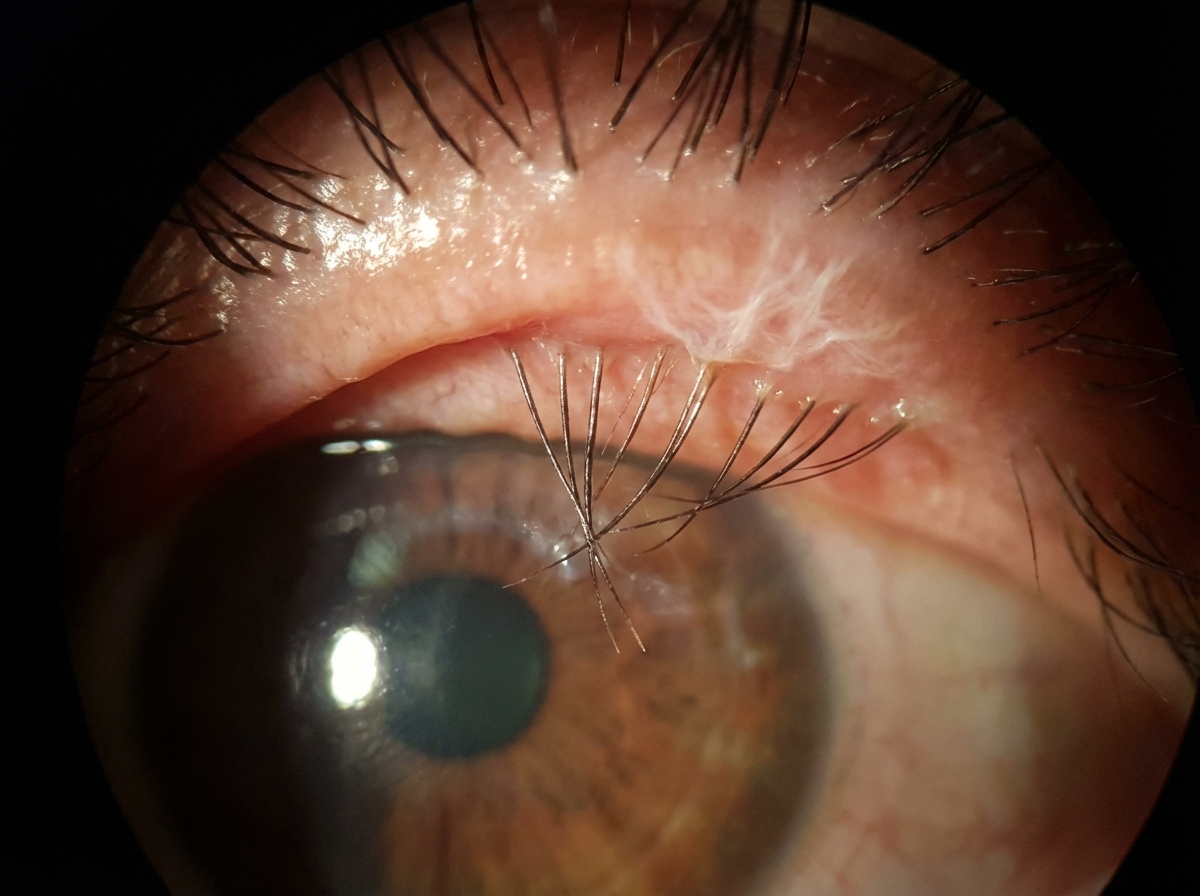
Ligneous conjunctivitis is caused by:
Explanation: **Explanation:** **Angular Conjunctivitis** is a specific type of chronic conjunctivitis characterized by inflammation localized to the intermarginal strip at the outer or inner angles (canthi) of the eye, often associated with excoriation of the surrounding skin. 1. **Why Moraxella axenfeldii is correct:** * **Moraxella axenfeldii** (a Gram-negative diplobacillus) is the most common causative agent. It produces a **proteolytic enzyme (protease)** that macerates and dissolves the epithelium of the conjunctiva and the skin of the lid angles. * The clinical hallmark is **redness and excoriation** at the canthi, often accompanied by a stringy discharge. * *Note:* Staphylococcus aureus can also cause angular conjunctivitis, but Moraxella remains the classic association for exams. 2. **Why other options are incorrect:** * **Haemophilus influenzae:** Typically causes acute mucopurulent conjunctivitis, often in children, and is frequently associated with subconjunctival hemorrhages. * **Adenovirus type 32:** Adenoviruses (specifically types 8, 19, and 37) are the primary cause of Epidemic Keratoconjunctivitis (EKC) and Pharyngoconjunctival Fever (PCF), characterized by follicles and preauricular lymphadenopathy, not localized angular inflammation. * **Branhamella (Moraxella catarrhalis):** While related, it is more commonly associated with respiratory infections and occasionally endophthalmitis, but it is not the classic cause of angular conjunctivitis. **High-Yield Clinical Pearls for NEET-PG:** * **Treatment of Choice:** Zinc-based eye drops (e.g., **Zinc Borate**). Zinc acts by inhibiting the proteolytic enzyme produced by Moraxella. * **Differential Diagnosis:** If the patient has angular blepharitis with greasy scales, consider *Staphylococcus aureus*. * **Gram Stain:** Moraxella axenfeldii appears as large, thick, Gram-negative bacilli in pairs (diplobacilli) or short chains.
Explanation: **Explanation:** **Acute Hemorrhagic Conjunctivitis (AHC)** is a highly contagious, self-limiting viral infection characterized by rapid onset of conjunctival hyperemia, lid edema, and pathognomonic **subconjunctival hemorrhages**. **Why Enterovirus 70 is correct:** The primary causative agents of AHC are **Enterovirus 70 (EV-70)** and **Coxsackievirus A24 (CA24v)**. These belong to the *Picornaviridae* family. EV-70 was first identified during a massive pandemic in 1969 and is specifically associated with large-scale outbreaks. It is neurotropic and, in rare cases, can lead to a polio-like paralysis (Radiculomyelitis). **Analysis of Incorrect Options:** * **B. Coxsackie virus:** While Coxsackievirus **A24** is a major cause of AHC, the option is non-specific. In competitive exams, if both are listed generally, EV-70 is often the preferred "textbook" answer for the classic description of hemorrhagic conjunctivitis. * **C. Enterovirus 72:** This is the former taxonomic name for **Hepatitis A virus**, which causes viral hepatitis, not ocular infections. * **D. Calicivirus:** These viruses (like Norovirus) primarily cause acute gastroenteritis. They are not associated with hemorrhagic conjunctivitis. **High-Yield Clinical Pearls for NEET-PG:** * **Incubation Period:** Very short (12–48 hours). * **Clinical Sign:** Subconjunctival hemorrhages usually start in the **upper bulbar conjunctiva** and spread downwards. * **Adenoviral Conjunctivitis vs. AHC:** While Adenovirus (Serotypes 8, 11, 19) causes Epidemic Keratoconjunctivitis (EKC), it typically presents with prominent follicles and pseudomembranes; AHC is distinguished by the prominent *hemorrhagic* component. * **Management:** Purely supportive; topical antibiotics are only used to prevent secondary bacterial infection.
Explanation: **Explanation:** **Spring Catarrh**, also known as **Vernal Keratoconjunctivitis (VKC)**, is a bilateral, recurrent, seasonal allergic inflammation of the conjunctiva, typically affecting young boys. The hallmark clinical feature is the presence of **large, flat-topped, polygonal raised areas** on the superior palpebral conjunctiva. These are hypertrophied papillae that, when packed closely together, resemble **"Cobblestones"** or "French street paving." This occurs due to the hyperplasia of subepithelial connective tissue and cellular infiltration. **Analysis of Incorrect Options:** * **Phlyctenular conjunctivitis:** Characterized by a "Phlycten"—a small, greyish-yellow nodule near the limbus, representing a Type IV hypersensitivity reaction to endogenous antigens (most commonly Tubercular protein). * **Foreign body:** Usually presents with localized congestion, a "foreign body sensation," and linear corneal abrasions (if trapped under the lid), but does not cause generalized papillary hypertrophy. * **Trachoma:** Characterized by **follicles** (not papillae) and subsequent scarring. While it involves the superior tarsal conjunctiva, the classic findings are **Arlt’s line** (scarring) and **Herbert’s pits** (limbal depressions), rather than a cobblestone appearance. **High-Yield Clinical Pearls for NEET-PG:** * **VKC Types:** Palpebral (Cobblestone papillae), Bulbar (Trantas dots), and Mixed. * **Horner-Trantas Dots:** White, chalky dots at the limbus composed of eosinophils and epithelial debris. * **Maxwell-Lyons Sign:** A ropey, stringy discharge characteristic of VKC. * **Shield Ulcer:** A sterile, shallow, transverse oval ulcer in the upper part of the cornea seen in severe VKC. * **Treatment:** Mast cell stabilizers (Sodium Cromoglycate) and topical steroids for acute exacerbations.
Explanation: **Explanation:** Vernal Keratoconjunctivitis (VKC), or "Spring Catarrh," is a bilateral, recurrent, external ocular inflammation primarily affecting young boys. It is a **Type I and Type IV hypersensitivity reaction**. **Why "Follicles" is the correct answer:** The hallmark pathological feature of VKC is **Papillae**, not follicles. * **Papillae** are vascular structures with a central vessel, commonly found in allergic conditions and bacterial conjunctivitis. * **Follicles** are avascular lymphoid aggregates (white/grey elevations) typically seen in **Viral** (e.g., Adenovirus), **Chlamydial** (e.g., Trachoma), or toxic conjunctivitis. **Analysis of Incorrect Options:** * **Maxwell-Lyons Sign:** This refers to the characteristic **"ropy discharge"** or pseudomembrane formed by the accumulation of mucus and eosinophils over the giant palpebral papillae. * **Trantas Spots:** Also known as Horner-Trantas spots, these are white, chalky dots found at the limbus consisting of **eosinophils and epithelial debris**. They are pathognomonic for the limbal form of VKC. * **Perilimbal Papillary Hypertrophy:** This is the defining feature of the **Limbal (Bulbar) variant** of VKC, characterized by a gelatinous thickening of the limbal conjunctiva. **High-Yield Clinical Pearls for NEET-PG:** * **Cobblestone/Pavimentous Papillae:** Large, flat-topped giant papillae seen on the superior tarsal conjunctiva (Palpebral form). * **Shield Ulcer:** A sterile, shallow, transverse oval ulcer in the upper part of the cornea caused by mechanical rubbing of giant papillae. * **Treatment:** Mast cell stabilizers (Prophylaxis), Topical Steroids (Acute flares), and Cyclosporine (Steroid-sparing).
Explanation: **Explanation:** **Correct Answer: A. HP bodies** Trachoma is caused by *Chlamydia trachomatis* (serotypes A, B, Ba, and C). Being an obligate intracellular bacterium, it undergoes a unique life cycle within the conjunctival epithelial cells. The **Halberstaedter-Prowazek (HP) bodies** are intracytoplasmic inclusion bodies that represent a cluster of replicating Chlamydia (elementary and reticulate bodies) near the host cell nucleus. They are typically visualized using Giemsa or iodine staining. **Analysis of Incorrect Options:** * **B. Negri bodies:** These are pathognomonic eosinophilic intracytoplasmic inclusions found in the pyramidal cells of the hippocampus and Purkinje cells of the cerebellum in **Rabies**. * **C. Koeppe’s nodules:** These are small nodules found at the **pupillary margin** in cases of granulomatous uveitis (e.g., Sarcoidosis, TB). * **D. Boiled sago-grain follicles:** This is a **clinical description** of the follicles seen on the palpebral conjunctiva in Stage IIa of Trachoma (MacCallan classification). They are physical signs, not microscopic inclusion bodies. **High-Yield Clinical Pearls for NEET-PG:** * **Vector:** The common housefly (*Musca sorbens*) is the major carrier. * **Herbert’s Pits:** Scarred-down limbal follicles; pathognomonic for healed trachoma. * **Arlt’s Line:** Horizontal scarring on the superior palpebral conjunctiva. * **SAFE Strategy:** WHO-recommended management (Surgery, Antibiotics—Azithromycin, Facial cleanliness, Environmental improvement). * **Staining:** Giemsa stain is the gold standard for identifying HP bodies.
Explanation: **Explanation:** The core concept in differentiating conjunctival reactions lies in the pathological response of the subepithelial lymphoid tissue. **Follicles** are localized aggregations of lymphocytes (focal lymphoid hyperplasia) with a germinal center, appearing as pale, translucent, "rice-grain" elevations. **Papillae**, conversely, are vascular projections with a central vessel, typically seen in allergic and bacterial conditions. **Why Allergic Conjunctivitis is the correct answer:** Allergic conjunctivitis (such as Vernal Keratoconjunctivitis or Atopic Conjunctivitis) is characterized by a **papillary reaction**, not a follicular one. The hallmark is the "cobblestone" appearance of large papillae on the upper tarsal conjunctiva, driven by IgE-mediated mast cell degranulation. **Why the other options are incorrect:** * **Herpes Simplex Conjunctivitis:** Viral infections are the most common cause of follicular conjunctivitis. The virus acts as an antigen, stimulating the lymphoid tissue. * **Drug-induced Conjunctivitis:** Chronic use of topical medications (e.g., Brimonidine, Atropine, Pilocarpine, or preservatives like BAK) can cause a toxic/hypersensitivity follicular reaction. * **Adult Inclusion Conjunctivitis:** Caused by *Chlamydia trachomatis* (serotypes D-K), this is a classic cause of large, prominent follicles, especially in the inferior fornix. **High-Yield Clinical Pearls for NEET-PG:** * **Follicles = Viral, Chlamydial, or Toxic/Drug-induced.** * **Papillae = Allergic or Bacterial.** * **Trachoma (A-C):** Characterized by follicles on the *upper* tarsal conjunctiva (Herbert’s pits). * **Inclusion Conjunctivitis (D-K):** Characterized by follicles predominantly in the *lower* fornix. * **Exception:** Neonatal conjunctivitis (Ophthalmia Neonatorum) does **not** show follicles (even if Chlamydial) because the conjunctival lymphoid tissue does not develop until 3–6 weeks after birth.
Explanation: **Explanation:** **Angular Conjunctivitis** is a specific type of chronic conjunctivitis characterized by inflammation localized to the angles of the eye (canthi). 1. **Why Moraxella axenfeld is correct:** The most common causative organism is **Moraxella axenfeld** (a Gram-negative diplobacillus). The pathogenesis involves the production of a **proteolytic enzyme** (protease) by the bacteria. This enzyme macerates and dissolves the epithelium of the bulbar conjunctiva and the skin at the inner and outer canthi, leading to the characteristic excoriation and redness. 2. **Why other options are incorrect:** * **Haemophilus influenzae:** While it is a common cause of acute mucopurulent conjunctivitis (especially in children), it is not the primary cause of the angular variety. However, *Haemophilus duplex* is occasionally implicated. * **Klebsiella pneumoniae:** This is typically associated with respiratory infections or rare cases of endogenous endophthalmitis, but it does not cause angular conjunctivitis. **High-Yield Clinical Pearls for NEET-PG:** * **Clinical Features:** Patients present with "redness at the corners," irritation, and a stringy discharge. The skin at the canthi appears excoriated and macerated. * **Treatment of Choice:** **Zinc oxide** or **Zinc sulphate** eye drops. Zinc acts by inhibiting the proteolytic enzyme produced by Moraxella, thereby allowing the epithelium to heal. * **Alternative Treatment:** Oxytetracycline or Erythromycin ointment can be used to eliminate the bacteria. * **Differential Diagnosis:** Angular blepharitis (often caused by *Staphylococcus aureus*).
Explanation: **Explanation:** **Ophthalmia Neonatorum** is defined as bilateral inflammation of the conjunctiva occurring within the first 30 days of life. It is a preventable ocular emergency. **Why Proteus is the Correct Answer:** While various bacteria can cause neonatal conjunctivitis, **Proteus species** are not considered standard or typical causative agents of Ophthalmia Neonatorum. The condition is primarily caused by pathogens transmitted from the mother's birth canal during delivery or common skin/environmental flora. **Analysis of Other Options:** * **Chlamydia trachomatis (Serotypes D-K):** Currently the **most common cause** of Ophthalmia Neonatorum worldwide. It typically presents 5–14 days after birth. * **Neisseria gonorrhoeae:** The **most hyperacute and vision-threatening** cause. It presents early (2–5 days) with profuse purulent discharge and can lead to corneal perforation. * **Staphylococcus aureus:** A common cause of bacterial conjunctivitis in neonates, often appearing around the end of the first week, usually acquired from the environment or skin flora. **High-Yield Clinical Pearls for NEET-PG:** 1. **Incubation Periods (Crucial for Diagnosis):** * *Chemical (Silver Nitrate):* Within 24 hours. * *Gonococcal:* 2–5 days (Most severe). * *Chlamydial:* 5–14 days (Most common). * *Herpes Simplex (HSV-2):* 1–2 weeks. 2. **Prophylaxis:** 1% Silver nitrate (Credé’s method) is largely replaced by 0.5% Erythromycin ointment or 1% Tetracycline. 3. **Treatment:** * *Gonococcal:* Systemic Ceftriaxone (25–50 mg/kg). * *Chlamydial:* Oral Erythromycin (50 mg/kg/day for 14 days) to prevent associated chlamydial pneumonia. 4. **Note:** Any neonate with conjunctivitis must be evaluated for systemic involvement.
Explanation: **Explanation:** The tear film consists of three distinct layers: the **outer lipid layer** (meibomian glands), the **middle aqueous layer** (lacrimal glands), and the **inner mucin layer** (conjunctival goblet cells). **1. Why Keratoconjunctivitis Sicca (KCS) is correct:** KCS is a multifactorial disease of the ocular surface. While it is often associated with aqueous deficiency (Sjögren’s syndrome), it also involves significant damage to the conjunctival goblet cells. This leads to a **deficiency in the mucin layer**, which is essential for converting the hydrophobic corneal surface into a hydrophilic one, allowing the tear film to spread evenly. **2. Analysis of Incorrect Options:** * **Lacrimal gland removal:** This results in a pure **aqueous layer deficiency**, as the lacrimal gland is responsible for the bulk of water production. * **Canalicular block:** This causes **epiphora** (overflow of tears) due to an obstruction in the drainage system, rather than a deficiency in any tear film component. * **Herpetic keratitis:** This is a viral infection of the cornea. While it can cause secondary dry eye due to decreased corneal sensitivity (neurotrophic effect), it is not primarily defined by a mucin layer deficiency. **High-Yield Clinical Pearls for NEET-PG:** * **Mucin Layer Secretors:** Goblet cells (primary), Crypts of Henle, and Glands of Manz. * **Schirmer’s Test I:** Measures total tear secretion (Aqueous). <10mm in 5 mins is abnormal. * **Tear Film Break-up Time (TBUT):** The gold standard for assessing **mucin deficiency** and tear film stability. Normal is 15–35 seconds; <10 seconds indicates instability. * **Rose Bengal/Lissamine Green Stains:** Used to identify devitalized cells caused by mucin deficiency.
Explanation: **Explanation:** **Ligneous conjunctivitis** is a rare, chronic form of **membranous conjunctivitis** characterized by the formation of thick, firm, wood-like (ligneous) membranes on the palpebral conjunctiva. 1. **Why Membranous Conjunctivitis is correct:** The underlying pathophysiology involves a systemic **Type 1 Plasminogen deficiency**. This leads to impaired fibrinolysis, causing excessive fibrin deposition on mucous membranes. In the eye, this manifests as persistent, "woody" pseudomembranes or true membranes that recur rapidly if surgically removed. 2. **Why other options are incorrect:** * **Purulent conjunctivitis:** Typically caused by *N. gonorrhoeae*, it presents with profuse, thick pus but does not form organized, chronic woody membranes. * **Angular conjunctivitis:** Caused by *Moraxella lacunata*, it involves excoriation of the skin at the inner and outer canthi, not membrane formation. * **Phlyctenular conjunctivitis:** A type IV hypersensitivity reaction to endogenous toxins (like Tuberculoprotein), characterized by small, greyish-yellow nodules (phlyctens) near the limbus. **High-Yield Clinical Pearls for NEET-PG:** * **Pathognomonic Feature:** "Woody" consistency of the conjunctiva. * **Genetic Basis:** Autosomal recessive inheritance; mutation in the **PLG gene** (Plasminogen deficiency). * **Systemic Involvement:** Similar membranes can form in the mouth (gingiva), nasopharynx, and female genital tract. * **Treatment:** Topical heparin or concentrated plasminogen drops (surgical excision alone usually leads to aggressive recurrence).
Conjunctivitis: Bacterial
Practice Questions
Conjunctivitis: Viral
Practice Questions
Conjunctivitis: Allergic
Practice Questions
Conjunctivitis: Chronic
Practice Questions
Degenerations of Conjunctiva
Practice Questions
Benign Tumors of Conjunctiva
Practice Questions
Malignant Tumors of Conjunctiva
Practice Questions
Conjunctival Manifestations of Systemic Diseases
Practice Questions
Cicatricial Conjunctival Disorders
Practice Questions
Pterygium and Pinguecula
Practice Questions
Conjunctival Trauma
Practice Questions
Subconjunctival Hemorrhage
Practice Questions
Get full access to all questions, explanations, and performance tracking.
Start For Free