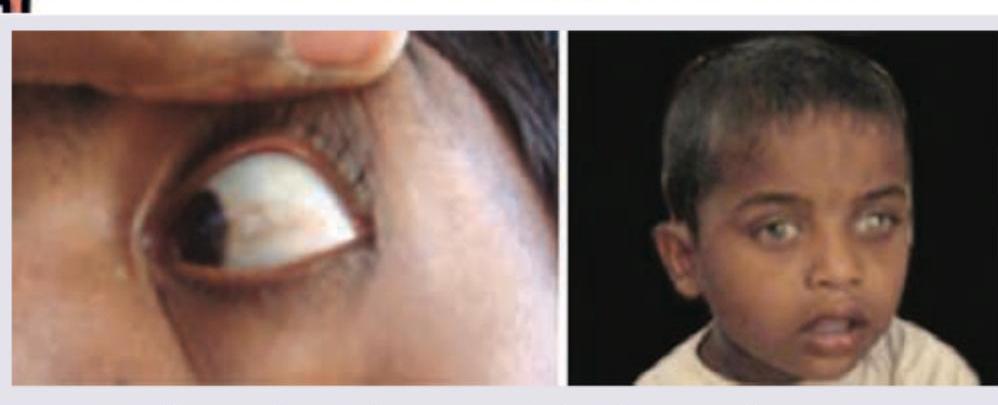
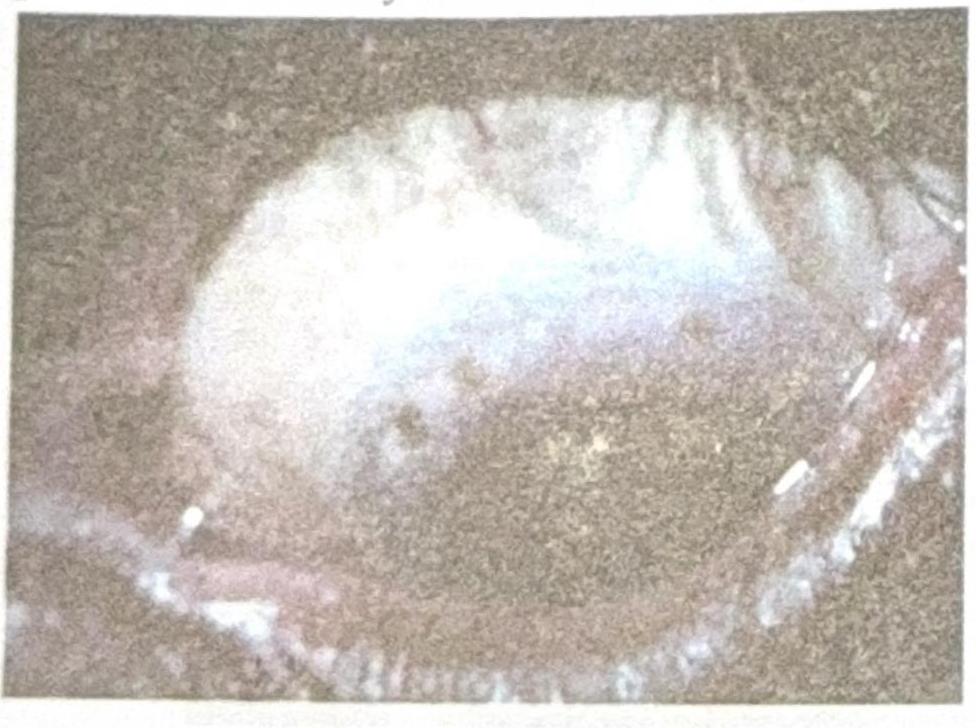
A 7-year-old patient presents with a conjunctival nodule, with a history of previous TB treatment. The nodule has now encroached onto the limbus. What is the most likely diagnosis?
Infection of which structure is called a stye?
Ophthalmia nodosa is seen with which of the following conditions?
Conjunctiva in vitamin A deficiency shows which of the following changes?
Follicle formation may be seen in all of the following except?
Which of the following is NOT a causative agent of acute hemorrhagic conjunctivitis?
What is the most common malignant cancer of the conjunctiva?
Which of the following clinical conditions is associated with Herbert's pits?
Conjunctival xerosis is seen in which of the following conditions?
All are complications of ulcerative blepharitis except?
Explanation: **Explanation:** **Phlyctenular Keratoconjunctivitis (PKC)** is the most likely diagnosis. It is a **Type IV delayed hypersensitivity reaction** of the conjunctiva and cornea to endogenous microbial proteins. In developing countries like India, the most common allergen is **Tuberculoprotein** (from *Mycobacterium tuberculosis*), while in developed nations, it is often *Staphylococcus aureus*. * **Why it is correct:** The patient’s age (common in children), history of TB, and the clinical presentation of a nodule at the limbus are classic for PKC. The "phlycten" typically starts as a small, pinkish-white nodule surrounded by a zone of hyperemia, often located at or near the limbus. **Analysis of Incorrect Options:** * **Trachoma:** Caused by *Chlamydia trachomatis* (Serotypes A-C). It presents with follicles and papillae on the upper tarsal conjunctiva, not a solitary limbal nodule. * **Vernal Keratoconjunctivitis (VKC):** A Type I IgE-mediated hypersensitivity. While it can present with limbal nodules (Horner-Trantas dots), these are usually multiple, transient, and associated with intense itching and "cobblestone" papillae. * **Limbal Stem Cell Deficiency:** Presents with conjunctivalization of the cornea and loss of limbal palisades, usually following chemical burns or chronic inflammation, not as an acute nodule. **High-Yield Clinical Pearls for NEET-PG:** * **Triad of PKC:** Photophobia, lacrimation, and blepharospasm (more severe when the cornea is involved). * **Fascicular Ulcer:** A characteristic wandering ulcer formed when a limbal phlycten moves towards the center of the cornea, carrying a leash of blood vessels behind it. * **Management:** Topical steroids for the nodule; however, always rule out or treat the underlying systemic cause (e.g., Chest X-ray/Mantoux test for TB).
Explanation: **Explanation:** A **stye**, medically known as a **Hordeolum Externum**, is an acute, focal, pyogenic inflammation of the eyelid margin. It is most commonly caused by a *Staphylococcus aureus* infection. **Why Zeis glands is the correct answer:** A stye specifically involves the infection of the **glands of Zeis** (sebaceous glands) or the **glands of Moll** (modified sweat glands) located at the base of the eyelashes. While it is anatomically associated with the lash follicle, the primary site of the abscess formation is the glandular tissue. Therefore, in the context of NEET-PG, the Zeis gland is the definitive pathological site. **Analysis of Incorrect Options:** * **A. Hair follicles:** While the infection occurs *at* the lash follicle, the term "stye" specifically refers to the infection of the associated glands (Zeis/Moll). * **B. Tarsal gland:** Infection of the tarsal (Meibomian) glands is called a **Hordeolum Internum**. Chronic granulomatous inflammation of these glands is known as a **Chalazion**. * **C. Conjunctiva:** Inflammation of the conjunctiva is termed **Conjunctivitis**, which presents with diffuse hyperemia rather than a localized lid abscess. **High-Yield Clinical Pearls for NEET-PG:** * **Hordeolum Externum (Stye):** Painful, localized, points **outwards** (towards the skin). * **Hordeolum Internum:** Painful, localized, points **inwards** (towards the conjunctiva). * **Chalazion:** Painless, firm, non-tender nodule; it is a sterile lipogranulomatous inflammation (not an acute infection). * **Treatment:** Most styes are self-limiting; management includes warm compresses and topical antibiotics. If pointing occurs, evacuation of pus by pulling the affected eyelash is effective.
Explanation: **Explanation:** **Ophthalmia nodosa** is a granulomatous inflammatory reaction of the eye caused by the penetration of **caterpillar hairs** (setae) or certain plant hairs into the ocular tissues. 1. **Why the correct answer is right:** Caterpillar hairs possess tiny barbs that allow them to migrate deeper into the eye (conjunctiva, cornea, or even the iris and vitreous). The body reacts to these foreign bodies by forming **yellowish-grey nodules** (granulomas) in the conjunctiva, hence the name "nodosa." This is a classic example of a foreign body granulomatous reaction. 2. **Analysis of incorrect options:** * **Onchocerciasis (River Blindness):** Caused by the nematode *Onchocerca volvulus*. While it causes ocular inflammation (keratitis, uveitis), it does not present as Ophthalmia nodosa. * **Pseudoexfoliation syndrome:** A systemic condition characterized by the deposition of white, flaky amyloid-like material on the anterior segment (lens capsule, pupillary margin). It is associated with glaucoma, not granulomatous nodules. * **Pinguecula:** A common degenerative condition of the conjunctiva caused by UV exposure, appearing as a yellowish-white deposit near the limbus. It is not an inflammatory reaction to foreign hairs. **High-Yield Clinical Pearls for NEET-PG:** * **Mechanism:** The hairs migrate due to their barbed structure and the mechanical action of blinking. * **Pathology:** Histology shows a **Type IV hypersensitivity** (granulomatous) reaction with giant cells surrounding the hair. * **Management:** Immediate removal of visible hairs. If hairs migrate intraocularly, they can cause severe endophthalmitis-like reactions requiring surgical intervention. * **Differential Diagnosis:** Often confused with Parinaud’s Oculoglandular Syndrome, but the history of contact with insects/caterpillars is key.
Explanation: **Explanation:** Vitamin A (Retinol) is essential for maintaining the integrity of epithelial surfaces. In the eye, it acts as a differentiating agent for the conjunctival and corneal epithelium. **Why Option A is Correct:** Vitamin A deficiency leads to a process called **Squamous Metaplasia**. Under normal conditions, the conjunctiva is composed of non-keratinized stratified columnar epithelium. When Vitamin A is deficient, there is a loss of mucus-secreting goblet cells and a transformation of the epithelium into a **keratinized stratified squamous** type. This involves **hyperplasia of the squamous epithelium**, leading to the characteristic dryness (Xerosis) and the formation of Bitot’s spots (keratin debris). **Why Other Options are Incorrect:** * **B. Actinic degeneration:** This refers to damage caused by UV radiation, typically seen in conditions like Pinguecula or Pterygium, not nutritional deficiencies. * **C. Macrophage infiltration:** While chronic inflammation may involve macrophages, the hallmark histological change in Xerophthalmia is epithelial transformation (metaplasia), not primary histiocytic infiltration. * **D. Hyperplasia of goblet cells:** This is the opposite of what occurs. Vitamin A deficiency causes a **marked decrease or total loss** of goblet cells, which is the primary reason for the loss of the tear film’s mucin layer. **High-Yield Clinical Pearls for NEET-PG:** * **WHO Classification (Xerophthalmia):** X1A (Conjunctival xerosis), X1B (Bitot’s spots), X2 (Corneal xerosis), X3A/B (Keratomalacia). * **Bitot’s Spots:** Triangular, foamy, silvery-white patches usually located on the **temporal** bulbar conjunctiva. * **Earliest Symptom:** Night blindness (Nyctalopia). * **Earliest Sign:** Conjunctival xerosis (loss of luster). * **Treatment:** WHO schedule (200,000 IU orally on days 0, 1, and 14 for children >1 year).
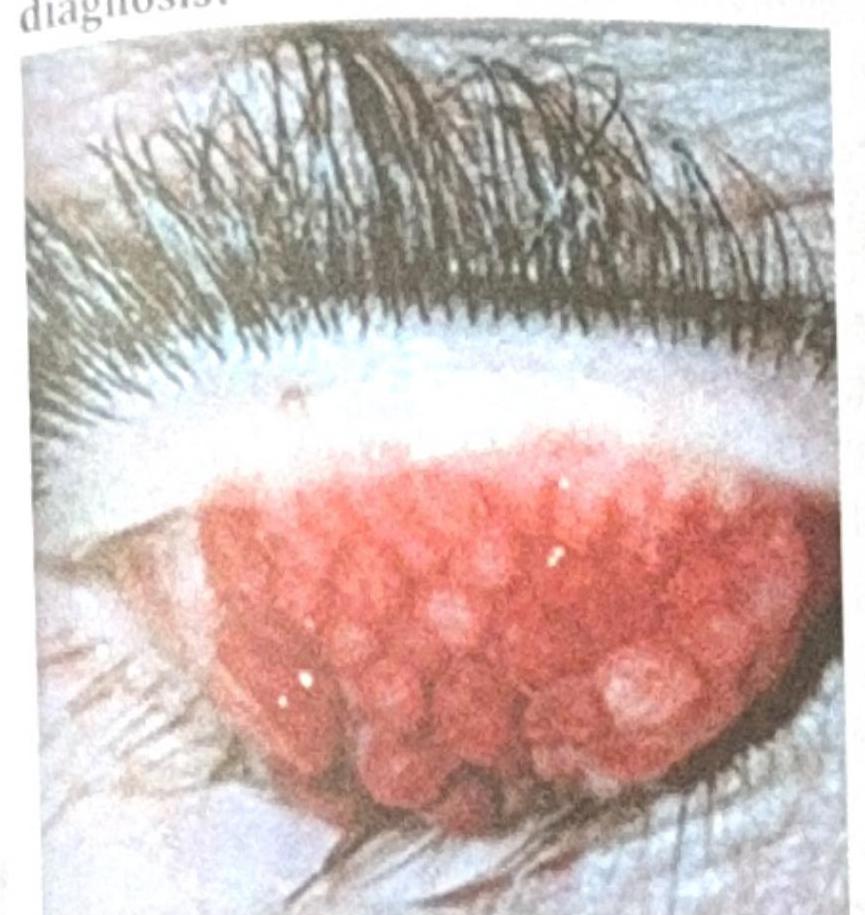
Explanation: **Explanation:** The core concept tested here is the differentiation between **Follicular** and **Papillary** conjunctival responses. **Why Vernal Keratoconjunctivitis (VKC) is the correct answer:** VKC is a Type I hypersensitivity reaction (allergic). The hallmark clinical finding in VKC is **Papillae** formation (specifically "cobblestone" papillae on the superior tarsal conjunctiva). Papillae are vascular structures with a central fibrovascular core, whereas follicles are lymphoid aggregates. Therefore, VKC does not typically present with follicles. **Analysis of Incorrect Options:** * **Trachoma (Option A):** Caused by *Chlamydia trachomatis* (Serotypes A, B, Ba, C). It is a classic cause of follicular conjunctivitis, particularly involving the upper tarsal conjunctiva. * **Inclusion Conjunctivitis (Option C):** Caused by *Chlamydia trachomatis* (Serotypes D-K). It presents as an acute follicular conjunctivitis, typically involving the inferior fornix. * **Epidemic Keratoconjunctivitis (Option D):** Caused by Adenovirus (Types 8, 19, 37). Viral infections are the most common cause of acute follicular conjunctivitis. **High-Yield Clinical Pearls for NEET-PG:** * **Follicles:** Look like "grains of rice." They are subepithelial lymphoid follicles (B-cells/T-cells) and **lack** a central vessel (vessels run over the surface). * **Causes of Follicles:** Remember the mnemonic **"CHAV"**: **C**hlamydia, **H**erpes simplex, **A**denovirus, and **V**ariations (Toxic/Molluscum). * **Papillae:** Have a "red dot" in the center (central vessel). Seen in **Allergic** conditions (VKC, GPC) and **Bacterial** conjunctivitis. * **Herbert’s Pits:** These are scarred follicles at the limbus, pathognomonic for Trachoma.
Explanation: **Explanation:** **Acute Hemorrhagic Conjunctivitis (AHC)** is a highly contagious, self-limiting viral infection characterized by sudden onset, painful conjunctival inflammation, and prominent subconjunctival hemorrhages. **1. Why Reovirus is the Correct Answer:** Reoviruses (Respiratory Enteric Orphan viruses) are generally associated with mild respiratory or gastrointestinal infections in humans but are **not** recognized as causative agents for acute hemorrhagic conjunctivitis. Therefore, it is the "except" in this list. **2. Analysis of Incorrect Options:** * **Enterovirus 70:** This is the most common and classic cause of AHC. It was first identified during a major pandemic in 1969. * **Coxsackievirus A24:** This is the second most common cause and is responsible for numerous large-scale outbreaks, particularly in tropical regions. * **Adenovirus:** Specifically **Serotype 11** (and occasionally 37) is known to cause a hemorrhagic variant of conjunctivitis, though Adenoviruses more typically cause Pharyngoconjunctival Fever (Types 3, 7) or Epidemic Keratoconjunctivitis (Types 8, 19, 37). **Clinical Pearls for NEET-PG:** * **Incubation Period:** Extremely short (12–48 hours). * **Key Sign:** Multiple petechial hemorrhages that may coalesce to involve the entire bulbar conjunctiva. * **Neurological Association:** Enterovirus 70 is uniquely associated with a rare, polio-like **radiculomyelitis** (lower motor neuron paralysis) occurring weeks after the conjunctivitis. * **Management:** Purely supportive; topical steroids are contraindicated as they may promote viral replication or secondary keratitis.
Explanation: **Explanation:** **Squamous Cell Carcinoma (SCC)** is the most common primary malignant tumor of the conjunctiva. It typically arises from **Conjunctival Intraepithelial Neoplasia (CIN)**, often at the limbus within the interpalpebral fissure. The primary risk factors include chronic exposure to ultraviolet (UV-B) radiation, Human Papillomavirus (HPV) types 16 and 18, and immunosuppression (e.g., HIV/AIDS). Clinically, it presents as a pearly-white, fleshy mass with "feeder vessels" and can be plaque-like, nodular, or fungating. **Analysis of Incorrect Options:** * **Basal Cell Carcinoma (BCC):** While BCC is the most common malignancy of the **eyelids**, it does not arise from the conjunctiva because the conjunctiva lacks the hair follicles and sebaceous structures from which BCC originates. * **Dermoid:** A limbal dermoid is a common **benign** congenital choristoma (normal tissue in an abnormal location), not a malignancy. It is often associated with Goldenhar syndrome. * **Papilloma:** This is a **benign** epithelial tumor. While it can be associated with HPV, it is not a cancerous lesion. **High-Yield Clinical Pearls for NEET-PG:** * **Gold Standard Diagnosis:** Incisional or excisional biopsy. * **Treatment:** Wide local excision using the "No-touch technique" combined with cryotherapy to the margins. * **Adjuvant Therapy:** Topical Mitomycin-C (MMC), 5-Fluorouracil (5-FU), or Interferon alpha-2b are used to prevent recurrence. * **Precursor Lesion:** CIN is also known as "Bowen’s disease of the conjunctiva" when it involves the full thickness of the epithelium.
Explanation: **Explanation:** **Herbert’s pits** are a pathognomonic clinical sign of **Trachoma**, a chronic keratoconjunctivitis caused by *Chlamydia trachomatis* (serotypes A, B, Ba, and C). ### Why Trachoma is Correct: In the active stage of Trachoma (Stage TF/TI), lymphoid follicles develop at the upper limbus. As the disease progresses to the cicatricial stage, these limbal follicles undergo necrosis and heal by scarring. The resulting small, circular, shallow depressions filled with transparent epithelial tissue are known as **Herbert’s pits**. They are most clearly visible at the superior limbus. ### Why Other Options are Incorrect: * **Psoriasis:** While it can cause non-specific blepharitis or conjunctivitis, it does not produce limbal follicles or the characteristic pitting seen in Trachoma. * **Vernal Keratoconjunctivitis (VKC):** This is characterized by **Horner-Trantas dots** (white limbal dots consisting of eosinophils and epithelial debris) and "cobblestone" papillae, rather than Herbert's pits. * **Fungal Keratitis:** This presents with corneal ulcers featuring feathery margins and satellite lesions, but does not involve the specific limbal scarring process of Trachoma. ### NEET-PG High-Yield Pearls: * **Arlt’s Line:** Horizontal scarring on the superior palpebral conjunctiva (also seen in Trachoma). * **SAFE Strategy:** WHO-recommended management (Surgery, Antibiotics, Facial cleanliness, Environmental improvement). * **Drug of Choice:** Single dose of Oral Azithromycin (20 mg/kg). * **Classification:** The WHO simplified grading system (TF, TI, TS, TT, CO) is frequently tested.
Explanation: **Explanation:** **Conjunctival Xerosis** refers to a dry, non-wettable condition of the conjunctiva resulting from a deficiency in mucin production or structural damage to the ocular surface. 1. **Vitamin A Deficiency (Xerophthalmia):** This is the most common cause. Vitamin A is essential for the health of goblet cells. Deficiency leads to squamous metaplasia of the conjunctival epithelium, loss of goblet cells, and subsequent mucin deficiency, causing the characteristic "dry, lusterless" appearance and Bitot’s spots. 2. **Trachoma:** In the cicatricial stage (Stage IV), chronic inflammation leads to extensive scarring of the conjunctiva. This destroys the goblet cells and the ducts of the lacrimal glands, resulting in secondary xerosis. 3. **Pemphigus/Cicatricial Pemphigoid:** These are autoimmune mucocutaneous blistering diseases. Chronic subepithelial fibrosis and symblepharon formation lead to the destruction of the accessory lacrimal glands and goblet cells, causing severe ocular surface dryness. **Why "All of the above" is correct:** Xerosis is classified into two types: **Parenchymatous** (due to local ocular disease like Trachoma, Pemphigus, or Stevens-Johnson Syndrome) and **Epithelial** (due to systemic Vitamin A deficiency). Since all three conditions listed lead to the destruction of the mucin-secreting apparatus, they all cause conjunctival xerosis. **High-Yield Clinical Pearls for NEET-PG:** * **Bitot’s Spots:** Triangular, foamy, silvery-white patches on the bulbar conjunctiva; pathognomonic for Vitamin A deficiency. * **WHO Classification of Xerophthalmia:** X1A (Conjunctival xerosis), X1B (Bitot’s spots), X2 (Corneal xerosis), X3A/B (Corneal ulceration/Keratomalacia). * **Goblet Cells:** Primarily located in the crypts of Henle and glands of Manz; their loss is the hallmark of early xerosis.
Explanation: **Explanation:** Ulcerative blepharitis is a chronic staphylococcal infection of the lash follicles and associated glands (Zeis and Moll). It is characterized by hard, brittle crusts at the base of the lashes which, when removed, leave behind bleeding ulcers. **Why Poliosis is the correct answer:** **Poliosis** refers to the premature whitening or graying of eyelashes or hair. It is typically associated with conditions like Vogt-Koyanagi-Harada (VKH) syndrome, Waardenburg syndrome, or vitiligo. While it involves the hair follicle, it is not a direct pathological complication of the inflammatory/cicatricial process seen in staphylococcal ulcerative blepharitis. **Analysis of incorrect options (Complications of Ulcerative Blepharitis):** * **Madarosis:** The chronic inflammation and ulceration destroy the hair follicles, leading to permanent loss of eyelashes. * **Tylosis:** Chronic inflammation leads to hypertrophy and inflammatory thickening of the lid margin, making it look "heavy." * **Trichiasis:** Healing of the ulcers by fibrosis causes scarring, which misdirects the eyelashes toward the cornea. **High-Yield Clinical Pearls for NEET-PG:** * **Etiology:** Most commonly caused by *Staphylococcus aureus*. * **Distinction:** Unlike Squamous (seborrheic) blepharitis, Ulcerative blepharitis is characterized by **bleeding ulcers** upon crust removal and permanent structural changes (Madarosis/Trichiasis). * **Other complications:** Ectropion (due to scarring of the skin) and chronic papillary conjunctivitis. * **Treatment:** Strict lid hygiene and topical antibiotic ointments (e.g., Bacitracin or Erythromycin).
Conjunctivitis: Bacterial
Practice Questions
Conjunctivitis: Viral
Practice Questions
Conjunctivitis: Allergic
Practice Questions
Conjunctivitis: Chronic
Practice Questions
Degenerations of Conjunctiva
Practice Questions
Benign Tumors of Conjunctiva
Practice Questions
Malignant Tumors of Conjunctiva
Practice Questions
Conjunctival Manifestations of Systemic Diseases
Practice Questions
Cicatricial Conjunctival Disorders
Practice Questions
Pterygium and Pinguecula
Practice Questions
Conjunctival Trauma
Practice Questions
Subconjunctival Hemorrhage
Practice Questions
Get full access to all questions, explanations, and performance tracking.
Start For Free