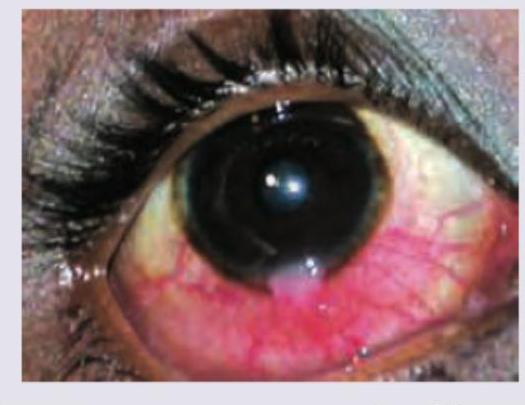
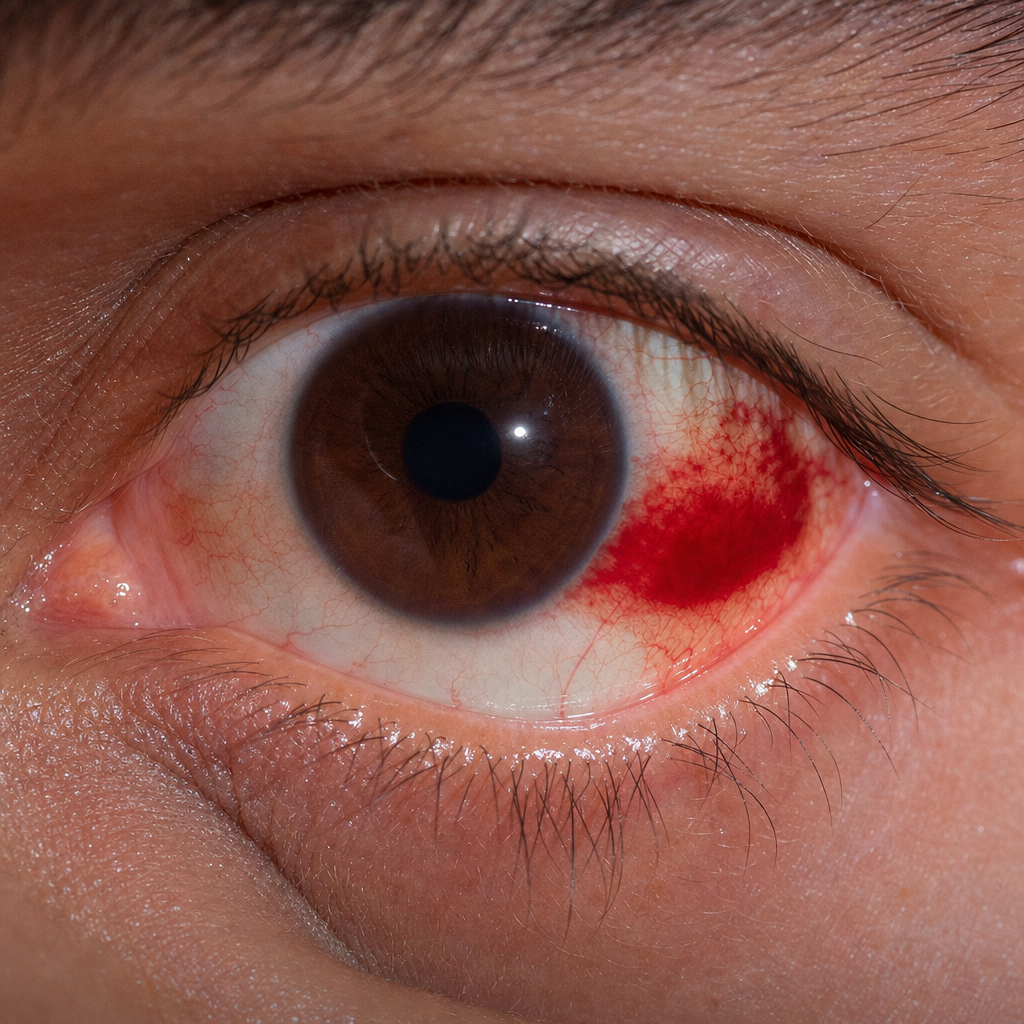
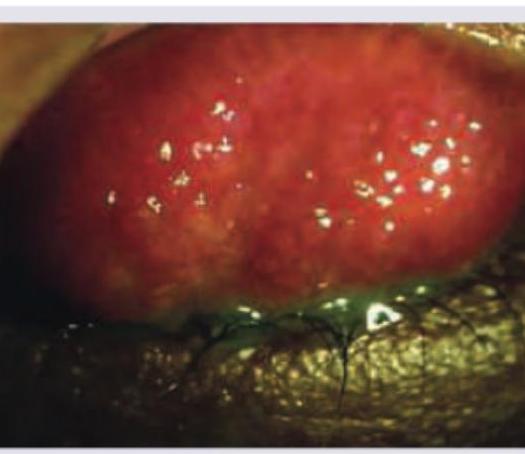
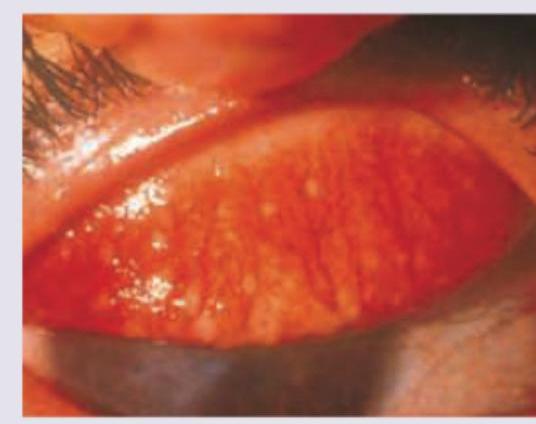
Which is the most common etiologic agent of Phlyctenular conjunctivitis?
Conjunctival xerosis is seen in all of the following except?
Which of the following is NOT a feature of Ocular Mucous Membrane Pemphigoid?
Which of the following is NOT a corneal sign of trachoma?
Blepharitis acarica is caused by which of the following?
Cicatrising trachoma is seen in which stage?
Which of the following is NOT true regarding epidemic keratoconjunctivitis?
Arlt's line is seen in which condition?
Herbert's pits are seen in which condition?
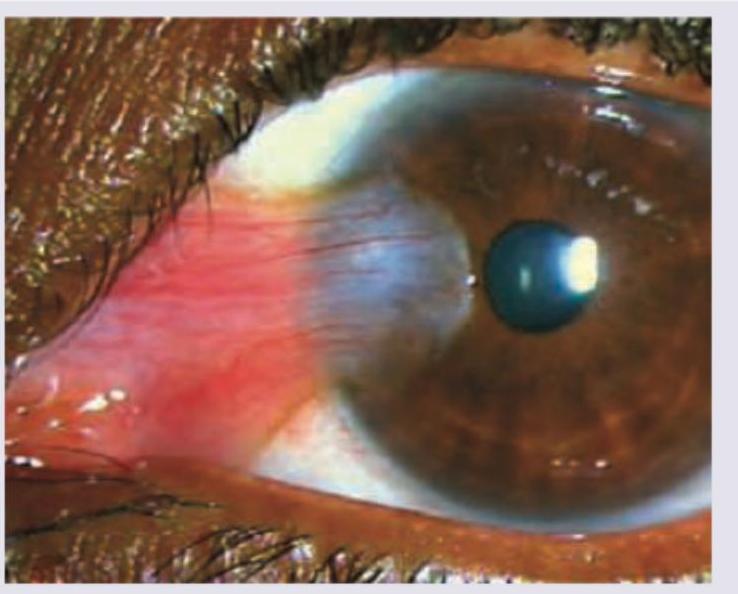
Diagnosis of the given condition is:

Explanation: **Explanation:** **Phlyctenular Keratoconjunctivitis** is a localized **Type IV hypersensitivity reaction** (delayed hypersensitivity) of the conjunctiva and cornea to endogenous microbial proteins to which the tissues have become sensitized. 1. **Why Bacterial is correct:** Historically, *Mycobacterium tuberculosis* was the most common cause worldwide. However, in modern clinical practice and especially in developed regions, **Staphylococcus aureus** (bacterial) has emerged as the most common etiologic agent. The reaction is triggered by the bacterial cell wall proteins. 2. **Why Tuberculous is incorrect:** While Tuberculosis remains a significant cause in developing countries (and is often the second most common cause), it is no longer the leading agent globally compared to the prevalence of Staphylococcal blepharoconjunctivitis. 3. **Why Fungal and Protozoal are incorrect:** These organisms do not typically trigger the specific delayed hypersensitivity response seen in phlyctenulosis. Other rare causes include *Chlamydia*, *Coccidioides immitis*, and certain parasites, but they are statistically insignificant compared to bacterial triggers. **Clinical Pearls for NEET-PG:** * **The Phlycten:** Characteristically starts as a small, pinkish-white nodule surrounded by a zone of hyperemia, usually near the limbus. * **Pathology:** The nodule is a subepithelial infiltration of **lymphocytes and plasma cells**. * **Symptoms:** Intense photophobia and lacrimation occur if the cornea is involved (Fascicular ulcer). * **Treatment:** Topical steroids (to control the hypersensitivity) and treatment of the underlying cause (e.g., lid hygiene for Staphylococcal blepharitis or systemic ATT for Tuberculosis).
Explanation: **Explanation:** **Conjunctival Xerosis** refers to the dryness of the conjunctiva, which can be categorized into two types: **Parenchymatous xerosis** (due to local ocular disease/scarring) and **Epithelial xerosis** (due to systemic Vitamin A deficiency). **Why Sarcoidosis is the correct answer:** Sarcoidosis is a multisystem granulomatous disease that primarily affects the eye by causing **Uveitis** (most commonly chronic granulomatous anterior uveitis) and **Lacrimal gland enlargement**. While it can lead to dry eye (keratoconjunctivitis sicca) if the lacrimal glands are heavily infiltrated, it is not a classic or primary cause of conjunctival xerosis compared to the other options. In NEET-PG, Sarcoidosis is more frequently associated with "Mutton-fat" keratic precipitates and "Candle-wax drippings" on the retina. **Analysis of Incorrect Options:** * **Vitamin A Deficiency:** This is the most common cause of **Epithelial Xerosis**. Lack of Vitamin A leads to the loss of goblet cells and keratinization of the conjunctival epithelium, classically presenting with **Bitot’s spots**. * **Stevens-Johnson Syndrome (SJS):** This causes **Parenchymatous Xerosis**. Extensive scarring and destruction of goblet cells and accessory lacrimal glands lead to severe ocular surface dryness and symblepharon. * **Keratoconjunctivitis Sicca (KCS):** This is the clinical hallmark of dry eye syndrome. It involves a deficiency in the aqueous layer of the tear film, leading directly to xerotic changes of the ocular surface. **High-Yield Clinical Pearls for NEET-PG:** 1. **Bitot’s Spots:** Triangular, foamy, silvery-white patches on the bulbar conjunctiva; a pathognomonic sign of Vitamin A deficiency. 2. **Parenchymatous Xerosis** is also seen in Trachoma (Stage IV), Ocular Pemphigoid, and chemical burns. 3. **Schirmer’s Test:** Used to quantify tear production; <5mm in 5 minutes is diagnostic of severe dry eye.
Explanation: **Explanation:** **Ocular Mucous Membrane Pemphigoid (OMMP)** is a chronic, progressive, autoimmune cicatrizing conjunctivitis. The correct answer is **D (Type 1 hypersensitivity)** because OMMP is actually a **Type II hypersensitivity reaction**. It involves the formation of autoantibodies (IgG, IgA, or C3) against the basement membrane zone (specifically the BP180 protein) of the conjunctival epithelium, leading to subepithelial fibrosis. **Analysis of Options:** * **A. Loss of fornices:** This is a hallmark feature. Chronic inflammation leads to subepithelial scarring, which causes shortening of the conjunctival fornices and eventually leads to **symblepharon** (adhesion between palpebral and bulbar conjunctiva). * **B. Lid: Trichiasis and Entropion:** Cicatrization (scarring) of the palpebral conjunctiva causes the eyelid margin to turn inward (**entropion**), which subsequently causes the lashes to rub against the cornea (**trichiasis**). * **C. Involvement of oral mucosa:** OMMP is a systemic mucosal disease. The oral mucosa is the most common site of extraocular involvement (seen in ~90% of cases), often presenting as desquamative gingivitis. **High-Yield Clinical Pearls for NEET-PG:** * **Diagnosis:** Confirmed by **Direct Immunofluorescence (DIF)** of a conjunctival biopsy showing linear deposition of antibodies at the basement membrane. * **End-stage:** Can lead to **Ankyloblepharon** (fusion of the lid margins) and total surface failure with corneal keratinization (xerosis). * **Management:** Systemic immunosuppression (e.g., Dapsone, Methotrexate, or Cyclophosphamide) is the mainstay of treatment to halt progression. Avoid surgery during the active inflammatory phase.
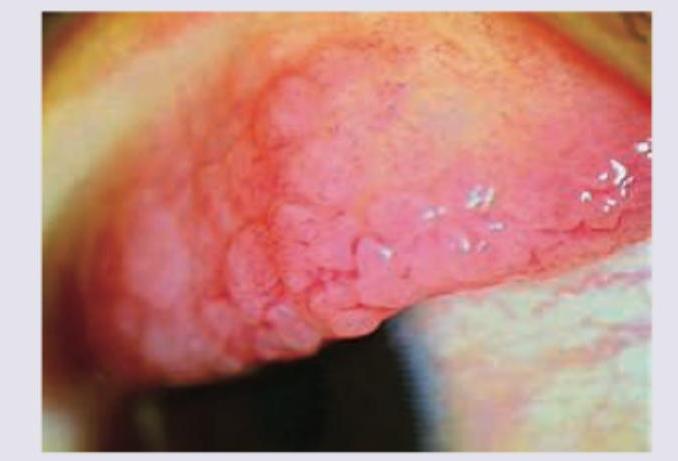
Explanation: **Explanation:** The question asks for the option that is **NOT** a corneal sign of trachoma. **1. Why Arlt’s Line is the Correct Answer:** Arlt’s line is a **conjunctival sign**, not a corneal sign. It is a horizontal band of scar tissue (cicatrization) typically found in the upper tarsal conjunctiva, running parallel to the lid margin at the junction of the anterior one-third and posterior two-thirds. It is a hallmark of the cicatricial stage of Trachoma (WHO Stage TS). **2. Analysis of Incorrect Options (Corneal Signs):** * **Herbert’s Pits (Option A - likely a typo for "Herbert's follicles"):** These are lymphoid follicles at the limbus. When they heal, they leave behind pathognomonic shallow depressions known as **Herbert’s pits**. These are considered corneal/limbal signs. * **Pannus (Option B):** Trachomatous pannus is an active vascularization and infiltration of the upper part of the cornea. It is a classic corneal involvement in the progressive stage. * **Opacity (Option C):** Chronic inflammation and pannus eventually lead to corneal opacification and scarring, which is a major cause of blindness in trachoma. **3. High-Yield Clinical Pearls for NEET-PG:** * **Causative Agent:** *Chlamydia trachomatis* (Serotypes A, B, Ba, and C). * **SAFE Strategy:** **S**urgery (for trichiasis), **A**ntibiotics (Azithromycin), **F**acial cleanliness, **E**nvironmental improvement. * **WHO Grading (FIST):** **F**ollicles, **I**ntense Inflammation, **S**carring (Arlt's line), **T**richiasis, Corneal **O**pacity. * **Pathognomonic Sign:** Herbert’s pits are the most specific corneal sign of past trachoma.
Explanation: **Explanation:** **Blepharitis acarica** refers specifically to a chronic inflammation of the eyelid margins caused by an infestation of mites. **Why Demodex folliculorum is correct:** The term "acarica" is derived from *Acarina*, the subclass of arachnids that includes mites and ticks. **Demodex folliculorum** (found in hair follicles) and **Demodex brevis** (found in sebaceous/meibomian glands) are the primary causative agents. These mites reside at the base of the eyelashes, leading to mechanical blockage and delayed hypersensitivity reactions. A pathognomonic clinical sign of Demodex infestation is **cylindrical dandruff** (clear sleeves/collarettes) surrounding the base of the lashes. **Why the other options are incorrect:** * **A. Streptococcus:** This is a bacterium responsible for acute ulcerative blepharitis, characterized by yellow crusts and bleeding on removal, rather than parasitic infestation. * **B. Ascaris:** This is an intestinal nematode (roundworm). While it can cause systemic allergic manifestations, it does not cause blepharitis. * **C. Propionibacterium (Cutibacterium acnes):** This bacterium is often associated with acne vulgaris and chronic endophthalmitis but is not the primary cause of blepharitis acarica. **High-Yield Clinical Pearls for NEET-PG:** * **Pathognomonic Sign:** Cylindrical dandruff (collarettes) at the lash base. * **Symptoms:** Itching (worse in the morning), burning, and "madarosis" (loss of lashes). * **Treatment of Choice:** **Tea Tree Oil** (scrubs or 50% solution) is the most effective treatment as it kills the mites. Oral Ivermectin may be used in resistant cases. * **Associated Condition:** Strongly linked with **Ocular Rosacea**.
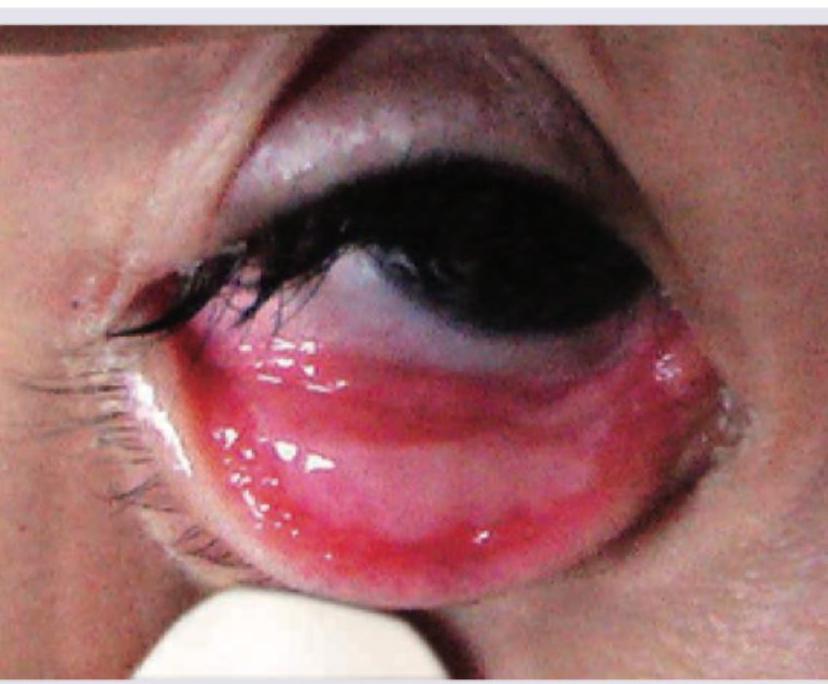
Explanation: **Explanation:** Trachoma, caused by *Chlamydia trachomatis* (serotypes A, B, Ba, and C), is traditionally classified using the **McCallan Classification**, which divides the clinical course into four stages based on conjunctival changes. * **Stage 3 (Stage of Cicatrization):** This is the correct answer. This stage is characterized by the presence of **scarring (cicatrization)** of the palpebral conjunctiva. A hallmark finding here is **Arlt’s line**, a horizontal band of scarring located at the junction of the anterior one-third and posterior two-thirds of the tarsal conjunctiva. This scarring eventually leads to complications like trichiasis and entropion. **Analysis of Incorrect Options:** * **Stage 1 (Incipient Trachoma):** Characterized by immature follicles on the upper tarsal conjunctiva and early corneal changes (superficial keratitis). No scarring is present. * **Stage 2 (Established Trachoma):** Defined by mature follicles and papillary hypertrophy. It is the stage of active inflammation. * **Stage 4 (Stage of Sequelae):** This is the stage of "healed trachoma." The disease is inactive, and the patient presents with the late-stage consequences of scarring, such as corneal opacity and xerosis. **High-Yield Clinical Pearls for NEET-PG:** * **WHO Classification (FISTO):** Remember the mnemonic for active/chronic stages: **F**ollicular, **I**ntense inflammation, **S**carring, **T**richiasis, **O**pacity. * **Herbert’s Pits:** These are pathognomonic clinical signs of trachoma, representing scarred-down limbal follicles. * **Treatment:** The drug of choice is a single dose of **Azithromycin** (20 mg/kg). * **SAFE Strategy:** WHO-recommended strategy for control: **S**urgery, **A**ntibiotics, **F**acial cleanliness, **E**nvironmental improvement.
Explanation: **Explanation:** Epidemic Keratoconjunctivitis (EKC) is a highly contagious, severe form of viral conjunctivitis. **1. Why Enterovirus is the correct answer (The "NOT" true statement):** EKC is caused by **Adenovirus**, specifically serotypes **8, 19, and 37**. Enteroviruses (such as Enterovirus 70 and Coxsackievirus A24) are the causative agents of **Acute Hemorrhagic Conjunctivitis (AHC)**, which is characterized by rapid onset and prominent subconjunctival hemorrhages, rather than the chronic corneal involvement seen in EKC. **2. Analysis of other options:** * **Superficial Punctate Keratitis (SPK):** This is the initial corneal manifestation of EKC, occurring within the first week of infection due to active viral replication in the epithelium. * **Pseudomembrane formation:** Severe inflammation in EKC often leads to the formation of pseudomembranes (fibrinous exudate on the palpebral conjunctiva). If left untreated, these can lead to conjunctival scarring. * **Subepithelial Infiltrates (SEIs):** These are a hallmark of EKC, appearing around day 11–15. They represent an immune response to viral antigens and can persist for months, causing blurred vision and glare. **Clinical Pearls for NEET-PG:** * **Rule of 8:** EKC is often associated with Adenovirus type 8; symptoms typically appear 8 days after exposure; and the first 8 days are the most infectious. * **Preauricular Lymphadenopathy:** A classic clinical sign of viral conjunctivitis (including EKC). * **Treatment:** Primarily supportive. Topical steroids are reserved for vision-threatening SEIs or dense pseudomembranes but should be used cautiously as they may prolong viral shedding.
Explanation: **Explanation:** **Arlt’s line** is a classic clinical sign of **Trachoma**, a chronic keratoconjunctivitis caused by *Chlamydia trachomatis* (serotypes A, B, Ba, and C). It represents a horizontal band of scar tissue (cicatrization) located in the upper tarsal conjunctiva, specifically at the junction of the anterior one-third and posterior two-thirds. It occurs due to the healing of lymphoid follicles and chronic inflammation, leading to the contraction of the conjunctiva. **Analysis of Options:** * **Trachoma (Correct):** Characterized by the "SAFE" strategy. Arlt’s line is a hallmark of the cicatricial stage (WHO Stage: Trachomatous scarring - TS). * **Vernal Keratoconjunctivitis (VKC):** Associated with "cobblestone" papillae on the superior tarsal conjunctiva and Horner-Tranta’s dots at the limbus, but not linear scarring like Arlt’s line. * **Pterygium:** A degenerative condition involving a fibrovascular proliferation of the subconjunctival tissue onto the cornea (Stocker’s line may be seen here). * **Ocular Pemphigoid:** A chronic cicatrizing conjunctivitis that leads to symblepharon and ankyloblepharon, but the scarring is diffuse and involves the fornices rather than forming a specific horizontal line on the tarsus. **High-Yield Clinical Pearls for Trachoma:** 1. **Herbert’s Pits:** Small circular depressions on the limbus (pathognomonic) representing healed follicles. 2. **Sago-grain follicles:** Typical appearance of follicles in the upper tarsal conjunctiva. 3. **Pannus:** Vascularization of the upper part of the cornea. 4. **Entropion and Trichiasis:** Common late complications due to conjunctival scarring. 5. **Treatment:** Single dose of Oral Azithromycin (20 mg/kg) is the drug of choice.
Explanation: **Explanation:** **Herbert’s pits** are a pathognomonic clinical sign of **Trachoma**, a chronic keratoconjunctivitis caused by *Chlamydia trachomatis* (serotypes A, B, Ba, and C). They represent the late cicatricial stage of limbal follicles. During the active phase, lymphoid follicles form at the limbus; as these follicles heal, they undergo necrosis and are replaced by transparent fibrous tissue. This results in characteristic circular, shallow depressions or "pits" at the superior limbus. **Analysis of Incorrect Options:** * **B. Spring Catarrh (VKC):** Characterized by "cobblestone" papillae on the palpebral conjunctiva and **Horner-Trantas dots** (white limbal dots consisting of eosinophils and epithelial debris), not pits. * **C. Phlyctenular Conjunctivitis:** A type IV hypersensitivity reaction (often to Tubercular protein) presenting as a small, yellowish-grey nodule (phlycten) near the limbus, which may lead to a fascicular ulcer but not Herbert's pits. * **D. Sarcoidosis:** Can cause non-caseating granulomatous conjunctival nodules (often described as "mutton-fat" precipitates in the eye), but it is not associated with limbal follicular scarring. **High-Yield Clinical Pearls for NEET-PG:** * **Arlt’s Line:** Horizontal scarring of the superior palpebral conjunctiva (also seen in Trachoma). * **SAFE Strategy:** WHO-recommended management for Trachoma (**S**urgery, **A**ntibiotics—Azithromycin, **F**acial cleanliness, **E**nvironmental improvement). * **Pannus:** Trachomatous pannus is typically **superior** and progressive. * **Vector:** The common housefly (*Musca sorbens*) is the primary vector for transmission.
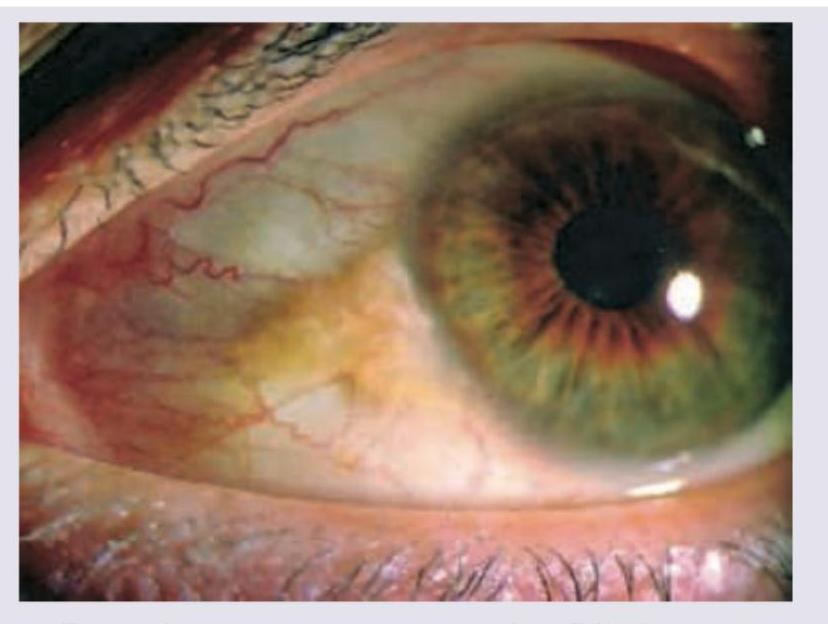
Explanation: ***Pterygium*** - A **triangular fibrovascular growth** that extends from the **conjunctiva onto the cornea**, crossing the **limbus** (junction between cornea and conjunctiva). - Typically grows from the **nasal side** and can cause **astigmatism** or **visual impairment** if it reaches the visual axis. *Episcleritis* - Presents as **localized redness** and **mild discomfort** without any growth or tissue proliferation. - It's a **vascular inflammation** of the episclera, not a fibrous growth extending onto the cornea. *Bitot spots* - Appear as **foamy, triangular patches** on the **bulbar conjunctiva** due to **vitamin A deficiency**. - They are **whitish-gray plaques** associated with **conjunctival xerosis**, not fibrovascular growths. *Pinguecula* - A **yellowish, elevated lesion** on the **bulbar conjunctiva** that does **not cross the limbus**. - It remains **confined to the conjunctiva** and does not extend onto the corneal surface like pterygium.
Conjunctivitis: Bacterial
Practice Questions
Conjunctivitis: Viral
Practice Questions
Conjunctivitis: Allergic
Practice Questions
Conjunctivitis: Chronic
Practice Questions
Degenerations of Conjunctiva
Practice Questions
Benign Tumors of Conjunctiva
Practice Questions
Malignant Tumors of Conjunctiva
Practice Questions
Conjunctival Manifestations of Systemic Diseases
Practice Questions
Cicatricial Conjunctival Disorders
Practice Questions
Pterygium and Pinguecula
Practice Questions
Conjunctival Trauma
Practice Questions
Subconjunctival Hemorrhage
Practice Questions
Get full access to all questions, explanations, and performance tracking.
Start For Free