Which of the following is NOT a core component of the WHO's global STI control strategy?
All of the following conditions are immediate priorities in the WHO's "Vision -2020: The Right to sight" except:
All are true about Swajaldhara programme except:
Which of the following procedures is not typically covered by the National Programme for Control of Blindness (NPCB) for reimbursement of surgery done by a non-governmental organization (NGO) eye hospital?
All of the following are the targets for National Programme for Control of Blindness (NPCB), EXCEPT:
Which of the following is recognized as the apex national institute of ophthalmology in India?
Under the WHO "Vision 2020" program, the "SAFE" strategy is adopted for which of the following diseases:
A boy presented with multiple non suppurative osteomyelitis with sickle cell anaemia. What will be the causative organism?
Vision 2020 "The right to sight" includes all except-
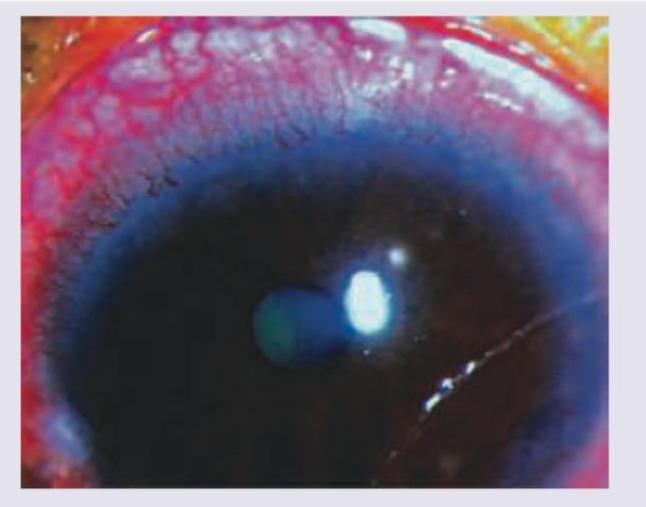
What does the following image show?
Explanation: ***Universal mandatory screening*** - While screening is part of STI control, **universal mandatory screening** for all STIs in the general population is not a core component of the WHO's strategy due to feasibility, cost, and ethical considerations. - The strategy emphasizes **targeted screening** for at-risk populations and opportunistic screening. *Case management* - **Case management**, including accurate diagnosis and effective treatment, is a critical component for managing current infections and preventing further transmission. - This involves syndromic or etiologic approaches to treatment and partner notification. *Strategic information systems* - **Strategic information systems** are essential for monitoring trends, evaluating interventions, and informing policy decisions related to STI control. - This includes surveillance data, program monitoring, and research. *Prevention services* - **Prevention services** are a cornerstone of the WHO's strategy, aiming to reduce the incidence of new infections. - These services encompass health education, condom promotion and distribution, vaccination, and pre-exposure prophylaxis (PrEP).
Explanation: ***Epidemic conjunctivitis*** - While **epidemic conjunctivitis** can cause significant discomfort and temporary vision impairment, it is generally **self-limiting** and rarely leads to permanent blindness. - It was not identified as one of the top five global causes of avoidable blindness targeted by the Vision 2020 initiative. *Cataract* - **Cataract** is the **leading cause of blindness** globally, accounting for approximately half of all cases. - It is a highly treatable condition through surgery, making it a critical priority for Vision 2020. *Onchocerciasis* - Also known as **river blindness**, onchocerciasis is a parasitic disease that causes severe visual impairment and blindness. - It is a significant public health problem in several regions, particularly in Africa, and was a key focus of Vision 2020 due to its widespread impact and the availability of preventive chemotherapy. *Trachoma* - **Trachoma** is the **leading infectious cause of blindness** worldwide, caused by *Chlamydia trachomatis*. - Given its preventable and treatable nature, and its prevalence in many impoverished areas, it was designated as one of the priority diseases under Vision 2020.
Explanation: ***State government maintain and manage all water supply*** - The **Swajaldhara programme** emphasizes a **community-driven approach**, where local communities are responsible for the operation and maintenance of the water supply systems. - This program aimed to shift away from complete government control, promoting **local ownership and sustainability**. *Encourage water harvesting practices* - The Swajaldhara scheme actively promoted and supported **water conservation methods**, including **rainwater harvesting**, to ensure the long-term availability of water resources. - This was an integral part of its strategy to enhance **water security** in rural areas. *Provide drinking water in Rural areas* - The primary objective of the Swajaldhara programme was to improve access to and the quality of **drinking water supplies** in **rural areas** of India. - It focused on providing safe and adequate drinking water to underserved rural populations. *Community led, participatory program* - Swajaldhara was designed as a **demand-driven and community-led initiative**, requiring beneficiaries to contribute to the capital cost and take responsibility for managing the water schemes. - This **participatory approach** fostered self-reliance and empowerment within the local communities.
Explanation: ***Syringing and probing of the nasolacrimal duct*** - While important for lacrimal drainage issues, procedures like **syringing and probing** are generally considered minor and less vision-restoring compared to the major surgeries targeted by the **NPCB**. - The **NPCB** focuses on interventions for leading causes of blindness, primarily **cataract** and other significant vision-threatening conditions, which this procedure typically isn't. *Cataract surgery* - **Cataract surgery** is a cornerstone of the **NPCB's** efforts, as cataracts are the leading cause of reversible blindness. - Reimbursement for **cataract surgery** is a primary objective to improve access and reduce the burden of blindness. *Pan retinal photocoagulation for diabetic retinopathy* - **Diabetic retinopathy** is a major cause of preventable blindness, and **pan retinal photocoagulation (PRP)** is a key intervention to preserve vision. - The **NPCB** includes procedures for **diabetic retinopathy** management due to its significant public health impact. *Trabeculectomy surgery* - **Trabeculectomy** is a surgical procedure for **glaucoma**, which is another significant cause of irreversible blindness. - The **NPCB** includes interventions for **glaucoma** given its severe vision-threatening nature and the need for surgical management in many cases.
Explanation: ***100% coverage of vitamin A prophylaxis doses from 9 months to 3 years of age*** - This objective is typically associated with the **Reproductive and Child Health (RCH) program** and efforts to combat **Vitamin A deficiency**, not directly with the core targets of the National Programme for Control of Blindness (NPCB). - While vitamin A deficiency can lead to blindness, the NPCB's primary focus has historically been on treatable causes of blindness such as **cataract** and **refractive errors**. *Development of 50 pediatric ophthalmic units* - The NPCB aims to **strengthen ophthalmic services**, and the development of specialized pediatric units is a crucial component to address childhood blindness. - This target aligns with the program's focus on **preventing and treating blindness** across all age groups, including children. *Increase cataract surgery rate to 450 operations per lakh population* - **Cataract** is the leading cause of blindness in India, and increasing the **cataract surgery rate** is a key strategic objective of the NPCB to reduce the burden of preventable blindness. - This specific numerical target reflects the program's commitment to **scaling up surgical interventions**. *Intraocular lens implantation in more than 80 percent cataract surgery cases* - The NPCB emphasizes not just the quantity but also the **quality of cataract surgeries** performed. - Promoting **intraocular lens (IOL) implantation** in a high percentage of cases ensures better visual outcomes and rehabilitation for patients.
Explanation: ***Dr. R P Centre for Ophthalmic Sciences, AIIMS, New Delhi*** - Dr. R P Centre for Ophthalmic Sciences at AIIMS, New Delhi, is widely recognized as the **apex national institute for ophthalmology in India**, leading in patient care, research, and education. - Its status is attributed to its comprehensive facilities, advanced research, and significant contributions to **ophthalmic training and healthcare policy** at a national level. *Shankara Netralaya, Chennai* - Though a highly reputed and large-scale eye hospital, Sankara Nethralaya is a **private, not-for-profit institution** and does not hold the official "apex national institute" designation. - It is renowned for its clinical excellence and research but primarily operates as a **tertiary care center** rather than a national apex body. *Advanced Eye Care, PGIMER, Chandigarh* - The Advanced Eye Centre at PGIMER, Chandigarh, is a prominent **regional institute** and a center of excellence in ophthalmology in North India. - While it provides high-quality care and education, it is not designated as the **national apex body** for ophthalmology across India. *Regional Institute of Ophthalmology (RIO)* - There are several Regional Institutes of Ophthalmology (RIOs) located across different states in India, established to provide **specialized eye care** and training within their respective regions. - Each RIO serves as a **regional hub**, but no single RIO represents the overall national apex institution for ophthalmology in India.
Explanation: ***Trachoma*** * The SAFE strategy is an acronym for **Surgery** for trichiasis, **Antibiotics** to treat infection (especially azithromycin), **Facial cleanliness**, and **Environmental improvement** to prevent transmission. * This comprehensive approach is central to the global elimination efforts for **trachoma**, as outlined by the WHO's Vision 2020 initiative. *Glaucoma* * Glaucoma management typically involves **medications (eye drops)** to lower intraocular pressure, laser therapy, or **surgery** to improve fluid drainage from the eye. * The SAFE strategy with its specific components (Surgery for trichiasis, Antibiotics, Facial cleanliness, Environmental improvement) is not applicable to the pathophysiology or treatment of **glaucoma**. *Onchocerciasis* * Onchocerciasis, or **river blindness**, is primarily controlled through mass drug administration of **ivermectin** to kill microfilariae and prevent new infections. * While both are Neglected Tropical Diseases causing blindness, the SAFE strategy is not designed for **onchocerciasis** prevention or treatment, which focuses on vector control and anthelmintic drugs. *Diabetic retinopathy* * Management of diabetic retinopathy focuses on **strict glycemic control**, managing blood pressure and lipids, and interventions such as **laser photocoagulation**, intravitreal injections of anti-VEGF agents, or vitrectomy for severe cases. * The term "SAFE strategy" with its specific interventions relates to bacterial infection control and environmental hygiene, which are not primary methods for managing **diabetic retinopathy**.
Explanation: ***Salmonella*** - **Salmonella species** are a well-known cause of **osteomyelitis** in patients with **sickle cell anemia**, due to factors like gut mucosal damage and functional asplenia. [1] - The unique pathophysiology of sickle cell disease, including areas of bone infarction and compromised reticulendothelial system function, predisposes these patients to **Salmonella infections**. [1] *Staphylococcus aureus* - While **Staphylococcus aureus** is the most common cause of osteomyelitis in the general population, it is less likely to be the causative organism in patients with **sickle cell anemia** compared to Salmonella. - Its presence usually indicates other predisposing factors like trauma or prosthetic devices. *H. influenzae* - **Haemophilus influenzae** was a common cause of osteomyelitis in children before widespread vaccination but is now rare, especially with routine immunizations. - It is not specifically associated with a higher risk in patients with **sickle cell disease** for osteomyelitis compared to other pathogens. *Enterobacter species* - **Enterobacter species** can cause osteomyelitis, particularly in immunocompromised individuals or following surgery, but they are not uniquely associated with **sickle cell anemia** as a primary cause compared to Salmonella. - Their involvement in non-suppurative osteomyelitis in this specific patient population is less common.
Explanation: ***Measles induced blindness*** - Vision 2020 primarily targets conditions that are either preventable or treatable with *cost-effective interventions* and contribute significantly to *avoidable blindness*. - While measles can cause blindness, the specific program focuses on a defined list of priority diseases for intervention, and measles-related blindness is generally addressed through broader public health initiatives (vaccination) rather than direct "right to sight" surgical or direct medical interventions for established blindness. *Onchocerciasis* - **Onchocerciasis** (river blindness) is a major focus of Vision 2020 due to its profound impact on sight, particularly in endemic areas. - It is a **preventable** and **treatable** cause of blindness through mass drug administration. *Trachoma* - **Trachoma** is recognized as one of the leading infectious causes of blindness globally and is explicitly targeted by Vision 2020 through the **SAFE strategy** (Surgery, Antibiotics, Facial cleanliness, Environmental improvement). - It is a highly **preventable** and **treatable** condition, fitting the program's objectives. *Cataract* - **Cataract** is the leading cause of blindness worldwide and is highly **treatable** through a relatively simple and cost-effective surgical procedure. - Providing cataract surgery is a cornerstone of the Vision 2020 initiative to restore sight.
Explanation: ***Pannus*** - The image distinctly shows **new blood vessels growing into the cornea** from the limbus, which is characteristic of pannus formation. This vascularization often accompanies chronic inflammation or hypoxia. - This condition is a hallmark of certain ophthalmic diseases, such as **trachoma** or chronic irritation from prolonged **contact lens wear**. *Anterior uveitis* - Anterior uveitis presents with inflammation of the iris and ciliary body, typically causing **ciliary flush**, **miosis**, and cells/flare in the anterior chamber, which are not the primary features shown. - While uveitis can sometimes lead to corneal changes, the prominent **vascularization extending onto the cornea** is not its defining visual characteristic. *Membranous conjunctivitis* - Membranous conjunctivitis is characterized by the formation of a **true membrane on the conjunctiva** that binds tightly to the underlying epithelium, often caused by severe bacterial infections like *Corynebacterium diphtheriae*. - The image does not show a membrane on the conjunctival surface; instead, it highlights **corneal vascularization**. *Pseudomembranous conjunctivitis* - Pseudomembranous conjunctivitis involves a **fibrinous exudate loosely adherent** to the conjunctiva, which can be peeled off without significant bleeding, as seen in adenoviral conjunctivitis. - The findings in the image, specifically **vascular ingrowth into the cornea**, are not consistent with the appearance of a pseudomembrane on the conjunctiva.
Get full access to all questions, explanations, and performance tracking.
Start For Free