All of the following are features of asteroid hyalosis except?
Ankyloblepharon is defined as:
Which of the following statements about the depth of the anterior chamber is FALSE?
What is the Zonula of Zinn?
Where are stem cells located in the cornea?
Which is the thinnest layer of the tear film?
All of the following structures of the eye are mesodermal in origin EXCEPT:
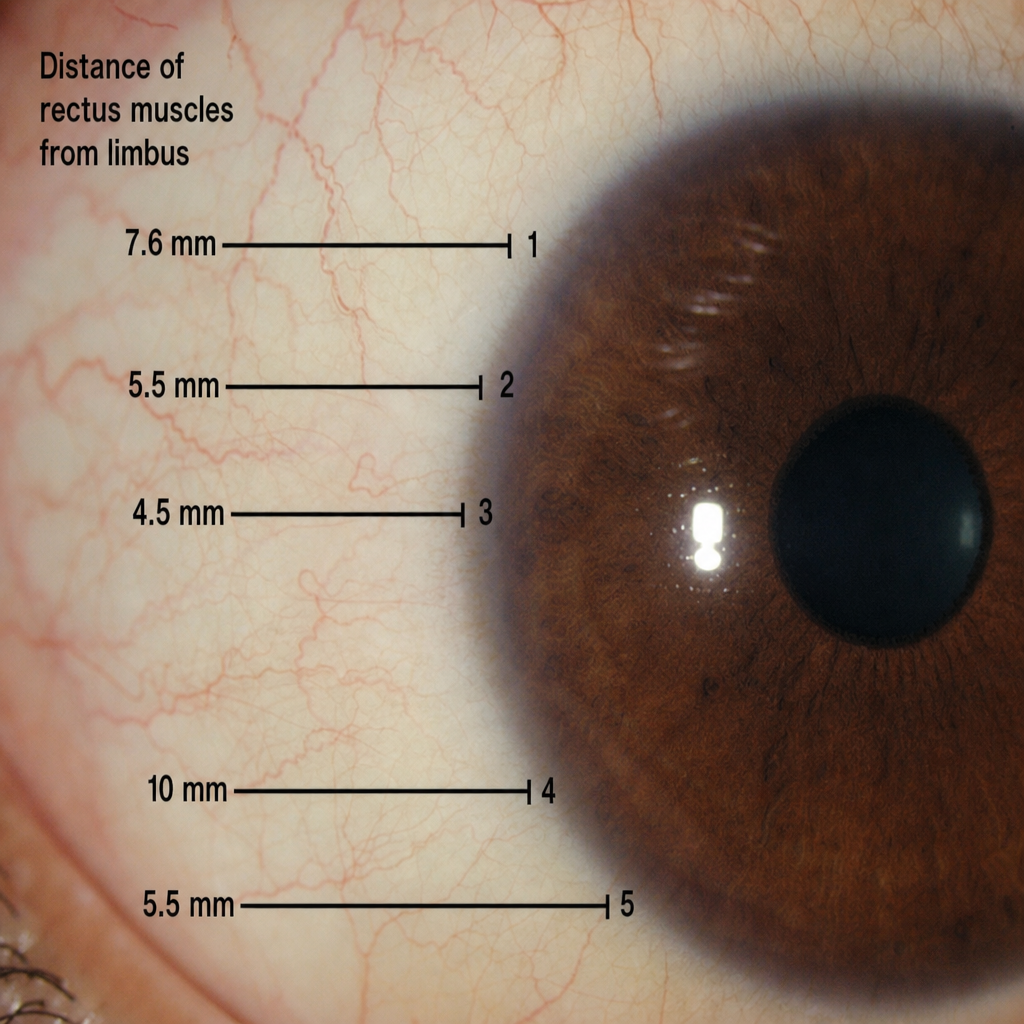
Which of the following actions is NOT caused by the superior oblique muscle?
All of the following are true regarding the tear film except:
The Ligament of Lockwood is found in relation to which anatomical structure?
Explanation: **Explanation:** Asteroid hyalosis is a common, benign vitreous condition characterized by the accumulation of tiny, white, spherical bodies within the vitreous gel. **Why Option A is the correct answer (The Exception):** Asteroid hyalosis is characteristically **unilateral** in approximately 75–80% of cases. The question asks for the "except" feature; therefore, "Usually bilateral" is the incorrect statement and the right answer. It typically occurs in patients over 60 years of age and shows no specific gender or racial predilection. **Analysis of Incorrect Options:** * **B. Solid vitreous:** Unlike synchysis scintillans (where the vitreous is liquefied), in asteroid hyalosis, the **vitreous is solid** and structurally intact. The calcium bodies are suspended within the collagen fibrils and move with the vitreous, returning to their original position when eye movement stops. * **C. Spherical calcium bodies:** These "asteroid bodies" are composed of **calcium-phospholipid complexes** (hydroxyapatite). They appear as brilliant, gold-white spheres under focal illumination. * **D. Usually asymptomatic:** Despite the dramatic appearance on ophthalmoscopy (often described as a "snowstorm"), patients are **usually asymptomatic** and rarely complain of floaters. The condition is typically an incidental finding during a routine exam. **NEET-PG High-Yield Pearls:** * **Asteroid Hyalosis vs. Synchysis Scintillans:** Asteroid hyalosis is unilateral, occurs in solid vitreous, and contains calcium. Synchysis scintillans is bilateral, occurs in liquefied vitreous (end-stage eye disease), and contains cholesterol crystals that settle at the bottom. * **Clinical Tip:** If the fundus is obscured by asteroid bodies, **B-scan ultrasonography** will show high-amplitude mobile echoes with a clear space between the echoes and the posterior globe wall. * **Association:** Historically linked to diabetes and hypertension, though recent large-scale studies suggest the primary association is simply aging.
Explanation: **Explanation:** **Ankyloblepharon** is a clinical condition characterized by the partial or complete **fusion of the upper and lower eyelid margins**. The term is derived from the Greek words *ankylos* (stiff/fused) and *blepharon* (eyelid). It occurs when the palpebral fissure is shortened due to the adhesion of the lid margins, which can be congenital or acquired (secondary to trauma, chemical burns, or Stevens-Johnson Syndrome). **Analysis of Options:** * **Option B (Correct):** This describes the fusion of the lid margins themselves, which is the definition of ankyloblepharon. * **Option A:** Fusion of the bulbar conjunctiva (covering the globe) with the palpebral conjunctiva (lining the lids) is termed **Symblepharon**. * **Option C & D:** Fusion of the conjunctiva (bulbar or palpebral) with the cornea is termed **Pseudopterygium** (usually following an inflammatory adhesion) or is part of a severe symblepharon. **High-Yield Clinical Pearls for NEET-PG:** * **Ankyloblepharon Filiforme Adnatum:** A specific congenital variant where the lid margins are joined by fine, contractile bands of connective tissue. * **Cryptophthalmos:** A more severe condition where the eyelid skin is continuous over the eyeball (total failure of eyelid development), often associated with Fraser Syndrome. * **Blepharophimosis:** A generalized narrowing of the palpebral fissure in both horizontal and vertical directions, often seen in the BPES triad (Blepharophimosis, Ptosis, and Epicanthus Inversus). * **Distinction:** Do not confuse *Ankyloblepharon* (lid to lid) with *Symblepharon* (lid to globe).
Explanation: The depth of the anterior chamber (AC) is a critical anatomical parameter in ophthalmology, particularly concerning the risk of angle-closure glaucoma. **Explanation of the Correct Answer:** **Option C is FALSE** because the depth of the anterior chamber actually **decreases with age**. As an individual ages, the crystalline lens continues to grow in thickness (phakomorphosis) and moves slightly forward. This increased lens volume encroaches upon the posterior aspect of the AC, making it shallower. This is a primary reason why the risk of primary angle-closure glaucoma increases with advancing age. **Analysis of Incorrect Options:** * **Option A (Less in women than men):** This is a **true** statement. On average, women have smaller ocular dimensions, including shorter axial lengths and shallower anterior chambers, which contributes to their higher predisposition to angle-closure glaucoma. * **Option B (Correspondent to volume):** This is **true**. The AC depth (the distance between the corneal endothelium and the anterior lens capsule) is the primary determinant of the total AC volume. A shallow chamber inherently contains less aqueous humor. * **Option B (More in myopes):** This is **true**. Myopic eyes (especially axial myopia) tend to be larger with longer axial lengths and deeper anterior chambers. Conversely, hyperopes have smaller eyes and shallower chambers. **High-Yield Clinical Pearls for NEET-PG:** * **Average AC Depth:** Approximately **2.5 to 3.0 mm** in the center. A depth of <2.5 mm is considered a risk factor for angle closure. * **Refractive Errors:** Myopes = Deep AC; Hyperopes = Shallow AC. * **Aphakia/Pseudophakia:** The AC depth increases significantly after the removal of the natural lens (aphakia) or if a thin intraocular lens is implanted (pseudophakia). * **Van Herick Technique:** A clinical method using a slit lamp to estimate AC depth by comparing the peripheral AC depth to the corneal thickness.
Explanation: ### Explanation The **Zonula of Zinn** (ciliary zonules) refers to the suspensory ligaments that connect the ciliary body to the lens capsule, playing a crucial role in accommodation. In embryology, the vitreous body develops in three distinct stages, and the zonules are derived from the final stage. **1. Why "Tertiary Vitreous" is Correct:** The **Tertiary Vitreous** consists of the collagenous fibers (zonules) that develop during the 4th to 5th month of gestation. These fibers are secreted by the non-pigmented ciliary epithelium. They bridge the gap between the ciliary processes and the lens equator, forming the suspensory apparatus of the lens. **2. Analysis of Incorrect Options:** * **A. Primary Vitreous:** Also known as the *hyaloid vitreous*, it develops during the 1st month. It is highly vascularized (containing the hyaloid artery system). In adults, its remnant is found in Cloquet’s canal. * **B. Secondary Vitreous:** This is the *definitive vitreous* that forms the bulk of the adult vitreous body. It is an avascular gel consisting of Type II collagen and hyaluronic acid, which eventually compresses the primary vitreous into the center. * **C. Persistence Vitreous:** This is a pathological condition (Persistent Fetal Vasculature) where the primary vitreous fails to regress, leading to leukocoria and potential vision loss. **Clinical Pearls for NEET-PG:** * **Composition:** Zonules are primarily made of **Fibrillin-1**. Mutations in the *FBN1* gene lead to **Marfan Syndrome**, causing ectopia lentis (typically superotemporal subluxation). * **Anatomy:** The zonules insert into the **pre-equatorial and post-equatorial** regions of the lens capsule. * **Function:** Contraction of the ciliary muscle relaxes the zonules, allowing the lens to become more spherical (increased refractive power) during **accommodation**.
Explanation: **Explanation:** The correct answer is **Limbus**. **1. Why Limbus is Correct:** The corneal epithelium is a self-renewing layer that undergoes constant turnover. The source of these new cells is a population of **Limbal Epithelial Stem Cells (LESCs)** located in the **Palisades of Vogt** within the limbus (the junction between the clear cornea and the opaque sclera). These stem cells divide to produce transient amplifying cells, which migrate centripetally toward the center of the cornea and superficially to replace shed epithelial cells. This "Limbal Barrier" also prevents the conjunctival epithelium from growing onto the transparent cornea. **2. Why Other Options are Incorrect:** * **Stroma:** This is the thickest layer of the cornea, composed primarily of organized collagen fibers and keratocytes. It does not harbor epithelial stem cells. * **Epithelium:** While the epithelium contains the progeny of stem cells, the actual "mother" stem cells reside at the periphery (limbus) to remain protected in a vascularized niche. * **Descemet's Membrane:** This is the basement membrane of the endothelium. It is an acellular layer and does not possess regenerative stem cell properties. **3. Clinical Pearls for NEET-PG:** * **Limbal Stem Cell Deficiency (LSCD):** Caused by chemical burns (alkali), Stevens-Johnson Syndrome, or ocular cicatricial pemphigoid. It leads to "conjunctivalization" of the cornea, resulting in vascularization and loss of transparency. * **XYZ Hypothesis:** Describes corneal epithelial dynamics: **X** (proliferation of basal cells), **Y** (centripetal migration of limbal cells), and **Z** (desquamation of surface cells). * **High-Yield Fact:** The corneal **endothelium** does not regenerate; it heals by the enlargement and migration of existing cells (pleomorphism and polymegethism).
Explanation: The tear film is traditionally described as a three-layered structure that maintains ocular surface health. Understanding the composition and thickness of each layer is high-yield for NEET-PG. ### **Explanation of the Correct Answer** **A. Mucus Layer:** This is the **thinnest** layer of the tear film, measuring approximately **0.02 to 0.05 µm** in thickness. It is produced by the **Conjunctival Goblet cells**, Manz glands, and Crypts of Henle. Its primary function is to convert the hydrophobic corneal epithelium into a hydrophilic surface, allowing the aqueous layer to spread evenly. ### **Analysis of Incorrect Options** * **B. Aqueous Layer:** This is the **thickest** layer (approx. 7 µm), comprising about 90% of the total tear film thickness. It is produced by the **Lacrimal glands** and accessory glands (Krause and Wolfring). It provides nutrients and antibacterial proteins like Lysozyme and Lactoferrin. * **C & D. Lipid/Oily Layer:** These refer to the same outermost layer produced by the **Meibomian glands** (and glands of Zeis/Moll). It is approximately **0.1 µm** thick. While very thin, it is still thicker than the mucus layer. Its role is to prevent evaporation of the aqueous phase. ### **Clinical Pearls for NEET-PG** * **Order of layers (Outer to Inner):** Lipid $\rightarrow$ Aqueous $\rightarrow$ Mucus. * **Schirmer’s Test:** Used to evaluate the **Aqueous layer** (Secretory factor). * **Tear Break-Up Time (TBUT):** An indicator of **Mucin deficiency** or lipid instability (Stability factor). Normal TBUT is 15–35 seconds; <10 seconds is abnormal. * **Vitamin A Deficiency:** Primarily affects the **Goblet cells**, leading to a deficient mucus layer and subsequent Xerophthalmia (Bitot’s spots).
Explanation: ### Explanation The development of the eye involves three primary embryonic layers: **Surface Ectoderm**, **Neuroectoderm**, and **Mesoderm/Neural Crest Cells**. **Why Option A is Correct:** The **Dilator pupillae** and **Sphincter pupillae** muscles are unique because they are derived from the **Neuroectoderm** (specifically the outer layer of the optic cup). In most other parts of the body, muscles are mesodermal in origin, making this a high-yield exception frequently tested in NEET-PG. **Why the Other Options are Incorrect:** * **Iris Stroma (B):** While the iris epithelium is neuroectodermal, the stroma is derived from the **Neural Crest Cells** (often grouped under mesodermal structures in simplified classifications of the uveal tract). * **Ciliary Body (C):** The ciliary muscle and stroma are derived from **Neural Crest Cells/Mesoderm**. Only the ciliary epithelium is neuroectodermal. * **Choroid (D):** The entire vascular coat (Choroid) is derived from the **Mesoderm and Neural Crest Cells**. --- ### High-Yield Clinical Pearls for NEET-PG: 1. **The "Rule of Two":** The only two muscles in the body derived from the neuroectoderm are the **Dilator pupillae** and **Sphincter pupillae**. 2. **Surface Ectoderm Derivatives:** Lens, Corneal epithelium, Lacrimal gland, and Conjunctival epithelium. 3. **Neuroectoderm Derivatives:** Retina, Optic nerve, Iris epithelium, and the two pupillary muscles. 4. **Neural Crest Cells:** These contribute to the "S" structures: **S**clera, **S**troma of cornea/iris, and the **S**heath of the optic nerve. 5. **Vitreous:** It has a dual origin (Primary vitreous is mesodermal; Secondary vitreous is neuroectodermal).
Explanation: To master extraocular muscle actions for NEET-PG, it is essential to understand the relationship between the muscle's anatomical insertion and the visual axis. ### **Explanation** The **Superior Oblique (SO)** muscle originates from the body of the sphenoid, passes through the trochlea (acting as a pulley), and inserts onto the postero-superior quadrant of the globe. Because it inserts **behind the equator** and approaches the eye from the front (via the trochlea), its contraction pulls the back of the eye up, causing the front of the eye to move down. **Why Elevation is the Correct Answer:** The Superior Oblique is a **depressor**, not an elevator. Elevation is primarily performed by the Superior Rectus and Inferior Oblique muscles. Therefore, elevation is the "except" action for the SO. **Analysis of Other Options:** * **Intorsion (Primary Action):** The SO is the primary incyclotortor of the eye. (Mnemonic: **SIN** – **S**uperior muscles are **In**torters). * **Depression (Secondary Action):** As the SO inserts behind the equator, it pulls the posterior globe upward, resulting in the depression of the cornea. This action is maximal when the eye is **adducted**. * **Abduction (Tertiary Action):** Due to its insertion angle (51° to the visual axis), the SO pulls the back of the eye medially, causing the front of the eye to move laterally (abduction). ### **NEET-PG High-Yield Pearls** * **The "Oblique" Rule:** All oblique muscles are **Abductors**. (Recti are Adductors, except the Lateral Rectus). * **The "Superior" Rule:** All superior muscles (SR, SO) are **Intorters**. * **Clinical Testing:** To isolate the depressing action of the SO, ask the patient to look **"Down and In"** (Depression is maximal in adduction). * **Nerve Supply:** SO is supplied by the **4th Cranial Nerve (Trochlear)**. (Mnemonic: **SO4**LR6). * **Trochlear Nerve Palsy:** Presents with **extorsion** and **diplopia** (worse on downgaze, e.g., reading or walking down stairs). Patients often adopt a compensatory head tilt to the opposite shoulder.
Explanation: ### Explanation The tear film is a complex trilaminar structure essential for maintaining the health and optical clarity of the ocular surface. **Why Option C is the Correct Answer (The False Statement):** The aqueous layer is **not** formed by filtration from blood capillaries. Instead, it is actively secreted by the **lacrimal gland** (main) and the **accessory lacrimal glands of Krause and Wolfring**. While the fluid originates from blood plasma, it is a product of active secretion and electrolyte transport by acinar cells, not passive filtration. **Analysis of Other Options:** * **Option A:** The classical model describes the tear film as having three layers: an outer **lipid** layer, a middle **aqueous** layer, and an inner **mucus** layer (which interfaces with the corneal epithelium). * **Option B:** The lipid (outermost) layer is primarily secreted by the **Meibomian glands** (modified sebaceous glands). Its primary function is to prevent evaporation of the aqueous layer and provide a smooth optical surface. * **Option D:** Any deficiency in the quality or quantity of these layers leads to **Dry Eye Disease (Keratoconjunctivitis Sicca)**. For example, Meibomian gland dysfunction leads to evaporative dry eye, while lacrimal gland deficiency leads to aqueous tear deficiency. **High-Yield Clinical Pearls for NEET-PG:** * **Thickness:** The tear film is approximately **7–10 μm** thick. * **Mucin Source:** Secreted by **Conjunctival Goblet cells**. * **pH:** Slightly alkaline (~7.4). * **Schirmer’s Test:** Used to measure aqueous tear production (Normal >15 mm in 5 mins). * **Tear Break-Up Time (TBUT):** Measures tear film stability (Normal >10 seconds). A low TBUT indicates mucin or lipid deficiency.
Explanation: **Explanation:** The **Ligament of Lockwood** (also known as the Suspensory Ligament of the Eye) is a specialized thickening of the periorbita and Tenon’s capsule located in the **Orbit**. It forms a hammock-like structure that supports the globe, preventing it from displacing inferiorly. It is formed by the fusion of the sheaths of the inferior rectus and inferior oblique muscles and attaches to the medial and lateral check ligaments. **Why the other options are incorrect:** * **Ear:** Relevant ligaments here include the anterior and posterior ligaments of the malleus, but none are associated with Lockwood. * **Palate:** The primary structural support here is the palatine aponeurosis (tensor veli palatini tendon). * **Temporomandibular joint (TMJ):** Key ligaments include the sphenomandibular, stylomandibular, and temporomandibular ligaments. **High-Yield Clinical Pearls for NEET-PG:** * **Function:** The Ligament of Lockwood is robust enough to support the eyeball even after a total maxillectomy (removal of the orbital floor), provided the medial and lateral attachments remain intact. * **Surgical Significance:** During surgery for orbital floor fractures or thyroid eye disease, surgeons must be careful not to damage this ligament to avoid **hypotropia** (downward deviation of the eye). * **Whitnall’s Ligament:** Do not confuse Lockwood with Whitnall’s ligament (Superior Suspensory Ligament), which is related to the **Levator Palpebrae Superioris (LPS)** and acts as a fulcrum for eyelid elevation.
Embryology of Eye
Practice Questions
Ocular Anatomy
Practice Questions
Ocular Physiology
Practice Questions
Ocular Biochemistry
Practice Questions
Ocular Microbiology
Practice Questions
Ocular Pharmacology
Practice Questions
Ocular Pathology
Practice Questions
Ocular Genetics
Practice Questions
Ocular Immunology
Practice Questions
Visual Neuroscience
Practice Questions
Ocular Imaging Physics
Practice Questions
Laser Physics in Ophthalmology
Practice Questions
Get full access to all questions, explanations, and performance tracking.
Start For Free