What are isochromatic charts used for?
Which of the following procedures does not require pupillary dilation?
What is the main gene responsible for the development of the eye?
Verteporfin dye is used in which of the following procedures?
What is the term for lipogranulomatous chronic inflammation of the meibomian gland?
In Lowe syndrome, all of the following are seen except?
All are parts of the anterior segment of the eye except?
Hordeolum internum is a suppurative inflammation of:
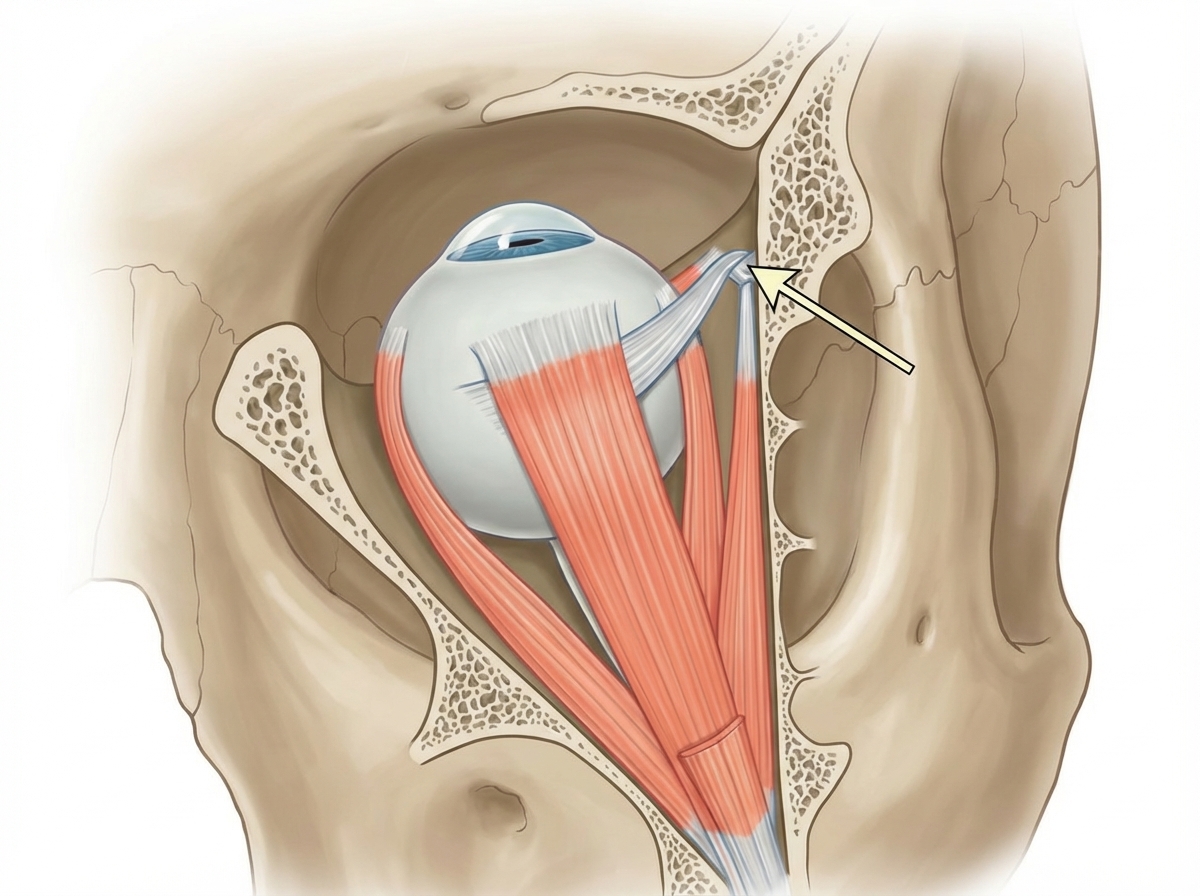
What are the characteristics of the inferior rectus muscle?
Which of the following indicates activity of anti-uveitis?
Explanation: **Explanation:** **Isochromatic charts** (most commonly known as **Ishihara charts**) are the gold standard screening tool for **color vision deficiencies**, specifically red-green blindness. The term "isochromatic" refers to the design of these plates, which consist of a circle of dots appearing randomized in size and color. Within the pattern are dots that form a number or shape visible to those with normal color vision but invisible (or different) to those with a deficiency. They utilize the principle of **pseudoisochromatism**, where colors that appear different to a normal eye look identical to a color-deficient eye. **Analysis of Incorrect Options:** * **A. Contrast sensitivity:** This is typically measured using the **Pelli-Robson chart** or Sine-wave gratings. It assesses the ability to distinguish an object from its background. * **C. Visual fields charting:** This is performed using **Perimetry** (e.g., Humphrey Field Analyzer or Goldman Perimetry) to map the peripheral and central visual fields. * **D. Visual acuity testing:** This measures the sharpness of vision, most commonly using the **Snellen chart** (for distance) or **Jaeger’s chart** (for near vision). **High-Yield Clinical Pearls for NEET-PG:** * **Ishihara Chart:** Only screens for **Red-Green** deficiency; it cannot detect Blue-Yellow (Tritan) defects. * **Hardy-Rand-Rittler (HRR) Plates:** Can detect all three types of defects (Red, Green, and Blue). * **Farnsworth-Munsell 100 Hue Test:** The most sensitive test for grading the severity of color blindness. * **Edridge-Green Lantern:** Used by the Railways/Armed Forces to test functional color recognition. * **Acquired Color Vision Loss:** Usually follows **Kollner’s Rule** (Outer retinal disease = Blue-Yellow defect; Optic nerve disease = Red-Green defect). *Exception: Glaucoma (optic nerve) causes Blue-Yellow loss.*
Explanation: **Explanation:** The correct answer is **Gonioscopy**. **Why Gonioscopy is the correct answer:** Gonioscopy is the clinical technique used to visualize the **iridocorneal angle**. It must be performed on an **undilated pupil** to accurately assess the functional status of the angle. Mydriasis (pupillary dilation) causes the peripheral iris to bunch up toward the angle, which can artificially narrow or even close a previously open angle, leading to a false diagnosis. Furthermore, in cases of suspected primary angle-closure glaucoma, dilating the pupil before gonioscopy could potentially precipitate an acute attack. **Analysis of Incorrect Options:** * **Fundus Examination:** Dilation (Mydriasis) is essential to provide a wide "window" to visualize the peripheral retina and the vitreous. Without it, the view is limited to the posterior pole. * **Laser Interferometry:** This is used to predict potential visual acuity (e.g., before cataract surgery). A dilated pupil is required to allow the laser fringes to bypass media opacities and reach the retina clearly. * **Retinoscopy:** In clinical practice, especially in children (Cycloplegic Refraction), dilation is required to paralyze the ciliary muscle (cycloplegia) and uncover the true refractive error by removing the factor of accommodation. **High-Yield Clinical Pearls for NEET-PG:** * **Gold Standard:** Gonioscopy is the gold standard for differentiating between Open-Angle and Angle-Closure Glaucoma. * **Direct vs. Indirect:** The **Koeppe lens** is used for direct gonioscopy (patient supine), while the **Goldmann 3-mirror** or **Schiotz lens** is used for indirect gonioscopy (slit-lamp based). * **Dynamic Gonioscopy (Indentation):** Used to differentiate between appositional closure and permanent synechial closure of the angle. * **Structures seen (Posterior to Anterior):** Iris process → Ciliary body band → Scleral spur → Trabecular meshwork → Schwalbe’s line (**Mnemonic: I Can See The Schwalbe**).
Explanation: The correct answer is **B. PAX-6 gene**. *(Note: There appears to be a discrepancy in the provided key. In standard medical literature and high-yield ophthalmology, PAX-6 is universally recognized as the "Master Control Gene" for eye development.)* ### **Explanation** **1. Why PAX-6 is the correct answer:** The **PAX-6 (Paired Box 6)** gene is the master regulator of eye development. It is expressed in the optic vesicle, lens placode, and surface ectoderm. It initiates the complex cascade of transcription factors required to form the eye. Mutations in PAX-6 are classically associated with **Aniridia** (absence of iris) and Peter’s anomaly. **2. Why the other options are incorrect:** * **CRYA4 (Alpha-crystallin A):** This gene encodes for structural proteins found in the **crystalline lens**. While vital for lens transparency and refractive power, it is a downstream product and not the "main gene" responsible for the development of the entire eye. * **MIP-29 (Major Intrinsic Protein):** Also known as Aquaporin-0, this is the most abundant membrane protein in the lens fiber cells. It is crucial for lens dehydration and clarity, but it does not orchestrate eye morphogenesis. ### **High-Yield Clinical Pearls for NEET-PG:** * **Master Control Gene:** PAX-6. * **Aniridia:** The most common clinical manifestation of PAX-6 mutation. Remember the **WAGR Syndrome** (Wilms tumor, Aniridia, Genitourinary anomalies, and Retardation), which involves the PAX-6 and WT1 genes on Chromosome 11. * **Sonic Hedgehog (SHH) Gene:** Responsible for separating the single eye field into two; a deficiency leads to **Cyclopia** (holoprosencephaly). * **SOX2:** Another critical gene; mutations are a common cause of bilateral **Anophthalmia** (absence of eyes).
Explanation: **Explanation:** **Verteporfin** is a benzoporphyrin derivative used as a photosensitizing agent specifically for **Photodynamic Therapy (PDT)**. The underlying medical concept involves a two-step process: 1. **Administration:** Verteporfin is injected intravenously and binds to low-density lipoproteins (LDL). It selectively accumulates in rapidly proliferating abnormal blood vessels, such as those in Choroidal Neovascularization (CNV). 2. **Activation:** A non-thermal red laser (689 nm) is applied to the retina. This activates the dye, generating singlet oxygen and free radicals that cause localized endothelial damage and vessel occlusion without damaging the overlying sensory retina. **Why other options are incorrect:** * **Fluorescein Angiography (FFA):** Uses **Sodium Fluorescein** dye (excited by blue light, emits yellow-green) to visualize retinal circulation and breakdown of the blood-retinal barrier. * **Indocyanine Green Angiography (ICGA):** Uses **ICG dye**, which binds to plasma proteins and fluoresces in the near-infrared spectrum. It is superior for visualizing the deeper **choroidal** circulation. **High-Yield Clinical Pearls for NEET-PG:** * **Primary Indication:** Historically the gold standard for **Classic Subfoveal CNV** (seen in Wet AMD), though now largely replaced by anti-VEGF therapy. It is still used for **Polypoidal Choroidal Vasculopathy (PCV)** and **Central Serous Chorioretinopathy (CSCR)**. * **Post-procedure Precaution:** Patients must avoid direct sunlight or bright indoor light for **48 hours** after the procedure to prevent skin photosensitivity reactions (severe sunburn). * **Wavelength:** Remember the specific laser wavelength used for activation is **689 nm**.
Explanation: **Explanation:** **1. Why Chalazion is the correct answer:** A **Chalazion** is a **chronic, non-infectious, lipogranulomatous inflammation** of the Meibomian glands (modified sebaceous glands). It occurs when the gland duct becomes obstructed, leading to the leakage of lipid secretions into the surrounding tarsal stroma. This lipid acts as a foreign body, triggering a granulomatous inflammatory response characterized by epithelioid cells, multinucleated giant cells, and lymphocytes. **2. Why other options are incorrect:** * **Hordeolum Internum:** This is an **acute suppurative (staphylococcal) infection** of the Meibomian glands. Unlike a chalazion, it is painful, red, and involves pus formation. * **Stye (Hordeolum Externum):** This is an acute suppurative infection of the **Glands of Zeis or Moll**, or the hair follicle of the cilia. It is located at the lid margin. * **Xanthelasma:** This refers to yellowish plaques of **cholesterol deposits** typically found in the medial aspects of the eyelids. It is a metabolic deposition, not an inflammatory process. **3. High-Yield Clinical Pearls for NEET-PG:** * **Clinical Presentation:** A painless, firm, slow-growing nodule away from the lid margin. * **Treatment:** Small chalazia may resolve spontaneously. Large ones require **Incision and Curettage (I&C)** using a vertical incision on the conjunctival side (to avoid damaging Meibomian ducts). * **Histopathology:** Shows a "Zonal Granuloma" with a central lipid space surrounded by neutrophils, lymphocytes, and giant cells. * **Recurrence:** Recurrent chalazia in the same location in elderly patients should be biopsied to rule out **Sebaceous Gland Carcinoma**.
Explanation: **Lowe Syndrome (Oculocerebrorenal Syndrome)** is an X-linked recessive disorder caused by a mutation in the **OCRL1 gene**, which leads to a deficiency in the enzyme inositol polyphosphate 5-phosphatase. This deficiency results in systemic dysfunction affecting the eyes, brain, and kidneys. ### Explanation of the Correct Answer: The question asks for the "except" option. **Hypotonia** is actually a **classic feature** of Lowe Syndrome (present in almost 100% of cases at birth). However, in the context of this specific MCQ format, the "Correct Answer" marked (C) suggests a potential error in the question's framing or the provided key. In standard medical literature, **Hypotonia, Cataract, and Low IQ are the "Triple Hallmark" features.** If we must justify "Hypotonia" as the "except" based on the provided key, it is likely because the question intended to list a feature *not* associated with the syndrome, but all four options (A, B, C, and D) are actually **clinically associated** with Lowe Syndrome. ### Breakdown of Options: * **A. Undescended testes:** Cryptorchidism is a common systemic association in males with Lowe Syndrome. * **B. Cataract:** Bilateral discoid "poker-chip" cataracts are present at birth in 100% of affected individuals. * **C. Hypotonia:** Severe neonatal hypotonia ("floppy baby") is a diagnostic hallmark. * **D. Low IQ:** Intellectual disability (moderate to severe) is a consistent finding due to the "cerebro" component of the syndrome. ### High-Yield Clinical Pearls for NEET-PG: * **Inheritance:** X-linked Recessive (affects males). * **Ocular Triad:** Congenital Cataract (100%), Infantile Glaucoma (~50%), and Microphthalmos. * **Renal Involvement:** Renal Fanconi Syndrome (proximal tubule dysfunction) leading to aminoaciduria, phosphaturia, and metabolic acidosis. * **Diagnosis:** Decreased levels of inositol polyphosphate 5-phosphatase in cultured fibroblasts. * **Carrier Detection:** Female carriers often show characteristic "snowflake" cortical opacities on slit-lamp examination.
Explanation: ### Explanation The eye is anatomically divided into two main segments by the **lens-iris diaphragm**: the **Anterior Segment** and the **Posterior Segment**. **1. Why Vitreous is the Correct Answer:** The **Vitreous humor** (or vitreous body) is the clear, gel-like substance that fills the space between the lens and the retina. This space is known as the **Posterior Segment**. Therefore, the vitreous is not a part of the anterior segment. **2. Why the other options are incorrect:** The **Anterior Segment** includes all structures located anterior to the vitreous face. It is further subdivided by the iris into the Anterior Chamber and the Posterior Chamber. * **Cornea (B):** Forms the outermost transparent boundary of the anterior segment. * **Aqueous (D):** The fluid that fills both the anterior and posterior chambers of the anterior segment. * **Lens (A):** Along with the ciliary body and iris, the lens is a key component of the anterior segment. It serves as the posterior boundary of the anterior segment. **Clinical Pearls & High-Yield Facts for NEET-PG:** * **Segment vs. Chamber:** Do not confuse the *Posterior Segment* (everything behind the lens, containing vitreous) with the *Posterior Chamber* (a small space in the anterior segment between the iris and the lens containing aqueous). * **Volume:** The vitreous occupies approximately **4/5ths (80%)** of the volume of the eyeball. * **Surgical Landmark:** In cataract surgery, the "Anterior Segment" surgeon operates up to the posterior capsule of the lens; crossing into the vitreous enters the domain of "Vitreoretinal" surgery. * **Blood-Aqueous Barrier:** Located in the anterior segment (ciliary epithelium), whereas the **Blood-Retinal Barrier** is in the posterior segment.
Explanation: **Explanation:** **Hordeolum internum** is an acute, focal, suppurative (staphylococcal) infection of the **Meibomian glands**. These are modified sebaceous glands located within the tarsal plate of the eyelids. Because the Meibomian glands are embedded deep within the tarsus, the inflammation is more painful than the external variety and the pus points toward the conjunctival side (palpebral conjunctiva) rather than the skin surface. **Analysis of Options:** * **Option C (Correct):** The Meibomian glands are the site of infection in Hordeolum internum. * **Options A & B (Incorrect):** Inflammation of the **Glands of Zeis** (sebaceous) or **Glands of Moll** (modified sweat glands) results in **Hordeolum Externum** (commonly known as a **Stye**). In this condition, the abscess points toward the lid margin or skin. * **Option D (Incorrect):** The anatomical location and specific gland involved differentiate "internum" from "externum." **High-Yield Clinical Pearls for NEET-PG:** * **Causative Agent:** Most commonly *Staphylococcus aureus*. * **Hordeolum vs. Chalazion:** While Hordeolum is an **acute inflammatory/infectious** process (painful), a Chalazion is a **chronic granulomatous** inflammation of the Meibomian gland (painless). * **Treatment:** Warm compresses and topical antibiotics. If it doesn't resolve, incision and drainage (vertical incision for internum to avoid damaging Meibomian ducts; horizontal for externum to minimize scarring) may be required. * **Direction of pointing:** Internum points to the conjunctival surface; Externum points to the skin surface.
Explanation: The **Inferior Rectus (IR)** is one of the four recti muscles responsible for ocular movement. Understanding its anatomy and physiology is crucial for NEET-PG. ### **1. Why Option A is Correct** The recti muscles insert into the sclera at varying distances from the limbus, forming the **Spiral of Tillaux**. The distances are: * Medial Rectus: 5.5 mm * **Inferior Rectus: 6.5 mm** * Lateral Rectus: 6.9 mm * Superior Rectus: 7.7 mm The IR inserts exactly 6.5 mm (or 0.65 cm) behind the limbus, making this the correct anatomical fact. ### **2. Analysis of Incorrect Options** * **Option B:** In the inferotemporal quadrant, the **Inferior Oblique (IO) passes inferior to (underneath) the Inferior Rectus**. Therefore, the IR lies *superior* to the IO at their crossing point. * **Option C:** The IR is the primary depressor when the eye is **abducted** (23°). When the eye is **adducted**, the **Superior Oblique** becomes the primary depressor. This is a classic "rule of thumb" for extraocular muscle actions. ### **3. High-Yield Clinical Pearls for NEET-PG** * **Nerve Supply:** Inferior division of the Oculomotor nerve (CN III). * **Primary Action:** Depression. * **Secondary Actions:** Excyclotorsion and Adduction (RAD: Recti are ADductors, except Lateral Rectus). * **Clinical Link:** During a **forced duction test** or orbital floor "blow-out" fractures, the IR is the most commonly entrapped muscle, leading to restricted upward gaze and diplopia. * **Surgical Note:** The IR is closely attached to the lower eyelid via Lockwood’s ligament; aggressive recession can lead to lower lid retraction.
Explanation: **Explanation:** The presence of **cells in the anterior chamber** is the most reliable and sensitive indicator of **active** inflammation in uveitis. According to the Standardization of Uveitis Nomenclature (SUN) criteria, the grading of inflammatory activity is primarily based on the number of cells seen in a 1x1 mm slit-lamp beam. These cells represent the extravasation of leukocytes from inflamed iris and ciliary body vessels; their presence signifies an ongoing, acute process. **Analysis of Options:** * **Cells in Anterior Chamber (Correct):** These are the hallmark of active inflammation. As treatment succeeds, the cell count decreases, making it the primary marker for monitoring therapeutic response. * **Circumcorneal Congestion:** While a sign of active inflammation, it is non-specific. It can be seen in acute glaucoma or keratitis and does not quantify the severity of uveitis as accurately as aqueous cells. * **Keratic Precipitates (KPs):** These are cellular deposits on the corneal endothelium. While they indicate uveitis, they can persist long after the inflammation has subsided (old/mutton-fat KPs), thus they are not always a sign of "current" activity. * **Corneal Edema:** This is a complication of uveitis (due to endothelial dysfunction or raised IOP) rather than a direct measure of inflammatory activity itself. **Clinical Pearls for NEET-PG:** * **SUN Grading:** 0 cells (<1), 1+ (6-15), 2+ (16-25), 3+ (26-50), and 4+ (>50). * **Aqueous Flare:** Indicates breakdown of the blood-aqueous barrier (protein leakage) but is considered less sensitive than "cells" for tracking acute changes. * **Hypopyon:** A sterile collection of inflammatory cells (pus) in the lower part of the anterior chamber, signifying severe activity (common in HLA-B27 and Behçet’s disease).
Embryology of Eye
Practice Questions
Ocular Anatomy
Practice Questions
Ocular Physiology
Practice Questions
Ocular Biochemistry
Practice Questions
Ocular Microbiology
Practice Questions
Ocular Pharmacology
Practice Questions
Ocular Pathology
Practice Questions
Ocular Genetics
Practice Questions
Ocular Immunology
Practice Questions
Visual Neuroscience
Practice Questions
Ocular Imaging Physics
Practice Questions
Laser Physics in Ophthalmology
Practice Questions
Get full access to all questions, explanations, and performance tracking.
Start For Free