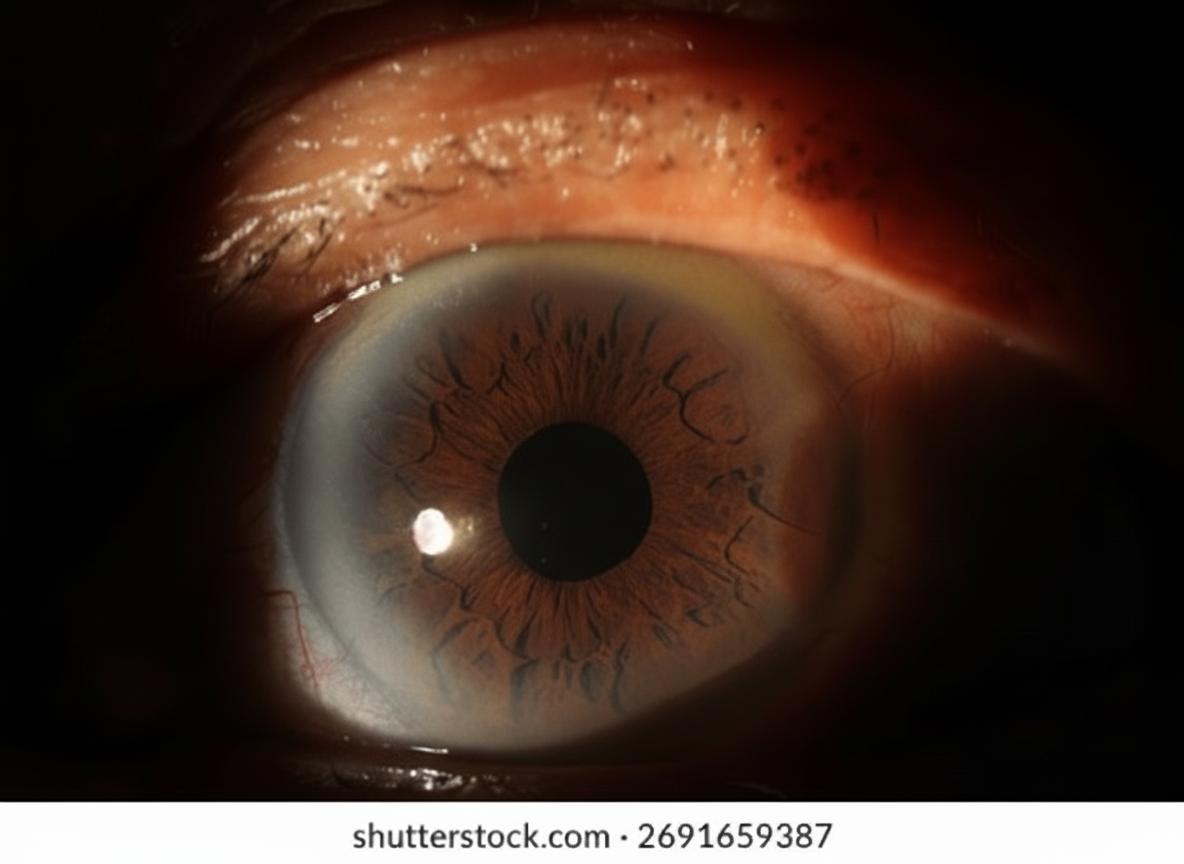
Amsler's sign is seen in which of the following conditions?
Mucopolysaccharide hyaluronic acid is present in which of the following ocular structures?
Which of the following is seen in non-granulomatous uveitis?
What is the structure connecting the posterior surface of the lens to the capsule called?
Which of the following statements about the optic nerve is FALSE?
Ascorbate and alpha-tocopherol are maintained in a reduced state in the lens by:
What is the typical characteristic of anterior chamber depth?
Which of the following conditions is the drug of choice for a topical beta blocker?
Which of the following statements about the vitreous humor is incorrect?
What is stereopsis?
Explanation: **Explanation:** **Amsler’s Sign** (also known as Amsler-Verrey sign) is a classic clinical finding in **Fuchs’ Heterochromic Iridocyclitis (FHI)**. It refers to the occurrence of a **filiform hemorrhage** in the anterior chamber angle following a paracentesis or minor trauma (such as applanation tonometry or cataract surgery). The underlying pathophysiology involves the presence of fragile, fine, neovascular vessels in the angle of the anterior chamber. These vessels lack a proper basement membrane, making them prone to bleeding when the intraocular pressure (IOP) drops suddenly. **Analysis of Options:** * **Fuchs’ Uveitis (Correct):** Characterized by the triad of heterochromia iridis, stellate keratic precipitates (KPs), and early cataract formation. Amsler’s sign is a diagnostic hallmark. * **Posner-Schlossman Syndrome:** Also known as Glaucomatocyclitic crisis; it presents with recurrent episodes of very high IOP and mild anterior uveitis but does not feature Amsler’s sign. * **Pars Planitis:** A form of intermediate uveitis characterized by "snowbanking" and "snowballs" in the vitreous, not angle neovascularization. * **Macular Degeneration:** This is associated with the **Amsler Grid Test** (used to detect metamorphopsia), which is a common point of confusion for students. Amsler’s *sign* and Amsler *grid* are entirely different entities. **High-Yield Clinical Pearls for NEET-PG:** * **FHI Triad:** Heterochromia (affected eye usually lighter), diffuse stellate KPs, and posterior subcapsular cataract. * **Management:** Unlike other forms of uveitis, FHI is typically **resistant to topical steroids** and does not usually lead to posterior synechiae. * **Glaucoma:** FHI is a common cause of secondary open-angle glaucoma.
Explanation: **Explanation:** The correct answer is **A. Vitreous humor.** The vitreous humor is a transparent, gel-like substance that fills the posterior segment of the eye. Its structural integrity is maintained by a complex network of **Type II collagen fibrils** and the glycosaminoglycan (GAG) **hyaluronic acid**. Hyaluronic acid is a highly hydrophilic mucopolysaccharide that binds large amounts of water, providing the vitreous with its characteristic viscoelasticity and volume. **Analysis of Incorrect Options:** * **B. Cornea:** While the corneal stroma contains glycosaminoglycans, the predominant ones are **keratan sulfate** and **dermatan sulfate**, which are essential for maintaining transparency through precise collagen spacing. * **C. Blood vessels:** The vascular basement membrane primarily consists of Type IV collagen, laminin, and heparan sulfate proteoglycans. * **D. Lens:** The lens is composed of specialized crystallin proteins and is enclosed by a capsule of Type IV collagen. It is notably devoid of hyaluronic acid to maintain its rigid yet elastic refractive structure. **High-Yield Clinical Pearls for NEET-PG:** * **Composition of Vitreous:** 98-99% water, Type II collagen (major structural protein), and Hyaluronic acid (major GAG). * **Aging Change:** With age, the vitreous undergoes **syneresis** (liquefaction), where hyaluronic acid molecules clump and the collagen network collapses, often leading to Posterior Vitreous Detachment (PVD). * **Surgical Relevance:** **Hyaluronidase** is often added to local anesthetic blocks (like Peribulbar blocks) to increase tissue permeability and drug diffusion by breaking down hyaluronic acid in the connective tissue.
Explanation: **Explanation:** Uveitis is clinically classified into granulomatous and non-granulomatous types based on the nature of the inflammatory infiltrate. **1. Why Aqueous Flare is correct:** Non-granulomatous uveitis is characterized by an acute onset and a marked breakdown of the blood-aqueous barrier. This leads to the leakage of proteins into the anterior chamber, which scatters light (Tyndall effect), known as **Aqueous Flare**. While flare can occur in both types, it is a hallmark of the intense, acute exudative reaction seen in non-granulomatous cases (e.g., HLA-B27 associated uveitis). Additionally, the cellular infiltrate consists mainly of **lymphocytes and neutrophils**, resulting in small, fine Keratic Precipitates (KPs). **2. Why other options are incorrect:** * **Iris Nodules (Koeppe and Busacca):** These are pathognomonic for **granulomatous uveitis**. They represent focal collections of epithelioid cells and macrophages. * **Krukenberg Spindle:** This refers to a vertical pigment deposit on the corneal endothelium, typically seen in **Pigment Dispersion Syndrome**, not as a primary feature of acute uveitis. * **Broad-based Posterior Synechiae:** While synechiae occur in both, granulomatous uveitis typically presents with thick, broad-based, and "mutton-fat" adhesions. Non-granulomatous uveitis usually presents with thin, "thread-like" synechiae that are more easily broken by mydriatics. **Clinical Pearls for NEET-PG:** * **Granulomatous Uveitis:** Large "Mutton-fat" KPs, Iris nodules, and chronic course (e.g., Sarcoidosis, TB, Syphilis). * **Non-granulomatous Uveitis:** Small/fine KPs, marked flare, and acute onset (e.g., Ankylosing spondylitis, IBD). * **Koeppe nodules** are at the pupillary margin; **Busacca nodules** are on the iris stroma.
Explanation: **Explanation:** The **Hyaloideocapsular ligament of Weiger** (also known as the ligamentum hyaloideocapsulare) is a circular adhesion between the anterior face of the vitreous (the anterior hyaloid membrane) and the posterior capsule of the lens. It forms a ring-like attachment with a diameter of approximately 8–9 mm. Within this ring lies a potential space called the **Space of Berger** (retrolental space), where the vitreous is not physically attached to the lens. **Analysis of Options:** * **Vitreous Base (B):** This is the strongest area of vitreous attachment, located at the ora serrata. It straddles the ora serrata, extending 2mm anteriorly and 3mm posteriorly. * **Cloquet’s Canal (C):** This is an S-shaped transparent channel running through the vitreous from the optic nerve head to the posterior lens. It represents the remnant of the primary vitreous and the hyaloid artery system. * **Collagen Fibres (D):** While the vitreous is composed of Type II collagen fibres, this is a general structural component and not the specific anatomical name for the lens-vitreous connection. **NEET-PG High-Yield Pearls:** 1. **Age-related change:** The ligament of Weiger is very strong in children and young adults but weakens significantly with age. This is why intracapsular cataract extraction (ICCE) is contraindicated in young patients (risk of vitreous loss). 2. **Eponym Check:** The space formed inside the ligament is the **Space of Berger**. 3. **Vitreous Attachments (Strongest to Weakest):** Vitreous Base > Posterior Lens (Weiger) > Optic Disc (Weiss Ring) > Macula > Retinal Vessels.
Explanation: **Explanation:** The optic nerve (Cranial Nerve II) is a unique structure that is embryologically an extension of the forebrain rather than a peripheral nerve. **1. Why Option B is the Correct (False) Statement:** The total length of the optic nerve is approximately **47–50 mm (roughly 5 cm)**, not 4 cm. It is divided into four distinct segments: * **Intraocular:** 1 mm * **Intraorbital:** 25–30 mm (S-shaped to allow for eye movement) * **Intracanalicular:** 6–9 mm (passes through the optic canal) * **Intracranial:** 10–15 mm (ends at the optic chiasm) **2. Analysis of Other Options:** * **Option A (True):** The optic nerve is formed by the axons of the **ganglion cells** of the retina. These axons converge at the optic disc. (Note: While the signal passes from photoreceptors to bipolar cells to ganglion cells, the nerve itself is composed of ganglion cell axons). * **Option C (True):** Since it is a CNS tract, it is covered by the **dura, arachnoid, and pia mater**, which are continuous with the cranial meninges. This explains why increased intracranial pressure is transmitted to the optic disc (papilledema). * **Option D (True):** The primary blood supply is derived from the **ophthalmic artery** (a branch of the internal carotid) and its branches, including the central retinal artery and the pial plexus. **High-Yield Clinical Pearls for NEET-PG:** * **Myelination:** Unlike peripheral nerves (Schwann cells), the optic nerve is myelinated by **oligodendrocytes**. Myelination begins behind the lamina cribrosa. * **Lamina Cribrosa:** The weakest point of the sclera where optic nerve fibers exit; it is the primary site of damage in glaucoma. * **Visual Pathway:** The optic nerve contains approximately **1.2 million nerve fibers**.
Explanation: ### Explanation The lens is subject to constant oxidative stress from UV radiation and metabolic byproducts. To maintain transparency and prevent cataract formation, it relies on a robust antioxidant system. **Why Glutathione is Correct:** Glutathione (GSH), a tripeptide (Glu-Cys-Gly), is the most abundant antioxidant in the lens, found in concentrations higher than in almost any other tissue. It acts as the primary "redox buffer." * **Mechanism:** Glutathione maintains other antioxidants, specifically **Ascorbate (Vitamin C)** and **Alpha-tocopherol (Vitamin E)**, in their active, reduced states. * It donates electrons to neutralize free radicals and regenerates Vitamin C, which in turn regenerates Vitamin E. * This cycle is sustained by the enzyme **Glutathione Reductase**, which uses NADPH (derived from the Hexose Monophosphate Shunt) to convert oxidized glutathione (GSSG) back to its reduced form (GSH). **Why Other Options are Incorrect:** * **A. Glucose:** While glucose is the primary energy source for the lens (via anaerobic glycolysis), it does not directly reduce antioxidants. However, its metabolism via the HMP shunt provides the NADPH necessary for glutathione regeneration. * **B. Glycoprotein:** These are structural or functional proteins (like those in the basement membrane) and do not possess the redox potential required for antioxidant regeneration. * **D. Fatty acid:** Fatty acids are components of cell membranes. In fact, alpha-tocopherol exists to protect these fatty acids from lipid peroxidation; they are the *targets* of protection, not the *reductants*. **High-Yield Clinical Pearls for NEET-PG:** * **GSH Gradient:** Glutathione concentration is highest in the **lens cortex** and lowest in the nucleus. * **Cataractogenesis:** A decrease in reduced glutathione levels is a hallmark of almost all types of cataracts, especially senile and diabetic cataracts. * **HMP Shunt:** Approximately 5-10% of glucose in the lens is metabolized via the HMP shunt to produce NADPH, which is vital for maintaining the glutathione pool.
Explanation: The average depth of the anterior chamber (AC) is approximately **3.0 mm** (measured from the corneal endothelium to the anterior lens capsule). Understanding its variations is crucial for diagnosing conditions like angle-closure glaucoma. **Explanation of the Correct Option:** * **Option B (Is lesser in women):** Anatomically, women tend to have slightly smaller eyeballs with shorter axial lengths compared to men. Consequently, the anterior chamber is shallower in females. This is a significant clinical factor, as it contributes to the higher prevalence of primary angle-closure glaucoma (PACG) in women. **Analysis of Incorrect Options:** * **Option A (Increases with age):** This is incorrect. AC depth **decreases with age**. As we age, the crystalline lens increases in thickness (anteroposterior diameter) and moves slightly forward, pushing the iris diaphragm anteriorly and narrowing the chamber. * **Option C (Is lesser in myopes):** This is incorrect. Myopic eyes are typically larger with longer axial lengths, resulting in a **deeper** AC. Conversely, hypermetropic (farsighted) eyes are smaller and have shallower ACs. * **Option D (Has hardly any effect on AC volume):** This is incorrect. The AC depth is the primary determinant of AC volume. A shallow AC significantly reduces the total volume of aqueous humor the chamber can hold. **High-Yield Clinical Pearls for NEET-PG:** * **Normal AC Depth:** ~3.0 mm (range 2.5–3.5 mm). * **Volume:** The AC contains approximately **0.25 ml** of aqueous humor. * **Refractive Index:** The refractive index of aqueous humor is **1.33**. * **Clinical Correlation:** A shallow AC (<2.5 mm) is a major predisposing factor for **Angle-Closure Glaucoma**. * **Measurement:** AC depth is most accurately measured using **Optical Coherence Tomography (OCT)** or **A-scan ultrasonography**.
Explanation: **Explanation:** **Topical Beta Blockers (e.g., Timolol, Betaxolol)** are traditionally considered the first-line or primary medical therapy for **Open-Angle Glaucoma (OAG)** and Ocular Hypertension. Their primary mechanism of action is the **reduction of aqueous humor production** by inhibiting beta-receptors in the ciliary epithelium. * **Why Option B is Correct:** In Open-Angle Glaucoma, the goal is to lower intraocular pressure (IOP) to prevent optic nerve damage. Beta-blockers are highly effective, have a convenient twice-daily dosing schedule, and do not affect pupil size or accommodation, making them ideal for chronic management of OAG. * **Why Options A, C, and D are Incorrect:** * **Angle Closure Glaucoma:** The definitive treatment is peripheral iridotomy. While beta-blockers can help lower IOP, they are not the "drug of choice" for the underlying anatomical block. * **Hypopyon Corneal Ulcer:** This is an infectious/inflammatory condition requiring intensive topical antibiotics (e.g., fortified cephalosporins or fluoroquinolones) and cycloplegics. Beta-blockers have no role in treating the infection. * **Acute Granulomatous Uveitis:** The mainstay of treatment is topical steroids to control inflammation and cycloplegics (like Atropine) to prevent synechiae. **High-Yield Clinical Pearls for NEET-PG:** * **Mechanism:** Decreases aqueous secretion (not increasing outflow). * **Contraindications:** Avoid in patients with **Bronchial Asthma**, COPD, or second/third-degree heart block due to systemic absorption via the nasolacrimal duct. * **Drug of Choice:** While Prostaglandin analogues (PGAs) are now often preferred for potency, Beta-blockers remain a classic "drug of choice" in exam questions for OAG. * **Betaxolol:** A cardioselective (Beta-1) blocker; it is safer for the lungs but less effective at lowering IOP than Timolol.
Explanation: The vitreous humor is a transparent, gel-like substance that fills the posterior segment of the eye, playing a crucial role in maintaining intraocular pressure and retinal apposition. ### **Explanation of the Correct Answer** The question asks for the **incorrect** statement. While **Option B** states that Type II collagen is the most abundant, this is actually a **correct** physiological fact (Type II collagen constitutes about 75% of the total collagen in the vitreous). However, in the context of many standardized medical exams, if this is marked as the "correct" answer to an "incorrect statement" question, it usually implies a technicality or a misprint in the question's source material. *Note for NEET-PG:* In standard textbooks (like Khurana), **Type II collagen is indeed the predominant type**. If this option is meant to be the "incorrect" one, the examiner may be testing a specific subtype (like Type IX or XI) or there is a typographical error in the question key. ### **Analysis of Other Options** * **Option A (Correct Fact):** The volume of the vitreous is approximately **4 mL (or 4 cc)**, accounting for about 80% of the total volume of the globe. * **Option C (Correct Fact):** Glucose concentration in the vitreous is significantly **lower** than in plasma (approx. 30-50 mg/dL) because it is consumed by the retina for metabolism. * **Option D (Correct Fact):** Hyaluronic acid (HA) is the primary glycosaminoglycan in the vitreous, providing its viscoelastic properties. Its concentration is much **higher** in the vitreous than in the aqueous humor. ### **High-Yield Clinical Pearls for NEET-PG** * **Composition:** 98-99% water; the rest is a network of Collagen (Type II) and Hyaluronic acid. * **Hyalocytes:** These are the resident cells of the vitreous, located primarily in the cortex; they produce hyaluronic acid and collagen. * **Attachments:** The vitreous is most firmly attached at the **Vitreous Base** (ora serrata), followed by the optic disc margin and the fovea. * **Aging:** Syneresis (liquefaction of the vitreous) is a common age-related change that leads to Posterior Vitreous Detachment (PVD).
Explanation: **Explanation:** **Stereopsis** is the highest grade of binocular vision, characterized by the **perception of depth** or three-dimensionality. It occurs because our eyes are horizontally separated, allowing each eye to capture a slightly different image of the same object (binocular parallax). The brain’s visual cortex processes these two disparate images and fuses them into a single image with depth. **Analysis of Options:** * **Option B (Correct):** Stereopsis specifically refers to the ability to perceive the relative distance of objects in space, providing a 3D view. * **Option A (Incorrect):** The perception of different colors is mediated by the **cones** in the retina and processed via the photopic visual system. * **Option C (Incorrect):** Peripheral visual field perception is primarily a function of the **rods** and the peripheral retina, essential for motion detection and orientation. * **Option D (Incorrect):** The perception of the size of an object is a cognitive process involving visual cues and the **macula's** resolution, but it is not the definition of stereopsis. **Clinical Pearls for NEET-PG:** * **Grades of Binocular Single Vision (Worth’s Classification):** 1. **Grade I:** Simultaneous Macular Perception (SMP). 2. **Grade II:** Fusion. 3. **Grade III:** Stereopsis (The highest grade). * **Clinical Tests:** Stereopsis is measured in "seconds of arc" using tests like the **Titmus Fly Test**, **TNO Random Dot Test**, and **Lang’s Test**. * **Prerequisite:** For stereopsis to exist, there must be good alignment of the eyes and overlapping visual fields. It is often lost in patients with **strabismus** (squint) or severe **amblyopia**.
Embryology of Eye
Practice Questions
Ocular Anatomy
Practice Questions
Ocular Physiology
Practice Questions
Ocular Biochemistry
Practice Questions
Ocular Microbiology
Practice Questions
Ocular Pharmacology
Practice Questions
Ocular Pathology
Practice Questions
Ocular Genetics
Practice Questions
Ocular Immunology
Practice Questions
Visual Neuroscience
Practice Questions
Ocular Imaging Physics
Practice Questions
Laser Physics in Ophthalmology
Practice Questions
Get full access to all questions, explanations, and performance tracking.
Start For Free