Regarding the sling procedure for Urodynamic Stress Incontinence (USI), which statement is correct?
Which of the following does NOT provide support to the urethra and bladder neck?
A patient who underwent an extended hysterectomy one week ago presents with urine leakage from the vagina. She also experiences the urge to void periodically. What is the most likely cause of this presentation?
What is preserved in the Manchester operation?
Cystitis is most commonly caused by which organism?
What is the recommended site for the placement of tension-free vaginal tapes for the management of stress urinary incontinence?
Fistula formation due to the given etiology occurs within how much time?
75% of iatrogenic ureteric injuries are due to gynaecological procedures. Which hysterectomy route has the least risk of ureteric injury?
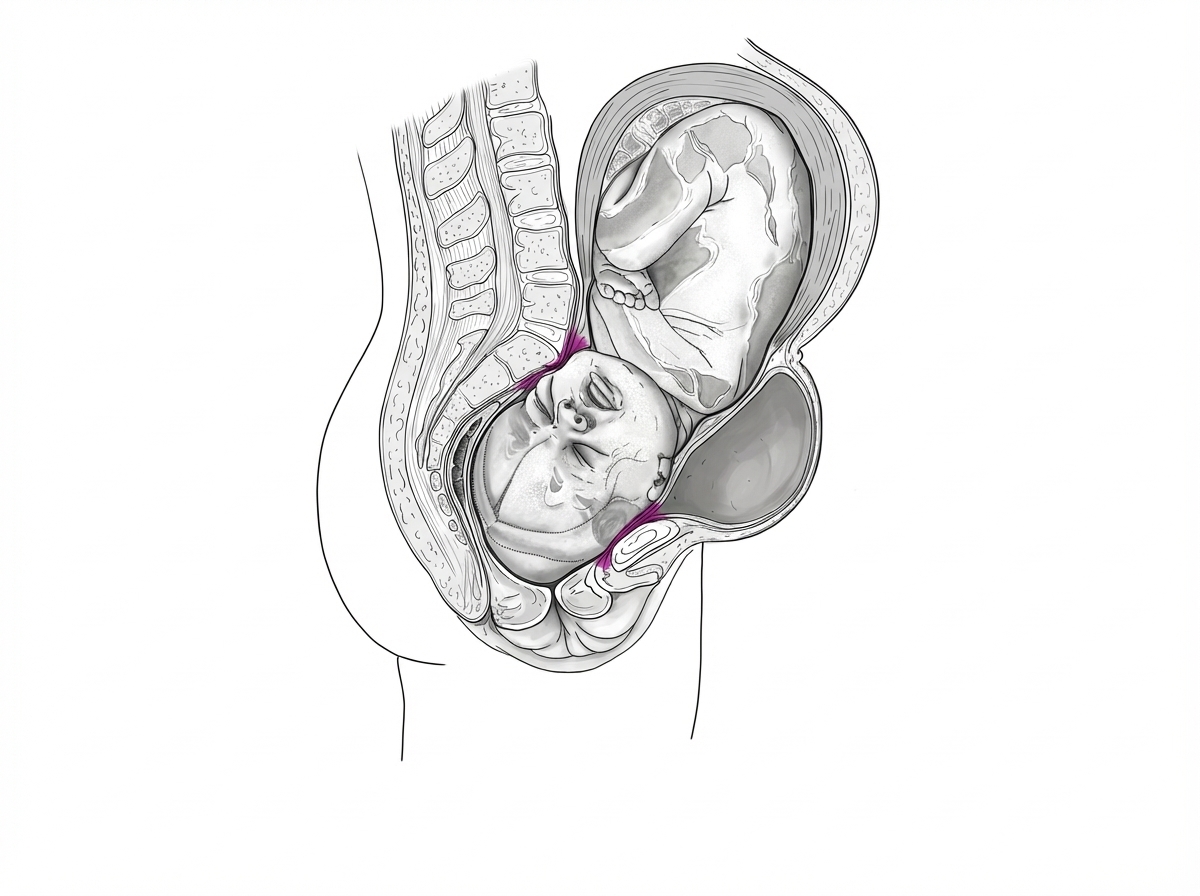
A woman had a difficult labour. She complains of dribbling of urine 7 days after delivery. What is the diagnosis?
Which of the following is the most common site for genito-urinary fistula?
Explanation: ### Explanation **1. Why Option C is Correct:** Intrinsic Sphincter Deficiency (ISD) is a severe form of stress urinary incontinence where the urethral sphincter lacks sufficient resting tone to remain closed, even in the absence of hypermobility. Mid-urethral slings (MUS), such as TVT, are specifically indicated for ISD because they provide a stable "backboard" against which the urethra can be compressed during increased intra-abdominal pressure, effectively compensating for the weakened sphincter. **2. Analysis of Incorrect Options:** * **Option A:** TVT is a **mid-urethral sling**, not a bladder neck suspension. Unlike the Burch colposuspension, TVT does not aim to elevate the bladder neck; instead, it provides dynamic support to the mid-urethra. * **Option B:** TVT uses **synthetic material** (Type 1 Macroporous Monofilament Polypropylene mesh). Autologous slings (using fascia lata or rectus sheath) are different procedures, usually reserved for complex cases or mesh complications. * **Option D:** TVT is currently the **"Gold Standard"** for surgical management of USI. Its success rates (85-90%) are comparable to or better than the Burch colposuspension, with the advantage of being minimally invasive. **Clinical Pearls for NEET-PG:** * **Mechanism:** TVT works on the **Integral Theory** (Petros and Ulmsten), emphasizing the importance of mid-urethral support. * **Placement:** TVT is placed **tension-free**; overtightening leads to voiding dysfunction and urinary retention. * **Complications:** The most common complication of the retropubic TVT approach is **bladder perforation** (requires mandatory intraoperative cystoscopy). * **TOT vs. TVT:** Transobturator Tape (TOT) avoids the retropubic space, reducing the risk of bladder/bowel injury but is slightly less effective for ISD compared to TVT.
Explanation: The pelvic floor support is traditionally described using **DeLancey’s Three Levels of Support**. Understanding these levels is crucial for identifying the structures responsible for maintaining the position of specific pelvic organs. ### **Why Uterosacral Ligament is the Correct Answer** The **Uterosacral Ligaments** (along with the Cardinal ligaments) constitute **DeLancey Level I support**. These structures suspend the **upper third of the vagina and the cervix** to the sacrum and pelvic side walls. While they are vital for preventing uterine and apical prolapse, they do not provide direct anatomical support to the urethra or the bladder neck, which are located more anteriorly and inferiorly in the pelvis. ### **Analysis of Incorrect Options** * **Pubourethral Ligaments:** These are strong fibrous bands that attach the mid-urethra to the posterior aspect of the pubic bone. They are essential for stabilizing the urethra during increases in intra-abdominal pressure. * **Arcus Tendineus Fascia Pelvis (ATFP):** Also known as the "white line," this is a condensation of fascia where the pubocervical fascia attaches laterally. It provides **Level II support**, which stabilizes the bladder and the anterior vaginal wall. * **Levator Ani Muscles:** These muscles (specifically the pubococcygeus and puborectalis) maintain a constant basal tone that keeps the pelvic floor closed, providing a firm platform upon which the pelvic viscera rest. ### **High-Yield Clinical Pearls for NEET-PG** * **DeLancey Level I:** Suspension (Cervix/Vaginal Vault) via Cardinal/Uterosacral ligaments. * **DeLancey Level II:** Attachment (Bladder/Anterior Vagina) via ATFP and Pubocervical fascia. * **DeLancey Level III:** Fusion (Urethra/Distal Vagina) via Pubourethral ligaments and Perineal body. * **Hammock Hypothesis:** The urethra is supported by a "hammock" of endopelvic fascia and anterior vaginal wall; failure of this support leads to **Stress Urinary Incontinence (SUI)**.
Explanation: ### Explanation The clinical presentation of **continuous urine leakage** following a pelvic surgery, while the patient **retains the urge to void periodically**, is the classic hallmark of a **Ureterovaginal Fistula (UVF)**. #### Why Ureterovaginal Fistula is Correct: In UVF, one ureter is injured (often due to ischemic necrosis or accidental ligation during an extended hysterectomy). Urine from the affected kidney leaks into the vagina, causing constant dribbling. However, the **contralateral ureter remains intact**, allowing the bladder to fill normally with urine from the healthy kidney. This preserved bladder filling explains why the patient still experiences a normal urge to void and can pass urine voluntarily, despite the continuous leakage. #### Why Other Options are Incorrect: * **Vesico-vaginal fistula (VVF):** This is the most common post-surgical fistula. However, in VVF, the bladder cannot store urine because it leaks directly into the vagina. Consequently, the patient **does not** experience the urge to void or the ability to pass urine normally. * **Stress Incontinence:** This involves leakage during maneuvers that increase intra-abdominal pressure (coughing/sneezing) due to urethral hypermobility, not continuous leakage post-surgery. * **Overflow Incontinence:** This occurs due to an overdistended bladder (detrusor underactivity or obstruction). While it involves dribbling, it is not typically a direct complication of surgical trauma presenting in this specific manner. #### NEET-PG High-Yield Pearls: * **Moir’s Test (Three-Swab Test):** Used to differentiate VVF from UVF. * Methylene blue is injected into the bladder. * **VVF:** Swab turns **blue**. * **UVF:** Swab remains **white** but gets **wet** (clear urine from the ureter). * **Most common site of ureteric injury:** At the level of the **isthmus** (where the ureter passes under the uterine artery—"water under the bridge"). * **Gold Standard Investigation:** Intravenous Urogram (IVU) or Contrast CT to visualize the site of ureteric injury.
Explanation: The **Manchester operation** (also known as the Fothergill’s operation) is a conservative surgical procedure designed for the treatment of **uterine prolapse**, specifically when there is an associated elongation of the cervix and the patient wishes to retain her uterus. ### **Explanation of the Correct Answer** The primary goal of the Manchester operation is to repair the pelvic floor while preserving the uterus. Since the **uterine body is left intact**, the endometrial lining remains functional. Therefore, **menstruation is preserved**. This makes it a historical alternative to vaginal hysterectomy for women who do not wish to have their uterus removed. ### **Analysis of Incorrect Options** * **A. Full length of cervix:** This is incorrect because a key step of the procedure is the **amputation of the elongated cervix**. The cervix is shortened to anatomical limits. * **B. Competency of os:** Amputation of the cervix often leads to cervical incompetence (weakness of the internal os), which can cause mid-trimester miscarriages in future pregnancies. * **C. Fertility:** While the uterus is present, fertility is significantly **reduced** due to the removal of cervical mucus-secreting glands, cervical stenosis, or scarring. If pregnancy does occur, it is considered high-risk. ### **High-Yield Clinical Pearls for NEET-PG** * **Indication:** Uterine prolapse with cervical elongation in a woman who wants to preserve her uterus (though rarely performed now due to better alternatives). * **Key Steps:** Dilation and Curettage (D&C), anterior colporrhaphy, **amputation of the cervix**, and **Fothergill’s stitch** (shortening of the Mackenrodt’s/cardinal ligaments by suturing them to the anterior aspect of the stump). * **Contraindications:** Post-menopausal women (risk of occult endometrial cancer), women desiring future pregnancy (due to risk of abortion/preterm labor), and cases of procidentia. * **Complication:** "Secondary hemorrhage" is a common post-operative risk following cervical amputation.
Explanation: **Explanation:** **Correct Answer: A. E. coli** Cystitis (inflammation of the urinary bladder) is most frequently caused by **Escherichia coli**, which accounts for approximately **75–90%** of uncomplicated urinary tract infections (UTIs). The primary medical concept is the **ascending infection** pathway. E. coli, a commensal of the gastrointestinal tract, colonizes the vaginal introitus and periurethral area. Due to the short female urethra, these uropathogenic strains (UPEC) use fimbriae (P-pili) to adhere to the urothelium, resisting washout by urine. **Analysis of Incorrect Options:** * **B. Pseudomonas:** This is typically an opportunistic pathogen. It is a common cause of **nosocomial (hospital-acquired)** UTIs, especially in patients with indwelling catheters or those who have undergone recent urological instrumentation. * **C. Proteus mirabilis:** While a significant cause of UTIs, it is less common than E. coli. It is clinically high-yield because it produces **urease**, which alkalinizes the urine and leads to the formation of **struvite (staghorn) calculi**. * **D. Neisseria gonorrhea:** This organism primarily causes urethritis and cervicitis (STIs) rather than isolated cystitis. While it can cause urinary symptoms, it is not the leading cause of bladder infection. **High-Yield Clinical Pearls for NEET-PG:** * **Most common cause overall:** E. coli. * **Second most common cause in young, sexually active females:** *Staphylococcus saprophyticus*. * **Honeymoon Cystitis:** Often refers to cystitis triggered by sexual intercourse, frequently involving E. coli. * **Gold Standard Diagnosis:** Urine culture showing $\geq 10^5$ CFU/mL (Kass criteria), though $\geq 10^2$ CFU/mL is significant in symptomatic women.
Explanation: **Explanation:** The correct answer is **D. Middle part of the urethra.** **Why it is correct:** The Tension-free Vaginal Tape (TVT) procedure is based on the **Integral Theory** proposed by Petros and Ulmsten. This theory posits that stress urinary incontinence (SUI) results from laxity in the connective tissue supports of the urethra. The mid-urethra is the most mobile part of the urethra and plays a critical role in the continence mechanism. By placing a synthetic mesh (polypropylene) at the **mid-urethra**, the tape acts as a "backstop" or an artificial pubourethral ligament. During moments of increased intra-abdominal pressure (coughing/sneezing), the mid-urethra is compressed against this stable tape, effectively closing the lumen and preventing leakage. **Why the other options are incorrect:** * **A & B (Ureterovaginal/Urethrovaginal junction):** These are anatomical landmarks but are not the functional sites for dynamic compression. Placing a tape at the ureterovaginal junction would risk ureteric injury and would not address the urethral hypermobility associated with SUI. * **C (Upper part of the urethra):** Traditional surgeries like the Burch Colposuspension focus on elevating the bladder neck (proximal/upper urethra). However, mid-urethral slings have superseded these because they are less invasive and specifically target the site of maximal pressure transmission. **High-Yield Clinical Pearls for NEET-PG:** * **Gold Standard:** Mid-urethral slings (TVT/TOT) are currently the gold standard for surgical management of SUI. * **TVT vs. TOT:** TVT (Retropubic) has a higher risk of **bladder perforation** (requires mandatory cystoscopy), while TOT (Transobturator) has a higher risk of **groin pain** but lower risk of visceral injury. * **Material:** The tape used is a Type I Macroporous Monofilament Polypropylene mesh. * **Mechanism:** It works by providing a dynamic support to the mid-urethra without tension (hence "tension-free").
Explanation: ***5 days*** - **Obstructed labor** causes prolonged compression of the **bladder neck** and **anterior vaginal wall** between the fetal head and pubic symphysis, leading to **ischemic necrosis**. - The necrotic tissue **sloughs off within 5 days** after delivery, forming a **vesicovaginal fistula (VVF)** as the devitalized tissue separates. *24 hours* - **Ischemic changes** begin within hours, but complete **tissue necrosis** and sloughing requires more time to develop. - At 24 hours, tissues are still undergoing **ischemic damage** but have not yet progressed to complete necrosis and fistula formation. *48 hours* - While **tissue ischemia** is well-established by this time, **complete necrosis** and subsequent sloughing typically requires longer duration. - **Fistula formation** involves tissue breakdown and separation, which occurs after the necrotic tissue becomes completely devitalized. *2 weeks* - This timeframe is too long for **obstetric fistulas** caused by obstructed labor, which typically manifest within the first week. - **Surgical trauma-related fistulas** may present around this time, but **pressure necrosis fistulas** occur much earlier after delivery.
Explanation: ***Vaginal***- The **vaginal** route typically involves less extensive dissection in the lateral pelvis where the ureters are located, thus minimizing the risk of direct trauma or clamping. - The operation focuses more on the inferior attachments, avoiding the critical area where the ureter passes near the **uterine arteries** (the 'water under the bridge'). *Laparoscopic* - The risk can be significant due to the use of energy devices leading to **thermal injury** or entrapment during suture placement in the cardinal and uterosacral ligaments. - Reduced tactile feedback and potential for altered **3D visualization** increase the likelihood of inadvertent injury during dissection near the pelvic sidewall. *Abdominal* - Although providing good visualization, the procedure requires deliberate dissection near the **pelvic sidewall** where the ureter is vulnerable during clamping and suturing of the **uterine arteries**. - Ureter disruption or ligation often occurs during procedures for large uteri or in cases of **pelvic pathology** (e.g., severe endometriosis, fibroids) that distort anatomy. *Robotic* - Similar to laparoscopic approaches, it carries risks related to extensive use of **electrosurgical energy** and dissection near the ureters for complex cases. - Despite offering enhanced dexterity and 3D visualization, the manipulation and application of clips/sutures to the **cardinal ligaments** still require high vigilance to avoid ureter compromise.
Explanation: ***VVF***- **Vesicovaginal fistula (VVF)** is the most common genitourinary fistula following obstetrical trauma, often resulting from pressure necrosis due to **prolonged obstructed labor**. The typical presentation is continuous **dribbling of urine** from the vagina, starting several days (often 3-7 days) after the event when the necrotic tissue sloughs off.*UVF*- **Ureterovaginal fistula (UVF)** typically results from injury during **gynecological surgery** (like hysterectomy) rather than primarily from complicated labor itself.- While it also causes continuous urinary leakage, the diagnosis usually requires advanced imaging (IV Urography) to confirm ureteric involvement.*Rectovaginal fistula*- This fistula connects the **rectum** and the **vagina**, leading to the passage of **flatus** and **fecal matter** through the vagina.- It is directly related to damage to the perineum (3rd or 4th-degree lacerations) and does **not** cause urinary leakage.*VUF*- **Vesicouterine fistula (VUF)** involves communication between the bladder and the uterine cavity, almost exclusively occurring after a **Cesarean section**.- While urine can leak into the vagina, classic differentiating features often include secondary **amenorrhea** and **cyclic hematuria (Menouria)**.
Explanation: ***Bladder (Vesicovaginal Fistula)*** - This is the **most common type of genito-urinary fistula**. - It involves an abnormal connection between the **urinary bladder** and the **vagina**, leading to continuous urine leakage through the vagina. - **Common causes** include obstructed labor (developing countries) and surgical trauma during gynecological procedures (developed countries). - **Clinical presentation**: Continuous urinary incontinence, urine leaking through vagina regardless of position or activity. *Uterus (Uterovesical Fistula)* - A fistula involving the **uterus and bladder** is **much less common** than vesicovaginal fistula. - Usually results from cesarean section complications or severe pelvic trauma. - Urine may leak into the uterine cavity, presenting with cyclical hematuria (menouria) or urine loss. *Ureter (Ureterovaginal Fistula)* - A connection between the **ureter** and the **vagina** causes urine leakage but is **less common** than vesicovaginal fistula. - Typically occurs after pelvic surgery (hysterectomy) or urological procedures with ureteral injury. - Patient may have **normal voiding** but continuous urine leakage through vagina. *Rectum (Rectovaginal Fistula)* - This involves a connection between the **rectum** and the **vagina**. - This is a **genito-intestinal fistula**, NOT a genito-urinary fistula. - Results in passage of gas or stool through the vagina, not urine leakage.
Pelvic Floor Anatomy and Function
Practice Questions
Urinary Incontinence: Classification
Practice Questions
Stress Urinary Incontinence
Practice Questions
Overactive Bladder and Urge Incontinence
Practice Questions
Pelvic Organ Prolapse: Classification
Practice Questions
Cystocele and Urethrocele
Practice Questions
Uterine Prolapse
Practice Questions
Rectocele and Enterocele
Practice Questions
Surgical Management in Urogynecology
Practice Questions
Conservative Management Approaches
Practice Questions
Get full access to all questions, explanations, and performance tracking.
Start For Free