Moschcowitz repair is done for:
Complications of sling procedures (TVT) for USI are all except:
The most common type of genital prolapse is:
Gold standard management for vault prolapse is
The recommended non-surgical treatment of stress incontinence is:
Cystocoele is prolapse of
A 65-year-old P3+0 female complains of procidentia. She has a past history significant for MI and is diabetic and hypertensive. The patient is not sexually active. Ideal management of prolapse in this patient is:
Purandare's cervicopexy is done in :
Le Fort's operation is done in:
A 50-year-old female presents with involuntary loss of urine on coughing or sneezing for 3 years with increasing frequency. Which of the following types of incontinence is the patient suffering from?
Explanation: ***Enterocele*** - The **Moschcowitz repair** is a historical procedure designed to repair an **enterocele** by obliterating the cul-de-sac. - It involves placing a series of high **purse-string sutures** in the posterior cul-de-sac peritoneum to elevate it and prevent bowel herniation. *Vault prolapse* - Vault prolapse involves the **prolapse of the vaginal apex** after hysterectomy. - While it can coexist with an enterocele, the Moschcowitz repair specifically targets the **enterocele defect**, not the overall vault support. *Adenomyosis* - **Adenomyosis** is a condition where endometrial tissue grows into the muscular wall of the uterus. - It is managed medically or surgically via **hysterectomy**, and is unrelated to surgical repairs for pelvic organ prolapse. *Chronic inversion of uterus* - **Chronic uterine inversion** is a rare condition where the uterus turns inside out, typically following childbirth. - Management involves **manual or surgical repositioning of the uterus** and is unrelated to the Moschcowitz repair for enterocele.
Explanation: ***Obturator nerve injury is about 10%*** ✓ **CORRECT ANSWER (NOT a complication of TVT)** - **Obturator nerve injury** is exceedingly rare during **TVT (Tension-free Vaginal Tape)** procedures, which use a retropubic approach through the space of Retzius. - This complication is primarily associated with **TOT (Trans-Obturator Tape)** procedures where the tape passes near the obturator foramen, not with standard retropubic TVT. - The incidence of obturator nerve injury in TVT is essentially negligible (<0.1%), nowhere near 10%. *Overactive bladder in about 7% cases* - **De novo overactive bladder (OAB)** symptoms or worsening of pre-existing OAB can occur in 3-15% of patients after TVT procedures, with 7% being a commonly cited figure. - This occurs due to changes in bladder neck support, urethral kinking, or irritation from the sling material. *Injury to bladder and wound haematoma* - **Bladder injury/perforation** occurs in 2-5% of TVT cases due to the retropubic passage of needles close to the bladder, which is why intraoperative cystoscopy is routinely performed. - **Wound hematoma** can occur at the vaginal or suprapubic incision sites as a common surgical complication from tissue dissection and bleeding. *Sling erosion particularly with polytetrafluoroethylene (Goretex)* - **Sling erosion** into the vagina or urethra is a documented complication of synthetic slings, with rates of 0.5-3% for modern materials. - **Polytetrafluoroethylene (Goretex)**, an older first-generation mesh material, was associated with significantly higher rates of erosion (up to 10%) and infection compared to modern monofilament polypropylene meshes, which is why it has been largely discontinued for sling procedures.
Explanation: ***Cystocele*** - A **cystocele** (also known as a bladder prolapse) is the most common type of genital prolapse. - It occurs when the **bladder bulges into the vagina** due to weakened supporting tissues. *Enterocele* - An **enterocele** is the prolapse of the **small intestine into the vagina**, often occurring after a hysterectomy. - While it is a type of prolapse, it is less common than a cystocele. *Procidentia* - **Uterine procidentia** refers to a complete **uterine prolapse** where the entire uterus descends past the vaginal opening. - This is a severe form of prolapse but is less common than a cystocele. *Rectocele* - A **rectocele** occurs when the **rectum bulges into the vagina** due to weakened rectovaginal septum. - Although common, it is still less frequent than a cystocele.
Explanation: ***Sacral colpopexy*** - **Sacral colpopexy** is considered the **gold standard** for treating post-hysterectomy vaginal vault prolapse due to its high success rates and durability. - It involves attaching a synthetic mesh from the vaginal apex to the **anterior longitudinal ligament** of the sacrum, effectively suspending the vagina. *Sacrospinous ligament fixation* - While effective for vault prolapse, **sacrospinous ligament fixation** involves unilateral attachment of the vaginal vault to the sacrospinous ligament, which can cause **vaginal axis deviation**. - Its long-term success rates are generally considered slightly lower than sacral colpopexy, although it is still a viable option, especially in cases where an abdominal approach is contraindicated. *LeFort repair* - **LeFort repair** is a **colpocleisis procedure**, meaning it involves partial closure of the vagina, typically reserved for elderly patients who are no longer sexually active and desire a less invasive procedure. - This option is not considered the "best management" in general as it is a **destructive procedure** that restricts future sexual function. *Anterior colporrhaphy* - **Anterior colporrhaphy** is primarily used to repair a **cystocele** (prolapse of the bladder into the vagina) and does not directly address **vaginal vault prolapse**. - While a patient with vault prolapse might also have a cystocele, anterior colporrhaphy alone would not correct the apical support defect.
Explanation: ***Pelvic floor muscle exercises*** - **Pelvic floor muscle exercises** (Kegel exercises) are considered the **first-line non-surgical treatment** for stress urinary incontinence. - They aim to strengthen the **pelvic floor muscles**, which support the urethra and bladder, improving urethral closure pressure. *Electrical stimulation* - **Electrical stimulation** is a passive treatment method that involves using a probe to deliver electrical currents to the pelvic floor muscles. - It is typically used as a **secondary treatment** when active pelvic floor muscle training is difficult or ineffective, as it does not actively engage the patient in muscle control. *Bladder training* - **Bladder training** is a behavioral therapy primarily used for **urge incontinence** or mixed incontinence, not specifically stress incontinence. - It involves learning to suppress sudden urges to urinate and gradually increasing the time between voids to regain bladder control. *Vaginal cone/weights* - **Vaginal cones or weights** are devices inserted into the vagina that patients hold in place by contracting their pelvic floor muscles. - While they can be used to **improve pelvic floor muscle strength**, they are often considered an **adjunctive or secondary treatment**, not the primary recommended non-surgical approach.
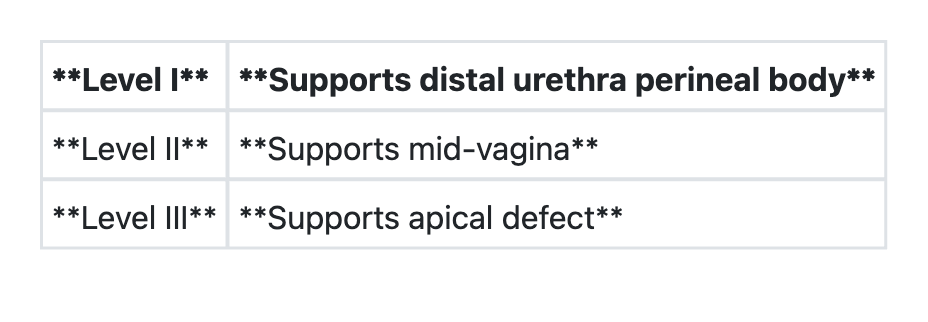
Explanation: ***Upper 2/3rd of anterior vaginal wall*** - A **cystocele** specifically refers to the prolapse of the **bladder** through the **upper two-thirds of the anterior vaginal wall**. - The bladder is primarily supported by the **pubocervical fascia** overlying the upper 2/3rd of the anterior vaginal wall. - When this fascial support weakens, the bladder herniates into the vaginal lumen, creating a cystocele. - This is the **classic anatomical definition** found in standard gynecology textbooks. *Lower 2/3rd of anterior vaginal wall* - This option is anatomically incorrect for defining a pure cystocele. - While severe cystoceles can extend downward, the primary defect involves the upper two-thirds where bladder support is located. *Lower 1/3 of anterior vaginal wall* - Prolapse of the lower 1/3 of the anterior vaginal wall is called a **urethrocele**, which involves prolapse of the **urethra**. - A **cystourethrocele** refers to combined prolapse of both bladder and urethra. - This is distinct from a pure cystocele. *Upper 1/3 of anterior vaginal wall* - While the upper third is involved in cystocele, the complete anatomical definition encompasses the **entire upper two-thirds** (upper 2/3rd), not just the upper one-third. - Limiting it to only the upper 1/3 would be incomplete and anatomically imprecise.
Explanation: ***Le Fort's repair*** - This procedure, a **colpocleisis**, involves partially or completely closing the vagina, making it an ideal choice for elderly, non-sexually active women with significant medical comorbidities who require surgical management of severe prolapse. - The goal is symptom relief with a **minimally invasive** procedure, avoiding a major abdominal surgery that might be risky for a patient with a history of MI, diabetes, and hypertension. *Cervicopexy* - This procedure aims to support the cervix, often done in conjunction with uterine preservation for prolapse. - It is typically performed in younger, sexually active women who wish to retain their uterus, which is not the case for this patient. *Vaginal hysterectomy* - While vaginal hysterectomy is a common procedure for uterine prolapse, in this patient with significant comorbidities and who is not sexually active, a less invasive procedure like Le Fort's repair would be preferred to minimize surgical risks. - This procedure removes the uterus and may be combined with efforts to provide apical support; however, it is a more extensive surgery than colpocleisis. *Wait and watch* - Given the complaint of **procidentia**, which represents severe prolapse, a "wait and watch" approach is inappropriate as it implies significant symptoms and risk of complications, such as ulceration or infection. - This approach is typically reserved for women with **mild to moderate prolapse** and minimal symptoms, or those who decline active treatment, which is not indicated here.
Explanation: ***Elongated cervix*** - **Purandare's cervicopexy** is a surgical procedure specifically designed to treat **elongated cervix** (cervical elongation) associated with uterine prolapse. - This technique involves fixing the elongated cervix to the anterior abdominal wall to provide support and correct the anatomical defect. - The procedure addresses cervical elongation by suspending the cervix, preventing its descent and associated prolapse symptoms. - It is particularly useful when cervical elongation is a significant component of uterine prolapse. *Congenital prolapse of uterus* - While **congenital prolapse of uterus** is a rare condition requiring surgical management, Purandare's cervicopexy is not the primary procedure specifically designed for this indication. - Congenital prolapse may require various surgical approaches depending on the severity and anatomical findings. *Missed IUD* - A **missed IUD** refers to a situation where an intrauterine device is no longer found in its expected position within the uterus. - Management typically involves retrieval of the IUD, often with instruments, and does not involve cervical suspension procedures. *Incompetent cervix* - An **incompetent cervix** is a condition where the cervix dilates painlessly in the second trimester, leading to preterm birth or pregnancy loss. - The standard treatment is **cervical cerclage**, a stitch placed around the cervix to keep it closed during pregnancy, not cervicopexy which is a suspension procedure for prolapse.
Explanation: ***Elderly menopausal patients with advanced prolapse*** - Le Fort's operation is a **colpocleisis** procedure, involving partial closure of the vagina, and is suitable for elderly patients who are no longer sexually active. - It provides a definitive and durable solution for **advanced pelvic organ prolapse** with a low recurrence rate. *Women under 40 years who are desirous of retaining their menstrual and reproduction function* - This procedure renders a woman unable to have sexual intercourse and potential future vaginal deliveries, making it unsuitable for those desiring to **retain reproductive function**. - It also makes future gynecological examinations and access to the cervix difficult, which is important for **younger women**. *Women over 40 years, those who have completed their families* - While these women may have completed their families, suitability for Le Fort's depends more on whether they are sexually active, as the procedure **obliterates the vaginal canal**. - Other less invasive or reconstructive surgeries would be preferred if **sexual function** is to be preserved. *Young woman suffering from second or third degree prolapse* - Young women with prolapse typically undergo **reconstructive procedures** to preserve their anatomical and functional integrity, including sexual function and future fertility. - Le Fort's operation would be a last resort or generally contraindicated in young women due to its **irreversible nature** and impact on quality of life.
Explanation: ***Stress incontinence*** - This is characterized by **involuntary urine leakage** during activities that increase intra-abdominal pressure, such as **coughing, sneezing**, laughing, or exercising. - It often results from **weakening of the pelvic floor muscles** and urethral sphincter, frequently seen in women, especially after childbirth or with aging. *Functional incontinence* - This type involves **involuntary urine loss** due to the inability or unwillingness to reach the toilet in time, often related to **cognitive impairments** or **physical disabilities**. - The urinary tract itself is intact, but external factors prevent timely voiding. *Overflow incontinence* - This occurs when the **bladder does not empty completely** and urine leaks out when the bladder becomes overly full. - It is typically caused by **bladder outlet obstruction** (e.g., enlarged prostate in men) or impaired bladder muscle contraction. *Urgency incontinence* - This is defined by a **sudden, strong urge to urinate** followed by involuntary loss of urine, often before reaching a restroom. - It is caused by **involuntary detrusor muscle contractions** and is commonly associated with overactive bladder syndrome.
Pelvic Floor Anatomy and Function
Practice Questions
Urinary Incontinence: Classification
Practice Questions
Stress Urinary Incontinence
Practice Questions
Overactive Bladder and Urge Incontinence
Practice Questions
Pelvic Organ Prolapse: Classification
Practice Questions
Cystocele and Urethrocele
Practice Questions
Uterine Prolapse
Practice Questions
Rectocele and Enterocele
Practice Questions
Surgical Management in Urogynecology
Practice Questions
Conservative Management Approaches
Practice Questions
Get full access to all questions, explanations, and performance tracking.
Start For Free