Use of folic acid to prevent congenital malformations should be best initiated:
Most accurate method to confirm viable intrauterine pregnancy at 6 weeks' gestation is
A pregnant lady delivers a healthy baby via normal delivery. What is the earliest time at which an intrauterine contraceptive device (IUCD) can be inserted?
Which of the following is an absolute indication for elective repeat caesarean section in a patient with previous caesarean delivery?
A woman comes after 96 hours post coitus. Best contraceptive of choice is?
A woman dies from a heart disease six days after delivery. This would come under the category of :
The causes for subinvolution of uterus are the following except:
As per the definition of the World Health Organization, 'late maternal death' is defined as the death of a woman from direct or indirect obstetric causes, after more than X days but less than one year after termination of pregnancy. Which one among the following is the correct value of X?
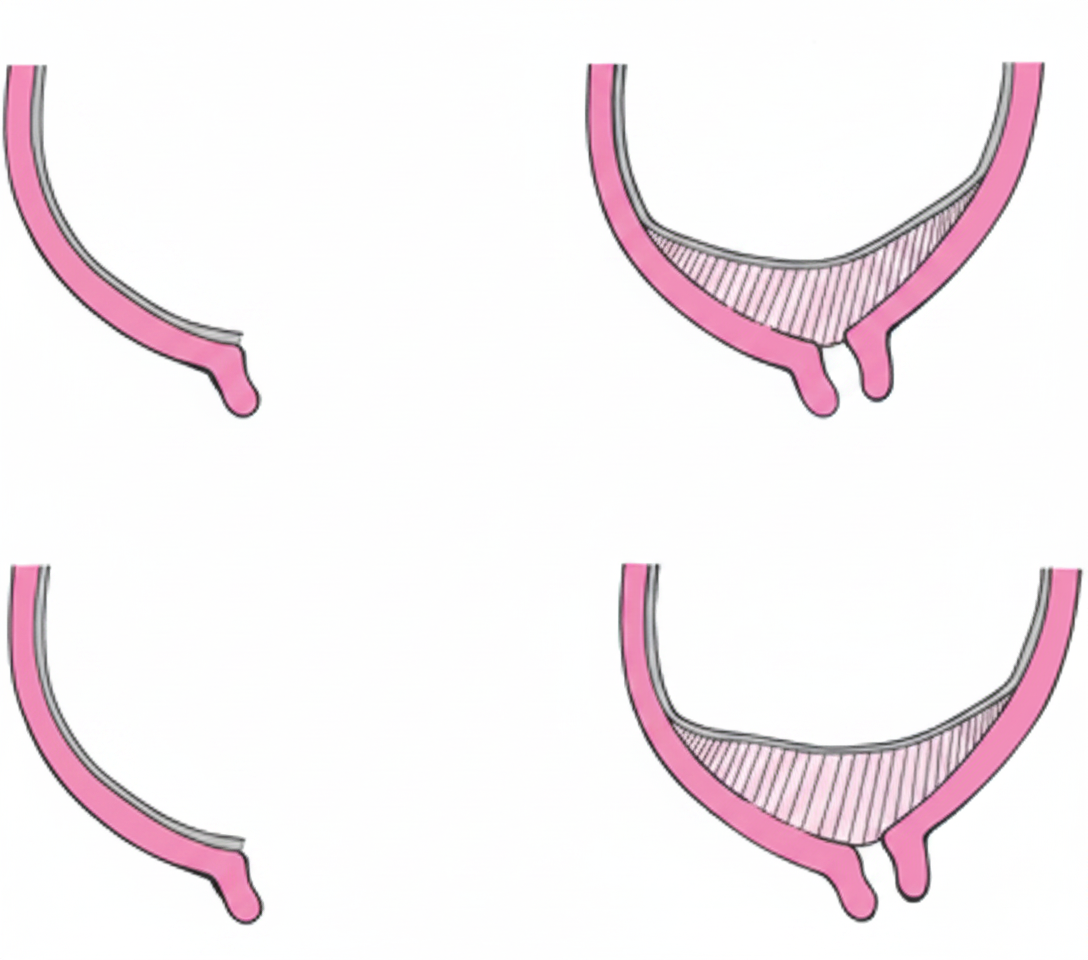
What is the type of placenta previa shown below?
Consider the following regarding the use of Magnesium Sulphate: 1. Used as tocolytic 2. As neuroprotective agent 3. Used in management of postpartum eclampsia Which of the statements given above are correct?
Explanation: ***Before conception*** - **Neural tube defects (NTDs)**, such as spina bifida and anencephaly, occur very early in pregnancy, often before a woman even knows she is pregnant. - Adequate folate levels are crucial for **neural tube closure**, which happens between 21 and 28 days after conception. Therefore, supplementation needs to start before this period. *During 1st trimester of pregnancy* - While still helpful, initiating folic acid during the first trimester might be **too late** to prevent all NTDs. - The critical period for neural tube formation has largely passed, meaning the **maximum preventive effect** may not be achieved. *During 2nd trimester of pregnancy* - This is **too late** for primary prevention of NTDs, as neural tube closure is completed in the first few weeks of gestation. - At this stage, folic acid supplementation would primarily benefit the ongoing **fetal growth and development**, but not the prevention of NTDs. *During 3rd trimester of pregnancy* - This timing is **ineffective** for the prevention of congenital malformations like NTDs, which have already occurred or been avoided by this point. - Folic acid at this stage primarily supports continued fetal growth and maternal health, but offers no additional benefit regarding **early developmental defects**.
Explanation: **USG fetal cardiac activity** - At 6 weeks' gestation, the presence of **fetal cardiac activity** on ultrasound is the definitive sign of a **viable intrauterine pregnancy**. - This finding confirms both the presence of an embryo and its vital status, providing direct evidence of viability. *Urine HCG test* - A **urine HCG test** confirms the presence of pregnancy but does not provide information about its viability or location (intrauterine vs. ectopic). - High HCG levels can be present even in non-viable or ectopic pregnancies. *Clinical examination* - A **clinical examination** may reveal signs consistent with pregnancy, such as an enlarged uterus, but it cannot definitively confirm **intrauterine location** or **fetal viability** at 6 weeks' gestation. - These findings are supportive but not diagnostic of viability. *Doppler ultrasound in specific clinical situations* - Doppler ultrasound is typically used to assess **blood flow** to various structures and may be useful in later pregnancy for assessing fetal well-being or placental function. - It is not the primary or most accurate method to confirm early **fetal cardiac activity** or viability at 6 weeks' gestation compared to standard grayscale ultrasound.
Explanation: ***Within 48 hours*** - **Immediate postpartum insertion** (within 48 hours of delivery) is considered safe and effective, with high client satisfaction and continuation rates. - While there's a slightly higher risk of **expulsion** compared to later insertions, it provides immediate contraception for women who might not return for follow-up. *After 6 weeks* - This is a common time for postpartum check-ups and a traditional window for IUCD insertion, after the uterus has largely involuted. - However, it is not the **earliest possible time**, as immediate postpartum insertion is also an option. *After 3 months* - Delaying IUCD insertion until three months postpartum is unnecessarily late if the woman desires contraception sooner. - This longer delay could increase the risk of an **unintended pregnancy** during the interim. *After 1 month* - Insertion at one month postpartum is also a safe option, after early uterine involution. - However, similar to the six-week option, it is not the **earliest possible time** for insertion.
Explanation: ***Previous classical incision*** - A **classical incision** (vertical uterine incision in the upper uterine segment) carries a **4-9% risk of uterine rupture** in subsequent pregnancies, compared to 0.5-1% with low transverse incisions. - **VBAC (Vaginal Birth After Cesarean) is absolutely contraindicated** with a previous classical incision due to the high rupture risk. - This is a **standing absolute indication** for elective repeat cesarean section at 36-37 weeks gestation. - Other absolute indications include previous T-incision, J-incision, and previous uterine rupture. *Uterine rupture/scar dehiscence* - **Uterine rupture** is a catastrophic **intrapartum emergency** requiring immediate cesarean delivery. - This is not a pre-existing "indication" but rather an **acute complication** that occurs during labor. - Previous uterine rupture (not active rupture) would be an absolute indication for planned repeat C-section. *Placenta accreta spectrum* - This involves abnormal placental invasion and is strongly associated with previous C-sections. - While it requires cesarean delivery with possible hysterectomy, it is a **complication of placental implantation**, not a direct indication based on the previous uterine incision type. - It necessitates C-section but is not specific to the type of previous cesarean scar. *Failed TOLAC (Trial of Labor After Cesarean)* - A **failed TOLAC** means cesarean delivery is required because vaginal delivery could not be achieved. - This is an **intrapartum decision** based on failure to progress or fetal compromise, not a pre-existing indication for planned repeat C-section.
Explanation: ***IUCD*** - An **intrauterine contraceptive device (IUCD)** can be inserted up to **5 days (120 hours)** after unprotected intercourse or within 5 days of the earliest estimated ovulation. - It is the **most effective form of emergency contraception**, offering approximately **99% efficacy**. - Provides **immediate ongoing contraception** after insertion, making it the optimal choice at 96 hours post-coitus. *Progesterone only pills* - **Progesterone-only emergency contraceptive pills** (e.g., levonorgestrel) are most effective when taken within **72 hours (3 days)** of unprotected intercourse. - At **96 hours**, their efficacy is **significantly reduced**, making them suboptimal compared to IUCD. *OCP* - **Combined oral contraceptive pills (OCPs)** used for emergency contraception (Yuzpe method) are less effective and have more side effects than other emergency contraceptive methods. - Their effectiveness also significantly declines after **72 hours** post-coitus. *Mifepristone* - **Mifepristone** is an **anti-progestin** that can be used for emergency contraception within **120 hours (5 days)** of unprotected intercourse. - While effective within this timeframe at **96 hours**, the **IUCD remains superior** due to its higher efficacy (>99% vs ~98%) and provision of ongoing contraception.
Explanation: ***Indirect maternal death*** - An **indirect maternal death** is defined as one resulting from a pre-existing disease or a disease that developed during pregnancy, which was not due to direct obstetric causes but was aggravated by the physiological effects of pregnancy. - Heart disease in this context, especially when occurring six days postpartum, is often a pre-existing condition exacerbated by pregnancy-related cardiovascular demands, fitting this definition. *Direct maternal death* - **Direct maternal deaths** are those resulting from obstetric complications of the pregnant state, from interventions, omissions, incorrect treatment, or from a chain of events resulting from any of these. - Examples include severe hemorrhage, pre-eclampsia/eclampsia, or obstructed labor, which are not described in this scenario. *Unclassified death* - An **unclassified death** is assigned when there is insufficient information to determine the cause of death as direct, indirect, or coincidental. - In this case, the cause of death (heart disease) is known, making classification possible. *Medical (non-maternal) death* - This category usually refers to deaths from medical conditions **unrelated to or unaggravated by pregnancy**. - While heart disease is a medical condition, its occurrence six days postpartum strongly suggests that the physiological changes of pregnancy played a significant role in its exacerbation or presentation, thereby classifying it as a maternal death rather than a coincidental non-maternal death.
Explanation: ***Established breast feeding*** - **Breastfeeding** promotes the release of **oxytocin**, which aids in uterine contractions and thus helps the uterus return to its pre-pregnancy size and state, preventing subinvolution. - Therefore, it is a protective factor against subinvolution, not a cause. *Retained placental fragments* - **Retained placental tissue** prevents the uterus from contracting effectively, leading to continued bleeding and an enlarged, soft uterus. - This physical obstruction interferes with the normal process of **involution**. *Multiple pregnancy* - A uterus stretched significantly by a **multiple pregnancy** (e.g., twins or triplets) may have difficulty contracting efficiently after birth. - The increased uterine size and distension can impair the myometrial fibers' ability to involute properly. *Pelvic infection* - **Infection** within the uterus (e.g., **endometritis**) can interfere with uterine contractions and tissue repair. - The inflammatory process can delay or prevent the normal physiological reduction in uterine size, contributing to subinvolution.
Explanation: ***Correct: 42*** - According to the **World Health Organization (WHO)**, **late maternal death** is defined as the death of a woman from direct or indirect obstetric causes occurring **more than 42 days** but less than one year after termination of pregnancy. - This definition helps in categorizing and understanding the timeframe and causes of maternal mortality beyond the immediate postpartum period. - The **42-day threshold** distinguishes between direct maternal deaths (within 42 days) and late maternal deaths (42 days to 1 year). *Incorrect: 21* - This value is not used in the WHO definition for the onset of late maternal death. - The **42-day mark** is the internationally recognized threshold for distinguishing between the immediate postpartum period and late maternal complications. *Incorrect: 7* - Seven days is too short a period for a death to be classified as **"late maternal death"**; deaths within this timeframe fall under **direct maternal deaths** in the immediate postpartum period. - This period is often associated with immediate postpartum complications such as **postpartum hemorrhage**, **eclampsia**, or **early-onset puerperal sepsis**. *Incorrect: 84* - While 84 days (12 weeks) is a significant period in postpartum recovery for some physiological changes, it is not the specific threshold used by the **WHO** to define the beginning of **late maternal death**. - The international standard remains **42 days** (6 weeks) as the transition point between direct and late maternal deaths.
Explanation: ***Type 4*** - Type 4 placenta previa, also known as **complete or central placenta previa**, occurs when the **placenta completely covers the internal cervical os**. - This type necessitates a **cesarean section** delivery due to the complete obstruction of the birth canal. *Type 1* - Type 1 placenta previa, or **low-lying placenta**, means the placenta is in the lower uterine segment but **does not reach the cervical os**. - It often resolves by term as the uterus grows, potentially allowing a **vaginal delivery**. *Type 2* - Type 2 placenta previa, or **marginal placenta previa**, indicates the placental edge **reaches the internal cervical os** but does not cover it. - While a vaginal delivery might be possible, there's an increased risk of **hemorrhage**. *Type 3* - Type 3 placenta previa, or **partial placenta previa**, is where the placenta **partially covers the internal cervical os** but not completely. - This type also typically requires a **cesarean section** due to the obstruction.
Explanation: ***1, 2 and 3*** - **Magnesium sulfate** is a well-established **tocolytic agent**, used to delay preterm labor by relaxing the uterine smooth muscle. - It is also utilized for its **neuroprotective effects** in preterm infants, reducing the risk of cerebral palsy and other neurological sequelae when administered to mothers at risk of preterm birth. - Furthermore, magnesium sulfate is the **drug of choice** for the prevention and management of **eclampsia and pre-eclampsia**, which can occur both during pregnancy and in the postpartum period. *1 and 3 only* - This option correctly identifies the use of **magnesium sulfate** as a **tocolytic** and for **postpartum eclampsia**, but incorrectly omits its significant role as a **neuroprotective agent**. - The neuroprotective effect, particularly in reducing the risk of cerebral palsy in preterm infants, is a crucial indication for magnesium sulfate use. *2 and 3 only* - This option correctly recognizes **magnesium sulfate's** application as a **neuroprotective agent** and in **postpartum eclampsia**, but overlooks its primary role as a **tocolytic** for preterm labor. - Its ability to relax uterine contractions makes it a vital medication in managing threatened preterm delivery. *1 and 2 only* - This option accurately states the use of **magnesium sulfate** as a **tocolytic** and a **neuroprotective agent**, but fails to include its critical role in the management of **postpartum eclampsia**. - Eclampsia, defined by seizures in a pre-eclamptic patient, is effectively prevented and treated with magnesium sulfate.
Get full access to all questions, explanations, and performance tracking.
Start For Free