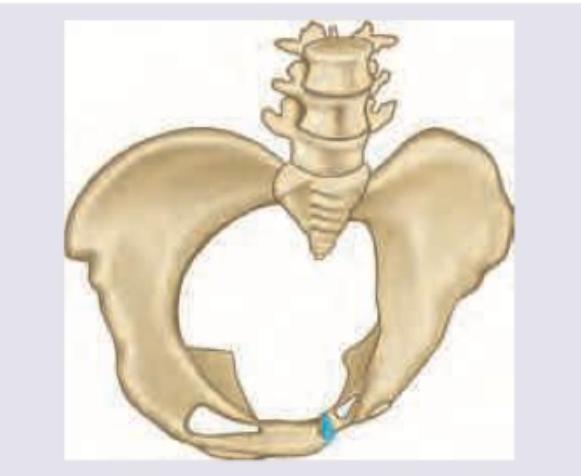
The image shows:

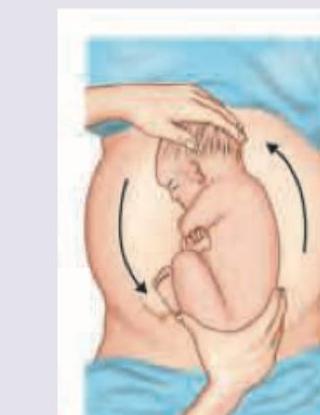
Identify the manoeuvre shown:
Which of the following are contraindications to External Cephalic Version (ECV) in breech? I. Pregnancy less than 36 weeks II. Multiple pregnancy III. Previous cesarean delivery IV. Rhesus isoimmunization Select the correct answer using the code given below :
Which of the following statements are correct regarding audit in Obstetrics and Gynaecology? I. It can replace the out of date clinical practices with better ones. II. It is an efficient educational tool. III. It should be based on scientific evidences with facts and figures. IV. It is not labour-intensive. Select the answer using the code given below :
Which one of the following is an indication for knife conisation? 1. Treatment of Nabothian follicle 2. Diagnosis and directed biopsy of cervix when punch biopsy is inadequate 3. Unsatisfactory colposcopy (transformation zone not fully visible) 4. Negative endocervical curettage Select the correct answer using the code given below:
Which one of the following is a prerequisite for Endometrial Ablation ?
Which of the following are essential steps of Fothergill's operation? 1. Laparoscopic or vaginal ligation 2. Amputation of cervix 3. Plication of Mackenrodt's ligaments in front of cervix 4. Anterior colporrhaphy Select the correct answer using the code given below.
Which of the following is a common pathology that increases the risk of uterine injury during abdominal hysterectomy?
Spiegelberg's criteria for diagnosis of ovarian pregnancy include the following except
A multiparous woman presenting with postpartum haemorrhage due to placenta increta is best managed by
Explanation: ***Rachitic pelvis*** - The image illustrates a **flattened anteroposterior diameter** and a **pronounced protrusion of the sacrum** into the pelvic cavity. - These features are characteristic of a rachitic pelvis, which results from **rickets** (vitamin D deficiency) in childhood, leading to softened bones and deformities due to gravitational and muscular forces. *Scoliotic pelvis* - A scoliotic pelvis would show **asymmetry** in the pelvic bones due to **lateral curvature of the spine**, which is not the primary symmetrical flattening seen here. - This condition involves a **twisting or rotation** of the pelvis, rather than the anteroposterior compression depicted. *Osteomalacic pelvis* - An osteomalacic pelvis, while also due to poor bone mineralization, typically presents with a **triradiate or trefoil shape** resulting from indentation of the acetabula and collapse of the sacrum into the pelvic canal, leading to a **heart-shaped inlet**. - While related to vitamin D deficiency, the specific deformation pattern in the image with characteristic flattening is more indicative of a rachitic pelvis from childhood rather than adult-onset osteomalacia. *Naegele pelvis* - A Naegele pelvis is an **obliquely contracted pelvis** characterized by **atrophy or absence of one sacral ala** and ankylosis of the corresponding sacroiliac joint. - This results in a highly asymmetrical, severely distorted pelvic inlet, which is distinct from the symmetrical flattening observed in the image.
Explanation: ***External cephalic version*** - The image depicts a procedure where external pressure is applied to the maternal abdomen to **rotate the fetus from a breech or transverse presentation to a cephalic (head-down) presentation**. - This manoeuvre aims to enable a **vaginal birth** by positioning the head towards the birth canal. *Loveset manoeuvre* - The Loveset manoeuvre is used during a **breech delivery to assist in the delivery of the fetal arms**. - It involves rotating the fetal trunk to enable the delivery of one arm at a time, which is not what is shown here. *Internal podalic version* - Internal podalic version is a procedure where the obstetrician **inserts a hand into the uterus to grasp the fetal feet and turn the fetus to a breech presentation**. - This is typically performed to deliver a second twin and is done **internally**, unlike the external manipulation shown. *Leopold manoeuvre* - Leopold manoeuvres are a series of four palpations performed on the pregnant abdomen to **determine fetal lie, presentation, position, and engagement**. - They are diagnostic manoeuvres and do not involve actively changing the fetal position as depicted.
Explanation: ***II, III and IV*** - **Multiple pregnancy** is an absolute contraindication to ECV due to significantly increased risks of cord entanglement, placental abruption, premature rupture of membranes, and the complexity of managing two or more fetuses during the procedure. - **Previous cesarean delivery** is generally considered a relative contraindication due to the theoretical increased risk of uterine rupture during ECV, though some centers perform ECV in carefully selected cases with prior cesarean section. - **Rhesus isoimmunization** is a contraindication because ECV carries the risk of fetomaternal hemorrhage, which can worsen existing isoimmunization and increase maternal antibody production, potentially compromising fetal wellbeing. *I, II and III* - While **multiple pregnancy** and **previous cesarean delivery** are valid contraindications, **pregnancy less than 36 weeks** is not a true contraindication to ECV. - The standard timing for ECV is at or after 37 weeks of gestation, but being less than 36 weeks represents inappropriate timing rather than a contraindication. If there were a compelling reason for ECV before 36 weeks, the early gestational age itself would not prohibit the procedure. *I, III and IV* - **Previous cesarean delivery** and **Rhesus isoimmunization** are correct contraindications. - However, **pregnancy less than 36 weeks** is not a standard contraindication - it simply represents a gestational age before the recommended timing for the procedure (≥37 weeks). *I, II and IV* - **Multiple pregnancy** and **Rhesus isoimmunization** are valid contraindications. - **Pregnancy less than 36 weeks** is not a contraindication but rather reflects suboptimal timing, as ECV is typically performed at 37+ weeks when the likelihood of spontaneous version has decreased and the fetus is term.
Explanation: ***Correct: I, II and III*** - Statement I is correct: Clinical audit aims to improve **patient care** and **outcomes** by systematically reviewing care against explicit criteria, identifying areas for improvement, and implementing changes that **replace outdated practices** with evidence-based approaches. - Statement II is correct: Audit serves as a powerful **educational tool** by providing feedback to clinicians, highlighting best practices, and encouraging critical appraisal of current methods. - Statement III is correct: Effective audits must be based on **scientific evidence** with facts and figures to ensure validity, robustness, and clinical relevance. - Statement IV is **incorrect**: Clinical audit is **labour-intensive**, requiring significant time, resources, and coordination for data collection, analysis, meetings, implementation of changes, and follow-up assessments. *Incorrect: I, II and IV* - While statements I and II are correct, statement IV is incorrect because audit is generally **labour-intensive**, not the opposite. Effective audits involve substantial resource-demanding tasks. *Incorrect: I, III and IV* - While statements I and III are correct (audit replaces outdated practices with evidence-based approaches), statement IV is incorrect as thorough audits require **considerable effort and resources**. *Incorrect: II, III and IV* - While statements II and III are correct (audit as educational tool based on scientific evidence), statement IV is incorrect; audits often require **substantial time and effort** for all phases of the audit cycle.
Explanation: ***2 and 3 only*** - **Knife conisation** (cold-knife conization) is a surgical procedure that removes a **cone-shaped piece of tissue** from the cervix for both diagnostic and therapeutic purposes. - **Statement 2 is correct**: Conisation is indicated for diagnosis and obtaining adequate tissue when punch biopsy is inadequate or when there is discrepancy between cytology, colposcopy, and histology. - **Statement 3 is correct**: Unsatisfactory colposcopy (when the transformation zone cannot be fully visualized) is a key indication for diagnostic conisation. *1, 2 and 3* - This option incorrectly includes treatment of **Nabothian follicles**. Nabothian cysts are benign retention cysts that are asymptomatic and require **no treatment**. They are not an indication for conisation. *1 and 4* - Both statements are **incorrect**. Nabothian follicles do not require treatment, and a **negative endocervical curettage (ECC)** is not an indication for conisation. In fact, a **positive ECC** (showing dysplasia) would be an indication. *1 and 3 only* - This option incorrectly includes **Nabothian follicle treatment**, which is not an indication for conisation as these are benign cysts requiring no intervention.
Explanation: ***Correct: Completed childbearing*** **Completed childbearing** is the key **prerequisite** for **endometrial ablation (EA)**. This is a fundamental requirement because: - **EA significantly impairs or destroys fertility** by ablating the endometrial lining essential for implantation - Pregnancy after EA is **rare and high-risk**, with increased chances of **miscarriage, ectopic pregnancy, preterm birth, and placental abnormalities** (placenta accreta, previa) - Patients must be **thoroughly counseled** that EA is intended as a permanent solution and future pregnancy is contraindicated - Most guidelines and consent protocols require documentation that the patient has completed childbearing or accepts permanent loss of fertility - While not an absolute contraindication if a patient insists, the strong recommendation is that childbearing should be complete *Incorrect: Presence of large submucous fibroids* - Large submucous fibroids are a **CONTRAINDICATION**, not a prerequisite - Fibroids distort the uterine cavity, making safe and effective ablation **difficult or impossible** - They may require **hysteroscopic myomectomy** first, or EA may not be appropriate at all - This is the opposite of a prerequisite *Incorrect: Desire to maintain fertility* - This is a strong **CONTRAINDICATION** for EA - EA destroys the endometrium needed for pregnancy - Patients desiring future fertility should pursue other treatments for abnormal uterine bleeding - This directly contradicts the purpose and effects of the procedure *Incorrect: Uterine size >16 weeks* - A uterus larger than **12 weeks' gestation** is a **relative contraindication** or limitation - Increased risk of **incomplete ablation, perforation**, and treatment failure - Large uteri often indicate underlying pathology needing alternative management - This is a contraindication, not a prerequisite
Explanation: ***2, 3 and 4*** - **Fothergill's operation** (also known as Manchester operation) is a surgical procedure for **pelvic organ prolapse** that involves amputation of the cervix, plication of Mackenrodt's ligaments, and anterior colporrhaphy. - The goal is to correct **cervical elongation** and provide support to the uterus and bladder. *1, 2 and 3* - This option incorrectly includes "laparoscopic or vaginal ligation" as an essential step. Fothergill's operation does not typically involve ligation of structures; it focuses on correcting prolapse through tissue reshaping and support. - While cervical amputation and plication of Mackenrodt's ligaments are essential, ligation is not a characteristic component. *1, 2 and 4* - This option also incorrectly includes "laparoscopic or vaginal ligation" and misses the crucial step of "plication of Mackenrodt's ligaments in front of cervix." - The plication of these ligaments is fundamental to providing uterine support and is a defining feature of the Fothergill's procedure. *1, 3 and 4* - This option again incorrectly includes "laparoscopic or vaginal ligation" and omits "amputation of the cervix." - Cervical amputation is an essential component of Fothergill's operation, addressing cervical elongation which contributes to prolapse.
Explanation: ***Pelvic endometriosis*** - Pelvic endometriosis causes **dense adhesions, anatomical distortion, and obliteration of normal tissue planes**, making surgical dissection technically challenging during hysterectomy. - The **fibrotic adhesions** bind pelvic organs together, obscure surgical landmarks, and increase the risk of inadvertent injury to the uterus, bladder, ureters, and bowel. - Studies show that **endometriosis is a significant risk factor** for intraoperative complications, including uterine perforation and vascular injury. - The **distorted pelvic anatomy** requires careful dissection and may necessitate modifications in surgical technique. *Hydrosalpinx* - Hydrosalpinx is a **fluid-filled, dilated fallopian tube** resulting from distal tubal obstruction, typically from prior pelvic inflammatory disease. - While it may be encountered during hysterectomy, it does **not distort the uterine anatomy or create adhesions** that would increase the risk of uterine injury. - Hydrosalpinx is generally easily separated from surrounding structures. *Ovarian teratoma* - Ovarian teratoma (dermoid cyst) is a **benign germ cell tumor of the ovary** containing mature tissues from all three germ layers. - It is typically **well-encapsulated and does not cause significant pelvic adhesions** unless there has been rupture or torsion. - It does not increase the risk of uterine injury during hysterectomy. *Adenomyosis* - Adenomyosis is **endometrial tissue within the myometrium**, causing an enlarged, boggy, tender uterus. - While adenomyosis is often an **indication for hysterectomy**, it is an intrinsic uterine condition that does **not cause pelvic adhesions or anatomical distortion**. - The uterus may be more vascular and bulky, but this does not specifically increase the risk of uterine injury during standard hysterectomy technique.
Explanation: ***Gestational sac is connected with infundibulopelvic ligament*** - Spiegelberg's criteria define specific conditions for diagnosing **ovarian pregnancy**, and a connection to the infundibulopelvic ligament is **not one of them**. - This criterion is associated more with **tubal pregnancies** or other ectopic locations rather than an ovarian implantation. *Gestational sac must occupy the position of ovary* - This is a key criterion by Spiegelberg, indicating that the **pregnancy is located within the ovary** itself, which is essential for diagnosis. - The macroscopic observation of the gestational sac within the ovarian borders is crucial in differentiating it from other ectopic sites. *Ovarian tissue should be present in the wall of gestational sac on histopathology* - This is also a fundamental Spiegelberg criterion, confirming the ovarian origin through **histopathological examination**. - The presence of **ovarian stroma** or **follicular structures** within the sac wall histologically proves ovarian implantation. *Tube on the affected side must be intact* - This criterion ensures that the **fallopian tube is not involved** in the pregnancy, ruling out a tubal ectopic pregnancy. - An intact tube supports the diagnosis of an ovarian pregnancy by excluding the most common site of ectopic gestation.
Explanation: ***Hysterectomy*** - In placenta increta, the chorionic villi invade into the myometrium, causing abnormal placental adherence that cannot be safely separated. - **Total hysterectomy** is the definitive management for placenta increta with active postpartum hemorrhage. - The standard approach is to perform hysterectomy with the placenta left **in situ** (en bloc removal), as attempting to remove the adherent placenta first dramatically increases the risk of **catastrophic hemorrhage**. - This is the most appropriate answer as it represents the gold standard surgical management. *Hysterectomy with the removal of the adherent placenta* - While hysterectomy is correct, this phrasing is potentially misleading as it may imply **manual removal** of the placenta before or during hysterectomy. - In modern practice, the placenta is typically left in place and removed **en bloc** with the uterus to minimize blood loss. - Attempting to remove a placenta increta before hysterectomy can cause **uncontrollable hemorrhage**. *Internal iliac artery ligation* - This procedure reduces blood flow to the uterus by ligating the **internal iliac arteries** but is a temporizing measure or adjunct to other treatments. - It does not address the underlying issue of the **adherent placenta** invading the myometrium and may not be sufficient to control severe hemorrhage in placenta increta. - May be used as part of a fertility-sparing approach in selected stable cases, but not appropriate as definitive management for active PPH. *Packing the uterus followed by a course of methotrexate* - **Uterine packing** is a temporary measure for diffuse atonic bleeding and is generally inappropriate for **placenta increta** due to the risk of concealed hemorrhage. - **Methotrexate** may be considered in highly selected cases where placental tissue is left in situ as part of a conservative/fertility-sparing approach in **stable** patients, but it is not appropriate for active postpartum hemorrhage. - This is not definitive management for acute PPH due to placenta increta.
Cesarean Section Techniques
Practice Questions
Vaginal Birth After Cesarean
Practice Questions
Instrumental Deliveries
Practice Questions
Breech Delivery
Practice Questions
Episiotomy and Repair
Practice Questions
Management of Multiple Gestation
Practice Questions
Cervical Cerclage
Practice Questions
Obstetric Hysterectomy
Practice Questions
Surgery During Pregnancy
Practice Questions
Surgical Complications in Obstetrics
Practice Questions
Get full access to all questions, explanations, and performance tracking.
Start For Free