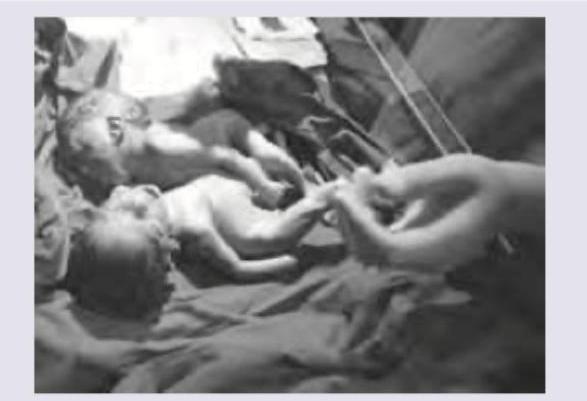
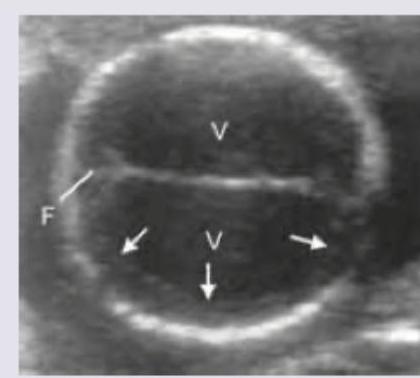
According to Hellin's law, what are the chances of twins in pregnancy?
What is the venous drainage of the upper part of the uterus and placenta?
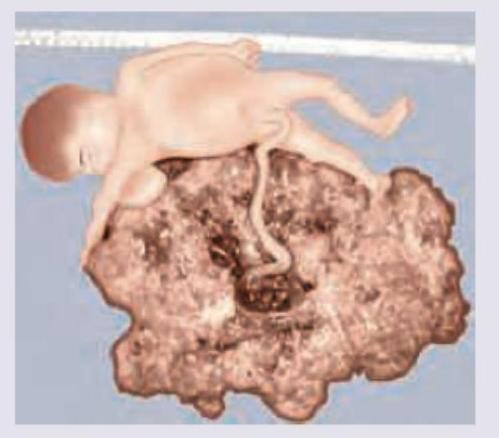
Which of the following predisposes to placenta previa?
Which of the following is NOT a complication of placenta previa?
A pregnant lady at 32 weeks' gestation presents with a BP of 160/110 mm Hg, proteinuria, and retinal hemorrhage. What is the definitive management of choice in this case?
Singer's alkali denaturation test is done to estimate:
What is the initial site of RBC production in a fetus?
In a lady at 32 weeks gestation, an injection of dexamethasone is given to prevent which of the following in the newborn?
What is true about hematological changes in pregnancy?
Regarding autoimmune hemolytic anemia in pregnancy, all are true except?
Explanation: **Explanation:** **Hellin’s Law** is a mathematical rule used to estimate the natural frequency of spontaneous multiple gestations. It states that if the incidence of twins is **1 in $N$**, the incidence of triplets is **1 in $N^2$**, and quadruplets is **1 in $N^3$**. 1. **Why Option C is Correct:** Traditionally, Hellin’s Law uses the value of **80** as the base ($N$). Therefore: * **Twins:** 1 in 80 ($80^1$) * **Triplets:** 1 in 6,400 ($80^2$) * **Quadruplets:** 1 in 512,000 ($80^3$) While modern statistics show variations due to ethnicity and the use of Assisted Reproductive Technology (ART), **1 in 80** remains the standard "textbook" answer for medical examinations like NEET-PG. 2. **Why Other Options are Incorrect:** * **Options A, B, and D:** These values do not align with the mathematical progression established by Hellin. While some older texts or specific populations (like the Yoruba tribe in Nigeria) may show a higher incidence (e.g., 1 in 40), the universal rule applied in standard obstetric teaching is based on the factor of 80. **High-Yield Clinical Pearls for NEET-PG:** * **Zygosity:** In spontaneous twins, 2/3 are Dizygotic (fraternal) and 1/3 are Monozygotic (identical). * **The "N" Factor:** The incidence of dizygotic twins varies by race (highest in Blacks, lowest in Asians), maternal age, and parity. However, the incidence of **monozygotic twins** is constant worldwide at approximately **1 in 250** (or 3–4 per 1,000 births). * **Most Common Type:** The most common variety of monozygotic twins is **Monochorionic Diamniotic (70-75%)**, occurring due to division between days 4 and 8.
Explanation: **Explanation:** The venous drainage of the uterus is divided into two primary zones based on the anatomical level of the organ. 1. **Why Ovarian Vein is Correct:** The **upper part of the uterus** (fundus and upper body), along with the ovaries, fallopian tubes, and the **placental site**, drains primarily into the **pampiniform plexus** of the broad ligament. From here, the blood is carried by the **ovarian veins**. This is embryologically significant as the gonadal vessels descend from the level of the kidneys. The right ovarian vein drains into the Inferior Vena Cava (IVC), while the left ovarian vein drains into the Left Renal Vein. 2. **Why Incorrect Options are Wrong:** * **Uterine Vein:** This primarily drains the **lower part of the uterus**, cervix, and upper vagina. It originates from the uterine venous plexus and eventually empties into the internal iliac vein. * **Internal Iliac Vein:** While the uterine vein is a tributary of the internal iliac vein, it does not directly drain the fundus or the placenta. The internal iliac vein is the main drainage for the pelvic viscera but is not the primary route for the upper uterine segment. **High-Yield Clinical Pearls for NEET-PG:** * **Placental Drainage:** Because the placenta usually implants in the upper uterine segment, its venous return is predominantly via the ovarian veins. * **Ovarian Vein Thrombosis (OVT):** This is a rare but serious postpartum complication. It occurs more frequently on the **right side (90%)** because the right ovarian vein is longer, lacks valves, and enters the IVC at an acute angle, leading to stasis. * **Uterine Artery:** Remember that while venous drainage is split, the **Uterine Artery** (a branch of the internal iliac) provides the majority of the arterial supply to the entire uterus via its ascending and descending branches.
Explanation: **Explanation:** Placenta previa occurs when the placenta implants in the lower uterine segment, partially or completely covering the internal os. The primary pathophysiology involves **delayed implantation** or a **damaged endometrium**, which forces the blastocyst to seek a site lower in the uterus where the blood supply may be more favorable. **1. Why "Past Cesarean Pregnancy" is correct:** A previous Cesarean section is the most significant risk factor. The uterine scar causes **endometrial scarring and atrophy**, which interferes with normal decidualization in the upper segment. This "scarred" environment encourages the placenta to implant in the lower, unscarred segment. The risk increases linearly with the number of previous surgeries (the "dose-response" effect). **2. Why the other options are incorrect:** * **Primigravida:** Placenta previa is more common in **multiparous** women. Increased parity leads to repeated endometrial changes that predispose to lower implantation. * **Singleton pregnancy:** **Multiple gestations** (twins/triplets) are a risk factor because the larger surface area of the placenta(s) is more likely to encroach upon the lower uterine segment. * **Diabetes mellitus:** While associated with macrosomia and polyhydramnios, it is not a direct predisposing factor for placenta previa. **Clinical Pearls for NEET-PG:** * **Most common cause of painless, bright red vaginal bleeding** in the third trimester. * **Risk Factors (High-Yield):** Advanced maternal age (>35), smoking (causes compensatory placental hypertrophy), and previous uterine curettage. * **Placenta Accreta Spectrum:** There is a high association between placenta previa and placenta accreta in patients with a previous C-section scar. * **Diagnosis:** Transvaginal Ultrasound (TVS) is the gold standard (safer and more accurate than transabdominal). **Never** perform a digital vaginal examination (PV) unless previa is ruled out, as it can provoke torrential hemorrhage.
Explanation: **Explanation:** **Placenta Previa** occurs when the placenta is implanted in the lower uterine segment, partially or completely covering the internal os. **Why "Rapid dilation of the cervix" is the correct answer:** In placenta previa, the presence of the placenta in the lower segment actually acts as a physical barrier, often hindering the descent of the fetal head and interfering with the normal mechanism of labor. Furthermore, the lower uterine segment is thin and lacks the muscular efficiency of the upper segment, which can lead to **slow or poor cervical dilation** (cervical dystocia) rather than rapid dilation. Rapid dilation is more characteristic of "precipitate labor," which is not associated with previa. **Analysis of other options:** * **Malpresentation (A):** Since the placenta occupies the lower uterine segment, it prevents the fetal head from engaging, leading to a high incidence of breech, transverse, or oblique lies. * **Premature labor (B):** Episodes of antepartum hemorrhage (warning bleeds) often trigger uterine irritability or necessitate iatrogenic preterm delivery to ensure maternal and fetal safety. * **Retained placenta (D):** There is a high association between placenta previa and **placenta accreta spectrum** (morbidly adherent placenta) because the lower segment has a poorly developed decidua, making the placenta difficult to separate after delivery. **High-Yield NEET-PG Pearls:** * **Classic Presentation:** Painless, causeless, recurrent, bright red vaginal bleeding in the third trimester. * **Stallworthy’s Sign:** A posterior placenta previa can push the fetal head forward, making it difficult to feel the head on abdominal examination (associated with a higher risk of cord compression). * **Contraindication:** Digital vaginal examination is strictly contraindicated unless performed in an "Operation Theatre" setup (Double Setup Examination) as it can provoke torrential hemorrhage. * **Investigation of Choice:** Transvaginal Ultrasound (TVS) is the gold standard for diagnosis.
Explanation: **Explanation:** The patient presents with a blood pressure of 160/110 mm Hg and proteinuria, which confirms a diagnosis of **Preeclampsia**. The presence of **retinal hemorrhage** is a "severity marker" indicating end-organ damage (Grade IV hypertensive retinopathy). This classifies the condition as **Preeclampsia with Severe Features**. **1. Why "Termination of Pregnancy" is correct:** In cases of severe preeclampsia, the definitive treatment is the delivery of the fetus and placenta, regardless of gestational age. Once end-organ damage (like retinal hemorrhage, renal failure, or HELLP syndrome) occurs, the risk of maternal complications (stroke, retinal detachment, or eclampsia) outweighs the benefits of prolonging the pregnancy. At 32 weeks, the goal is maternal safety via termination. **2. Why other options are incorrect:** * **Ritodrine (A):** This is a tocolytic used to *stop* preterm labor. It is contraindicated here because we want to deliver the patient, not prolong the pregnancy. * **Nifedipine (B):** While used to control acute BP, it is a symptomatic treatment, not a definitive cure. * **Magnesium Sulfate (C):** This is the drug of choice for seizure prophylaxis (preventing eclampsia), but it does not treat the underlying pathology. It is an *adjunct* to management, not the definitive treatment. **High-Yield Clinical Pearls for NEET-PG:** * **Definitive treatment for Preeclampsia/Eclampsia:** Delivery (Termination of pregnancy). * **Indications for immediate delivery in Preeclampsia:** BP >160/110 despite meds, platelet count <1 lakh, deteriorating renal/liver function, placental abruption, or visual disturbances/retinal changes. * **Target BP in Severe Preeclampsia:** Maintain between 140/90 and 150/100 mm Hg to prevent hemorrhagic stroke.
Explanation: **Explanation:** **Singer’s Alkali Denaturation Test** is a biochemical method used to differentiate and quantify **Fetal Hemoglobin (HbF)** from adult hemoglobin (HbA). 1. **Why the correct answer is right:** The test is based on the principle that HbF is highly resistant to denaturation by strong alkaline solutions (like Potassium Hydroxide), whereas adult hemoglobin (HbA) is acid- and alkali-labile. When an alkaline reagent is added to a blood sample, HbA denatures and precipitates as brownish-black globin hemochromogen, while HbF remains stable and soluble. The solution is then filtered or centrifuged; the remaining pink supernatant indicates the presence of HbF, which can be measured colorimetrically. 2. **Why the incorrect options are wrong:** * **Maternal Hemoglobin (HbA):** This is easily denatured by alkali. While the test helps distinguish it from HbF, its primary purpose is the estimation of the resistant fraction (HbF). * **Amniotic Fluid:** While the **Apt test** (a variation of the alkali denaturation test) is used to see if blood *within* amniotic fluid is fetal or maternal, the Singer test specifically quantifies hemoglobin types in a blood sample. * **Menstrual Fluid:** This consists of endometrial debris and blood; it is not the substrate for alkali denaturation testing. **Clinical Pearls for NEET-PG:** * **Apt Test:** A rapid qualitative version of this test used in clinical settings to differentiate fetal from maternal blood in cases of **Vasa Previa** (antepartum hemorrhage) or swallowed blood syndrome in neonates. * **Kleihauer-Betke (KB) Test:** Unlike the Singer test (which uses alkali), the KB test uses **acid elution** on a blood smear. It is the gold standard for quantifying **Fetal-Maternal Hemorrhage (FMH)** to calculate the required dose of Anti-D prophylaxis. * **HbF levels:** Normal adults have <1% HbF. Elevated levels are seen in β-Thalassemia major and Hereditary Persistence of Fetal Hemoglobin (HPFH).
Explanation: **Explanation:** The production of red blood cells (erythropoiesis) in the fetus occurs in distinct chronological stages, often referred to as the "Mesoblastic," "Hepatic," and "Myeloid" phases. **1. Why Yolk Sac is Correct:** The **Yolk Sac** is the site of the **Mesoblastic phase**, which is the very first stage of hematopoiesis. It begins as early as the **3rd week** of gestation. Mesenchymal cells in the wall of the yolk sac aggregate into "blood islands," where peripheral cells form the endothelium and central cells become primitive erythroblasts. This remains the primary site until approximately the 6th–8th week of gestation. **2. Why Other Options are Incorrect:** * **Gestational sac:** This is an anatomical structure (comprising the chorion, amnion, and yolk sac) visible on ultrasound, but it is not a specific hematopoietic organ. * **Placenta:** While the placenta is vital for nutrient and gas exchange between mother and fetus, it does not serve as a primary site for RBC production. * **Fetal bones:** Bone marrow becomes the primary site of hematopoiesis (the **Myeloid phase**) only starting from the **4th to 5th month** (around 20 weeks) of gestation and remains the permanent site after birth. **High-Yield Clinical Pearls for NEET-PG:** * **Chronology of Erythropoiesis:** 1. **Yolk Sac:** 3 weeks to 2 months (Initial site). 2. **Liver:** 2 months to 7 months (Peak site during the second trimester). 3. **Spleen:** 3 months to 6 months (Minor contribution). 4. **Bone Marrow:** 5 months onwards (Definitive site). * **Fetal Hemoglobin (HbF):** Unlike adult hemoglobin (HbA - $\alpha_2\beta_2$), HbF ($\alpha_2\gamma_2$) has a higher affinity for oxygen, facilitating oxygen transfer across the placenta. * **Nucleation:** RBCs produced in the yolk sac are **nucleated**, whereas those produced later in the liver and bone marrow are predominantly non-nucleated.
Explanation: ### Explanation **Correct Option: A. Respiratory Distress Syndrome (RDS)** The primary goal of administering antenatal corticosteroids (like Dexamethasone or Betamethasone) between 24 and 34 weeks of gestation is to accelerate **fetal lung maturity**. Dexamethasone induces the maturation of **Type II pneumocytes**, which increases the production and release of **surfactant**. Surfactant reduces alveolar surface tension, preventing lung collapse upon expiration. This significantly reduces the incidence and severity of Respiratory Distress Syndrome (RDS), Intraventricular Hemorrhage (IVH), and Necrotizing Enterocolitis (NEC) in preterm neonates. **Why other options are incorrect:** * **B. Neonatal convulsion:** These are typically caused by metabolic disturbances (hypoglycemia, hypocalcemia), birth asphyxia, or infections, rather than a lack of steroids. * **C. Neonatal jaundice:** Steroids do not influence bilirubin metabolism or conjugation in the liver. Jaundice in preterm infants is usually due to hepatic immaturity or hemolysis. * **D. Cerebral palsy:** While steroids reduce IVH (a risk factor for brain injury), they are not primarily given to prevent cerebral palsy. Magnesium sulfate is the drug of choice for neuroprotection in pregnancies <32 weeks. **High-Yield Clinical Pearls for NEET-PG:** * **Standard Dose:** Dexamethasone **6 mg IM every 12 hours (4 doses)** OR Betamethasone **12 mg IM every 24 hours (2 doses)**. * **Window of Efficacy:** Maximum benefit is seen if delivery occurs **after 24 hours** but **within 7 days** of the first dose. * **Rescue Dose:** A single "rescue course" can be given if the initial course was >7 days ago and the patient is still <34 weeks with an imminent risk of delivery. * **Contraindication:** Systemic maternal infection (e.g., Chorioamnionitis).
Explanation: **Explanation:** The physiological adaptation to pregnancy involves significant expansion of the intravascular volume to support the metabolic demands of the fetus and protect the mother against blood loss during delivery. **1. Why Option A is Correct:** Total blood volume begins to increase as early as 6 weeks of gestation. It rises progressively, reaching a peak of approximately **40–50% above non-pregnant levels** by 32–34 weeks and remains elevated until term. This expansion is driven by an increase in both plasma volume and red cell mass. **2. Why the Other Options are Incorrect:** * **Options B & D:** While the Red Blood Cell (RBC) mass increases by about 20–30%, the **plasma volume increases disproportionately more** (about 45–50%). This results in hemodilution, leading to a **decrease** in hematocrit and hemoglobin concentration—a phenomenon known as **Physiological Anemia of Pregnancy**. * **Option C:** Red cell volume starts to increase at approximately **10 weeks** of gestation, not 20 weeks. The expansion is mediated by increased erythropoietin levels. **Clinical Pearls for NEET-PG:** * **Maximum Expansion:** Plasma volume expansion peaks at **32 weeks**. * **Hemoglobin Cut-off:** According to the WHO, anemia in pregnancy is defined as Hb **<11 g/dL**. * **Purpose:** The increased volume serves as a "buffer" for the blood loss during delivery (average 500 mL for vaginal birth; 1000 mL for C-section). * **Cardiac Output:** Increases by 30–50%, peaking early in the third trimester.
Explanation: ### Explanation **Autoimmune Hemolytic Anemia (AIHA)** in pregnancy is a rare but serious condition characterized by the production of autoantibodies against red blood cell (RBC) antigens. **Why Option C is the Correct Answer (The "Except" Statement):** Contrary to the statement, **steroids (Corticosteroids) are the first-line treatment** for AIHA in pregnancy. Most cases are of the "warm-antibody" type (IgG), which typically shows a dramatic response to prednisone. Steroids work by decreasing antibody production and reducing the clearance of antibody-coated RBCs by the splenic macrophages. **Analysis of Other Options:** * **Option A (Direct Coombs Test):** This is the gold standard for diagnosis. A positive Direct Antiglobulin Test (DAT) confirms the presence of antibodies or complement attached to the patient's RBCs. * **Option B (Pregnancy accelerates hemolysis):** Pregnancy is known to exacerbate AIHA. The physiological changes and altered immune state can lead to increased hemolysis, often requiring higher doses of steroids or even blood transfusions. * **Option C (Fetal Microchimerism):** This is a recognized pathogenic theory. The trafficking of fetal cells into the maternal circulation (microchimerism) can trigger an immune dysregulation, leading to the production of aberrant autoantibodies against maternal RBCs. **High-Yield Clinical Pearls for NEET-PG:** * **Warm AIHA:** Most common type in pregnancy; mediated by **IgG**; responds well to steroids. * **Cold AIHA:** Mediated by **IgM**; usually does not respond to steroids; managed by avoiding cold exposure. * **Fetal Risk:** While maternal IgG can cross the placenta, significant fetal hemolysis is rare. However, there is an increased risk of preterm labor and fetal growth restriction (FGR). * **Second-line therapy:** If steroids fail, intravenous immunoglobulin (IVIG) or splenectomy (preferably in the second trimester) may be considered.
Fetal Assessment Techniques
Practice Questions
Hypertensive Disorders in Pregnancy
Practice Questions
Intrauterine Growth Restriction
Practice Questions
Multiple Gestation
Practice Questions
Rh Isoimmunization and Other Blood Group Incompatibilities
Practice Questions
Intrauterine Fetal Therapy
Practice Questions
Prenatal Diagnosis and Genetic Counseling
Practice Questions
Placental Abnormalities
Practice Questions
Preterm Labor and Delivery
Practice Questions
Management of Medical Disorders in Pregnancy
Practice Questions
Get full access to all questions, explanations, and performance tracking.
Start For Free