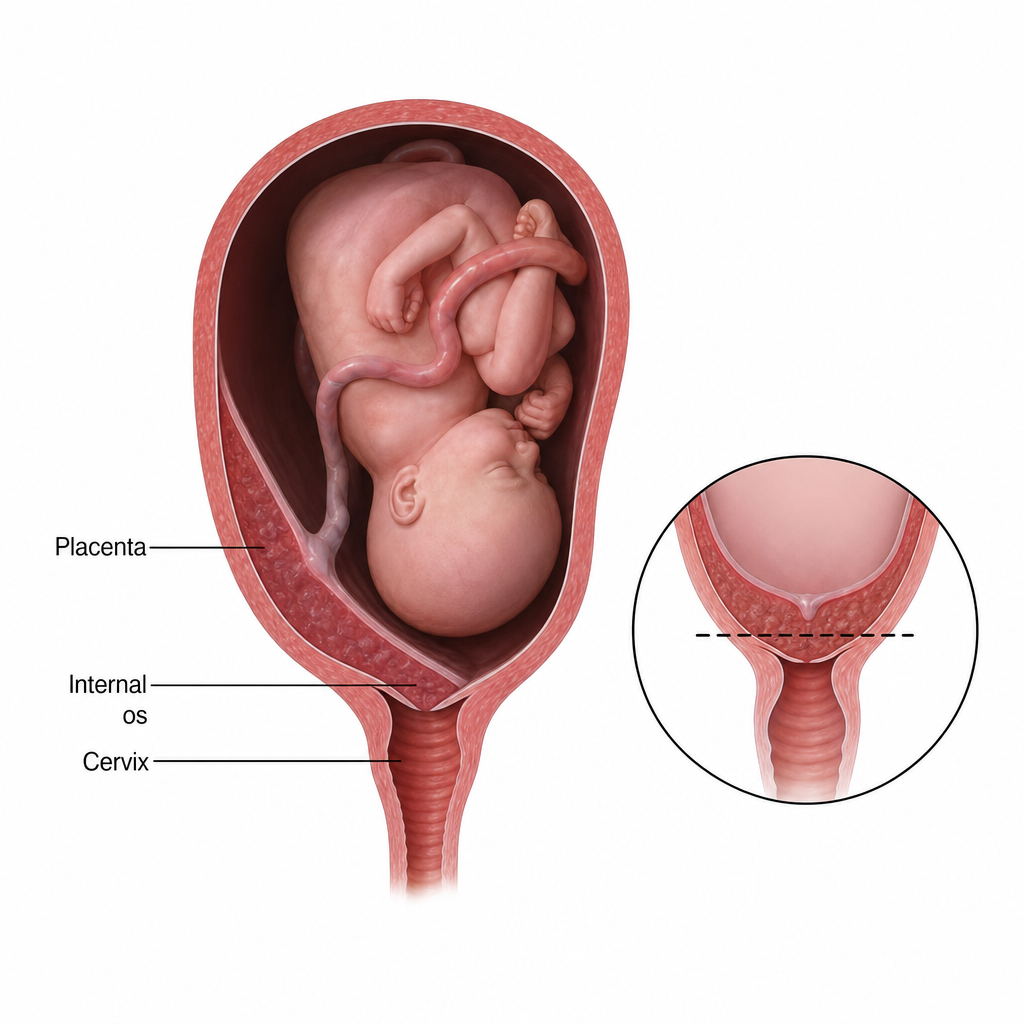
Which is the longest fetal diameter?
Which of the following sonographic findings suggests the development of preeclampsia?
Which of the following statements about multiple pregnancies is TRUE?
Which of the following is true about intrauterine fetal death (IUD)?
A pregnant mother at 32 weeks gestation presents in preterm labor. Antenatal steroid to induce fetal lung maturity is indicated in all of the following conditions, EXCEPT:
Which of the following is true regarding Intrauterine Growth Restriction (IUGR)?
Which cardiovascular change is physiological in the last trimester of pregnancy?
What is the drug of choice for hypertension in pregnancy?
All of the following are direct causes of maternal mortality except?
A multipara at 34 weeks of pregnancy presents with tachycardia, fever, hepatosplenomegaly, and pallor. What is the most likely diagnosis?
Explanation: **Explanation:** The fetal skull diameters are categorized into longitudinal and transverse diameters. The **Mentovertical (MV)** diameter is the longest diameter of the fetal head, measuring approximately **13.5 cm**. It extends from the midpoint of the chin (mentum) to the highest point on the sagittal suture (vertex). This diameter presents in a **Brow presentation**, which is clinically significant because it exceeds the average diameters of the maternal pelvic inlet, typically making vaginal delivery impossible. **Analysis of Incorrect Options:** * **Biparietal (9.5 cm):** This is a transverse diameter between the two parietal eminences. It is the most important transverse diameter as it represents the widest part of the head to pass through the pelvic inlet in a well-flexed vertex presentation. * **Suboccipitofrontal (10 cm):** This longitudinal diameter extends from the undersurface of the occipital bone to the prominence of the forehead. it is the presenting diameter when the head is partially flexed. * **Occipitofrontal (11.5 cm):** This diameter extends from the occipital protuberance to the root of the nose (glabella). It is the presenting diameter in a **deflexed vertex** (occipito-posterior) position. **NEET-PG High-Yield Pearls:** 1. **Smallest Diameter:** The Suboccipitobregmatic (9.5 cm) is the presenting diameter in a well-flexed vertex presentation. 2. **Mento-Vertical (13.5 cm):** Associated with Brow presentation; usually results in obstructed labor. 3. **Submentobregmatic (9.5 cm):** The presenting diameter in a Face presentation (fully extended head). 4. **Engaging Diameter:** In a normal labor, the Biparietal (transverse) and Suboccipitobregmatic (longitudinal) are the key diameters.
Explanation: **Explanation:** Preeclampsia is fundamentally a disease of **defective placentation**. In a normal pregnancy, extravillous trophoblasts invade the maternal spiral arterioles, converting them from high-resistance, narrow vessels into low-resistance, high-capacity channels. In preeclampsia, this process fails. **1. Why Option A is Correct:** In preeclampsia, the placenta undergoes compensatory changes due to chronic hypoxia and ischemia. Sonographically and histologically, there is an **increase in the volume and surface area of chorionic villi** (specifically terminal villi) as the placenta attempts to maximize nutrient and oxygen exchange despite poor maternal perfusion. This is often associated with "villous hypervascularity" or "chorangiosis" in response to the hypoxic environment. **2. Why the Other Options are Incorrect:** * **Option B:** Extensive remodeling of spiral arterioles is a feature of a **normal pregnancy**. In preeclampsia, remodeling is incomplete or absent, restricted only to the decidual segments rather than the deeper myometrial segments. * **Option C:** Increased invasion of extravillous trophoblasts is characteristic of a healthy placenta. In preeclampsia, there is **shallow/reduced invasion**, leading to high-resistance placental circulation. **Clinical Pearls for NEET-PG:** * **Uterine Artery Doppler:** The most reliable sonographic predictor of preeclampsia is an **increased Pulsatility Index (PI)** and the presence of **diastolic notches** (beyond 24 weeks). * **Placental Morphology:** Preeclamptic placentas are often smaller, but may show sonographic "lakes," infarcts, or retroplacental hematomas. * **Biomarkers:** A high **sFlt-1/PlGF ratio** is a strong biochemical predictor of preeclampsia development.
Explanation: **Explanation:** In multiple pregnancies, determining **chorionicity** is the single most important factor for risk stratification and management. **1. Why Option B is Correct:** The **Twin Peak Sign** (also known as the **Lambda sign**) is the pathognomonic ultrasound feature of **dichorionic (DC)** twins. It occurs when the thick chorionic tissue projects into the base of the inter-twin membrane, creating a triangular appearance. This confirms that each fetus has its own placenta, even if they are fused. **2. Why the Other Options are Incorrect:** * **Option A:** Same-gender fetuses do **not** exclude dichorionicity. While all dizygotic twins are dichorionic, approximately 25-30% of monozygotic twins also result in dichorionicity (if cleavage occurs within 72 hours). Only different-gender twins *guarantee* dichorionicity. * **Option C:** A **thick separating membrane** (>2 mm) is a feature of **dichorionic** twins (consisting of 4 layers: 2 amnions and 2 chorions). Monochorionic twins have a thin membrane (<2 mm) consisting of only 2 layers of amnion (the **T-sign**). * **Option D:** Chorionicity is most reliably detected in the **first trimester** (10–14 weeks). As the pregnancy progresses beyond 16 weeks, the chorion laeve disappears, and the "Lambda sign" may regress into a "false T-sign," making late diagnosis difficult. **High-Yield Clinical Pearls for NEET-PG:** * **Lambda Sign (λ):** Dichorionic Diamniotic (DCDA). * **T-Sign:** Monochorionic Diamniotic (MCDA). * **Timing of Cleavage:** * 0–72 hours: DCDA * 4–8 days: MCDA (Most common monozygotic type) * 8–13 days: MCMA (Monochorionic Monoamniotic) * >13 days: Conjoined twins
Explanation: Intrauterine Fetal Death (IUFD) is diagnosed through specific radiological and clinical signs that reflect the physiological changes occurring after fetal demise. **Explanation of Options:** * **A. Gas bubbles in great vessels (Robert’s Sign):** This is the earliest radiological sign of IUFD, often appearing within 12 hours of death. It occurs due to the release of gas (mostly nitrogen) from the decomposition of fetal blood. * **B. Amniotic fluid volume:** Following fetal death, there is a cessation of fetal swallowing and urine production. This typically leads to a progressive decrease in amniotic fluid volume (**Oligohydramnios**), which is a common sonographic finding in IUFD. * **C. Overlapping of skull bones (Spalding’s Sign):** This occurs due to the liquefaction of the brain and loss of intracranial pressure, leading to the collapse of the fetal skull. It usually takes 4–7 days to develop and is a definitive late sign of demise. Since all three findings are characteristic indicators of fetal death, **Option D** is the correct answer. **High-Yield Clinical Pearls for NEET-PG:** * **Spalding’s Sign:** Most specific late radiological sign (requires fetal death for >48 hours). * **Robert’s Sign:** Earliest radiological sign (visible on X-ray/USG). * **Deuel’s Halo Sign:** Edema of the fetal scalp causing a "halo" appearance due to the separation of the scalp from the skull. * **Spalding’s Index:** Overlapping of skull bones is only significant if the mother is not in labor (as molding can occur during labor). * **Gold Standard Diagnosis:** Real-time Ultrasound showing the absence of fetal cardiac activity.
Explanation: **Explanation:** The primary goal of antenatal corticosteroids (ANS) is to accelerate fetal lung maturity and reduce the incidence of Respiratory Distress Syndrome (RDS), Intraventricular Hemorrhage (IVH), and Necrotizing Enterocolitis (NEC) in preterm births. **Why Chorioamnionitis is the Correct Answer:** Chorioamnionitis is a clinical diagnosis of intrauterine infection. In this condition, the risk of maternal and fetal sepsis outweighs the benefits of delaying delivery to administer steroids. The definitive management for chorioamnionitis is **immediate delivery** regardless of gestational age. Administering steroids in the presence of active infection is generally contraindicated as it can worsen the infectious process and delay necessary intervention. **Analysis of Incorrect Options:** * **Prolonged Rupture of Membranes (PROM):** ANS are indicated in Preterm PROM (PPROM) between 24 and 34 weeks to reduce neonatal morbidity, provided there is no clinical evidence of infection (chorioamnionitis). * **Pregnancy-Induced Hypertension (PIH):** Hypertensive disorders often necessitate iatrogenic preterm delivery. Steroids are indicated to improve neonatal outcomes before the planned delivery. * **Diabetes Mellitus:** While steroids can cause transient maternal hyperglycemia (requiring insulin adjustment), they are **not contraindicated**. The benefit of fetal lung maturity is significant, though close monitoring of maternal glucose is mandatory. **High-Yield Clinical Pearls for NEET-PG:** * **Window of Efficacy:** Most effective if delivery occurs between 24 hours and 7 days after the first dose. * **Gestational Age:** Recommended for women at risk of preterm birth between **24 and 34 weeks**. (Recent guidelines extend this to 36+6 weeks in specific "late preterm" scenarios). * **Drug of Choice:** **Betamethasone** (12 mg IM, 2 doses, 24 hours apart) or Dexamethasone (6 mg IM, 4 doses, 12 hours apart). * **Mechanism:** Steroids induce **Type II pneumocytes** to produce surfactant.
Explanation: Intrauterine Growth Restriction (IUGR) is a critical topic in Maternal-Fetal Medicine, categorized into two main types based on the timing and etiology of the insult. **Explanation of Options:** * **Option A:** **Asymmetrical IUGR** (Type II) accounts for approximately **70-80%** of all cases, making it significantly more common than symmetrical IUGR (Type I). It typically occurs in the third trimester due to placental insufficiency (e.g., maternal hypertension or preeclampsia). * **Option B:** The **Ponderal Index** (Weight/Length³) is a measure of "fleshiness." In **Symmetrical IUGR**, both weight and length are equally reduced from early pregnancy (due to genetic factors or early infections), resulting in a **normal** index. In contrast, Asymmetrical IUGR shows a low Ponderal Index because the weight is disproportionately reduced compared to length. * **Option C:** **Prognosis** is generally **better in Asymmetrical IUGR** because the "Brain Sparing Effect" preserves the growth of the fetal head and brain. Symmetrical IUGR involves a decrease in total cell number from the first trimester, often leading to poorer neurological outcomes and lower growth potential. **High-Yield Clinical Pearls for NEET-PG:** 1. **Head-to-Abdominal Circumference (HC/AC) Ratio:** This is the most sensitive parameter to differentiate the two. It is **elevated** in Asymmetrical IUGR (due to a small liver/abdomen) and **normal** in Symmetrical IUGR. 2. **Etiology:** Symmetrical = "Small all over" (Chromosomal anomalies, TORCH infections). Asymmetrical = "Head sparing" (Uteroplacental insufficiency). 3. **Diagnosis:** A lag in symphysio-fundal height (SFH) of >3 cm compared to gestational age is a clinical screening indicator for IUGR.
Explanation: **Explanation:** The cardiovascular system undergoes significant adaptation during pregnancy to meet the metabolic demands of the mother and fetus. **Why Option C is Correct:** During the third trimester, the enlarging uterus elevates the diaphragm. This mechanical displacement causes the heart to rotate on its long axis and move **upwards, outwards, and to the left**. Consequently, the **apical impulse (PMI)** is shifted laterally and cephalad, typically found in the **left 4th intercostal space** (lateral to the midclavicular line), rather than the usual 5th intercostal space. **Analysis of Incorrect Options:** * **A. Mid-diastolic murmur:** While a soft, transient *systolic* flow murmur (Grade I/II) is physiological due to increased cardiac output and decreased blood viscosity, **diastolic murmurs are always pathological** in pregnancy and warrant further investigation (e.g., mitral stenosis). * **B. Occasional atrial fibrillation:** Atrial fibrillation is never physiological. While benign ectopic beats (PACs/PVCs) are common due to increased sympathetic tone, sustained arrhythmias like AFib indicate underlying structural heart disease or thyrotoxicosis. * **D. Cardiomegaly:** On X-ray, the heart may appear enlarged due to the horizontal shift and increased shadow from a larger stroke volume, but **true cardiomegaly (hypertrophy) is not physiological**. Any significant cardiac enlargement suggests cardiomyopathy. **High-Yield NEET-PG Pearls:** * **Heart Sounds:** There is loud splitting of S1 and a prominent S3 (due to rapid ventricular filling). * **ECG Changes:** Left axis deviation (due to heart displacement) and flattened or inverted T-waves in Lead III are common. * **Blood Volume:** Increases by 40-50%, peaking at 32-34 weeks. * **Cardiac Output:** Increases by 30-50%; it is highest immediately postpartum.
Explanation: **Explanation:** **Methyldopa** is traditionally considered the **drug of choice (DOC)** for the long-term management of chronic hypertension in pregnancy. It is a centrally acting alpha-2 adrenergic agonist. Its preference in medical examinations stems from its long-standing safety profile and extensive data confirming a lack of teratogenicity and no adverse effects on fetal hemodynamics or long-term postnatal development. **Analysis of Options:** * **Methyldopa (Correct):** It is the gold standard for maintenance therapy. It has a slow onset of action (4–6 hours), making it ideal for stable hypertension but unsuitable for hypertensive emergencies. * **Labetalol (Option C):** While increasingly used as a first-line agent in modern clinical practice (and often preferred over Methyldopa in Western guidelines due to fewer side effects), in the context of NEET-PG, Methyldopa remains the classical "textbook" answer for the DOC. * **Hydralazine (Option A):** This is a direct vasodilator. It was previously the DOC for **hypertensive emergencies** (acute management), but it is not used for long-term maintenance due to reflex tachycardia and fluid retention. * **Nifedipine (Option D):** A Calcium Channel Blocker used as an alternative for maintenance or acute management (oral/sublingual), but it is not the primary DOC. **High-Yield Clinical Pearls for NEET-PG:** * **Hypertensive Emergency in Pregnancy:** The current DOC is **IV Labetalol** (fastest acting) or IV Hydralazine. * **Contraindicated Drugs:** ACE inhibitors and ARBs (e.g., Enalapril, Losartan) are strictly contraindicated as they cause fetal renal dysgenesis, oligohydramnios, and skull defects. * **Side effect of Methyldopa:** Maternal depression and a positive Coombs test (though hemolytic anemia is rare).
Explanation: **Explanation:** Maternal mortality is categorized into two types: **Direct** and **Indirect** obstetric deaths. Understanding this distinction is crucial for NEET-PG. **1. Why Heart Disease is the Correct Answer:** Heart disease is classified as an **Indirect Obstetric Death**. These are deaths resulting from a previously existing disease, or a disease that developed during pregnancy, which was not due to direct obstetric causes but was aggravated by the physiological effects of pregnancy. Other examples include Anemia (the most common indirect cause in India), Malaria, and HIV. **2. Analysis of Incorrect Options (Direct Causes):** Direct obstetric deaths result from obstetric complications of the pregnant state (pregnancy, labor, and puerperium) due to interventions, omissions, or incorrect treatment. * **PPH & APH (Hemorrhage):** Globally and in India, hemorrhage is the **leading direct cause** of maternal mortality. * **Eclampsia (Hypertensive Disorders):** This is the second most common direct cause. It involves pregnancy-specific multi-system dysfunction. * **Other Direct Causes:** Sepsis (Infection), Obstructed labor, and Unsafe abortion. **High-Yield Clinical Pearls for NEET-PG:** * **Most common cause of Maternal Mortality (India & Global):** Obstetric Hemorrhage (specifically PPH). * **Most common Indirect cause of Maternal Mortality (India):** Anemia. * **Maternal Mortality Ratio (MMR):** Calculated per 1,00,000 live births. * **The "Big Three" Direct Causes:** Hemorrhage, Sepsis, and Hypertensive disorders (Eclampsia).
Explanation: **Explanation:** The clinical presentation of **tachycardia, fever, hepatosplenomegaly, and pallor** in a pregnant woman is a classic constellation of symptoms for **Malaria**. 1. **Why Malaria is correct:** Malaria in pregnancy is a medical emergency. The presence of **fever** indicates an infectious process, while **pallor** (anemia) results from the hemolysis of infected red blood cells. **Hepatosplenomegaly** is a hallmark sign caused by the sequestration of parasites and the resultant immune response in the reticuloendothelial system. In endemic areas, any pregnant woman presenting with fever and anemia should be screened for malaria. 2. **Why other options are incorrect:** * **Iron deficiency anemia & Megaloblastic anemia:** While both cause significant pallor and tachycardia (due to compensatory high-output states), they are **not** associated with fever or hepatosplenomegaly. * **Physiological anemia:** This is a normal adaptation due to plasma volume expansion exceeding red cell mass. It is usually mild (Hb >10 g/dL) and never presents with fever or organomegaly. **Clinical Pearls for NEET-PG:** * **Most common species in pregnancy:** *Plasmodium falciparum* is associated with more severe maternal and fetal complications (hypoglycemia, pulmonary edema, and placental sequestration). * **Drug of Choice:** According to the latest WHO/NVBDCP guidelines, **Artesunate-based Combination Therapy (ACT)** is now recommended for uncomplicated malaria in **all trimesters** (including the first). * **Complication:** Malaria in pregnancy is a leading cause of **Low Birth Weight (LBW)** due to placental insufficiency and IUGR.
Fetal Assessment Techniques
Practice Questions
Hypertensive Disorders in Pregnancy
Practice Questions
Intrauterine Growth Restriction
Practice Questions
Multiple Gestation
Practice Questions
Rh Isoimmunization and Other Blood Group Incompatibilities
Practice Questions
Intrauterine Fetal Therapy
Practice Questions
Prenatal Diagnosis and Genetic Counseling
Practice Questions
Placental Abnormalities
Practice Questions
Preterm Labor and Delivery
Practice Questions
Management of Medical Disorders in Pregnancy
Practice Questions
Get full access to all questions, explanations, and performance tracking.
Start For Free