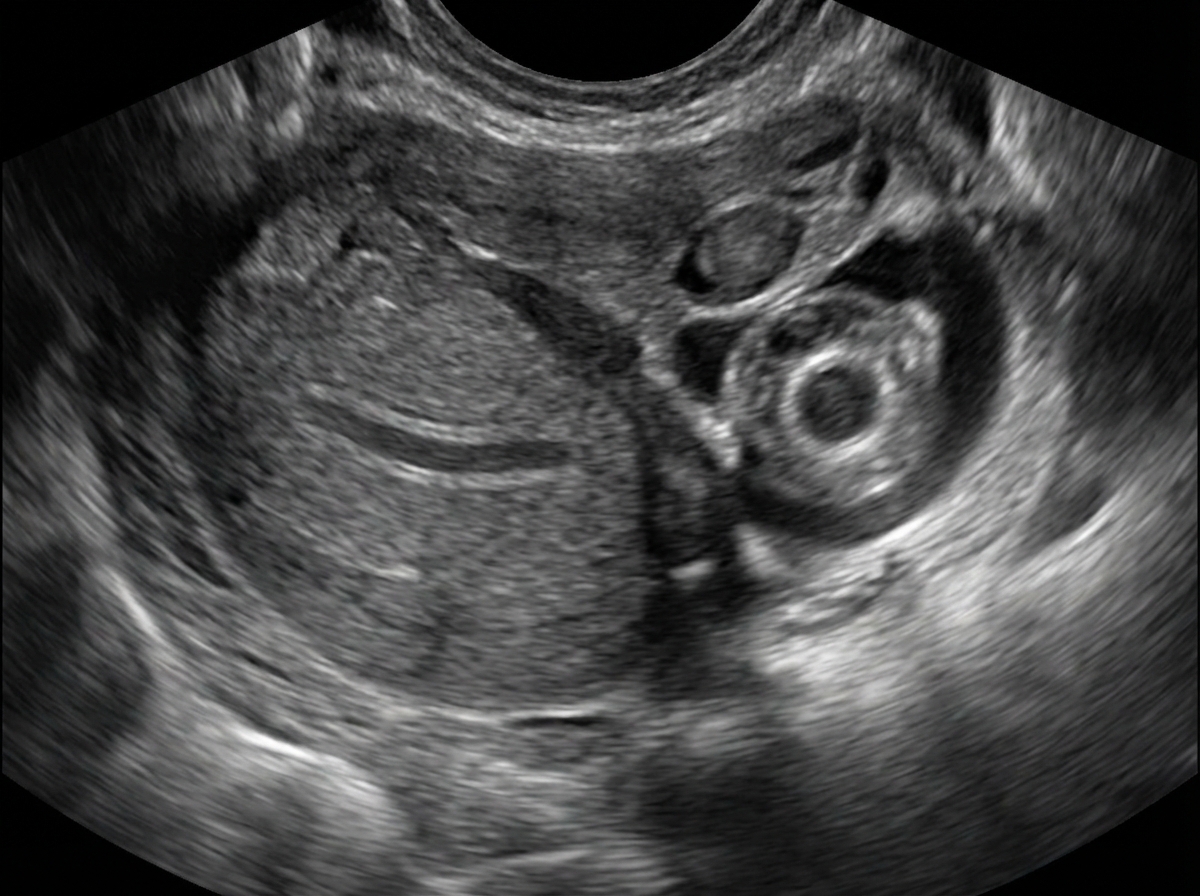
Which of the following statements is TRUE regarding fetal trunk movements in the third trimester?
Demand of fetus for iron is evident after how many weeks?
What is the effect of pregnancy-induced hypertension (PIH) on the Glomerular Filtration Rate (GFR)?
What is the typical pH of amniotic fluid in later weeks of gestation?
Ebstein's anomaly is associated with maternal intake of which of the following substances?
Which of the following congenital anomalies is seen with maternal use of cocaine?
Which is the most common heart disease associated with maximum mortality during pregnancy?
Early deceleration denotes:
In a pregnant female with BP 150/100 mm Hg, a protein/creatinine ratio of what value suggests the development of pre-eclampsia?
External ballottement can be done after how many weeks of gestation?
Explanation: **Explanation:** The correct answer is **A. Increases towards term.** **Underlying Medical Concept:** Fetal movements are a critical indicator of fetal well-being and neuromuscular development. In the third trimester, while the *nature* of movements changes due to reduced amniotic fluid volume and limited intrauterine space (shifting from gross "somersaults" to more localized "rolls" and "kicks"), the actual frequency of **fetal trunk movements** (axial movements) and limb movements continues to increase, peaking between 32 and 40 weeks. Studies using ultrasonography and maternal perception have shown that as the fetus matures, the complexity and coordination of trunk movements increase as part of normal neurological maturation. **Why other options are incorrect:** * **Option B & C:** There is a common clinical misconception that fetal movements decrease near term because the baby "runs out of room." While the *amplitude* (range) of movement may be restricted, the *frequency* and *strength* of trunk movements do not decrease in a healthy pregnancy. A perceived decrease in movement is often a warning sign of fetal distress or placental insufficiency and requires immediate evaluation (e.g., BPP or NST). **High-Yield Clinical Pearls for NEET-PG:** * **Peak Frequency:** Fetal movements typically peak between 9:00 PM and 1:00 AM, coinciding with maternal rest and circadian rhythms. * **Diurnal Rhythm:** Fetal activity shows a diurnal rhythm, often increasing in the evening. * **Clinical Significance:** "Daily Fetal Movement Count" (DFMC) or "Cardiff Count-to-Ten" is a screening tool. A standard threshold is perceiving 10 movements within 2 hours. * **Factors affecting perception:** Maternal obesity, anterior placenta, and polyhydramnios can decrease the mother's ability to perceive these movements, even if the fetus is active.
Explanation: **Explanation:** The correct answer is **25 weeks**. **1. Why 25 weeks is correct:** The demand for iron by the fetus is not uniform throughout pregnancy. During the first half of gestation, fetal iron requirements are minimal. Significant transplacental transfer of iron begins only after the mid-second trimester. The fetal demand for iron becomes clinically evident and increases sharply after **24 to 25 weeks** of gestation. This coincides with the period of rapid fetal growth and the peak expansion of maternal red cell mass. Approximately 80% of fetal iron stores are acquired during the third trimester. **2. Why other options are incorrect:** * **10 weeks:** During the first trimester, iron requirements are actually lower than in the non-pregnant state due to the cessation of menstruation. * **20 weeks:** While maternal blood volume begins to expand significantly around this time, the specific fetal demand for iron stores has not yet reached its peak. * **30 weeks:** By 30 weeks, the fetus is already in the phase of maximum iron uptake. The *onset* of evident demand occurs earlier, at 25 weeks. **3. Clinical Pearls for NEET-PG:** * **Total Iron Requirement:** Approximately **1000 mg** for a singleton pregnancy (300 mg for the fetus/placenta, 500 mg for maternal red cell expansion, and 200 mg for obligatory losses). * **Iron Absorption:** Iron is actively transported across the placenta against a concentration gradient, primarily via **transferrin receptors** on the syncytiotrophoblast. * **Fetal Priority:** The fetus acts as a "parasite" for iron; fetal hemoglobin levels are usually maintained even if the mother has mild-to-moderate iron deficiency anemia. * **Prophylactic Dose:** Government of India (IFA tablets) recommends 100 mg elemental iron and 500 mcg folic acid daily for 180 days, starting from the second trimester (after 12-14 weeks).
Explanation: ### Explanation In a normal physiological pregnancy, the Glomerular Filtration Rate (GFR) and Renal Plasma Flow (RPF) increase significantly (by approximately 50%) due to systemic vasodilation and increased cardiac output. However, in **Pregnancy-Induced Hypertension (PIH)** or Preeclampsia, the primary underlying pathology is **widespread endothelial dysfunction and vasospasm**. **Why the GFR Decreases:** The hallmark renal lesion in PIH is **Glomerular Endotheliosis**. This involves the swelling of glomerular endothelial cells and the deposition of fibrin-like material, which narrows the capillary lumens. This structural change, combined with intense vasospasm of the afferent arterioles, reduces renal perfusion and the surface area available for filtration. Consequently, the GFR decreases by roughly 25% compared to a normal pregnancy. **Analysis of Incorrect Options:** * **Option A & D:** GFR does not increase or fluctuate unpredictably. The pathological vasoconstriction and endothelial damage in PIH specifically counteract the normal gestational rise in GFR, leading to a consistent decline. * **Option C:** GFR cannot remain the same because the renal involvement in PIH is a defining feature of the disease's systemic impact. **NEET-PG High-Yield Pearls:** * **Glomerular Endotheliosis:** This is the pathognomonic renal lesion of preeclampsia (seen on electron microscopy). * **Uric Acid:** A decrease in GFR leads to reduced clearance of uric acid. **Hyperuricemia** is one of the earliest laboratory markers of worsening PIH and correlates with fetal prognosis. * **Creatinine:** While GFR decreases, serum creatinine may still appear "normal" by non-pregnant standards (e.g., 0.9 mg/dL). In pregnancy, any creatinine value **>0.8 mg/dL** should be viewed with suspicion for renal impairment.
Explanation: **Explanation:** The pH of amniotic fluid is a critical clinical marker used to differentiate it from other vaginal fluids. In the later weeks of gestation, amniotic fluid is **slightly alkaline**, typically ranging between **7.0 and 7.5**, with **7.2** being the most representative value. **Why 7.2 is correct:** Amniotic fluid is primarily composed of fetal urine in the third trimester. Since fetal urine and systemic circulation are slightly alkaline, the resulting fluid maintains a pH above neutral. This alkalinity is the physiological basis for the **Nitrazine test** used to diagnose Premature Rupture of Membranes (PROM). **Analysis of Incorrect Options:** * **A (4.5):** This is the typical **acidic pH of a normal vagina** in a reproductive-age woman (maintained by *Lactobacillus* producing lactic acid). * **B (6.5):** While closer to neutral, this is too acidic for healthy amniotic fluid. However, vaginal secretions mixed with amniotic fluid might show a pH in this range. * **C (7.0):** This is neutral pH. While amniotic fluid can occasionally be 7.0, it is characteristically more alkaline (7.2) in a healthy pregnancy. **High-Yield Clinical Pearls for NEET-PG:** * **Nitrazine Test:** When amniotic fluid (pH 7.0–7.5) leaks into the vagina (pH 4.5–5.5), the Nitrazine paper turns **blue** (indicating a pH > 6.0). * **False Positives in Nitrazine Test:** Presence of blood, semen, soap, or antiseptic solutions (like Savlon/Betadine) can cause a false-positive result as they are also alkaline. * **Fern Test:** This is the gold standard for confirming ROM; it relies on the high sodium chloride content of amniotic fluid crystallizing into a "fern" pattern on a slide.
Explanation: **Explanation:** **Ebstein’s anomaly** is a rare congenital heart defect characterized by the downward displacement of the tricuspid valve leaflets into the right ventricle, leading to "atrialization" of the ventricle and tricuspid regurgitation. 1. **Why Lithium is Correct:** Lithium is a mood stabilizer used for Bipolar Affective Disorder. It is a known **teratogen** that crosses the placenta. Maternal intake during the first trimester (organogenesis) is classically associated with Ebstein’s anomaly. While the absolute risk is lower than previously thought (approx. 1-2 per 1,000 exposures), the **relative risk** is significantly higher compared to the general population (where it is 1 in 20,000). 2. **Why Other Options are Incorrect:** * **Mercury (A):** Organic mercury (methylmercury) exposure during pregnancy causes **Minamata disease**, characterized by severe neurological damage, microcephaly, and cerebral palsy. * **Copper (B):** Copper is not a recognized teratogen. In fact, disorders of copper metabolism like Wilson’s disease are managed during pregnancy, and copper-containing IUCDs are local contraceptives with no systemic teratogenic effect. * **Lead (D):** Lead exposure is associated with increased risks of miscarriage, intrauterine growth restriction (IUGR), and neurodevelopmental delays, but not specific cardiac structural defects like Ebstein's. **Clinical Pearls for NEET-PG:** * **Best Screening Tool:** Fetal Echocardiography (performed at 18–22 weeks) is the gold standard to detect Ebstein’s anomaly in mothers taking Lithium. * **Management:** If a bipolar patient plans pregnancy, Lithium should ideally be tapered; however, if the risk of relapse is high, it may be continued with close fetal monitoring. * **Other Lithium Side Effects:** In neonates, it can cause "Floppy Baby Syndrome" (hypotonia) and neonatal goiter.
Explanation: **Explanation:** The correct answer is **C. Cerebral infarction.** **Mechanism:** Cocaine is a potent sympathomimetic agent that acts by inhibiting the reuptake of norepinephrine, epinephrine, and dopamine. In pregnancy, cocaine causes intense **vasoconstriction** and maternal hypertension, leading to decreased placental perfusion. This results in acute fetal hypoxia and sudden fluctuations in fetal blood pressure. These hemodynamic shifts can lead to **neonatal cerebral infarction (stroke)**, intracranial hemorrhage, and porencephaly. Additionally, cocaine use is strongly associated with **placental abruption** due to acute hypertensive episodes. **Analysis of Incorrect Options:** * **A. Sacral agenesis:** This is the most specific anomaly associated with **maternal diabetes mellitus** (caudal regression syndrome), not cocaine. * **B. Hydrops:** Fetal hydrops (accumulation of fluid in two or more compartments) is typically caused by Rh isoimmunization (immune) or conditions like Parvovirus B19, chromosomal anomalies, or fetal arrhythmias (non-immune). * **C. Hypertrichosis:** Excessive hair growth is a feature of **Fetal Alcohol Syndrome (FAS)** or maternal use of certain drugs like phenytoin (Fetal Hydantoin Syndrome), but not cocaine. **NEET-PG High-Yield Pearls:** * **Cocaine:** Think "Vasoconstriction." Key associations: Placental abruption (most common), IUGR, preterm labor, and limb reduction defects (due to vascular disruption). * **Warfarin:** Chondrodysplasia punctata (stippled epiphyses) and nasal hypoplasia. * **Lithium:** Ebstein’s anomaly (atrialization of the right ventricle). * **Valproate:** Neural tube defects (specifically spina bifida). * **Thalidomide:** Phocomelia (seal-like limbs).
Explanation: ### Explanation **Correct Answer: A. Eisenmenger syndrome** **Why it is correct:** Eisenmenger syndrome represents the most severe form of pulmonary arterial hypertension (PAH) resulting from a long-standing left-to-right shunt that reverses to a right-to-left shunt. In pregnancy, the physiological decrease in systemic vascular resistance (SVR) further exacerbates this right-to-left shunt, leading to profound hypoxemia, heart failure, and sudden cardiovascular collapse. It carries a maternal mortality rate of **30–50%**, the highest among all cardiac conditions. Consequently, pregnancy is strictly contraindicated in these patients. **Why the other options are incorrect:** * **B. Mitral Stenosis:** This is the **most common** rheumatic heart disease encountered in pregnancy. While it carries significant morbidity (especially pulmonary edema during the second trimester or labor), the mortality rate is much lower than Eisenmenger syndrome if managed appropriately. * **C. Aortic Stenosis:** Severe symptomatic aortic stenosis is high-risk (NYHA III/IV), but with modern monitoring and activity restriction, the mortality rate (approx. 5–10%) does not reach the lethal levels of Eisenmenger syndrome. * **D. Ventricular Septal Defect (VSD):** Small to moderate VSDs without pulmonary hypertension are generally well-tolerated during pregnancy with minimal risk of mortality. **High-Yield Clinical Pearls for NEET-PG:** * **WHO Class IV Cardiac Conditions (Pregnancy Contraindicated):** Eisenmenger syndrome, severe Pulmonary Hypertension, Marfan syndrome with aortic root >40mm, and severe symptomatic Aortic Stenosis. * **Most common heart disease in pregnancy (India):** Rheumatic Heart Disease (specifically Mitral Stenosis). * **Most common congenital heart disease in pregnancy:** Atrial Septal Defect (ASD). * **Highest risk period:** The immediate postpartum period (first 24–48 hours) is the most dangerous due to "autotransfusion" from the involuting uterus, which can trigger acute heart failure.
Explanation: **Explanation:** **1. Why Head Compression is Correct:** Early decelerations are characterized by a gradual decrease and return of the fetal heart rate (FHR) that coincides with the peak of a uterine contraction (the "mirror image" effect). The underlying mechanism is **fetal head compression**, which occurs as the head enters the birth canal. This compression triggers a **vagal (parasympathetic) response**, leading to a transient slowing of the heart rate. Because it is a physiological reflex rather than a sign of hypoxia, early decelerations are considered **benign** and do not require intervention. **2. Why the Other Options are Incorrect:** * **Cord Compression (B):** This leads to **Variable decelerations**. These are abrupt in onset and vary in shape, size, and timing relative to contractions. They are the most common type of deceleration seen in labor. * **Placental Insufficiency (C):** This leads to **Late decelerations**. These begin after the peak of the contraction and return to baseline only after the contraction has ended. They indicate uteroplacental insufficiency and potential fetal hypoxia. * **Fetal Distress (D):** While late and prolonged decelerations are markers of fetal distress (non-reassuring status), early decelerations are physiological and are **not** indicative of fetal compromise. **3. High-Yield Clinical Pearls for NEET-PG:** * **The "Mirror Image":** If the nadir (lowest point) of the deceleration matches the peak of the contraction, it is **Early**. * **Rule of 15:** Variable decelerations are defined as a decrease in FHR of $\ge$ 15 bpm, lasting $\ge$ 15 seconds but < 2 minutes. * **Management:** Early decelerations require **no treatment**. Late decelerations require the "L-I-O-N" protocol (Left lateral position, IV fluids, Oxygen, and Notice the physician/stop Oxytocin).
Explanation: ### Explanation **Concept Overview:** Pre-eclampsia is defined as new-onset hypertension (BP ≥140/90 mmHg) after 20 weeks of gestation, typically accompanied by proteinuria. While the traditional "gold standard" for diagnosing proteinuria is a 24-hour urine collection (≥300 mg/day), the **Spot Urinary Protein:Creatinine (P:C) Ratio** is now the preferred rapid diagnostic tool due to its high correlation with 24-hour results and faster turnaround time. **Why Option B is Correct:** According to ACOG and NHBPEP guidelines, a **Protein:Creatinine ratio of ≥0.3 mg/mg** (or 30 mg/mmol) is the diagnostic threshold for significant proteinuria in pregnancy. This value represents the point where the risk of adverse maternal and fetal outcomes increases significantly, confirming the transition from gestational hypertension to pre-eclampsia. **Analysis of Incorrect Options:** * **Option A (>0.20):** While some studies suggest lower thresholds for increased monitoring, 0.20 is below the internationally recognized diagnostic cutoff for pre-eclampsia. * **Option C (<0.20) & Option D (<0.30):** These values represent normal or non-significant protein excretion. A ratio below 0.30 generally rules out significant proteinuria, suggesting the patient may have gestational hypertension rather than pre-eclampsia (unless other "severity features" like low platelets or liver dysfunction are present). **NEET-PG High-Yield Pearls:** * **Diagnostic Criteria:** Pre-eclampsia can be diagnosed **without** proteinuria if hypertension is accompanied by "severity features" (thrombocytopenia <100,000, serum creatinine >1.1 mg/dL, elevated liver enzymes, or visual/cerebral symptoms). * **Dipstick Testing:** A dipstick reading of **1+** is used only if quantitative methods (P:C ratio or 24-hour urine) are unavailable. * **Gold Standard:** 24-hour urine protein **≥300 mg**. * **P:C Ratio Advantage:** It eliminates the errors associated with incomplete 24-hour urine collections.
Explanation: **Explanation:** **Ballottement** is a clinical technique used to detect a floating object in the body. In obstetrics, it refers to the palpatory sensation of the fetus rebounding against the examiner’s fingers when a sharp upward or inward pressure is applied. **1. Why 20 weeks is correct:** External ballottement is typically elicited starting from the **20th week of gestation**. By this stage, the volume of amniotic fluid is relatively large compared to the size of the fetus, and the fetus has gained enough mass to be felt as a distinct body. When the clinician pushes the uterine wall firmly, the fetus floats away in the amniotic fluid and then taps back against the hand, confirming its presence. **2. Analysis of incorrect options:** * **6 weeks:** The uterus is still a pelvic organ and the embryo is too small to be palpated abdominally. * **16 weeks:** While **Internal Ballottement** (performed via the vaginal fornices) can be elicited as early as **16 weeks**, the fetus is usually not large enough or the uterus high enough for reliable *external* palpation. * **24 weeks:** By this time, ballottement is easily performed, but it is not the *earliest* point of detection. As the pregnancy approaches the third trimester, the fetus grows larger and the relative amount of amniotic fluid decreases, making ballottement more difficult to elicit near term. **Clinical Pearls for NEET-PG:** * **Internal Ballottement:** Performed during a PV exam; earliest at **16 weeks**. * **External Ballottement:** Performed abdominally; earliest at **20 weeks**. * **Differential Diagnosis:** Ballottement can also be felt in cases of a large subserosal fibroid with ascites, though the "rebound" sensation is most characteristic of a fetus. * **Disappearance:** Ballottement disappears in late pregnancy (around 37 weeks) when the fetus becomes "engaged" or too large to float freely.
Fetal Assessment Techniques
Practice Questions
Hypertensive Disorders in Pregnancy
Practice Questions
Intrauterine Growth Restriction
Practice Questions
Multiple Gestation
Practice Questions
Rh Isoimmunization and Other Blood Group Incompatibilities
Practice Questions
Intrauterine Fetal Therapy
Practice Questions
Prenatal Diagnosis and Genetic Counseling
Practice Questions
Placental Abnormalities
Practice Questions
Preterm Labor and Delivery
Practice Questions
Management of Medical Disorders in Pregnancy
Practice Questions
Get full access to all questions, explanations, and performance tracking.
Start For Free