A 28-year-old pregnant woman develops sudden onset of dyspnea and tachycardia with no other physical findings. Which of the following is the most likely diagnosis?
A 38-year-old pregnant woman is admitted to the emergency department with severe vaginal bleeding. Ultrasound examination confirms the initial diagnosis of ectopic pregnancy. Which of the following is the most common site of an ectopic pregnancy?
Fetal lung maturity is signified by all of the following EXCEPT:
Fetal blood loss is most commonly seen in which placental abnormality?
At which gestational age does surfactant typically appear in amniotic fluid?
Which drugs are used to prevent HIV transmission from mother to child?
Amniotic fluid volume in polyhydramnios is more than:
Which of the following measures the amount of fetal blood entering maternal circulation?
Which of the following is NOT considered a high-risk factor for gestational hypertension?
In diabetic pregnancy, which of the following is least common?
Explanation: **Explanation:** **Correct Answer: B. Pulmonary Embolism** Pregnancy is a well-known **hypercoagulable state** due to an increase in clotting factors (I, VII, VIII, IX, X), a decrease in Protein S, and venous stasis from the gravid uterus. **Pulmonary Embolism (PE)** is a leading cause of maternal mortality. The classic clinical presentation is the **sudden onset of unexplained dyspnea and tachycardia** in a patient with no prior respiratory or cardiac history. In many cases, physical examination of the chest is remarkably normal, making the diagnosis highly dependent on clinical suspicion. **Why other options are incorrect:** * **A. Pulmonary Emphysema:** This is a chronic obstructive pulmonary disease (COPD) typically seen in long-term smokers. It presents with chronic, progressive dyspnea rather than an acute, sudden onset. * **C. Myocardial Infarction (MI):** While possible, MI in a 28-year-old is rare unless there are significant risk factors (e.g., familial hyperlipidemia). It usually presents with crushing chest pain and ECG changes, not isolated dyspnea. * **D. Ventricular Tachycardia:** This is a life-threatening arrhythmia that typically presents with palpitations, syncope, or hemodynamic collapse. While tachycardia is present, it is usually a *finding* of PE rather than the primary diagnosis in this clinical context. **High-Yield Clinical Pearls for NEET-PG:** * **Gold Standard Investigation for PE in pregnancy:** CT Pulmonary Angiography (CTPA) is generally preferred over V/Q scan due to higher sensitivity and lower fetal radiation dose. * **Initial Screening:** D-dimer levels are physiologically elevated in pregnancy, so a positive result is non-specific; however, a **negative** D-dimer is still useful for ruling out PE. * **Treatment:** Low Molecular Weight Heparin (LMWH) is the drug of choice as it does not cross the placenta. Warfarin is contraindicated due to teratogenicity.
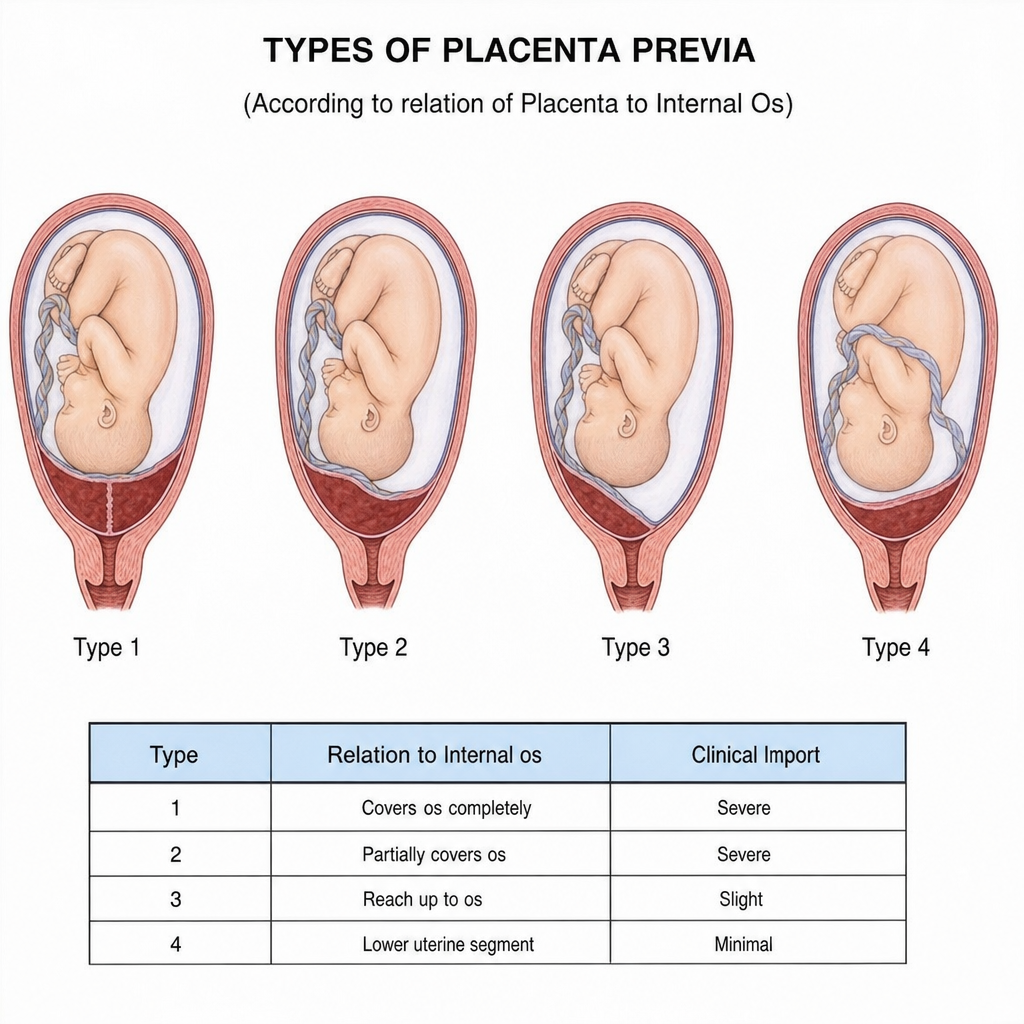
Explanation: **Explanation:** **1. Why the Correct Answer is Right:** An ectopic pregnancy occurs when a fertilized ovum implants outside the normal uterine cavity. The **uterine (fallopian) tubes** are the most common site, accounting for approximately **95–98%** of all ectopic pregnancies. Within the tube, the **ampulla** is the most frequent specific site (approx. 70%), followed by the isthmus (12%), fimbria (11%), and interstitial/cornual portion (2%). The high frequency in the tubes is due to delayed transport of the zygote, often caused by previous pelvic inflammatory disease (PID), tubal surgery, or anatomical distortions. **2. Why the Incorrect Options are Wrong:** * **B. Cervix:** Cervical pregnancy is rare (<1%). It is associated with high morbidity due to the risk of massive hemorrhage, as the cervix is highly vascular and cannot contract to stop bleeding. * **C. Mesentery of the abdominal wall:** This refers to an abdominal pregnancy (approx. 1%). While rare, it can be primary or secondary (following tubal rupture) and is associated with high maternal mortality. * **D. Lower part of uterine body overlapping the internal cervical os:** This describes **Placenta Previa**, not an ectopic pregnancy. In placenta previa, the implantation is within the uterus but in an abnormally low position. **3. Clinical Pearls for NEET-PG:** * **Most common site overall:** Ampulla of the Fallopian tube. * **Most common site for rupture:** Isthmus (due to its narrow lumen; usually occurs at 6–8 weeks). * **Most dangerous tubal site:** Interstitial/Cornual (rupture occurs later at 12–14 weeks and causes massive hemorrhage). * **Classic Triad:** Amenorrhea, abdominal pain, and vaginal bleeding (present in only 50% of cases). * **Gold Standard Diagnosis:** Transvaginal Ultrasound (TVUS) + Serum β-hCG (Correlation with the "Discriminatory Zone").
Explanation: **Explanation:** The assessment of fetal lung maturity (FLM) is critical in managing preterm deliveries to prevent Respiratory Distress Syndrome (RDS). **Why Option D is the correct answer:** A **Non-stress test (NST)** is a method of fetal surveillance used to assess fetal well-being and acid-base status, not lung maturity. A **Non-reactive NST** (absence of required fetal heart rate accelerations) indicates potential fetal hypoxia or sleep cycles, but it has no physiological correlation with the biochemical or structural maturity of the lungs. **Analysis of other options:** * **L-S Ratio > 2:** The Lecithin-Sphingomyelin ratio is the gold standard for biochemical FLM. Lecithin (phosphatidylcholine) increases as the lungs mature, while sphingomyelin remains constant. A ratio > 2:1 indicates a low risk of RDS. * **> 37 Weeks Gestation:** Lung maturity is a developmental process. By 37 completed weeks (term), surfactant production is generally sufficient to maintain alveolar stability, making this a clinical marker of maturity. * **Level of Phosphatidylcholine:** This is the primary active component of surfactant. Its presence and concentration in the amniotic fluid are direct indicators of functional lung maturity. **Clinical Pearls for NEET-PG:** * **Phosphatidylglycerol (PG):** Its presence is the most reliable indicator of lung maturity, especially in diabetic mothers (where L-S ratio may be falsely reassuring). * **Shake Test (Bubble Stability Test):** A rapid bedside test; if bubbles form at a 1:2 dilution with ethanol, lungs are likely mature. * **L-S Ratio in Diabetes:** In pregnancies complicated by diabetes, an L-S ratio of **2.5 or 3.0** is often required to confirm maturity due to delayed surfactant functional development. * **Corticosteroids:** Betamethasone or Dexamethasone are administered between 24–34 weeks to accelerate FLM by inducing Type II pneumocytes.
Explanation: **Explanation:** **Vasa previa** is the correct answer because it involves fetal vessels (umbilical arteries or veins) running through the membranes, unprotected by placental tissue or the umbilical cord, across the internal os of the cervix. When the membranes rupture (spontaneous or artificial), these vessels are easily lacerated. Since the blood within these vessels is entirely **fetal in origin**, even a small amount of bleeding can lead to rapid fetal exsanguination and death. **Analysis of Incorrect Options:** * **Decidua basalis:** This is the maternal component of the placenta. Bleeding here (as seen in placental abruption) is primarily **maternal blood**, though it can lead to fetal distress due to hypoxia. * **Battledore placenta (Marginal insertion):** The cord inserts at the margin of the placenta rather than the center. While it increases the risk of preterm labor, it rarely causes direct fetal vessel rupture unless associated with vasa previa. * **Succenturiate placenta:** This refers to one or more accessory lobes connected to the main placenta by vascular bridges. While it is a **major risk factor** for vasa previa, the presence of the lobe itself does not cause blood loss unless the connecting vessels cross the internal os and rupture. **Clinical Pearls for NEET-PG:** * **Classic Presentation:** Painless vaginal bleeding immediately following the Rupture of Membranes (ROM) accompanied by sudden **fetal bradycardia** or a sinusoidal heart rate pattern. * **Apt Test / Ogita Test:** Used to differentiate fetal hemoglobin (HbF) from maternal hemoglobin (HbM) in vaginal blood. * **Management:** If diagnosed prenatally via Doppler USG, an elective Cesarean section is planned at 34–35 weeks to avoid labor and membrane rupture.
Explanation: **Explanation:** The production of pulmonary surfactant is a critical milestone in fetal lung maturity. Surfactant is a phospholipid-protein complex produced by **Type II pneumocytes** that reduces surface tension in the alveoli, preventing collapse during expiration. **Why 28 weeks is correct:** While surfactant synthesis begins internally around 20–24 weeks, it is only by **28 weeks** that it is secreted into the alveolar lumen in sufficient quantities to be detectable in the **amniotic fluid**. This marks the transition where the fetus reaches a significant threshold of viability, as the lungs become capable of gas exchange with medical support. **Analysis of Incorrect Options:** * **20 weeks:** This is when Type II pneumocytes begin to differentiate and start producing surfactant internally, but it is not yet secreted into the amniotic fluid. * **32 weeks:** At this stage, surfactant levels are increasing significantly, but the initial appearance occurs much earlier (at 28 weeks). By **34–35 weeks**, surfactant levels (specifically Lecithin) rise sharply, indicating mature lungs. * **4 weeks:** This is the embryonic period when the lung bud first appears; specialized alveolar cells have not yet developed. **NEET-PG High-Yield Pearls:** * **L/S Ratio:** A Lecithin/Sphingomyelin ratio of **>2:1** (usually achieved by 35 weeks) indicates fetal lung maturity. * **Phosphatidylglycerol (PG):** Its presence is the most reliable indicator of lung maturity, especially in diabetic mothers. * **Glucocorticoids:** Administered to the mother (e.g., Betamethasone) between 24–34 weeks to accelerate surfactant production by inducing enzymes in Type II pneumocytes.
Explanation: **Explanation:** Prevention of Parent-to-Child Transmission (PPTCT) of HIV involves a multi-pronged pharmacological approach targeting different stages of potential exposure: pregnancy, labor, and the neonatal period. * **Zidovudine (AZT) to the mother:** Historically the cornerstone of the "PACTG 076" protocol, Zidovudine reduces maternal viral load and provides pre-exposure prophylaxis to the fetus via placental transfer. * **Nevirapine (NVP) to the mother:** A Non-Nucleoside Reverse Transcriptase Inhibitor (NNRTI) that crosses the placenta rapidly. A single dose at the onset of labor was a standard intervention (especially in resource-limited settings) to provide "cover" during the high-risk period of delivery. * **Zidovudine to the baby:** Post-exposure prophylaxis (PEP) for the newborn is critical. Administering AZT (often combined with NVP) to the infant starting immediately after birth for 6–12 weeks significantly reduces the risk of transmission from micro-transfusions during birth or through breastfeeding. **Why "All of the above" is correct:** Effective PPTCT requires treating both the mother (to lower viral load and provide transplacental drug levels) and the infant (to provide post-exposure protection). Therefore, options A, B, and C are all established components of various PPTCT protocols. **High-Yield Clinical Pearls for NEET-PG:** * **Current WHO/NACO Guidelines:** The preferred regimen for pregnant women is **TLD** (Tenofovir + Lamivudine + Dolutegravir) regardless of CD4 count or clinical stage, continued for life (Option B+). * **Infant Prophylaxis:** In India, the standard is **NVP syrup** for 6 weeks. If the mother received ART for less than 24 weeks, dual prophylaxis (NVP + AZT) is often used. * **Mode of Delivery:** Elective Cesarean Section (at 38 weeks) is indicated only if the maternal viral load is >1000 copies/mL or unknown. * **Breastfeeding:** Exclusive breastfeeding for 6 months is recommended in India, provided the mother is adherent to ART. Mixed feeding should be strictly avoided.
Explanation: **Explanation:** **Polyhydramnios** is defined as a pathological increase in amniotic fluid volume during pregnancy. By standard clinical definition, polyhydramnios occurs when the total volume of amniotic fluid exceeds **2000 ml** at any point during gestation. 1. **Why 2000 ml is correct:** Amniotic fluid volume increases progressively until 34–36 weeks, peaking at approximately 800–1000 ml. A volume exceeding 2000 ml is considered abnormal and is associated with maternal complications (like respiratory distress or preterm labor) and fetal anomalies (like esophageal atresia or neural tube defects). 2. **Why other options are incorrect:** * **500 ml:** This is within the normal range for mid-pregnancy. A volume below 200 ml is termed oligohydramnios. * **1000 ml:** This represents the physiological peak of amniotic fluid at 36 weeks; it is the upper limit of normal, not polyhydramnios. * **1500 ml:** While this is an excessive amount, it does not meet the formal diagnostic threshold of 2000 ml used in obstetric textbooks (e.g., Williams Obstetrics, Dutta). **High-Yield Clinical Pearls for NEET-PG:** * **Sonographic Diagnosis:** Polyhydramnios is diagnosed via ultrasound if the **Amniotic Fluid Index (AFI) is >25 cm** or the **Single Deepest Pocket (SDP) is >8 cm**. * **Most Common Cause:** Idiopathic (50–60%), followed by maternal diabetes and fetal structural anomalies. * **Complications:** Malpresentation, cord prolapse, placental abruption (due to sudden decompression), and Postpartum Hemorrhage (PPH) due to uterine atony. * **Management:** Therapeutic amniocentesis (amniodrainage) or Indomethacin (which decreases fetal urine production) may be used in severe cases.
Explanation: ### Explanation **1. Why Kleihauer-Betke (KB) Test is Correct:** The **Kleihauer-Betke test** is the gold standard for quantifying the volume of **fetal-maternal hemorrhage (FMH)**. It relies on the principle that **Fetal Hemoglobin (HbF)** is resistant to acid elution, whereas Adult Hemoglobin (HbA) is not. When a maternal blood smear is treated with an acid buffer, HbA is leached out of the adult cells (leaving them as "ghost cells"), while HbF remains intact. The percentage of fetal cells is then used to calculate the required dose of **Anti-D immunoglobulin** to prevent Rh isoimmunization. **2. Analysis of Incorrect Options:** * **B. Singer’s Test:** This is a chemical method (alkali denaturation) used to estimate the percentage of HbF in a blood sample, but it is not used to quantify fetal cells in maternal circulation for FMH. * **C. APT Test:** This is a qualitative test used to differentiate fetal blood from maternal blood in cases of **antepartum hemorrhage** (e.g., vasa previa) or neonatal gastric aspirate (to see if the baby swallowed maternal blood during delivery). It uses NaOH; fetal blood stays pink, while maternal blood turns yellow-brown. * **D. Benedict Test:** This is a classic biochemistry test used to detect **reducing sugars** (like glucose) in the urine. **3. High-Yield Clinical Pearls for NEET-PG:** * **Formula for Anti-D:** Volume of FMH (mL) = % of fetal cells × 50. One 300 mcg vial of Anti-D covers **30 mL** of fetal whole blood (or 15 mL of fetal RBCs). * **Screening vs. Quantification:** The **Rosette Test** is the initial *qualitative* screening test for FMH. If positive, the KB test is performed for *quantification*. * **False Positives:** Conditions with high maternal HbF (e.g., Beta-thalassemia trait, Sickle cell anemia, or Hereditary Persistence of Fetal Hemoglobin) can cause a false-positive KB test.
Explanation: **Explanation:** The management of gestational hypertension and preeclampsia depends on identifying "high-risk" or "severe" features that necessitate closer monitoring or urgent delivery. **Why Polyhydramnios is the correct answer:** Polyhydramnios (excess amniotic fluid) is generally associated with maternal diabetes, fetal anomalies, or multiple gestations, but it is **not** a diagnostic or risk criterion for severe gestational hypertension. In fact, hypertensive disorders of pregnancy are classically associated with **Oligohydramnios** due to placental insufficiency and reduced fetal renal perfusion. **Analysis of Incorrect Options:** * **Blood pressure of 150/100 mm Hg:** While the threshold for "severe" hypertension is ≥160/110 mm Hg, any persistent elevation above 140/90 mm Hg in a previously normotensive woman is a primary risk factor and diagnostic criterion for gestational hypertension. * **Gestation age <30 weeks:** Early-onset hypertension (especially before 34 weeks) is a significant high-risk factor. It often indicates an underlying placental pathology and carries a higher risk of progression to severe preeclampsia and adverse neonatal outcomes. * **Intrauterine growth restriction (IUGR):** This is a critical marker of "placental insufficiency." When hypertension is coupled with IUGR, it suggests that the disease is affecting the feto-placental unit, placing the pregnancy in a high-risk category. **High-Yield Clinical Pearls for NEET-PG:** * **Severe Features of Preeclampsia:** BP ≥160/110 mm Hg, thrombocytopenia (<1 lakh), elevated liver enzymes, progressive renal insufficiency (Creatinine >1.1 mg/dL), pulmonary edema, or new-onset cerebral/visual disturbances. * **The "Rule of 10":** In preeclampsia, there is roughly a 10% risk of placental abruption and a 10% risk of HELLP syndrome. * **Drug of Choice:** Magnesium Sulfate ($MgSO_4$) is the gold standard for seizure prophylaxis in high-risk gestational hypertension/preeclampsia.
Explanation: In diabetic pregnancies, the risk of congenital malformations is 3–4 times higher than in the general population, primarily due to poor glycemic control during organogenesis. **Explanation of the Correct Answer:** While **Caudal Regression Syndrome** (sacral agenesis) is the **most specific** malformation associated with maternal diabetes (with a relative risk over 200 times higher than the general population), it is actually the **least common** in terms of absolute frequency. In exams, students often confuse "most specific" with "most common." Because the baseline incidence of caudal regression is extremely low, it remains a rare finding compared to other defects. **Analysis of Incorrect Options:** * **Ventricular Septal Defect (VSD):** This is the **most common** congenital malformation seen in infants of diabetic mothers. Cardiovascular anomalies, specifically VSD and Transposition of the Great Arteries (TGA), occur more frequently than any other system defects. * **Anencephaly and Spina Bifida:** Neural Tube Defects (NTDs) are the second most common group of malformations in diabetic pregnancies. The risk of NTDs like anencephaly and spina bifida is increased 10-fold in diabetic mothers compared to the general population. **NEET-PG High-Yield Pearls:** * **Most Specific Malformation:** Caudal Regression Syndrome. * **Most Common Malformation:** Cardiovascular anomalies (specifically VSD). * **Most Common Neonatal Complication:** Hypoglycemia. * **HbA1c Correlation:** The risk of malformations increases significantly if HbA1c is >8.5% during the first trimester. * **Note:** Gestational Diabetes (GDM) usually does not increase the risk of these malformations because hyperglycemia typically develops after the period of organogenesis.
Fetal Assessment Techniques
Practice Questions
Hypertensive Disorders in Pregnancy
Practice Questions
Intrauterine Growth Restriction
Practice Questions
Multiple Gestation
Practice Questions
Rh Isoimmunization and Other Blood Group Incompatibilities
Practice Questions
Intrauterine Fetal Therapy
Practice Questions
Prenatal Diagnosis and Genetic Counseling
Practice Questions
Placental Abnormalities
Practice Questions
Preterm Labor and Delivery
Practice Questions
Management of Medical Disorders in Pregnancy
Practice Questions
Get full access to all questions, explanations, and performance tracking.
Start For Free