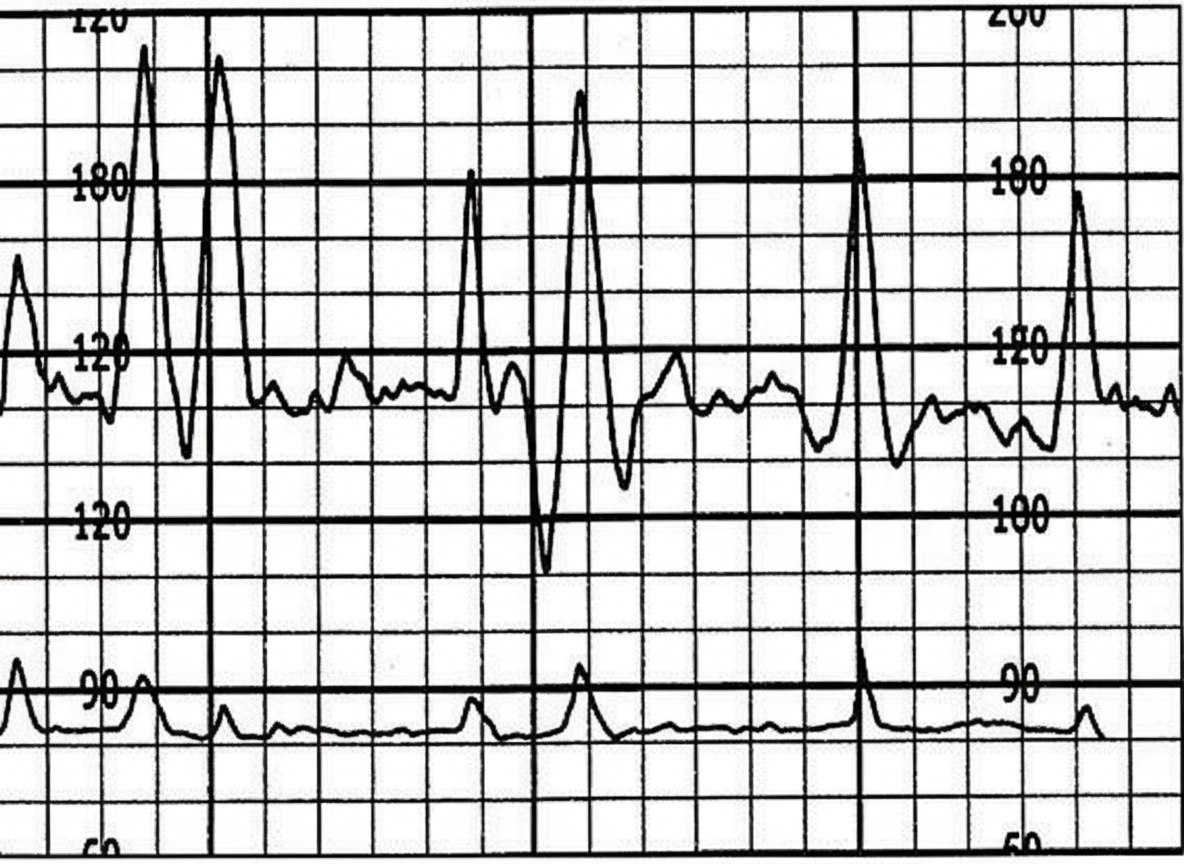
All of the following are true of placenta previa EXCEPT:
Which drug is given to prevent vertical transmission of HIV from mother to child?
What is the typical appearance of amniotic fluid in post-maturity?
Ventricular function improves with pregnancy in which of the following conditions?
Hypertension, proteinuria, and pitting edema are noted in the second month of the first pregnancy in a 25-year-old woman. The pathogenesis of her presenting complaints is most closely associated with which of the following?
Which of the following describes a dangerous placenta?
What is a known consequence of maternal cocaine use during pregnancy?
What neurological defect is seen in the fetus of a diabetic mother?
Which of the following statements about the placenta is NOT true?
In hydrops foetalis, what is the earliest sonographic sign observed?
Explanation: **Explanation:** In **Placenta Previa**, the placenta is implanted in the lower uterine segment. The correct answer is **A** because postpartum hemorrhage (PPH) is actually a **frequent and serious complication**, not an infrequent one. **Why Option A is the correct answer (The Exception):** The lower uterine segment is thin and lacks the thick, interlacing muscle fibers (the "living ligatures") found in the upper segment. After placental delivery, the lower segment fails to contract effectively, leading to **atonic PPH**. Additionally, the increased vascularity and potential for morbidly adherent placenta (PAS) in the lower segment further increase the risk of severe bleeding. **Analysis of Incorrect Options:** * **B. First-trimester bleeding:** While classic previa presents in the third trimester, early "warning bleeds" or spotting due to placental formation near the internal os can occur in the late first or early second trimester. * **C. Premature labor:** Bleeding from a low-lying placenta often acts as a uterine irritant, triggering contractions. Furthermore, many cases require iatrogenic preterm delivery due to heavy hemorrhage. * **D. Malposition and malpresentation:** Because the placenta occupies the lower uterine segment, it prevents the fetal head from engaging. This leads to a high incidence of **breech, transverse lie, or high floating head.** **NEET-PG High-Yield Pearls:** * **Classic Presentation:** Painless, causative, recurrent, bright red vaginal bleeding in the third trimester. * **Stallworthy’s Sign:** A posterior placenta previa prevents the head from engaging; pressing the head into the pelvis causes fetal bradycardia (due to cord compression). * **Investigation of Choice:** Transvaginal Ultrasound (TVS) is the gold standard (safe and more accurate than TAS). * **Contraindication:** **Vaginal examination (PV)** is strictly contraindicated unless performed in an "Operation Theatre" setup (Double Setup Examination) as it can provoke torrential hemorrhage.
Explanation: **Explanation:** The prevention of mother-to-child transmission (PMTCT) of HIV is a high-yield topic for NEET-PG. **Nevirapine**, a Non-Nucleoside Reverse Transcriptase Inhibitor (NNRTI), is the drug of choice for prophylaxis in newborns. **Why Nevirapine is correct:** Nevirapine is highly effective because it has a long half-life and rapidly crosses the placenta. In the standard WHO/NACO protocol, a single dose of Nevirapine is administered to the infant immediately after birth (within 72 hours) to prevent vertical transmission during the intrapartum and early postpartum period. For the mother, the current "Option B+" strategy involves a lifelong Triple ART regimen (Tenofovir + Lamivudine + Efavirenz), but Nevirapine remains the classic answer for infant prophylaxis. **Why other options are incorrect:** * **Lamivudine (3TC):** While used as part of the mother’s triple-drug ART regimen, it is not typically used as a standalone prophylactic agent for the neonate unless in specific dual-therapy scenarios. * **Stavudine (d4T):** This drug is largely phased out of modern protocols due to significant mitochondrial toxicity and lipodystrophy. * **Abacavir (ABC):** Used in pediatric HIV treatment, but not used for immediate post-exposure prophylaxis in newborns due to the risk of hypersensitivity reactions (linked to HLA-B*5701). **Clinical Pearls for NEET-PG:** * **Most common route of transmission:** Intrapartum (during labor/delivery). * **Best method to reduce transmission:** Elective Cesarean Section (if viral load >1000 copies/mL) and avoiding breastfeeding. * **Infant Prophylaxis duration:** Usually 6 weeks of daily Nevirapine. * **Diagnosis in infants:** DNA-PCR is the gold standard (Antibody tests like ELISA are unreliable until 18 months due to maternal antibodies).
Explanation: **Explanation:** The correct answer is **Saffron colored (A)**. In post-maturity (pregnancy extending beyond 42 weeks), the amniotic fluid often takes on a characteristic saffron or greenish-yellow hue. This occurs due to the presence of **vernix caseosa** and the passage of **meconium** (fetal stool) into the amniotic sac. As the placenta ages (placental insufficiency), the fetus may experience mild hypoxia, which stimulates bowel peristalsis and relaxation of the anal sphincter, leading to meconium staining. The "saffron" tint specifically refers to the staining of the fetal membranes and vernix by the bile pigments in the meconium over a prolonged period. **Analysis of Incorrect Options:** * **B. Tuberculosis:** This is a systemic infection and does not have a specific, diagnostic association with amniotic fluid color changes. * **C. Breech presentation:** While meconium passage is common in breech presentation due to physical compression of the fetal abdomen during labor, it is an acute event and does not typically result in the "saffron" staining seen in chronic post-maturity. * **D. Normal appearance:** Normal amniotic fluid is clear or straw-colored. In post-maturity, the fluid volume typically decreases (oligohydramnios) and its appearance changes due to meconium. **High-Yield Clinical Pearls for NEET-PG:** * **Golden Yellow:** Rh-isoimmunization (due to bilirubin from fetal hemolysis). * **Green (Dark):** Acute fetal distress (fresh meconium). * **Dark Red/Meat washings:** Intrauterine Fetal Death (IUFD). * **Dark Brown (Tobacco juice):** Also associated with IUFD (older hemorrhage/maceration). * **Post-maturity Syndrome:** Also known as Clifford’s syndrome; characterized by loss of subcutaneous fat, wrinkled skin, and long nails.
Explanation: **Explanation:** The correct answer is **Mitral Insufficiency (Regurgitation)**. To understand why, we must look at the physiological changes in pregnancy: an increase in heart rate and a significant **decrease in Systemic Vascular Resistance (SVR)** due to the low-resistance placental circulation. **Why Mitral Insufficiency (MI) improves:** In MI, the severity of regurgitation depends on the "afterload" (the resistance the heart pumps against). During pregnancy, the physiological drop in SVR reduces afterload. This makes it easier for the left ventricle to pump blood forward into the aorta rather than backward into the left atrium. Consequently, the regurgitant fraction decreases, and ventricular function/efficiency effectively improves. **Why the other options are wrong:** * **Mitral Stenosis (MS):** This is the most common and dangerous valvular lesion in pregnancy. Pregnancy increases heart rate (shortening diastolic filling time) and cardiac output. In MS, the blood cannot clear the left atrium fast enough, leading to pulmonary congestion and edema. * **Aortic Stenosis (AS):** The fixed obstruction to outflow cannot accommodate the 40-50% increase in cardiac output required during pregnancy. This leads to a critical inability to maintain stroke volume, often resulting in syncope or heart failure. * **Pulmonary Stenosis:** Similar to AS, the right ventricle struggles to handle the increased blood volume against a fixed obstruction, leading to right-sided heart failure. **NEET-PG High-Yield Pearls:** 1. **Rule of Thumb:** "Regurgitant" lesions (MR, AR) are generally better tolerated in pregnancy due to decreased SVR. "Stenotic" lesions (MS, AS) are poorly tolerated. 2. **Most common cardiac cause of maternal death:** Mitral Stenosis. 3. **Most common arrhythmia in pregnancy:** Paroxysmal Supraventricular Tachycardia (PSVT). 4. **Labor Management:** The most stressful period for the heart is the **immediate postpartum period** (due to "autotransfusion" from the uterus and relief of IVC compression).
Explanation: **Explanation:** The clinical triad of **hypertension, proteinuria, and edema** (Preeclampsia) occurring in the **first half of pregnancy** (before 20 weeks) is a classic diagnostic hallmark for a **Hydatidiform Mole** (molar pregnancy). **1. Why Option A is Correct:** A hydatidiform mole is a **benign tumor of the chorionic villi** characterized by trophoblastic proliferation and hydropic degeneration of the villi. While preeclampsia typically occurs after 20 weeks of gestation, its appearance in the first or early second trimester (as seen in this 25-year-old patient at two months) strongly suggests gestational trophoblastic disease (GTD). The pathogenesis involves abnormal placental development and excessively high levels of hCG, which are thought to trigger early-onset preeclamptic features. **2. Why the other options are incorrect:** * **Option B (Gestational Diabetes):** While GDM increases the risk of preeclampsia later in pregnancy, it does not cause early-onset hypertension in the second month. * **Options C & D (Primary Endometrial Cancer):** Endometrial cancer is rare in a 25-year-old and typically presents with abnormal uterine bleeding, not the systemic signs of preeclampsia or a positive pregnancy state. **High-Yield Clinical Pearls for NEET-PG:** * **Rule of Thumb:** Preeclampsia before 20 weeks = **Think Hydatidiform Mole** until proven otherwise. * **Diagnostic Investigation:** The gold standard is an **Ultrasound**, which reveals a characteristic **"Snowstorm appearance"** and absence of a fetus (in complete mole). * **Biochemical Marker:** Markedly elevated **serum β-hCG** levels (often >100,000 mIU/mL) are characteristic. * **Other Early-Onset Preeclampsia Causes:** Apart from molar pregnancy, consider Systemic Lupus Erythematosus (SLE) or Antiphospholipid Syndrome (APLS).
Explanation: ### Explanation In the context of placenta previa, **Type II posterior** is famously known as the **"Dangerous Placenta"** due to its specific anatomical implications during labor. #### Why Type II Posterior is the Correct Answer: 1. **Sacral Promontory Interference:** The placenta is situated over the sacral promontory. This reduces the effective anteroposterior (AP) diameter of the pelvic inlet. 2. **Fetal Malpresentation:** Because the placenta occupies the posterior pelvic space, it prevents the fetal head from engaging. This leads to a high floating head or malpresentations (like transverse or oblique lie). 3. **Cord Compression:** As the fetal head attempts to descend, it can compress the placenta and the umbilical cord against the sacral promontory, leading to acute fetal distress. 4. **Stallard’s Sign:** This clinical sign is positive in Type II posterior placenta previa, where the fetal heart rate slows down when the head is pushed down into the pelvis (due to cord/placental compression). #### Why Other Options are Incorrect: * **Type I (Low-lying):** The placenta is in the lower segment but does not reach the internal os. It is the least severe form and rarely causes significant mechanical obstruction. * **Type II Anterior:** While the placenta is in the lower segment, it lies against the flat pubic symphysis. It does not significantly reduce the pelvic diameter or cause the same degree of cord compression as the posterior variety. * **Type III (Incomplete/Partial Central):** The placenta covers the internal os partially. While clinically more severe in terms of bleeding risk, it is not traditionally termed the "dangerous placenta" in the context of mechanical labor obstruction and Stallard's sign. #### High-Yield Clinical Pearls for NEET-PG: * **Stallard’s Sign:** Pathognomonic for Type II posterior placenta previa. * **Gold Standard Investigation:** Transvaginal Ultrasound (TVS) is safer and more accurate than transabdominal ultrasound for locating the placental edge. * **Management:** Type II posterior usually necessitates a Cesarean Section because the engaged head cannot bypass the placental mass without causing fetal compromise.
Explanation: **Explanation:** The correct answer is **C. Cerebral infarction**. **Mechanism of Action:** Cocaine is a potent sympathomimetic agent that acts by inhibiting the reuptake of norepinephrine, epinephrine, and dopamine. In pregnancy, this leads to profound maternal and fetal vasoconstriction, tachycardia, and acute hypertension. These vascular disruptions cause "vascular accidents" in the developing fetus. **Cerebral infarction** (stroke) and intracranial hemorrhage occur due to sudden fluctuations in fetal blood pressure and reduced cerebral blood flow. Other related complications include placental abruption (due to uterine artery vasoconstriction) and limb reduction defects. **Analysis of Incorrect Options:** * **A. Hydrops fetalis:** This is typically caused by severe fetal anemia (Rh isoimmunization, Parvovirus B19) or cardiac failure, not the acute vasoconstrictive mechanism of cocaine. * **B. Sacral agenesis:** This is a highly specific pathognomonic finding associated with **maternal diabetes mellitus** (caudal regression syndrome), not drug abuse. * **D. Hypertrichosis:** Excessive hair growth is associated with fetal alcohol syndrome (hirsutism) or certain maternal endocrine disorders, but it is not a feature of cocaine embryopathy. **High-Yield NEET-PG Pearls:** * **Cocaine & Placenta:** Cocaine is a leading risk factor for **Abruptio Placentae**. * **Vascular Disruptions:** Besides cerebral infarcts, cocaine is associated with **Necrotizing Enterocolitis (NEC)** in neonates and **jejunal atresia** (Apple-peel atresia) due to mesenteric ischemia. * **Growth:** Cocaine use is strongly linked to **IUGR** (Intrauterine Growth Restriction) and microcephaly. * **Teratogen vs. Disruptor:** Cocaine is often viewed as a "vascular disruptor" rather than a classic malformative teratogen.
Explanation: **Explanation:** In pregnancies complicated by pre-gestational diabetes mellitus, maternal hyperglycemia during the period of organogenesis (first 8 weeks) is highly teratogenic. High glucose levels lead to the production of reactive oxygen species (ROS), which disrupt gene expression and induce apoptosis in developing embryonic tissues. **Why "All of the above" is correct:** * **Neural Tube Defects (NTDs):** These are the **most common** CNS malformations in infants of diabetic mothers (IDM). The risk is increased 10-fold compared to the general population. * **Anencephaly:** This is a specific, severe type of open neural tube defect characterized by the absence of a major portion of the brain and skull. It falls under the spectrum of NTDs commonly seen in diabetic embryopathy. * **Caudal Regression Syndrome (Sacral Agenesis):** While rare, this is the **most characteristic/specific** malformation associated with maternal diabetes. It involves the underdevelopment of the distal spine and lower extremities. **Clinical Pearls for NEET-PG:** * **Most Common Cardiac Defect:** Ventricular Septal Defect (VSD). However, **Transposition of the Great Arteries (TGA)** is also highly associated. * **Most Specific Defect:** Caudal Regression Syndrome. * **HbA1c Correlation:** The risk of congenital anomalies increases significantly if the periconceptional HbA1c is >8.5%. * **Screening:** Fetal echocardiography and a detailed Level II ultrasound (at 18–20 weeks) are mandatory for diabetic mothers to screen for these defects. * **Prevention:** Strict glycemic control before conception and throughout the first trimester reduces the risk to near-baseline levels.
Explanation: ### Explanation **Why Option D is the correct answer (The False Statement):** The placenta is primarily a **fetal organ**. At term, approximately **four-fifths (80%)** of the placenta is derived from the **fetal component** (chorion frondosum), while only **one-fifth (20%)** is derived from the **maternal component** (decidua basalis). Option D incorrectly reverses this ratio, making it the false statement. **Analysis of Other Options:** * **Option A:** True. The placenta begins to form distinct lobes or **cotyledons** (about 15–20) as the decidual septa grow during the second trimester. Their complexity and functional maturity increase as gestation progresses. * **Option B:** True. In early pregnancy, the placenta is larger than the fetus. At approximately **16 weeks (4 months)**, the weights of the fetus and the placenta are roughly equal. After this point, the fetal weight rapidly overtakes the placental weight. * **Option C:** True. At term, a healthy placenta weighs approximately **500 gm** (or about 1/6th of the baby's birth weight). **High-Yield Clinical Pearls for NEET-PG:** * **Feto-Placental Weight Ratio:** At term, the ratio is **6:1**. * **Placental Surface:** The maternal surface is rough, dull red, and divided into cotyledons; the fetal surface is smooth, shiny (covered by amnion), and has the umbilical cord attached. * **Placental Membrane:** Also known as the placental barrier. It is **hemomonochorial** in humans, meaning maternal blood directly bathes the fetal syncytiotrophoblast. * **Nitabuch’s Layer:** A fibrinoid layer between the decidua basalis and cytotrophoblast that prevents over-invasion of the placenta. Its absence is linked to **Placenta Accreta**.
Explanation: **Explanation:** **Hydrops Foetalis** is defined as the abnormal accumulation of fluid in two or more fetal compartments (e.g., ascites, pleural effusion, pericardial effusion, or skin edema). It is often associated with polyhydramnios and placental thickening. **Why Skin Edema is the Correct Answer:** Among the sonographic markers of hydrops, **skin edema (anasarca)** is traditionally considered the **earliest sign**. It is defined as a skin thickness of **>5 mm**. The physiological basis lies in the initial increase in hydrostatic pressure or decrease in oncotic pressure within the fetal subcutaneous tissues, which manifests before significant fluid collection occurs in the serous cavities. **Analysis of Incorrect Options:** * **Ascites (B):** While ascites is often the most *easily* recognized sign and frequently the first sign of fluid in the *serous cavities*, it typically appears after the initial subcutaneous changes. * **Pericardial Effusion (A):** This is often a later finding. A small amount of fluid in the pericardium (up to 2 mm) can be physiological in a normal fetus; therefore, it is not a reliable early marker. * **Pleural Effusion (C):** This usually develops after ascites and skin edema as the hydrostatic pressure continues to rise or lymphatic drainage fails. **NEET-PG High-Yield Pearls:** * **Definition:** Fluid in $\geq$ 2 fetal compartments. * **Most common cause (Worldwide):** Non-immune hydrops (e.g., chromosomal anomalies like Turner syndrome, cardiovascular defects). * **Immune Hydrops:** Most commonly due to Rh isoimmunization. * **Mirror Syndrome:** A rare condition where the mother "mirrors" the fetal hydrops, developing edema and preeclampsia-like symptoms. * **Diagnostic Threshold:** Skin thickness >5 mm and placental thickness >4 cm are key sonographic criteria.
Fetal Assessment Techniques
Practice Questions
Hypertensive Disorders in Pregnancy
Practice Questions
Intrauterine Growth Restriction
Practice Questions
Multiple Gestation
Practice Questions
Rh Isoimmunization and Other Blood Group Incompatibilities
Practice Questions
Intrauterine Fetal Therapy
Practice Questions
Prenatal Diagnosis and Genetic Counseling
Practice Questions
Placental Abnormalities
Practice Questions
Preterm Labor and Delivery
Practice Questions
Management of Medical Disorders in Pregnancy
Practice Questions
Get full access to all questions, explanations, and performance tracking.
Start For Free