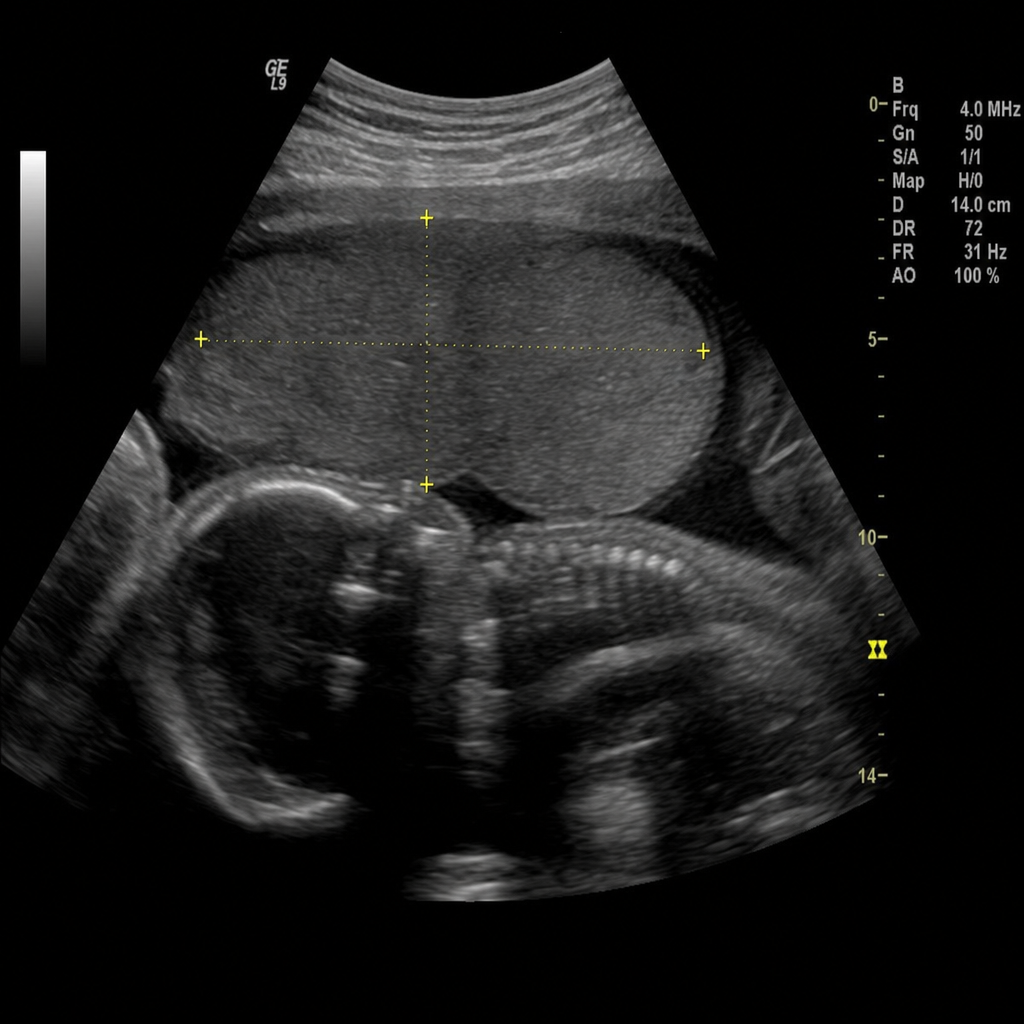
Which of the following describes the radiographic finding of a flattened, overlapping arch of the fetal skull, indicating fetal death?
What is the single best parameter to assess fetal well-being?
In a patient with sickle cell anaemia, blood transfusion is indicated in which of the following conditions?
Which of the following is a grave prognostic factor in a woman with pre-eclampsia?
During her eighth month of pregnancy, a 29-year-old woman is noted to have polyhydramnios. Further testing shows anencephaly. Polyhydramnios in this patient is caused by which of the following?
What is the most common cause of multiple fetal anomalies?
Ectopic pregnancy is most common in which of the following conditions?
A 15 cms X 15 cms ovarian cyst has been diagnosed in an 8-week pregnant lady. What is the recommended further management?
What is the blood pressure reading in severe pregnancy-induced hypertension (PIH)?
What is the commonest congenital malformation in an infant of a diabetic mother?
Explanation: **Explanation:** **Spalding’s Sign (Option A)** is the correct answer. It refers to the overlapping of the fetal skull bones caused by the liquefaction of the brain matter and the loss of intracranial pressure following intrauterine fetal death (IUFD). This radiographic sign typically appears 4 to 7 days after fetal demise. It is a classic high-yield finding in obstetric imaging, though it has largely been replaced by ultrasound in modern practice. **Analysis of Incorrect Options:** * **Robert’s Sign (Option B):** This refers to the presence of gas (usually nitrogen) in the fetal heart and great vessels. It is one of the earliest radiological signs of fetal death, appearing as early as 12 hours after demise. * **Wood’s Sign (Option C):** This is not a standard term for fetal death. It may be confused with the "Wood’s Screw Maneuver," which is a clinical technique used to manage shoulder dystocia by rotating the posterior shoulder. * **Normal Pregnancy (Option D):** In a viable pregnancy, the fetal skull bones are well-aligned without overlapping, maintained by normal intracranial pressure and brain volume. **Clinical Pearls for NEET-PG:** * **Earliest Sign of IUFD on X-ray:** Robert’s Sign (Gas in the circulatory system). * **Most Reliable Sign of IUFD:** Absence of fetal heart activity on Real-time Ultrasound (M-mode). * **Deuel’s Halo Sign:** Another sign of IUFD, characterized by the elevation of the scalp soft tissues (edema) creating a "halo" appearance around the fetal skull. * **Spalding’s Sign Caution:** It can occasionally be seen in a living fetus during labor when the head is deeply engaged and undergoing significant molding.
Explanation: The **Biophysical Profile (BPP)** is the gold standard for assessing acute and chronic fetal well-being because it combines multiple dynamic parameters to evaluate the integrity of the fetal central nervous system. ### **Why Biophysical Profile (D) is correct:** The BPP evaluates five parameters: **Fetal breathing movements, Fetal tone, Gross body movements, Amniotic fluid volume, and the Non-Stress Test (NST).** * **Acute markers** (Breathing, Tone, Movement, NST) reflect the immediate oxygenation of the fetal brain. * **Chronic markers** (Amniotic fluid) reflect long-term placental perfusion. Because it assesses both immediate neurological status and placental reserve, it is the most reliable predictor of fetal health and the risk of intrauterine death. ### **Why other options are incorrect:** * **Femur Length (A):** This is a biometric parameter used primarily to assess gestational age and skeletal growth, not acute well-being. * **Abdominal Circumference (B):** While this is the most sensitive indicator for **fetal growth restriction (IUGR)** and nutritional status (liver glycogen stores), it does not provide a real-time assessment of fetal hypoxia or distress. * **Head Circumference (C):** This is used for dating and monitoring brain growth but does not reflect the current physiological state of the fetus. ### **High-Yield Clinical Pearls for NEET-PG:** * **Manning’s Score:** The BPP is scored out of 10. A score of **8-10 is normal**, while **0-2 indicates certain fetal asphyxia** and requires immediate delivery. * **Modified BPP:** Consists of only the **NST** (acute) and **Amniotic Fluid Index** (chronic). It is as predictive as the full BPP. * **Sequence of Loss:** In fetal hypoxia, the first parameter to disappear is the **NST (reactivity)**, followed by breathing, and finally fetal tone (the last to disappear).
Explanation: In patients with Sickle Cell Anemia (SCA), pregnancy acts as a physiological stressor that can trigger vaso-occlusive crises and worsen maternal-fetal outcomes. While routine prophylactic transfusion for all pregnant patients with SCA is controversial, **selective transfusion** is indicated in high-risk scenarios to improve the oxygen-carrying capacity and reduce the concentration of HbS. **Explanation of Options:** * **Frequent Sickling Episodes (A):** Recurrent vaso-occlusive crises (painful crises), acute chest syndrome, or severe anemia (Hb <7 g/dL) are primary indications. Transfusion helps suppress endogenous erythropoiesis, thereby reducing the percentage of circulating sickle cells. * **Twin Pregnancy (B):** Multiple gestations significantly increase the metabolic demand and plasma volume expansion, leading to "dilutional anemia." This puts the mother at a higher risk of heart failure and the fetuses at risk of growth restriction. * **Poor Obstetrical Outcome (C):** A history of recurrent abortions, intrauterine growth restriction (IUGR), or stillbirths suggests placental insufficiency caused by micro-infarctions in the placental bed. Transfusions help maintain placental perfusion. **Why "All of the Above" is Correct:** All three conditions represent high-risk states where the benefits of increasing HbA levels (via transfusion) outweigh the risks of iron overload or alloimmunization. **High-Yield Clinical Pearls for NEET-PG:** * **Target Hb:** The goal of transfusion in pregnancy is typically to maintain **Hb around 10 g/dL** and **HbS <30-40%**. * **Prophylactic vs. Therapeutic:** Current ACOG/RCOG guidelines generally favor *selective* transfusion over routine prophylactic transfusion unless complications arise. * **Iron Supplementation:** Use caution; patients with SCA often have iron overload from previous transfusions. Check serum ferritin before prescribing routine iron. * **Commonest Complication:** Urinary Tract Infection (UTI) is the most common medical complication in pregnant women with sickle cell trait/disease.
Explanation: In pre-eclampsia, the fundamental pathology is widespread endothelial dysfunction and vasospasm, leading to end-organ damage. The kidneys are particularly vulnerable, and the development of acute kidney injury (AKI) is a hallmark of severe disease. ### **Explanation of the Correct Answer** **Serum creatinine >1.1 mg/dL** (or a doubling of baseline) is a diagnostic criterion for **Preeclampsia with Severe Features**. A value of **>1.4 mg/dL** is considered a **grave prognostic sign** because it indicates significant renal impairment (likely due to glomerular endotheliosis or acute tubular necrosis). Elevated creatinine is associated with an increased risk of maternal morbidity, including pulmonary edema, placental abruption, and the need for immediate delivery regardless of gestational age. ### **Analysis of Incorrect Options** * **Option A (Remission for 6 months):** This is not a prognostic factor for the acute episode. While pre-eclampsia usually resolves within 6–12 weeks postpartum, a "remission" period refers to the interval between pregnancies and does not indicate the severity of the current condition. * **Option C (24-h urine protein < 2.6 g):** While proteinuria is a classic sign of pre-eclampsia, the *amount* of protein (even massive proteinuria >5g) is no longer used to define "severe features" according to current ACOG guidelines, as it does not accurately predict maternal or fetal outcomes. A value < 2.6 g is relatively low and not considered a grave sign. ### **NEET-PG High-Yield Pearls** * **Severe Features of Preeclampsia:** BP ≥160/110 mmHg, Platelets <100,000/µL, Serum Creatinine >1.1 mg/dL, elevated liver enzymes (2x normal), pulmonary edema, or new-onset cerebral/visual disturbances. * **Drug of Choice:** Magnesium Sulfate ($MgSO_4$) for seizure prophylaxis (Pritchard or Zuspan regimen). * **Definitive Treatment:** Delivery of the fetus and placenta. * **Renal Pathology:** The characteristic renal lesion in pre-eclampsia is **Glomerular Endotheliosis** (swelling of endothelial cells and loss of fenestrations).
Explanation: **Explanation:** **Why Option A is correct:** Amniotic fluid volume is maintained by a delicate balance between production (fetal urine and lung fluid) and clearance (fetal swallowing and intramembranous absorption). In a normal pregnancy, the fetus swallows approximately 500–700 ml of amniotic fluid daily, which is then absorbed through the gastrointestinal tract. **Anencephaly**, a neural tube defect, results in the absence of a major portion of the brain and skull. This leads to a lack of the neural control required for the **swallowing reflex**. Additionally, the exposed area cerebrovasculosa may cause transudation of fluid, but the primary mechanism for polyhydramnios in these cases is the failure of the fetus to swallow and process the fluid. **Why incorrect options are wrong:** * **Option B:** While intracranial tumors can occur, anencephaly is a defect of "absence" (failure of cranial neuropore closure) rather than a space-occupying lesion. * **Option C:** There is no known placental secretory peptide that significantly increases amniotic fluid volume to the level of polyhydramnios. * **Option D:** Excess ADH (Antidiuretic Hormone) would lead to *decreased* fetal urine production, which would cause **oligohydramnios**, not polyhydramnios. **High-Yield Clinical Pearls for NEET-PG:** * **Common causes of Polyhydramnios:** Fetal anomalies (Anencephaly, Esophageal/Duodenal atresia), Maternal Diabetes, and Rh-isoimmunization. * **Amniotic Fluid Index (AFI):** Polyhydramnios is defined as an AFI > 24–25 cm or a Single Deepest Pocket (SDP) > 8 cm. * **Anencephaly Screening:** Elevated Maternal Serum Alpha-Fetoprotein (MSAFP) and "frog-eye" appearance on ultrasound. * **Therapeutic Management:** If symptomatic, medicinal management includes Indomethacin (reduces fetal urine) or therapeutic amniocentesis (amniodrainage).
Explanation: **Explanation:** **Rubella (German Measles)** is the correct answer because it is a potent teratogen known for causing **Congenital Rubella Syndrome (CRS)**. When infection occurs during the first trimester (the period of organogenesis), the virus causes chronic focal destruction of developing cells, leading to a classic triad of anomalies: **Cataracts, Sensorineural deafness, and Congenital Heart Disease** (most commonly Patent Ductus Arteriosus). Because it affects multiple organ systems simultaneously (eyes, ears, heart, and CNS), it is the most common infectious cause of multiple fetal anomalies. **Why other options are incorrect:** * **Syphilis:** Caused by *Treponema pallidum*, it typically presents with features like snuffles, Hutchinson’s teeth, and hepatosplenomegaly. However, it is generally considered a "late" fetal infection (usually manifesting after the 16th week) rather than a cause of early structural malformations. * **Tetracycline:** This is a drug-induced teratogen. Its primary effect is localized to the **calcification of teeth** (discoloration) and inhibition of bone growth. It does not typically cause a wide spectrum of "multiple" structural anomalies. * **Rubeola (Measles):** While it can cause maternal morbidity and is associated with an increased risk of miscarriage or preterm labor, the Rubeola virus is **not teratogenic** and does not cause structural fetal malformations. **High-Yield Clinical Pearls for NEET-PG:** * **Gregg’s Triad:** Cataract, Deafness, and Cardiac defects (PDA). * **Timing:** The risk of fetal malformation is highest (up to 80%) if the infection occurs within the first 12 weeks of gestation. * **Blueberry Muffin Rash:** A characteristic neonatal presentation of CRS due to extramedullary hematopoiesis. * **Vaccination:** Rubella is a live attenuated vaccine (RA 27/3); it is **contraindicated during pregnancy**, and pregnancy should be avoided for 1 month post-vaccination.
Explanation: **Explanation:** The most significant risk factor for ectopic pregnancy is any condition that causes structural damage or functional impairment to the fallopian tubes. **1. Why Option A is Correct:** **Pelvic Inflammatory Disease (PID)**, particularly recurrent episodes, is the leading cause of tubal factor infertility and ectopic pregnancy. PID (often caused by *Chlamydia trachomatis* or *Neisseria gonorrhoeae*) leads to **salpingitis**, which causes the loss of ciliary action and the formation of intratubal adhesions (endosalpingeal folds). This prevents the fertilized ovum from reaching the uterine cavity, leading to implantation within the tube. A single episode of PID increases the risk of ectopic pregnancy by 7-fold. **2. Why Other Options are Incorrect:** * **B. Previous history of abortion:** While a history of multiple surgical evacuations may slightly increase the risk of pelvic infection, a simple spontaneous or induced abortion is not a primary independent risk factor compared to PID. * **C. Previous history of twin pregnancy:** Multi-fetal gestation does not cause tubal damage or alter the transport mechanism of the zygote; therefore, it is not a risk factor. * **D. Endometriosis:** While pelvic endometriosis can cause adhesions that distort pelvic anatomy, it is a much less common cause of ectopic pregnancy than the widespread tubal mucosal damage seen in PID. **High-Yield Clinical Pearls for NEET-PG:** * **Most common site of Ectopic Pregnancy:** Fallopian tube (97%), specifically the **Ampulla** (most common overall). * **Most common site for Tubal Rupture:** Isthmus (due to its narrow lumen). * **Strongest Risk Factor:** Previous history of ectopic pregnancy (recurrence risk is ~10-15%). * **Classic Triad:** Amenorrhea, abdominal pain, and vaginal bleeding (present in only 50% of cases). * **Gold Standard Investigation:** Transvaginal Ultrasound (TVUS) + Serial β-hCG levels.
Explanation: ### Explanation **1. Why Option B is Correct:** The management of an ovarian cyst in pregnancy depends on its size, symptoms, and gestational age. A cyst measuring **15 cm** is considered large (typically >6 cm is the threshold for concern). Large cysts carry a high risk of **torsion, rupture, or labor obstruction**. The ideal time for surgery is the **early second trimester (14–16 weeks)** because: * **Organogenesis is complete**, reducing teratogenic risk from anesthesia. * The **placenta has taken over progesterone production**, so removing the corpus luteum (if necessary) will not cause miscarriage. * The uterus is not yet large enough to technically hinder the surgery, unlike in the third trimester. **2. Why Other Options are Incorrect:** * **Option A:** Follow-up is only appropriate for small (<6 cm), simple, asymptomatic cysts (likely functional), which often regress. A 15 cm cyst is unlikely to regress and poses a high risk of complications. * **Option C & D:** Waiting until term or postpartum is dangerous. As the uterus grows, the risk of **adnexal torsion** increases significantly. Furthermore, a 15 cm cyst in the pelvis can cause **soft tissue dystocia**, necessitating an emergency Cesarean section, which is riskier than elective mid-trimester surgery. **3. Clinical Pearls for NEET-PG:** * **Most common ovarian cyst in pregnancy:** Corpus luteal cyst (usually regresses by 12–14 weeks). * **Most common benign tumor in pregnancy:** Mature cystic teratoma (Dermoid). * **Most common complication:** Torsion (most frequent in the 1st trimester or early puerperium). * **Surgical approach:** While laparotomy is the traditional answer, **laparoscopy** is now considered safe and preferred in the second trimester by experienced surgeons.
Explanation: **Explanation:** Pregnancy-Induced Hypertension (PIH), specifically Preeclampsia, is defined as new-onset hypertension (BP ≥140/90 mm Hg) after 20 weeks of gestation. The classification into "Severe" features is critical for clinical management and timing of delivery. **1. Why Option A is Correct:** According to ACOG and NHBPEP guidelines, **Severe Hypertension** in pregnancy is defined as a Systolic Blood Pressure (SBP) **≥160 mm Hg** and/or a Diastolic Blood Pressure (DBP) **≥110 mm Hg**, measured on two occasions at least 4 hours apart (unless antihypertensive therapy is initiated sooner). This threshold is used because pressures above this level significantly increase the risk of maternal cerebrovascular accidents (stroke) and placental abruption. **2. Analysis of Incorrect Options:** * **Option B (150/100 mm Hg):** This falls under the category of "Mild to Moderate" hypertension (SBP 140–159 or DBP 90–109 mm Hg). While abnormal, it does not meet the criteria for severe PIH. * **Option C (260/100 mm Hg):** While the systolic value is dangerously high, this is not the standard diagnostic threshold for defining the onset of severe PIH. * **Option D (120/80 mm Hg):** This represents a normal physiological blood pressure reading in a healthy adult. **3. NEET-PG High-Yield Pearls:** * **Proteinuria:** No longer mandatory for the diagnosis of Preeclampsia if other "Severe Features" (thrombocytopenia, renal insufficiency, impaired liver function, pulmonary edema, or cerebral/visual symptoms) are present. * **Drug of Choice (Acute Crisis):** Intravenous Labetalol or Hydralazine. * **Drug of Choice (Seizure Prophylaxis):** Magnesium Sulfate ($MgSO_4$) is the gold standard for preventing eclampsia in severe PIH. * **Definitive Treatment:** Delivery of the fetus and placenta.
Explanation: In infants of diabetic mothers (IDM), the risk of congenital malformations is 3–4 times higher than in the general population, primarily due to maternal hyperglycemia during organogenesis (the first 8 weeks). **Explanation of the Correct Answer:** While **Sacral Agenesis** is the most *specific* malformation associated with maternal diabetes, it is not the most common. The most frequent category of malformations in IDMs are **Cardiovascular anomalies** (e.g., VSD, Transposition of the Great Arteries). However, among **Central Nervous System (CNS) defects**, which are the second most common group, **Anencephaly** (a type of neural tube defect) is statistically the most frequent individual malformation observed. **Analysis of Incorrect Options:** * **A. Neural Tube Defect (NTD):** This is a broad category that includes anencephaly and spina bifida. While NTDs as a group are very common in IDMs, the question asks for a specific malformation, making anencephaly the more precise choice in many standardized exams. * **B. Hydrocephalus:** While it can occur as a complication of other CNS defects (like spina bifida), it is not the most common primary malformation. * **D. Sacral Agenesis (Caudal Regression Syndrome):** This is a **high-yield distractor**. It is the most **pathognomonic (specific)** malformation for diabetes—meaning if you see it, you should immediately suspect maternal diabetes—but its absolute incidence is much lower than that of anencephaly or cardiac defects. **NEET-PG High-Yield Pearls:** * **Most common system involved:** Cardiovascular system (VSD is the most common specific cardiac lesion). * **Most specific/pathognomonic malformation:** Sacral agenesis (Caudal Regression Syndrome). * **Most common CNS malformation:** Anencephaly. * **Most common functional cardiac abnormality:** Hypertrophic Cardiomyopathy (specifically asymmetric septal hypertrophy), which is usually transient. * **Prevention:** Strict glycemic control (HbA1c < 6-7%) in the pre-conception period significantly reduces these risks.
Fetal Assessment Techniques
Practice Questions
Hypertensive Disorders in Pregnancy
Practice Questions
Intrauterine Growth Restriction
Practice Questions
Multiple Gestation
Practice Questions
Rh Isoimmunization and Other Blood Group Incompatibilities
Practice Questions
Intrauterine Fetal Therapy
Practice Questions
Prenatal Diagnosis and Genetic Counseling
Practice Questions
Placental Abnormalities
Practice Questions
Preterm Labor and Delivery
Practice Questions
Management of Medical Disorders in Pregnancy
Practice Questions
Get full access to all questions, explanations, and performance tracking.
Start For Free