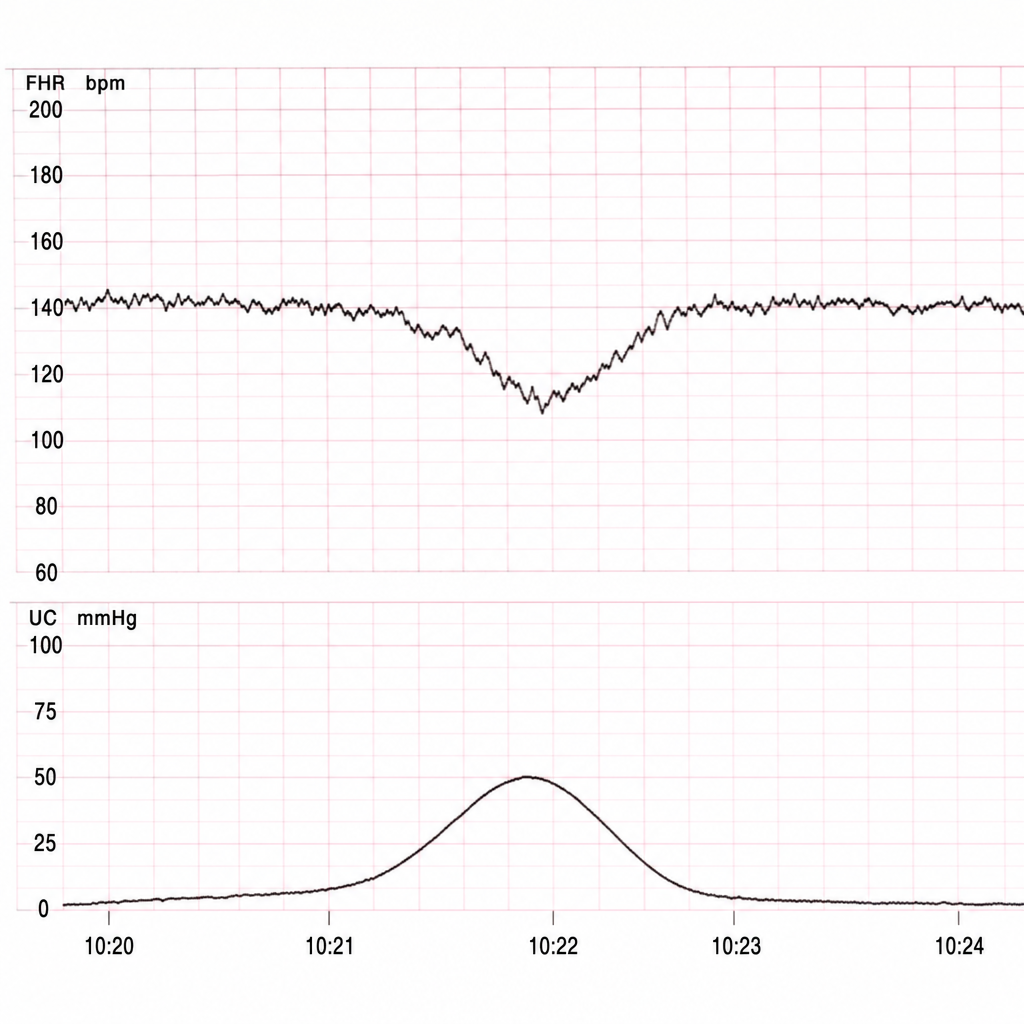
Intrauterine growth restriction is defined as:
Which of the following is seen in intrauterine fetal demise?
In multiple pregnancy, fetal reduction is typically performed using which of the following agents?
Which of the following Doppler findings in Intrauterine Growth Restriction (IUGR) is associated with the worst prognosis?
What is the most common association of renal failure in obstetrics?
A pregnant woman is found to have excessive accumulation of amniotic fluid. Polyhydramnios is likely to be associated with all of the following conditions, except:
Which of the following is the drug of choice in pregnancy-induced hypertension?
Which of the following is not a predisposing factor for Preeclampsia?
What is the recommended treatment for Chlamydia trachomatis infection during pregnancy?
Conservative management is contraindicated in a case of placenta previa under which of the following situations?
Explanation: **Explanation:** **1. Why Option C is Correct:** Intrauterine Growth Restriction (IUGR) is a clinical-pathological term defined as a **fetus that fails to achieve its genetically predetermined growth potential** due to environmental or genetic factors. While Small for Gestational Age (SGA) is a statistical definition (weight <10th percentile), IUGR implies a pathological process (like placental insufficiency) that prevents the fetus from growing as much as it should have. **2. Why Other Options are Incorrect:** * **Option A:** Oligohydramnios is a common *finding* or complication associated with IUGR (due to reduced fetal renal perfusion), but it is not the definition itself. * **Option B:** 2.5 kg is the threshold for "Low Birth Weight" (LBW) at birth, regardless of gestational age. A preterm baby can be 2.4 kg and perfectly healthy for its age, whereas a term baby at 2.4 kg is growth-restricted. * **Option D:** Pregnancy beyond 40 weeks is "Post-term" or "Post-dates." While post-maturity can lead to placental senescence and late-onset growth restriction, it is a temporal classification, not a definition of IUGR. **3. NEET-PG High-Yield Pearls:** * **SGA vs. IUGR:** SGA is weight <10th percentile for gestational age. All IUGR fetuses are SGA, but not all SGA fetuses are IUGR (some are just "constitutionally small"). * **Symmetric IUGR:** Occurs early (hyperplastic phase); caused by chromosomal anomalies or TORCH infections. Ponderal index is normal. * **Asymmetric IUGR:** More common (70-80%); occurs late (hypertrophic phase); caused by placental insufficiency/maternal hypertension. Shows **"Head Sparing Effect"** (AC is reduced more than HC). * **Best Screening Tool:** Symphysis-fundal height (SFH) measurement. * **Best Diagnostic Tool:** Serial Ultrasonography (specifically Abdominal Circumference). * **Gold Standard for Monitoring:** Doppler study of the Umbilical Artery.
Explanation: **Explanation:** Intrauterine Fetal Demise (IUFD) refers to fetal death occurring after 20 weeks of gestation but before birth. **Why B is Correct:** The primary complication associated with a retained dead fetus is **Disseminated Intravascular Coagulation (DIC)**. When a fetus dies and is retained in the uterus for more than 3–4 weeks, thromboplastin-like substances are released from the degenerating fetal tissues and placenta into the maternal circulation. This triggers the extrinsic coagulation pathway, leading to the consumption of clotting factors (especially fibrinogen) and platelets, ultimately resulting in a consumptive coagulopathy. **Why Incorrect Options are Wrong:** * **A. Hypertension:** IUFD does not cause hypertension. While Preeclampsia is a common *cause* of IUFD, the death of the fetus itself often leads to a decrease in blood pressure as the placental hormonal influence diminishes. * **C. Increase in fundal height:** In IUFD, the fundal height **decreases** or remains stationary. This is due to the cessation of fetal growth, the absorption of amniotic fluid (liquor), and the collapse of the fetal skull bones (Spalding’s sign). * **D. Increased uterine tone:** IUFD is typically associated with a "silent" or flaccid uterus. Increased uterine tone (hypertonicity) is more characteristic of Abruptio Placentae. **High-Yield Clinical Pearls for NEET-PG:** * **Spalding’s Sign:** Overlapping of fetal skull bones (seen on X-ray/USG 4–7 days after death). * **Robert’s Sign:** Appearance of gas in the fetal large vessels or heart (earliest radiological sign, seen within 12 hours). * **Investigation of Choice:** Ultrasound (demonstrates absence of fetal heart activity). * **Management:** If fibrinogen levels drop below 150 mg/dL, it indicates impending DIC, and the uterus must be evacuated immediately after stabilizing the patient.
Explanation: **Explanation:** **Multifetal Pregnancy Reduction (MFPR)** is a procedure performed to reduce the number of fetuses in a high-order multiple pregnancy (usually triplets or more) to improve the survival chances and outcomes of the remaining fetuses. **1. Why Potassium Chloride (KCl) is the Correct Answer:** Intracardiac injection of **Potassium Chloride (KCl)** is the gold standard for fetal reduction. It works by inducing immediate cardiac arrest in the targeted fetus through hyperkalemia. The procedure is typically performed between **10–14 weeks of gestation** under transabdominal ultrasound guidance. KCl is preferred because it is highly effective, acts instantly, and—when injected into the fetal heart—does not pose a systemic risk to the mother or the remaining fetuses. **2. Why the Other Options are Incorrect:** * **Mifepristone (B):** An anti-progestogen used for medical abortion or cervical ripening. It acts systemically to detach the placenta and cannot be used for selective reduction without affecting all fetuses. * **PGF2-alpha (C):** A prostaglandin used to induce uterine contractions. Systemic or intra-amniotic administration would lead to the expulsion of the entire pregnancy. * **Methotrexate (D):** A folate antagonist used for ectopic pregnancies. It is teratogenic and slow-acting; it cannot be used selectively in a viable multiple pregnancy as it may harm the surviving fetuses. **3. High-Yield Clinical Pearls for NEET-PG:** * **Timing:** Ideally performed at **10–13 weeks**. This allows for the first-trimester screening (NT scan) to identify and reduce the fetus with the highest risk of chromosomal anomalies. * **Monochorionic Twins:** KCl is **contraindicated** in monochorionic (MC) twins due to vascular anastomoses, which would cause the KCl to pass to the co-twin, leading to its death or neurological damage. In MC twins, **Radiofrequency Ablation (RFA)** or bipolar cord coagulation is used instead. * **Risk:** The procedure carries a roughly 4–5% risk of total pregnancy loss.
Explanation: **Explanation:** In the management of Intrauterine Growth Restriction (IUGR), Umbilical Artery (UA) Doppler is the gold standard for monitoring fetal well-being and predicting placental insufficiency. The progression of Doppler changes reflects increasing resistance in the placental vascular bed. **Why "Reversal of Diastolic Flow" is correct:** As placental resistance increases, the end-diastolic velocity in the umbilical artery decreases. Eventually, the pressure in the placenta exceeds the pressure in the umbilical artery during diastole, causing blood to flow backward toward the fetus. **Reversed End-Diastolic Velocity (REDV)** indicates that over 70% of the placental vascular bed is obliterated. It is a pre-terminal finding associated with extreme fetal acidemia, multi-organ failure, and a high risk of imminent intrauterine fetal death (IUFD). **Analysis of Incorrect Options:** * **Dicrotic notch:** This is a normal finding in the **Uterine Artery** during the first trimester. Its persistence beyond 24 weeks indicates a failure of trophoblastic invasion and an increased risk for pre-eclampsia/IUGR, but it is a screening tool rather than a terminal prognostic marker. * **Absence of diastolic flow (AEDV):** This occurs when placental resistance is high enough to stop flow during diastole. While serious and an indication for intensive monitoring or delivery (usually >34 weeks), it precedes REDV and carries a slightly better prognosis. * **Absence of systolic flow:** This is not a recognized clinical stage in IUGR Doppler progression. Systolic flow is maintained by the fetal heart until the very end; its absence would imply fetal cardiac arrest. **High-Yield Clinical Pearls for NEET-PG:** 1. **Sequence of Deterioration:** Increased S/D ratio → Absent End Diastolic Velocity (AEDV) → Reversed End Diastolic Velocity (REDV). 2. **Ductus Venosus (DV):** Reversal of the 'a-wave' in the DV is the most ominous venous Doppler finding and often the final trigger for delivery in early-onset IUGR. 3. **Brain Sparing Effect:** Indicated by a decrease in the Middle Cerebral Artery (MCA) Pulsatility Index (PI), showing blood shunting to the fetal brain.
Explanation: **Explanation:** Acute Kidney Injury (AKI) in pregnancy is a serious complication, and **Pregnancy-Induced Hypertension (PIH)**, specifically pre-eclampsia and eclampsia, remains the most common cause of renal failure in the obstetric population. **1. Why PIH is the Correct Answer:** The pathophysiology of PIH involves widespread endothelial dysfunction and vasospasm. In the kidneys, this manifests as **Glomerular Endotheliosis** (swelling of endothelial cells and loss of capillary lumen), which leads to a decreased Glomerular Filtration Rate (GFR), proteinuria, and eventually, acute renal failure. While modern management has reduced its incidence, it still accounts for the majority of obstetric AKI cases globally. **2. Analysis of Incorrect Options:** * **Sepsis:** A significant cause of AKI, particularly in the first trimester (due to septic abortion) or postpartum (puerperal sepsis). However, statistically, it follows PIH in overall frequency. * **Abruptio Placentae:** This is the most common cause of **Acute Tubular Necrosis (ATN)** and **Bilateral Renal Cortical Necrosis** in pregnancy due to severe hypovolemia and DIC. While it is a "classic" cause of severe AKI, it is less frequent than PIH. * **HELLP Syndrome:** While HELLP is a severe variant of PIH and frequently involves renal impairment, it is a subset of the broader category of hypertensive disorders of pregnancy. **3. High-Yield Clinical Pearls for NEET-PG:** * **Most common cause of AKI in 1st trimester:** Septic abortion. * **Most common cause of AKI in 3rd trimester:** PIH (Pre-eclampsia/Eclampsia). * **Renal Cortical Necrosis:** Classically associated with Abruptio Placentae; it often leads to permanent renal failure. * **Glomerular Endotheliosis:** The pathognomonic renal lesion of pre-eclampsia.
Explanation: **Explanation:** The volume of amniotic fluid is a dynamic balance between production (primarily fetal urine) and clearance (primarily fetal swallowing). **Polyhydramnios** occurs when there is either excessive production or impaired clearance of fluid. **Why Bilateral Renal Agenesis is the Correct Answer:** In **Bilateral Renal Agenesis** (Potter’s Syndrome), the fetal kidneys fail to develop. Since fetal urine is the primary source of amniotic fluid from the second trimester onwards, its absence leads to **Oligohydramnios** (deficiency of fluid), not polyhydramnios. This is a classic "except" question where the condition leads to the exact opposite pathology. **Analysis of Incorrect Options:** * **Twin Pregnancy:** Polyhydramnios can occur due to increased fetal surface area or, more specifically, in **Twin-to-Twin Transfusion Syndrome (TTTS)**, where the recipient twin develops polyuria and subsequent polyhydramnios. * **Anencephaly:** This neural tube defect causes polyhydramnios via two mechanisms: (1) failure of the fetal swallowing reflex and (2) transudation of fluid from the exposed meninges into the amniotic sac. * **Esophageal Atresia:** This creates a mechanical obstruction in the fetal gastrointestinal tract, preventing the fetus from swallowing and absorbing amniotic fluid, leading to accumulation. **High-Yield Clinical Pearls for NEET-PG:** * **Definition:** Polyhydramnios is defined as an Amniotic Fluid Index (AFI) **> 25 cm** or a Single Deepest Pocket (SDP) **> 8 cm**. * **Maternal Cause:** The most common maternal cause of polyhydramnios is **Maternal Diabetes Mellitus** (due to fetal osmotic diuresis). * **Potter Sequence:** Bilateral renal agenesis → Oligohydramnios → Pulmonary hypoplasia, limb deformities, and flattened facies.
Explanation: **Explanation:** **Alpha-methyldopa** is considered the traditional drug of choice for the management of chronic hypertension and pregnancy-induced hypertension (PIH). It is a centrally acting alpha-2 adrenergic agonist that reduces sympathetic outflow. Its preference in pregnancy stems from its long-standing safety profile, lack of teratogenicity, and the fact that it does not compromise uteroplacental blood flow. **Analysis of Options:** * **B. Diltiazem:** This is a calcium channel blocker (CCB). While certain CCBs like Nifedipine are commonly used in pregnancy, Diltiazem is not a first-line agent for PIH due to less clinical data compared to Methyldopa or Labetalol. * **C. Metoprolol:** While beta-blockers can be used, Metoprolol is generally avoided in the first trimester due to risks of fetal bradycardia and potential growth restriction (IUGR). **Labetalol** (a combined alpha/beta-blocker) is the preferred beta-blocker in pregnancy. * **D. Enalapril:** ACE inhibitors and ARBs are **strictly contraindicated** in pregnancy (Category X). They are associated with fetal renal dysgenesis, oligohydramnios, and skull hypoplasia. **High-Yield Clinical Pearls for NEET-PG:** * **Drug of Choice (Chronic/Long-term):** Methyldopa. * **Drug of Choice (Acute Hypertensive Crisis/Emergency):** Intravenous **Labetalol** (fastest acting) or Hydralazine. * **Oral Labetalol** is increasingly replacing Methyldopa in modern guidelines due to a faster onset and fewer side effects (like sedation/depression). * **Prophylaxis:** Low-dose Aspirin (75–150 mg) is started before 16 weeks for women at high risk of preeclampsia. * **Magnesium Sulfate ($MgSO_4$):** The drug of choice for seizure prophylaxis and control in Eclampsia.
Explanation: **Explanation:** Preeclampsia is a multisystem disorder characterized by new-onset hypertension and proteinuria after 20 weeks of gestation. Understanding its risk factors is crucial for NEET-PG. **Why Smoking is the Correct Answer:** Counter-intuitively, **smoking is a protective factor** against preeclampsia (reducing risk by approximately 30-50%). The underlying medical concept involves the stimulation of placental growth factor (PlGF) and the inhibition of soluble fms-like tyrosine kinase-1 (sFlt-1) by carbon monoxide and nicotine. This helps maintain a pro-angiogenic balance, preventing the endothelial dysfunction typical of preeclampsia. **Analysis of Incorrect Options:** * **Anti-phospholipid antibody (APLA):** This is a major risk factor. APLA syndrome causes placental thrombosis and impaired trophoblastic invasion, leading to placental ischemia and early-onset preeclampsia. * **Gestational Diabetes (GDM):** Hyperinsulinemia and insulin resistance are associated with systemic inflammation and endothelial damage, significantly increasing the risk of hypertensive disorders. * **Molar Pregnancy:** This is a classic "high-yield" risk factor. The excessive trophoblastic proliferation leads to the release of anti-angiogenic factors. Notably, preeclampsia occurring **before 20 weeks** should always raise suspicion of a hydatidiform mole. **Clinical Pearls for NEET-PG:** * **Highest Risk Factor:** A prior history of preeclampsia is the strongest predictor. * **Nulliparity:** Often called the "disease of theories," it is most common in first pregnancies. * **Protective Factors:** Smoking and previous term delivery with a different partner (though the latter is debated). * **Prophylaxis:** Low-dose Aspirin (75–150 mg) started before 16 weeks is recommended for high-risk patients.
Explanation: **Explanation:** *Chlamydia trachomatis* is the most common bacterial sexually transmitted infection. During pregnancy, treatment is essential to prevent complications such as preterm labor, premature rupture of membranes (PROM), and neonatal transmission (leading to ophthalmia neonatorum or pneumonia). **Why Amoxicillin is Correct:** According to the CDC and standard obstetric guidelines, the first-line treatments for Chlamydial infection in pregnancy are **Azithromycin (1g orally in a single dose)** or **Amoxicillin (500 mg orally 3 times daily for 7 days)**. Amoxicillin is highly effective, safe (FDA Category B), and preferred when macrolides are not tolerated. It works by inhibiting bacterial cell wall synthesis. **Why Other Options are Incorrect:** * **B. Metronidazole:** This is the drug of choice for *Trichomonas vaginalis* and Bacterial Vaginosis, but it has no clinical activity against *Chlamydia*. * **C. Cefazolin:** A first-generation cephalosporin used primarily for surgical prophylaxis and skin infections; it is ineffective against the intracellular nature of *Chlamydia*. * **D. Clindamycin:** Used for Bacterial Vaginosis or pelvic inflammatory disease (in combination), but it is not a primary treatment for Chlamydial cervicitis. **NEET-PG High-Yield Pearls:** 1. **Contraindication:** **Doxycycline and Tetracyclines** are strictly contraindicated in pregnancy (Category D) due to the risk of fetal dental staining and inhibition of bone growth. 2. **Erythromycin:** Previously used, but no longer preferred due to high rates of gastrointestinal side effects. 3. **Test of Cure (TOC):** Unlike in non-pregnant patients, a TOC (via Nucleic Acid Amplification Test - NAAT) is mandatory **3–4 weeks** after treatment completion in pregnant women to ensure eradication. 4. **Partner Treatment:** Simultaneous treatment of the sexual partner is crucial to prevent reinfection.
Explanation: **Explanation:** The goal of conservative management (MacAfee and Johnson regimen) in placenta previa is to prolong pregnancy until fetal maturity is reached, typically up to 37 weeks. **Why Option C is the Correct Answer:** The question asks for a situation where conservative management is **contraindicated**. Conservative management is specifically indicated when the mother is hemodynamically stable and the fetus is premature. Therefore, a stable hemodynamic status is a **requirement** for conservative management, not a contraindication. (Note: In many exam formats, this is a "negative" question where you identify the prerequisite rather than the contraindication). **Analysis of Incorrect Options (Contraindications):** * **Option A (Fetal Distress):** If there is evidence of fetal hypoxia or distress, immediate delivery is mandatory regardless of gestational age to prevent fetal demise. * **Option B (Fetal Malformations):** If the fetus has anomalies incompatible with life, there is no benefit in prolonging the pregnancy and risking maternal hemorrhage; delivery is indicated. * **Option D (Women in Labor):** Active labor is a contraindication to conservative management because cervical effacement and dilatation will inevitably lead to massive, life-threatening maternal hemorrhage in placenta previa. **NEET-PG High-Yield Pearls:** * **MacAfee Regimen Criteria:** Pregnancy <37 weeks, mother stable (Hb >10g/dL), fetus alive and stable, and no active labor. * **Termination Timing:** In stable cases of placenta previa, elective delivery is usually planned at **37 completed weeks**. * **Vaginal Examination:** Digital vaginal examination is **strictly contraindicated** (can provoke torrential hemorrhage) unless performed in the "Double Setup" (OT ready for immediate CS). * **Investigation of Choice:** Transvaginal Ultrasound (TVS) is the gold standard for diagnosis and is safe.
Fetal Assessment Techniques
Practice Questions
Hypertensive Disorders in Pregnancy
Practice Questions
Intrauterine Growth Restriction
Practice Questions
Multiple Gestation
Practice Questions
Rh Isoimmunization and Other Blood Group Incompatibilities
Practice Questions
Intrauterine Fetal Therapy
Practice Questions
Prenatal Diagnosis and Genetic Counseling
Practice Questions
Placental Abnormalities
Practice Questions
Preterm Labor and Delivery
Practice Questions
Management of Medical Disorders in Pregnancy
Practice Questions
Get full access to all questions, explanations, and performance tracking.
Start For Free