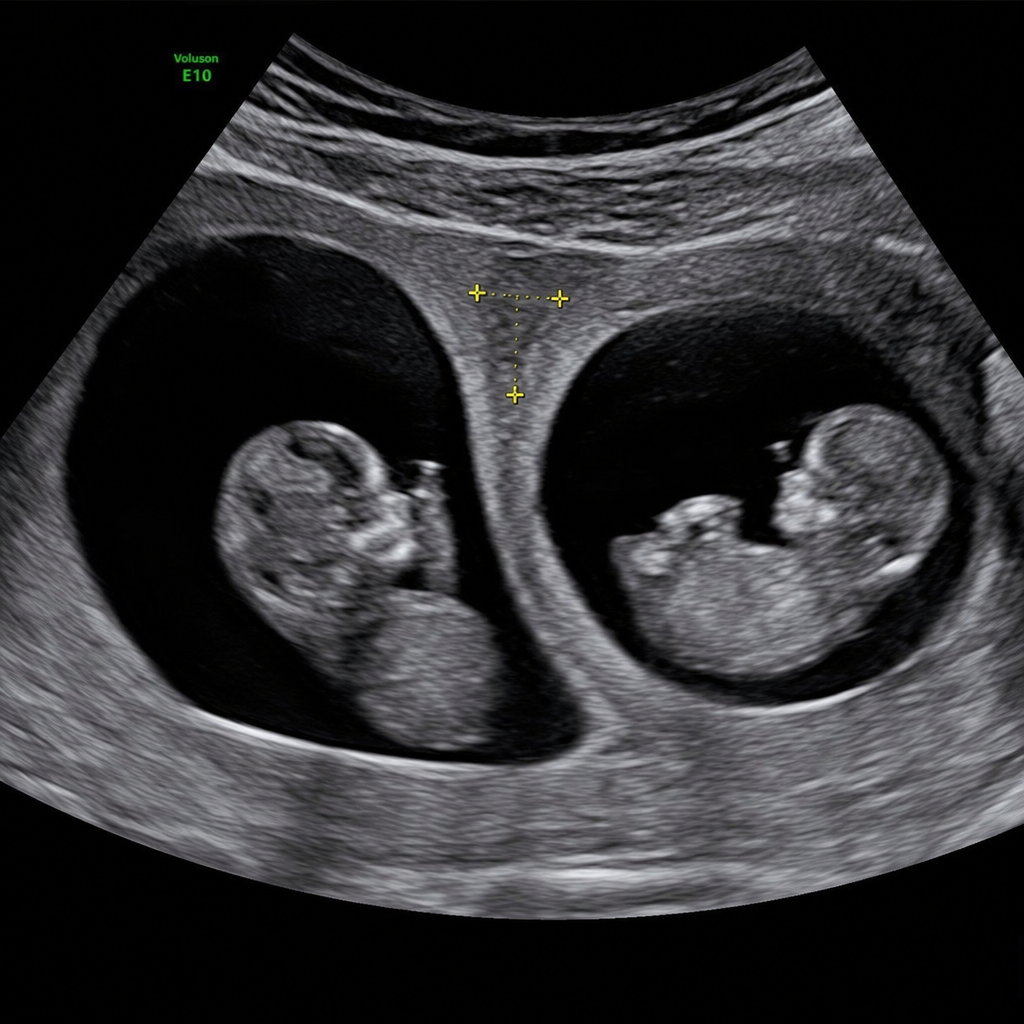
Which of the following is NOT a characteristic of the recipient twin in a monochorionic twin gestation affected by twin-twin transfusion syndrome?
A 30-year-old primigravida at 36 weeks of pregnancy presents with a blood pressure of 160/110 mmHg, 3+ urinary albumin, and a platelet count of 80,000/mm3. What is the most appropriate management option?
Consider the following: 1. Reactive non-stress test, 2. Absence of deceleration, and 3. Sinusoidal pattern. Which of the above findings in an antepartum cardiotocogram indicate fetal well-being?
What is the most serious complication of maternal varicella infection during late pregnancy?
A female with 6 weeks of amenorrhea presents with an ovarian cyst that requires surgical intervention. The optimal timing for surgery is:
Which of the following measures is NOT effective in reducing perinatal HIV transmission?
Which of the following is not a feature of HELLP syndrome?
Which of the following are individual indicators of fetal distress?
In cases where threatened abortion is associated with ongoing placental insufficiency, what is the most likely fetal complication?
Which condition is associated with a sinusoidal heart rate pattern?
Explanation: ***Hypovolemia*** - The recipient twin in twin-twin transfusion syndrome (TTTS) experiences **hypervolemia** due to excessive blood flow from the donor twin, not hypovolemia. - This increased blood volume leads to **polycythemia** and volume overload. - Hypovolemia is actually a characteristic of the **donor twin**, not the recipient. *Thrombosis* - The recipient twin has **polycythemia** and increased blood viscosity due to hypervolemia, which increases the risk of **thrombosis**. - This hyperviscosity can lead to **vascular occlusions** in various organs. *Polyhydramnios* - The recipient twin characteristically develops **polyhydramnios** (excessive amniotic fluid) due to increased urine output from hypervolemia. - This is one of the **classic ultrasound findings** in TTTS, with the recipient showing a large fluid-filled sac. *Heart failure* - The recipient twin's heart has to pump an increased volume of blood, leading to **cardiac overload** and hypertrophy. - This chronic workload can eventually result in **congestive heart failure** and hydrops fetalis.
Explanation: ***Magnesium sulfate for seizure prophylaxis*** - This patient has **severe preeclampsia** (BP ≥160/110 mmHg, significant proteinuria, thrombocytopenia), making her at **high risk for eclamptic seizures**. - **Magnesium sulfate** is the **first-line treatment** and must be initiated immediately for **seizure prophylaxis** in severe preeclampsia. - According to **ACOG and RCOG guidelines**, magnesium sulfate should be started **before delivery** and is the most critical immediate intervention to prevent maternal mortality and morbidity. - While delivery is the definitive treatment for preeclampsia, magnesium sulfate must be administered first to stabilize the patient. *Urgent LSCS* - At **36 weeks with severe preeclampsia**, delivery is indicated within 24-48 hours, but **cesarean section is not automatically required**. - The **mode of delivery** depends on **obstetric factors** (cervical favorability, fetal presentation, previous cesarean, etc.), not the preeclampsia diagnosis itself. - With a platelet count of **80,000/mm³**, vaginal delivery is generally safe (platelets >50,000/mm³ are adequate for labor). - **Labor induction** would be appropriate first-line unless there are specific obstetric contraindications to vaginal delivery. *Labetalol for hypertension* - **Antihypertensive therapy** is important to prevent maternal stroke when BP is ≥160/110 mmHg. - However, **magnesium sulfate takes priority** as the immediate life-saving intervention for seizure prevention. - Labetalol would be administered concurrently but is not the single most appropriate answer. *Labour induction* - Labor induction is an appropriate method of delivery for severe preeclampsia at ≥34 weeks gestation. - However, **before proceeding with delivery**, the patient must be **stabilized with magnesium sulfate** and antihypertensives. - Induction would follow after initial stabilization with magnesium sulfate.
Explanation: ***1 and 2 only*** - A **reactive non-stress test (NST)** indicates adequate fetal oxygenation and an intact autonomic nervous system, characterized by accelerations in fetal heart rate. - The **absence of decelerations**, particularly late or variable decelerations, suggests that the fetus is not experiencing significant uteroplacental insufficiency or cord compression. *2 and 3 only* - While the **absence of decelerations** is a positive sign, a **sinusoidal pattern** is a sign of severe fetal compromise. - Therefore, combining the absence of deceleration with a sinusoidal pattern does not indicate fetal well-being. *1 and 3 only* - A **reactive non-stress test** is a good indicator of fetal well-being. - However, the presence of a **sinusoidal pattern** is a concerning sign and indicates severe fetal anemia or hypoxia, not well-being. *1, 2, 3* - A **reactive non-stress test** and the **absence of decelerations** both indicate fetal well-being. - A **sinusoidal pattern**, however, is a non-reassuring finding, often associated with severe fetal anemia, hypoxia, or severe neurological compromise, and therefore does not indicate well-being.
Explanation: ***Severe neonatal varicella in the newborn.*** - If a pregnant mother contracts **varicella** in the last 5 days before delivery or up to 2 days postpartum, the newborn is at risk for **severe, disseminated neonatal varicella**, which can be fatal. - This is because the mother does not have enough time to produce and transfer protective **antibodies** to the fetus before birth. - Mortality rates can reach 20-30% without treatment, making this the most serious complication of late pregnancy maternal varicella infection. *Affects the limbs more than the trunk.* - This statement refers to **congenital varicella syndrome**, which occurs with maternal infection in the first 20 weeks of pregnancy, not late pregnancy. - Congenital varicella syndrome characteristically presents with **skin scarring** in a dermatomal distribution, **limb hypoplasia**, and neurologic and ocular defects. *May cause pneumonitis.* - While **varicella pneumonitis** is a serious complication for the **mother** if infected during pregnancy, it is not a complication affecting the **newborn** due to late pregnancy maternal infection. - The question asks about complications of maternal infection during late pregnancy, and the most serious outcome for the **fetus/newborn** is severe neonatal varicella, not maternal pneumonitis. *Is commonly seen in a congenital form.* - **Congenital varicella syndrome** (the "congenital form") is rare and results from maternal infection during the **first 20 weeks of gestation**, not late pregnancy. - Late pregnancy infection leads to **neonatal varicella**, which is a distinct and often more severe acute entity compared to the chronic congenital syndrome.
Explanation: ***Ovariotomy at second trimester*** - The **second trimester (14-28 weeks)** is the optimal time for surgical management of ovarian cysts in pregnancy requiring intervention. - During this period, the risk of **miscarriage** is significantly reduced compared to the first trimester, as the placenta has taken over progesterone production. - Fetal organogenesis is complete, and the uterus size allows for adequate surgical access with minimal risk of injury. - Most functional cysts (corpus luteum) have resolved spontaneously by this time, so persistent cysts are more likely to be true neoplasms requiring removal. *Immediate ovariotomy* - Performing **immediate surgery** at 6 weeks of amenorrhea carries a high risk of **miscarriage** due to surgical stress and anesthesia effects. - At this early stage of pregnancy, the corpus luteum is essential for progesterone production, and its disruption could threaten pregnancy viability. - Surgery in the first trimester should be reserved only for acute complications like **torsion** or **rupture**. *Ovariotomy 24 hours after delivery* - Waiting until 24 hours after delivery would delay treatment unnecessarily for a cyst requiring intervention, potentially leading to complications like **torsion**, **rupture**, or **hemorrhage** during pregnancy. - If the cyst is large or suspicious, allowing it to persist throughout pregnancy increases maternal morbidity risk. - However, expectant management throughout pregnancy is appropriate for simple, asymptomatic cysts. *Ovariotomy with cesarean* - Performing **ovariotomy concurrently with Cesarean section** significantly increases operative time, blood loss, and risk of postpartum complications. - This approach is only justified if the cyst is causing obstruction of labor or has highly suspicious features for malignancy. - Routine combination of these procedures is not recommended for benign ovarian pathology.
Explanation: ***Breastfeeding*** - Breastfeeding is **NOT effective in reducing perinatal HIV transmission** - in fact, it is a route of HIV transmission from mother to child. - In resource-rich settings, HIV-positive mothers are advised against breastfeeding because breast milk can transmit HIV, with transmission risk of 5-20% through prolonged breastfeeding. - While breastfeeding offers nutritional and immunological benefits, the risk of HIV transmission outweighs these benefits when safe alternatives (formula feeding) are available. - **This is the correct answer** to the question asking what is "NOT effective" in reducing transmission. *Delivery by elective cesarean section* - An **elective cesarean section** before the onset of labor or rupture of membranes significantly reduces the risk of vertical HIV transmission. - This method avoids the neonate's exposure to maternal blood and genital secretions during vaginal delivery. - Reduces transmission risk by approximately 50% when used alone, and even more when combined with ART. *Antiretroviral therapy to the neonate* - Administering **antiretroviral therapy (ART)** to the neonate, typically within hours of birth and continuing for 4-6 weeks, is crucial in preventing HIV infection. - This post-exposure prophylaxis can prevent establishment of HIV infection that may have been acquired during delivery or in utero. - Reduces transmission risk significantly, especially when maternal viral load is high. *Intrapartum antiretroviral therapy* - **Intrapartum antiretroviral therapy** involves administering ART to the mother during labor and delivery. - This helps reduce the maternal viral load at the time of birth, thereby minimizing the risk of HIV transmission to the neonate. - Part of the comprehensive approach to prevent mother-to-child transmission (PMTCT).
Explanation: ***Eosinophilia*** - **Eosinophilia** (an increase in eosinophils) is not a characteristic feature of **HELLP syndrome**. - HELLP syndrome is defined by specific hematologic and liver abnormalities, not changes in eosinophil count. *Thrombocytopenia* - **Thrombocytopenia** (platelet count < 100,000/µL) is a defining feature of **HELLP syndrome**. - It results from increased platelet consumption due to microangiopathic hemolysis. *Raised liver enzyme* - **Raised liver enzymes** (AST or ALT ≥ 70 IU/L) are a crucial diagnostic criterion for **HELLP syndrome**, indicating hepatocellular injury. - This elevation reflects liver damage and is often associated with epigastric or right upper quadrant pain. *Hemolytic anemia* - **Hemolytic anemia** (evidenced by an abnormal peripheral blood smear, elevated bilirubin, or low haptoglobin) is another key component of **HELLP syndrome**. - This involves the destruction of red blood cells, leading to anemia and often contributing to the elevated liver enzymes and thrombocytopenia.
Explanation: ***All of the options*** - **Meconium staining** of the amniotic fluid, **late decelerations of fetal heart rate**, and a **decrease in fetal scalp blood pH** are all recognized individual indicators of fetal distress. - These signs individually or collectively suggest that the fetus is experiencing **hypoxia** or other adverse conditions. *Meconium staining* - Refers to the presence of **meconium** (the first stool of a newborn) in the **amniotic fluid**, which can indicate fetal stress leading to gasping and passage of meconium. - While concerning, it's not always indicative of severe hypoxia but warrants further assessment. - **Mechanism**: Fetal hypoxia → vagal stimulation → relaxation of anal sphincter → meconium passage. *Late deceleration of heart rate* - **Late decelerations** are symmetric drops in fetal heart rate that begin after the peak of the contraction and return to baseline after the contraction has ended. - They are associated with **uteroplacental insufficiency** and **fetal hypoxia**, reflecting inadequate oxygen delivery to the fetus. - **Significance**: Indicates fetal compromise requiring immediate evaluation and potential intervention. *Decrease in fetal scalp blood pH* - A **low fetal scalp blood pH** (typically below 7.20) indicates **fetal acidosis**, which is a direct sign of **fetal hypoxemia** and distress. - It suggests that the fetus is undergoing anaerobic metabolism due to insufficient oxygen supply. - **Clinical utility**: Provides objective biochemical evidence of fetal compromise when CTG is non-reassuring.
Explanation: ***Intrauterine growth restriction (IUGR)*** - **Placental insufficiency** is the leading cause of **IUGR**, as the placenta fails to deliver adequate oxygen and nutrients to the developing fetus - In threatened abortion associated with ongoing placental insufficiency, the chronic nature of reduced placental function directly impairs fetal growth - IUGR is characterized by fetal weight below the 10th percentile for gestational age and is the most predictable complication of sustained placental dysfunction - This represents a direct cause-and-effect relationship: inadequate placental function → reduced fetal nutrition → growth restriction *Fetal malformation* - Congenital malformations are primarily caused by **genetic abnormalities**, **teratogenic exposures**, or **early developmental errors** during organogenesis - Placental insufficiency does not cause structural malformations, though it may affect fetal growth and development - Malformations would typically be established early in pregnancy, independent of placental function *Preterm labor* - While placental insufficiency can be associated with preterm labor in some cases, this is not the **most likely** or most direct fetal complication - Preterm labor is a maternal-fetal process influenced by multiple factors including infection, cervical insufficiency, and uterine abnormalities - IUGR is a more consistent and direct consequence of chronic placental insufficiency *None of the options* - This is incorrect as **IUGR** is the established and most likely fetal complication when placental insufficiency is ongoing - The direct pathophysiology of placental insufficiency leading to IUGR is well-documented in obstetric literature
Explanation: ***Vasa previa*** - A **sinusoidal heart rate pattern** is a sign of severe **fetal anemia**, often caused by **fetal hemorrhage**. - In vasa previa, unprotected fetal blood vessels course over the cervical os, making them vulnerable to rupture and leading to **fetal bleeding** and subsequent anemia. *Placenta previa* - This condition involves the **placenta covering the cervical os**, primarily causing **painless vaginal bleeding** in the mother. - The bleeding is **maternal blood**, not fetal blood, so it does not directly cause fetal anemia or a sinusoidal heart rate pattern. *Battledore placenta* - In a battledore placenta, the **umbilical cord is inserted marginally** into the placental disk, rather than centrally. - This anatomical variation is generally a benign finding and is not directly associated with fetal hemorrhage or a sinusoidal heart rate pattern. *Succenturiate placenta* - This involves **one or more accessory placental lobes** located separately from the main placental body. - The main concern is a retained lobe after delivery or vessels connecting the lobes, which can cause bleeding, but it is not specifically linked to a sinusoidal heart rate pattern.
Fetal Assessment Techniques
Practice Questions
Hypertensive Disorders in Pregnancy
Practice Questions
Intrauterine Growth Restriction
Practice Questions
Multiple Gestation
Practice Questions
Rh Isoimmunization and Other Blood Group Incompatibilities
Practice Questions
Intrauterine Fetal Therapy
Practice Questions
Prenatal Diagnosis and Genetic Counseling
Practice Questions
Placental Abnormalities
Practice Questions
Preterm Labor and Delivery
Practice Questions
Management of Medical Disorders in Pregnancy
Practice Questions
Get full access to all questions, explanations, and performance tracking.
Start For Free