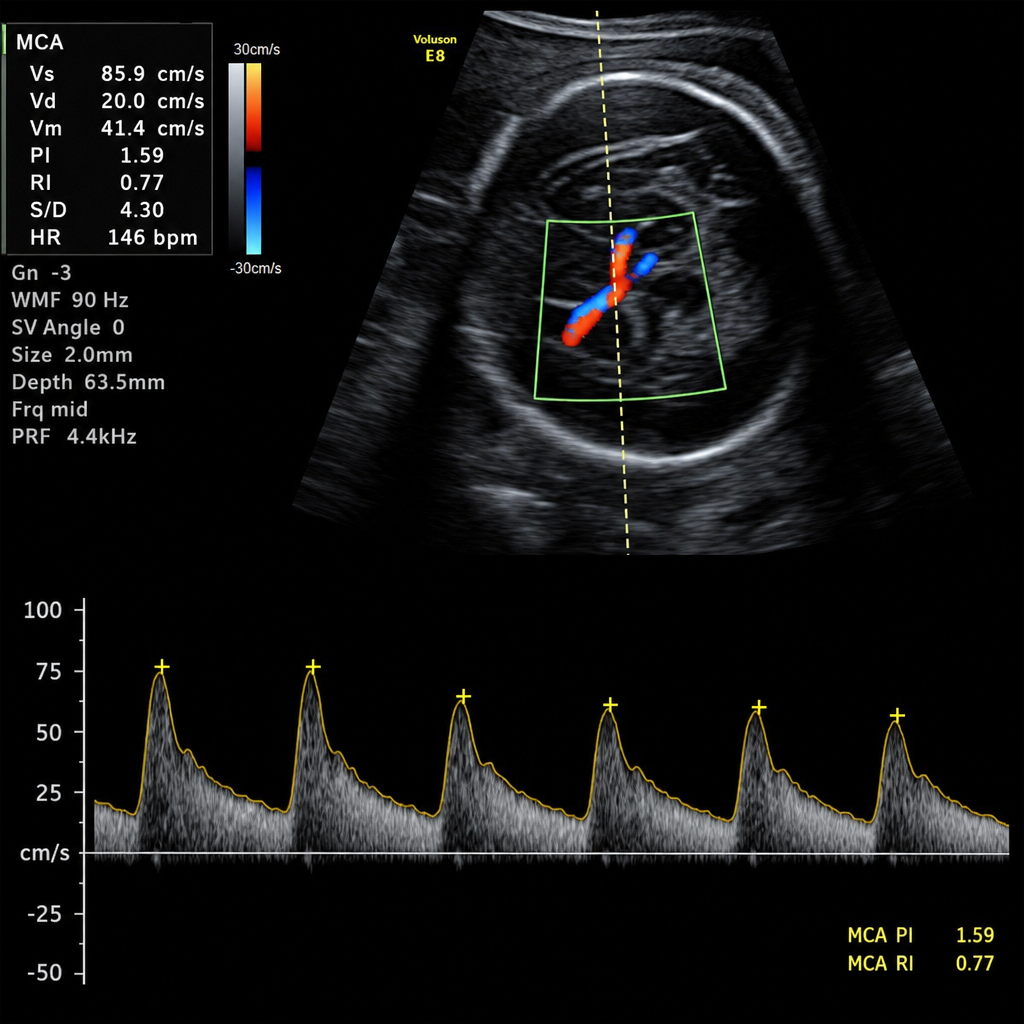
Which of the viruses listed below is not teratogenic?
Anencephaly can be diagnosed by ultrasound (USG) at
Anti-D prophylaxis is MOST critically indicated in which of the following situations?
Lowest frequency of twin pregnancy is seen in:
Which type of eclampsia has the worst prognosis?
What is the most specific use of Doppler ultrasound in twin pregnancies?
What is the critical value of the shock index that is considered abnormal in pregnancy?
Which of the following is NOT a finding in a dead-born fetus?
At what gestational age is transabdominal color Doppler sonography optimally performed to assess fetal well-being?
Which of the following statements regarding the umbilical cord is true?
Explanation: ***Herpes simplex*** - HSV is **not considered a classic teratogen** and does not cause congenital malformations from intrauterine infection. - The primary risk is **neonatal HSV infection** acquired during vaginal delivery through an infected birth canal, not from transplacental transmission causing birth defects. - Neonatal HSV can cause serious disease (disseminated infection, encephalitis, skin/eye/mouth disease), but these are **postnatal infections**, not true teratogenic effects. *Rubella* - Rubella virus is a well-known **teratogen**, causing **congenital rubella syndrome (CRS)** if infection occurs early in pregnancy. - CRS can lead to severe birth defects including **cataracts**, **congenital heart defects**, and **sensorineural hearing loss** (classic triad). - Greatest risk when infection occurs in the **first trimester**. *Cytomegalovirus* - **Congenital CMV infection** is the most common congenital viral infection and a leading cause of birth defects. - Can cause **microcephaly**, **periventricular calcifications**, **sensorineural hearing loss**, **hepatosplenomegaly**, and **intellectual disability**. - Part of the **TORCH** screening panel for teratogenic infections. *Measles* - Measles (rubeola) during pregnancy can cause complications including **spontaneous abortion**, **premature delivery**, and **low birth weight**. - While less studied than rubella, measles has been associated with increased risk of pregnancy complications and adverse fetal outcomes. - Can cause maternal morbidity with increased risk of pneumonia and encephalitis during pregnancy.
Explanation: ***14-18 weeks of gestation*** - **Anencephaly**, characterized by the absence of a major portion of the brain and skull, can be reliably diagnosed by **ultrasound (USG)** during this gestational period. - At this stage, the fetal head structures are sufficiently developed to clearly visualize the **absence of the cranium and cerebral hemispheres**. *10-12 weeks of gestation* - While some gross anomalies might be suspected, the developing fetal skull and brain are often **too small** for a definitive diagnosis of anencephaly. - The **ossification of the calvaria** (skull bones) is still incomplete, making it difficult to confidently identify its absence. *20-24 weeks of gestation* - Anencephaly would be clearly detectable by this stage, but it is **later than the optimal window** for early diagnosis and intervention, if desired. - Many screening programs aim for diagnosis before this period to allow for more options for parental decision-making. *24-28 weeks of gestation* - At this advanced stage, the diagnosis of anencephaly would be evident, but it represents a **significantly delayed diagnosis** given the availability of earlier screening methods. - The primary purpose of **antenatal screening** is to detect such severe congenital anomalies in the mid-trimester.
Explanation: ***Intra-uterine transfusion at 28 weeks*** - **Intra-uterine transfusion (IUT)** is an invasive procedure involving needle insertion into the fetal umbilical vein or peritoneal cavity to transfuse blood (typically O-negative) to treat severe fetal anemia. - This procedure carries a **very high risk of fetomaternal hemorrhage** due to the invasive nature of accessing fetal vessels, with potential for significant mixing of fetal and maternal blood. - The procedure is performed when the fetus is already at risk (Rh alloimmunization complications), and any additional sensitization could worsen the current or future pregnancies. - **Adequate anti-D prophylaxis is absolutely critical** to prevent exacerbation of alloimmunization. *Amniocentesis at 16 weeks* - **Amniocentesis** carries approximately 1% risk of fetomaternal hemorrhage, necessitating anti-D prophylaxis. - This is a standard indication for anti-D prophylaxis (300 mcg in second/third trimester). - The procedure is less invasive than intra-uterine transfusion. *Manual removal of placenta* - **Manual removal of the placenta** is associated with **very high risk of significant fetomaternal hemorrhage** (can exceed 30 mL of fetal blood) due to direct uterine manipulation and placental separation. - This is one of the **most important postpartum indications** for anti-D prophylaxis. - While extremely critical, this is a postnatal event, whereas IUT represents an ongoing high-risk antenatal situation in an already sensitized pregnancy scenario. *MTP at 63 days* - **Medical Termination of Pregnancy (MTP)** at 63 days (9 weeks) involves risk of fetomaternal hemorrhage, though typically smaller volumes due to early gestational age. - Anti-D prophylaxis (50 mcg for first trimester) is recommended for all Rh-negative women undergoing MTP. - The risk and volume of fetomaternal hemorrhage is generally less than with invasive antenatal procedures or traumatic delivery events.
Explanation: ***Japan*** - **Japan** has one of the **lowest rates of twin pregnancies globally**, characterized by a low incidence of both **monozygotic** and **dizygotic twins**. This is attributed to genetic predisposition and potentially lower use of assisted reproductive technologies. - The population's genetic background and reproductive practices contribute to the observed lower twinning rates compared to other regions. *Nigeria* - **Nigeria** has the **highest frequency of twin pregnancies in the world**, with birth rates significantly higher than the global average, particularly in certain ethnic groups like the **Yoruba**. - This high rate is primarily due to a genetic predisposition to **dizygotic twinning**, linked to specific dietary and genetic factors. *Philippines* - The **Philippines** has a relatively **moderate to high frequency of twin pregnancies** compared to some other Asian countries, though not as high as countries in Africa. - Genetic and possibly some socio-economic factors contribute to its twinning rate, which is higher than the lowest observed rates. *India* - **India** generally exhibits a **lower to moderate frequency of twin pregnancies** compared to African nations, but often higher than some East Asian countries. - While regional variations exist, the overall rate is influenced by a mix of genetic factors and the increasing, but still relatively limited, use of **assisted reproductive technologies (ART)**.
Explanation: ***Late postpartum*** - **Late postpartum eclampsia**, occurring more than 48 hours after delivery, often presents with a poorer prognosis due to delayed diagnosis and potential for more severe complications, such as **cerebral hemorrhage** or **status epilepticus**, as patients may no longer be under close medical supervision. - The delayed onset can lead to misinterpretation of symptoms, making treatment less timely and effective, thus contributing to higher rates of morbidity and mortality. *Antepartum* - **Antepartum eclampsia** occurs before labor and while serious, is often detected when the patient is under medical care for preeclampsia, allowing for earlier intervention and management. - Although it can lead to complications such as **placental abruption** and **fetal distress**, the mother is typically in a healthcare setting, which facilitates immediate care. *Early postpartum* - **Early postpartum eclampsia** occurs within 48 hours after delivery, and while still critical, is usually managed in the hospital setting where medical attention is readily available, allowing for prompt treatment of seizures and associated complications. - The patient remains under close observation during this period, enabling quick response to emergent conditions. *Intrapartum* - **Intrapartum eclampsia** occurs during labor and delivery, and like early postpartum eclampsia, benefits from the patient being in a hospital environment with immediate access to medical personnel and emergency interventions. - The prompt recognition and management of seizures during childbirth can help mitigate severe outcomes for both mother and baby.
Explanation: ***Assessing twin-to-twin transfusion syndrome (TTTS)*** - Doppler ultrasound is crucial for diagnosing and monitoring **TTTS** by evaluating blood flow in the umbilical arteries and veins, and assessing fetal cardiac output and venous flow patterns. - It helps detect the characteristic signs of **TTTS**, such as unequal blood flow between twins and abnormal Doppler indices in the umbilical and middle cerebral arteries, guiding timely intervention. *Evaluating conjoined twins* - While ultrasound identifies **conjoined twins** and their anatomical connections, Doppler primarily assesses blood flow, not the structural fusion itself. - 2D and 3D ultrasound are more directly used for the anatomical evaluation of the degree and type of organ sharing in **conjoined twins**. *Monitoring fetal well-being in twins* - Though Doppler can contribute to **fetal well-being assessment** through blood flow analysis, its primary and most specific role in twin pregnancies is the diagnosis and management of **TTTS**. - Other parameters like **biophysical profile** and growth scans are also vital for general fetal well-being in twins. *All of the options* - This option is incorrect because while Doppler ultrasound might be part of a broader assessment in some scenarios, its most significant and specific application in twin pregnancies is for **TTTS**. - Its role in the direct evaluation of conjoined twin anatomy or general fetal well-being is secondary to specialized applications like **TTTS** diagnosis.
Explanation: ***0.9-1.1*** - A **shock index (heart rate/systolic blood pressure) of 0.9 or greater** is considered abnormal and a critical value in pregnant patients. - This elevated threshold indicates a significant risk of **hypovolemia and hemodynamic compromise**, which might be masked by the physiological changes of pregnancy. - Values ≥0.9 suggest that compensatory mechanisms are failing and require **immediate clinical intervention**. *0.5-0.7* - This range represents a **normal shock index for non-pregnant adults**. - Due to the **physiological hypervolemia and cardiovascular adaptations** of pregnancy, vital signs can remain deceptively stable even with significant blood loss, making this range inappropriately low for identifying shock in pregnant patients. *0.3-0.5* - A shock index within this range is considered **low** and generally indicative of a well-perfused state in non-pregnant individuals. - It does not reflect the **baseline physiological changes** seen in pregnancy and would miss critical hemodynamic compromise in obstetric emergencies. *0.7-0.9* - While this range may indicate mild elevation approaching abnormal values, it falls **below the established critical threshold of 0.9** for pregnancy. - The critical cutoff is specifically set at **≥0.9** to ensure **early detection and intervention** for maternal hemodynamic compromise before decompensation occurs.
Explanation: ***Caput succedaneum*** - **Caput succedaneum** is a swelling on the baby's scalp that is present at birth, caused by pressure during a vaginal delivery. It is a sign of a **live birth** and indicates that the birth canal compressed the baby's head, leading to localized edema. - Since it is a result of forces experienced during the process of a live delivery, its presence would indicate that the fetus was **alive at the time of delivery**, not dead-born. *Spalding's sign* - **Spalding's sign** refers to the overlapping of the fetal skull bones (sutures) visualized on ultrasound or X-ray, which occurs due to **liquefaction of the brain** after fetal death and subsequent collapse of the skull. - This sign is a reliable indicator of **intrauterine fetal demise** and often appears within a week of death. *Robe's sign* - **Robe's sign** (also known as Robert's sign) describes the presence of **gas in the fetal circulatory system** or abdominal cavity, visible on X-ray or ultrasound. - This gas is produced by **bacterial decomposition** of the fetal tissues after death, making it a definitive sign of fetal demise, usually seen several days after death. *Maceration* - **Maceration** is the softening, discoloration (reddish-brown to black), and eventual aseptic autolysis of fetal tissues, especially the skin, that occurs when a fetus dies in utero and remains there. - The degree of maceration is directly related to the **duration of fetal death**, with more severe changes indicating a longer time since death.
Explanation: ***18-20 weeks*** - This gestational age is ideal for a **detailed anatomical survey** and assessing fetal well-being using **transabdominal color Doppler sonography**. - At this stage, fetal structures are well-developed, and the **fetus is large enough** for accurate assessment of blood flow in various vessels. *11-13 weeks* - This period is primarily for **nuchal translucency** screening and early structural assessment, but fetal vessels are generally too small for optimal Doppler flow studies. - While some early Doppler studies can be done, a comprehensive assessment of fetal well-being is usually not achieved. *Done before 10 weeks* - Before 10 weeks, the embryo/fetus is **too small** for a detailed anatomical survey or meaningful Doppler assessment of most vessels. - Doppler studies at this stage are usually limited to confirming viability via **heartbeat.** *5-7 weeks* - This is a very early stage of pregnancy where the primary goal of sonography is to confirm **intrauterine pregnancy**, **fetal viability**, and estimate gestational age. - **Fetal anatomical structures** are not yet sufficiently developed for detailed assessment or Doppler studies of most circulatory components.
Explanation: ***Observation of a single umbilical artery is associated with additional anomalies*** - A **single umbilical artery (SUA)** is an anatomical variation where one umbilical artery is absent, leaving the cord with one artery and one vein. - SUA is found in approximately **0.5-1% of all pregnancies** and is associated with an increased risk of other **congenital anomalies**, particularly affecting the renal, cardiac, and gastrointestinal systems, as well as chromosomal abnormalities. *Two arteries and two veins* - The typical umbilical cord structure consists of **two umbilical arteries** and **one umbilical vein**. - This option describes an abnormal configuration and is not the standard structure. *One artery and two veins* - This configuration is also a deviation from the normal structure of the umbilical cord. - A healthy umbilical cord contains **two arteries** and **one vein**. *Observation of a single umbilical vein is associated with additional anomalies* - The umbilical cord normally contains **only one umbilical vein**, which carries oxygenated blood and nutrients to the fetus. - Therefore, the presence of a single umbilical vein is **normal** and not an indicator of associated anomalies.
Fetal Assessment Techniques
Practice Questions
Hypertensive Disorders in Pregnancy
Practice Questions
Intrauterine Growth Restriction
Practice Questions
Multiple Gestation
Practice Questions
Rh Isoimmunization and Other Blood Group Incompatibilities
Practice Questions
Intrauterine Fetal Therapy
Practice Questions
Prenatal Diagnosis and Genetic Counseling
Practice Questions
Placental Abnormalities
Practice Questions
Preterm Labor and Delivery
Practice Questions
Management of Medical Disorders in Pregnancy
Practice Questions
Get full access to all questions, explanations, and performance tracking.
Start For Free