A woman presents with a history of recurrent abortions at 8,11 , and 22 weeks, with normal fetal cardiac activity in all three pregnancies. She also has a history of preeclampsia in her last pregnancy. What is the most probable cause?
A patient presents with infraumbilical flattening and the fetal heart rate is heard laterally. What is the most likely fetal position?
Which of the following is NOT typically associated with uterine didelphys?
A pregnant woman, whose niece contracted varicella while living in the same house, tested negative for serum antibodies to varicella. What does this result indicate?
A woman with eclampsia is started on magnesium sulfate. What is the first sign of magnesium sulfate toxicity?
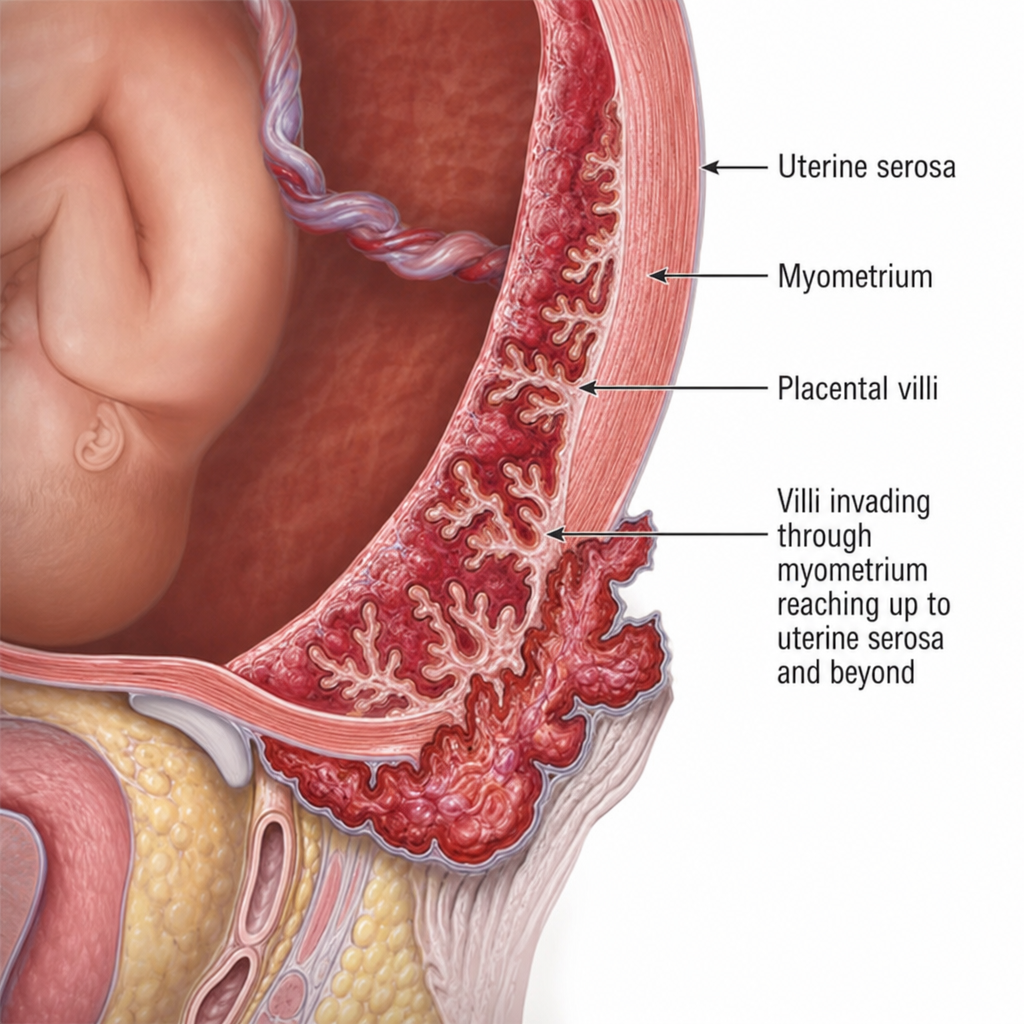
The given image depicts:

Kassowitz rule is related to:
Which of the following is not true about lupus nephritis in pregnancy?
A 30-year-old pregnant female diagnosed with fibroid presented with fever, mild leukocytosis, and pain at 28 weeks. What is the likely cause?
Least chance of perinatal transmission?
Explanation: ***Antiphospholipid Antibody Syndrome (APLA)*** - The presentation of **recurrent abortions** (especially with normal fetal cardiac activity) and a history of **preeclampsia** is highly characteristic of Antiphospholipid Antibody Syndrome (APLA). - In APLA, antibodies cause **thrombosis** in the placental vasculature, leading to placental insufficiency, fetal loss, and complications like preeclampsia. *Syphilis* - While syphilis can cause fetal loss, it typically presents with **hydrops fetalis**, hepatosplenomegaly, and bone abnormalities, rather than recurrent losses with normal cardiac activity in the early stages. - Untreated syphilis usually leads to congenital syphilis or stillbirths later in pregnancy, not necessarily early recurrent abortions with good fetal heart tones. *Gestational Diabetes Mellitus (GDM)* - GDM is associated with complications like **macrosomia**, polyhydramnios, and an increased risk of shoulder dystocia, but it is not a direct cause of recurrent early and mid-trimester abortions with normal fetal cardiac activity. - While poorly controlled diabetes can affect fetal development and pregnancy outcomes, it does not typically manifest as recurrent unexplained fetal demise with this specific presentation. *TORCH infections* - TORCH infections (Toxoplasmosis, Other [syphilis, varicella-zoster, parvovirus B19], Rubella, Cytomegalovirus, and Herpes simplex virus) can cause congenital anomalies and fetal death. - However, they would usually present with specific fetal abnormalities, signs of infection, or hydrops, and not typically with recurrent, apparently healthy fetal losses followed by preeclampsia, as often seen in APLA.
Explanation: ***Occipitoposterior*** - **Infraumbilical flattening** of the abdomen is a classic sign of an occipitoposterior position due to the fetal spine lying against the maternal spine. - The **heart sounds are heard laterally** because the fetal back, where the heart sounds are best transmitted, is positioned towards the maternal flanks. *Right occipitoanterior* - In a right occipitoanterior position, the fetal spine is anterior and slightly to the right, leading to a more **convex abdomen** and **heart sounds audible anteriorly** and to the right of the midline. - This position does not typically cause infraumbilical flattening. *Right dorsoanterior* - This term is more commonly associated with a **breech presentation** where the fetal back (dorsum) is anterior. - In a cephalic presentation, "dorsoanterior" is not a standard term for fetal position relative to the occiput. *Left occipitoanterior* - In a left occipitoanterior position, the fetal spine is anterior and slightly to the left, resulting in a **convex abdomen** and **heart sounds audible anteriorly** and to the left of the midline. - Infraumbilical flattening is not a characteristic finding for this position.
Explanation: ***Endometriosis*** - **Endometriosis** is a condition where tissue similar to the lining of the uterus grows outside the uterus; it is not typically associated with specific Müllerian anomalies like uterine didelphys. - While both conditions can cause pelvic pain or infertility, there isn't a direct causal link or increased prevalence of endometriosis specifically due to uterine didelphys. *Premature labor* - **Uterine didelphys** involves two separate uteri, each with its own cervix, which can lead to a smaller uterine cavity in each horn, increasing the risk of **premature labor**. - The abnormal uterine shape and reduced cavity size can compromise the ability to carry a pregnancy to term. *Transverse lie* - The presence of **two separate uterine horns** in uterine didelphys can significantly alter the shape of the uterine cavity, making it difficult for the fetus to assume a regular **longitudinal lie**. - This anatomical variation often predisposes to **malpresentation**, such as **transverse lie**, where the baby lies horizontally across the uterus. *Repeated abortion* - Uterine didelphys is associated with a higher incidence of **repeated abortions** due to various factors including the smaller size of each uterine cavity, potential cervical incompetence, and altered blood supply. - The structural abnormalities can prevent proper implantation or adequate growth of the fetus, leading to recurrent pregnancy losses.
Explanation: ***She is susceptible to chickenpox*** - A negative test for serum antibodies to varicella indicates a **lack of protective immunity** to the varicella-zoster virus (VZV). - This woman has not previously been infected with VZV or vaccinated, making her **susceptible to primary infection (chickenpox)** upon exposure. *She is susceptible to zoster* - **Zoster (shingles)** is caused by the **reactivation of latent VZV** in individuals who have previously had chickenpox. - Since she tested negative for antibodies, she has not had chickenpox and thus **cannot harbor latent VZV** to reactivate. *She is immune to zoster* - Immunity to zoster implies that she has had chickenpox and subsequently developed a robust immune response to prevent viral reactivation. - A negative antibody test directly contradicts this, as it signifies no prior exposure or immune response. *She is immune to chicken pox* - Immunity to chickenpox is established by the presence of **varicella antibodies**, which are absent in this case. - A negative antibody result means she is **not immune** and is therefore at risk of contracting chickenpox if exposed.
Explanation: ***Loss of knee jerk*** - **Diminished or absent deep tendon reflexes**, particularly the knee jerk, is the **earliest clinical sign** of magnesium sulfate toxicity. - This occurs at serum magnesium levels between **7-10 mEq/L** (8.5-12 mg/dL) due to magnesium's depressant effect on the nervous system and neuromuscular transmission. *Respiratory depression* - **Respiratory depression** is a more severe and later sign of magnesium toxicity, occurring at higher serum levels (typically >12 mEq/L). - It indicates significant central nervous system depression and potential for respiratory arrest, usually after reflexes are already lost. *Hypotension* - While magnesium sulfate can cause **vasodilation** and a subsequent drop in blood pressure, it is generally **not the first sign of toxicity** and often occurs concurrently with other mild to moderate signs. - Hypotension may be part of the therapeutic effect to reduce blood pressure in eclampsia, rather than an initial indicator of toxicity. *Reduced muscle tone* - **Reduced muscle tone** or **flaccidity** is also a consequence of magnesium's neuromuscular blocking effect but typically manifests **after the loss of deep tendon reflexes**. - It signifies more profound neuromuscular impairment, closer to the progression towards respiratory depression.
Explanation: ***Both succenturiate lobe and velamentous insertion*** - The image clearly depicts two distinct placental lobes (**succenturiate lobes**), with a smaller accessory lobe separate from the main placental body. - The **umbilical vessels** are also seen running through the fetal membranes before reaching the placental tissue, which is characteristic of **velamentous insertion**. *Normal placenta* - A normal placenta consists of a **single, unified organ** directly attached to the decidua, with the umbilical cord inserting centrally or eccentrically into this main mass. - The **umbilical cord** in a normal placenta would insert directly into the placental tissue, not into the membranes. *Succenturiate lobe* - A succenturiate lobe (or accessory lobe) refers to one or more small lobes of the placenta located at a distance from the main placental body. - While a succenturiate lobe is present, the image also shows the umbilical vessels traversing the membranes, indicating an additional anomaly known as **velamentous insertion**, making this option incomplete. *Velamentous insertion of the cord* - Velamentous insertion is characterized by the **umbilical blood vessels** separating before reaching the placental disc, traveling through the fetal membranes. - While velamentous insertion is evident, the presence of a **separate accessory lobe** makes this option incomplete as it doesn't account for both depicted abnormalities.
Explanation: ***Congenital syphilis*** - The **Kassowitz rule** specifically describes the high rate of perinatal mortality (abortion, stillbirth, or death shortly after birth) in cases of untreated maternal syphilis, especially during early stages of infection. - It highlights that the risk is highest when the mother acquires syphilis shortly before or during pregnancy, leading to severe fetal disease. *Primary syphilis* - This stage is characterized by a **chancre** at the site of infection and is the initial presentation in the infected individual, not directly related to fetal outcomes. - While primary syphilis in the mother can lead to congenital syphilis, the Kassowitz rule itself describes the outcome of congenital infection, not the primary infection in the mother. *Latent syphilis* - **Latent syphilis** refers to a stage where the infection is present but asymptomatic, potentially for years. - While it can be transmitted vertically and lead to congenital syphilis, the Kassowitz rule specifically quantifies the mortality risk of congenital syphilis, not the mother's latent infection itself. *Secondary syphilis* - This stage involves a systemic rash and other widespread symptoms in the infected individual, appearing weeks to months after the chancre. - Though highly infectious and a significant risk for vertical transmission, the rule focuses on the severe consequences *for the fetus* when congenital syphilis occurs, not the symptoms of secondary syphilis in the mother.
Explanation: ***Ecosprin, methotrexate, cyclophosphamide, corticosteroids, azathioprine are safe in pregnancy*** - This statement is **incorrect** because **methotrexate** and **cyclophosphamide** are **contraindicated** in pregnancy due to their teratogenic effects, while **ecosprin (aspirin)** and some **corticosteroids** and **azathioprine** are generally considered relatively safe at appropriate doses. - The combination of **safe and unsafe drugs** within the same statement makes the entire statement untrue; a pregnant patient with lupus nephritis cannot safely take all listed medications. *Pregnancy to be planned once the disease has been quiescent for at least 6 months and there is no evidence of renal dysfunction* - This statement is **true** and represents a **standard recommendation** for managing lupus nephritis in pregnancy. Achieving disease quiescence for at least 6 months significantly reduces the risk of flares and adverse pregnancy outcomes. - Ensuring **absence of renal dysfunction** before conception is crucial to prevent complications like pre-eclampsia, worsening renal function, and prematurity. *High dose corticosteroids for lupus flare in pregnancy is safe* - This statement is **true**. High-dose corticosteroids, such as **prednisone** or **prednisolone**, are often used to manage lupus flares during pregnancy. - These corticosteroids are largely **inactivated by placental enzymes**, minimizing fetal exposure and making them relatively safe for the fetus, while effectively treating maternal disease. *Immunosuppression can be continued during pregnancy* - This statement is **true**. Certain immunosuppressants, like **azathioprine** and **calcineurin inhibitors**, are considered relatively safe and are often continued during pregnancy to prevent disease flares. - **Continuing safe immunosuppression** helps maintain disease control, which is essential for a successful pregnancy outcome in patients with lupus nephritis.
Explanation: ***Red degeneration of fibroid*** - **Red degeneration** (also known as carneous degeneration) is common in pregnancy due to rapid fibroid growth outstripping its blood supply, leading to **ischemic necrosis** and causing pain, fever, and leukocytosis. - This complication typically occurs during the **second and third trimesters** due to hormonal changes and increased vascularity, consistent with the 28-week presentation. *Fibroid infection* - While possible, **fibroid infection** is a rarer complication, often secondary to other procedures or prolonged degeneration. - It would likely present with more pronounced signs of infection, such as higher fever, significant leukocytosis, and possibly discharge or septic symptoms, which are not explicitly stated as severe here. *Fibroid torsion* - **Torsion** usually occurs with pedunculated fibroids when the stalk twists, leading to acute, severe pain and potentially necrosis. - This presentation does not specifically mention a pedunculated fibroid or the sudden, sharp, localized pain typically associated with torsion of an appendage. *Labor pain* - At 28 weeks, **labor pain** would indicate preterm labor, which would typically involve regular, escalating uterine contractions and cervical changes. - The symptoms of fever and leukocytosis are not characteristic of uncomplicated labor pain, suggesting an underlying inflammatory or degenerative process with the fibroid.
Explanation: ***Hepatitis A*** - Perinatal transmission of **hepatitis A virus (HAV)** is rare because it's primarily transmitted via the **fecal-oral route**. - While HAV can be present in blood during the viremic phase, the risk of maternal-fetal transmission is negligible due to the short duration of viremia and antibodies usually present in immune mothers. *HSV* - **Herpes simplex virus (HSV)** has a significant risk of perinatal transmission, especially during **vaginal delivery** if the mother has active genital lesions. - Neonatal herpes can lead to severe disseminated disease, central nervous system involvement, or skin, eye, and mouth disease. *Rubella* - **Rubella virus** can cause congenital rubella syndrome (CRS) if the mother is infected during pregnancy, leading to severe birth defects. - This highly teratogenic virus readily crosses the **placenta**, particularly in the first trimester. *CMV* - **Cytomegalovirus (CMV)** is the most common cause of congenital viral infection, with often asymptomatic mothers transmitting the virus to the fetus. - Perinatal transmission can occur *in utero*, during **delivery**, or through **breastfeeding**.
Fetal Assessment Techniques
Practice Questions
Hypertensive Disorders in Pregnancy
Practice Questions
Intrauterine Growth Restriction
Practice Questions
Multiple Gestation
Practice Questions
Rh Isoimmunization and Other Blood Group Incompatibilities
Practice Questions
Intrauterine Fetal Therapy
Practice Questions
Prenatal Diagnosis and Genetic Counseling
Practice Questions
Placental Abnormalities
Practice Questions
Preterm Labor and Delivery
Practice Questions
Management of Medical Disorders in Pregnancy
Practice Questions
Get full access to all questions, explanations, and performance tracking.
Start For Free