All of the following are used for cervical ripening, except:
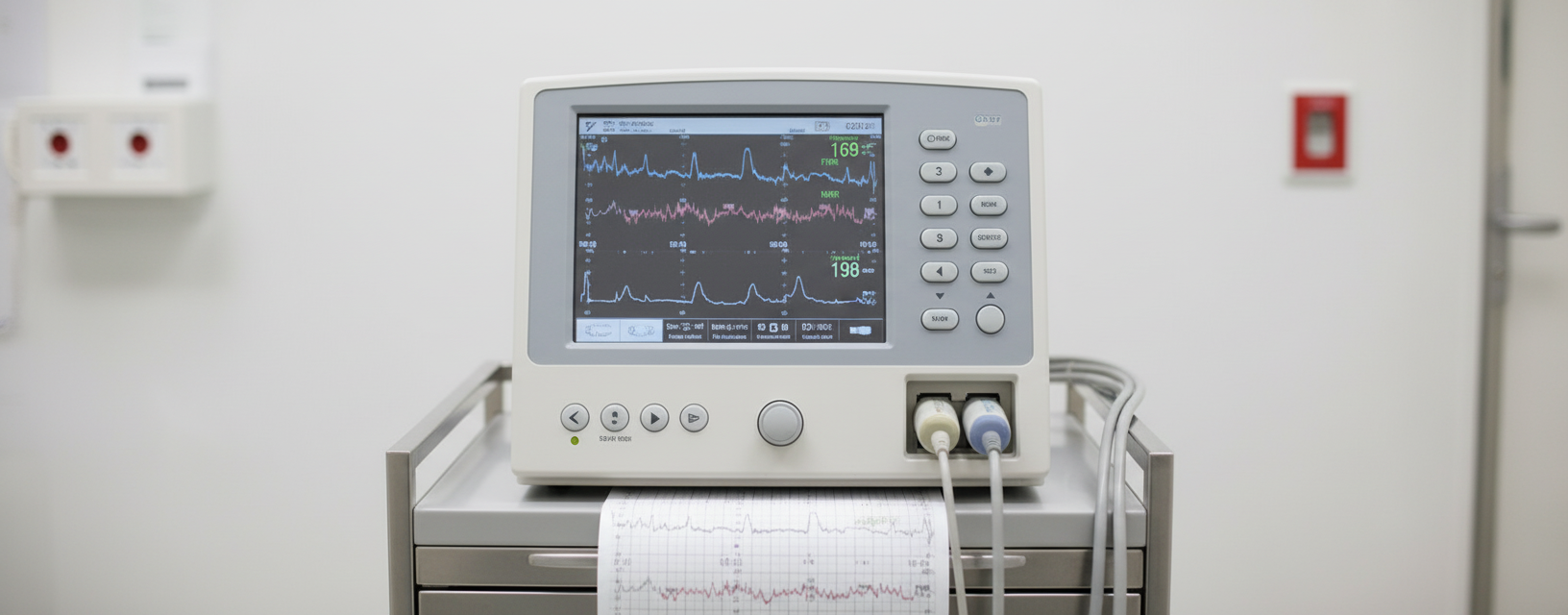
The above shown device is used for:
What is a chignon?
What is the longest diameter of the fetal skull?
Which of the following is NOT a risk factor for preterm delivery?
What is the main hormone that acts upon the uterus to initiate labor?
What is the WHO recommended dose of misoprostol in the treatment of postpartum hemorrhage?
What is the primary use of a partogram?
Post term pregnancy is defined as a pregnancy that continues beyond how many days from the first day of the last menstrual period?
Peak of prostaglandin levels occurs in which stage of labor?
Explanation: **Explanation:** **Cervical ripening** is the process of softening and thinning the cervix (effacement) to facilitate dilation. This is a prerequisite for a successful induction of labor. **1. Why Ergometrine is the correct answer:** Ergometrine (an ergot alkaloid) is a potent uterotonic that causes **tetanic, non-physiological contractions** of the uterine muscle, including the lower segment. It does not promote cervical ripening; instead, it is primarily used for the prevention and treatment of **Postpartum Hemorrhage (PPH)**. Using it before delivery is contraindicated as it can cause fetal hypoxia or uterine rupture. **2. Why the other options are incorrect:** * **Prostaglandins (Option D):** These are the **gold standard** for cervical ripening. PGE2 (Dinoprostone) and PGE1 (Misoprostol) act by breaking down collagen fibers and increasing water content in the cervix. * **Stripping of membranes (Option C):** This is a mechanical method. By separating the chorioamniotic membranes from the lower uterine segment, endogenous prostaglandins are released, which aids ripening. * **Oxytocin (Option B):** While primarily used for induction/augmentation of labor, high-dose oxytocin can contribute to cervical changes, though it is less effective than prostaglandins if the cervix is unfavorable (low Bishop score). **High-Yield Clinical Pearls for NEET-PG:** * **Bishop Score:** Used to assess cervical readiness. A score of **≥8** suggests a high likelihood of successful vaginal delivery. * **Drug of Choice:** PGE2 (Dinoprostone) is the preferred pharmacological agent for ripening. * **Mechanical Methods:** Foley’s catheter bulb induction is an excellent alternative for ripening, especially in women with a previous cesarean section where prostaglandins are contraindicated.
Explanation: ***Non-stress test*** - The **cardiotocograph (CTG)** monitors **fetal heart rate** and **uterine contractions** simultaneously to assess fetal well-being without inducing stress. - **Non-stress test (NST)** evaluates fetal heart rate **accelerations** in response to fetal movements, indicating adequate fetal oxygenation and neurological function. *Gestational age assessment* - Gestational age is determined using **ultrasound biometry** measuring **biparietal diameter**, **head circumference**, and **femur length**. - **CTG** does not provide anatomical measurements required for gestational age calculation. *Fetal arterial Doppler* - **Doppler ultrasound** is used to assess **umbilical artery**, **middle cerebral artery**, and **uterine artery** blood flow patterns. - **CTG** monitors heart rate patterns but does not evaluate **vascular resistance** or blood flow velocities. *Detecting progression of labor* - Labor progression is assessed through **cervical dilation** and **fetal station** via **vaginal examination** and **partograph**. - While **CTG** monitors contractions, it does not measure **cervical changes** or **fetal descent** necessary for labor progression assessment.
Explanation: **Explanation:** A **chignon** is the temporary, localized swelling of the scalp tissue caused by the application of a **vacuum extractor (ventouse)** during assisted vaginal delivery. **Why the correct answer is right:** When the vacuum cup is applied to the fetal scalp and negative pressure is exerted, it causes the underlying scalp tissue to be sucked into the cup. This leads to localized edema and extravasation of fluid, creating an **artificial caput succedaneum**. This "chignon" helps the cup maintain a firm grip on the fetal head to facilitate traction. It typically resolves spontaneously within 24 to 48 hours. **Why the incorrect options are wrong:** * **Cephalhematoma:** This is a collection of blood *under* the periosteum. Unlike a chignon, it is limited by suture lines and usually appears several hours after birth. * **Scalp laceration:** While a potential complication of vacuum or forceps delivery, a chignon is a physiological response to suction, not a cut or tear in the skin. * **Excessive molding:** Molding refers to the alteration of the fetal cranial shape due to the overlapping of skull bones during labor. While vacuum delivery can occur alongside molding, the chignon specifically refers to the soft tissue swelling. **High-Yield Facts for NEET-PG:** * **Placement:** The vacuum cup should be placed over the **flexion point** (3 cm anterior to the posterior fontanelle, along the sagittal suture). * **Pressure:** The recommended suction pressure is **0.6 to 0.8 kg/cm²**. * **Safety Rule:** The "Rule of 3s"—discontinue if there are 3 "pop-offs," 3 pulls with no descent, or the procedure exceeds 30 minutes. * **Contraindication:** Vacuum is contraindicated in **preterm fetuses (<34 weeks)** due to the high risk of subgaleal or intraventricular hemorrhage.
Explanation: **Explanation:** The fetal skull diameters are critical in determining the mechanism of labor and the feasibility of vaginal delivery. The **Mentovertical (MV)** diameter is the longest diameter of the fetal skull, measuring approximately **13.5 cm**. It extends from the midpoint of the chin (mentum) to the highest point on the sagittal suture (vertex). This diameter is the engaging diameter in a **Brow presentation**, which is typically undeliverable vaginally because it exceeds the average diameters of the maternal pelvic inlet. **Analysis of Incorrect Options:** * **Occipitofrontal (11.5 cm):** Extends from the occipital eminence to the root of the nose. It is the engaging diameter in a **deflexed vertex** presentation. * **Submentobregmatic (9.5 cm):** Extends from the junction of the floor of the mouth and neck to the center of the bregma. It is the engaging diameter in a **Face presentation** (fully extended head). * **Suboccipitobregmatic (9.5 cm):** Extends from the undersurface of the occiput to the center of the bregma. This is the **shortest longitudinal diameter** and the engaging diameter in a **well-flexed vertex** presentation, making it the most favorable for delivery. **High-Yield Clinical Pearls for NEET-PG:** * **Shortest Diameter:** Suboccipitobregmatic (9.5 cm). * **Longest Transverse Diameter:** Biparietal diameter (9.5 cm). * **Molding:** The ability of the fetal head to change shape; the mentovertical diameter is the least likely to compress, contributing to obstructed labor in brow presentations. * **Rule of Thumb:** Flexion decreases the engaging diameter, while extension (up to brow) increases it.
Explanation: **Explanation:** The correct answer is **A. Absence of fetal fibronectin at less than 37 weeks gestation.** **Understanding Fetal Fibronectin (fFN):** Fetal fibronectin is a "biological glue" that binds the fetal sac to the uterine lining. It is normally present in vaginal secretions before 22 weeks and again near the onset of labor (after 37 weeks). Between 22 and 34 weeks, its presence is abnormal. However, the clinical utility of the fFN test lies in its **Negative Predictive Value (NPV)**. The *absence* of fFN in vaginal secretions between 24 and 34 weeks is a strong indicator (95–99% certainty) that delivery will **not** occur within the next 7–14 days. Therefore, its absence is a protective indicator, not a risk factor. **Analysis of Incorrect Options:** * **B. Previous history of preterm delivery:** This is the **strongest risk factor** for a subsequent preterm birth. The risk increases with the number of prior preterm deliveries and the earlier the gestational age of the previous delivery. * **C. Asymptomatic cervical dilatation:** A cervix that dilates or thins prematurely (cervical insufficiency) without contractions is a major risk factor for mid-trimester loss and preterm birth. * **D. Chlamydial infection:** Genital tract infections (Chlamydia, Gonorrhea, Bacterial Vaginosis) trigger an inflammatory response and prostaglandin release, which can lead to premature rupture of membranes (PROM) and preterm labor. **High-Yield Clinical Pearls for NEET-PG:** * **fFN Test Requirements:** The test must be performed before a digital vaginal exam or transvaginal ultrasound, and there should be no intercourse or vaginal bleeding within the last 24 hours (to avoid false positives). * **Gold Standard for Cervical Assessment:** Transvaginal Ultrasound (TVUS) measuring cervical length. A length **<25 mm** before 24 weeks is a significant risk factor. * **Prophylaxis:** For women with a history of preterm birth, **Progesterone** supplementation (starting at 16 weeks) is the standard of care to reduce recurrence.
Explanation: **Explanation:** **Correct Answer: A. Oxytocin** Oxytocin is the primary hormone responsible for the initiation and maintenance of uterine contractions during labor. It acts via G-protein coupled receptors on the myometrium, increasing intracellular calcium levels to trigger muscle contraction. While the fetus and placenta contribute to the hormonal milieu, the maternal posterior pituitary releases pulsatile oxytocin, and the uterus itself increases its expression of oxytocin receptors (up to 200-fold) near term, making it highly sensitive to even low levels of the hormone. **Why other options are incorrect:** * **B. Estrogen:** Estrogen levels rise toward the end of pregnancy to "prime" the uterus. It increases the synthesis of gap junctions and oxytocin receptors, but it does not directly initiate the rhythmic contractions of labor. * **C. Progesterone:** Known as the "hormone of pregnancy," progesterone maintains uterine quiescence by inhibiting contractions. Labor is preceded by a functional "progesterone withdrawal," but the hormone itself does not initiate labor. * **D. Cortisol:** In many species (like sheep), fetal cortisol triggers the onset of labor. In humans, while the fetal hypothalamic-pituitary-adrenal (HPA) axis plays a role in increasing precursor hormones for estrogen, it is not the direct effector hormone for uterine contractions. **High-Yield Clinical Pearls for NEET-PG:** * **Ferguson’s Reflex:** This is a neuroendocrine reflex where stretching of the cervix (by the presenting part) triggers the release of oxytocin from the posterior pituitary, creating a positive feedback loop. * **Active Management of Third Stage of Labor (AMTSL):** Oxytocin (10 IU IM or 5 IU slow IV) is the drug of choice to prevent Postpartum Hemorrhage (PPH). * **Bishop Score:** Used to assess "cervical ripeness" before inducing labor with oxytocin.
Explanation: **Explanation:** Postpartum Hemorrhage (PPH) is a leading cause of maternal mortality, and its management follows specific WHO guidelines. While **Oxytocin** (10 IU IV/IM) remains the first-line drug for both prevention and treatment, **Misoprostol** (a Prostaglandin E1 analogue) is a critical alternative, especially in low-resource settings. **Why Option C is correct:** According to the WHO recommendations for the **treatment** of PPH, the recommended dose of Misoprostol is **800 mcg sublingual**. The sublingual route is preferred for treatment because it achieves the highest peak plasma concentration and the fastest onset of action (approximately 11 minutes), which is vital in an emergency hemorrhagic state. **Analysis of Incorrect Options:** * **A & B (400 mcg / 600 mcg):** These doses are used for the **prevention** (prophylaxis) of PPH, not treatment. The WHO recommends 600 mcg orally for prevention in settings where oxytocin is unavailable. * **D (1000 mcg):** While older protocols occasionally mentioned higher doses (often rectal), current WHO guidelines cap the therapeutic dose at 800 mcg to balance efficacy against side effects like shivering and pyrexia. **High-Yield Clinical Pearls for NEET-PG:** * **Drug of Choice (DOC) for PPH Prophylaxis:** Oxytocin (10 IU IM/IV). * **DOC for PPH Treatment:** Oxytocin (IV infusion) + Ergometrine (if no hypertension) or Carboprost (PGF2α). * **Misoprostol Side Effects:** Shivering and transient fever (pyrexia) are very common. * **Contraindication:** Avoid Ergometrine and Carboprost in patients with hypertension and asthma, respectively. Misoprostol is generally safe in these conditions.
Explanation: ### Explanation The **Partogram** (or Partograph) is a composite graphical record of key data during the active phase of labor. Its primary objective is to provide a continuous pictorial overview of labor progress to facilitate the early identification of **dystocia** (prolonged or obstructed labor). **Why Option D is Correct:** The partogram monitors labor progress by plotting **cervical dilatation** (the most important parameter) and the **descent of the fetal head** against time. It features two critical lines: * **Alert Line:** Indicates the rate of dilation in the slowest 10% of healthy primigravidae (usually 1 cm/hr). * **Action Line:** Usually 4 hours to the right of the alert line; crossing this suggests the need for intervention (e.g., amniotomy, oxytocin, or C-section). **Why Other Options are Incorrect:** * **Option A:** While fetal heart rate and liquor status are recorded on a partogram, its *primary* purpose is monitoring labor kinetics. Fetal well-being alone is specifically assessed via Cardiotocography (CTG) or Non-Stress Tests (NST). * **Option B:** The condition of the baby at birth is assessed using the **APGAR Score**. * **Option C:** Events throughout pregnancy are recorded in the **Antenatal Card** or Mother-Child Protection (MCP) card, not a partogram. **High-Yield Clinical Pearls for NEET-PG:** * **WHO Modified Partograph:** Starts only when the **active phase** begins (cervical dilation ≥ 4 cm). It eliminates the latent phase. * **Paperless Partograph:** Developed by Dr. Debdas, it focuses on the "Action Line" to simplify monitoring in low-resource settings. * **Friedman’s Curve:** The historical basis for the partogram, describing the sigmoidal pattern of cervical dilation.
Explanation: **Explanation:** **1. Understanding the Correct Answer (C):** According to the **International Federation of Gynecology and Obstetrics (FIGO)** and the **American College of Obstetricians and Gynecologists (ACOG)**, a **post-term pregnancy** is defined as one that extends to or beyond **42 completed weeks** (294 days) from the first day of the last menstrual period (LMP). * **Calculation:** 42 weeks × 7 days/week = **294 days**. It is crucial to distinguish this from "late-term" pregnancy, which is defined as 41 weeks to 41 weeks and 6 days. **2. Analysis of Incorrect Options:** * **Option A (274 days):** This represents approximately 39 weeks. This is considered "Full Term" (39 0/7 to 40 6/7 weeks), which is the ideal window for delivery to minimize neonatal morbidity. * **Option B (284 days):** This represents approximately 40 weeks and 4 days. While this is past the Estimated Date of Delivery (EDD), it is classified as "Full Term" and does not meet the criteria for post-term. * **Option D (304 days):** This represents approximately 43 weeks and 3 days. While this is technically post-term, the definition begins at the completion of the 42nd week (294 days). **3. High-Yield Clinical Pearls for NEET-PG:** * **Terminology:** * **Early Term:** 37 0/7 – 38 6/7 weeks. * **Full Term:** 39 0/7 – 40 6/7 weeks. * **Late Term:** 41 0/7 – 41 6/7 weeks. * **Post-term:** ≥ 42 0/7 weeks. * **Most Common Cause:** The most common cause of a post-term pregnancy diagnosis is **inaccurate dating** (wrong LMP). * **Etiology:** Associated with placental sulfatase deficiency, anencephaly, and fetal adrenal hypoplasia. * **Risks:** Increased risk of **Macrosomia**, **Meconium Aspiration Syndrome**, and **Dysmaturity Syndrome** (due to placental insufficiency). * **Management:** Induction of labor is generally recommended between 41 and 42 weeks to prevent stillbirth.
Explanation: **Explanation:** The correct answer is **C. Third stage of labor.** **Underlying Medical Concept:** Prostaglandins (specifically PGF2α and PGE2) play a critical role throughout labor by promoting cervical ripening and stimulating myometrial contractions. However, their concentration follows a progressive increase as labor advances. The **peak levels** are reached during the **third stage of labor** (the period between the birth of the baby and the delivery of the placenta). This surge is essential for the powerful, sustained uterine contractions required for placental separation and, most importantly, for the compression of intramyometrial blood vessels (living ligatures) to prevent postpartum hemorrhage (PPH). **Analysis of Options:** * **A & B (First and Second Stages):** While prostaglandin levels rise significantly during these stages to facilitate cervical dilation and fetal descent, they have not yet reached their maximum physiological concentration. * **D (Before the first stage):** Prostaglandins increase in the weeks leading up to labor (pre-labor) to assist in cervical "ripening," but these levels are baseline compared to the active labor process. **NEET-PG High-Yield Pearls:** * **PGF2α Metabolite:** In clinical studies, the levels of *15-keto-13,14-dihydro-PGF2α* (the primary metabolite) are used to measure prostaglandin activity; these levels are highest immediately after delivery. * **Clinical Application:** This physiological peak is the reason why prostaglandin analogues (like Carboprost or Misoprostol) are highly effective in managing atonic PPH. * **Amniotic Fluid:** Prostaglandin concentration in the amniotic fluid also increases progressively, reaching its maximum at the end of the second stage and during the third stage.
Physiology of Labor
Practice Questions
Stages of Labor and Normal Progression
Practice Questions
Fetal Monitoring Techniques
Practice Questions
Pain Management in Labor
Practice Questions
Induction and Augmentation of Labor
Practice Questions
Operative Delivery (Forceps and Vacuum)
Practice Questions
Cesarean Section: Indications and Techniques
Practice Questions
Dystocia and Abnormal Labor Patterns
Practice Questions
Obstetric Emergencies
Practice Questions
Postpartum Hemorrhage Management
Practice Questions
Get full access to all questions, explanations, and performance tracking.
Start For Free