A vesicovaginal fistula after an obstetric labor typically manifests after which time period?
Blood will interfere with the nitrazine test for detecting ruptured membranes because:
Which of the following clinical conditions is not an indication for induction of labor?
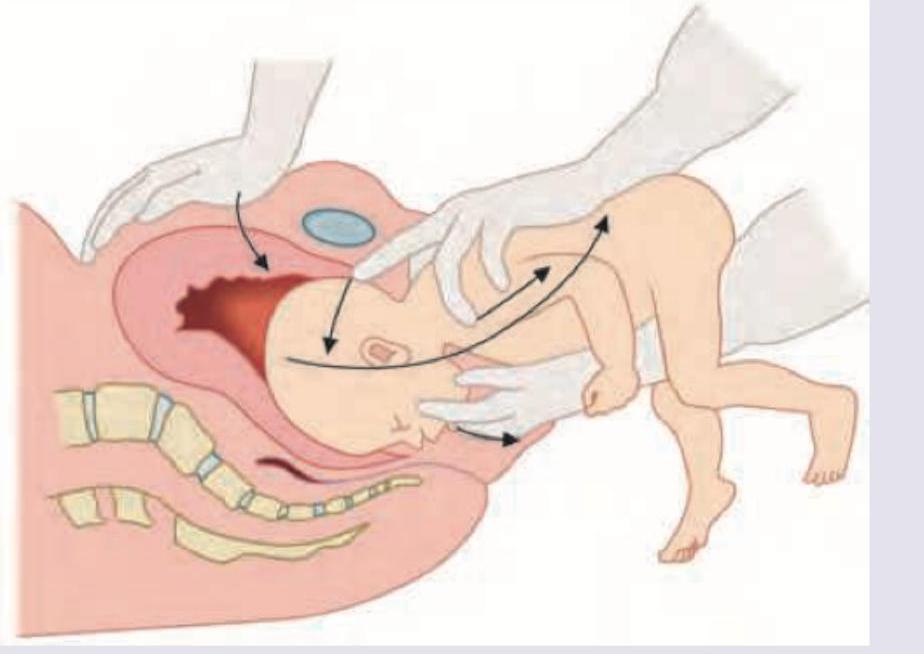
In a case of direct occipitoposterior position, what is the most commonly encountered problem during delivery?
Anti-Rh immunoglobulin (A.R.M) is contraindicated in which of the following conditions?
What is the standard dose regimen of betamethasone for fetal lung maturation?
A 27-year-old woman at 34 weeks' gestation presents to the emergency department following a motor vehicle collision. Her heart rate is 130/min and blood pressure is 150/90 mm Hg. She is alert and oriented. She complains of severe abdominal pain that began immediately after the collision. Physical examination reveals bruising over her abdomen, along with a hypertonic uterus and dark vaginal bleeding. A sonogram reveals a placental abruption, and the fetal heart tracing reveals some decelerations. Emergency laboratory tests reveal an International Normalized Ratio of 2.5, with elevated fibrin degradation products. Which of the following is the most appropriate first step in management?
During active labor, what is the average cervical dilatation per hour in a primigravida?
A 21-year-old female presents with painless vaginal bleeding at term. Her previous labor was normal. What is the next line of management?
Which of the following is true of brachial plexus injuries?
Explanation: **Explanation:** The timing of a vesicovaginal fistula (VVF) depends entirely on the **etiology of the injury**. **Why Option D is Correct:** In obstetric practice, a VVF most commonly results from **obstructed labor**. During prolonged labor, the fetal head compresses the bladder and vaginal wall against the pubic symphysis. This leads to **pressure necrosis** of the soft tissues. The necrotic tissue does not slough off immediately; it takes time for the devitalized area to disintegrate and form a communication. Typically, this sloughing occurs **5 to 14 days (after the 1st week)** postpartum, at which point the patient presents with continuous dribbling of urine. **Why other options are incorrect:** * **Options A & B (Within 24–72 hours):** These timeframes are too early for pressure necrosis. Fistulas appearing within the first 24–48 hours are usually **iatrogenic (surgical)**, resulting from direct trauma (e.g., an unrecognized bladder nick during a Cesarean section or hysterectomy). * **Option C (Within the 1st week):** While sloughing can begin toward the end of the first week, the classic clinical manifestation and the majority of cases peak after the 7th day. **Clinical Pearls for NEET-PG:** * **Most common cause of VVF (Worldwide):** Obstructed labor (Pressure necrosis). * **Most common cause of VVF (Developed countries):** Gynecological surgery (e.g., Total Abdominal Hysterectomy). * **Diagnostic Test:** **Three-swab test** (Methylene blue is instilled into the bladder; if the top swab is soaked in blue dye, it confirms VVF). * **Management:** Small fistulas may heal with continuous catheterization; larger ones require surgical repair (e.g., Ward-Mayo’s or Latzko’s procedure), usually performed 3–6 months after the tissue inflammation subsides.
Explanation: The **Nitrazine test** is a pH-based diagnostic tool used to confirm the Premature Rupture of Membranes (PROM). It utilizes nitrazine (phenaphthazine) paper, which changes color based on the acidity or alkalinity of the vaginal environment. ### **Explanation of the Correct Answer** The normal vaginal pH during pregnancy is typically **acidic (4.5 to 5.5)**, which keeps the nitrazine paper yellow. **Amniotic fluid is alkaline (pH 7.0 to 7.5)**; when it is present, the paper turns blue. **Blood is also alkaline (pH 7.35 to 7.45)**. Therefore, if blood is present in the vaginal vault (due to bloody show or antepartum hemorrhage), it will cause a **false-positive result** by turning the paper blue, even in the absence of amniotic fluid. ### **Analysis of Incorrect Options** * **Option A:** Blood is not acidic; it is slightly alkaline. If it were acidic, it would not change the color of the nitrazine paper and thus would not interfere with the test. * **Options C and D:** The nitrazine test is strictly a **pH indicator test**. While sodium chloride (NaCl) is the basis for the **Fern Test** (where NaCl crystallizes into a palm-leaf pattern), it does not influence the color change on nitrazine paper. ### **Clinical Pearls for NEET-PG** * **False Positives:** Caused by blood, semen (alkaline), antiseptic vapors, or bacterial vaginosis (which increases vaginal pH). * **False Negatives:** Occur if the rupture is remote (fluid has washed away) or if there is a very small amount of leakage. * **Confirmatory Test:** The **Fern Test** is more specific than the Nitrazine test. The "Gold Standard" for diagnosis remains the direct visualization of fluid pooling in the posterior fornix during a sterile speculum exam.
Explanation: **Explanation:** Induction of labor (IOL) is the artificial initiation of uterine contractions before the spontaneous onset of labor to achieve vaginal delivery. It is indicated when the benefits of delivery to the mother or fetus outweigh the risks of continuing the pregnancy. **Why "Complete Placenta Previa" is the correct answer:** In complete placenta previa, the internal os is entirely covered by the placenta. Attempting a vaginal delivery (or inducing labor) would lead to massive, life-threatening maternal hemorrhage as the cervix dilates and the placenta separates. Therefore, complete placenta previa is an **absolute contraindication** to induction and vaginal delivery; these cases must be managed via elective Cesarean section. **Analysis of Incorrect Options:** * **Intrauterine Fetal Demise (IUFD):** Once a fetus has died in utero, there is no benefit to continuing the pregnancy. IOL is indicated to prevent maternal complications like Disseminated Intravascular Coagulation (DIC) and infection. * **Severe Preeclampsia at 36 weeks:** Delivery is the definitive cure for preeclampsia. At 36 weeks (near term), the risks of maternal seizure (eclampsia) or organ failure outweigh the risks of prematurity, making IOL a standard indication. * **Chorioamnionitis:** This is an acute inflammation/infection of the fetal membranes. Prompt delivery is mandatory to prevent maternal sepsis and neonatal morbidity, regardless of gestational age. **High-Yield Clinical Pearls for NEET-PG:** * **Absolute Contraindications to IOL:** Complete placenta previa, vasa previa, transverse lie, previous classical (vertical) Cesarean section, and active genital herpes. * **Bishop Score:** Used to assess "cervical ripeness" before induction. A score of $\geq$ 8 suggests a high likelihood of successful vaginal delivery. * **Drug of Choice:** Oxytocin is the most common agent for IOL, while Prostaglandins ($PGE_2$ - Dinoprostone) are used for cervical ripening.
Explanation: In a **direct occipitoposterior (OP) position**, the fetal head is delivered by a process of **increased flexion** rather than extension. This mechanism leads to specific clinical challenges: ### Why "Complete Perineal Tears" is Correct: In direct OP, the diameter that distends the vulval outlet is the **suboccipitofrontal (10 cm)** or the **occipitofrontal (11.5 cm)**, both of which are significantly larger than the suboccipitobregmatic diameter (9.5 cm) seen in normal occipitoanterior delivery. * The wide part of the head (biparietal diameter) stretches the perineum excessively. * The "long" diameter of the head sweeps across the perineum, significantly increasing the risk of **3rd and 4th-degree (complete) perineal tears**. ### Why Other Options are Incorrect: * **A. Intracranial Injury:** While prolonged labor in OP can increase stress, it is not the *most common* complication. It is more associated with difficult instrumental deliveries (high forceps). * **B. Cephalhematoma:** This is a subperiosteal hemorrhage often related to vacuum extraction or prolonged pressure against the maternal pelvis, but it is a localized neonatal finding rather than a primary delivery complication of OP. * **C. Paraurethral tears:** These are common in many deliveries but are usually minor. The specific mechanical disadvantage of OP specifically targets the posterior vaginal wall and perineal body. ### NEET-PG High-Yield Pearls: * **Mechanism of Delivery:** In direct OP, the face (specifically the root of the nose/glabella) pivots under the symphysis pubis. * **Commonest Outcome:** Spontaneous delivery occurs in about 65% of cases (often with a large episiotomy). * **Maternal Risks:** Prolonged second stage and increased rate of instrumental delivery (Forceps/Ventouse). * **Key Diameter:** Remember that **Occipitofrontal (11.5 cm)** is the diameter that distends the vulva in OP, necessitating a generous episiotomy to prevent complete perineal tears.
Explanation: ### Explanation The primary objective of administering **Anti-Rh immunoglobulin (Anti-D)** is to prevent Rh-isoimmunization in an Rh-negative mother carrying an Rh-positive fetus. **Why "When the fetus is dead" is the correct answer:** The administration of Anti-D is indicated when there is a risk of feto-maternal hemorrhage (FMH), which allows fetal Rh-positive RBCs to enter the maternal circulation and trigger antibody production. However, in the case of an **intrauterine fetal death (IUFD)** where the fetus is already dead, the primary concern shifts. If the fetus is dead, the immediate clinical priority is the management of the delivery and maternal safety. More importantly, if the fetus is dead and the Rh status is unknown or if the death occurred due to hydrops fetalis (already sensitized), Anti-D is futile. In the specific context of this question's logic, if the fetus is dead, the "risk" of future sensitization from *this* specific pregnancy is often considered managed via delivery protocols, or the sensitization may have already occurred. **Analysis of Incorrect Options:** * **A. Pregnancy beyond 40 weeks:** Post-term pregnancy is not a contraindication. In fact, the risk of FMH increases with gestational age, making Anti-D administration necessary if delivery occurs or if an invasive procedure is performed. * **B. When the mother is Rh-negative:** This is the primary **indication** for Anti-D, not a contraindication. It is given to Rh-negative, non-sensitized (Indirect Coombs Test negative) mothers. * **C. When the mother is diabetic:** Diabetes is a medical comorbidity but does not affect the Rh-sensitization process or the safety profile of Anti-D. **NEET-PG High-Yield Pearls:** * **Standard Dose:** 300 mcg (1500 IU) covers up to 30 ml of fetal whole blood (or 15 ml of RBCs). * **Timing:** Routinely given at **28 weeks** (prophylaxis) and within **72 hours** of delivery. * **ICT (Indirect Coombs Test):** Must be negative before administration. If ICT is positive, the mother is already sensitized, and Anti-D is useless. * **Kleihauer-Betke Test:** Used to quantify the volume of feto-maternal hemorrhage to determine if additional doses of Anti-D are required.
Explanation: **Explanation:** Antenatal corticosteroids (ACS) are administered to women at risk of preterm delivery (24 to 34 weeks of gestation) to accelerate fetal lung maturation and reduce the incidence of Respiratory Distress Syndrome (RDS), intraventricular hemorrhage, and necrotizing enterocolitis. **1. Why Option B is Correct:** The standard, evidence-based regimen for **Betamethasone** is **12 mg intramuscularly (IM), given in two doses, 24 hours apart**. This regimen ensures optimal plasma concentrations to induce the production of surfactant by Type II pneumocytes in the fetal lungs. The maximum benefit is seen if delivery occurs between 24 hours and 7 days after the first dose. **2. Why Other Options are Incorrect:** * **Option A:** 6 mg of Betamethasone is an under-dose; the standard single dose is 12 mg. * **Option C:** This describes the standard regimen for **Dexamethasone** (6 mg IM, 4 doses, 12 hours apart). While both drugs are used, their dosing schedules are distinct. * **Option D:** This dosage is excessive and not supported by clinical guidelines, increasing the risk of maternal and fetal side effects without added benefit. **High-Yield Clinical Pearls for NEET-PG:** * **Drug of Choice:** Betamethasone is often preferred over Dexamethasone because it is associated with a lower risk of periventricular leukomalacia. * **Mechanism:** Corticosteroids induce surfactant-associated proteins and improve lung compliance. * **Timing:** The "Rescue Dose" (a single repeat dose) may be considered if the initial course was given >7 days ago and the patient is still <34 weeks pregnant. * **Contraindications:** Systemic fungal infections or active maternal tuberculosis.
Explanation: ### Explanation The patient presents with classic signs of **Placental Abruption** (painful vaginal bleeding, hypertonic uterus) following trauma. The critical finding here is the laboratory evidence of **Disseminated Intravascular Coagulation (DIC)**: an elevated INR (2.5) and elevated fibrin degradation products (FDPs). **1. Why Fresh Frozen Plasma (FFP) is the Correct Answer:** In cases of placental abruption complicated by DIC, the immediate priority is **hemodynamic stabilization and correction of coagulopathy** before surgical intervention. Administering FFP provides necessary clotting factors to stabilize the patient. Proceeding directly to surgery (LSCS) in a patient with an INR of 2.5 without correcting the coagulopathy would lead to uncontrollable intraoperative hemorrhage and maternal mortality. **2. Why Other Options are Incorrect:** * **A. Tocolytics:** These are strictly contraindicated in placental abruption, as they can worsen maternal hemorrhage and delay necessary delivery. * **B. Corticosteroids:** While indicated for fetal lung maturity at 34 weeks, they are not the *first* step in an unstable patient with active DIC and fetal distress. * **D. Immediate LSCS:** While delivery is the definitive treatment for abruption with fetal distress, the maternal coagulopathy must be addressed first (or concurrently with blood products) to ensure the mother survives the procedure. **Clinical Pearls for NEET-PG:** * **Placental Abruption** is the most common cause of DIC in pregnancy. * **Pathophysiology:** Release of tissue thromboplastin from the damaged placenta into maternal circulation triggers the extrinsic clotting pathway. * **Management Rule:** Always stabilize the mother (ABC + Coagulopathy correction) before addressing the fetus. * **Target:** In DIC, aim to keep Fibrinogen >150 mg/dL and Platelets >50,000/µL.
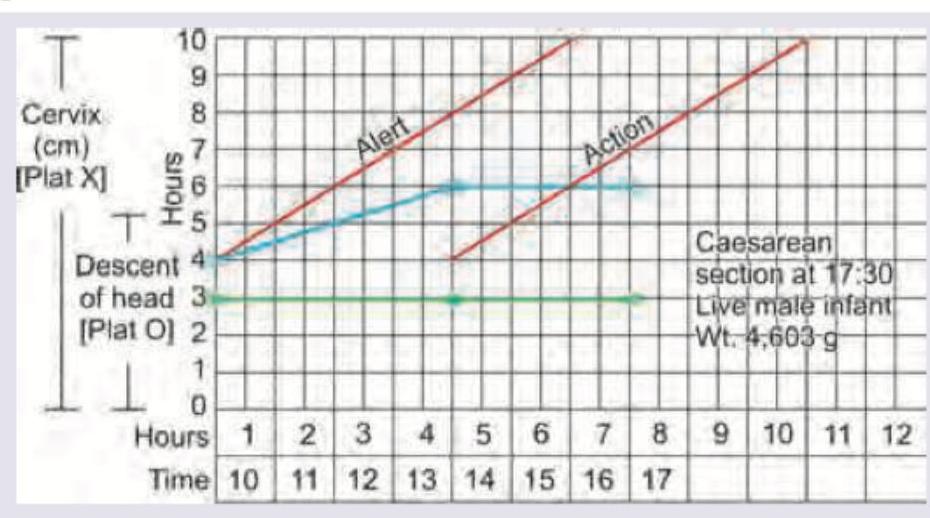
Explanation: **Explanation:** The correct answer is **1.2 cm/hr**. This value is based on **Friedman’s Curve**, which traditionally defines the parameters of normal labor progression. **1. Why 1.2 cm/hr is correct:** During the **active phase** of the first stage of labor (traditionally starting at 3–4 cm dilatation), the cervix undergoes rapid dilatation. In a **primigravida** (nullipara), the minimum expected rate of cervical dilatation is **1.2 cm per hour**. In contrast, for a **multigravida**, the rate is faster, at approximately **1.5 cm per hour**. **2. Analysis of incorrect options:** * **1.5 cm/hr (Option B):** This is the average rate of cervical dilatation for a **multigravida** during the active phase. * **1.7 cm/hr & 2.0 cm/hr (Options C & D):** These values exceed the standard physiological averages for primigravid labor and are not used as diagnostic criteria for normal progression. **3. Clinical Pearls for NEET-PG:** * **Friedman’s Criteria:** A rate of dilatation **<1.2 cm/hr** in primigravida or **<1.5 cm/hr** in multigravida signifies a **Protraction Disorder**. * **WHO Partograph:** While Friedman used 1.2 cm/hr, the WHO Partograph traditionally uses a simplified **1 cm/hr** rule for the "Alert Line" to identify prolonged labor. * **Newer Guidelines (Zhang’s Curve):** Recent evidence suggests labor may be slower (0.5 cm/hr) before 6 cm dilatation, but for exam purposes, Friedman’s 1.2 cm/hr remains the standard benchmark for primigravida. * **Active Phase Start:** Traditionally 3–4 cm, but modern ACOG guidelines now define the active phase starting at **6 cm**.
Explanation: ### Explanation The clinical presentation of **painless vaginal bleeding at term** is highly suggestive of **Placenta Previa**. In a stable patient at term, the definitive management strategy is the **Double Setup Examination**. **1. Why Option C is Correct:** The "Double Setup" involves performing a vaginal examination in the **Operating Theatre (OT)** with the surgical team, anesthesia, and equipment ready for an immediate Cesarean section if heavy bleeding is triggered. If the examination confirms a low-lying placenta (Type I or Type II anterior) and the fetal head is engaged, an **artificial rupture of membranes (amniotomy)** is performed. This allows the fetal head to descend and compress the placental site (the Stallworthy effect), potentially allowing for a vaginal delivery. **2. Why Other Options are Incorrect:** * **Option A (LSCS):** While LSCS is the definitive treatment for major degrees of placenta previa (Type II posterior, III, and IV), it is not the immediate "next step" for all cases. A trial of vaginal delivery via amniotomy is preferred for minor degrees. * **Option B (Perineal/Vaginal Exam in ER):** This is **strictly contraindicated**. A digital vaginal examination in the ER can cause massive, life-threatening hemorrhage by dislodging a placental clot. * **Option D (Hysterectomy):** This is a radical procedure reserved for uncontrollable postpartum hemorrhage or morbidly adherent placenta (Placenta Accreta spectrum), not a primary management step for bleeding. **Clinical Pearls for NEET-PG:** * **Golden Rule:** Never perform a per-vaginal (PV) examination in the ER for any case of Antepartum Hemorrhage (APH) until placenta previa is ruled out by ultrasound. * **Stallworthy’s Sign:** A drop in fetal heart rate when the head is pushed into the pelvis, suggestive of a posterior placenta previa. * **Investigation of Choice:** Transvaginal Ultrasound (TVS) is the gold standard for diagnosing placental localization (safer and more accurate than transabdominal).
Explanation: **Explanation:** **1. Why Option C is Correct:** Brachial plexus injuries (BPI) occur due to excessive stretching of the nerve roots during delivery. The two primary clinical manifestations are: * **Erb’s Palsy:** The most common type, involving the upper trunk (**C5-C6**). It presents with the classic "waiter's tip" deformity (adducted, internally rotated arm with a pronated forearm). * **Klumpke’s Paralysis:** Less common, involving the lower trunk (**C8-T1**). It results in a "claw hand" deformity due to the involvement of the intrinsic muscles of the hand. **2. Why the Other Options are Incorrect:** * **Option A:** While shoulder dystocia is a major risk factor, BPI can occur in its absence. Approximately **25-50% of cases** occur during uncomplicated vaginal deliveries or even Cesarean sections, often due to maternal propulsive forces. * **Option B:** Most neonatal brachial plexus injuries are transient. Roughly **80-90% of cases resolve completely** within the first year of life with conservative management (physical therapy). * **Option D:** BPI typically occurs due to excessive **downward traction on the anterior shoulder** (under the symphysis pubis) or extreme lateral flexion of the neck, not the posterior shoulder. **High-Yield Clinical Pearls for NEET-PG:** * **Risk Factors:** Macrosomia (>4kg), maternal diabetes, operative vaginal delivery (forceps/vacuum), and prolonged second stage of labor. * **Moro Reflex:** In Erb’s palsy, the Moro reflex is **asymmetrical/absent** on the affected side, but the grasp reflex remains intact. * **Horner’s Syndrome:** If T1 is involved in Klumpke’s, look for associated ptosis and miosis. * **Management:** Initial management is conservative (immobilization for 1-2 weeks followed by passive ROM exercises). Surgery is considered only if no recovery is seen by 3-6 months.
Physiology of Labor
Practice Questions
Stages of Labor and Normal Progression
Practice Questions
Fetal Monitoring Techniques
Practice Questions
Pain Management in Labor
Practice Questions
Induction and Augmentation of Labor
Practice Questions
Operative Delivery (Forceps and Vacuum)
Practice Questions
Cesarean Section: Indications and Techniques
Practice Questions
Dystocia and Abnormal Labor Patterns
Practice Questions
Obstetric Emergencies
Practice Questions
Postpartum Hemorrhage Management
Practice Questions
Get full access to all questions, explanations, and performance tracking.
Start For Free