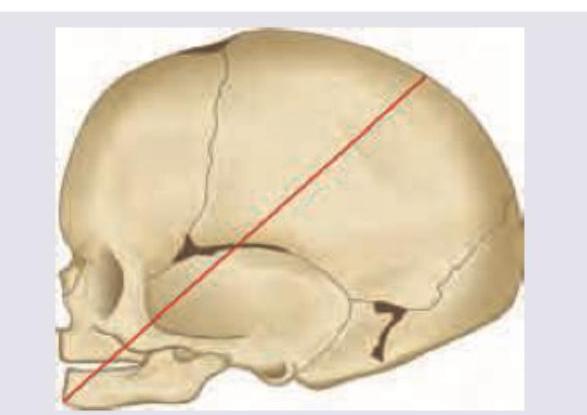
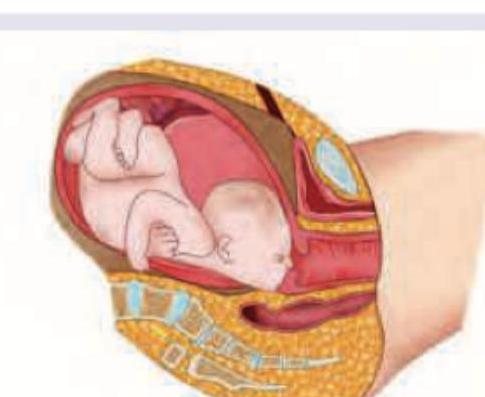
Which type of pelvis is associated with the lack of a single pelvic ala?
What marks the beginning and end of the second stage of labor?
Active management of the third stage of labor includes all of the following except?
Which is the earliest ectopic pregnancy location to undergo rupture?
Which drug is used prophylactically to decrease postpartum hemorrhage (PPH)?
Placental villi invading through the serosa of the uterus falls under which category?
The McAfee and Johnson regimen is used for which of the following conditions?
True labor pains include all of the following except:
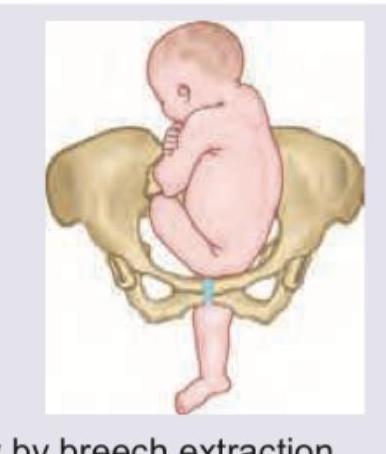
Vasa previa may lead to which of the following complications?
According to WHO guidelines, which of the following is true about the management of the second stage of labor?
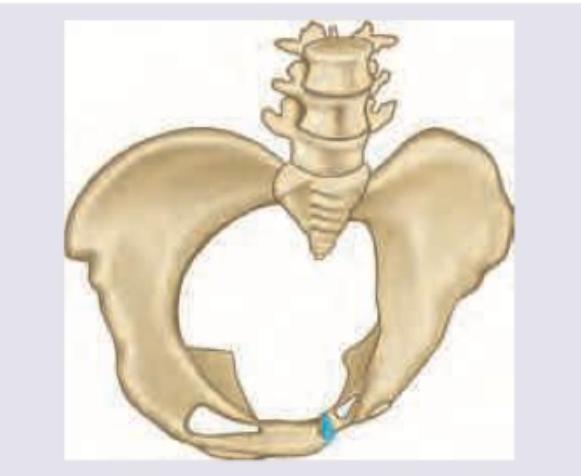
Explanation: **Explanation:** The correct answer is **Naegele’s pelvis**. This is a rare type of contracted pelvis characterized by the **congenital absence or imperfect development of one sacral ala (wing)**. This unilateral defect leads to an oblique contraction of the pelvic brim, as the sacrum fuses with the ilium on the affected side (synostosis), resulting in a tilted and narrowed birth canal. **Analysis of Options:** * **Robert’s Pelvis:** This is characterized by the **bilateral absence** of both sacral alae. It results in a transversely contracted pelvis that is extremely narrow, usually necessitating a Cesarean section. * **Rachitic Pelvis:** Caused by Vitamin D deficiency in childhood (Rickets). It typically features a shortened anteroposterior (AP) diameter and a widened transverse diameter, giving the inlet a "kidney-shaped" appearance. * **Osteomalacic Pelvis:** Caused by adult Vitamin D deficiency. The pelvic bones become soft and are pushed inward by the weight of the body, resulting in a "triradiate" or "clover-leaf" shaped pelvic brim. **NEET-PG High-Yield Pearls:** * **Naegele’s = Unilateral** (One ala missing). * **Robert’s = Bilateral** (Both alae missing). * **Rachitic Pelvis** is associated with a **reniform (kidney-shaped)** inlet and an increased intertuberous diameter (everted ischial tuberosities). * **Osteomalacic Pelvis** is associated with a **triradiate** inlet. * Both Naegele’s and Robert’s pelvis are extremely rare but are high-yield "spotter" questions for pelvic abnormalities in competitive exams.
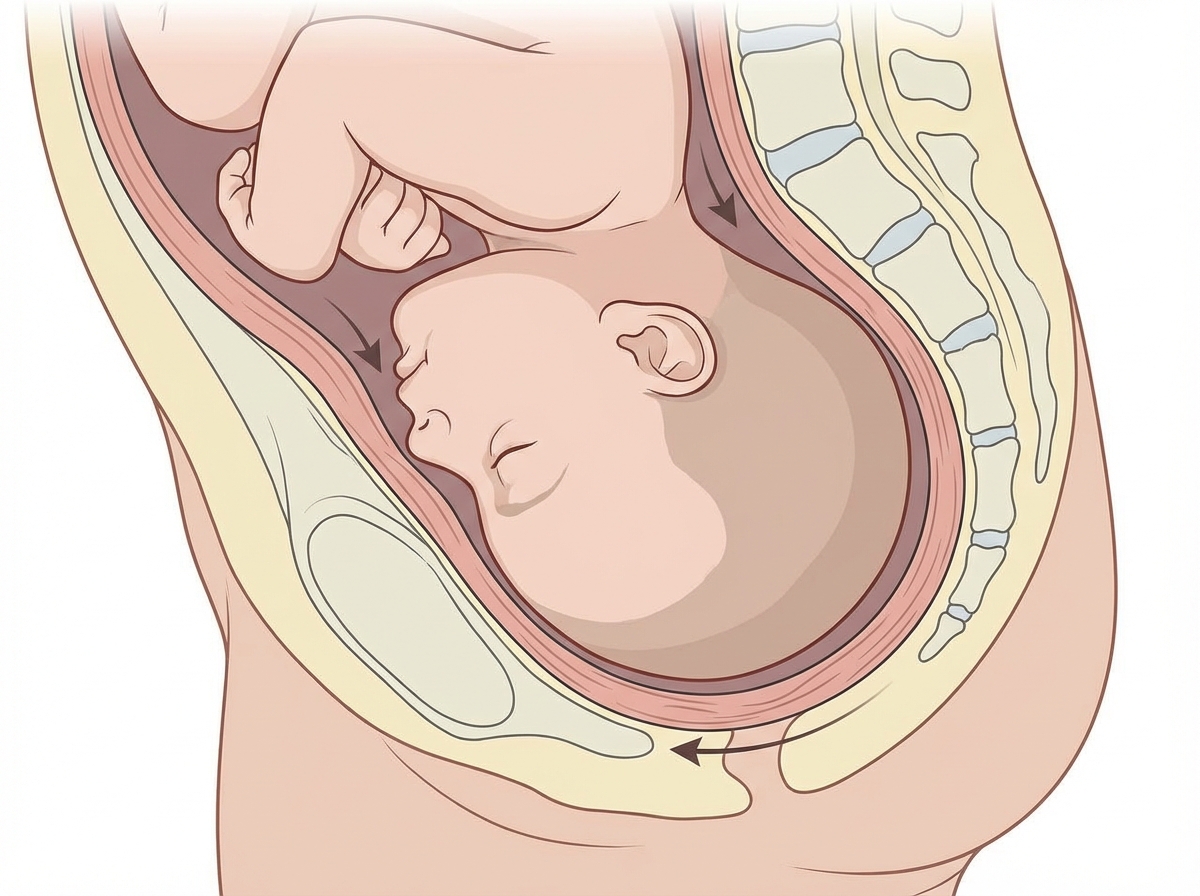
Explanation: ### Explanation The correct answer is **D. Full cervical dilation to delivery of the fetus.** Labor is clinically divided into four distinct stages. The **second stage** is defined as the interval between **full cervical dilation (10 cm)** and the **complete expulsion of the fetus**. This stage represents the period of active maternal pushing and fetal descent through the birth canal. #### Analysis of Options: * **Option A:** Rupture of membranes (ROM) is an event that can occur at any time (pre-labor or during the first stage) and does not define the onset of a specific stage. * **Option B:** This describes the **first stage of labor**, which begins with regular, painful uterine contractions and ends when the cervix is fully dilated. * **Option C:** While the fetus is delivered at the end of the second stage, the starting point is cervical dilation, not the rupture of membranes. #### Clinical Pearls for NEET-PG: * **Duration:** In primigravida, the second stage typically lasts **2 hours** (3 hours with epidural). In multigravida, it lasts **1 hour** (2 hours with epidural). Prolongation beyond these limits is a high-yield diagnostic criterion for "Prolonged Second Stage." * **Phases:** The second stage is further divided into the **Propulsive phase** (from full dilation until the head touches the pelvic floor) and the **Expulsive phase** (maternal bearing down efforts). * **Mechanism:** The cardinal movements of labor (engagement, descent, flexion, internal rotation, extension, restitution, and external rotation) primarily occur during this stage. * **Third Stage:** Begins after the delivery of the fetus and ends with the **delivery of the placenta**.
Explanation: **Explanation:** The **Active Management of the Third Stage of Labor (AMTSL)** is a bundle of interventions designed to facilitate the delivery of the placenta and prevent Postpartum Hemorrhage (PPH). According to the latest WHO and FIGO guidelines, the three core components of AMTSL are: 1. **Administration of a Uterotonic agent:** Oxytocin (10 IU IM/IV) is the drug of choice. 2. **Controlled Cord Traction (CCT):** Also known as the Brandt-Andrews maneuver, used to deliver the placenta once the uterus has contracted. 3. **Delayed Cord Clamping:** (Performed 1–3 minutes after birth). **Why "Uterine Massage" is the correct answer:** While uterine massage is a vital step in the *monitoring* phase after the placenta is delivered (to ensure the uterus remains contracted), it is **no longer recommended as a routine component of AMTSL** before placental delivery. Research shows it does not significantly reduce blood loss when a uterotonic is already administered. **Analysis of other options:** * **Oxytocin infusion (D):** This is the gold standard uterotonic for AMTSL. * **Ergometrine after anterior shoulder delivery (A):** While Oxytocin is preferred, Ergometrine is a potent uterotonic used in AMTSL (provided there are no contraindications like hypertension). Traditionally, uterotonics were given with the delivery of the anterior shoulder, though current guidelines suggest giving them immediately after the baby is born. * **Controlled Cord Traction (C):** This remains a standard component of AMTSL to shorten the third stage and reduce blood loss. **High-Yield NEET-PG Pearls:** * **Drug of Choice for PPH Prophylaxis:** Oxytocin (10 IU). * **Most common cause of PPH:** Uterine Atony (70%). * **Brandt-Andrews Maneuver:** Applying downward traction on the cord while the other hand applies suprapubic pressure (upward) to prevent uterine inversion. * **Timing:** AMTSL reduces the risk of PPH by approximately 60%.
Explanation: **Explanation:** The timing of rupture in an ectopic pregnancy is primarily determined by the **distensibility and diameter** of the anatomical site where the blastocyst implants. **Why Isthmic is the correct answer:** The **isthmus** is the narrowest part of the fallopian tube with a very thin muscular wall and minimal distensibility. Because the lumen is so constricted, the growing embryo quickly outgrows the available space and erodes through the wall. Consequently, isthmic pregnancies undergo the **earliest rupture**, typically between **6 to 8 weeks** of gestation. **Analysis of Incorrect Options:** * **Ampullary:** This is the most common site of ectopic pregnancy (70-80%). The ampulla is wider and more distensible than the isthmus, allowing the pregnancy to progress further. Rupture usually occurs later, around **8 to 12 weeks**. * **Interstitial:** This is the portion of the tube that traverses the thick myometrium of the uterus. Due to the surrounding muscular support and rich blood supply, it can expand significantly. Rupture occurs **latest (12–16 weeks)** but is the most life-threatening due to massive hemorrhage from the uterine arteries. * **Ovarian:** These are rare and do not follow a fixed timeline for rupture as strictly as tubal pregnancies, though they generally occur earlier than interstitial ones. **NEET-PG High-Yield Pearls:** * **Most common site of ectopic:** Ampulla. * **Earliest rupture:** Isthmus (6-8 weeks). * **Latest rupture/Most dangerous:** Interstitial (12-16 weeks). * **Most common site for Ectopic following IVF:** Interstitial. * **Classic Triad:** Amenorrhea, abdominal pain, and vaginal bleeding (present in only 50% of cases).
Explanation: **Explanation:** The prevention of Postpartum Hemorrhage (PPH) is a critical component of the **Active Management of Third Stage of Labor (AMTSL)**. **Why Methergin is the correct answer:** Methylergometrine (Methergin), an ergot alkaloid, acts directly on the smooth muscles of the uterus to cause sustained, tetanic contractions. While Oxytocin is the first-line drug globally for AMTSL, Methergin is frequently tested in the context of prophylaxis due to its potent, long-acting uterotonic effect. It effectively closes the uterine sinuses by compressing them between muscle fibers (the "living ligatures" of the uterus), thereby preventing excessive bleeding. **Analysis of Incorrect Options:** * **Oxytocin:** While Oxytocin is technically the "gold standard" and first-line agent for PPH prophylaxis due to its rapid onset and safety profile, in many traditional medical examinations, Methergin is highlighted for its sustained contractile strength. (Note: If both are options, current WHO guidelines prioritize Oxytocin; however, follow the provided key for specific exam patterns). * **Progesterone:** This hormone is used to maintain pregnancy and prevent preterm labor; it has no role in the acute management or prophylaxis of PPH. * **Prostaglandin:** Drugs like Carboprost (PGF2α) or Misoprostol (PGE1) are typically used as **second-line** agents when Oxytocin or Methergin fail to control hemorrhage, rather than as primary prophylaxis for all patients. **High-Yield Clinical Pearls for NEET-PG:** * **Contraindication:** Methergin is strictly contraindicated in patients with **Pregnancy-Induced Hypertension (PIH)**, Eclampsia, or Heart Disease, as it can cause sudden vasoconstriction and hypertensive crisis. * **Route:** Methergin is given Intramuscularly (0.2 mg). IV administration is avoided as it can cause dangerous spikes in blood pressure. * **Drug of Choice for PPH Treatment:** Oxytocin remains the first-line treatment, while Methergin is a potent secondary addition.
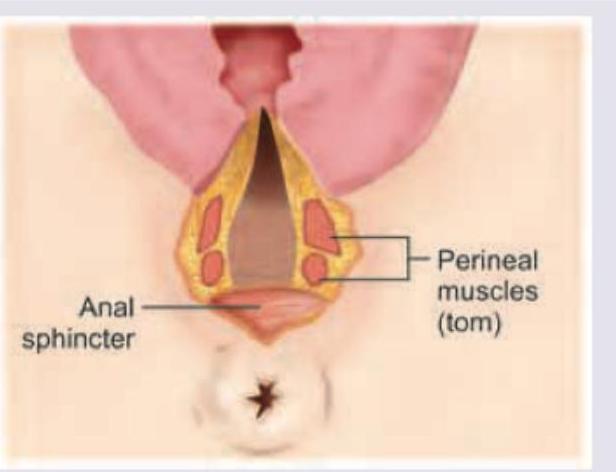
Explanation: **Explanation:** The question describes a spectrum of **Morbidly Adherent Placenta (MAP)**, where there is an abnormal attachment of the placenta to the uterine wall due to the absence or deficiency of the **Nitabuch’s layer** (decidua basalis). **Why Option D is Correct:** * **Placenta Percreta:** This is the most severe form. The chorionic villi penetrate through the entire thickness of the myometrium and breach the **uterine serosa**. In some cases, it may even invade adjacent organs, most commonly the urinary bladder. **Why Other Options are Incorrect:** * **A. Placenta Previa:** This refers to the abnormal *location* of the placenta (implanted in the lower uterine segment), not the depth of invasion. * **B. Placenta Accreta:** The villi are attached directly to the myometrium but do not invade it. This is the most common type (approx. 75-80%). * **C. Placenta Increta:** The villi invade deep **into** the myometrium but do not reach or pass through the serosa. **NEET-PG High-Yield Pearls:** 1. **Risk Factors:** The single most important risk factor is a **previous Cesarean Section** combined with **Placenta Previa**. The risk increases linearly with the number of prior C-sections. 2. **Diagnosis:** Antenatal diagnosis is primarily via **Ultrasound/Color Doppler**. Look for "placental lacunae" (Swiss cheese appearance) and loss of the retroplacental clear zone. 3. **Management:** The gold standard management for confirmed percreta is a **planned Cesarean Hysterectomy**. 4. **Complication:** The most common and life-threatening complication is massive postpartum hemorrhage (PPH).
Explanation: **Explanation:** The **McAfee and Johnson regimen** (also known as the expectant management of placenta previa) is the gold standard for managing asymptomatic or hemodynamically stable patients with placenta previa before 37 weeks of gestation. **Why it is correct:** The primary goal of this regimen is to prolong pregnancy to achieve fetal lung maturity while ensuring maternal safety. It is indicated when the fetus is preterm (<37 weeks), bleeding is not life-threatening, and the patient is not in active labor. The regimen includes: * Strict bed rest and hospitalization. * Administration of corticosteroids (e.g., Betamethasone) to accelerate fetal lung maturity. * Tocolytics (if needed) to stop uterine contractions. * Maintaining hemoglobin levels >10 g/dL. * Rh-immunoglobulin if the mother is Rh-negative. **Why other options are incorrect:** * **Eclampsia:** Managed using the **Pritchard regimen** or **Zuspan regimen** (Magnesium Sulfate) to control seizures. * **Placental Abruption:** Usually requires definitive management (delivery) rather than expectant management, as it poses an immediate risk of DIC and fetal distress. * **Placenta Accreta:** This is a surgical emergency typically managed by planned cesarean hysterectomy; expectant management is not the standard "McAfee" protocol. **High-Yield Clinical Pearls for NEET-PG:** * **Prerequisite:** The first step in suspected placenta previa is a **Transvaginal Ultrasound (TVS)**; per-vaginal examination is strictly contraindicated (can cause torrential hemorrhage). * **Termination:** Expectant management is terminated at **37 weeks** or if heavy bleeding/fetal distress occurs. * **Stallworthy’s Sign:** A clinical sign where the fetal head is displaced anteriorly or posteriorly due to a low-lying placenta.
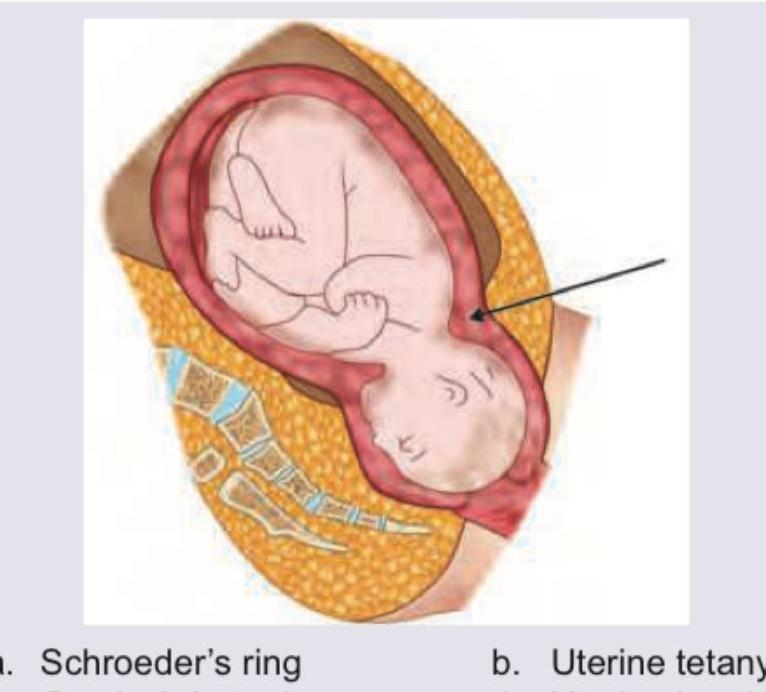
Explanation: **Explanation:** The diagnosis of **True Labor** is based on the presence of regular, painful uterine contractions that result in progressive cervical changes and the descent of the fetus. **Why "Show of vagina" is the correct answer (the exception):** The term "Show" (or bloody show) refers to the discharge of the cervical mucus plug mixed with a small amount of blood as the cervix begins to efface. While "Show" is a **premonitory sign** of labor and often precedes it, it is not a defining characteristic of true labor itself. Many women experience "show" hours or even days before active labor begins. Therefore, it is not a mandatory component of the definition of true labor. **Analysis of other options:** * **Painful uterine contractions:** True labor is characterized by rhythmic, involuntary contractions that increase in frequency, intensity, and duration over time. Unlike False Labor (Braxton Hicks), these are not relieved by rest or sedation. * **Progressive descent of presenting part:** As labor advances, the fetus moves down the birth canal. This descent is a hallmark of effective labor. * **Cervical dilatation:** This is the most objective sign of true labor. True labor must involve progressive effacement (thinning) and dilatation (opening) of the cervix. **NEET-PG High-Yield Pearls:** * **True vs. False Labor:** False labor pains are irregular, confined to the lower abdomen, and do not cause cervical changes. * **Friedman’s Curve:** Used to track the progress of labor based on cervical dilatation and fetal descent. * **Active Phase:** In modern obstetrics (WHO/ACOG), the active phase of labor is now considered to start at **6 cm** of cervical dilatation.
Explanation: **Explanation:** **Vasa previa** is a high-risk obstetric condition where fetal vessels (unprotected by Wharton’s jelly or placental tissue) run through the fetal membranes across the internal os of the cervix. These vessels are usually derived from a velamentous cord insertion or connect a succenturiate placental lobe. 1. **Why "All of the above" is correct:** * **Rupture of membranes (Option A):** The fetal vessels are embedded within the membranes. When the membranes rupture (spontaneous or artificial), these fragile vessels are highly susceptible to tearing. * **Fetal exsanguination (Option B):** Because the vessels contain fetal blood, their rupture leads to rapid fetal blood loss. Since the total fetal blood volume is small (approx. 80-100 mL/kg), even a minor bleed can lead to hemorrhagic shock. * **Fetal death (Option C):** Rapid exsanguination leads to fetal hypoxia, distress, and ultimately death if an emergency Cesarean section is not performed immediately. The fetal mortality rate in undiagnosed vasa previa is reported to be as high as 50-90%. 2. **Clinical Pearls for NEET-PG:** * **Classic Triad:** Rupture of membranes + Painless vaginal bleeding + Fetal bradycardia/distress. * **Diagnosis:** Antenatal diagnosis is best made via **Transvaginal Color Doppler Ultrasound** (showing pulsating vessels over the internal os). * **Apt Test:** Used to differentiate fetal blood from maternal blood in vaginal discharge. * **Management:** If diagnosed antenatally, elective Cesarean delivery is planned at **34–36 weeks** to avoid the onset of labor or ROM. * **Key Distinction:** Unlike placenta previa, the bleeding in vasa previa is **entirely fetal** in origin.
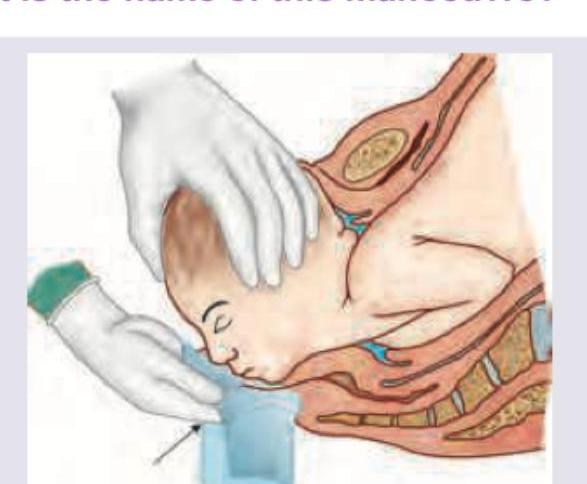
Explanation: **Explanation:** The management of the second stage of labor focuses on facilitating a controlled delivery to minimize maternal perineal trauma and neonatal injury. **1. Why Option A is Correct:** The WHO recommends **manual perineal protection** (the "hands-on" technique) during the crowning of the head. The primary objective is to maintain **continuous flexion** (often referred to in clinical practice as controlling the extension/deflexion process) to ensure the smallest diameters of the fetal head (suboccipitobregmatic) distend the vulva slowly. This controlled delivery prevents the sudden "popping out" of the head, which significantly reduces the risk of third- and fourth-degree perineal tears. **2. Why Other Options are Incorrect:** * **Option B:** Routine episiotomy is **not recommended**. WHO advocates for restrictive use, as routine episiotomy increases the risk of severe perineal trauma and slow healing without providing benefits for the baby. * **Option C:** While warm compresses are a recognized comfort measure that may reduce the risk of severe tears, they are considered an **adjunct** rather than the primary mechanical maneuver for head delivery management. * **Option D:** The lithotomy position is discouraged. WHO recommends allowing the woman to choose a **comfortable, upright, or lateral position**, as the lithotomy position can lead to aortocaval compression and a narrower pelvic outlet. **High-Yield Clinical Pearls for NEET-PG:** * **Ritgen Maneuver:** A specific technique of perineal support where the clinician uses one hand to extend the head (via the chin) while the other hand applies pressure to the occiput to control the speed of delivery. * **Active Management of Third Stage (AMTSL):** The most important step to prevent PPH is the administration of **10 IU Oxytocin** (IM/IV) immediately after the delivery of the baby. * **Delayed Cord Clamping:** WHO recommends waiting **1–3 minutes** before clamping the cord to improve infant iron stores.
Physiology of Labor
Practice Questions
Stages of Labor and Normal Progression
Practice Questions
Fetal Monitoring Techniques
Practice Questions
Pain Management in Labor
Practice Questions
Induction and Augmentation of Labor
Practice Questions
Operative Delivery (Forceps and Vacuum)
Practice Questions
Cesarean Section: Indications and Techniques
Practice Questions
Dystocia and Abnormal Labor Patterns
Practice Questions
Obstetric Emergencies
Practice Questions
Postpartum Hemorrhage Management
Practice Questions
Get full access to all questions, explanations, and performance tracking.
Start For Free