Placenta accreta is associated with which of the following conditions?
Dystocia dystrophia syndrome is seen in which type of pelvis?
A woman G3P2 at 34 weeks of gestation presents with abdominal pain, uterine tenderness, and bleeding per vaginum. Her vital signs are stable, and fetal heart rate tracing is regular. Which of the following steps is NOT required?
Artificial rupture of membranes (ARM) is contraindicated in which of the following situations?
What is the action of oxytocin in small doses when used as an intravenous infusion in a term uterus?
A 22-year-old G3P2 presented with profuse bleeding after a normal spontaneous vaginal delivery. Physical examination reveals a boggy uterus, and a bedside sonogram indicates the presence of retained placental tissue. What is the most probable diagnosis?
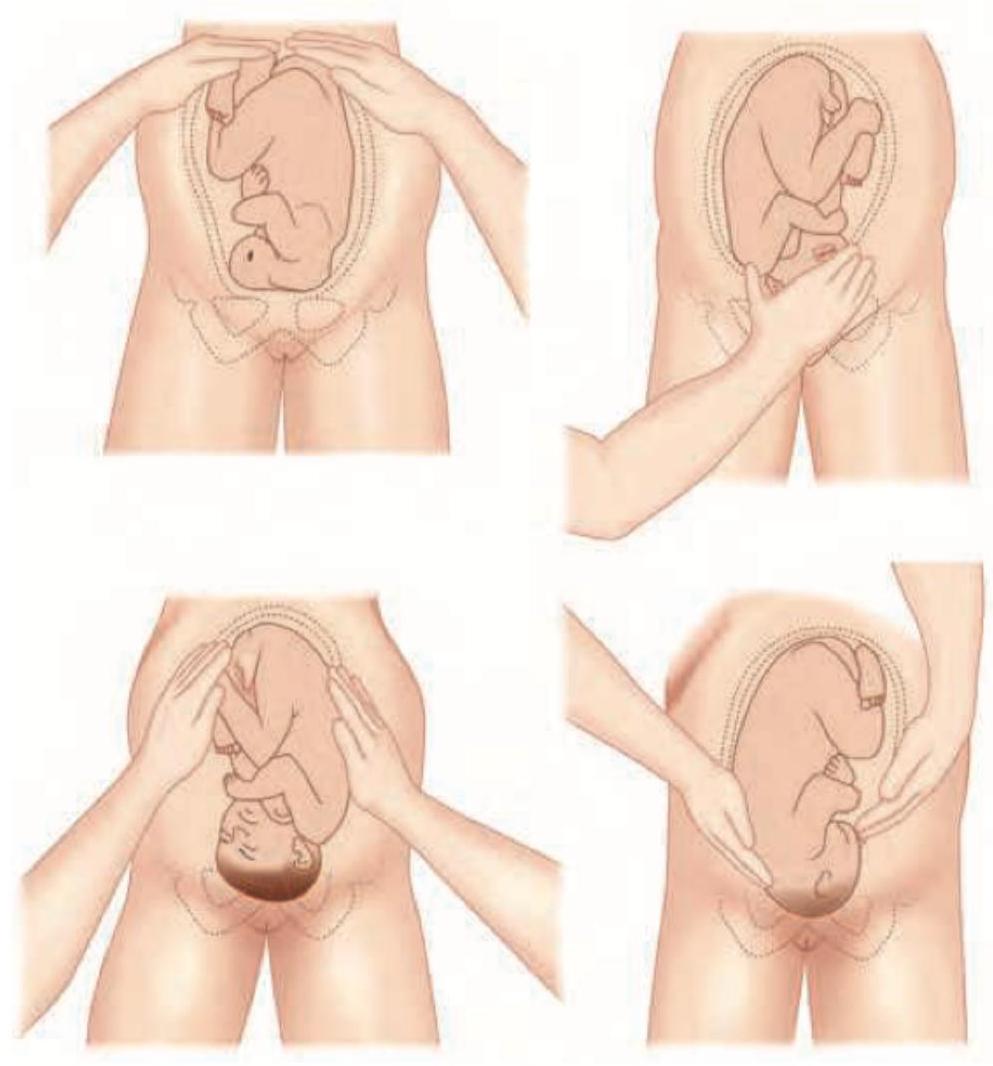
Fetal position refers to which of the following?
What is the commonest cause of death in breech delivery?
What is the TRUE statement regarding the management of monoamniotic pregnancy?
Which of the following is NOT true regarding Duncan's mechanism of placental separation?
Explanation: **Explanation:** **Placenta Accreta** refers to an abnormal adherence of the placenta to the uterine wall due to the partial or total absence of the **Nitabuch’s layer** (decidua basalis). 1. **Why Uterine Scar is Correct:** The single most significant risk factor for placenta accreta is a previous **uterine scar**, most commonly from a prior Cesarean section. A scar creates a defect in the endometrial-myometrial junction, allowing chorionic villi to invade directly into or through the myometrium. The risk increases proportionally with the number of previous C-sections. 2. **Why Other Options are Incorrect:** * **Placenta Previa:** While placenta previa is strongly *associated* with accreta (especially when overlying a scar), the primary pathological trigger is the underlying damaged decidua (the scar itself). In the absence of a scar, previa alone has a much lower incidence of accreta. * **Multiple Pregnancy & Multiparity:** These are minor risk factors associated with placental site issues but do not inherently cause the defective decidualization required for accreta. **High-Yield Clinical Pearls for NEET-PG:** * **The "Incidence Rule":** If a patient has 1 prior C-section and a current placenta previa, the risk of accreta is ~11%. With 4 or more C-sections and previa, the risk jumps to **>60%**. * **Classification:** * **Accreta:** Villi attached to myometrium (80%). * **Increta:** Villi invade into myometrium (15%). * **Percreta:** Villi penetrate through the serosa/into bladder (5%). * **Diagnosis:** Antenatal diagnosis is via **Color Doppler Ultrasound** (showing "moth-eaten" placental lacunae and loss of the retroplacental hypoechoic zone). * **Management:** The standard treatment for confirmed placenta accreta is a planned **Cesarean Hysterectomy**.
Explanation: **Explanation:** **Dystocia Dystrophia Syndrome** is a clinical condition typically associated with the **Android (masculine) pelvis**. This syndrome describes a specific physical habitus and clinical course during labor. 1. **Why Android Pelvis is correct:** The Android pelvis is characterized by a heart-shaped inlet, convergent side walls, and a narrow subpubic angle. Women with this syndrome often exhibit a "masculine" build: they are typically short, sturdy, somewhat obese, and may have features like a short neck, thick skin, and increased facial hair. Clinically, this leads to **dystocia** (difficult labor) because the narrow forepelvis and convergent walls favor **occipito-posterior positions**, leading to deep transverse arrest and an increased need for instrumental delivery or Cesarean section. 2. **Why other options are incorrect:** * **Platypelloid Pelvis:** This is a "flat" pelvis with a short anteroposterior diameter and a wide transverse diameter. It is associated with **simple flat pelvis** and typically results in a transverse engagement of the fetal head. * **Anthropoid Pelvis:** This is an "ape-like" pelvis with a long anteroposterior diameter. It favors **direct occipito-posterior** or occipito-anterior engagement and generally has a better prognosis for vaginal delivery than the android pelvis. * **Gynaecoid Pelvis:** This is the normal female pelvis (most common, ~50%). It has a round inlet and wide diameters, making it the most favorable for spontaneous vaginal delivery. **High-Yield Clinical Pearls for NEET-PG:** * **Most common pelvis:** Gynaecoid (50%). * **Least common pelvis:** Platypelloid (3%). * **Android Pelvis features:** Heart-shaped inlet, narrow subpubic angle, prominent ischial spines (leads to "funneling" of the pelvis). * **Dystocia Dystrophia Syndrome features:** Primigravida, elderly, obese, masculine features, narrow pelvis, and prolonged labor (often ending in mid-cavity arrest).
Explanation: This clinical scenario describes a classic presentation of **Abruptio Placentae** (Abruption), characterized by abdominal pain, uterine tenderness, and vaginal bleeding. ### **Explanation of the Correct Answer** **D. Tocolysis to arrest labor:** Tocolysis is strictly **contraindicated** in cases of placental abruption. The underlying pathology is the premature separation of the placenta, which can lead to rapid maternal hemorrhage and fetal distress. Attempting to arrest labor with tocolytics (like Nifedipine or Ritodrine) delays necessary delivery, increases the risk of concealed hemorrhage, and can exacerbate maternal coagulopathy (DIC). Even if the fetus is preterm (34 weeks), the priority is maternal safety and stabilization. ### **Analysis of Incorrect Options** * **A. Amniotomy or prostaglandins:** In abruption, vaginal delivery is preferred if the mother is stable and the fetal heart rate is reassuring. Amniotomy (ARM) is often performed to induce/accelerate labor and reduce intra-amniotic pressure, which may decrease the entry of thromboplastin into maternal circulation. * **B. Arrange for blood products:** Abruption is a leading cause of obstetric hemorrhage and DIC. Cross-matching blood and having products (PRBCs, FFP) ready is a standard resuscitative measure. * **C. Intravenous crystalloids and colloids:** Aggressive fluid resuscitation is essential to maintain maternal hemodynamics and renal perfusion, as the visible bleeding often underestimates the actual blood loss (concealed component). ### **NEET-PG High-Yield Pearls** * **Most common cause of DIC in pregnancy:** Abruptio Placentae. * **Couvelaire Uterus:** A complication of severe abruption where blood extravasates into the myometrium (uteroplacental apoplexy). * **Management Rule:** If the fetus is dead or the mother is unstable, stabilize and deliver. If the fetus is alive and stable, vaginal delivery is preferred unless there is an obstetric contraindication.
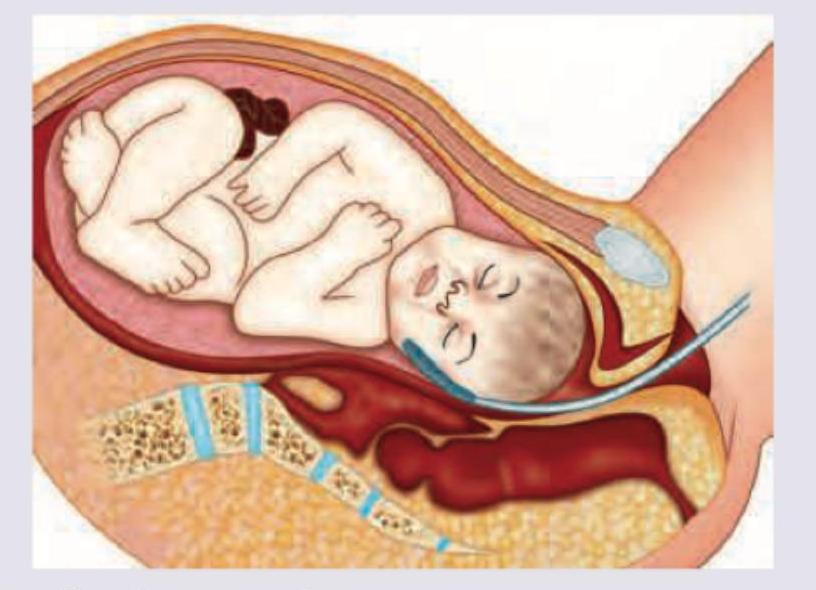
Explanation: **Explanation:** **Why the correct answer is right:** In the case of an intrauterine fetal death (IUFD), the primary goal of management is to ensure a safe delivery while minimizing maternal complications. Artificial Rupture of Membranes (ARM) is strictly contraindicated in a dead fetus because the amniotic sac acts as a vital **protective barrier against infection**. Once the membranes are ruptured, the risk of ascending infection (chorioamnionitis) increases significantly. In a dead fetus, the necrotic tissues and stagnant liquor provide an ideal medium for bacterial growth, which can rapidly lead to maternal sepsis or Clostridium welchii infection. Therefore, membranes should be kept intact as long as possible to allow for a "closed" labor process. **Analysis of incorrect options:** * **A. Pregnancy beyond 40 weeks:** ARM is a standard method for the **induction of labor** in post-dated or post-term pregnancies to initiate uterine contractions or augment labor. * **B. Rh-negative mother:** Being Rh-negative is not a contraindication for ARM. However, care should be taken to avoid trauma to the fetal vessels to prevent feto-maternal hemorrhage; Anti-D prophylaxis is managed according to standard protocols. * **C. Diabetic mother:** Diabetes is an indication for timely delivery (often at 38–39 weeks). ARM is frequently used as part of the induction process in these patients to prevent macrosomia-related complications. **High-Yield Clinical Pearls for NEET-PG:** * **Indications for ARM:** Induction of labor, augmentation of labor, and to assess the color of liquor (e.g., for meconium). * **Prerequisites for ARM:** The head must be engaged (to prevent cord prolapse) and the cervix must be favorable. * **Complications of ARM:** Cord prolapse, accidental fetal injury, and maternal infection. * **IUFD Management:** If labor does not start spontaneously, induction with prostaglandins (Misoprostol) is preferred over ARM.
Explanation: **Explanation:** **Mechanism of Action (Why B is correct):** Oxytocin is a peptide hormone synthesized in the hypothalamus and released by the posterior pituitary. At term, the uterus becomes highly sensitive to oxytocin due to a significant increase in the number of oxytocin receptors. When administered in **small doses via intravenous infusion**, oxytocin acts on these G-protein coupled receptors to increase intracellular calcium in the myometrium. This triggers rhythmic, synchronous contractions that mimic natural labor (increasing both frequency and force of contractions). **Analysis of Incorrect Options:** * **Option A:** Oxytocin is a potent **uterotonic** agent; it never relaxes the uterus. Drugs that relax the uterus are called tocolytics (e.g., Nifedipine, Terbutaline). * **Option C:** While cervical dilatation occurs during labor, it is a **secondary effect** of uterine contractions and the downward pressure of the fetal presenting part. Oxytocin does not have a direct biochemical "ripening" or dilatory effect on the cervix itself (unlike Prostaglandins E2). **NEET-PG High-Yield Pearls:** * **Half-life:** Oxytocin has a very short plasma half-life (approx. 3–5 minutes), which is why it must be given as a continuous IV infusion for labor induction. * **Side Effects (High Dose):** In large doses, oxytocin has an **ADH-like effect**, leading to water retention and potential water intoxication (hyponatremia). It can also cause peripheral vasodilation and hypotension if given as a rapid bolus. * **Drug of Choice:** It is the preferred agent for **induction/augmentation of labor** and the first-line drug for the prevention and management of **Postpartum Hemorrhage (PPH)**.
Explanation: ### Explanation **Correct Answer: A. Retained placental tissue** The clinical presentation of profuse postpartum hemorrhage (PPH) associated with a **boggy uterus** and **sonographic evidence** of intrauterine contents points directly to retained placental tissue. While uterine atony is the most common cause of PPH, the presence of retained fragments prevents the uterus from contracting effectively (secondary atony), leading to a boggy feel on palpation. Ultrasound is the gold standard for confirming the presence of these fragments. **Why other options are incorrect:** * **B. Uterine atony:** While a "boggy uterus" is the hallmark of atony, the specific mention of a bedside sonogram showing placental tissue makes "Retained placental tissue" the more specific and accurate diagnosis. Atony is often the *result* of the retained tissue. * **C. Placental abruption:** This is a cause of antepartum hemorrhage (bleeding before delivery), characterized by painful vaginal bleeding and a "woody hard" uterus, not a boggy one postpartum. * **D. Uterine inversion:** This presents with sudden shock out of proportion to blood loss and a characteristic "fundal notch" or a mass protruding through the cervix/vagina. The uterus would not be palpable in its normal abdominal position. **NEET-PG High-Yield Pearls:** * **The 4 Ts of PPH:** **T**one (Atony - 80%), **T**issue (Retained products), **T**rauma (Lacerations), and **T**hrombin (Coagulopathy). * **Management:** For retained placenta, manual removal or suction/evacuation is required. * **Active Management of Third Stage of Labor (AMTSL):** Reduces the risk of PPH by 60%. It includes prophylactic uterotonics (Oxytocin 10 IU IM), controlled cord traction, and uterine massage. * **Uterine Atony vs. Trauma:** If the uterus is **firm** but bleeding persists, suspect a traumatic cause (cervical/vaginal tear). If the uterus is **boggy**, suspect atony or retained tissue.
Explanation: **Explanation:** The terminology used to describe the orientation of the fetus within the uterus is fundamental in obstetrics. **Correct Answer (A):** **Fetal Position** is defined as the relationship of an arbitrarily chosen portion of the fetal presenting part (known as the **denominator**) to the right or left side of the maternal birth canal. For example, in a cephalic presentation, the denominator is the occiput; if the occiput is directed toward the left side of the mother’s pelvis, the position is "Left Occiput" (LO). **Analysis of Incorrect Options:** * **Option B (Presentation):** This describes **Fetal Presentation**, which refers to the part of the fetus that lies over the pelvic inlet or is foremost in the birth canal (e.g., cephalic, breech, or shoulder). * **Option C (Lie):** This describes **Fetal Lie**, which is the relationship between the long axis of the fetus and the long axis of the mother (e.g., longitudinal, transverse, or oblique). * **Option D (Attitude):** This describes **Fetal Attitude**, which refers to the posture of the fetus (flexion or extension) and how fetal body parts relate to one another. **High-Yield Clinical Pearls for NEET-PG:** * **Most common lie:** Longitudinal (99% at term). * **Most common presentation:** Cephalic (specifically Vertex). * **Most common position at the onset of labor:** Left Occiput Transverse (LOT), followed by Left Occiput Anterior (LOA). * **Denominator Examples:** Occiput (Vertex), Mentum (Face), Sacrum (Breech), and Acromion (Shoulder).
Explanation: **Explanation:** In breech delivery, the **commonest cause of death is intracranial hemorrhage**. This occurs primarily due to the rapid compression and subsequent decompression of the fetal head as it passes through the birth canal. Unlike a vertex presentation, where the head has hours to undergo "molding," the after-coming head in a breech delivery must engage and pass through the pelvis quickly. This sudden pressure change can lead to the tearing of the **tentorium cerebelli** or the **great vein of Galen**, resulting in fatal intracranial bleeding. **Analysis of Options:** * **A. Intracranial hemorrhage (Correct):** The lack of gradual molding leads to dural tears and vascular rupture. It remains the leading cause of neonatal mortality in vaginal breech births. * **B & C. Atlantoaxial dislocation/fracture:** These are traumatic injuries caused by excessive traction or hyperextension of the fetal neck (e.g., during the Prague maneuver). While specific to breech complications, they are significantly less common than intracranial trauma. * **D. Aspiration:** While breech infants are at risk of inhaling amniotic fluid or meconium if the breathing reflex is triggered while the head is still in the birth canal, it is a less frequent cause of immediate death compared to hemorrhage. **High-Yield Clinical Pearls for NEET-PG:** * **Most common cause of fetal death overall in breech:** Birth asphyxia (often due to cord prolapse or head entrapment). * **Most common cause of traumatic death:** Intracranial hemorrhage. * **Cord Prolapse:** More common in footling (15%) and complete breech (5%) than in frank breech (0.5%). * **Safe Delivery:** To prevent intracranial trauma, the **Burn-Marshall maneuver** or **Piper’s forceps** are used to control the delivery of the after-coming head and prevent sudden decompression.
Explanation: ### Explanation **Monoamniotic-monochorionic (MoMo) twins** represent the highest-risk category of twin pregnancies due to the absence of a dividing membrane, occurring when the zygote divides between 8 and 13 days post-fertilization. **Why Option B is Correct:** The primary risk in MoMo pregnancies is **umbilical cord entanglement**, which can lead to sudden fetal demise at any time. To mitigate this risk, international guidelines (ACOG and RCOG) recommend elective delivery via **Lower Segment Cesarean Section (LSCS)** between **32 and 34 weeks**. Antenatal corticosteroids are administered prior to delivery to enhance fetal lung maturity. **Analysis of Incorrect Options:** * **Option A:** A trial of labor is contraindicated in MoMo twins. Even if conjoint twins are ruled out, the high risk of cord prolapse and acute cord entanglement during the descent of the first twin necessitates a Cesarean delivery. * **Option C:** Carrying the pregnancy to term is dangerous. The risk of fetal loss increases significantly after 32 weeks; studies show the risk of intrauterine death outweighs the risks of prematurity at this stage. * **Option D:** Prophylactic tocolytics are not routinely recommended. Management focuses on intensive fetal monitoring (often inpatient from 24–28 weeks) rather than preventing labor, as the danger is cord-related, not necessarily spontaneous preterm birth. **High-Yield Clinical Pearls for NEET-PG:** * **Timing of Division:** 8–13 days (MoMo); 4–8 days (MoDi); <4 days (DiDi). * **Diagnostic Sign:** The **"T-sign"** on ultrasound indicates Monochorionic twins, while the **absence of any membrane** confirms Monoamniotic. * **Complications:** Cord entanglement (unique to MoMo), Twin-to-Twin Transfusion Syndrome (TTTS), and congenital anomalies. * **Mode of Delivery:** Always LSCS for MoMo twins to prevent intrapartum cord accidents.
Explanation: **Explanation:** The third stage of labor involves the separation and expulsion of the placenta. There are two primary mechanisms of placental separation: **Schultze** and **Duncan**. **Why Option D is the correct answer:** Option D is incorrect (and thus the right answer for this "NOT true" question) because **Schultze mechanism** is the most common method, occurring in approximately **80%** of cases. In Schultze, separation begins at the center of the placenta, leading to the formation of a retroplacental hematoma that aids in complete detachment. Duncan’s mechanism occurs in only about 20% of cases. **Analysis of other options:** * **Option A & B:** In **Duncan’s mechanism**, separation starts at the **periphery (margins)**. Because the edges detach first, the placenta slides down sideways, and the **maternal surface** (rough, cotyledonous side) presents first at the vulva. * **Option C:** Duncan’s mechanism is associated with **more visible blood loss** during the process. Unlike Schultze, where the blood is trapped behind the membranes (retroplacental) until the placenta is delivered, in Duncan’s, the blood escapes immediately from the margins. **NEET-PG High-Yield Pearls:** * **Schultze Mechanism (80%):** "Center first." Fetal surface (shiny side) presents. Less external bleeding. * **Duncan Mechanism (20%):** "Edges first." Maternal surface (dirty/rough side) presents. More external bleeding. * **Memory Aid:** **S**chultze = **S**hiny (Fetal surface) and **S**afe (less bleeding). **D**uncan = **D**irty (Maternal surface).
Physiology of Labor
Practice Questions
Stages of Labor and Normal Progression
Practice Questions
Fetal Monitoring Techniques
Practice Questions
Pain Management in Labor
Practice Questions
Induction and Augmentation of Labor
Practice Questions
Operative Delivery (Forceps and Vacuum)
Practice Questions
Cesarean Section: Indications and Techniques
Practice Questions
Dystocia and Abnormal Labor Patterns
Practice Questions
Obstetric Emergencies
Practice Questions
Postpartum Hemorrhage Management
Practice Questions
Get full access to all questions, explanations, and performance tracking.
Start For Free