What is the most important cause of coagulation failure in obstetrics?
A 30-year-old woman, para 6, delivers vaginally following normal labor with spontaneous delivery of an intact placenta. Excessive bleeding continues despite manual exploration, bimanual massage, intravenous oxytocin, and administration of 0.2 mg methylergometrine IV. Which one of the following would be the next step in the management of this patient?
A 37-week pregnant female presents with mild labor pain for 10 hours. On examination, the cervix is persistently 1 cm dilated and non-effaced. What is the next appropriate management?
In a primigravida patient experiencing preterm labor, which of the following can be used as a tocolytic agent?
A 39-week gestation patient presents with a footling presentation. What is the most appropriate management?
Oxytocin should be discontinued if the number of uterine contractions persists with a frequency more than how many per 10 minutes?
Successful trial of labour can be expected in:
A primipara with a breech presentation is in the second stage of labor for 2 hours. The fetal heart rate is 140 beats per minute. She is experiencing 3 uterine contractions per 10 minutes. The breech is felt at the level of the ischial spines. The membranes are absent. The pelvis is adequate. The estimated fetal weight is 3 kg. What is the most appropriate management?
At which gestational age is external cephalic version typically performed?
What is the standard regimen of magnesium sulfate for the management of severe pre-eclampsia and eclampsia?
Explanation: **Explanation:** **Accidental hemorrhage (Abruptio Placentae)** is the most common and important cause of Disseminated Intravascular Coagulation (DIC) in obstetrics. The underlying mechanism involves the release of a massive amount of **tissue thromboplastin** from the damaged placenta and retroplacental clot into the maternal circulation. This triggers the extrinsic coagulation pathway, leading to widespread consumption of clotting factors (fibrinogen, platelets, Factors V and VIII), ultimately resulting in coagulation failure. **Analysis of Options:** * **Intrauterine Fetal Death (IUFD):** While IUFD can cause DIC, it typically takes **3–4 weeks** of the dead fetus being retained in utero for thromboplastin to leak sufficiently into the maternal system. It is a slower process compared to the acute onset seen in Abruption. * **Placenta Previa:** This condition involves painless bleeding without significant retroplacental clot formation or tissue damage. Therefore, the release of thromboplastin is negligible, and DIC is extremely rare. * **Rupture of the Uterus:** While this causes massive obstetric hemorrhage and shock, it does not inherently trigger the systemic consumptive coagulopathy pathway as directly or frequently as Abruptio Placentae does. **High-Yield Clinical Pearls for NEET-PG:** * **Most common cause of DIC in pregnancy:** Abruptio Placentae. * **Most common cause of Septic Shock in obstetrics:** Septic Abortion. * **Couvelaire Uterus:** Seen in severe Abruptio Placentae where blood infiltrates the myometrium; it is a risk factor for postpartum hemorrhage (PPH) but not an absolute indication for hysterectomy. * **Bedside Test:** The **"Modified Weiner’s Clot Observation Test"** is a quick bedside tool to screen for coagulation failure (failure of a 5ml blood sample to clot within 6–10 minutes or a clot that dissolves quickly).
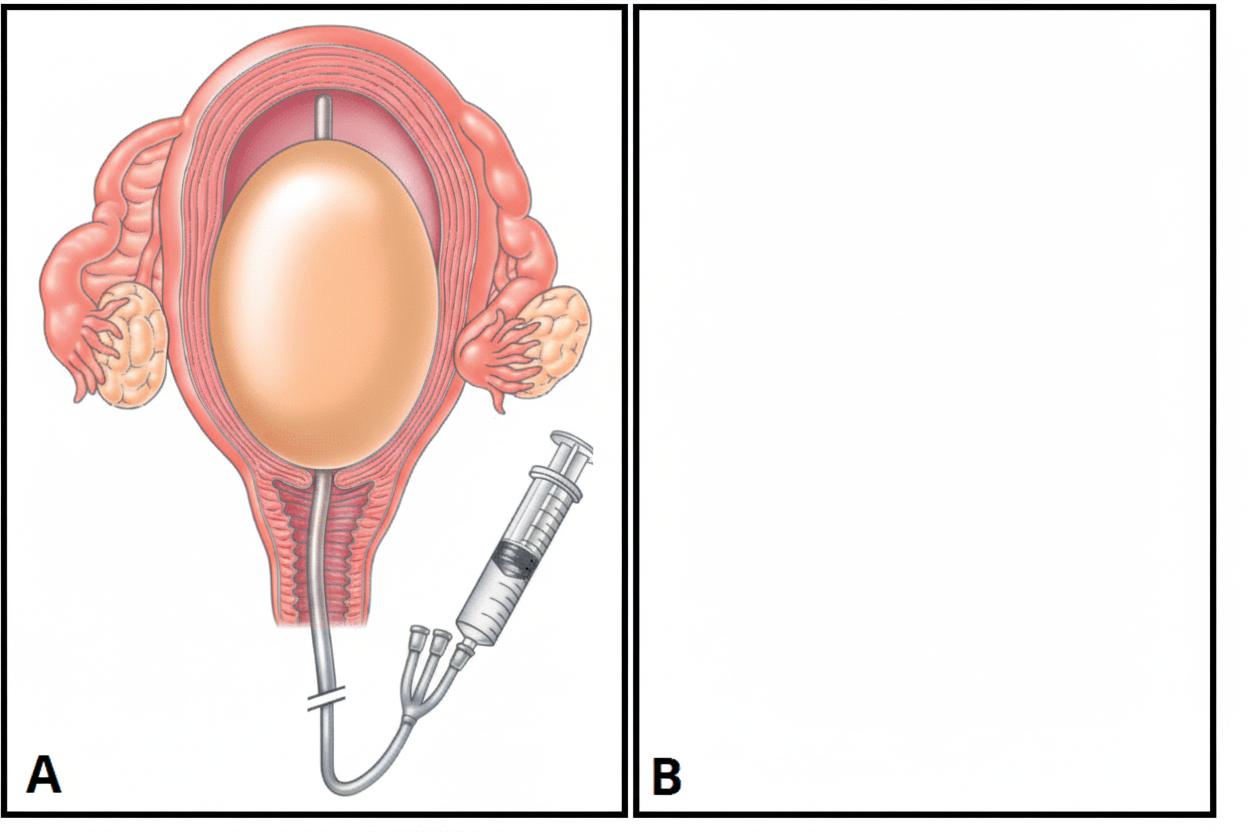
Explanation: This question describes a classic case of **Postpartum Hemorrhage (PPH)** due to **uterine atony** in a high-parity woman. The management of atonic PPH follows a specific step-wise escalation. ### **Explanation of the Correct Answer** The patient has already received first-line medical management (Oxytocin and Methylergometrine) and physical interventions (massage, exploration). According to the standard management protocol for atonic PPH, the next step is the administration of **Prostaglandin F2α (Carboprost/15-methyl PGF2α)**. * **Mechanism:** It causes potent myometrial contractions to compress bleeding vessels. * **Dose:** 0.25 mg intramuscularly (IM) or intramyometrially, repeatable every 15 minutes (max 8 doses). * **Note:** It is contraindicated in patients with asthma. ### **Why Other Options are Incorrect** * **A. Packing the uterus:** This is an older technique, now largely replaced by **Bakri Balloon tamponade**. It is generally considered if medical management fails and before surgical intervention. * **B. Immediate hysterectomy:** This is the "last resort" procedure when all medical and conservative surgical methods fail to control life-threatening hemorrhage. * **C. Bilateral internal iliac ligation:** This is a surgical intervention (Step 3/4). Surgical steps (Devascularization or B-Lynch sutures) are only initiated if **all** pharmacological agents (including PGF2α and Misoprostol) fail. ### **High-Yield Clinical Pearls for NEET-PG** * **Most common cause of PPH:** Uterine Atony (70-80%). * **Risk Factor in this case:** High parity (Para 6) leads to "exhausted" myometrium. * **Drug of Choice for Prophylaxis (AMTSL):** Oxytocin (10 IU IM/IV). * **Methylergometrine Contraindication:** Hypertension/Preeclampsia. * **Misoprostol (PGE1):** Often used (800-1000 mcg rectally) if PGF2α is unavailable or contraindicated. * **Sequence of Drugs:** Oxytocin → Methylergometrine → PGF2α → Misoprostol.
Explanation: ### Explanation The patient is in the **Prolonged Latent Phase** of labor. According to Friedman’s criteria, the latent phase is considered prolonged if it exceeds 20 hours in a primigravida or 14 hours in a multigravida. However, the key clinical finding here is the lack of cervical change (1 cm dilated, non-effaced) despite 10 hours of mild contractions, suggesting **False Labor** or an early latent phase. **1. Why Sedation and Observation is Correct:** The management of a prolonged latent phase is conservative. **Therapeutic rest (sedation)** using morphine or similar agents is the treatment of choice. This helps differentiate between false labor and true labor. After sedation, the patient will either: * Stop having contractions (confirming False Labor). * Wake up in the active phase of labor (confirming True Labor). **2. Why Other Options are Incorrect:** * **B. Augmentation with Oxytocin:** Oxytocin is indicated for protraction or arrest disorders in the **Active Phase** (cervix >4–6 cm). Using it in the latent phase increases the risk of uterine tachysystole and unnecessary intervention. * **C. Cesarean Section:** A prolonged latent phase is NOT an indication for C-section. Delivery is only indicated if there is evidence of fetal distress or maternal exhaustion. * **D. Amniotomy:** Artificial rupture of membranes (ARM) is reserved for the active phase to accelerate labor. Performing it too early increases the risk of chorioamnionitis and cord prolapse. **Clinical Pearls for NEET-PG:** * **Latent Phase:** From onset of labor to 4–6 cm dilation. * **Active Phase:** From 6 cm to 10 cm (full) dilation. * **Friedman’s Curve:** Latent phase >20 hrs (Primi) or >14 hrs (Multi) = Prolonged Latent Phase. * **Management Rule:** Never diagnose "Failure to Progress" in the latent phase; it can only be diagnosed in the active phase.
Explanation: **Explanation:** **1. Why Option B is Correct:** Tocolytics are drugs used to suppress uterine contractions to delay delivery, typically for 48 hours, allowing for corticosteroid administration or maternal transport. * **Ritodrine** is a **Beta-2 adrenergic agonist** that increases intracellular cAMP, leading to smooth muscle relaxation (uterine quiescence). * **Magnesium Sulfate (MgSO4)** acts as a calcium antagonist, competing with calcium at the motor endplate and inhibiting myometrial contractility. In preterm labor, MgSO4 serves a dual purpose: tocolysis and **fetal neuroprotection** (reducing the risk of cerebral palsy). **2. Analysis of Incorrect Options:** * **Option A & D:** **Dexamethasone** is a corticosteroid used for fetal lung maturity (to prevent RDS, IVH, and NEC). While it is essential in preterm labor management, it is **not a tocolytic agent** as it has no effect on uterine contractions. * **Option C:** **Propranolol** is a non-selective **Beta-blocker**. Since Beta-2 stimulation causes uterine relaxation, a Beta-blocker would theoretically increase uterine activity and is contraindicated when tocolysis is desired. **3. High-Yield Clinical Pearls for NEET-PG:** * **First-line Tocolytic:** Currently, **Nifedipine** (Calcium Channel Blocker) is the preferred first-line agent due to its oral efficacy and better safety profile compared to Ritodrine. * **Atosiban:** A competitive Oxytocin receptor antagonist; highly specific with fewer side effects but expensive. * **Indomethacin:** A COX inhibitor used as a tocolytic, but contraindicated after **32 weeks** due to the risk of premature closure of the *ductus arteriosus* and oligohydramnios. * **Ritodrine Side Effects:** Maternal tachycardia, pulmonary edema, and hyperglycemia.
Explanation: **Explanation:** In modern obstetric practice, **Caesarean section (CS)** is the preferred and safest mode of delivery for a **footling breech presentation** at term (39 weeks). **Why Caesarean Section is Correct:** Footling breech is an incomplete breech where one or both feet are the presenting part below the buttocks. This carries a high risk (up to 15-20%) of **umbilical cord prolapse** because the feet do not adequately fill the pelvic inlet, allowing the cord to slip past. Furthermore, there is a significant risk of **head entrapment**, where the cervix dilates enough to allow the feet and trunk to pass but remains insufficiently dilated for the larger, non-molded aftercoming head. **Analysis of Incorrect Options:** * **Vaginal Delivery:** While once common, the *Term Breech Trial* established that planned CS significantly reduces perinatal mortality and morbidity compared to vaginal delivery for breech presentations, especially incomplete types like footling. * **External Cephalic Version (ECV):** ECV is typically attempted between 36–37 weeks. At 39 weeks, with the patient potentially in early labor or having reduced liquor, the success rate is lower and the risk of complications (like placental abruption) is higher. * **Expectant Management:** At 39 weeks (full term), there is no benefit to waiting. Delaying delivery increases the risk of spontaneous rupture of membranes and subsequent cord prolapse. **Clinical Pearls for NEET-PG:** * **Types of Breech:** Frank breech (buttocks presenting, legs extended) is the most common and has the lowest risk of cord prolapse (0.5%). Footling breech has the highest risk. * **Prerequisites for Vaginal Breech:** If ever attempted (usually only in Frank breech), the pelvis must be adequate, the fetus <3.5kg, and the head must be flexed. * **Burn-Marshall Maneuver:** Used for delivery of the aftercoming head in vaginal breech. * **Mauriceau-Smellie-Veit Maneuver:** Used to maintain flexion of the aftercoming head.
Explanation: **Explanation:** The correct answer is **A. 5 per 10 minutes.** **Underlying Medical Concept:** The primary goal of oxytocin administration for induction or augmentation of labor is to achieve adequate uterine activity without causing **uterine tachysystole**. Tachysystole is defined as **more than 5 contractions in a 10-minute period**, averaged over a 30-minute window. Excessive contractions can lead to uteroplacental insufficiency because the short relaxation intervals between contractions do not allow for adequate fetal oxygenation (re-oxygenation of the intervillous space). This can result in fetal distress, late decelerations, or even uterine rupture. Therefore, if the frequency exceeds 5 per 10 minutes, oxytocin must be discontinued immediately to ensure fetal safety. **Analysis of Incorrect Options:** * **B and C (5 per 15 or 20 minutes):** These frequencies represent normal or even suboptimal labor patterns. A frequency of 3–4 contractions per 10 minutes is generally considered ideal for cervical dilatation. Stopping oxytocin at these lower frequencies would lead to failed induction or prolonged labor. * **D (Any of the above):** This is incorrect because there is a specific, evidence-based threshold (tachysystole) that mandates the cessation of the drug. **Clinical Pearls for NEET-PG:** * **Definition of Tachysystole:** >5 contractions in 10 minutes (regardless of fetal heart rate changes). * **Hypertonus:** A single contraction lasting longer than 2 minutes (also an indication to stop oxytocin). * **Management of Tachysystole:** Stop oxytocin infusion, place the mother in the left lateral position, administer oxygen, and consider a tocolytic (e.g., Terbutaline) if fetal distress is present. * **Half-life of Oxytocin:** Very short (3–5 minutes), which allows for rapid reversal of effects once the infusion is stopped.
Explanation: **Explanation:** The success of a trial of labor (TOL) depends on whether the fetal head can overcome the initial pelvic obstruction. In a **Flat (Platypelloid) pelvis**, the primary resistance is at the pelvic inlet due to a shortened anteroposterior (AP) diameter. However, once the head engages—often through the mechanism of **exaggerated asynclitism**—the rest of the pelvis is usually roomy. Since the mid-pelvis and outlet do not pose further obstruction, a successful vaginal delivery is highly likely once the inlet is crossed. **Analysis of Incorrect Options:** * **Android Pelvis:** Known as the "masculine" pelvis, it is funnel-shaped. While the inlet may be adequate, the pelvis narrows progressively toward the outlet (convergent side walls, narrow subpubic angle). This frequently leads to deep transverse arrest and difficult instrumental deliveries, making it unfavorable for TOL. * **Naegele’s Pelvis:** This is a type of asymmetric contracted pelvis caused by the congenital absence of one wing (ala) of the sacrum. The extreme distortion of pelvic diameters usually makes vaginal delivery impossible. * **Generally Contracted Pelvis (Small Gynecoid):** All diameters (inlet, cavity, and outlet) are proportionately reduced. Even if the head engages, it faces continuous resistance at every level of the birth canal, increasing the risk of prolonged labor and failure. **High-Yield Clinical Pearls for NEET-PG:** * **Mechanism in Flat Pelvis:** The head enters the inlet in a transverse diameter with **asynclitism** (Naegele’s or Litzmann’s obliquity). * **Most Common Pelvis:** Gynecoid (50%). * **Most Common Malpresentation in Android Pelvis:** Persistent Occipito-posterior (OP) position. * **Robert’s Pelvis:** Congenital absence of both wings of the sacrum (bilateral Naegele’s).
Explanation: **Explanation:** The core issue in this clinical scenario is **failure to progress in the second stage of labor** with a **breech presentation**. In a primipara, the second stage of labor is considered prolonged if it exceeds 2 hours (without epidural). This patient has already reached the 2-hour mark, and the breech is still at the level of the **ischial spines (Station 0)**. For a safe vaginal breech delivery, the breech must be deeply engaged and descending rapidly to ensure the after-coming head does not get trapped. A breech at the ischial spines after 2 hours of pushing indicates **cephalopelvic disproportion (CPD)** or poor progress, making vaginal delivery hazardous. Therefore, an immediate **Lower Segment Cesarean Section (LSCS)** is the safest management to avoid fetal morbidity. **Analysis of Incorrect Options:** * **A & B:** Oxytocin or hydration are used for uterine inertia. However, this patient has adequate contractions (3 in 10 minutes). Adding oxytocin in a breech presentation with poor descent is contraindicated as it increases the risk of birth trauma and cord prolapse. * **C:** Observation is inappropriate. In breech labor, "waiting" during a stalled second stage significantly increases the risk of fetal hypoxia and intracranial hemorrhage. **Clinical Pearls for NEET-PG:** * **Term Breech Trial:** Established that planned CS is safer than vaginal delivery for term breech presentations. * **Prerequisites for Vaginal Breech:** Adequate pelvis, fetal weight 2.5–3.5 kg, frank/complete breech, and flexed head. * **Station:** A breech at station 0 in the second stage is a "high breech" and a red flag for obstruction.
Explanation: **Explanation:** External Cephalic Version (ECV) is a procedure where the fetus is manually rotated from a breech or transverse lie to a cephalic presentation through the maternal abdomen. **Why 36 weeks is correct:** The timing of ECV is a balance between the likelihood of spontaneous version and the risks of prematurity. * **In Nulliparous women:** ECV is typically performed at **36 weeks**. * **In Multiparous women:** It is often delayed until **37 weeks**. At 36 weeks, the fetus is large enough that spontaneous version is unlikely, yet there is still sufficient amniotic fluid and space to facilitate the maneuver. Most importantly, if a complication occurs (e.g., placental abruption or cord prolapse) necessitating emergency delivery, the fetus has reached near-term maturity. **Why other options are incorrect:** * **34 weeks:** Too early. Many fetuses (approx. 25%) will undergo spontaneous version to cephalic before 36 weeks. Performing it now increases the risk of the fetus reverting to breech and exposes a preterm infant to unnecessary delivery risks if complications arise. * **38/40 weeks:** Too late. As the pregnancy advances, the fetus grows larger and the relative volume of amniotic fluid decreases, significantly reducing the success rate of the procedure. **High-Yield Clinical Pearls for NEET-PG:** * **Prerequisites:** Reactive NST (reassuring fetal heart rate), adequate liquor, and no contraindications to vaginal delivery. * **Success Rate:** Approximately 50–60%. * **Tocolysis:** Use of beta-mimetics (e.g., Terbutaline) increases success rates by relaxing the uterus. * **Absolute Contraindications:** Placenta previa, multifetal gestation, ruptured membranes, and prior classical cesarean section. * **Rh Status:** Rh-negative non-sensitized mothers must receive **Anti-D immunoglobulin** after the procedure to prevent isoimmunization.
Explanation: **Explanation:** Magnesium sulfate ($MgSO_4$) is the drug of choice for preventing and treating seizures in severe pre-eclampsia and eclampsia. The **Pritchard regimen** (intramuscular) and the **Zuspan regimen** (intravenous) are the two globally recognized protocols. **Why Option B is Correct:** The **Pritchard regimen** is the standard intramuscular (IM) protocol. It consists of: * **Loading Dose:** 4g IV (20% solution) over 5–10 minutes + 10g IM (5g in each buttock as a 50% solution). * **Maintenance Dose:** 5g IM every 4 hours in alternating buttocks. It is preferred in settings where infusion pumps are unavailable, making it a high-yield topic for exams focusing on Indian clinical scenarios. **Analysis of Incorrect Options:** * **A. Menon Regimen:** This is an older "Lytic Cocktail" (Chlorpromazine, Promethazine, and Pethidine) used before $MgSO_4$ became the gold standard. It is no longer recommended due to inferior efficacy and neonatal depression. * **C. Lean Regimen:** This is a distractor; there is no standard obstetric protocol by this name. * **D. Pinard’s Regimen:** Pinard refers to a maneuver for breech extraction (bringing down a leg) or a type of stethoscope used for fetal heart sounds, not a pharmacological regimen. **High-Yield Clinical Pearls for NEET-PG:** 1. **Therapeutic Range:** 4–7 mEq/L. 2. **Toxicity Signs:** Loss of patellar reflex (first sign, 8–10 mEq/L) $\rightarrow$ Respiratory depression (12 mEq/L) $\rightarrow$ Cardiac arrest (>25 mEq/L). 3. **Prerequisites for Maintenance:** Urine output >30 ml/hr, Respiratory rate >12-14/min, and presence of Patellar reflex. 4. **Antidote:** 10 ml of 10% **Calcium Gluconate** IV (given over 10 minutes).
Physiology of Labor
Practice Questions
Stages of Labor and Normal Progression
Practice Questions
Fetal Monitoring Techniques
Practice Questions
Pain Management in Labor
Practice Questions
Induction and Augmentation of Labor
Practice Questions
Operative Delivery (Forceps and Vacuum)
Practice Questions
Cesarean Section: Indications and Techniques
Practice Questions
Dystocia and Abnormal Labor Patterns
Practice Questions
Obstetric Emergencies
Practice Questions
Postpartum Hemorrhage Management
Practice Questions
Get full access to all questions, explanations, and performance tracking.
Start For Free