Given the following partogram data, identify the most likely diagnosis: Cervical dilation curve shows a prolonged labor with the cervical dilation falling to the right of the alert line.

What is the presenting diameter of a fully flexed head?
A female patient collapses soon after delivery. There is profuse bleeding and features of disseminated intravascular coagulation. Which of the following is the most likely etiology?
A primigravida presents to the labor room at 40 weeks of gestation with lower abdominal pain. She has been in labor for 3 hours. Which of the following will determine if she is in active labor?
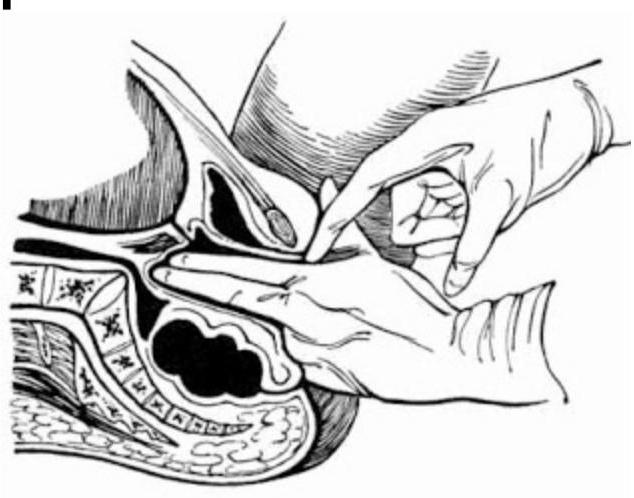
Which of the following describes the points marked in the diagram of pelvic measurements?
Which of these steps is followed first for the management of shoulder dystocia after McRoberts maneuver?
Contracted pelvis is defined as a condition where the dimensions of the pelvis are reduced, making childbirth difficult. What is the minimum shortening of one or more planes that is considered significant?
What is the primary clinical advantage of the occipitoanterior position in childbirth?
Lovset manoeuvre is used in delivery of:
When the fetus is at station +2 and the fetal skull reaches the pelvic floor, which of the following statements is MOST clinically relevant?
Explanation: ***Cephalopelvic Disproportion (CPD)*** - A cervical dilation curve that crosses the **alert line** and approaches or crosses the **action line** on a partogram indicates **prolonged labor** or **arrest of labor**. This pattern is highly suggestive of CPD, where the fetal head is too large to pass through the maternal pelvis. - While other factors can cause prolonged labor, CPD is a common cause of **protracted active phase disorders** and **labor arrest**, characterized by a cervix that fails to dilate adequately despite sufficient contractions. *Inadequate uterine contractions* - While inadequate uterine contractions (hypotonic contractions) can lead to **prolonged labor**, the partogram does not provide direct information about the frequency or intensity of contractions to conclusively make this diagnosis. - If contractions were primarily the issue, augmenting labor with oxytocin would be expected to improve the dilation curve, which is not indicated as the primary problem here. *Rupture of the uterus during labor* - Uterine rupture is a catastrophic event typically presenting with sudden **severe pain**, **vaginal bleeding**, **fetal heart rate abnormalities**, and potentially **maternal shock**. - While it can lead to cessation of labor progress, the partogram pattern of a slowly deviating dilation curve over time is not characteristic of an acute uterine rupture. *Maternal exhaustion* - Maternal exhaustion is a common consequence of **prolonged labor** but is not a primary cause of labor arrest or a specific diagnosis reflected by the cervical dilation curve alone. - It often accompanies other underlying issues like CPD or inefficient uterine contractions, rather than being the sole etiology for the observed partogram.
Explanation: ***Suboccipito-bregmatic diameter*** - This diameter measures from the **nape of the neck** (**suboccipital region**) to the **anterior fontanelle** (**bregma**), which is the smallest presenting diameter of the fetal head when it is in **full flexion**. - A fully flexed head presents the smallest and most favorable diameter for vaginal birth, allowing for optimal passage through the birth canal. *Suboccipito-frontal diameter* - This diameter is measured from the **nape of the neck to the center of the forehead**, indicating a less flexed head than the suboccipito-bregmatic diameter. - While it represents some flexion, it is not the ideal presenting diameter for a fully flexed head and is larger than the suboccipito-bregmatic diameter. *Occipito-frontal diameter* - This diameter is measured from the **occipital protuberance to the forehead**, representing a **deflexed** or **partially flexed** head. - This presentation is less favorable for vaginal delivery as it is a larger diameter than either the suboccipito-bregmatic or suboccipito-frontal diameters. *Biparietal diameter* - This diameter measures the **widest transverse diameter of the fetal head**, between the two parietal eminences. - While clinically important for assessing head size and growth, it is **not a presenting longitudinal diameter** that describes the leading part of the fetal head during engagement and descent.
Explanation: ***Amniotic fluid embolism as a complication of pregnancy*** - **Amniotic fluid embolism** is a rare but catastrophic complication where amniotic fluid enters the maternal circulation, leading to sudden **cardiovascular collapse**, **respiratory distress**, and **disseminated intravascular coagulation (DIC)**. - The rapid onset of symptoms after delivery, along with profuse bleeding and features of DIC, is highly characteristic of this condition. *Uterine atony* - **Uterine atony** is the most common cause of **postpartum hemorrhage**, typically leading to profuse bleeding due to the uterus's inability to contract. - While it causes significant bleeding, it does not typically cause the triad of sudden cardiovascular collapse, respiratory distress, and DIC seen in amniotic fluid embolism. *Peripartum cardiomyopathy as a cause of collapse* - **Peripartum cardiomyopathy** can lead to heart failure and cardiovascular collapse, but it typically develops **gradually** in the peripartum period. - It does not directly cause profuse bleeding or DIC; rather, its complications might include thromboembolic events, which are distinct from the primary events described. *Rupture of the uterus during delivery* - **Uterine rupture** causes significant hemorrhage and can lead to maternal collapse. - However, it primarily results in **external or internal bleeding** from the rupture site and does not typically trigger the widespread systemic inflammatory response and DIC as rapidly or profoundly as an amniotic fluid embolism.
Explanation: ***Cervical dilatation of 6 cm or more with regular contractions*** - Active labor is officially defined by **cervical dilatation of 6 cm or more** according to the ACOG and SMFM 2014 consensus guidelines, which redefined the labor curve based on the Consortium on Safe Labor study. - This represents a shift from the traditional Friedman curve definition of 4 cm, recognizing that **significant progressive cervical change** with regular uterine contractions is the hallmark of active labor. - Complete effacement typically occurs during the latent phase, and while regular contractions accompany active labor, **cervical dilatation ≥6 cm is the primary diagnostic criterion**. *Fetal head 5/5 palpable on abdominal examination* - This finding indicates a **high fetal head** that is not engaged (0/5 of the head has entered the pelvis), which does not determine whether active labor has begun. - **Fetal station and engagement** are important for assessing labor progression and potential for cephalopelvic disproportion, but are not the primary criteria for diagnosing active labor. *Two contractions lasting for 10 seconds in 10 minutes* - These contractions are **infrequent and very short**, more characteristic of latent labor or Braxton Hicks contractions. - Active labor typically involves **3-5 contractions in 10 minutes, each lasting 45-60 seconds**, with sufficient intensity to cause progressive cervical change. *Rupture of membranes* - **Rupture of membranes (ROM)**, whether spontaneous or artificial, is an important event but does not by itself indicate active labor. - A woman can have ROM in the **latent phase** or even before labor begins (prelabor ROM or PROM), and **cervical dilatation remains the primary determinant** of active labor.
Explanation: ***Diagonal conjugate*** - The image depicts a **bimanual examination** where one hand is inserted vaginally to measure the distance from the **lower border of the pubic symphysis** to the **sacral promontory**. - This measurement directly corresponds to the **diagonal conjugate**, which is a clinically estimated measurement of the pelvic inlet. *Obstetric conjugate measurement* - The **obstetric conjugate** is the smallest anteroposterior diameter through which the fetal head must pass. - It extends from the **middle of the sacral promontory** to the **innermost aspect of the pubic symphysis** and cannot be measured directly by clinical examination. *True conjugate measurement* - The **true conjugate**, also known as the anatomical conjugate, extends from the **sacral promontory** to the **upper border of the pubic symphysis**. - Like the obstetric conjugate, it is not directly palpable and must be estimated from the diagonal conjugate (true conjugate = diagonal conjugate - 1.5 to 2 cm). *Oblique conjugate measurement* - The **oblique conjugate** measures the distance between the sacroiliac joint on one side to the iliopectineal eminence on the opposite side. - This measurement is not typically assessed during a routine pelvic examination as depicted and is more relevant for identifying asymmetric pelvic deformities.
Explanation: ***Suprapubic pressure*** - After performing the **McRoberts maneuver**, applying **suprapubic pressure** is the next step to aid in dislodging the anterior shoulder from behind the pubic symphysis. - This maneuver helps to adduct the fetal shoulders and rotates the anterior shoulder into a more oblique diameter, often allowing for delivery. *90-degree rotation of posterior shoulder* - This describes components of the **Wood's screw maneuver**, which, while effective, is typically attempted *after* suprapubic pressure if initial maneuvers fail. - The Wood's screw maneuver involves rotating the fetal shoulders to disimpact the anterior shoulder, but it is not the *first* step following McRoberts and suprapubic pressure. *Emergency C-section* - An **emergency C-section** is reserved for cases where all other *manual maneuvers* have failed to resolve shoulder dystocia and is not a primary or early step in the management algorithm. - The goal is to first attempt less invasive maneuvers to deliver the baby vaginally, as a C-section carries its own set of risks. *Sharp flexion of hip joints towards abdomen* - This action describes the **McRoberts maneuver** itself, which involves hyperflexing the mother's hips towards her abdomen to flatten the sacrum and rotate the symphysis pubis cephalad. - The question asks for the step *after* McRoberts maneuver, not the maneuver itself.
Explanation: ***1.5 cm*** - A reduction of **1.5 cm or more** in any of the pelvic planes is widely accepted as **clinically significant** to define a contracted pelvis. - Most standard obstetric textbooks (including Williams Obstetrics and DC Dutta) cite **1.5-2 cm** as the threshold for clinically significant pelvic contraction. - This degree of shortening can impede the normal mechanism of labor and increase the risk of **cephalopelvic disproportion**. *1 cm* - While some older references mention 1 cm, the **generally accepted minimum threshold** in modern obstetric practice is **1.5-2 cm**. - A reduction of only 1 cm may not consistently cause significant obstetric complications and falls within the range of normal variation in many cases. *1.25 cm* - This value is **below the standard threshold** of 1.5-2 cm used to define a contracted pelvis in most authoritative obstetric texts. - While it represents some reduction, it does not meet the minimum accepted criterion for clinical significance. *0.5 cm* - A shortening of **0.5 cm** is **insufficient** to classify a pelvis as contracted. - Minor variations within this range fall within the **normal spectrum** and do not typically cause labor complications.
Explanation: ***It allows optimal fetal head flexion reducing the presenting diameter.*** - In the occipitoanterior (OA) position, the fetal head is **well-flexed**, allowing the **smallest diameter** of the fetal head to present to the maternal pelvis - The presenting diameter is the **suboccipitobregmatic diameter** (~9.5 cm), which is the smallest anteroposterior diameter of the fetal head - This optimal flexion is the **primary clinical advantage** as it facilitates easier passage through the birth canal and reduces maternal and fetal trauma - The **occiput (posterior fontanelle)** faces anteriorly in this position, which is a key anatomical landmark used to diagnose OA position during vaginal examination *It is the most favorable position for vaginal delivery.* - While this statement is true, it is **too general** and doesn't explain the specific anatomical or mechanical reason - It describes an outcome rather than explaining the **primary clinical advantage** in terms of fetal head mechanics *Anterior fontanelle is anterior in this position.* - This statement is **anatomically incorrect** - In occipitoanterior position, the **occiput (posterior fontanelle)** is anterior, not the anterior fontanelle - The anterior fontanelle (bregma) is actually positioned **posteriorly** in the OA position *It is associated with shorter labor duration and fewer complications.* - This is a **consequence** of the favorable OA position, not the primary clinical advantage itself - The shorter labor and fewer complications result from the optimal fetal head flexion and smaller presenting diameter - This option describes an **outcome** rather than the underlying anatomical/mechanical advantage
Explanation: ***Arms*** - The Lovset manoeuvre is specifically designed to facilitate the delivery of the **shoulders and arms** in a **breech presentation** when they are extended upwards. - This technique involves rotating the fetal trunk to bring the anterior shoulder under the pubic symphysis, allowing for the gentle extraction of the posterior arm first, followed by the anterior arm. *Head* - Delivery of the head in a breech presentation is typically managed using **Mauriceau-Smellie-Veit manoeuvre** or Piper forceps, not the Lovset manoeuvre. - The Lovset manoeuvre aims to address difficult arm delivery prior to head delivery. *Breech* - While the Lovset manoeuvre is used *during* a breech delivery, it specifically addresses **arm extraction**, not the overall delivery of the entire breech presentation. - The term "breech" refers to the fetal presentation where the buttocks or feet are presented first. *Foot* - If a foot is presenting first, it is usually a **footling breech presentation**, and the delivery of the foot itself does not typically require the Lovset manoeuvre. - The Lovset manoeuvre is reserved for extended arms, which are distinct from the initial presentation of a foot.
Explanation: ***Forceps may be applied if necessary.*** - At **station +2**, the fetal head has progressed significantly into the pelvis (2 cm below the ischial spines), indicating a **low-lying head** where instrumental delivery with **forceps** or a **vacuum extractor** can be safely performed if indicated (e.g., maternal exhaustion, fetal distress). - This station qualifies as **low forceps** or **outlet forceps** delivery, which are considered safe procedures when properly indicated. - The fetal head at this level has reached or is approaching the **pelvic floor**, meeting the prerequisites for assisted vaginal delivery. *Crowning occurs at this stage.* - **Crowning** specifically refers to the stage when the largest diameter of the fetal head is visible at the **vaginal introitus** and does not recede between contractions. - This occurs at approximately **station +4 to +5**, not at station +2. - While station +2 indicates significant descent, the fetus must descend further before crowning occurs. *There is a risk of deep transverse arrest.* - **Deep transverse arrest** occurs when the fetal head fails to internally rotate from the transverse position to an occipito-anterior or occipito-posterior position. - This complication typically occurs at **station 0 to +1** (mid-pelvis level), not at station +2. - By the time the fetal head reaches station +2 and the pelvic floor, internal rotation should have already occurred. *Episiotomy must be performed at this station.* - **Episiotomy** is **not mandatory** at any particular fetal station. - It is a selective procedure performed when indicated, typically just before crowning (around station +3 to +4), to prevent severe perineal trauma or expedite delivery. - The decision is based on clinical factors like fetal size, maternal tissue quality, and risk of severe laceration—not solely on fetal station.
Physiology of Labor
Practice Questions
Stages of Labor and Normal Progression
Practice Questions
Fetal Monitoring Techniques
Practice Questions
Pain Management in Labor
Practice Questions
Induction and Augmentation of Labor
Practice Questions
Operative Delivery (Forceps and Vacuum)
Practice Questions
Cesarean Section: Indications and Techniques
Practice Questions
Dystocia and Abnormal Labor Patterns
Practice Questions
Obstetric Emergencies
Practice Questions
Postpartum Hemorrhage Management
Practice Questions
Get full access to all questions, explanations, and performance tracking.
Start For Free