What is the optimal timing for the repair of an old complete perineal tear?
Most common breech presentation in primigravida is?
What is the risk of scar rupture in the lower segment of the uterus in patients with a previous cesarean section?
Which of the following is NOT a contraindication for induction of labour?
What is the most common position of engagement in vertex presentation?
Which type of pelvis is most accommodating for the occipitoposterior position during labor?
Which of the following is not typically given to a patient with preterm labor?
Which is the engaging diameter in occipitoposterior presentation?
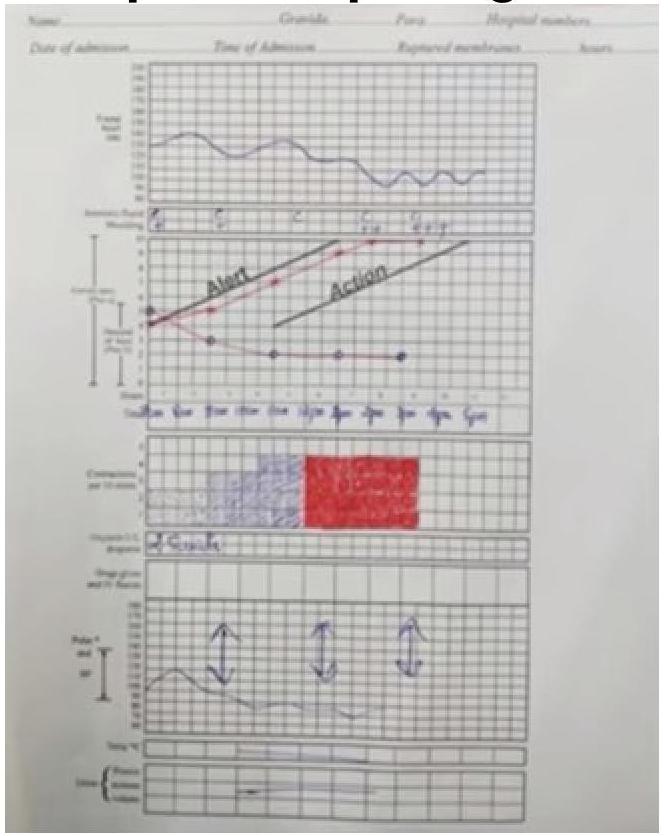
A multigravida patient with a 4 kg fetus has been in labor for 15 hours, with cervical dilation at 5 cm for the last 8 hours. What is the most appropriate management for this patient?
A 41-week pregnant female, confirmed by radiological investigation and very sure of her last menstrual period, presents with no uterine contractions, no effacement, and no dilatation. Which of the following should not be administered?
Explanation: ***3 to 6 months after injury*** - This timing allows sufficient time for **inflammation** to subside, **scar tissue** to mature, and tissues to heal, optimizing surgical outcomes for a stable repair. - Delaying the repair beyond the immediate postpartum period decreases **tissue friability** and the risk of **wound dehiscence**, which are common in acute repairs. *Immediately after injury* - Immediate repair of an **old complete perineal tear** is not indicated as the tissues are typically **inflamed**, **friable**, and potentially **infected**, leading to a high failure rate. - This timing is suitable for **acute perineal tears** (within hours after delivery), not for old, established tears. *6 to 9 months after injury* - While still feasible, waiting this long may lead to more **fibrotic tissue** and **atrophy** of the anal sphincter muscles, potentially complicating surgical dissection and recovery. - The optimal window for tissue condition for repair is generally considered to be somewhat earlier. *9 to 12 months after injury* - At this stage, the tissues may be more significantly **fibrotic** and less pliable, which can make surgical repair technically more challenging and potentially compromise the long-term functional outcome. - There is no added benefit to waiting this long compared to earlier repair, and functional recovery may be delayed.
Explanation: ***Frank breech presentation*** - This is the most common type of breech presentation, accounting for **65-70% of all breech presentations**, especially in **primigravida**. - The baby's **hips are flexed and knees are extended**, with the feet near the head. - The extended legs splint the fetal body and contribute to a more stable position within the uterus. *Complete breech presentation* - In a **complete breech**, the baby's hips and knees are both flexed, with the buttocks presenting first and the feet near the buttocks. - Accounts for approximately **5-10% of breech presentations**. - While common, it is significantly less frequent than frank breech, particularly in primigravidas. *Footling breech presentation* - In a **footling breech**, one or both feet present first through the cervix. - Accounts for approximately **10-30% of breech presentations**. - Associated with higher risks including premature rupture of membranes, umbilical cord prolapse, and is less stable during delivery. *Incomplete breech presentation* - This is a general term that includes **footling and kneeling breech** presentations, where the presentation is neither frank nor complete. - It's an encompassing category rather than a specific single presentation type. - Less common than frank breech as the most frequent single type in primigravidas.
Explanation: ***0.5 - 1.5%*** - The risk of **uterine scar rupture** in a **lower segment Cesarean section** (LSCS) is generally low, ranging from 0.5% to 1.5% during a Trial of Labor After Cesarean (TOLAC). - This low risk is why **Vaginal Birth After Cesarean (VBAC)** is often considered a safe option for selected patients. *15 - 25%* - This percentage is significantly higher than the actual risk for a **lower segment Cesarean scar rupture**. Risks this high would generally lead to reconsideration of VBAC as a safe option. - Such a high risk is usually associated with a **classical (vertical) incision** on the uterus or multiple previous Cesarean sections. *2.5 - 3.5%* - This range is higher than the typical risk for a single **lower segment Cesarean scar rupture**. - While still relatively low, it might be observed in specific populations or with certain risk factors like a short inter-delivery interval or a single-layer uterine closure. *3.5 - 4.5%* - This risk is considerably elevated compared to the established risk for a **lower segment Cesarean scar rupture** and would generally lead to a more cautious approach to TOLAC. - This range can be associated with specific risk factors for scar dehiscence or rupture such as a history of multiple previous Cesarean sections or certain uterine anomalies.
Explanation: ***Hypertensive disease of pregnancy*** - **Hypertensive disorders** including **preeclampsia** and **gestational hypertension** are actually **INDICATIONS for induction of labor**, not contraindications - **Delivery is the definitive treatment** for preeclampsia and is recommended when maternal or fetal risks outweigh the benefits of expectant management - Induction is frequently performed in these conditions to prevent progression to severe complications like **eclampsia**, **HELLP syndrome**, or **placental abruption** - This is the correct answer as it is NOT a contraindication *Heart disease of pregnancy* - Most women with heart disease can safely undergo induction of labor with appropriate cardiac monitoring and support - However, **severe decompensated heart disease** (NYHA Class III-IV), **severe pulmonary hypertension**, **severe aortic stenosis**, or **peripartum cardiomyopathy** may require special consideration - While not an absolute contraindication to induction, severe cardiac conditions may favor planned cesarean delivery to minimize cardiac stress - The statement is somewhat imprecise but represents conditions where induction requires careful evaluation *Pelvic tumor* - A **pelvic tumor obstructing the birth canal** is an **absolute contraindication** to vaginal delivery and therefore to induction of labor - Examples include large **cervical fibroids**, **ovarian masses**, or other pelvic masses preventing descent of the presenting part - **Cesarean section** is mandatory in such cases to avoid **obstructed labor** and potential **uterine rupture** *Vasa previa* - **Vasa previa** is an **absolute contraindication** to both induction of labor and vaginal delivery - Unprotected fetal vessels crossing the **internal cervical os** are at high risk of rupture during cervical dilation or membrane rupture - This would result in rapid **fetal exsanguination** and **fetal death** - Requires **elective cesarean section** at 36-37 weeks before onset of labor
Explanation: ***Left Occiput Anterior (LOA)*** - This is the **most common** fetal position for engagement, as the fetal head's **occiput** aligns with the maternal pelvis's **left anterior quadrant**. - The **long axis** of the fetal head is generally aligned with the **oblique diameter** of the maternal pelvis, facilitating descent. *Right Occiput Anterior (ROA)* - While an anterior position, **LOA** is more common due to the typical orientation of the **uterus and fetal spine**. - The fetal occiput is in the **right anterior quadrant** of the maternal pelvis. *Right Occiput Posterior (ROP)* - This is a **malposition** that can lead to **prolonged labor** and increased pain due to direct pressure on the sacrum. - The fetal occiput is in the **right posterior quadrant** of the maternal pelvis. *Left Occiput Posterior (LOP)* - Similar to ROP, this is also a **malposition** that may require significant **rotation** for successful vaginal delivery. - The fetal occiput is in the **left posterior quadrant** of the maternal pelvis.
Explanation: ***Anthropoid*** - The **anthropoid pelvis** is characterized by a long anteroposterior diameter and a narrow transverse diameter, which allows the fetal head in an **occipitoposterior (OP) position** to accommodate more easily. - Its oval shape facilitates a direct anterior-posterior delivery, reducing the need for extensive rotation when the occiput is posterior. *Android pelvis* - The **android pelvis** is heart-shaped with a narrow pubic arch and reduced diameters, making it unfavorable for *any* fetal presentation, especially OP. - This pelvic type is associated with a higher incidence of **arrest of labor** and requires more interventions during delivery. *Gynaecoid* - The **gynaecoid pelvis** is considered the classic female pelvis, with a rounded inlet and good proportions for vaginal delivery in an **occipitoanterior (OA) position**. - While generally favorable, its broader transverse diameter makes accommodation of an OP position less optimal compared to the anthropoid pelvis. *Platypelloid* - The **platypelloid pelvis** has a flattened shape with a short anteroposterior diameter and a wide transverse diameter. - This shape is highly unfavorable for vaginal delivery, as it obstructs engagement and descent of the fetal head in both OA and OP positions, leading to complications.
Explanation: ***Beta blocker*** - **Beta blockers** are generally avoided in preterm labor because they can worsen **fetal bradycardia** and **neonatal hypoglycemia**. - They are not used to manage uterine contractions or promote fetal lung maturity. *Glucocorticoids* - **Glucocorticoids** (e.g., **betamethasone**) are administered to promote **fetal lung maturity** and reduce the risk of **respiratory distress syndrome** in preterm infants. - They are a crucial intervention in managing preterm labor. *Tocolytic drugs* - **Tocolytic drugs** (e.g., **nifedipine**, **terbutaline**) are used to **suppress uterine contractions** and delay delivery in preterm labor. - This allows time for glucocorticoids to take effect and for transfer to a facility with neonatal intensive care. *Antibiotics* - Although not routinely given to all patients with preterm labor, **antibiotics** are prescribed if there is evidence of an **intrauterine infection** or if the patient is positive for **Group B Streptococcus (GBS)**. - Infection can be a trigger for preterm labor, and treating it can help prolong pregnancy or prevent neonatal sepsis.
Explanation: ***Suboccipitofrontal*** - In an occipitoposterior presentation, the fetal head is usually deflexed, causing the **suboccipitofrontal diameter** (approximately 10 cm) to be the engaging diameter. - This diameter extends from the junction of the occiput and the neck to the anterior part of the forehead (glabella). *Mentovertical* - The **mentovertical diameter** is the engaging diameter in a brow presentation, which is typically around 13.5 cm and usually makes vaginal birth impossible. - This diameter extends from the chin to the very top of the head (vertex). *Submentovertical* - The **submentovertical diameter** is the engaging diameter in a face presentation, measuring about 11.5 cm. - This diameter extends from below the chin to the vertex of the head. *Bitrochanteric* - The **bitrochanteric diameter** refers to the width between the fetal **trochanters** (hips) and is relevant for breech presentations, but not for cephalic presentations. - It is typically around 10 cm and is not involved in head engagement.
Explanation: ***Cesarean section*** - This patient is experiencing **arrest of active phase labor**, defined by no cervical change for ≥4 hours with adequate contractions, or ≥6 hours with inadequate contractions. With **8 hours of arrest at 5 cm**, this patient has exceeded both diagnostic thresholds, indicating **failure to progress**. - The presence of a **4 kg fetus (macrosomia)** in a multigravida who is not progressing despite adequate time suggests **cephalopelvic disproportion (CPD)**, making vaginal delivery unlikely to succeed. - Prolonged labor arrest significantly increases risks of **maternal exhaustion**, **chorioamnionitis**, **fetal distress**, and **postpartum hemorrhage**, making cesarean section the safest definitive management at this point. *Observe and monitor the patient* - Continued observation without intervention is inappropriate after **8 hours of cervical arrest**, as this far exceeds the diagnostic criteria for arrest of labor. - Further delay increases risks of **maternal morbidity** (infection, exhaustion, dehydration) and **fetal compromise** (acidosis, sepsis) without improving the likelihood of vaginal delivery. *Perform amniotomy if indicated* - Amniotomy can be used to **augment labor** and assess amniotic fluid for meconium, potentially shortening labor duration. - However, after **8 hours of arrest** with a likely **cephalopelvic disproportion** (4 kg fetus in arrested labor), amniotomy alone is insufficient and unlikely to resolve the underlying mechanical problem preventing descent and cervical dilation. *Administer oxytocin for augmentation of labor* - Oxytocin is appropriate for **augmenting inadequate contractions** in cases of protraction or early arrest of labor. - However, after **8 hours of arrest at 5 cm**, oxytocin would likely have already been attempted as part of active management. If labor has not progressed despite adequate time (exceeding the 6-hour threshold even with inadequate contractions), continuing oxytocin risks **uterine hyperstimulation**, **fetal distress**, and **uterine rupture** (especially in a multigravida) without achieving vaginal delivery given the probable CPD with a macrosomic fetus.
Explanation: ***PGF2alpha*** - **Prostaglandin F2-alpha (carboprost)** is primarily used for **postpartum hemorrhage** and is contraindicated for cervical ripening or labor induction in a live fetus due to its powerful uterotonic effects that can lead to uterine hyperstimulation and fetal distress. - Its mechanism of action involves strong uterine contractions and vasoconstriction, which is not suitable for a routine induction where cervical ripening is the initial goal. *Intracervical foley's* - A **Foley catheter** is a mechanical method for cervical ripening, acting by local pressure to stimulate endogenous prostaglandin release, and is a safe option for an unfavorable cervix. - It does not involve pharmacological agents and is often preferred in situations where prostaglandin use is contraindicated. *PGE1 tab* - **Prostaglandin E1 (misoprostol)** is a synthetic prostaglandin commonly used in tablet form for cervical ripening and labor induction. - It effectively softens and effaces the cervix, and is a widely accepted and safe method for an unfavorable cervix in a 41-week pregnancy. *PGE2 gel* - **Prostaglandin E2 (dinoprostone)**, available as a gel or insert, is a common and effective pharmacological agent for cervical ripening and labor induction. - It works by stimulating direct cervical changes and uterine contractions, which would be indicated in this scenario of an unripe cervix.
Physiology of Labor
Practice Questions
Stages of Labor and Normal Progression
Practice Questions
Fetal Monitoring Techniques
Practice Questions
Pain Management in Labor
Practice Questions
Induction and Augmentation of Labor
Practice Questions
Operative Delivery (Forceps and Vacuum)
Practice Questions
Cesarean Section: Indications and Techniques
Practice Questions
Dystocia and Abnormal Labor Patterns
Practice Questions
Obstetric Emergencies
Practice Questions
Postpartum Hemorrhage Management
Practice Questions
Get full access to all questions, explanations, and performance tracking.
Start For Free