Which of the following procedures is done with the instrument shown below? 
A woman presents with complaints of greenish-frothy vaginal discharge for 1 month. On examination, vulvovaginal erythema is noticed. On saline microscopy, motile organisms are seen. What is the most likely diagnosis?
A 26-year-old woman presents with amenorrhea for 8 weeks, lower abdominal pain, and vaginal spotting. Beta-hCG is 3,500 mIU/mL. Transvaginal ultrasound shows an empty uterus with a 3 cm adnexal mass and moderate free fluid in the pouch of Douglas. Vital signs are stable. What is the most appropriate management?
A 42-year-old woman presents with chronic lower abdominal pain and dysmenorrhea. MRI shows diffuse uterine enlargement with junctional zone thickening and scattered high-signal foci in the myometrium. What is the most likely diagnosis?
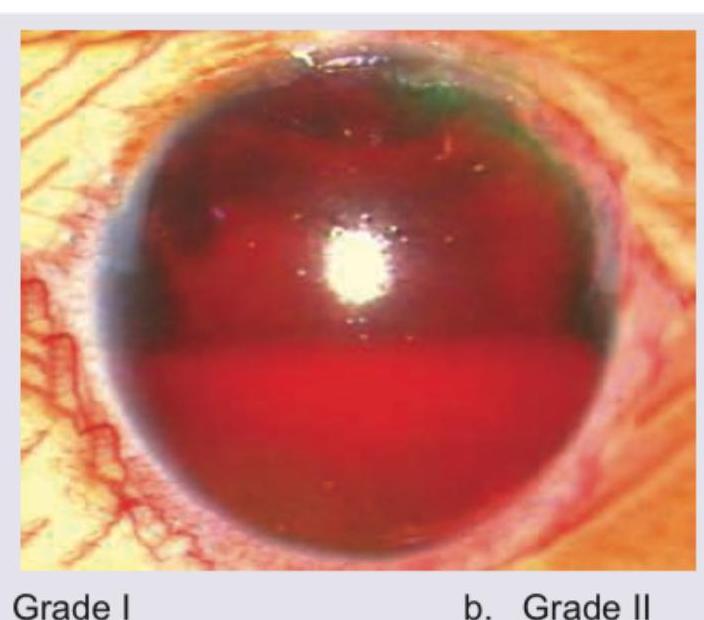
Comment on the grade of the lesion shown in the image.
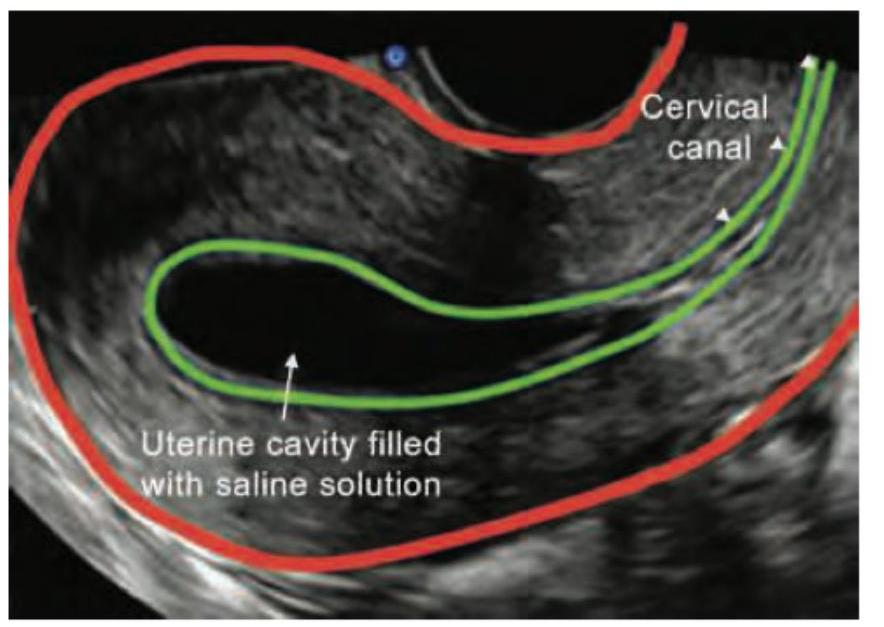
Identify the imaging procedure shown in the image.
Identify the instrument:
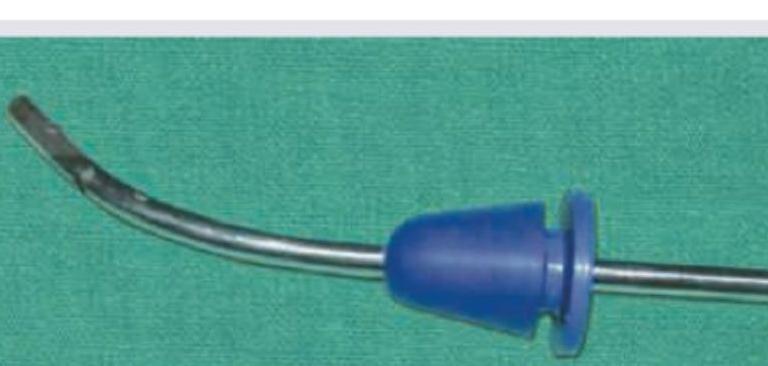
What is incorrect about the instrument?
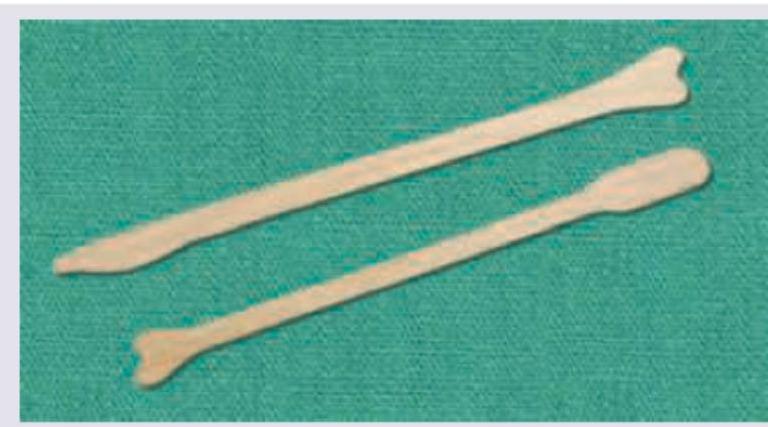
Identify the instrument shown below:
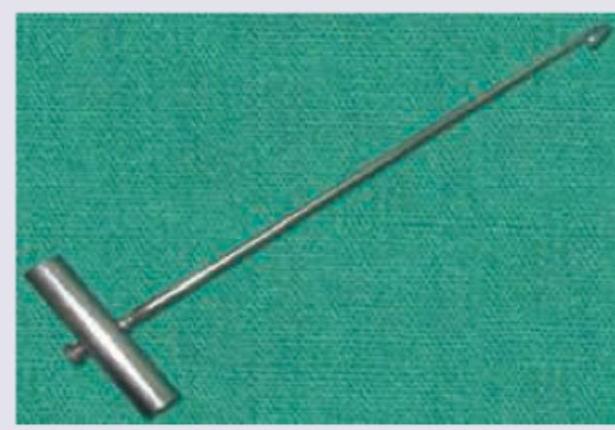
Identify the instrument shown below:
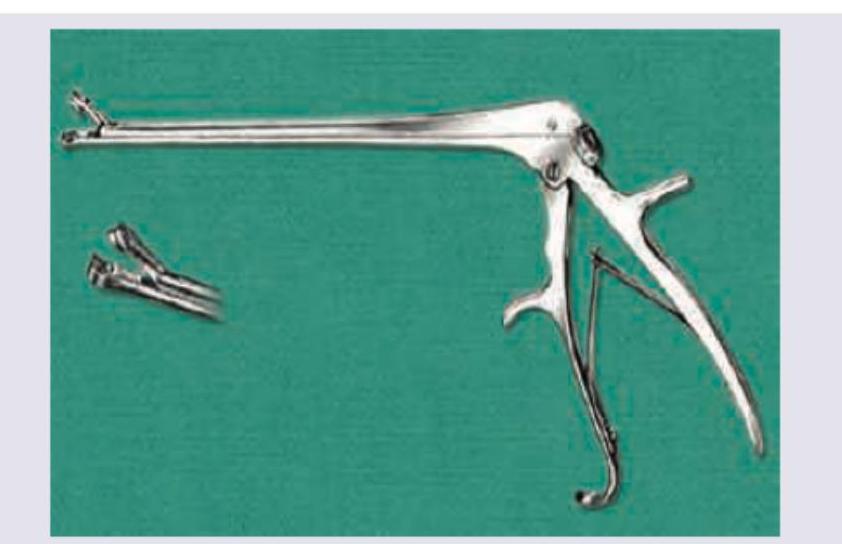
Explanation: ***Endometrial sampling*** - The instrument shown is a **Sims uterine curette**, which is specifically designed with a fenestrated (windowed) tip to scrape and collect tissue from the uterine lining. - This procedure, also known as an **endometrial biopsy**, is performed to obtain a sample of the **endometrium** for histological examination, often to investigate abnormal uterine bleeding or infertility. - When asked about the **primary procedure** performed with this instrument, endometrial sampling is the most direct and specific answer. *Dilatation and curettage* - While a curette **is used** in a D&C, the question asks about the procedure done with **this specific instrument**. - D&C is a **two-step procedure**: cervical **dilatation** (using dilators) followed by **curettage** (using the curette). - The complete D&C procedure involves **multiple instruments**, whereas the curette shown specifically performs the endometrial sampling/curettage component. - Therefore, "endometrial sampling" more precisely describes what **this instrument alone** accomplishes. *Hysterosalpingography* - This is a radiological imaging procedure used to evaluate the uterus and fallopian tubes, not a tissue sampling method. - It involves injecting a contrast medium through the cervix using a **cannula**, followed by X-ray imaging. - A curette is not used in this procedure. *Cervical sampling* - This procedure, commonly for a **Pap smear**, uses instruments like an **Ayre's spatula** or a **cytobrush** to collect cells from the cervix. - A uterine curette is designed to reach the endometrium inside the uterus and is not used for sampling the cervix.
Explanation: ***Trichomoniasis***- The classic triad for this parasitic infection caused by **Trichomonas vaginalis** includes vulvovaginal erythema, dyspareunia, and a characteristic **greenish-frothy discharge**.- The diagnosis is confirmed by visualizing the **motile, flagellated protozoa** on saline wet mount microscopy, which directly matches the findings in the clinical presentation.*Bacterial vaginosis*- This condition, usually due to an overgrowth of **Gardnerella vaginalis**, typically presents with a thin, **gray discharge** and a strong **fishy odor**.- Saline microscopy characteristically reveals **clue cells** (vaginal epithelial cells covered in bacteria), not motile parasitic organisms.*Chlamydial cervicitis*- Infections with **Chlamydia trachomatis** primarily cause **cervicitis**, which is often asymptomatic or results in **mucopurulent discharge** from the cervix.- The diagnosis is typically made using highly sensitive **nucleic acid amplification tests (NAATs)**, and motile organisms are not seen on microscopy.*Candidiasis*- Vaginal candidiasis (yeast infection) typically causes intense pruritus (itching) and a **thick, white, cottage-cheese-like discharge**.- Microscopy shows **pseudohyphae** and **budding yeasts**, which are non-motile fungal elements, differentiating it from the motile organisms of Trichomoniasis.
Explanation: ***Diagnostic laparoscopy*** - This is the **most appropriate management** for a hemodynamically stable patient with confirmed ectopic pregnancy (amenorrhea, positive Beta-hCG, empty uterus, adnexal mass). - Diagnostic laparoscopy allows direct visualization of the ectopic pregnancy and **immediate surgical management** (salpingostomy or salpingectomy) based on intraoperative findings. - With Beta-hCG at 3,500 mIU/mL, a 3 cm mass, and **moderate free fluid** (suggesting possible tubal compromise), surgical intervention is preferred over medical management. - In a **stable patient** with a small ectopic mass, laparoscopic salpingostomy can be performed to **preserve fertility** by removing the ectopic pregnancy while conserving the fallopian tube. *Expectant management with serial beta-hCG monitoring* - This approach is only appropriate for **highly selected cases** where Beta-hCG levels are **low (<1,000–1,500 mIU/mL) and spontaneously declining**, the patient is asymptomatic, and the ectopic mass is very small. - The current Beta-hCG level (3,500 mIU/mL) and presence of symptoms (pain, spotting, moderate free fluid) make expectant management inappropriate due to **high risk of tubal rupture**. *Methotrexate therapy* - Medical management with methotrexate is appropriate for **early, unruptured ectopic pregnancies** meeting strict criteria: Beta-hCG typically **<5,000 mIU/mL** (preferably <2,000), mass size **<3.5 cm**, no fetal cardiac activity, and **minimal or no free fluid**. - While the patient's Beta-hCG (3,500 mIU/mL) and mass size (3 cm) are borderline acceptable, the presence of **moderate free fluid** and **symptomatic presentation** (pain, spotting) suggest higher risk of rupture, making surgical management safer. - Methotrexate also requires reliable patient follow-up and contraindications must be ruled out. *Immediate laparotomy* - Emergency laparotomy is reserved for **hemodynamically unstable patients** with ruptured ectopic pregnancy, massive hemorrhage, or when laparoscopic equipment/expertise is unavailable. - Since this patient has **stable vital signs**, laparoscopic approach is preferred as it is **less invasive**, has faster recovery, and better cosmetic outcomes compared to open surgery.
Explanation: ***Adenomyosis*** - This diagnosis is strongly suggested by the triad of **chronic lower abdominal pain**, severe **dysmenorrhea**, and an associated **diffusely enlarged uterus** (globular). - MRI typically shows ill-defined thickening of the **junctional zone** (>12 mm) and scattered high-signal intensity foci within the myometrium, representing ectopic endometrial tissue. *Uterine fibroid* - While fibroids cause chronic pain and heavy menstrual bleeding (**menorrhagia**), they less commonly cause severe, primary **dysmenorrhea** compared to adenomyosis. - On imaging, fibroids are typically **well-circumscribed** solid masses with sharply defined borders, unlike the diffuse enlargement of adenomyosis. *Endometriosis* - Endometriosis causes **chronic pelvic pain** and dysmenorrhea, but the symptoms are due to implants outside the uterus (e.g., ovaries, peritoneum). - Imaging (MRI) would primarily show features like **endometriomas** (chocolate cysts) or deep infiltrating nodules, rather than the diffuse myometrial involvement seen here. *Endometrial carcinoma* - The principal symptom of endometrial carcinoma in pre-menopausal women is typically **abnormal uterine bleeding** (menorrhagia or metrorrhagia), not primarily chronic pelvic pain and dysmenorrhea. - MRI would show hallmark features like **focal endometrial thickening** and invasion, which are generally distinct from the diffuse process of adenomyosis.
Explanation: ***Grade IV*** - The image depicts a **total hyphema**, where the anterior chamber is completely filled with blood, often obscuring the iris and pupil. - This extensive bleeding corresponds to a **Grade IV hyphema**, indicating a severe injury. *Grade I* - A **Grade I hyphema** involves a small amount of blood, typically layering less than one-third of the anterior chamber, often appearing as a thin, reddish crescent at the bottom. - The image shows significantly more blood, filling the entire anterior chamber. *Grade II* - A **Grade II hyphema** involves blood filling one-third to one-half of the anterior chamber. - The image demonstrates blood completely filling the anterior chamber, exceeding the criteria for Grade II. *Grade III* - A **Grade III hyphema** involves blood filling one-half to less than total (usually around two-thirds) of the anterior chamber. - The observed total filling of the anterior chamber surpasses the definition of Grade III.
Explanation: ***Saline infusion sonography*** - The image clearly shows the "uterine cavity filled with **saline solution**" seen on an **ultrasound** image, which is the hallmark of saline infusion sonography (SIS). - SIS, also known as **sonohysterography**, is used to evaluate the uterine cavity for abnormalities such as polyps, fibroids, or adhesions by distending the cavity with saline. *Hysterosalpingography* - This procedure uses **X-rays** and an **iodine-based contrast dye** to visualize the uterus and fallopian tubes, not ultrasound and saline. - While it also evaluates the uterine cavity, the imaging modality and contrast agent are different. *Pelvic ultrasound* - A standard pelvic ultrasound does not involve the **infusion of saline** into the uterine cavity. - While it can visualize the uterus, the detailed assessment of the **endometrial lining** and cavity shape is limited without uterine distension. *MRI of pelvis* - Magnetic resonance imaging (MRI) uses **magnetic fields** and radio waves to create detailed cross-sectional images of pelvic organs. - It does not involve the use of **saline infusion** into the uterine cavity for diagnostic purposes as shown in the image.
Explanation: ***Mucus sucker*** - The image displays a device with a **curved tip** and a connecting piece, characteristic of a mucus sucker used for aspirating secretions. - This instrument is commonly used in **neonates** and **infants** to clear the airway from mucus or amniotic fluid. *Rubin insufflation cannula* - A Rubin insufflation cannula is typically used for **uterotubal insufflation**, a procedure to test the patency of fallopian tubes. - It has a more rigid, straight design with a cone-shaped tip to seal the cervix, which is different from the curved tip shown. *Uterine sound* - A uterine sound is a malleable, slender instrument used to **measure the depth and direction** of the uterine cavity. - Its design is typically straight or slightly curved, but lacks the suction port and associated components seen in the image. *Suction cannula* - While a mucus sucker is a type of suction cannula, a general suction cannula often refers to instruments like a **Yankauer suction tip** or **Frazier suction tip**. - These are typically used in different surgical fields with varied tip designs and sizes, and the specific instrument shown is clearly identifiable as a mucus sucker due to its characteristic shape for neonatal use.
Explanation: ***Primary prevention for cervical cancer*** - The Ayre spatula is used for **secondary prevention** (screening) of cervical cancer through **Pap smears**, not primary prevention. - **Primary prevention** for cervical cancer typically involves **HPV vaccination**. *Ayre spatula* - The instrument shown is an **Ayre spatula**, specifically designed for collecting cervical cells. - It has a distinctive shape to scrape cells from the **ectocervix** and the squamocolumnar junction. *Wooden spatula* - The Ayre spatula is traditionally made of **wood**, as depicted in the image. - Wooden spatulas are inexpensive and disposable, making them suitable for widespread use in cervical screening programs. *Long end inserted into cervical canal* - The **longer, pointed end** of the Ayre spatula is designed to be placed in the **external os** and rotated to collect cells from the squamocolumnar junction and ectocervix. - The shorter, broader end is used to collect cells from the **vaginal fornices**.
Explanation: ***Uterine sound*** - This instrument, characterized by a **long, slender shaft** with a blunt, slightly curved or knobbed tip and a handle, is consistent with a uterine sound. - It is used in gynecology to **measure the depth and direction of the uterine cavity**. *Jardine decapitation hook* - A Jardine decapitation hook is a specific obstetrical instrument used for **fetal decapitation** in cases of obstructed labor with a dead fetus, and it has a distinct sharp, curved hook for this purpose. - Its appearance is very different from the smooth, blunt-tipped instrument shown. *Myoma screw* - A myoma screw is used in gynecological surgery for **grasping and extracting uterine fibroids** (myomas) from the uterus. - It typically has a **threaded, corkscrew-like tip** designed to penetrate and hold fibrous tissue, which is not visible here. *Vulsellum* - A vulsellum is a type of **forceps with sharp, hooked tips** used to grasp and hold tissues, particularly the cervix, during gynecological procedures. - The pictured instrument is a long, thin rod with a blunt end, not a grasping instrument with sharp hooks.
Explanation: ***Tenaculum*** - The instrument shown has sharp, pointed tips designed for securely grasping and holding tissue, which is characteristic of a **tenaculum**. - **Tenaculum** is commonly used in gynecology to hold the cervix during procedures like IUD insertion, cervical biopsies, or hysteroscopy. - It typically has **single or double sharp hooks/teeth** on each jaw that penetrate the tissue for a secure grip. *Vulsellum* - A **vulsellum (volsellum)** is very similar to a tenaculum and the terms are often used interchangeably in clinical practice. - Classically, a vulsellum has **multiple small teeth** on each jaw rather than single hooks, providing a broader grip. - Both instruments serve the same function of grasping the cervix, but the specific tooth configuration may differ. *Cervical biopsy forceps* - **Cervical biopsy forceps** (such as Tischler or Eppendorf forceps) are used to excise small pieces of tissue for diagnostic purposes. - They have **cup-shaped jaws with sharp cutting edges**, not pointed grasping tips. - Designed for cutting and removing tissue specimens, not for holding structures. *EB curette* - An **EB curette** (Endometrial Biopsy curette or Pipelle) is a thin, flexible instrument with a small opening at its tip. - Used for **sampling the uterine lining** by scraping or aspiration. - The pictured instrument is rigid with grasping tips, not designed for scraping tissue from an internal cavity.
Abnormal Uterine Bleeding
Practice Questions
Endometriosis
Practice Questions
Adenomyosis
Practice Questions
Uterine Fibroids
Practice Questions
Ovarian Cysts
Practice Questions
Pelvic Inflammatory Disease
Practice Questions
Vulvovaginitis
Practice Questions
Pelvic Organ Prolapse
Practice Questions
Vulvar Disorders
Practice Questions
Benign Breast Diseases
Practice Questions
Get full access to all questions, explanations, and performance tracking.
Start For Free