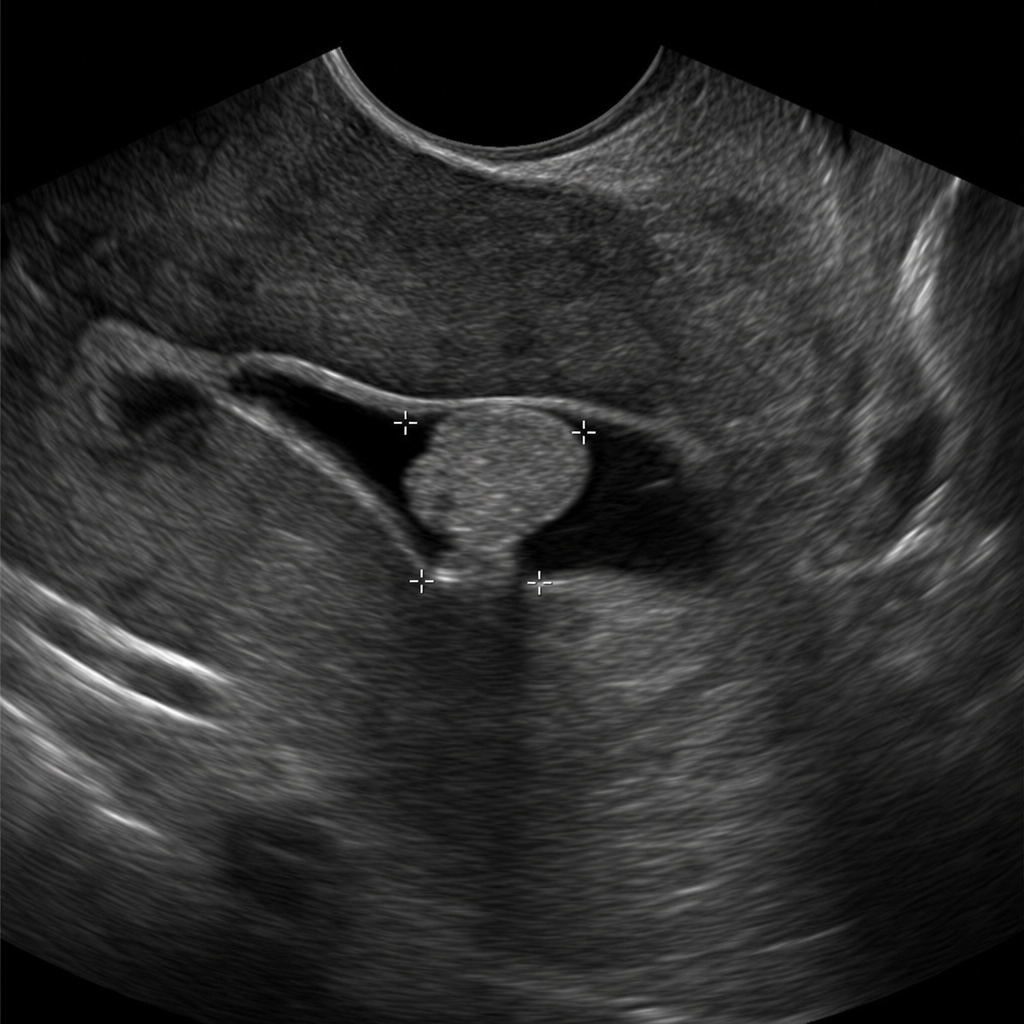
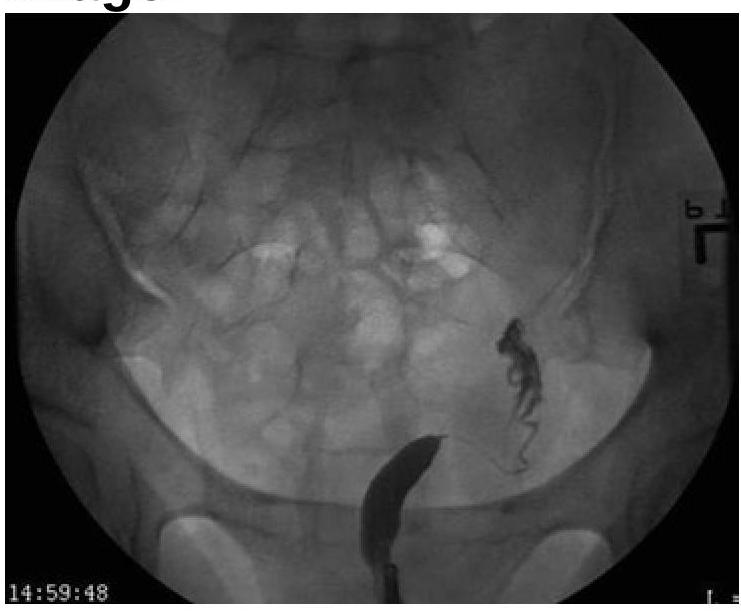
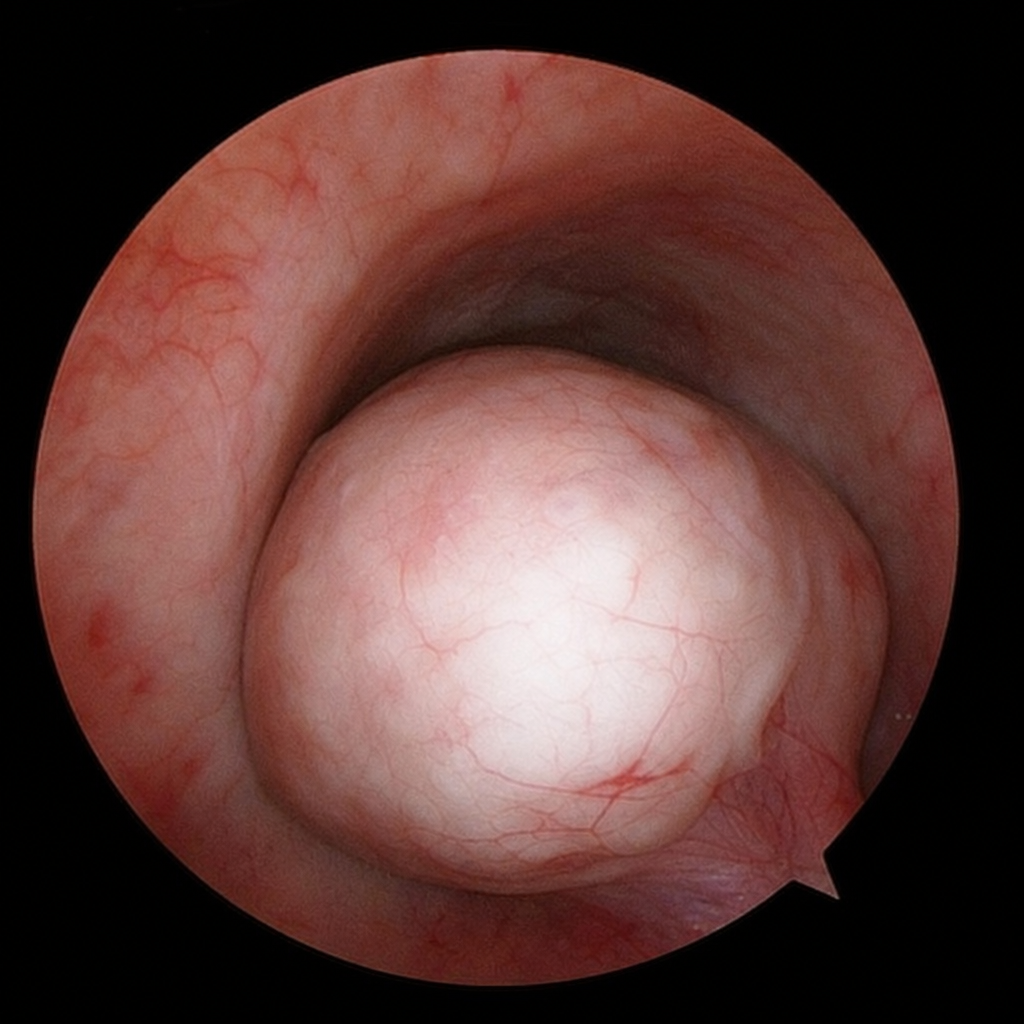
Which Mullerian duct anomaly is associated with the best reproductive outcome?
A 55-year-old woman presents with chronic pelvic discomfort, lower back pain, constipation, difficulty with walking, and impaired coitus. Pelvic examination reveals that the uterine cervix lies low within the vaginal canal but does not protrude through the introitus. For minor degrees of this condition, Kegel exercises are sometimes prescribed. How are Kegel exercises performed?
Which of the following statements is NOT true regarding cryosurgery?
What is the most reliable method for diagnosing hydatidiform mole?
What is the preferred procedure for obtaining an endometrial sample for histopathology?
What is the most common site of extra-pelvic endometriosis?
Which of the following statements regarding Candida in the genital tract is true?
Fundal myomas commonly present as:
A young female presents with cyclical pain, dysmenorrhea, and infertility. Which of the following would be the investigation of choice in her?
A female patient presents with post-void dribbling, recurrent urinary tract infections, and a tender anterior vaginal wall mass. Her MRI pelvis is shown in the image. What is the most likely diagnosis?

Explanation: **Explanation:** Mullerian duct anomalies (MDAs) result from the failure of development, fusion, or canalization of the Mullerian ducts. The reproductive outcome is generally measured by the live birth rate and the risk of obstetric complications. **Why Bicornuate Uterus is the Correct Answer:** Among the options provided, the **Bicornuate uterus** (Class IV) is associated with the most favorable reproductive prognosis. While it carries an increased risk of malpresentation and preterm labor due to reduced intrauterine space, the live birth rate is significantly higher (approx. 60-70%) compared to didelphic or unicornuate uteri. Note: While an **Arcuate uterus** is often considered a normal variant with the best overall outcome, it is frequently excluded from "anomaly" classifications in competitive exams; among true fusion/developmental defects, the Bicornuate uterus performs best. **Analysis of Other Options:** * **Arcuate Uterus:** Often considered a normal anatomical variant. While it has the best outcomes, it is frequently not classified as a "pathological anomaly" in the same category as the others. * **Didelphic Uterus:** Results from a complete failure of fusion. It is associated with higher rates of preterm birth and lower live birth rates compared to bicornuate. * **Unicornuate Uterus:** Results from the failure of one duct to develop. It has the **worst** reproductive prognosis among the options, with high risks of spontaneous abortion, ectopic pregnancy (in the rudimentary horn), and intrauterine growth restriction (IUGR). **High-Yield Clinical Pearls for NEET-PG:** * **Most Common MDA:** Septate Uterus (also has the highest rate of infertility/miscarriage). * **Best Outcome after Surgery:** Septate uterus (post-hysteroscopic septal resection). * **Renal Anomalies:** Always screen the renal system (USG KUB) in patients with MDAs, as they coexist in 30-40% of cases (most common in Unicornuate). * **HSG vs. MRI:** MRI is the gold standard for differentiating Bicornuate from Septate uterus by visualizing the external fundal contour.
Explanation: **Explanation:** The clinical presentation describes a **Stage I or II Pelvic Organ Prolapse (POP)**. Kegel exercises are the first-line conservative management for mild degrees of prolapse and stress urinary incontinence. **Why Option B is Correct:** Kegel exercises aim to strengthen the **Levator Ani muscle complex** (specifically the pubococcygeus). The most effective way to identify and isolate these muscles is by instructing the patient to attempt to **stop the flow of urine mid-stream** or to contract the muscles used to prevent the passage of flatus. This voluntary contraction increases the tone of the pelvic floor, providing better structural support to the pelvic viscera. **Why Other Options are Incorrect:** * **Option A:** Closing the glottis while increasing abdominal pressure describes the **Valsalva maneuver**. This increases intra-abdominal pressure, which actually exacerbates prolapse and weakens the pelvic floor. * **Option C & D:** Pressing the knees together (adductors) or tensing the buttocks (gluteus maximus) involves the **accessory muscles** of the pelvic girdle. While often mistakenly recruited by patients, these do not specifically strengthen the pelvic floor diaphragm. **Clinical Pearls for NEET-PG:** * **Grading of Prolapse (Baden-Walker):** In this case, since the cervix is in the vagina but not at the introitus, it is **Grade 1**. If it reached the introitus, it would be Grade 2. * **Primary Support:** The **Mackenrodt’s (Cardinal) ligaments** are the primary supports of the uterus. * **Kegel’s Efficacy:** To be effective, exercises must be performed regularly (at least 30-80 contractions/day) for at least 8 weeks. * **Definitive Management:** For symptomatic advanced prolapse in postmenopausal women, **Vaginal Hysterectomy with Ward-Mayo’s repair** is often the treatment of choice.
Explanation: ### Explanation **Cryosurgery** is a common outpatient procedure used in gynecology, primarily for treating benign cervical lesions and low-grade Cervical Intraepithelial Neoplasia (CIN). **Why Option D is the Correct Answer (The False Statement):** While Nitrous oxide ($N_2O$) is a frequently used cryogen, it is **not** the most commonly used one in modern clinical practice. **Carbon dioxide ($CO_2$)** is the most commonly used cryogen because it is inexpensive and readily available. Both gases work via the **Joule-Thomson effect**, where rapid expansion of the gas through a small nozzle leads to a significant drop in temperature. **Analysis of Other Options:** * **Option A:** Cryosurgery is relatively painless because the freezing process itself exerts an anesthetic effect on the nerve endings. Therefore, it is typically performed **without anesthesia** in an office setting. * **Option B:** To achieve cellular death (cryonecrosis), the temperature must fall significantly below the freezing point of water. $CO_2$ reaches approximately **-65°C to -78.5°C**, while $N_2O$ reaches **-89°C**. * **Option C:** Cryosurgery is an established **ablative treatment** for CIN (specifically CIN 1 and 2), provided the lesion is small, entirely visible on the ectocervix, and there is no evidence of endocervical involvement or malignancy. **High-Yield Clinical Pearls for NEET-PG:** * **Mechanism of Action:** Cell death occurs due to intracellular ice crystal formation and microvascular thrombosis. * **Technique:** The "Freeze-Thaw-Freeze" technique is the gold standard to ensure maximum tissue destruction. * **Major Side Effect:** Patients often experience a **profuse, watery vaginal discharge** for 2–4 weeks post-procedure as the necrotic tissue sloughs off. * **Contraindication:** It should never be performed if invasive carcinoma is suspected or if the transformation zone is not fully visible (Type 3 TZ).
Explanation: **Explanation:** The diagnosis of a hydatidiform mole (molar pregnancy) is primarily clinical and radiological. **Ultrasound (USG)** is considered the most reliable and gold-standard diagnostic tool. **Why Ultrasound is the Correct Answer:** USG provides a definitive visual diagnosis. In a **complete mole**, it reveals the characteristic **"Snowstorm appearance"** or "honeycomb pattern," which represents the multiple hydropic villi and the absence of a fetus or amniotic sac. In a **partial mole**, it shows focal cystic changes in the placenta and a distorted gestational sac or fetal parts. It is non-invasive, widely available, and provides immediate confirmation. **Analysis of Incorrect Options:** * **A. HCG Estimation:** While hCG levels are typically markedly elevated (often >100,000 mIU/ml), a single high value is not diagnostic. High hCG can also be seen in multiple pregnancies or incorrect dating. It is more useful for **monitoring follow-up** and detecting persistent gestational trophoblastic neoplasia (GTN). * **B. Amniography:** Historically used to show a "moth-eaten" appearance, this invasive technique has been entirely replaced by ultrasound and is no longer practiced. * **D. Absence of FHS:** While the absence of fetal heart sounds is a clinical feature of a complete mole, it is a non-specific finding also seen in missed abortions or pseudocyesis. It cannot confirm a molar pregnancy. **Clinical Pearls for NEET-PG:** * **Theca Lutein Cysts:** Found in 25-30% of cases due to high hCG levels; they usually regress after evacuation. * **Treatment of Choice:** Suction Evacuation (regardless of uterine size). * **Most common site of metastasis:** Lungs (followed by the vagina). * **Follow-up:** Weekly hCG until three consecutive negative results, then monthly for 6 months. Contraception (preferably OCPs) is mandatory during this period.
Explanation: **Explanation:** The preferred first-line procedure for obtaining an endometrial sample is **Endometrial Aspiration** (e.g., using a Pipelle catheter). This is because it is a simple, cost-effective, office-based procedure that does not require general anesthesia or cervical dilatation. It has a high sensitivity (approx. 90-99%) for detecting endometrial carcinoma and hyperplasia, making it the gold standard for initial screening in cases of Abnormal Uterine Bleeding (AUB) or postmenopausal bleeding. **Analysis of Options:** * **Dilatation and Curettage (D&C):** Formerly the gold standard, it is now reserved for cases where aspiration is not possible (e.g., cervical stenosis) or when the sample is inadequate. It is an invasive procedure usually requiring anesthesia and carries risks like uterine perforation. * **Dilatation and Evacuation (D&E):** This is a surgical procedure used for the termination of pregnancy (usually in the second trimester) or for managing retained products of conception, not for diagnostic endometrial sampling. * **Hysteroscopy:** While hysteroscopy allows for direct visualization and "targeted" biopsy of focal lesions (like polyps or submucous fibroids), it is more invasive and expensive. It is typically performed if aspiration results are inconclusive or if a focal lesion is suspected on ultrasound. **High-Yield Clinical Pearls for NEET-PG:** * **Pipelle Catheter:** The most common device used for endometrial aspiration; it works on the principle of creating negative pressure. * **Indications:** Any woman >40 years with AUB or any postmenopausal woman with a thickened endometrial stripe (>4mm on TVS) requires sampling. * **Accuracy:** Endometrial aspiration samples only about 4% of the surface area but is highly accurate for global pathologies like malignancy.
Explanation: **Explanation:** Endometriosis is defined as the presence of endometrial-like tissue outside the uterine cavity. While it most commonly occurs within the pelvis (ovaries being the #1 site), it can involve almost any organ system. **1. Why the Intestinal Tract is Correct:** The **intestinal tract** is the most common site for extra-pelvic (and extra-genital) endometriosis, occurring in approximately 5–15% of women with the disease. Within the bowel, the **rectosigmoid colon** is the most frequently affected segment (70–90% of bowel cases), followed by the appendix and terminal ileum. Symptoms often include catamenial dyschezia (painful defecation during menses) or cyclic rectal bleeding. **2. Analysis of Incorrect Options:** * **Bladder & Ureter:** While urinary tract endometriosis exists, it is less common than bowel involvement. The bladder is the most common site *within* the urinary system, but it ranks lower than the gastrointestinal tract in overall extra-pelvic frequency. * **Lungs:** Thoracic endometriosis (leading to catamenial pneumothorax) is the most common site *above the diaphragm*, but it is significantly rarer than intestinal involvement. **3. NEET-PG High-Yield Pearls:** * **Most common site overall:** Ovary (often forming "Chocolate cysts" or Endometriomas). * **Most common site for extra-pelvic/extra-genital disease:** Rectosigmoid colon. * **Most common site for cutaneous endometriosis:** Umbilicus (Villar’s nodule), often following laparoscopic surgery. * **Gold Standard Diagnosis:** Laparoscopy with biopsy (visual confirmation of "powder-burn" or "mulberry" lesions). * **Classic Triad:** Dysmenorrhea, Dyspareunia, and Dyschezia.
Explanation: **Explanation:** **1. Why Option A is Correct:** Diabetes mellitus is a major predisposing factor for Vulvovaginal Candidiasis (VVC). Elevated blood glucose levels lead to increased glycogen content in the vaginal epithelium. *Candida albicans* (a dimorphic fungus) utilizes this glycogen for growth and adherence. Furthermore, hyperglycemia can impair local immune responses (neutrophil function), facilitating fungal overgrowth and recurrent infections. **2. Why the Other Options are Incorrect:** * **Option B:** While *Candida* can be found in the vagina of asymptomatic women (colonization), it is technically classified as an **opportunistic pathogen** rather than "normal flora." Normal vaginal flora is dominated by *Lactobacillus* species, which maintain a protective environment. * **Option C:** *Candida* thrives in an **acidic environment** (pH < 4.5). Unlike Trichomoniasis or Bacterial Vaginosis, which are associated with an alkaline pH (> 4.5), Candidiasis typically occurs when the vaginal pH remains normal (acidic). * **Option D:** Candida infections are actually more common **luteally (premenstrually)** due to high progesterone levels, which increase vaginal glycogen. However, the question asks for the most definitive "true" statement; while common premenstrually, the association with diabetes is a more fundamental clinical fact in pathology. (Note: In some contexts, symptoms may flare premenstrually, but the incidence is most significantly linked to hormonal/metabolic shifts). **Clinical Pearls for NEET-PG:** * **Most common species:** *Candida albicans* (80-90%). * **Classic Presentation:** Thick, white, "curd-like" or "cottage cheese" discharge with intense vulvar pruritus and erythema. * **Diagnosis:** Whiff test is negative; KOH mount shows pseudohyphae and spores. * **Risk Factors:** Pregnancy (high estrogen), Diabetes, broad-spectrum antibiotics, and immunosuppression. * **Drug of Choice:** Oral Fluconazole (150mg single dose) or topical Clotrimazole.
Explanation: **Explanation:** **1. Why Menorrhagia is the Correct Answer:** Uterine leiomyomas (fibroids) are the most common benign tumors of the uterus. Regardless of their specific location (fundal, body, or cornual), the most frequent clinical presentation is **menorrhagia** (heavy menstrual bleeding). Fundal myomas, especially those with an intramural or submucosal component, increase the total surface area of the endometrium. This leads to increased shedding during menstruation. Furthermore, they interfere with normal uterine contractility and cause congestion of the perimyomatous veins, preventing effective hemostasis during the menstrual cycle. **2. Analysis of Incorrect Options:** * **A. Inversion of uterus:** While a pedunculated fundal submucosal myoma can theoretically cause chronic uterine inversion by pulling the fundus downward (acting as a lead point), this is a **rare** complication rather than a common presentation. * **B. Dysmenorrhea:** While fibroids can cause pelvic pain or secondary dysmenorrhea due to the uterus attempting to expel a submucosal polyp, it is less common than the primary symptom of heavy bleeding. * **C. Urinary retention:** This is typically a feature of **cervical fibroids** or large posterior wall fibroids (impacted in the pouch of Douglas) that compress the urethra or displace the bladder neck. Fundal myomas usually grow upward into the abdominal cavity and are less likely to cause acute urinary symptoms. **3. NEET-PG High-Yield Pearls:** * **Most common symptom of fibroid:** Menorrhagia (specifically for intramural and submucosal types). * **Most common type of fibroid:** Intramural. * **Most common fibroid to undergo torsion:** Pedunculated subserosal fibroid. * **Red Degeneration:** Most common during the 2nd trimester of pregnancy; presents with acute pain and fever. * **Hyaline Degeneration:** The most common overall type of degeneration in fibroids.
Explanation: **Explanation:** The clinical triad of **cyclical pelvic pain, secondary dysmenorrhea, and infertility** in a young female is a classic presentation of **Endometriosis**. **1. Why Diagnostic Laparoscopy is the Correct Answer:** Diagnostic laparoscopy is considered the **"Gold Standard"** investigation for endometriosis. It allows for direct visualization of ectopic endometrial implants (e.g., powder-burn lesions, mulberry spots, or chocolate cysts) and provides the opportunity for simultaneous biopsy for histopathological confirmation. It is the only definitive way to diagnose early-stage or peritoneal endometriosis that imaging often misses. **2. Why Other Options are Incorrect:** * **Transvaginal Sonography (TVS):** While TVS is the investigation of choice for detecting an **Endometrioma** (chocolate cyst of the ovary), it has very low sensitivity for diagnosing peritoneal implants or adhesions. Therefore, it is not the definitive investigation of choice for overall endometriosis. * **Aspirate from Pouch of Douglas:** This is typically used to check for hemoperitoneum (e.g., ruptured ectopic pregnancy) or to obtain cytology in suspected malignancy. It is not a standard diagnostic tool for endometriosis. * **Hormonal Assessment:** Endometriosis is an estrogen-dependent condition, but there are no specific hormonal markers used to diagnose it. **Clinical Pearls for NEET-PG:** * **Gold Standard:** Laparoscopy + Biopsy. * **Most common site:** Ovary. * **CA-125:** May be elevated in endometriosis but is non-specific; used primarily for monitoring recurrence rather than diagnosis. * **Staging:** The American Society for Reproductive Medicine (ASRM) staging is based on laparoscopic findings. * **Management:** For infertility in endometriosis, the first-line treatment is often laparoscopic ablation/excision of lesions.
Explanation: ***Urethral diverticula*** - The classic triad of **post-void dribbling**, **recurrent UTIs**, and a **tender anterior vaginal wall mass** is pathognomonic for urethral diverticulum. - MRI typically shows a **fluid-filled cystic structure** adjacent to the urethra, which matches the clinical presentation. *Vesicovaginal fistula* - Presents with **continuous urinary leakage** into the vagina, not post-void dribbling. - Typically associated with **obstetric trauma** or surgical complications, causing constant wetness rather than a palpable mass. *Post-partum hemorrhage* - Occurs within **24 hours of delivery** and involves **excessive bleeding**, not urinary symptoms. - Characterized by **blood loss >500ml** (vaginal delivery) or **>1000ml** (cesarean), unrelated to urinary tract pathology. *Pelvic organ prolapse* - Involves **descent of pelvic organs** (bladder, uterus, rectum) into or beyond the vaginal introitus. - Symptoms include **pelvic pressure** and **bulging sensation**, not the specific triad of urethral diverticulum.
Abnormal Uterine Bleeding
Practice Questions
Endometriosis
Practice Questions
Adenomyosis
Practice Questions
Uterine Fibroids
Practice Questions
Ovarian Cysts
Practice Questions
Pelvic Inflammatory Disease
Practice Questions
Vulvovaginitis
Practice Questions
Pelvic Organ Prolapse
Practice Questions
Vulvar Disorders
Practice Questions
Benign Breast Diseases
Practice Questions
Get full access to all questions, explanations, and performance tracking.
Start For Free