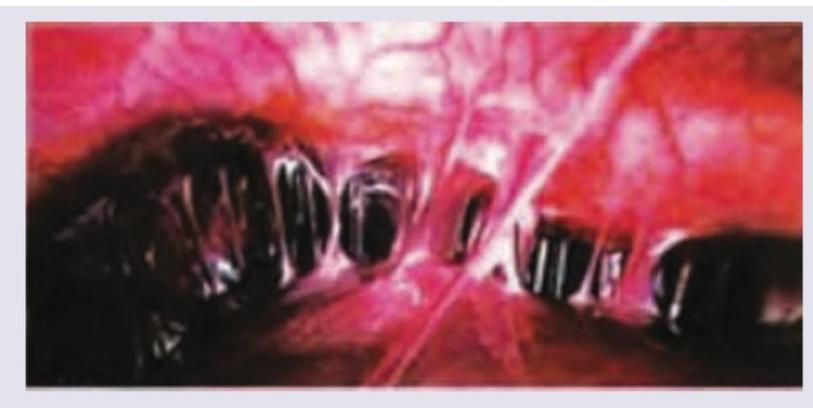
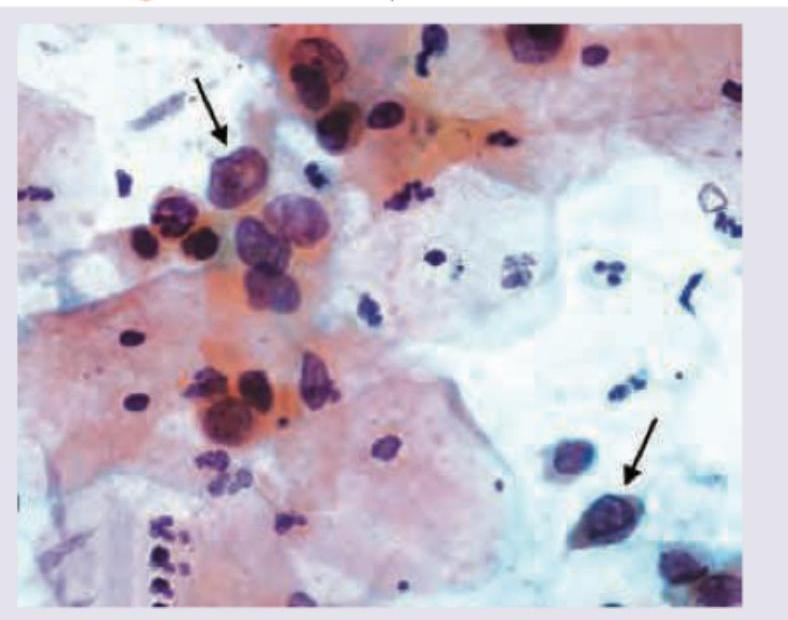
A patient presents with pain and swelling in the vagina. On examination, a bluish bulge is found on the posterior vaginal wall behind the cervix. The swelling enlarges and becomes more painful with approaching menses. What is your diagnosis?
What are the most frequent sites of endometriosis in order of frequency?
What is the best treatment for condyloma acuminata during pregnancy?
Rokitansky-Kuster-Hauser syndrome is associated with which of the following?
What is the most common cause of Asherman's syndrome?
Regarding saline infusion sonography, all are true except?
Which of the following conditions is NOT caused by Chlamydia trachomatis?
What is saline infusion sonography also called?
Which of the following is NOT a risk factor for vaginal candidiasis?
What is the normal vaginal pH in a reproductive-age group?
Explanation: ### Explanation The correct diagnosis is **Endometriotic cyst** (Option D). **Why it is correct:** The clinical hallmark of endometriosis is the presence of ectopic endometrial tissue that responds to hormonal fluctuations. The **"bluish bulge"** is a classic sign of a "powder-burn" or "mulberry" lesion, representing old hemorrhage trapped within the tissue. The most pathognomonic feature in this case is the **cyclical nature of the symptoms**—the swelling enlarges and becomes more painful with approaching menses (premenstrual congestion and intramural bleeding). When located in the posterior vaginal fornix or the rectovaginal septum, it presents as a painful, bluish vaginal mass. **Why the other options are incorrect:** * **Gartner’s duct cyst:** These are remnants of the Wolffian duct. They are typically found on the **anterolateral** wall of the vagina and are asymptomatic and non-cyclical. * **Inclusion cyst:** These usually occur due to birth trauma or surgery (episiotomy scars) where the epithelium is buried. They are found in the **posterior lower third** of the vagina and do not change with the menstrual cycle. * **Bartholin’s cyst:** These occur due to duct obstruction of the Bartholin gland, located at the **4 o'clock or 8 o'clock position of the vulva** (posterior third of the labia majora), not behind the cervix on the vaginal wall. **Clinical Pearls for NEET-PG:** * **Triad of Endometriosis:** Dysmenorrhea, Dyspareunia, and Infertility. * **Commonest site:** Ovary (Chocolate cyst). * **Rectovaginal Endometriosis:** Often presents with "deep-seated" dyspareunia and painful defecation (dyschezia). * **Gold Standard Diagnosis:** Laparoscopy with biopsy.
Explanation: **Explanation:** Endometriosis is defined as the presence of functioning endometrial tissue outside the uterine cavity. The distribution of these lesions follows a specific pattern of frequency, primarily dictated by the proximity to the fallopian tubes (Sampson’s retrograde menstruation theory) and the gravity-dependent areas of the pelvis. **1. Why Option D is Correct:** The **ovaries** are the most common site of endometriosis (seen in approx. 50-60% of cases), often presenting as "chocolate cysts" or endometriomas. The next most frequent sites are the **uterine ligaments** (specifically the uterosacral ligaments) and the **rectovaginal septum** (including the Pouch of Douglas). This sequence follows the anatomical path where menstrual blood most commonly pools in the dependent parts of the pelvis. **2. Analysis of Incorrect Options:** * **Option A:** The umbilicus and vulva are rare, "extra-pelvic" sites. Umbilical endometriosis (Villar's nodule) is uncommon and usually occurs after laparoscopic surgery. * **Option B:** While the pelvic peritoneum and ovaries are common, laparotomy scars are infrequent sites, usually occurring secondary to surgical seeding (e.g., after a C-section). * **Option C:** The appendix and vagina are considered rare sites. While the appendix can be involved in extensive pelvic endometriosis, it is never among the "most frequent." **NEET-PG High-Yield Pearls:** * **Most common site:** Ovary (Unilateral > Bilateral). * **Most common site for distant/extra-pelvic endometriosis:** Lungs and pleura. * **Classic Sign:** "Powder-burn" or "Gunshot" lesions on laparoscopy. * **Gold Standard Diagnosis:** Laparoscopy with biopsy. * **Commonest symptom:** Secondary dysmenorrhea (characteristically starts 1-2 days before menses).
Explanation: **Explanation:** **Condyloma acuminata** (anogenital warts) are caused by Human Papillomavirus (HPV), typically types 6 and 11. During pregnancy, these lesions often proliferate and become more vascular due to hormonal changes and relative immunosuppression. **Why Cryotherapy is the Correct Answer:** Cryotherapy (using liquid nitrogen) is considered a first-line treatment during pregnancy because it is a **physical ablation** method. It is highly effective, has a low systemic absorption profile, and is safe for the fetus. While Trichloroacetic acid (TCA) is also safe, cryotherapy is often preferred in clinical practice for its rapid action and controlled application. **Analysis of Incorrect Options:** * **A. Podophyllin:** This is **contraindicated** in pregnancy. It is antimitotic and can be systemically absorbed, leading to potential fetal death, teratogenicity, or maternal toxicity (peripheral neuropathy, coma). * **C. Trichloroacetic acid (TCA):** While TCA is safe to use in pregnancy (it acts by chemical coagulation of proteins), it is generally considered secondary to physical methods like cryotherapy or laser for extensive lesions. * **D. 5-FU cream:** This is **contraindicated** (Category X) due to its interference with DNA synthesis, posing a significant risk of teratogenicity. **High-Yield Clinical Pearls for NEET-PG:** * **Mode of Delivery:** The presence of genital warts is **not** an absolute indication for Cesarean section. C-section is only indicated if the warts are so large they obstruct the birth canal or if vaginal delivery would result in massive hemorrhage. * **Juvenile Laryngeal Papillomatosis:** This is a rare but serious complication in the neonate caused by vertical transmission of HPV 6/11. However, C-section does not reliably prevent this transmission. * **Imiquimod:** Also generally avoided in pregnancy due to limited safety data.
Explanation: **Explanation:** **Mayer-Rokitansky-Küster-Hauser (MRKH) syndrome**, also known as Müllerian agenesis, is a congenital anomaly characterized by the failure of the Müllerian ducts (paramesonephric ducts) to develop. Since the Müllerian ducts normally give rise to the fallopian tubes, uterus, and the upper two-thirds of the vagina, their agenesis leads to specific anatomical deficits. 1. **Why Vaginal Atresia is Correct:** In MRKH, there is congenital absence or severe hypoplasia of the uterus and the upper 2/3rd of the vagina. This results in **vaginal atresia** (a blind-ending vaginal pouch). Patients typically present with primary amenorrhea but have normal female secondary sexual characteristics (46, XX) because ovarian function is preserved. 2. **Why Other Options are Incorrect:** * **Ovarian agenesis:** Incorrect. Ovaries develop from the primitive germ cells and the genital ridge, not the Müllerian ducts. In MRKH, ovaries are functional, leading to normal estrogen levels and ovulation. * **Absent fallopian tube:** While the medial portions of the tubes are often absent, the distal (fimbrial) ends (derived from the cranial part of the ducts) are frequently present. Vaginal atresia is the more defining and consistent clinical feature. * **Bicornuate uterus:** Incorrect. This is a fusion defect of the Müllerian ducts. In MRKH, there is **agenesis** (absence), not just a failure of fusion. **High-Yield Clinical Pearls for NEET-PG:** * **Karyotype:** 46, XX (Normal female). * **Hormonal Profile:** Normal FSH, LH, and Estrogen (distinguishes it from Turner Syndrome). * **Associated Anomalies:** Renal anomalies (e.g., renal agenesis, ectopic kidney) are seen in 40% of cases; skeletal anomalies (e.g., Klippel-Feil syndrome) in 10-15%. * **First Investigation:** Pelvic Ultrasound (shows absent uterus). * **Gold Standard Investigation:** MRI. * **Treatment:** Vaginal dilators (Frank’s method) or vaginoplasty (McIndoe procedure).
Explanation: **Explanation:** **Asherman’s Syndrome** refers to the presence of intrauterine adhesions (synechiae) that result from trauma to the basal layer of the endometrium. **Why Option A is Correct:** The most common cause of Asherman’s syndrome is **over-vigorous Dilatation and Curettage (D&C)**, particularly when performed for pregnancy-related complications such as incomplete abortion, missed abortion, or postpartum hemorrhage (secondary PPH). During these procedures, the gravid uterus is soft, making it easier to accidentally denude the *stratum basalis* layer of the endometrium. This leads to the apposition of the uterine walls and subsequent fibrosis. **Why Other Options are Incorrect:** * **Option B (Tubercular Endometritis):** While Genital Tuberculosis is a significant cause of intrauterine adhesions in developing countries (often leading to "Netter’s Syndrome"), it is statistically less common than post-traumatic causes globally. * **Options C & D (Amenorrhea/Oligomenorrhea):** These are **symptoms** or clinical presentations of Asherman’s syndrome, not the underlying cause. Patients typically present with secondary amenorrhea or hypomenorrhea that does not respond to a progesterone withdrawal test. **High-Yield Clinical Pearls for NEET-PG:** * **Gold Standard Investigation:** Hysteroscopy (allows for both diagnosis and grading). * **Hysterosalpingography (HSG) Finding:** Characteristic "honeycomb appearance" or irregular filling defects. * **Treatment:** Hysteroscopic adhesiolysis followed by the insertion of an IUCD or Foley’s catheter and high-dose estrogen therapy to promote endometrial regrowth. * **Netter’s Syndrome:** A severe form of Asherman’s caused specifically by Tuberculosis, often resulting in total obliteration of the uterine cavity.
Explanation: ### Explanation **Saline Infusion Sonography (SIS)**, or sonohysterography, is a procedure where sterile saline is instilled into the uterine cavity to provide better visualization of the endometrium and uterine morphology. **Why Option B is the Correct Answer (The "Except" Statement):** The timing of SIS is **not** cycle-dependent in all women. While premenopausal women require specific timing (the follicular phase), the procedure can be performed at **any time** in postmenopausal women (provided they are not on sequential hormone replacement therapy) or in women with amenorrhea, as their endometrial thickness remains relatively constant. **Analysis of Other Options:** * **Option A & D:** SIS is ideally performed during the **early follicular phase** (Days 4–10, specifically optimal on days 4–6). During this window, the endometrium is at its thinnest (post-menses), making it easier to distinguish between normal lining and pathologies like polyps, submucosal fibroids, or synechiae. * **Option C:** Performing the procedure in the initial days of the cycle (immediately after menstruation) ensures that the patient is not pregnant, thereby preventing accidental disruption of an early intrauterine pregnancy. **Clinical Pearls for NEET-PG:** * **Gold Standard:** While SIS is excellent for cavity assessment, **Hysteroscopy** remains the gold standard for diagnosis and treatment. * **Indications:** Abnormal uterine bleeding (AUB), infertility, and recurrent pregnancy loss. * **Contraindications:** Pregnancy and active pelvic inflammatory disease (PID) are absolute contraindications. * **Advantage over TVS:** SIS has higher sensitivity and specificity than Transvaginal Sonography (TVS) for detecting focal endometrial lesions.
Explanation: **Explanation:** *Chlamydia trachomatis* (Serotypes D-K) is an obligate intracellular bacterium that specifically targets **columnar and transitional epithelium**. This tissue tropism dictates the clinical manifestations of the infection. **1. Why Vulvitis is the Correct Answer:** The vulva is covered by **keratinized stratified squamous epithelium**. *Chlamydia* cannot infect these cells; therefore, it does not cause primary vulvitis. Vulvitis is more commonly associated with fungal infections (Candidiasis), viral infections (HSV), or chemical irritants. **2. Why the other options are incorrect:** * **Cervicitis (Option C):** The endocervix is lined by columnar epithelium, making it the most common site of Chlamydial infection in women. It often presents as mucopurulent cervicitis. * **Salpingitis (Option A):** If left untreated, the infection ascends to the fallopian tubes (lined by ciliated columnar epithelium), leading to Pelvic Inflammatory Disease (PID) and salpingitis. * **Urethritis (Option D):** The urethra is lined by transitional and columnar epithelium, making it a primary site for Chlamydial infection in both males and females (Non-gonococcal urethritis). **Clinical Pearls for NEET-PG:** * **Silent Infection:** Up to 70-80% of Chlamydial infections in women are asymptomatic, leading to "silent" PID and subsequent tubal factor infertility. * **Fitz-Hugh-Curtis Syndrome:** A complication of Chlamydial PID involving peri-hepatitis ("violin-string" adhesions). * **Reiter’s Syndrome:** A triad of Urethritis, Conjunctivitis, and Arthritis (can follow Chlamydial infection). * **Drug of Choice:** Azithromycin (1g single dose) or Doxycycline (100mg BID for 7 days). In pregnancy, Azithromycin is preferred.
Explanation: **Explanation:** **Saline Infusion Sonography (SIS)**, also known as **Sonohysterography**, is a specialized ultrasound technique used to evaluate the uterine cavity. It involves the instillation of sterile saline into the uterus via a catheter while performing transvaginal ultrasonography. The saline acts as a negative contrast agent, distending the endometrial cavity and allowing for clear visualization of endoluminal pathologies like endometrial polyps, submucosal fibroids, and synechiae. **Analysis of Options:** * **Sonohysterography (Option A):** This is the correct synonym. The term literally translates to "ultrasound imaging of the uterus" (Sono + Hystero + Graphy). It is the gold standard for differentiating between focal and diffuse endometrial lesions. * **Sonosalpingography (Option B):** This refers to the assessment of the **fallopian tubes** using ultrasound and a contrast medium (like air-saline or specialized foam) to check for tubal patency. * **Hysterosalpingography (Option C):** This is a **fluoroscopic (X-ray)** procedure using radiopaque iodine-based contrast to visualize the uterine cavity and fallopian tubes. It is not an ultrasound-based technique. **High-Yield Clinical Pearls for NEET-PG:** * **Timing:** SIS is ideally performed in the **early follicular phase** (Day 4 to Day 9) when the endometrium is thinnest. * **Indications:** Abnormal uterine bleeding (AUB), infertility, and recurrent pregnancy loss. * **Advantage:** It has a higher sensitivity and specificity than routine Transvaginal Sonography (TVS) for detecting intracavitary lesions and is less invasive than diagnostic hysteroscopy. * **Contraindications:** Pregnancy and active pelvic inflammatory disease (PID).
Explanation: **Explanation:** The correct answer is **Hypertension**. Vaginal candidiasis (moniliasis) is caused by the overgrowth of *Candida albicans*, a fungus that thrives in environments with high glycogen content, altered local immunity, or hormonal shifts. Hypertension is a cardiovascular/hemodynamic disorder and has no physiological link to the vaginal microbiome or fungal proliferation. **Why the other options are risk factors:** * **Diabetes Mellitus:** Hyperglycemia leads to increased glycogen levels in the vaginal epithelium. This provides an abundant food source for *Candida*, facilitating its transformation from yeast to the pathogenic hyphal form. * **Pregnancy:** High levels of estrogen during pregnancy increase vaginal glycogen deposition and decrease vaginal pH. Additionally, mild systemic immunosuppression during pregnancy predisposes women to recurrent infections. * **HIV:** Immunocompromised states (like HIV or prolonged steroid use) reduce the body’s cell-mediated immunity, allowing opportunistic overgrowth of fungal species. **High-Yield Clinical Pearls for NEET-PG:** * **Most common species:** *Candida albicans* (80-90%). * **Classic Presentation:** Thick, white, "curd-like" or "cottage cheese" discharge with intense vulvar pruritus and erythema. * **Diagnosis:** Presence of pseudohyphae on **KOH mount** (Wet film). The vaginal pH in candidiasis is typically **normal (<4.5)**, unlike bacterial vaginosis or trichomoniasis. * **Drug of Choice:** Oral Fluconazole (150 mg single dose) or topical Clotrimazole. In pregnancy, only **topical azoles** are recommended.
Explanation: **Explanation:** The normal vaginal pH in a woman of reproductive age is acidic, typically ranging from **4.0 to 4.5**. This acidity is a crucial defense mechanism against pathogenic infections. **Why 4.0–4.5 is correct:** Under the influence of **estrogen**, the vaginal epithelium thickens and accumulates **glycogen**. Commensal bacteria, primarily **Lactobacillus species (Döderlein’s bacilli)**, metabolize this glycogen into **lactic acid**. This process maintains the low pH, which inhibits the growth of most pathogens while favoring the survival of normal flora. **Analysis of Incorrect Options:** * **B (4.5–6.0):** This range is considered abnormally high for a reproductive-age woman. A pH >4.5 is a diagnostic criterion for **Bacterial Vaginosis** and **Trichomoniasis**. * **C & D (6.0–8.0):** These alkaline ranges are physiological only during specific life stages: **pre-puberty** and **post-menopause** (due to low estrogen and lack of glycogen) or during menstruation (due to the presence of blood, pH ~7.4). **High-Yield Clinical Pearls for NEET-PG:** 1. **Amsel’s Criteria:** A vaginal pH **>4.5** is one of the four criteria used to diagnose Bacterial Vaginosis. 2. **Vulvovaginal Candidiasis:** Uniquely, the pH remains **normal (4.0–4.5)** in yeast infections, helping to differentiate it from other types of vaginitis. 3. **Estrogen Correlation:** High estrogen = High glycogen = Low pH (Acidic). Low estrogen = Low glycogen = High pH (Alkaline). 4. **Semen Effect:** Semen is alkaline (pH 7.2–8.0) and can temporarily raise vaginal pH, which may trigger symptomatic BV in susceptible individuals.
Abnormal Uterine Bleeding
Practice Questions
Endometriosis
Practice Questions
Adenomyosis
Practice Questions
Uterine Fibroids
Practice Questions
Ovarian Cysts
Practice Questions
Pelvic Inflammatory Disease
Practice Questions
Vulvovaginitis
Practice Questions
Pelvic Organ Prolapse
Practice Questions
Vulvar Disorders
Practice Questions
Benign Breast Diseases
Practice Questions
Get full access to all questions, explanations, and performance tracking.
Start For Free