The pH of vaginal secretions varies with estrogen levels. When is the vaginal pH MOST acidic?
What is the management of a tubal ectopic pregnancy measuring 2.5 x 3 cm?
What procedure is performed in Fothergill's operation?
The mode of transmission of tuberculosis to the endometrium is:
Which imaging modality is primarily used to detect a submucosal fibroid?
Which of the following statements is NOT related to tubercular salpingitis?
Which statement is true regarding a retroverted uterus?
Asymptomatic carriage of gonococcal infection in females is commonly seen in which site?
What is the modern diagnostic aid for diagnosing ectopic pregnancy?
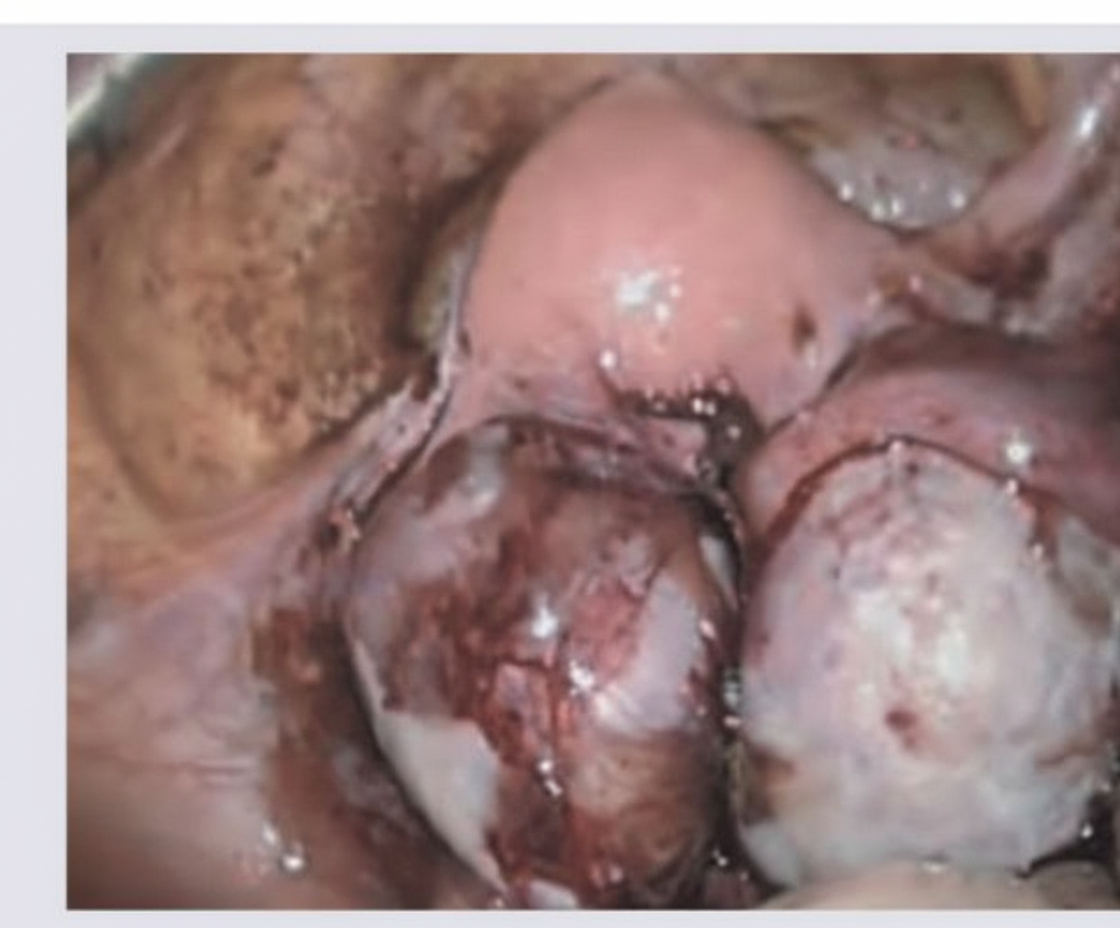
What is the gold standard investigation for diagnosing Pelvic Inflammatory Disease (PID)?
Explanation: **Explanation:** The vaginal pH is primarily determined by the action of **Döderlein’s bacilli** (Lactobacilli), which convert glycogen into lactic acid. This process is directly dependent on **estrogen levels**, as estrogen increases the glycogen content in the vaginal epithelium. **Why Pregnancy is Correct:** During pregnancy, estrogen levels are at their physiological peak. This leads to a massive accumulation of glycogen in the vaginal walls, providing an abundant substrate for Lactobacilli. Consequently, lactic acid production increases significantly, causing the vaginal pH to drop to its most acidic levels, typically between **3.5 and 4.5**. This acidity serves as a protective mechanism against ascending infections. **Analysis of Incorrect Options:** * **Menstruation:** During menses, the presence of blood (which is alkaline) and the shedding of the epithelium neutralize the acidity, raising the pH to around 7.0. * **Puerperium:** Following delivery, estrogen levels drop sharply, and the presence of lochia (alkaline) further raises the pH. * **Newborn:** While a newborn has an acidic pH for the first few days due to maternal estrogen, this quickly becomes neutral to alkaline as maternal hormones wane, remaining so until puberty. **High-Yield NEET-PG Pearls:** * **Normal Reproductive Age pH:** 4.0 to 5.0. * **Bacterial Vaginosis/Trichomoniasis:** pH increases (>4.5). * **Vulvovaginal Candidiasis:** pH remains normal/acidic (<4.5). * **Post-menopausal/Pre-pubertal pH:** 6.0 to 7.0 (due to low estrogen).
Explanation: The management of an unruptured tubal ectopic pregnancy depends on specific criteria that determine the success of medical therapy versus the necessity of surgical intervention. ### **Explanation of the Correct Answer** The size of the ectopic mass (2.5 x 3 cm) falls within the borderline range for medical management. According to standard guidelines (ACOG/RCOG), **medical management with Methotrexate** is typically indicated if the mass is <3.5 cm (or <4 cm by some standards) and the patient is hemodynamically stable. However, the **presence of fetal cardiac activity** is a major relative contraindication to medical management, as it significantly increases the risk of treatment failure. Therefore, the decision between medical management and surgery in this specific size range hinges on the presence or absence of fetal heart tones. ### **Why Other Options are Incorrect** * **A. Medical management:** While the size is <3.5 cm, medical management cannot be definitively chosen without first ruling out fetal cardiac activity, which would necessitate surgery. * **B. Salpingectomy:** This is the treatment of choice for ruptured ectopic pregnancy or when medical management is contraindicated. It is not the immediate first choice for a stable 3 cm mass unless cardiac activity is present or the patient desires sterilization. * **D. Observation:** Expectant management is only reserved for very small, resolving ectopics with low and declining β-hCG levels (typically <1000–1500 mIU/mL). ### **NEET-PG High-Yield Pearls** * **Drug of Choice (Medical):** Methotrexate (folic acid antagonist). * **Ideal Candidate for Methotrexate:** Hemodynamically stable, mass <3.5 cm, no fetal cardiac activity, and β-hCG <5000 mIU/mL. * **Surgical Gold Standard:** Laparoscopic Salpingostomy (if the other tube is damaged/absent and the patient wants to preserve fertility) or Salpingectomy (standard). * **Most Common Site:** Ampulla of the Fallopian tube. * **Most Common Site for Rupture:** Isthmus (occurs early, around 6–8 weeks).
Explanation: **Explanation:** **Fothergill’s Operation** (also known as the Manchester Operation) is a conservative surgical procedure designed for the management of **uterine prolapse**, specifically in women who wish to preserve their uterus (e.g., young patients or those avoiding hysterectomy) and where the primary defect is an elongated cervix. 1. **Why Option B is Correct:** The procedure consists of four key steps: * **Dilation and Curettage (D&C):** To rule out uterine malignancy. * **Cervical Amputation:** To address cervical elongation. * **Shortening of Mackenrodt’s ligaments (Cardinal ligaments):** The cut ends of these ligaments are sutured to the front of the cervical stump to provide apical support. * **Anterior Colporrhaphy:** This involves the repair of the cystocele (bladder prolapse) which almost always accompanies the uterine descent. The combination of cervical amputation and anterior repair is the hallmark of this surgery. 2. **Why Other Options are Incorrect:** * **Option A:** Cervical amputation alone is insufficient as it does not address the underlying pelvic floor weakness or the associated cystocele. * **Option C:** While a posterior colpoperineorrhaphy is often performed at the end of a Fothergill’s operation to repair a rectocele, the "classical" definition of the procedure specifically emphasizes the anterior repair and ligament plication. **High-Yield Clinical Pearls for NEET-PG:** * **Indication:** Uterine prolapse with cervical elongation in a woman who wants to preserve the uterus. * **Contraindications:** Post-menopausal women (where vaginal hysterectomy is preferred) or women planning future pregnancies (due to high risk of mid-trimester abortion and cervical dystocia). * **Key Step:** The "Fothergill’s stitch" involves suturing the Mackenrodt’s ligaments anterior to the cervix to tilt the uterus back into an anteverted position.
Explanation: **Explanation:** Genital Tuberculosis (GTB) is almost always a secondary infection, following a primary focus elsewhere in the body (most commonly the lungs). Understanding the sequence of spread is crucial for NEET-PG. **Why "Local Spread" is Correct:** In the female genital tract, the **Fallopian tubes** are the primary site of infection (involved in 90-100% of cases). Tuberculosis typically reaches the tubes via the **hematogenous route** from the lungs. However, once the infection is established in the tubes, it spreads to the **endometrium** via **direct mucosal extension** or **local spread** (descending infection). Since the question specifically asks for the mode of transmission *to the endometrium*, local spread from the tubes is the most accurate answer. **Analysis of Incorrect Options:** * **A. Hematogenous:** This is the most common mode of spread from the primary focus (lungs) to the **Fallopian tubes**, but not the primary way it reaches the endometrium. * **B. Lymphatic spread:** This is less common but can occur from abdominal nodes or during secondary spread within the pelvic organs; it is not the primary mechanism for endometrial involvement. * **C. Retrograde spread:** This refers to upward spread (e.g., from the cervix to the tubes), which is rare in TB as the infection is typically descending. **High-Yield Clinical Pearls for NEET-PG:** * **Order of Involvement:** Fallopian Tubes (100%) > Endometrium (50-60%) > Ovaries (20-30%) > Cervix (5-15%). * **Infertility:** GTB is a major cause of tubal factor infertility in developing countries. * **Diagnosis:** The "Gold Standard" is a culture of endometrial biopsy/aspirate (taken in the pre-menstrual phase) on Lowenstein-Jensen medium. * **Hysterosalpingography (HSG) Findings:** "Beaded tube," "Lead pipe appearance," or "Tobacco pouch" appearance.
Explanation: **Explanation:** **Why Hysterosalpingography (HSG) is the Correct Answer:** In the context of this question, **Hysterosalpingography (HSG)** is a primary imaging modality used to evaluate the uterine cavity. It involves the injection of radiopaque dye into the uterus under fluoroscopy. A submucosal fibroid, which protrudes into the uterine cavity, will appear as a **smooth, well-defined filling defect**. While ultrasound is often the first-line screening tool, HSG is specifically effective for mapping the contour of the cavity and assessing tubal patency simultaneously. **Analysis of Incorrect Options:** * **A. Hysteroscopy:** While Hysteroscopy is the **Gold Standard** for both diagnosis and treatment (resection) of submucosal fibroids because it allows direct visualization, it is technically an **endoscopic procedure**, not a primary "imaging modality" in the traditional radiological sense. * **C. Transabdominal Ultrasound (USG):** This is excellent for detecting intramural and subserosal fibroids but has low sensitivity for small submucosal fibroids. **Saline Infusion Sonohysterography (SIS)** is superior to standard USG for cavity evaluation. * **D. Laparoscopy:** This allows visualization of the serosal surface of the uterus. It cannot "see" inside the uterine cavity and is therefore useless for detecting submucosal fibroids unless they are large enough to distort the entire uterine shape. **High-Yield Clinical Pearls for NEET-PG:** * **Gold Standard for Submucosal Fibroids:** Hysteroscopy. * **Best Initial Screening Tool for Fibroids:** Transvaginal Ultrasound (TVS). * **Most Accurate Imaging for Mapping Multiple Fibroids:** MRI (used for surgical planning). * **Classic HSG Finding:** A "filling defect" indicates an intrauterine mass (fibroid, polyp, or synechiae). * **Symptom Hallmark:** Submucosal fibroids are the most likely type to cause **Menorrhagia** (heavy menstrual bleeding) due to increased endometrial surface area and interference with uterine contractions.
Explanation: ### Explanation **1. Why Option D is the correct (incorrect statement):** Salpingitis Isthmica Nodosa (SIN) is characterized by nodular thickening of the isthmic portion of the fallopian tube due to diverticula of the tubal epithelium into the muscularis layer. While it is strongly associated with **infertility and ectopic pregnancy**, it is primarily linked to **chronic inflammation or endometriosis**, not tuberculosis. In Pelvic Tuberculosis, the nodules formed are typically "tobacco pouch" or "beaded" appearances due to multiple strictures, which is distinct from the specific pathology of SIN. **2. Analysis of other options:** * **Option A:** In tubercular salpingitis, the fimbriae may remain everted and the ostium remains patent (unlike pyogenic salpingitis where it closes). This gives the characteristic **"Tobacco Pouch" appearance**. * **Option B:** Early tubercular lesions can show marked epithelial proliferation and nuclear atypia. This exuberant growth can mimic the histological appearance of **adenocarcinoma of the fallopian tube**, leading to diagnostic confusion. * **Option C:** Genital TB is almost **always secondary** to a primary focus elsewhere (usually lungs or lymph nodes), spreading via the hematogenous route. The **fallopian tubes are the primary site** of involvement in the genital tract in 90-100% of cases. **3. Clinical Pearls for NEET-PG:** * **Most common site of Genital TB:** Fallopian Tubes (1st), Endometrium (2nd), Ovaries (3rd). * **Hysterosalpingography (HSG) findings:** "Beaded tube," "Pipe-stem tube," "Golf-hole ostia," and "Lead pipe appearance." * **Gold Standard Diagnosis:** Endometrial biopsy/aspiration for TB culture or GeneXpert (NAAT), preferably taken in the pre-menstrual phase. * **Infertility:** Genital TB is a major cause of tubal factor infertility in developing countries.
Explanation: **Explanation:** A **retroverted uterus** occurs when the uterine fundus is tilted posteriorly toward the rectum rather than anteriorly over the bladder. While it is a normal anatomical variant in approximately 20% of women (mobile retroversion), it is frequently associated with pelvic pathology when it is fixed. * **Why 'All of the above' is correct:** 1. **Menorrhagia:** Retroversion often leads to pelvic venous congestion. The impaired venous drainage results in a boggy, engorged uterus, which clinically manifests as heavy menstrual bleeding (menorrhagia) and congestive dysmenorrhea. 2. **Endometriosis:** This is a leading cause of a **fixed retroverted uterus**. Endometriotic deposits in the Pouch of Douglas and on the uterosacral ligaments create dense adhesions that pull the uterus backward and fix it in a retroverted position. 3. **Infertility:** While not a direct cause in its mobile form, retroversion contributes to infertility through associated conditions like endometriosis or Pelvic Inflammatory Disease (PID). Additionally, the anterior displacement of the cervix (pointing toward the symphysis pubis) away from the posterior vaginal pool can hinder the deposition of semen near the external os. **Clinical Pearls for NEET-PG:** * **Pessary Test:** Used to determine if symptoms (like backache) are truly due to retroversion; if symptoms disappear after correcting the position with a Hodge pessary, surgery (Ventrosuspension) may be considered. * **Dyspareunia:** Deep dyspareunia is a classic symptom due to the ovaries prolapsing into the Pouch of Douglas (direct pressure during intercourse). * **Differential Diagnosis:** Always differentiate between **mobile** (asymptomatic/developmental) and **fixed** (pathological due to adhesions) retroversion.
Explanation: **Explanation:** The correct answer is **Endocervix**. *Neisseria gonorrhoeae* is a Gram-negative diplococcus that primarily infects **columnar and cuboidal epithelium**. 1. **Why Endocervix is correct:** The endocervix is lined by a single layer of columnar epithelium, making it the most common site of infection and asymptomatic carriage in females (up to 80% of cases are asymptomatic). From the endocervix, the infection can ascend to the endometrium and fallopian tubes, leading to Pelvic Inflammatory Disease (PID). 2. **Why Vagina is incorrect:** The adult vagina is lined by **stratified squamous epithelium**, which is resistant to gonococcal invasion. However, in prepubertal girls (vulvovaginitis), the vaginal mucosa is thin and susceptible. 3. **Why Urethra is incorrect:** While the urethra is frequently involved (causing dysuria), it is less common than the endocervix as a primary site of carriage. 4. **Why Fornix is incorrect:** The vaginal fornices are lined by the same squamous epithelium as the vagina and do not serve as a primary reservoir for the bacteria. **High-Yield Clinical Pearls for NEET-PG:** * **Most common site of infection:** Endocervix (80-90%), followed by the urethra (80%), and the rectum (40%). * **Gold Standard Diagnosis:** Culture on **Thayer-Martin medium** (a selective Chocolate agar). * **Investigation of Choice:** Nucleic Acid Amplification Test (NAAT). * **Fitz-Hugh-Curtis Syndrome:** A complication of gonococcal/chlamydial PID characterized by "violin-string" adhesions between the liver capsule and the parietal peritoneum. * **Treatment:** Current CDC guidelines recommend a single dose of **Ceftriaxone (500mg IM)**. Always co-treat for Chlamydia (Doxycycline) unless ruled out.
Explanation: **Explanation:** The diagnosis of ectopic pregnancy has been revolutionized by the combination of biochemical markers and high-resolution imaging. Among the options provided, **hCG (specifically the quantitative β-hCG subunit)** is considered the modern diagnostic aid because it is the earliest biochemical marker to indicate pregnancy and is essential for interpreting ultrasound findings. * **Why hCG is correct:** In a modern clinical setting, the **"Discriminatory Zone"** is the key concept. This is the level of serum β-hCG (usually 1,500–2,000 mIU/mL) at which a gestational sac should be visible via transvaginal ultrasound (TVUS). If β-hCG is above this level and the uterus is empty, an ectopic pregnancy is highly suspected. Furthermore, serial β-hCG monitoring (looking for a sub-optimal rise of <35% in 48 hours) is the gold standard for diagnosing pregnancy of unknown location (PUL). **Analysis of Incorrect Options:** * **Transvaginal USG (B):** While TVUS is the definitive tool for *localizing* the pregnancy, it often cannot visualize an early ectopic sac until β-hCG reaches a certain threshold. It is used in conjunction with, rather than independent of, hCG. * **AFP (C):** Alpha-fetoprotein is a marker used for neural tube defects and certain germ cell tumors; it has no role in the primary diagnosis of ectopic pregnancy. * **Gravindex (D):** This is an obsolete immunological urine test with low sensitivity (detects hCG only above 200–500 mIU/mL). It has been replaced by modern ELISA-based kits and quantitative serum assays. **Clinical Pearls for NEET-PG:** * **Gold Standard for Diagnosis:** TVUS + Serial Quantitative β-hCG. * **Gold Standard for Confirmation:** Laparoscopy (visualizing the "hematosalpinx"). * **Most Common Site:** Ampulla of the Fallopian tube. * **Medical Management Criteria:** Hemodynamically stable, adnexal mass <4cm, and β-hCG <5,000 mIU/mL (Methotrexate is the drug of choice).
Explanation: **Explanation:** **Laparoscopy** is considered the **gold standard** for the diagnosis of Pelvic Inflammatory Disease (PID). It allows for direct visualization of the pelvic organs, enabling the clinician to observe characteristic signs such as tubal erythema, edema, and purulent exudate. Furthermore, it facilitates the collection of peritoneal fluid or tubal fimbrial swabs for accurate microbiological culture. **Analysis of Options:** * **Anti-chlamydial antibodies (Option A):** These indicate a past or present infection but lack the specificity and sensitivity required to diagnose acute PID. They cannot differentiate between localized cervicitis and ascending pelvic infection. * **Ultrasound (Option C):** While USG is often the first-line imaging modality to rule out differentials (like ectopic pregnancy or ovarian cysts) or to detect complications like a Tubo-ovarian Abscess (TOA), it has low sensitivity for uncomplicated PID. * **Blood leukocyte count (Option D):** This is a non-specific marker of inflammation. While an elevated WBC count supports the diagnosis, it is absent in many confirmed cases of PID and cannot confirm the site of infection. **High-Yield Clinical Pearls for NEET-PG:** * **Clinical Diagnosis:** In routine practice, PID is diagnosed clinically based on the **CDC Minimum Criteria**: Uterine tenderness, Adnexal tenderness, OR Cervical Motion Tenderness (Chandelier sign). * **Most Common Organisms:** *Chlamydia trachomatis* (most common overall) and *Neisseria gonorrhoeae*. * **Fitz-Hugh-Curtis Syndrome:** A complication of PID involving peri-hepatitis, characterized by "violin-string" adhesions between the liver capsule and the parietal peritoneum. * **Definitive Diagnosis (Histology):** Endometrial biopsy showing plasma cells (endometritis) is also highly specific but less common than laparoscopy for direct visualization.
Abnormal Uterine Bleeding
Practice Questions
Endometriosis
Practice Questions
Adenomyosis
Practice Questions
Uterine Fibroids
Practice Questions
Ovarian Cysts
Practice Questions
Pelvic Inflammatory Disease
Practice Questions
Vulvovaginitis
Practice Questions
Pelvic Organ Prolapse
Practice Questions
Vulvar Disorders
Practice Questions
Benign Breast Diseases
Practice Questions
Get full access to all questions, explanations, and performance tracking.
Start For Free