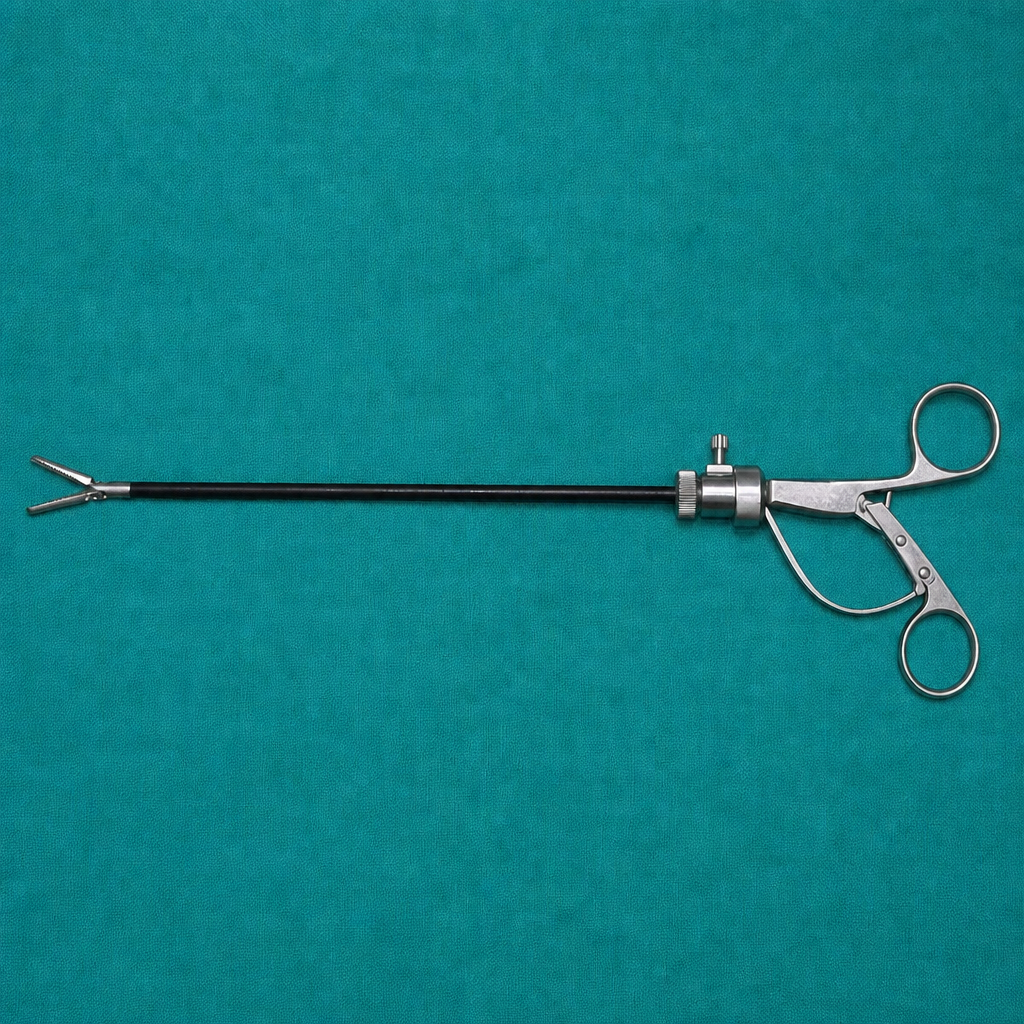
A young lady presents with mild erosion of the cervix and a Pap smear shows dysplasia. What is the next step in management?
Which of the following is NOT a complication of fibroid in pregnancy?
A 15-year-old girl is diagnosed with Mayer-Rokitansky-kuster-Hauser (MRKH) Syndrome. Which of the following statements is true regarding her management?
Sampson's Theory proposed to explain endometriosis is:
A 10-year-old girl presents with primary amenorrhea, absent breast development, and a malformed uterus. What is the most likely diagnosis?
Which drug is contraindicated in uterine fibroids?
In which of the following conditions is a sling operation performed?
A primigravida at 36 weeks of gestation presents with generalized pruritus, which is more intense on the soles. What is the most likely diagnosis?
Pus discharge (cervicitis/urethritis) in a female is most commonly caused by which of the following?
Which of the following is NOT an estrogen-dependent condition?
Explanation: **Explanation:** The correct management for a young lady with mild cervical erosion and dysplasia on a Pap smear is the administration of **antibiotics** first. **1. Why Antibiotics are the Correct Choice:** In clinical practice, inflammatory changes caused by infections (cervicitis) can mimic dysplastic changes on a Pap smear, leading to a "false positive" report of dysplasia. Cervical erosion (ectopy) is often associated with chronic infection. The standard protocol is to treat the underlying infection with a course of broad-spectrum antibiotics and then **repeat the Pap smear after 6 weeks**. If the dysplasia was merely inflammatory, the repeat smear will be normal, preventing unnecessary invasive procedures. **2. Analysis of Incorrect Options:** * **B. Colposcopy:** This is the next step only if dysplasia persists *after* treating the infection or if the initial smear shows high-grade changes (HSIL). * **C. Cryosurgery:** This is a treatment modality for confirmed persistent erosion or low-grade dysplasia (CIN 1). It should not be performed until a definitive histological diagnosis is made via biopsy. * **D. Conization:** This is a diagnostic and therapeutic surgical procedure reserved for high-grade dysplasia (CIN 2/3) or suspected microinvasive carcinoma. It is too invasive for an initial finding of mild dysplasia. **NEET-PG High-Yield Pearls:** * **Cervical Ectopy (Erosion):** It is a physiological condition where the columnar epithelium of the endocervix replaces the squamous epithelium of the ectocervix. It is common in pregnancy and women on OCPs. * **Inflammation Rule:** Always treat infection and repeat cytology before labeling a patient with "Cervical Intraepithelial Neoplasia" (CIN). * **Gold Standard:** While Pap smear is a screening tool, **Colposcopy-directed biopsy** is the gold standard for diagnosing cervical dysplasia.
Explanation: **Explanation:** The correct answer is **Malignant transformation**. While uterine fibroids (leiomyomas) are the most common benign tumors of the uterus, their transformation into leiomyosarcoma is extremely rare (incidence <0.3%). Crucially, there is no evidence that pregnancy increases this risk. In fact, most fibroids either remain stable or undergo "Red Degeneration" during pregnancy due to rapid growth and outstripping of blood supply, but they do not become malignant. **Why the other options are complications:** * **Abortion (C):** Fibroids, especially submucosal or large intramural ones, can distort the uterine cavity, interfere with implantation, or cause decidual irritation, leading to early pregnancy loss. * **Preterm labor (A):** Large fibroids act as space-occupying lesions, leading to uterine overdistension and increased uterine irritability, which triggers premature contractions. * **Postpartum hemorrhage (B):** Fibroids interfere with the effective contraction and retraction of the uterine myometrium after delivery (uterine atony), which is the most common cause of PPH in these patients. **High-Yield Clinical Pearls for NEET-PG:** * **Red Degeneration (Carneous Degeneration):** The most common complication of fibroid *during* pregnancy (usually 2nd trimester). It presents with acute abdominal pain, fever, and leukocytosis. Management is strictly **conservative** (analgesics and bed rest). * **Most common effect of pregnancy on fibroid:** Most fibroids (approx. 60-70%) show no significant change in size; however, if they do change, they usually enlarge during the first trimester. * **Myomectomy during pregnancy:** Generally contraindicated due to the risk of uncontrollable hemorrhage, except in cases of a pedunculated fibroid undergoing torsion.
Explanation: **Explanation:** **Mayer-Rokitansky-Küster-Hauser (MRKH) Syndrome** is characterized by congenital absence of the uterus and the upper two-thirds of the vagina (Müllerian agenesis) in a phenotypically and genotypically female individual (46, XX). **Why Option D is Correct:** In MRKH syndrome, the **ovaries are functional** and produce normal oocytes because they develop from the germ cells (not the Müllerian ducts). Since the patient has a normal 46, XX karyotype and functional ovaries, biological childbearing is possible via **In Vitro Fertilization (IVF)** with oocyte retrieval and the use of a **gestational surrogate**. Recently, uterine transplantation has also emerged as an experimental option. **Why Other Options are Incorrect:** * **Option A:** Vaginoplasty or vaginal dilation (Frank’s method) is generally delayed until the patient is **emotionally mature** and ready to initiate sexual activity (usually late adolescence or early adulthood). * **Option B:** The sex of rearing is **female**. These patients have normal female external genitalia, female secondary sexual characteristics (due to intact ovarian function), and a female gender identity. * **Option C:** Gonadectomy is **not required**. Unlike Androgen Insensitivity Syndrome (AIS), there is no risk of malignancy because the gonads are ovaries, not undescended testes. **High-Yield Clinical Pearls for NEET-PG:** * **Karyotype:** 46, XX (Normal female). * **Hormonal Profile:** Normal FSH, LH, and Estrogen levels (Normal ovulation). * **Presentation:** Primary amenorrhea with normal secondary sexual characteristics. * **Associated Anomalies:** Renal anomalies (e.g., renal agenesis, ectopic kidney) are seen in 40% of cases; skeletal anomalies (e.g., Klippel-Feil syndrome) are also common. * **First-line Management for Vagina:** Non-surgical vaginal dilation (Frank’s method).
Explanation: ### Explanation **Sampson’s Theory**, also known as the **Implantation Theory** or **Retrograde Menstruation Theory**, is the most widely accepted hypothesis for the pathogenesis of endometriosis. **1. Why the Correct Answer is Right:** According to John A. Sampson (1927), during menstruation, viable endometrial tissue fragments are shed and flow backward through the fallopian tubes into the peritoneal cavity (**Retrograde Menstruation**). These fragments then implant on the pelvic organs (ovaries, pouch of Douglas, broad ligament), proliferate, and respond to hormonal cycles, leading to the formation of endometriotic lesions. **2. Analysis of Incorrect Options:** * **Option A (Lymphatic/Vascular Theory):** Proposed by **Halban**, this suggests that endometrial cells are transported to distant sites (like the lungs or brain) via lymphatics or blood vessels. While it explains extra-pelvic endometriosis, it is not Sampson’s theory. * **Option B (Coelomic Metaplasia Theory):** Proposed by **Meyer**, this suggests that the peritoneal mesothelium (coelomic epithelium) undergoes transformation into endometrial tissue due to hormonal or inflammatory stimuli. * **Option D (Induction Theory):** This is an extension of the metaplasia theory, suggesting that unknown chemical substances released from the shed endometrium induce undifferentiated mesenchyme to form endometrial tissue. **3. NEET-PG Clinical Pearls:** * **Most common site of endometriosis:** Ovary. * **Most common symptom:** Secondary dysmenorrhea (characteristically begins before menses). * **Gold Standard Diagnosis:** Laparoscopy (visual confirmation with or without biopsy). * **Classic Sign:** "Powder-burn" or "Gunshot" lesions on the peritoneum and "Chocolate cysts" (Endometriomas) in the ovaries. * **Risk Factors:** Early menarche, late menopause, and nulliparity (increased lifetime menstrual cycles).
Explanation: **Explanation:** The clinical presentation of **primary amenorrhea** combined with **absent breast development** (infantilism) and a **malformed uterus** (often prepubertal or hypoplastic) points toward a defect in the Hypothalamic-Pituitary-Ovarian (HPO) axis, specifically **Hypergonadotropic Hypogonadism**. **Why Turner’s Syndrome is correct:** In Turner’s Syndrome (45,XO), the absence of a second X chromosome leads to accelerated oocyte atresia, resulting in **"streak gonads."** Since there is no estrogen production from the ovaries, secondary sexual characteristics like breast development do not occur (Tanner Stage 1). While the uterus is present (as Müllerian structures develop normally in the absence of Anti-Müllerian Hormone), it remains **prepubertal/malformed** due to the lack of estrogenic stimulation required for growth. **Why other options are incorrect:** * **MRKH Syndrome:** These patients have normal ovarian function and **normal breast development** (secondary sexual characteristics). The primary defect is Müllerian agenesis, leading to an absent uterus and upper vagina. * **Swyer Syndrome (46,XY Pure Gonadal Dysgenesis):** While these patients have streak gonads and absent breasts, they typically have a **well-formed (though small) uterus** because they are phenotypically female. However, Turner’s is statistically more common and more frequently associated with the "malformed/prepubertal" uterine description in pediatric age groups. * **Mixed Gonadal Dysgenesis (45,X/46,XY):** These patients often present with ambiguous genitalia or asymmetrical gonads (a streak gonad on one side and a testis on the other), which is not described here. **High-Yield Clinical Pearls for NEET-PG:** * **Most common cause of primary amenorrhea:** Turner’s Syndrome. * **Karyotype:** 45,XO is the most common; however, mosaicism (45,X/46,XX) can occur. * **Associated features:** Short stature, webbed neck (pterygium colli), increased carrying angle (cubitus valgus), and coarctation of the aorta. * **Gold Standard Diagnosis:** Karyotyping. * **Management:** Growth hormone for height; Estrogen and Progesterone for secondary sexual characteristics and uterine growth.
Explanation: **Explanation:** Uterine fibroids (leiomyomas) are **estrogen-dependent tumors**. Their growth is directly stimulated by estrogen, which increases the mitotic activity of the smooth muscle cells in the myometrium. Therefore, any exogenous administration of **Estrogen (Option B)** is strictly contraindicated as it will lead to the rapid enlargement of the fibroids and exacerbation of symptoms like menorrhagia and pelvic pain. **Analysis of other options:** * **Danazol (Option A):** This is a synthetic androgen that creates a high-androgen, low-estrogen environment. It induces atrophy of the endometrium and shrinks fibroids by inhibiting the pituitary-ovarian axis. * **Mifepristone (Option C):** A Selective Progesterone Receptor Modulator (SPRM). Since progesterone also plays a role in fibroid growth, mifepristone is used to reduce fibroid volume and control bleeding. * **GnRH Analogues (Option D):** These are the "gold standard" for medical shrinkage of fibroids. They induce a state of **pseudomenopause** (hypoestrogenism) by downregulating GnRH receptors in the pituitary, leading to a 30-50% reduction in tumor volume. **NEET-PG High-Yield Pearls:** * **Medical Management:** GnRH analogues are typically used for 3–6 months pre-operatively to reduce blood loss and tumor size. * **Red Degeneration:** The most common complication of fibroids during pregnancy (due to rapid growth and outstripping of blood supply). * **Ulipristal Acetate:** Another SPRM used for the medical management of fibroids. * **Rule of Thumb:** Any drug that lowers estrogen levels can be used to treat fibroids; any drug that increases estrogen is contraindicated.
Explanation: **Explanation:** The correct answer is **Nulliparous prolapse**. **1. Why Nulliparous Prolapse is Correct:** In a nulliparous woman (one who has never given birth), uterine prolapse is usually not due to childbirth trauma but rather due to congenital weakness of the pelvic supports (e.g., Mackenrodt’s and uterosacral ligaments) or conditions like spina bifida. Since these patients are typically young and desire to preserve their uterus and fertility, a **Sling Operation** (Uteropexy) is the treatment of choice. This procedure uses a synthetic mesh or fascia to anchor the cervix/uterus to a stable bony landmark (like the sacral promontory) or ligament, providing support without compromising reproductive function. **2. Why Other Options are Incorrect:** * **Multiple Prolapse:** This refers to a combination of cystocele, rectocele, and uterine descent. In older, multiparous women, the standard treatment is a Ward-Mayo’s operation (Vaginal Hysterectomy with Pelvic Floor Repair). * **Cystocele:** Isolated descent of the bladder is treated with **Anterior Colporrhaphy**. * **Rectocele:** Isolated descent of the rectum is treated with **Posterior Colpoperineorrhaphy**. **3. NEET-PG High-Yield Pearls:** * **Shirodkar’s Sling:** Used for nulliparous prolapse; the cervix is anchored to the sacral promontory using a Mersilene tape. * **Purandare’s Sling:** The uterus is anchored to the anterior abdominal wall (rectus sheath). * **Khanna’s Sling:** Anchors the cervix to the iliac crest. * **Fothergill’s (Manchester) Operation:** Indicated for multiparous women who desire to preserve the uterus but have an elongated cervix. It involves cervical amputation and shortening of Mackenrodt’s ligaments.
Explanation: ### Explanation **1. Why Intrahepatic Cholestasis of Pregnancy (ICP) is Correct:** ICP is the most common pregnancy-specific liver disorder, typically occurring in the **third trimester**. It is characterized by **generalized pruritus** that classically starts or is most intense on the **palms and soles**, worsening at night. Pathophysiologically, it involves the failure of bile acid excretion, leading to elevated serum bile acids. Crucially, there is **no primary skin rash** (only secondary excoriations) and no jaundice in most cases. **2. Why the Other Options are Incorrect:** * **HELLP Syndrome:** Presents with Hemolysis, Elevated Liver enzymes, and Low Platelets. It is usually associated with preeclampsia (hypertension/proteinuria) and presents with epigastric pain, not isolated pruritus. * **Viral Hepatitis:** The most common cause of jaundice in pregnancy. It presents with prodromal symptoms like fever, nausea, vomiting, and significantly elevated transaminases, rather than isolated pruritus of the soles. * **Acute Fatty Liver of Pregnancy (AFLP):** A medical emergency occurring in the late third trimester. It presents with acute liver failure symptoms (hypoglycemia, jaundice, encephalopathy, and DIC). Pruritus is not a hallmark feature. **3. High-Yield Clinical Pearls for NEET-PG:** * **Diagnosis:** Elevated **Serum Bile Acids** (>10 µmol/L) is the most sensitive biochemical marker. * **Treatment:** **Ursodeoxycholic acid (UDCA)** is the drug of choice (improves pruritus and liver functions). * **Fetal Risk:** ICP is associated with increased risks of **meconium-stained amniotic fluid**, preterm labor, and **sudden intrauterine fetal death (IUFD)**. * **Management:** Delivery is usually recommended by **37 weeks** to prevent late-term fetal complications.
Explanation: **Explanation:** **1. Why Chlamydia is Correct:** *Chlamydia trachomatis* (Serotypes D-K) is the most common cause of **mucopurulent cervicitis** and non-gonococcal urethritis worldwide. In females, the primary site of infection is the endocervical columnar epithelium. It typically presents with a yellow or green mucopurulent discharge from the external os and friability (bleeding on contact). It is often "silent" or asymptomatic, making it a major cause of Pelvic Inflammatory Disease (PID) and subsequent tubal factor infertility. **2. Why the Other Options are Incorrect:** * **A. Papilloma (HPV):** Human Papillomavirus causes genital warts (condyloma acuminata) or cervical dysplasia/cancer. It does not cause an acute purulent discharge. * **C. Candida:** *Candida albicans* causes vulvovaginal candidiasis, characterized by a thick, white, **"curdy" or "cottage-cheese"** like discharge with intense pruritus. It is a fungal infection of the vagina, not a primary cause of cervicitis. * **D. Bacterial Vaginosis (BV):** Caused by an overgrowth of *Gardnerella vaginalis* and anaerobes, BV presents with a thin, homogenous, **fishy-smelling** greyish-white discharge. It is a vaginal dysbiosis rather than a true inflammatory cervicitis/urethritis. **3. NEET-PG High-Yield Pearls:** * **Gold Standard Diagnosis:** Nucleic Acid Amplification Test (NAAT) is the investigation of choice for Chlamydia. * **Treatment:** The current CDC recommendation for Chlamydial cervicitis is **Doxycycline 100 mg BID for 7 days**. (Azithromycin 1g stat is now an alternative). * **Co-infection:** Always screen for *Neisseria gonorrhoeae* when cervicitis is suspected, as the two frequently coexist. * **Reiter’s Syndrome:** Remember the triad of "Urethritis, Conjunctivitis, and Arthritis" often triggered by Chlamydia.
Explanation: **Explanation:** The correct answer is **Carcinoma of the cervix**. Unlike the other conditions listed, cervical cancer is primarily caused by persistent infection with **High-Risk Human Papillomavirus (HPV)**, specifically types 16 and 18. Its pathogenesis is related to viral oncoproteins (E6 and E7) inhibiting tumor suppressor genes (p53 and Rb), rather than hormonal stimulation. **Why the other options are incorrect:** * **Endometriosis:** This is a classic estrogen-dependent inflammatory condition. Estrogen promotes the growth, proliferation, and survival of ectopic endometrial tissue. Treatments often aim to induce a hypoestrogenic state (e.g., GnRH agonists). * **Endometrial Carcinoma:** Type I endometrial adenocarcinoma is strongly linked to "unopposed estrogen" (estrogen without progesterone). Risk factors include obesity (peripheral conversion of androgens to estrone), PCOS, and estrogen-only HRT. * **Fibroids (Leiomyomas):** These are benign monoclonal tumors of the myometrium that are highly sensitive to estrogen and progesterone. They typically enlarge during pregnancy (high estrogen) and shrink after menopause (low estrogen). **NEET-PG Clinical Pearls:** * **HPV 16** is most commonly associated with Squamous Cell Carcinoma of the cervix, while **HPV 18** is more frequently linked to Adenocarcinoma. * **Protective factors for Endometrial Ca:** Combined Oral Contraceptive Pills (COCPs), multiparity, and smoking (decreases estrogen levels). * **Estrogen-Dependent Triad:** Endometriosis, Fibroids, and Adenomyosis often coexist due to their shared hormonal sensitivity. * **Medical Management:** Drugs like **Selective Estrogen Receptor Modulators (SERMs)** or **Aromatase Inhibitors** are often used in estrogen-dependent gynecological pathologies, but have no role in the primary treatment of cervical cancer.
Abnormal Uterine Bleeding
Practice Questions
Endometriosis
Practice Questions
Adenomyosis
Practice Questions
Uterine Fibroids
Practice Questions
Ovarian Cysts
Practice Questions
Pelvic Inflammatory Disease
Practice Questions
Vulvovaginitis
Practice Questions
Pelvic Organ Prolapse
Practice Questions
Vulvar Disorders
Practice Questions
Benign Breast Diseases
Practice Questions
Get full access to all questions, explanations, and performance tracking.
Start For Free