The rise in the incidence of ectopic pregnancy is related to all, except?
Which of the following factors is most likely to cause failure of methotrexate therapy in the treatment of ectopic pregnancy?
A 30-year-old female from a poor socio-economic strata, residing in a hill station, presents with complaints of urinary frequency, dysuria, hematuria, loss of appetite, mild fever, and amenorrhea. What is the most likely cause for her complaints?
Which of the following is NOT a primary site of acute gonococcal infection?
What are the advantages of cryosurgery over electrocauterization, with the exception of one option?
Regarding extrauterine endometriosis, which of the following statements is false?
What is pathognomic of Actinomyces pelvic infection in IUCD users?
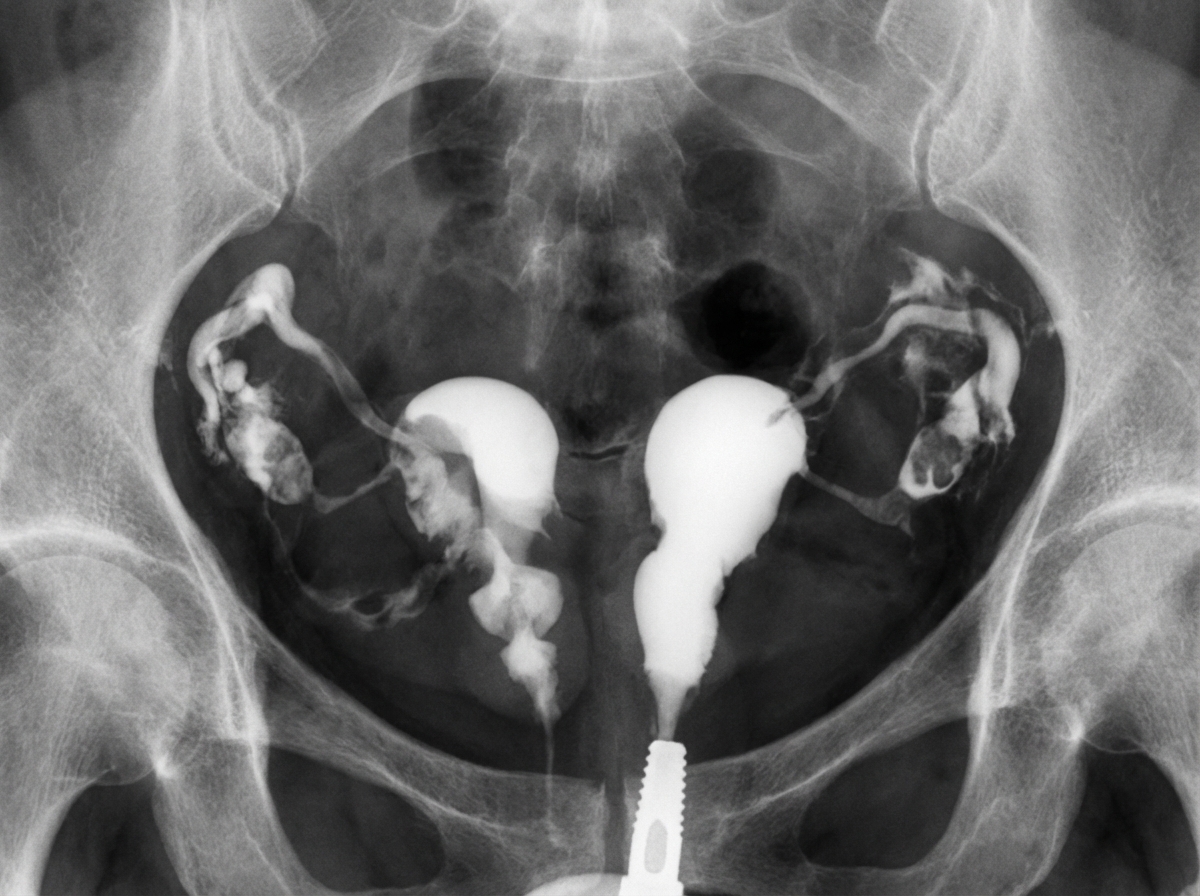
According to the WHO classification of Mullerian duct anomalies, to which class does a bicornuate uterus belong?
Which of the following is the causative organism for Bartholin's cyst?
A 10 cm ovarian cyst is detected incidentally in an 8-week pregnant woman. What is the appropriate management?
Explanation: **Explanation:** The incidence of ectopic pregnancy has risen globally due to factors that cause tubal damage or involve artificial manipulation of the reproductive tract. **Why Combined Oral Contraceptive Pills (COCPs) are the correct answer:** COCPs work primarily by inhibiting ovulation, thickening cervical mucus, and altering the endometrium. They are highly effective contraceptives. Because they prevent ovulation, they **reduce the absolute risk** of both intrauterine and ectopic pregnancies. If a woman conceives while taking COCPs, the pregnancy is more likely to be intrauterine. In contrast, Progesterone-Only Pills (POPs) and Levonorgestrel-IUCDs, if they fail, carry a higher relative risk of the pregnancy being ectopic due to slowed tubal motility. **Analysis of Incorrect Options:** * **Increase in STDs:** Pelvic Inflammatory Disease (PID), often caused by *Chlamydia trachomatis* or *Neisseria gonorrhoeae*, leads to tubal scarring, loss of ciliary function, and adhesions, which are the leading causes of ectopic pregnancy. * **ART Techniques:** Assisted Reproductive Technologies (e.g., IVF) increase the risk due to multiple embryo transfers, high hormonal levels affecting tubal motility, and the retrograde migration of embryos into the tubes. * **Tubal Reconstructive Surgery:** Any surgery on the fallopian tubes (e.g., tuboplasty or reversal of tubal ligation) creates anatomical distortions or luminal narrowing that predisposes to ectopic implantation. **High-Yield Clinical Pearls for NEET-PG:** * **Most common site:** Ampulla (70%). * **Most common risk factor:** Previous history of PID. * **Highest relative risk:** Previous history of ectopic pregnancy. * **Contraceptive paradox:** While IUCDs provide excellent protection against pregnancy, if a failure occurs, the *proportion* of ectopic pregnancies is higher compared to non-users. However, COCPs remain protective against both.
Explanation: **Explanation:** The success of medical management for ectopic pregnancy using Methotrexate (MTX) is highly dependent on the initial biochemical and clinical parameters. **Why Option D is Correct:** The **initial serum β-hCG level** is the single most important predictor of MTX therapy failure. According to ACOG and RCOG guidelines, a baseline β-hCG level **>5000 mIU/mL** is associated with a significantly higher failure rate (up to 14% or more) compared to levels below this threshold. A level of 9000 mIU/mL indicates a high trophoblastic load, making it the most likely factor among the choices to cause treatment failure. **Analysis of Incorrect Options:** * **Option A (Multiparous woman):** Parity has no clinical correlation with the pharmacological efficacy of Methotrexate. * **Option B (Size >2.5 cm):** While the size of the ectopic mass is a consideration, the standard contraindication threshold is typically **>3.5 cm or 4 cm**. A size of 2.5 cm is generally considered favorable for medical management. * **Option C (Previous history):** A history of ectopic pregnancy increases the risk of recurrence but does not inherently cause the failure of Methotrexate in treating the current pregnancy. **High-Yield Clinical Pearls for NEET-PG:** * **Ideal Candidate for MTX:** Hemodynamically stable, β-hCG <5000 mIU/mL, no fetal cardiac activity, and mass size <3.5 cm. * **Absolute Contraindications:** Hemodynamic instability (rupture), breastfeeding, immunodeficiency, or significant hepatic/renal/pulmonary disease. * **Dosing:** Most commonly the **Single-dose regimen** (50 mg/m² BSA). * **Monitoring:** β-hCG levels are measured on Day 4 and Day 7. A drop of **<15%** between Day 4 and Day 7 indicates the need for a second dose or surgical intervention.
Explanation: **Explanation:** The clinical presentation strongly suggests **Genitourinary Tuberculosis (GUTB)**, which is the second most common form of extrapulmonary TB. In females, the genital tract is involved in approximately 10% of cases of pulmonary TB, often spreading via the hematogenous route. **Why Genitourinary Tuberculosis is correct:** 1. **Demographics:** The patient belongs to a poor socio-economic strata and resides in a hill station (areas with higher TB prevalence in India). 2. **Constitutional Symptoms:** Loss of appetite and mild fever (evening rise) are classic "constitutional symptoms" of TB. 3. **Urinary Symptoms:** Frequency, dysuria, and hematuria in the absence of common bacteria (often presenting as "sterile pyuria") are hallmarks of renal/bladder TB. 4. **Menstrual Abnormality:** Amenorrhea (or oligomenorrhea) occurs due to endometrial destruction (Asherman-like syndrome) or ovarian involvement, which is a classic finding in genital TB. **Why other options are incorrect:** * **Pelvic Inflammatory Disease (PID):** While it causes pelvic pain and dysuria, it usually presents with vaginal discharge and menorrhagia (heavy bleeding) rather than amenorrhea. * **Bacterial Cystitis:** This is an acute condition. While it causes frequency and dysuria, it does not explain the systemic symptoms (weight loss/appetite) or the secondary amenorrhea. * **Foreign Body:** This would cause localized bladder irritation and hematuria but would not account for the systemic fever or the cessation of menses. **High-Yield Clinical Pearls for NEET-PG:** * **Most common site** of Female Genital TB: **Fallopian Tubes** (90-100%), followed by the Endometrium (50-60%). * **Infertility** is the most common presenting complaint of genital TB in India. * **Lead Pipe Ureter** and **Thimble Bladder** are classic radiological findings in advanced urinary TB. * **Diagnosis:** Gold standard is a culture (Lowenstein-Jensen medium) or Histopathology showing caseating granulomas.
Explanation: **Explanation:** The primary site of acute gonococcal infection in the female genital tract is the **Endocervix**, not the Ectocervix. **1. Why Ectocervix is the Correct Answer (The Concept):** *Neisseria gonorrhoeae* has a specific predilection for **columnar and transitional epithelium**. The **Ectocervix** is lined by stratified squamous epithelium, which is resistant to gonococcal invasion. In contrast, the **Endocervix** is lined by simple columnar epithelium, making it the most common site of infection (found in 80-90% of cases). **2. Why the other options are incorrect (Primary Sites):** * **Urethra (A):** Lined by transitional and columnar epithelium, it is a primary site of infection, often presenting as dysuria. * **Bartholin's gland (B):** The ducts are lined by columnar/transitional epithelium. Acute gonococcal infection can lead to Bartholinitis or abscess formation. * **Skene's gland (C):** Also known as paraurethral glands, these are lined by columnar epithelium and serve as a reservoir for the bacteria, often leading to chronic carriage if not treated. **Clinical Pearls for NEET-PG:** * **Most common site of Gonorrhea in females:** Endocervix. * **Vagina in adults:** Resistant to gonorrhea due to its stratified squamous lining and acidic pH. * **Exception:** In **pre-pubertal girls** (Vulvovaginitis), the vaginal epithelium is thin and lacks estrogen, making it susceptible to infection. * **Gold Standard Diagnosis:** Nucleic Acid Amplification Test (NAAT). Culture on **Thayer-Martin medium** is used for sensitivity. * **Treatment:** Current CDC/WHO guidelines recommend Ceftriaxone (IM) as the mainstay of therapy.
Explanation: **Explanation:** Cryosurgery and electrocauterization are both ablative techniques used to treat benign cervical lesions (like cervical ectopy) and low-grade CIN. Understanding the differences in their tissue effects is crucial for NEET-PG. **Why Option C is the Correct Answer (The Exception):** The primary disadvantage of cryosurgery is the **profuse, watery vaginal discharge** that occurs post-procedure. This happens because cryosurgery causes extensive cellular destruction and subsequent necrosis of the cervical stroma. As the frozen tissue thaws and sloughs off, it leads to significant inflammatory exudate that can last for 2–4 weeks. Therefore, saying discharge is "much less" is factually incorrect; it is actually significantly more than in electrocauterization. **Analysis of Other Options:** * **A. Less discomfort:** Cryosurgery is relatively painless because the extreme cold acts as a local anesthetic by numbing the nerve endings. Electrocautery often requires local anesthesia due to heat-induced pain. * **B. Less postoperative bleeding:** Cryosurgery causes vasoconstriction and creates a clean necrotic slough, making primary or secondary hemorrhage extremely rare compared to the thermal injury of electrocautery. * **C. Rare cervical stenosis:** Cryosurgery is "tissue-friendly" regarding structural integrity. It preserves the underlying collagen framework better than heat-based methods, making the risk of cervical stenosis or incompetence negligible. **High-Yield Clinical Pearls for NEET-PG:** * **Cryosurgery Mechanism:** Uses the "Joule-Thompson effect" (compressed gas expands, causing cooling). * **Cryogens used:** Nitrous oxide (Boiling point: -89°C) or Carbon dioxide (-78°C). * **Technique:** The "Freeze-Thaw-Freeze" technique is the gold standard for maximum cell destruction. * **Contraindication:** Never perform cryosurgery if there is any suspicion of invasive malignancy or if the lesion extends into the endocervical canal (where the probe cannot reach).
Explanation: ### Explanation **1. Why Option D is the Correct (False) Statement:** Ovarian endometriomas, commonly known as **"Chocolate Cysts,"** do not contain clear fluid. They are filled with thick, tarry, chocolate-colored fluid, which is actually **degenerated, hemolyzed old blood**. This occurs because the ectopic endometrial tissue within the ovary undergoes cyclic bleeding during menstruation, but the blood remains trapped, thickens over time, and loses its bright red color. **2. Analysis of Other Options:** * **Option A (True):** Endometriosis is a **hormone-dependent** condition. It thrives on estrogen, which stimulates the growth and shedding of the ectopic endometrial tissue. Symptoms typically regress after menopause or during pregnancy when estrogen levels are low or balanced by progesterone. * **Option B (True):** While most common in the pelvis, endometriosis can occur at distant sites. **Thoracic endometriosis** can involve the pleura and lungs, leading to conditions like catamenial pneumothorax (collapsed lung during menstruation) or hemoptysis. * **Option C (True):** The **ovary** is the most common site for endometriosis (found in approximately 50-60% of cases), followed by the Pouch of Douglas and the broad ligament. **3. NEET-PG Clinical Pearls:** * **Classic Triad:** Dysmenorrhea (congestive), Dyspareunia, and Infertility. * **Gold Standard Diagnosis:** Laparoscopy with biopsy (visualizing "powder-burn" or "gunshot" lesions). * **Tumor Marker:** CA-125 is often elevated but lacks specificity. * **Management:** Medical (OCPs, GnRH agonists, Dienogest) or Surgical (Cystectomy is preferred over drainage to prevent recurrence).
Explanation: **Explanation:** **1. Why "Presence of sulphur granules" is correct:** *Actinomyces israelii* is a Gram-positive, anaerobic, filamentous bacterium that is not part of the normal vaginal flora but can colonize the female genital tract in the presence of an **Intrauterine Contraceptive Device (IUCD)**. The pathognomonic feature of this infection is the presence of **"Sulphur granules"** (also known as Bolinger bodies). These are microscopic or macroscopic yellowish clumps of tangled bacterial filaments cemented together by calcium phosphate. On histology, they appear as basophilic masses with eosinophilic peripheral projections (Splendore-Hoeppli phenomenon). **2. Why other options are incorrect:** * **A. Raised ESR:** This is a non-specific marker of inflammation found in various infections, malignancies, and autoimmune conditions. It lacks diagnostic specificity for Actinomyces. * **B. Presence of granuloma:** While Actinomyces causes a chronic granulomatous-like reaction, "granulomas" are more characteristic of conditions like Tuberculosis or Sarcoidosis. The specific diagnostic hallmark remains the sulphur granule. * **D. Pelvic abscess:** Actinomyces can indeed cause "frozen pelvis" or tubo-ovarian abscesses, but these are clinical findings shared by many types of Pelvic Inflammatory Disease (PID) and are not pathognomonic. **3. NEET-PG High-Yield Pearls:** * **Incidence:** Actinomyces is found in approximately 7% of IUCD users on routine Pap smears. * **Management:** If a patient is **asymptomatic** but the Pap smear shows Actinomyces, the IUCD does **not** need to be removed. If the patient is **symptomatic** (pain, discharge), remove the IUCD and treat with high-dose **Penicillin G** (drug of choice). * **Stain:** They are best visualized using **Gomori Methenamine Silver (GMS)** or Gram stain.
Explanation: **Explanation:** The classification of Mullerian duct anomalies is a high-yield topic for NEET-PG, primarily based on the **American Fertility Society (AFS) / WHO classification system**, which categorizes anomalies based on the degree and type of developmental failure. **Why Class IV is Correct:** A **Bicornuate Uterus (Class IV)** results from the **partial failure of fusion** of the Mullerian ducts at the level of the fundus. It is characterized by two symmetrical uterine horns (cornua) and a prominent fundal cleft (>1 cm). It is further divided into *Bicornis unicollis* (one cervix) and *Bicornis bicollis* (two cervices). **Analysis of Incorrect Options:** * **Class II (Unicornate Uterus):** Results from the complete or partial **agenesis** of one Mullerian duct. * **Class III (Uterus Didelphys):** Results from the **complete failure of fusion** of the two Mullerian ducts, leading to two entirely separate uteri and two cervices. * **Class V (Septate Uterus):** Results from the **failure of resorption** of the midline septum after fusion has occurred. This is the most common Mullerian anomaly and carries the highest risk of miscarriage. **Clinical Pearls for NEET-PG:** * **Most Common Anomaly:** Septate Uterus (Class V). * **Anomaly with Worst Obstetric Outcome:** Septate Uterus (due to poor vascularity of the septum). * **Gold Standard Investigation:** Combined Laparoscopy and Hysteroscopy (to differentiate between Bicornuate and Septate by visualizing the fundal contour). * **Renal Association:** Always screen for renal anomalies (e.g., renal agenesis) using ultrasound, as the paramesonephric and mesonephric ducts develop in close proximity.
Explanation: **Explanation:** **Bartholin’s cyst** occurs due to the obstruction of the Bartholin’s duct, leading to the accumulation of secretions. While the cyst itself is often sterile, if it becomes infected, it forms a **Bartholin’s abscess**. 1. **Why Neisseria gonorrhoeae is correct:** Historically and classically, *Neisseria gonorrhoeae* (a Gram-negative diplococcus) is considered the most common specific pathogen associated with the initial infection leading to ductal obstruction and abscess formation. However, modern clinical studies show that most abscesses are now **polymicrobial**, often involving vaginal flora and *Chlamydia trachomatis*. For examination purposes, *N. gonorrhoeae* remains the high-yield causative agent. 2. **Why other options are incorrect:** * **Candida:** This is a fungal pathogen primarily responsible for vulvovaginal candidiasis (thick, curd-like discharge). It does not typically cause ductal obstruction or Bartholin's abscess. * **Anaerobes:** While anaerobes (like *Bacteroides*) are frequently found in polymicrobial Bartholin’s abscesses, they are usually secondary invaders rather than the primary classical cause cited in textbooks. * **Trichomonas:** *Trichomonas vaginalis* is a protozoan causing vaginitis (frothy discharge, strawberry cervix). It does not involve the Bartholin’s gland. **Clinical Pearls for NEET-PG:** * **Location:** Bartholin’s glands are located at the **4 o’clock and 8 o’clock** positions in the posterior third of the labia majora. * **Treatment:** The gold standard treatment for a symptomatic cyst or abscess is **Marsupialization** (to prevent recurrence). Simple incision and drainage have high failure rates. * **Word Catheter:** A specialized balloon catheter used for conservative management of the abscess. * **Age Factor:** In women **over 40 years**, a new Bartholin’s mass must be biopsied to rule out **Bartholin’s gland carcinoma**.
Explanation: **Explanation:** The management of an adnexal mass in pregnancy depends on the size of the cyst, gestational age, and ultrasound characteristics. **Why Option C is Correct:** The **second trimester (ideally 14–18 weeks)** is the "surgical window" for elective procedures in pregnancy. By this time, organogenesis is complete (reducing teratogenic risk), and the placenta has taken over progesterone production from the corpus luteum (reducing miscarriage risk). A 10 cm cyst is unlikely to resolve spontaneously and carries a high risk of **torsion, rupture, or labor obstruction**. Surgery is indicated for asymptomatic cysts >6–10 cm that persist into the second trimester. **Why Other Options are Incorrect:** * **Option A:** Surgery in the first trimester is avoided unless there is an emergency (e.g., acute torsion) because it increases the risk of miscarriage and may inadvertently remove a corpus luteum necessary for pregnancy maintenance. * **Option B:** CT scans are generally contraindicated in pregnancy due to ionizing radiation. MRI or Doppler Ultrasound are the preferred imaging modalities for assessing malignancy. * **Option D:** Waiting until a Cesarean section increases the risk of complications (torsion or rupture) during the second and third trimesters. Furthermore, most women with ovarian cysts can still have a vaginal delivery. **High-Yield Clinical Pearls for NEET-PG:** * **Most common ovarian mass in pregnancy:** Corpus luteum cyst (usually resolves by 14 weeks). * **Most common pathological cyst in pregnancy:** Mature cystic teratoma (Dermoid). * **Indications for surgery:** Size >10 cm, solid components/septations (suggesting malignancy), or acute complications (torsion). * **Laparoscopy** is safe in pregnancy but requires careful trocar placement and low intra-abdominal pressure (8–12 mmHg).
Abnormal Uterine Bleeding
Practice Questions
Endometriosis
Practice Questions
Adenomyosis
Practice Questions
Uterine Fibroids
Practice Questions
Ovarian Cysts
Practice Questions
Pelvic Inflammatory Disease
Practice Questions
Vulvovaginitis
Practice Questions
Pelvic Organ Prolapse
Practice Questions
Vulvar Disorders
Practice Questions
Benign Breast Diseases
Practice Questions
Get full access to all questions, explanations, and performance tracking.
Start For Free