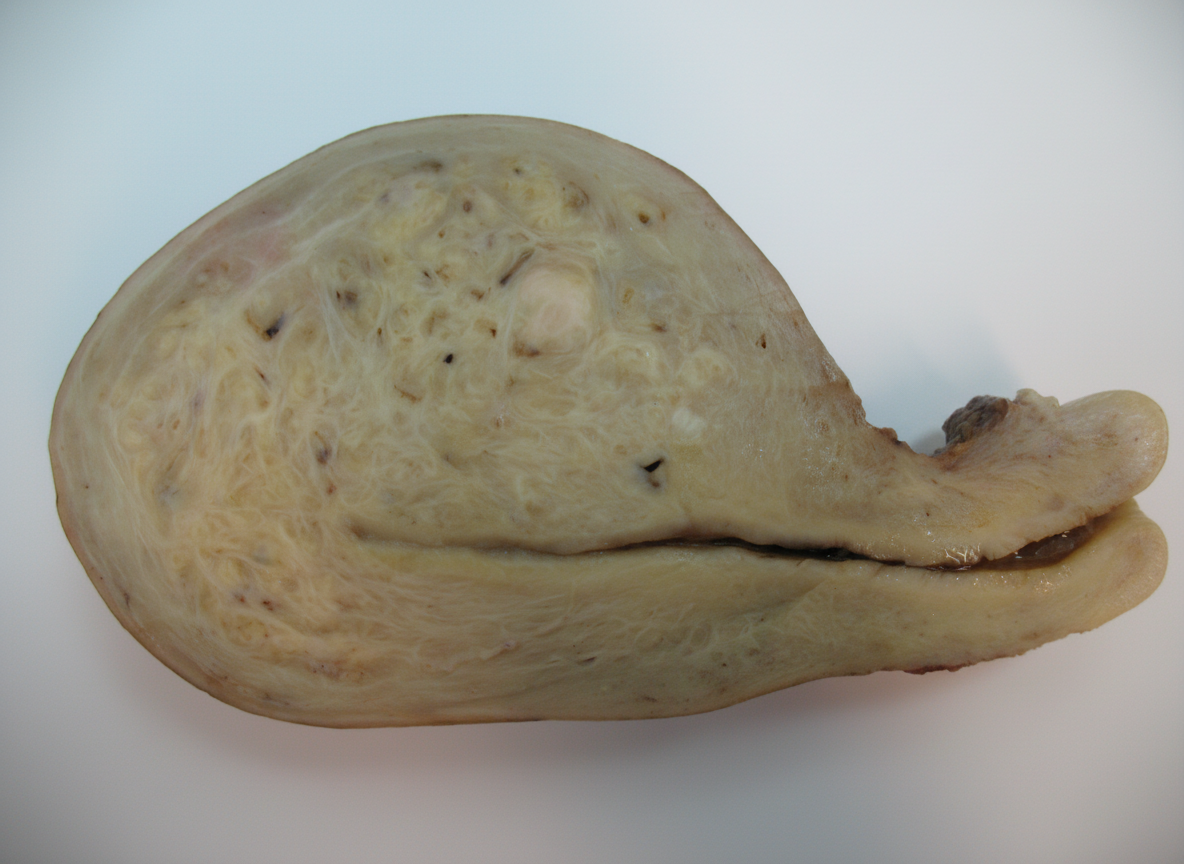
Major use of mifepristone in obstetrics and gynecology is for the management of:
What causes a creamy white watery vaginal discharge with a fishy odor and minimal itching?
What is the recommended working intra-abdominal pressure for gynecological laparoscopy?
Bilateral tubal ligation is a risk factor for:
An 18-year-old sexually active college student presents with complaints of lower abdominal pain and irregular bleeding for five days. She has no fever. She uses oral contraceptives as a method of birth control. Upon examination, the cervix is friable, there is cervical motion tenderness and adnexal tenderness. The pregnancy test is negative. Which is the most likely etiologic agent responsible for these findings?
All of the following differentiate theca lutein cysts from corpus luteum cysts, except?
Strawberry vagina is seen in which of the following conditions?
Which of the following treatment options is best for deep infiltrating endometriosis?
Hirsutism is seen in all of the following conditions except?
What is the most common uterine anomaly?
Explanation: **Explanation:** **Mifepristone (RU-486)** is a potent synthetic anti-progestational agent. Its primary mechanism involves competitive inhibition of progesterone receptors, leading to decidual breakdown and sensitization of the myometrium to prostaglandins. **Why Ectopic Pregnancy is Correct:** In the management of **unruptured ectopic pregnancy**, Mifepristone is used as an adjunct to **Methotrexate**. Progesterone is essential for maintaining the decidua and the viability of the ectopic pregnancy; by blocking these receptors, Mifepristone facilitates the detachment of the trophoblast, enhancing the success rate of medical management. **Analysis of Incorrect Options:** * **Molar Pregnancy:** The definitive treatment is **Suction Evacuation**. Medical induction with Mifepristone is contraindicated due to the high risk of hemorrhage and the potential for embolization of trophoblastic tissue. * **Fibroid Uterus:** While Mifepristone can be used to reduce the size of fibroids (by inhibiting progesterone-dependent growth), it is **not** considered a "major" or first-line use compared to its role in pregnancy termination and ectopic management. * **Threatened Abortion:** Progesterone is required to *sustain* a pregnancy. Administering an anti-progestogen like Mifepristone would be counter-therapeutic and would likely convert a threatened abortion into an inevitable or complete abortion. **High-Yield Clinical Pearls for NEET-PG:** * **Medical Abortion:** The most common use is in combination with Misoprostol (Mifepristone 200mg orally followed by Misoprostol 800mcg vaginally/sublingually) for termination of pregnancy up to 9 weeks (63 days). * **Cushing’s Syndrome:** Mifepristone is also FDA-approved for controlling hyperglycemia in endogenous Cushing’s syndrome (due to its anti-glucocorticoid effects). * **Emergency Contraception:** It can be used as a single dose (10mg) for emergency contraception. * **Cervical Priming:** It is used for pre-induction cervical ripening in cases of intrauterine fetal death (IUFD).
Explanation: **Explanation:** The clinical presentation of **creamy white, thin, watery vaginal discharge** accompanied by a characteristic **fishy odor** and minimal inflammation (itching/redness) is the classic hallmark of **Bacterial Vaginosis (BV)**. **1. Why Bacterial Vaginosis is correct:** BV is not an infection in the traditional sense, but a **dysbiosis** where normal *Lactobacillus* (which maintains an acidic pH) is replaced by anaerobes like *Gardnerella vaginalis*, *Mobiluncus*, and *Mycoplasma hominis*. The fishy odor is due to the release of **amines** (putrescine and cadaverine) when the vaginal pH rises above 4.5. The lack of significant itching or pain distinguishes it as a "vaginosis" rather than a "vaginitis" (no active inflammation). **2. Why other options are incorrect:** * **Gonorrhea:** Typically presents as a thick, purulent yellow-green discharge originating from the cervix (cervicitis), often associated with pelvic pain. * **Trichomonas:** Characterized by a **frothy, greenish-yellow** discharge, intense itching, and a "strawberry cervix" (punctate hemorrhages). * **Candida:** Presents with a thick, **curdy, "cottage-cheese"** like discharge with intense pruritus and a normal vaginal pH (<4.5). **Clinical Pearls for NEET-PG:** * **Amsel’s Criteria (3 out of 4 required):** 1. Thin, homogenous discharge. 2. Vaginal pH > 4.5. 3. **Positive Whiff Test** (fishy odor on adding 10% KOH). 4. **Clue Cells** on wet mount (Gold Standard for diagnosis). * **Nugent Scoring:** The most reliable laboratory method (Gram stain based). * **Treatment of Choice:** Oral or topical **Metronidazole**. (Note: Partner treatment is not routinely recommended for BV, unlike Trichomoniasis).
Explanation: The correct working intra-abdominal pressure for gynecological laparoscopy is **10-15 mm Hg**. ### **Explanation of the Correct Answer** To perform laparoscopy, a pneumoperitoneum must be created to provide adequate visualization and surgical space. **12-15 mm Hg** (commonly cited as the 10-15 mm Hg range) is considered the "gold standard" because it provides a sufficient view of the pelvic organs while minimizing hemodynamic and respiratory complications. At this pressure, the diaphragm is not excessively splinted, and venous return (preload) is generally maintained. ### **Analysis of Incorrect Options** * **B & C (15-30 mm Hg):** Pressures above 20 mm Hg are dangerous. High pressure causes **hypercarbia** (CO2 absorption), decreased cardiac output due to compression of the inferior vena cava, and reduced lung compliance. It also increases the risk of gas embolism and subcutaneous emphysema. * **D (30-50 mm Hg):** These levels are physiologically catastrophic, leading to severe respiratory acidosis and potential cardiovascular collapse. ### **High-Yield Clinical Pearls for NEET-PG** * **Gas of Choice:** **CO2** is used because it is non-combustible, highly soluble in blood (reducing embolism risk), and rapidly excreted by the lungs. * **Initial Insufflation:** Should be started at a **low flow rate (1 L/min)**. * **Veress Needle Safety:** The "Quadruple Test" (Aspiration, Saline drop test, Syringe test, and Initial low pressure <10 mm Hg) confirms correct placement. * **Shoulder Pain:** Post-operative shoulder pain is a common side effect caused by CO2 irritating the **phrenic nerve**, which refers pain to the C3-C5 dermatomes. * **Trendelenburg Position:** Used in gynecology to shift bowel cranially, but it further decreases functional residual capacity (FRC) in the lungs.
Explanation: **Explanation:** **Correct Answer: A. Uterine prolapse** The correct answer is uterine prolapse, primarily due to the disruption of pelvic blood flow and anatomical support. Bilateral Tubal Ligation (BTL) can interfere with the **utero-ovarian vascular arcade**. This compromise in blood supply may lead to the weakening of the pelvic floor musculature and the cardinal/uterosacral ligaments over time. Furthermore, some studies suggest that the surgical manipulation involved in BTL may subtly alter the pelvic fascia's integrity, predisposed to pelvic organ prolapse (POP) in the long term. **Analysis of Incorrect Options:** * **B. Endometriosis:** BTL is actually considered a **protective factor** against endometriosis. By occluding the fallopian tubes, it prevents the retrograde menstruation of endometrial tissue into the peritoneal cavity (Sampson’s theory). * **C. Pelvic Inflammatory Disease (PID):** BTL is **protective** against PID. It acts as a physical barrier that prevents the ascending spread of pathogens (like *N. gonorrhoeae* and *C. trachomatis*) from the lower genital tract to the pelvic cavity. * **D. Abortion:** BTL is a method of permanent sterilization. While it does not increase the risk of abortion, if a pregnancy does occur (failure of sterilization), there is a significantly higher risk that it will be an **ectopic pregnancy** rather than a spontaneous abortion. **NEET-PG High-Yield Pearls:** * **Protective effect of BTL:** It significantly reduces the risk of **Epithelial Ovarian Cancer** (by preventing the migration of carcinogens/fimbrial cells) and PID. * **Post-Tubal Ligation Syndrome:** A controversial complex of symptoms including pelvic pain and menorrhagia, often attributed to vascular compromise. * **Failure Rate:** The Pearl Index for BTL is approximately 0.5 per 100 woman-years. If pregnancy occurs post-BTL, always rule out ectopic pregnancy first.
Explanation: ### Explanation The clinical presentation of lower abdominal pain, irregular bleeding, cervical motion tenderness, and adnexal tenderness in a young, sexually active female is classic for **Pelvic Inflammatory Disease (PID)** [2], [3]. **1. Why Chlamydia trachomatis is correct:** * **Epidemiology:** *Chlamydia trachomatis* is the most common bacterial cause of PID worldwide, especially in the adolescent and young adult population [4]. * **Clinical Presentation:** Chlamydial PID often presents with a more subacute or "silent" course compared to Gonorrhea; the onset of pain is typically 5-7 days [5]. Symptoms like irregular bleeding (due to cervicitis/endometritis) and a **friable cervix** (bleeds easily on contact) are hallmark signs [2], [5]. * **Risk Factors:** The patient is on oral contraceptives (OCPs). While OCPs reduce the risk of severe PID by thickening cervical mucus, they are associated with **cervical ectopy**, which increases the surface area of columnar epithelium—the specific target for *Chlamydia* [1], [2]. **2. Why the other options are incorrect:** * **Neisseria gonorrhoeae:** While a major cause of PID, it typically presents more acutely with high-grade fever, purulent vaginal discharge, and more severe systemic symptoms [5]. * **Treponema pallidum:** The causative agent of Syphilis. It typically presents with a painless chancre (primary) or a generalized rash (secondary), not with acute adnexal tenderness or PID symptoms. * **Herpes simplex virus type 2:** Usually presents with painful vesicular or ulcerative lesions on the external genitalia and dysuria, rather than isolated adnexal tenderness. **3. NEET-PG High-Yield Pearls:** * **Gold Standard Diagnosis for PID:** Laparoscopy (shows tubal edema and erythema). * **Most Common Symptom:** Lower abdominal pain (dull/aching) [5]. * **Most Specific Sign:** Adnexal tenderness [2]. * **Fitz-Hugh-Curtis Syndrome:** A complication of PID involving peri-hepatitis ("violin-string" adhesions) [5]. * **Treatment:** CDC recommends Ceftriaxone (single IM dose) + Doxycycline (14 days) + Metronidazole (14 days).
Explanation: **Explanation:** The core concept differentiating these two functional ovarian cysts lies in their etiology and presentation. **Theca lutein cysts** are caused by hypersensitivity to or excessive levels of **hCG** (Human Chorionic Gonadotropin), which stimulates both ovaries simultaneously. Therefore, they are characteristically **bilateral**. In contrast, **corpus luteum cysts** are typically **unilateral**, forming after ovulation from a single dominant follicle. **Analysis of Options:** * **Option C (Correct):** This is the exception. Theca lutein cysts are almost always bilateral. Finding a unilateral cyst points towards a corpus luteum cyst or another pathology. * **Option A:** Theca lutein cysts often lead to **massively enlarged ovaries** (sometimes >10 cm), a condition known as *Hyperreactio Luteinalis*, whereas corpus luteum cysts are usually smaller (3–6 cm). * **Option B:** On ultrasound, theca lutein cysts present as multiple thin-walled cysts, giving a classic **"honeycombed" or "soap bubble" appearance**. Corpus luteum cysts typically appear as a single cyst with a "ring of fire" vascularity. * **Option D:** Grossly, theca lutein cysts appear as **lobulated, bluish-tinged** surfaces due to the multiple clear or straw-colored fluid-filled follicles under tension. **NEET-PG High-Yield Pearls:** 1. **Associations:** Theca lutein cysts are strongly associated with **Gestational Trophoblastic Disease (Molar pregnancy)**, multiple gestations, and Ovarian Hyperstimulation Syndrome (OHSS). 2. **Management:** They are physiological and usually **regress spontaneously** once the source of hCG is removed (e.g., evacuation of a mole). Surgery is only indicated for complications like torsion or rupture. 3. **Luteoma of Pregnancy:** Unlike theca lutein cysts, luteomas are solid tumors that can cause maternal and fetal virilization.
Explanation: **Explanation:** **Trichomonas vaginalis** is the correct answer. This condition is caused by a flagellated protozoan. The characteristic **"Strawberry Vagina" (Colpitis Macularis)** occurs due to punctate hemorrhages on the vaginal walls and the cervix. These small, red, inflammatory spots against the pink mucosa resemble the surface of a strawberry. Clinically, it presents with a profuse, malodorous, frothy, yellowish-green discharge and a vaginal pH > 4.5. **Why other options are incorrect:** * **Candida albicans:** This fungal infection typically presents with a thick, white, "curdy" or **cottage-cheese-like discharge** and intense vulvovaginal pruritus. The vaginal mucosa is usually erythematous but lacks punctate hemorrhages. * **H. vaginalis (Gardnerella vaginalis):** This is the primary organism in Bacterial Vaginosis. It is characterized by a thin, homogenous, greyish-white discharge with a "fishy odor" (positive Whiff test) and the presence of **Clue cells** on microscopy, not a strawberry cervix. * **Syphilis:** Primary syphilis presents with a painless **chancre**, while secondary syphilis may show condyloma lata. It does not cause the specific inflammatory pattern of a strawberry vagina. **High-Yield Clinical Pearls for NEET-PG:** * **Diagnosis:** The gold standard is **Culture (Diamond’s medium)**, but the most common bedside test is a **Wet mount** showing motile pear-shaped flagellates. * **Treatment:** The drug of choice is **Metronidazole** (2g stat or 400mg TDS for 7 days). * **Key Point:** Trichomoniasis is a **Sexually Transmitted Infection (STI)**; therefore, simultaneous treatment of the partner is mandatory to prevent recurrence.
Explanation: **Explanation:** **Deep Infiltrating Endometriosis (DIE)** is defined as endometriotic lesions that penetrate more than **5 mm** beneath the peritoneal surface. These lesions often involve the retroperitoneal space, including the uterosacral ligaments, rectovaginal septum, bowel, and bladder. 1. **Why Radical Excision is Correct:** The gold standard for DIE is **radical surgical excision**. Because these lesions are nodular and penetrate deeply into fibromuscular tissue, superficial treatments are ineffective. Complete excision (removing the entire nodule until healthy margins are reached) is necessary to provide long-term symptomatic relief from chronic pelvic pain and dyspareunia, and to reduce the high rate of recurrence associated with incomplete removal. 2. **Why Other Options are Incorrect:** * **Laser and Electrosurgical Ablation:** These techniques only treat the superficial "tip of the iceberg." They lack the depth of penetration required to destroy deep-seated nodules, leading to incomplete treatment and persistent symptoms. * **Laparoscopic Adhesiolysis:** While often performed alongside excision to restore anatomy, adhesiolysis alone does not address the underlying infiltrative disease. **High-Yield Clinical Pearls for NEET-PG:** * **Definition:** Penetration >5 mm into the peritoneum. * **Most Common Site:** Uterosacral ligaments. * **Diagnosis:** Transvaginal Ultrasound (TVUS) with "tenderness-guided" mapping or MRI are the preferred imaging modalities before surgery. * **Medical Management:** Usually serves as a bridge to surgery or for symptom control; it does not "cure" or disappear DIE nodules. * **Surgical Goal:** "Complete excision of all visible disease" is the primary objective in DIE management.
Explanation: **Explanation:** Hirsutism is defined as the presence of terminal hair in females in a male-pattern distribution (e.g., face, chest, back). It is primarily driven by an excess of circulating androgens or increased sensitivity of hair follicles to androgens. **Why Hyperthyroidism is the Correct Answer:** Hyperthyroidism is **not** associated with hirsutism. In fact, hyperthyroidism is typically associated with **thinning of hair** or diffuse alopecia. While thyroid disorders can affect Sex Hormone Binding Globulin (SHBG) levels, they do not cause the androgen excess required to produce terminal hair growth in a male distribution. **Analysis of Incorrect Options:** * **Acromegaly:** Excess Growth Hormone (GH) stimulates the production of IGF-1, which can lead to skin thickening and hirsutism. Additionally, GH can have a direct effect on the hair follicle and is often associated with insulin resistance, which lowers SHBG and increases free androgens. * **Arrhenoblastoma (Sertoli-Leydig Cell Tumor):** This is a rare ovarian tumor that secretes high levels of testosterone. It is a classic cause of rapid-onset, severe hirsutism often accompanied by virilization. * **PCOD (Polycystic Ovarian Disease):** This is the **most common cause** of hirsutism. It involves a state of hyperandrogenism driven by high LH levels and insulin resistance. **High-Yield Clinical Pearls for NEET-PG:** * **Ferriman-Gallwey Score:** Used to clinically grade hirsutism (Score ≥ 8 is significant). * **SHBG Connection:** Any condition that lowers SHBG (like Obesity, Hypothyroidism, or Acromegaly) increases the "Free Androgen Index," leading to hirsutism. * **Rapid Onset Hirsutism:** Always suspect an androgen-secreting tumor (Adrenal or Ovarian) if hirsutism develops rapidly or is accompanied by virilization (clitoromegaly, deepening of voice). * **Drug-induced Hirsutism:** Common culprits include Minoxidil, Phenytoin, Cyclosporine, and Anabolic steroids.
Explanation: **Explanation:** The correct answer is **Bicornuate uterus**. Uterine anomalies result from the abnormal development, fusion, or canalization of the Müllerian (paramesonephric) ducts during embryogenesis. **1. Why Bicornuate Uterus is Correct:** While there is some debate in older literature regarding the septate uterus, for the purpose of NEET-PG and based on standard textbooks like Williams Gynecology and Shaw’s, the **Bicornuate uterus** is frequently cited as the most common clinically significant Müllerian duct anomaly. It occurs due to the **partial failure of fusion** of the Müllerian ducts at the level of the fundus, resulting in two separate uterine horns with a single cervix. **2. Analysis of Incorrect Options:** * **Uterus didelphys (A):** This is a complete failure of fusion of the Müllerian ducts, resulting in two separate uteri, two cervices, and often a vaginal septum. It is much rarer than the bicornuate variety. * **Uterus pseudodidelphys (B):** This is not a standard classification in the AFS (American Fertility Society) or ESHRE/ESGE systems; it is often a descriptive term for a bicornuate unicollis uterus that mimics didelphys. * **Subseptate uterus (C):** This results from a failure of **resorption** of the midline septum. While some recent epidemiological studies suggest septate uteri are common in infertility clinics, the bicornuate uterus remains the classic answer for the most common anomaly in general obstetric populations. **3. High-Yield Clinical Pearls for NEET-PG:** * **Most common anomaly overall:** Bicornuate uterus (as per standard MCQ patterns). * **Anomaly with the worst obstetric outcome:** Septate uterus (highest risk of miscarriage). * **Anomaly most associated with Renal Agenesis:** Uterus didelphys (always check the renal system with an ultrasound). * **Gold Standard Investigation:** MRI or 3D Ultrasound (HSG cannot reliably distinguish between bicornuate and septate). * **Treatment of choice for Septate Uterus:** Hysteroscopic septal resection (Strassman’s metroplasty is for Bicornuate).
Abnormal Uterine Bleeding
Practice Questions
Endometriosis
Practice Questions
Adenomyosis
Practice Questions
Uterine Fibroids
Practice Questions
Ovarian Cysts
Practice Questions
Pelvic Inflammatory Disease
Practice Questions
Vulvovaginitis
Practice Questions
Pelvic Organ Prolapse
Practice Questions
Vulvar Disorders
Practice Questions
Benign Breast Diseases
Practice Questions
Get full access to all questions, explanations, and performance tracking.
Start For Free