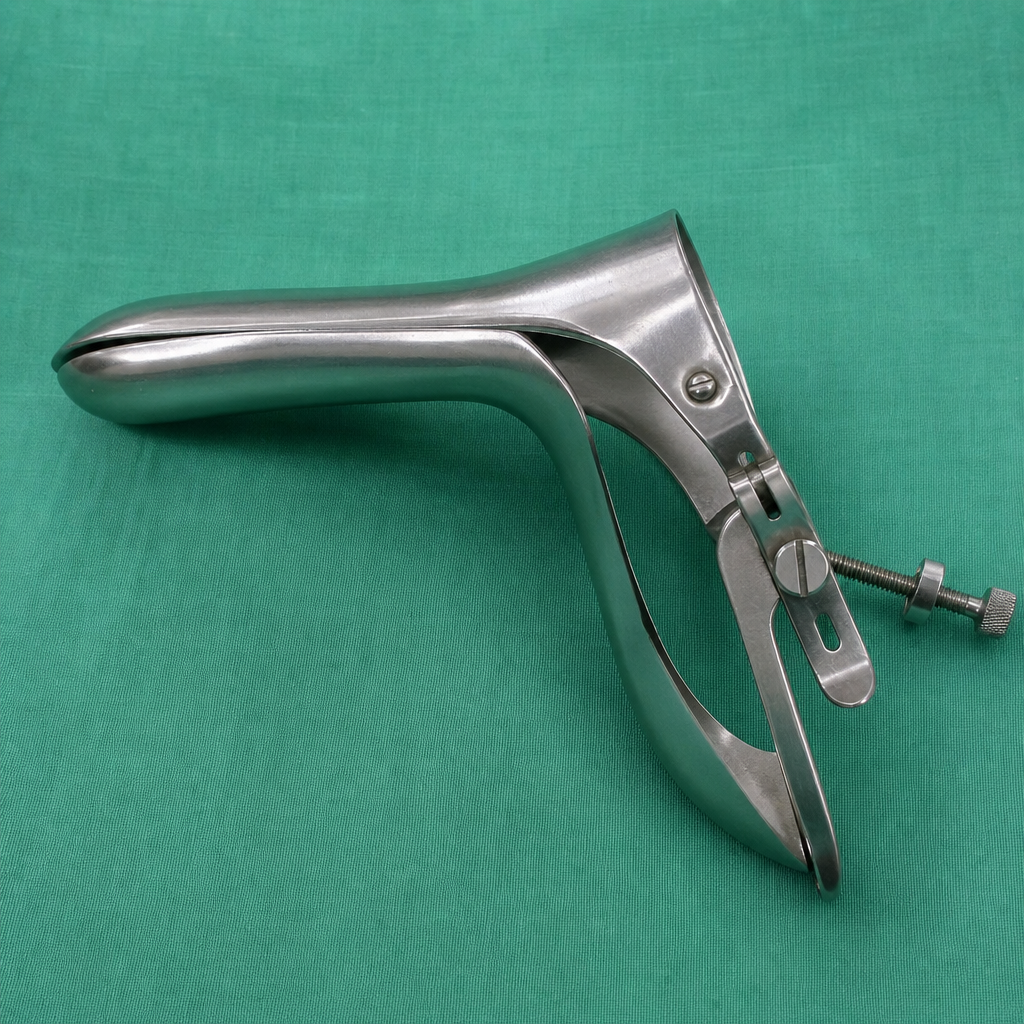
Candida infection is predisposed by all of the following, except?
Asherman's syndrome can be diagnosed by all of the following except?
Theca lutein cysts are usually managed by?
Which of the following is NOT used in the treatment of endometriosis?
What is the shape of the external os in a nulliparous female?
What is the surest sign of salpingitis?
Which of the following is NOT a complication of uterine prolapse?
A woman presents with vomiting and vaginal bleeding. Further investigation reveals a trophoblastic disease that has invaded the myometrium. Histopathology shows evidence of chorionic villi. What is your diagnosis?
What is the treatment for a lutein cyst in a hydatidiform mole?
What is the most common cause of anovulation?
Explanation: **Explanation:** The correct answer is **Menstruation**. **1. Why Menstruation is the correct answer:** *Candida albicans* thrives in an acidic environment (pH < 4.5). During **menstruation**, the vaginal pH becomes more **alkaline** due to the presence of blood (pH ~7.4). This increase in pH inhibits the growth of Candida, making symptomatic yeast infections less common during the menstrual flow. Conversely, Candida infections typically flare up in the **premenstrual phase** when progesterone levels are high and the environment is more acidic. **2. Why the other options are incorrect:** * **Diabetes (B):** Hyperglycemia leads to increased glucose levels in vaginal secretions, providing a rich medium for fungal growth. It also impairs local immune responses. * **Combined Oral Contraceptive Pill (D):** High estrogen levels in COCPs increase the glycogen content of the vaginal epithelium. *Lactobacilli* ferment this glycogen into lactic acid, maintaining an acidic pH that favors Candida overgrowth. Estrogen also increases the expression of vaginal receptors for Candida. * **Minipill users (C):** While the risk is lower than with COCPs, Progesterone-only pills (Minipills) can still predispose to infection by altering the vaginal environment and local immunity, though this is a subject of debate; however, compared to the protective effect of menstruation, it remains a predisposing factor. **Clinical Pearls for NEET-PG:** * **Classic Presentation:** Curdy white (cottage cheese) discharge with intense vulvar pruritus and "satellite lesions." * **Diagnosis:** Presence of pseudohyphae on **KOH mount** (Whiff test is negative). * **Risk Factors (High-Yield):** Pregnancy (high estrogen), Broad-spectrum antibiotics (kills protective Lactobacilli), Immunosuppression (HIV/Steroids), and tight synthetic clothing. * **Treatment:** Topical Clotrimazole or oral Fluconazole (150mg single dose). Note: Fluconazole is contraindicated in pregnancy.
Explanation: **Explanation:** Asherman’s Syndrome is characterized by the formation of intrauterine adhesions (synechiae), usually following trauma to the basal layer of the endometrium (e.g., over-zealous curettage or genital tuberculosis). Diagnosis relies on **imaging or direct visualization** of these structural abnormalities. **Why Endometrial Culture is the correct answer:** Endometrial culture is used to identify microbial pathogens in cases of chronic endometritis or pelvic inflammatory disease. While infection (like TB) can lead to Asherman’s, the culture itself identifies the *causative organism*, not the *structural adhesions*. Therefore, it is not a diagnostic tool for the syndrome itself. **Analysis of other options:** * **Hysterosalpingography (HSG):** Traditionally the initial screening test. It shows characteristic "filling defects" or a "lacunar appearance" where the dye cannot flow due to adhesions. * **Saline Infusion Sonography (SIS):** A sensitive bedside tool where saline distends the uterine cavity, allowing ultrasound to visualize bands of tissue (adhesions) stretching across the cavity. * **Hysteroscopy:** The **Gold Standard** for both diagnosis and treatment. It allows direct visualization of the extent, location, and nature of the adhesions and enables simultaneous adhesiolysis. **Clinical Pearls for NEET-PG:** * **Most common cause:** Post-traumatic (D&C for missed abortion or postpartum hemorrhage). * **In India:** Genital Tuberculosis is a significant non-traumatic cause. * **Clinical Presentation:** Secondary amenorrhea or hypomenorrhea with cyclic pelvic pain. * **Treatment:** Hysteroscopic adhesiolysis followed by estrogen therapy (to promote endometrial regrowth) and placement of an IUCD or Foley catheter to prevent re-adhesion.
Explanation: **Explanation:** **Theca Lutein Cysts** are functional ovarian cysts caused by hypersensitivity or abnormally high levels of **human chorionic gonadotropin (hCG)**. This leads to the luteinization of the theca interna cells and massive enlargement of the ovaries, often bilaterally. **Why Option D is Correct:** The primary management strategy is **conservative**. Since these cysts are driven by hCG, they undergo **spontaneous regression** once the source of the hormone is removed. They are most commonly associated with **Gestational Trophoblastic Disease (Hydatidiform mole)**, multiple gestations, or ovulation induction. Once the mole is evacuated or the pregnancy ends, the cysts typically resolve within 2–4 months without surgical intervention. **Why Other Options are Incorrect:** * **Option A (USG Aspiration):** Aspiration is avoided due to the risk of recurrence, infection, and the fact that these cysts are multi-loculated and highly vascular. * **Option B (Methotrexate):** While Methotrexate is used for ectopic pregnancy or persistent trophoblastic disease, it is not a direct treatment for theca lutein cysts themselves. * **Option C (Laparoscopic Cystectomy):** Surgery is contraindicated because the ovarian tissue is extremely friable and vascular. Intervention is reserved only for complications like **torsion** (if detorsion fails) or **rupture with hemorrhage**. **Clinical Pearls for NEET-PG:** * **Hyperreactio Luteinalis:** The term used when these cysts occur in a normal singleton pregnancy (usually in the third trimester). * **Appearance:** Classically described as **bilateral, multi-loculated "soap-bubble" appearance** on ultrasound. * **Complication:** They are associated with an increased risk of **Pre-eclampsia** and **Hyperemesis Gravidarum** due to high hCG levels. * **Rule of Thumb:** Always treat the underlying cause (e.g., suction evacuation for molar pregnancy) and wait for regression.
Explanation: **Explanation:** **1. Why Estrogen is the Correct Answer:** Endometriosis is an **estrogen-dependent** inflammatory condition characterized by the growth of endometrial-like tissue outside the uterus. Estrogen stimulates the proliferation and growth of these ectopic lesions. Therefore, the primary goal of medical management is to create a **hypoestrogenic environment** or a state of "pseudopregnancy" or "pseudomenopause." Administering estrogen would exacerbate the disease, worsen symptoms, and promote lesion growth, making it contraindicated as a standalone treatment. **2. Why the Other Options are Incorrect:** * **Progesterone (A):** Progestins (e.g., Medroxyprogesterone, Dienogest) cause decidualization and eventual atrophy of the endometrial tissue. They antagonize the proliferative effects of estrogen. * **Danazol (B):** An androgenic steroid that inhibits the mid-cycle LH/FSH surge and creates a high-androgen, low-estrogen environment (pseudomenopause), leading to atrophy of the ectopic tissue. * **GnRH Agonists (C):** Drugs like Leuprolide cause downregulation of pituitary GnRH receptors. This leads to profound suppression of FSH and LH, resulting in medical oophorectomy (hypogonadotropic hypogonadism). **3. Clinical Pearls for NEET-PG:** * **Gold Standard Diagnosis:** Laparoscopy (Visual confirmation with biopsy). * **First-line Medical Management:** Combined Oral Contraceptive Pills (COCPs) or NSAIDs for pain. * **Dienogest:** Currently a highly preferred progestin specifically for endometriosis due to its high efficacy and lower side-effect profile. * **Add-back Therapy:** When using GnRH agonists for >6 months, small doses of estrogen/progestin are added to prevent bone mineral density loss and vasomotor symptoms. * **Definitive Treatment:** Total Abdominal Hysterectomy with Bilateral Salpingo-oophorectomy (TAH + BSO).
Explanation: **Explanation:** The shape of the external os is a classic clinical indicator used to distinguish between a woman who has undergone vaginal childbirth and one who has not. **1. Why Circular is Correct:** In a **nulliparous** female (one who has never given birth), the external os is a small, smooth, and **circular** (or pin-head) opening. This is the anatomical state of the cervix before it has been subjected to the significant stretching and inevitable minor lacerations that occur during the second stage of labor. **2. Analysis of Incorrect Options:** * **B. Transverse:** This is the characteristic shape in a **multiparous** female. Following vaginal delivery, the circular os stretches and typically sustains small lateral tears. Once healed, the os appears as a wide, horizontal, or **transverse slit**. * **C. Vesicular:** This is not a standard anatomical description for the cervical os. The term "vesicular" usually refers to fluid-filled sacs (e.g., a hydatidiform mole). * **D. Oval:** While the os may appear slightly oval in some nulliparous women, "circular" is the standard medical descriptor used in textbooks and competitive exams like NEET-PG. **High-Yield Clinical Pearls for NEET-PG:** * **Nulliparous:** Circular/Pin-head os. * **Multiparous:** Transverse slit/Stellate (if severely lacerated). * **Ectocervix Lining:** Stratified squamous epithelium. * **Endocervix Lining:** Simple columnar epithelium. * **The Transformation Zone:** The area between the original and new squamocolumnar junction; it is the most common site for cervical intraepithelial neoplasia (CIN) and cervical cancer.
Explanation: **Explanation:** Salpingitis, a key component of Pelvic Inflammatory Disease (PID), is characterized by inflammation of the fallopian tubes. While several visual changes occur during laparoscopy, the **surest (most pathognomonic) sign** is the presence of **seropurulent discharge** (pus) leaking from the fimbrial ends or the tubal surface. **Why Option C is correct:** The presence of purulent or seropurulent exudate is the definitive evidence of active bacterial infection and inflammation within the tubal lumen. While other signs indicate inflammation, the visualization of pus is the most specific indicator that confirms the diagnosis of acute salpingitis during a laparoscopic evaluation. **Why other options are incorrect:** * **Options A, B, and D (Edema, Enlargement, and Hyperemia):** These are common features of inflammation, but they are **non-specific**. They can be seen in other conditions such as pelvic congestion syndrome, torsion, or even physiological changes during the periovulatory phase. While they are sensitive markers for inflammation, they lack the specificity of purulent discharge. **NEET-PG High-Yield Pearls:** * **Gold Standard Diagnosis:** Laparoscopy is the gold standard for diagnosing PID/salpingitis. * **Minimum Clinical Criteria (CDC):** For bedside diagnosis, the triad includes: 1) Cervical motion tenderness, 2) Uterine tenderness, and 3) Adnexal tenderness. * **Most Common Organisms:** *Chlamydia trachomatis* (most common overall) and *Neisseria gonorrhoeae*. * **Complications:** Chronic salpingitis is a leading cause of ectopic pregnancy and tubal factor infertility due to the destruction of the endosalpinx and subsequent scarring.
Explanation: **Explanation:** The correct answer is **A. Cervical cancer**. While uterine prolapse involves significant mechanical and structural changes to the pelvic organs, it is **not** a precursor or a risk factor for the development of cervical malignancy. In fact, the chronic friction and keratinization of the prolapsed tissue may actually make the detection of cervical intraepithelial neoplasia (CIN) more difficult, but it does not cause cancer. **Analysis of Options:** * **B. Elongation of the cervix:** This is a common compensatory mechanism in uterine prolapse. As the uterus descends, the supravaginal portion of the cervix stretches and elongates due to the constant downward pull and the resistance of the pelvic ligaments. * **C. Cystocele:** This is frequently associated with uterine prolapse. As the anterior vaginal wall loses support (due to defects in the pubocervical fascia), the urinary bladder herniates into the vaginal canal. * **D. Decubitus ulcer:** This is a classic complication of Grade III or IV prolapse (Procidentia). It occurs due to circulatory congestion and chronic friction of the exposed cervix against the thighs or clothing, leading to trophic changes and ulceration. **High-Yield Clinical Pearls for NEET-PG:** * **Decubitus Ulcer Management:** The primary treatment is bed rest and packing the vagina with gauze soaked in **glycerine and acriflavine** to reduce edema and promote healing before surgery. * **Hydroureter/Hydronephrosis:** A serious but often silent complication of procidentia caused by the ureters being "kinked" or dragged down by the uterine arteries. * **Keratinization:** The prolapsed vaginal mucosa undergoes "skin-like" changes (stratified squamous epithelium becomes keratinized) as a protective response to exposure.
Explanation: ### Explanation The correct diagnosis is **Invasive Mole** (also known as Chorioadenoma Destruens). **1. Why the correct answer is right:** The diagnosis of Gestational Trophoblastic Disease (GTD) depends on two key histopathological features: the presence of **chorionic villi** and the **depth of tissue invasion**. An invasive mole is characterized by the presence of hydropic chorionic villi that have invaded deep into the **myometrium** or its blood vessels. The clinical presentation of vaginal bleeding and vomiting (due to high hCG levels) is typical of molar pregnancies. **2. Why the incorrect options are wrong:** * **Benign Complete/Incomplete Mole:** While these also show chorionic villi, they are confined to the uterine cavity and do **not** invade the myometrium. * **Choriocarcinoma:** This is a highly malignant tumor. The pathognomonic feature that distinguishes it from an invasive mole is the **absence of chorionic villi**. It consists purely of sheets of anaplastic cytotrophoblasts and syncytiotrophoblasts with extensive hemorrhage and necrosis. **3. NEET-PG High-Yield Pearls:** * **Gold Standard for Diagnosis:** Histopathology is definitive. If you see "Villi + Myometrial Invasion," it is an **Invasive Mole**. If you see "No Villi + Myometrial Invasion," it is **Choriocarcinoma**. * **Most Common Site of Metastasis:** For both invasive moles and choriocarcinoma, the **lungs** are the most common site of distant spread (often presenting as "cannonball" opacities on X-ray). * **Treatment:** Both are highly sensitive to chemotherapy (Methotrexate is the first-line agent for low-risk cases). * **Follow-up:** Serial monitoring of **serum β-hCG** levels is essential to ensure complete remission.
Explanation: **Explanation:** The correct answer is **Suction Evacuation**. **Why it is correct:** The development of theca lutein cysts in a hydatidiform mole is a physiological response to excessively high levels of **human chorionic gonadotropin (hCG)**. These cysts are typically bilateral, multiloculated, and can reach significant sizes. The fundamental principle of management is that these cysts are **hCG-dependent**. Once the source of the high hCG (the molar pregnancy) is removed via **suction evacuation**, the stimulus for the cysts disappears. Consequently, the theca lutein cysts undergo spontaneous regression over several weeks to months. **Why the other options are incorrect:** * **A & B (Ovarian Cystectomy/Ovariectomy):** Surgical removal of the cysts or the entire ovary is contraindicated. Since the cysts are benign and regress spontaneously, surgery is unnecessary and increases the risk of hemorrhage and future infertility. * **D (Ovariotomy):** This term historically refers to any surgical opening of the ovary. Like other surgical interventions, it is not indicated for theca lutein cysts unless a rare complication like torsion or rupture occurs. **Clinical Pearls for NEET-PG:** * **Incidence:** Theca lutein cysts occur in approximately 25–30% of molar pregnancies. * **Significance:** Their presence is a risk factor for the development of **Gestational Trophoblastic Neoplasia (GTN)** post-evacuation. * **Complications:** Surgery is only indicated in emergencies such as **torsion, rupture, or internal hemorrhage**. * **Management:** Conservative management with serial ultrasound monitoring is the standard of care.
Explanation: **Explanation:** **1. Why Polycystic Ovary Syndrome (PCOS) is the Correct Answer:** PCOS is the most common cause of anovulatory infertility worldwide, affecting approximately 5–15% of women of reproductive age. It is classified by the WHO as **Group II Ovulatory Dysfunction** (normogonadotropic normoestrogenic). The underlying pathophysiology involves insulin resistance and hyperandrogenism, which disrupt the hypothalamic-pituitary-ovarian axis. This leads to an increased LH:FSH ratio, preventing the selection and maturation of a dominant follicle, resulting in chronic anovulation. **2. Analysis of Incorrect Options:** * **B. Hyperprolactinemia:** While a common cause of secondary amenorrhea, it is less prevalent than PCOS. Elevated prolactin inhibits GnRH pulsatility, leading to hypogonadotropic hypogonadism. * **C. Premature Ovarian Failure (POF):** Now termed Primary Ovarian Insufficiency (POI), this involves follicle depletion before age 40. It is a much rarer cause of anovulation compared to PCOS. * **D. Low Ovarian Reserves:** This refers to a decrease in the quantity/quality of oocytes (often age-related). While it leads to poor fertility, it is a physiological progression or a precursor to POI, not the most common clinical cause of anovulation. **3. NEET-PG High-Yield Clinical Pearls:** * **WHO Classification of Anovulation:** * Group I: Hypogonadotropic hypogonadism (e.g., Kallmann syndrome). * Group II: Normogonadotropic (e.g., **PCOS - Most Common**). * Group III: Hypergonadotropic hypogonadism (e.g., Premature Ovarian Failure). * **Rotterdam Criteria:** Used for PCOS diagnosis (requires 2 out of 3: Oligo/anovulation, Hyperandrogenism, and Polycystic ovaries on ultrasound). * **Drug of Choice:** Letrozole (Aromatase inhibitor) is now the first-line agent for ovulation induction in PCOS, surpassing Clomiphene Citrate.
Abnormal Uterine Bleeding
Practice Questions
Endometriosis
Practice Questions
Adenomyosis
Practice Questions
Uterine Fibroids
Practice Questions
Ovarian Cysts
Practice Questions
Pelvic Inflammatory Disease
Practice Questions
Vulvovaginitis
Practice Questions
Pelvic Organ Prolapse
Practice Questions
Vulvar Disorders
Practice Questions
Benign Breast Diseases
Practice Questions
Get full access to all questions, explanations, and performance tracking.
Start For Free