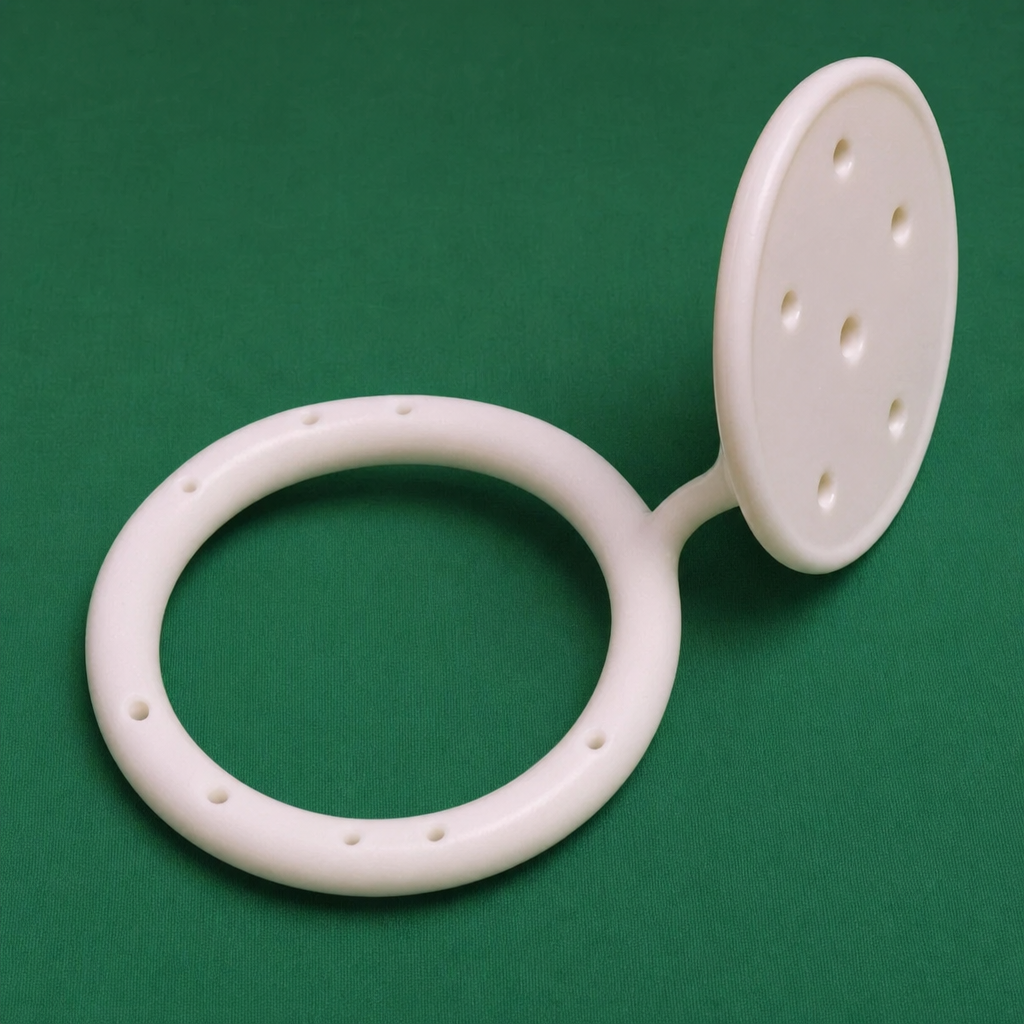
Bacterial vaginosis is also known by which of the following names?
Which of the following is least commonly seen in uterine fibroid?
What is the treatment of leukoplakia of the vulva?
In which condition might a vulvectomy be indicated?
In women with ureterovaginal fistula, which of the following statements is FALSE?
Ectopic pregnancy differs from threatened abortion by:
All of the following are true about Doderlein's bacillus, EXCEPT?
Which condition of the genital organs may lead to lesions in surgical scars, rectum, lymph nodes, and lungs?
Which of the following pre-malignant conditions of the vulva presents with a "cake icing effect"?
Histology of an endometriotic lesion represents its association with which of the following?
Explanation: **Explanation:** Bacterial Vaginosis (BV) is a clinical syndrome characterized by the replacement of normal hydrogen peroxide-producing *Lactobacillus* species with high concentrations of anaerobic bacteria. **Why Option B is Correct:** Historically, the organism most frequently associated with this condition was identified as *Haemophilus vaginalis*. Over time, the nomenclature evolved: it was renamed *Corynebacterium vaginale* and is currently known as **Gardnerella vaginalis**. Because of this historical classification, Bacterial Vaginosis is still synonymously referred to as **Haemophilus vaginitis** or Gardnerella vaginitis in medical literature and examinations. **Why Other Options are Incorrect:** * **Option A (Clostridium):** While some anaerobes like *Mobiluncus* are involved in BV, *Clostridium* species are not primary causative agents. * **Option C (Citrobacter):** This is a Gram-negative coliform bacterium typically associated with urinary tract infections or neonatal meningitis, not vaginal dysbiosis. * **Option D (Staphylococcal):** *Staphylococcus aureus* is associated with Toxic Shock Syndrome (TSS) but is not the etiology of the malodorous discharge seen in BV. **High-Yield Clinical Pearls for NEET-PG:** * **Amsel’s Criteria (3 out of 4 required):** 1. Homogeneous, thin, white-grey discharge. 2. Vaginal pH **> 4.5** (Most sensitive). 3. **Whiff Test:** Fishy odor on adding 10% KOH (due to release of amines). 4. **Clue Cells** on saline microscopy (Most specific). * **Nugent Scoring:** The "Gold Standard" for diagnosis based on Gram stain morphotypes. * **Treatment of Choice:** Oral **Metronidazole** (500 mg twice daily for 7 days). Clindamycin is an alternative. * **Note:** BV is a dysbiosis, not a true infection; therefore, treating the male partner is **not** recommended.
Explanation: **Explanation:** Uterine fibroids (leiomyomas) are benign smooth muscle tumors that frequently undergo various types of degeneration due to an outgrown blood supply. **Why Sarcomatous Change is the Correct Answer:** Sarcomatous change (transformation into leiomyosarcoma) is the **least common** occurrence, seen in **less than 0.1%** (approximately 0.5% in some texts) of cases. It is typically suspected in postmenopausal women who present with a rapidly enlarging uterus and postmenopausal bleeding. Because it is a malignant transformation rather than a simple degenerative process, it is statistically the rarest outcome among the options provided. **Analysis of Incorrect Options:** * **Hyaline Degeneration (A):** This is the **most common** type of degeneration (seen in ~65% of cases). It occurs when the fibrous tissue replaces the smooth muscle, giving it a homogenous appearance. * **Red Degeneration (C):** Also known as carneous degeneration, this typically occurs during **pregnancy** (usually the 2nd trimester) due to aseptic infarction. It is characterized by severe pain and a "beefy red" appearance. * **Fatty Degeneration (D):** This is relatively common, especially in older women or following menopause, occurring after hyaline degeneration as the tissue further breaks down. **NEET-PG High-Yield Pearls:** * **Most common degeneration overall:** Hyaline degeneration. * **Most common degeneration during pregnancy:** Red degeneration. * **Calcific degeneration:** Most common in postmenopausal women (seen as "womb stones" on X-ray). * **Cystic degeneration:** Occurs when hyaline tissue liquefies; often mimics an ovarian cyst on ultrasound. * **Key Clinical Sign of Sarcoma:** Rapid growth of a fibroid in a **postmenopausal** woman.
Explanation: **Explanation:** **Leukoplakia of the vulva** is a clinical term describing thickened, white, opaque patches on the vulvar skin. In modern gynecology, this most commonly corresponds to **Lichen Sclerosus** or **Squamous Cell Hyperplasia**. 1. **Why Estrogen Cream is the Correct Answer:** Leukoplakia is frequently associated with **atrophic changes** of the vulva and vagina, particularly in postmenopausal women. Estrogen deficiency leads to thinning of the epithelium and loss of glycogen, making the tissue prone to irritation and hyperkeratosis. Topical **Estrogen cream** helps restore the mucosal integrity, improves vascularity, and reverses atrophic changes, making it a primary medical management strategy for symptomatic relief and tissue restoration. (Note: For Lichen Sclerosus specifically, potent topical steroids like Clobetasol are the first line, but in the context of this classic MCQ, Estrogen is the preferred conservative choice). 2. **Why Other Options are Incorrect:** * **Irradiation (A):** Radiation is contraindicated for benign or pre-malignant vulvar lesions as it causes further tissue atrophy, endarteritis, and increases the risk of malignant transformation. * **Simple Vulvectomy (B):** This is an over-treatment for a benign condition. It is reserved for extensive cases of Vulvar Intraepithelial Neoplasia (VIN) or when medical therapy fails and there is a high suspicion of occult malignancy. * **Radical Vulvectomy (C):** This is the treatment of choice for **Invasive Vulvar Cancer**. It involves extensive removal of tissue and lymph nodes and is never indicated for leukoplakia. **High-Yield Clinical Pearls for NEET-PG:** * **Gold Standard Diagnosis:** Any suspicious white patch on the vulva must undergo a **punch biopsy** to rule out malignancy (Vulvar Carcinoma). * **Lichen Sclerosus:** Characterized by a "parchment-like" or "cigarette paper" appearance and a "Figure-of-8" distribution. * **Risk of Malignancy:** While leukoplakia is often benign, approximately 1-5% of cases of Lichen Sclerosus may progress to Squamous Cell Carcinoma.
Explanation: **Explanation:** **Granuloma Inguinale (Donovanosis)** is a chronic, progressive bacterial infection caused by *Klebsiella granulomatis*. While primarily treated with antibiotics (e.g., Azithromycin), it is characterized by extensive, painless, beefy-red "pseudobuboes" and significant tissue destruction. In chronic or neglected cases, the disease leads to severe **cicatrization (scarring), lymphatic obstruction, and vulvar elephantiasis**. In such instances of extensive tissue distortion or when there is a suspicion of malignant transformation (as chronic inflammation is a risk factor for squamous cell carcinoma), a **vulvectomy** may be indicated for functional and reconstructive purposes. **Why the other options are incorrect:** * **Chlamydia trachomatis:** Causes Lymphogranuloma Venereum (LGV) or cervicitis. While LGV can cause lymphatic obstruction (Esthiomene), the primary treatment is medical (Doxycycline). Vulvectomy is rarely the first-line surgical consideration compared to the extensive destruction seen in Donovanosis. * **Herpes Simplex (HSV):** A viral infection presenting with painful vesicles. It is managed with antiviral therapy (Acyclovir) and does not cause the structural destruction requiring radical surgery. * **Candidal Infection:** A common fungal vulvovaginitis treated with topical or oral antifungals (Fluconazole). It does not lead to permanent structural damage. **NEET-PG High-Yield Pearls:** * **Pathognomonic sign:** **Donovan Bodies** (safety-pin appearance) seen on Giemsa or Wright stain. * **Clinical feature:** "Beefy red" ulcers that bleed easily on touch; notably **painless**. * **Drug of Choice:** Azithromycin (1g once weekly or 500mg daily for at least 3 weeks). * **Surgical Note:** Surgery is reserved for late-stage complications like **pseudoelephantiasis** or secondary malignancy.
Explanation: ### Explanation **Ureterovaginal fistula (UVF)** most commonly occurs as a complication of pelvic surgeries, particularly radical hysterectomy. **Why Option B is the Correct (False) Statement:** The statement that "approximately 40% of cases heal spontaneously" is **false**. In clinical practice, the spontaneous healing rate of a true ureterovaginal fistula is very low (typically **less than 5–10%**). Unlike small vesicovaginal fistulae (VVF), which may occasionally close with prolonged catheterization, UVFs usually require surgical intervention (ureteroneocystostomy) or interventional radiology (antegrade/retrograde stenting) because the ureter is a high-pressure system with a small caliber, making it prone to stricture rather than spontaneous closure. **Analysis of Other Options:** * **Option A (True):** If the ureteric injury occurs intraperitoneally or if there is an associated leak into the peritoneal cavity before the fistula tract to the vagina is fully epithelialized, it can lead to **uroperitoneum**, presenting as free fluid in the abdominal cavity. * **Option C (True):** UVFs are frequently associated with **hydronephrosis**. This occurs because the injury causing the fistula (crush, thermal, or suture) often results in partial obstruction or scarring at the site of the ureteric leak, leading to proximal dilatation of the collecting system. **NEET-PG High-Yield Pearls:** 1. **Moir’s Test (Three-Swab Test):** Used to differentiate VVF from UVF. In UVF, the top swab is wet with **clear fluid** (urine), but the methylene blue injected into the bladder does **not** stain the swab. 2. **Clinical Presentation:** The classic triad is "continuous dribbling of urine" despite "normal voiding patterns" (since the contralateral ureter and bladder function are intact). 3. **Gold Standard Diagnosis:** Intravenous Urogram (IVU) or Contrast-Enhanced CT (CECT) to visualize the site of ureteric injury and the presence of hydroureteronephrosis. 4. **Most Common Site of Injury:** At the level of the uterine artery (where the ureter passes under the artery—"water under the bridge").
Explanation: In ectopic pregnancy, the embryo implants outside the uterine cavity (most commonly in the ampulla of the fallopian tube). Because the fallopian tube is thin-walled and lacks the decidual capacity of the endometrium, it cannot accommodate a growing fetus. This leads to early tubal distension or rupture, typically manifesting between **6 to 8 weeks** of gestation. In contrast, a threatened abortion occurs in an intrauterine pregnancy, where the uterus can expand significantly; symptoms usually manifest later in the first trimester. **Analysis of Options:** * **Option A (Incorrect):** Both conditions typically present with minimal or "spotting" vaginal bleeding. In ectopic pregnancy, bleeding is due to decidual sloughing, while in threatened abortion, it is due to slight separation of the chorion. * **Option B (Incorrect):** In ectopic pregnancy, **pain typically precedes bleeding**. In threatened abortion, bleeding usually occurs first, followed by mild cramping. This option is a distractor as it describes the sequence for ectopic, but the question asks for a definitive point of difference. * **Option C (Incorrect):** In threatened abortion, the uterine size corresponds to the period of amenorrhea. In ectopic pregnancy, the uterus is often **smaller** than expected for gestational age because the pregnancy is extrauterine. * **Option D (Correct):** Due to the limited space and lack of distensibility of the fallopian tube, ectopic pregnancies become symptomatic (pain/rupture) much earlier than most cases of threatened abortion. **High-Yield Clinical Pearls:** * **Classic Triad of Ectopic:** Amenorrhea, abdominal pain (most common symptom), and vaginal bleeding. * **Arias-Stella Reaction:** Hypersecretory endometrium seen on biopsy in ectopic pregnancy (not pathognomonic but high-yield). * **Discriminatory Zone:** The serum β-hCG level (usually 1500–2000 mIU/ml) at which an intrauterine gestational sac should be visible on Transvaginal Ultrasound (TVUS). If absent, suspect ectopic.
Explanation: ### Explanation The correct answer is **D**. While Doderlein’s bacilli are central to vaginal health, the statement that estrogen *directly* stimulates their growth is technically incorrect in a physiological sequence. **1. Why Option D is the correct answer (The Exception):** Estrogen does not directly act on the bacteria to stimulate growth. Instead, **estrogen stimulates the vaginal epithelium to produce and store glycogen.** Doderlein’s bacilli (Lactobacilli) then ferment this glycogen into lactic acid. Therefore, the growth of the bacilli is dependent on the *availability of glycogen* (the substrate), which is a secondary effect of estrogen, not a direct stimulation of the bacteria themselves. **2. Analysis of Incorrect Options:** * **Option A (Gram-positive):** Doderlein’s bacilli are indeed Gram-positive, non-spore-forming rod-shaped bacteria (primarily *Lactobacillus acidophilus*). * **Option B (Grows in acidic media):** These bacteria are acidophilic. They thrive in the acidic environment they help create, typically maintaining a vaginal pH of 3.8 to 4.5. * **Option C (Converts glycogen into lactic acid):** This is their primary metabolic function. By producing lactic acid, they maintain a low pH, which inhibits the overgrowth of pathogenic organisms like *E. coli* or *Gardnerella vaginalis*. **3. Clinical Pearls for NEET-PG:** * **Puberty & Menopause:** Doderlein’s bacilli appear only when estrogen is present. They are absent in prepubertal girls and postmenopausal women (where the pH is neutral/alkaline), making these groups more prone to non-specific vaginitis. * **Hydrogen Peroxide:** Some strains also produce $H_2O_2$, which acts as a natural disinfectant in the vaginal vault. * **Cytolytic Vaginosis:** An overgrowth of Doderlein’s bacilli can lead to excessive acidity, causing "cytolysis" of vaginal epithelial cells, mimicking a yeast infection (Candidiasis) but with a very low pH.
Explanation: **Explanation:** **Endometriosis** is defined as the presence of functioning endometrial tissue (glands and stroma) outside the uterine cavity. While it most commonly involves the ovaries (forming "chocolate cysts") and pelvic peritoneum, it is known for its unique ability to spread to distant sites via hematogenous or lymphatic routes, or through direct implantation. * **Why B is Correct:** Endometriosis is the only condition among the options that characteristically involves extra-pelvic sites. It can implant in **surgical scars** (especially post-LSCS or episiotomy), the **rectum** (causing cyclic hematochezia), **lymph nodes**, and even the **lungs/pleura** (leading to catamenial pneumothorax or hemoptysis). The "Metastatic Theory" (Halban’s theory) explains its spread through lymphatics, while the "Vascular Theory" explains distant organ involvement like the lungs. **Why the others are incorrect:** * **A. Teratoma:** These are germ cell tumors. While they contain tissue from all three germ layers, they do not "seed" to surgical scars or distant organs like the lungs unless they undergo malignant transformation (e.g., Squamous cell carcinoma), which is rare. * **C. Adenomyosis:** Often called "endometriosis interna," this is the invasion of the endometrium into the myometrium. It remains confined to the uterine wall and does not spread to distant sites or surgical scars. * **D. Fibroid:** These are benign monoclonal tumors of smooth muscle. While rare variants like "Benign Metastasizing Leiomyoma" exist, they do not typically present with the multi-organ involvement described in the question. **NEET-PG High-Yield Pearls:** * **Most common site:** Ovary. * **Most common distant site:** Lungs/Pleura (Catamenial pneumothorax). * **Sampson’s Theory:** Retrograde menstruation (most accepted for pelvic endometriosis). * **Diagnosis:** Laparoscopy is the "Gold Standard." * **Classic Triad:** Dysmenorrhea (congestive), Dyspareunia, and Infertility.
Explanation: ### Explanation **Correct Answer: C. Paget’s disease of vulva** **Why it is correct:** Extramammary Paget’s disease (EMPD) of the vulva is a rare intraepithelial neoplasia. It characteristically presents as a well-demarcated, erythematous, eczematous-like rash. The "cake icing effect" refers to the clinical appearance of **scattered white epithelial islands** (hyperkeratotic areas) overlying a bright red, velvety background. This creates a patchy, crusty appearance reminiscent of sugar icing on a cake. Patients typically present with chronic pruritus and soreness. **Why the other options are incorrect:** * **A. Vulvar Intraepithelial Neoplasia (VIN):** While VIN can present as white (leukoplakia), red, or pigmented lesions, it does not typically show the classic "cake icing" pattern. VIN is more commonly associated with HPV (uVIN) or chronic inflammatory conditions (dVIN). * **B. Lichen Sclerosis:** This is a chronic inflammatory dermatosis characterized by thin, ivory-white, "parchment-like" or "cigarette paper" skin. It often presents with a **"Figure-of-eight"** or "Hourglass" distribution around the vulva and anus, rather than the eczematous icing effect. * **D. Leukoplakia:** This is a clinical descriptive term for a white patch that cannot be rubbed off. It is a feature of many conditions (including VIN and Lichen Sclerosis) but is not a specific diagnosis or associated with the "cake icing" description. **NEET-PG High-Yield Pearls:** * **Histology:** Look for **Paget cells** (large, pale cells with granular cytoplasm and large nuclei) which stain positive with **PAS, Mucicarmine, and Alcian blue** (indicating mucin). * **Associated Malignancy:** Unlike Paget’s disease of the breast (nearly 100% associated with underlying ductal carcinoma), vulvar Paget’s is associated with an underlying adnexal or internal adenocarcinoma in only about **20-30%** of cases. * **Treatment:** Wide local excision is the gold standard, though recurrence rates are high due to "skip lesions."
Explanation: **Explanation:** **Endometriosis** is defined as the presence of endometrial-like tissue (stroma and glands) outside the uterine cavity. It is fundamentally an **estrogen-dependent, inflammatory condition.** **Why High Estrogen is Correct:** Estrogen plays a pivotal role in the pathogenesis and progression of endometriosis. The lesions exhibit high levels of **Aromatase** activity (the enzyme that converts androgens to estrogens) and a deficiency in **17β-hydroxysteroid dehydrogenase type 2** (which normally inactivates estradiol). This creates a local hyperestrogenic environment that promotes the proliferation of ectopic tissue and triggers an inflammatory response. Consequently, medical treatments for endometriosis (like GnRH agonists or aromatase inhibitors) focus on inducing a hypoestrogenic state. **Why Other Options are Incorrect:** * **High Progesterone:** Endometriotic lesions often exhibit **progesterone resistance**. There is a downregulation of progesterone receptors (PR-B), meaning progesterone cannot effectively antagonize the proliferative effects of estrogen in these lesions. * **High Cholesterol:** While cholesterol is a precursor to steroid hormones, systemic high cholesterol is not a diagnostic histological or pathophysiological hallmark of endometriosis. * **High Prolactin:** Hyperprolactinemia is associated with galactorrhea and amenorrhea but does not drive the growth of endometriotic implants. **NEET-PG High-Yield Pearls:** * **Commonest Site:** The ovary (often presenting as a "Chocolate Cyst" or Endometrioma). * **Classic Triad:** Dysmenorrhea (congestive/secondary), Dyspareunia, and Infertility. * **Gold Standard Diagnosis:** Laparoscopy with biopsy (visual confirmation of "powder-burn" or "gunshot" lesions). * **Theory of Pathogenesis:** Sampson’s Theory of Retrograde Menstruation is the most widely accepted. * **CA-125:** Often elevated in endometriosis but lacks specificity; used primarily for monitoring recurrence.
Abnormal Uterine Bleeding
Practice Questions
Endometriosis
Practice Questions
Adenomyosis
Practice Questions
Uterine Fibroids
Practice Questions
Ovarian Cysts
Practice Questions
Pelvic Inflammatory Disease
Practice Questions
Vulvovaginitis
Practice Questions
Pelvic Organ Prolapse
Practice Questions
Vulvar Disorders
Practice Questions
Benign Breast Diseases
Practice Questions
Get full access to all questions, explanations, and performance tracking.
Start For Free