Which of the following is the most common pure malignant germ cell tumor of the ovary?
A 50-year-old woman with a family history of breast cancer presents with a 6-month history of increasing abdominal girth. She reports vague abdominal pain for 1 year. She has no children and has never been pregnant. Bimanual pelvic examination reveals a 10-cm right adnexal mass. Percussion of the abdomen indicates ascites. Aspiration cytology of the ascites fluid reveals malignant papillary structures with psammoma bodies. A mutation in which of the following genes is most likely associated with this patient's malignant disease?
What is the treatment of choice for cervical intraepithelial neoplasia III with no colposcopic activity?
Sentinel biopsy is most effective in which of the following conditions?
Which of the following is the most radiosensitive ovarian tumor?
Which of the following is NOT true about Sertoli cell tumors of the ovary?
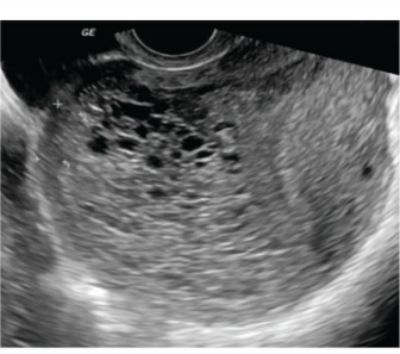
A 29-year-old female, G2 P1A1, presents with 16 weeks of amenorrhea, lower abdominal pain, and vaginal bleeding. Ultrasonography shows a "snow storm" appearance. What is the most feasible method of treatment?
An 8-week pregnant female presented with vaginal bleeding and ruptured cysts of hydatidiform mole. What is the investigation used for the diagnosis of hydatidiform mole?
Which is the largest common type of ovarian tumor?
What is the tumour marker for Endodermal Sinus Tumour?
Explanation: **Explanation:** **Dysgerminoma** is the most common pure malignant germ cell tumor (GCT) of the ovary, accounting for approximately 50% of all malignant GCTs. It is the female counterpart of the testicular seminoma. These tumors are typically seen in young women (adolescents and those in their 20s) and are characterized by their exquisite sensitivity to radiotherapy and chemotherapy. **Analysis of Options:** * **A. Choriocarcinoma:** This is a rare, highly aggressive non-gestational germ cell tumor. It is much less common than dysgerminoma and is associated with very high levels of hCG. * **B. Gonadoblastoma:** This is not a "pure" malignant germ cell tumor; it is a mixed germ cell-sex cord-stromal tumor. It typically arises in dysgenetic gonads (e.g., Swyer syndrome) and has the potential for malignant transformation into a dysgerminoma. * **D. Malignant Teratoma:** Specifically referring to **Immature Teratoma**, this is the second most common malignant GCT. While common, its incidence is lower than that of dysgerminoma. **High-Yield Clinical Pearls for NEET-PG:** * **Tumor Markers:** Dysgerminoma is associated with elevated **LDH** (most specific) and occasionally alkaline phosphatase. Unlike other GCTs, it usually does not produce AFP or hCG (unless syncytiotrophoblastic giant cells are present). * **Association:** It is the most common malignant tumor found in patients with **gonadal dysgenesis**. * **Bilateralism:** It is the only malignant GCT that is frequently **bilateral** (10–15% of cases); others are almost always unilateral. * **Microscopy:** Characterized by "fried egg" appearance cells (clear cytoplasm, central nuclei) separated by fibrous septa containing **lymphocytes**.
Explanation: **Explanation:** The clinical presentation—a 50-year-old nulliparous woman with a family history of breast cancer, a large adnexal mass, and ascites—is highly suggestive of **Epithelial Ovarian Cancer (EOC)**, specifically **Serous Cystadenocarcinoma**. The presence of **psammoma bodies** (laminated calcifications) and **papillary structures** in the ascitic fluid are classic histopathological hallmarks of serous tumors. 1. **Why BRCA1 is correct:** Mutations in **BRCA1** (and BRCA2) are the most significant genetic risk factors for hereditary ovarian cancer. BRCA1 is a tumor suppressor gene involved in DNA repair (homologous recombination). Women with BRCA1 mutations have a 40-50% lifetime risk of developing ovarian cancer, often presenting with high-grade serous histology. The patient’s nulliparity (incessant ovulation) and family history of breast cancer further increase this likelihood. 2. **Why other options are incorrect:** * **p53:** While *TP53* mutations are found in almost all high-grade serous ovarian cancers, they are usually somatic (acquired) rather than the primary germline driver associated with a strong family history of breast cancer in this context. * **Rb:** The Retinoblastoma gene is associated with retinoblastoma and osteosarcoma, not typically with the hereditary breast-ovarian cancer syndrome. * **VHL:** Von Hippel-Lindau gene mutations lead to hemangioblastomas, clear cell renal cell carcinoma, and pheochromocytomas. **High-Yield Clinical Pearls for NEET-PG:** * **Psammoma Bodies:** Found in **PS**ammoma: **P**apillary thyroid CA, **S**erous cystadenocarcinoma of ovary, **S**omatostatinoma, and **M**eningioma. * **Risk Factors for EOC:** Nulliparity, early menarche, late menopause (more ovulatory cycles). * **Protective Factors:** OCPs (suppress ovulation), pregnancy, and breastfeeding. * **Tumor Marker:** **CA-125** is used for monitoring response to treatment in serous ovarian cancer but is not specific for diagnosis.
Explanation: **Explanation:** **Cervical Intraepithelial Neoplasia III (CIN III)** represents high-grade squamous intraepithelial lesions (HSIL). When a colposcopic examination is considered "unsatisfactory" or shows **no colposcopic activity** (meaning the transformation zone or the extent of the lesion cannot be fully visualized), the primary goal is to rule out occult invasive carcinoma. **Why Conization is the Correct Choice:** Cold knife conization or LEEP (Loop Electrosurgical Excision Procedure) serves both a **diagnostic and therapeutic** purpose. Since the lesion's upper limit is not visible, a cone-shaped biopsy is mandatory to histologically evaluate the endocervical canal. This ensures that no microinvasive or invasive cancer is missed while simultaneously removing the CIN III lesion with clear margins. **Why Other Options are Incorrect:** * **A. Hysterectomy:** This is considered "overtreatment" as a primary step. Hysterectomy is only indicated for CIN III if there are coexisting gynecological issues (like fibroids), if margins remain positive after conization, or if the patient is post-menopausal and completed her family. * **B. Radiotherapy:** This is reserved for invasive cervical cancer (Stage IIB and above). It has no role in the management of pre-invasive lesions like CIN III. * **D. Follow up after 1 year:** CIN III is a high-grade lesion with a high risk of progression to malignancy. Observation is only acceptable for CIN I; CIN III requires active surgical intervention. **Clinical Pearls for NEET-PG:** * **Gold Standard for CIN III:** Excision (Conization/LEEP). * **Unsatisfactory Colposcopy:** Defined when the entire Squamocolumnar Junction (SCJ) is not visible. This is an absolute indication for conization. * **Treatment of Choice for CIN I:** Observation and repeat cytology in 6–12 months. * **Treatment of Choice for CIN II/III:** Ablation (if colposcopy is satisfactory) or Excision (if colposcopy is unsatisfactory).
Explanation: **Explanation:** **1. Why Vulval Cancer is Correct:** Sentinel Lymph Node (SLN) biopsy is the **standard of care** for early-stage vulval cancer (Stage IB or II, lesions <4 cm, and clinically N0 groin). The lymphatic drainage of the vulva is highly predictable, following a stepwise progression to the superficial and then deep inguinal nodes. Because radical inguinofemoral lymphadenectomy is associated with high morbidity (up to 70% risk of lymphedema, wound breakdown, and infection), SLN biopsy is most effective here to reduce surgical complications while maintaining oncological safety. **2. Why Other Options are Incorrect:** * **Cervix Cancer:** While SLN biopsy is increasingly used in early-stage cervical cancer (IA2-IB1), it is not yet the absolute "gold standard" compared to its established role in vulva cancer. The complex pelvic lymphatic drainage makes it technically more challenging. * **Endometrium Cancer:** SLN mapping is frequently used in low-risk endometrial cancer to avoid full pelvic lymphadenectomy, but its effectiveness is often debated regarding the detection of isolated tumor cells and its impact on overall survival compared to the vulva. * **Vaginal Cancer:** This is a rare malignancy with highly unpredictable lymphatic drainage (upper vagina to pelvic nodes, lower vagina to inguinal nodes). There is no established protocol for SLN biopsy in vaginal cancer. **Clinical Pearls for NEET-PG:** * **Tracer used:** Technetium-99m (99mTc) radiocolloid and/or Isosulfan/Methylene blue dye. * **Indication:** Lesion <4 cm, stromal invasion >1 mm, and no clinically palpable nodes. * **The "Ultra-staging" Concept:** SLN biopsy involves serial sectioning and Immunohistochemistry (IHC), which increases the detection of micrometastases that might be missed in a routine lymphadenectomy. * **Gold Standard:** For vulval cancer, if the SLN is negative, no further groin dissection is required.
Explanation: **Explanation:** **1. Why Dysgerminoma is the correct answer:** Dysgerminoma is the most common malignant germ cell tumor of the ovary and is uniquely characterized by its **extreme radiosensitivity**. It is the ovarian counterpart of the testicular seminoma. Because these tumors are highly sensitive to radiation, radiotherapy was historically the primary treatment. However, because dysgerminomas often affect young women of reproductive age, **platinum-based chemotherapy (BEP regimen)** is now the preferred treatment to preserve fertility, reserving radiotherapy for recurrent or resistant cases. **2. Why the other options are incorrect:** * **Dermoid Cyst (Mature Cystic Teratoma):** This is a benign germ cell tumor. It is composed of mature tissues (skin, hair, sebum) and is treated surgically (cystectomy); it is not radiosensitive. * **Serous Cystadenoma:** This is a benign epithelial tumor. Epithelial ovarian tumors, in general, are far less radiosensitive than germ cell tumors and are primarily managed with surgery. * **Endodermal Sinus Tumor (Yolk Sac Tumor):** While this is a malignant germ cell tumor, it is highly aggressive and primarily **chemosensitive**, not radiosensitive. It is characterized by elevated Alpha-Fetoprotein (AFP) and Schiller-Duval bodies. **3. Clinical Pearls for NEET-PG:** * **Tumor Marker:** Dysgerminoma is associated with elevated **LDH** (Lactic Dehydrogenase) and sometimes hCG. * **Microscopy:** Look for "large cells with clear cytoplasm and central nuclei, separated by fibrous septa containing **lymphocytes**." * **Most common malignant germ cell tumor in pregnancy:** Dysgerminoma. * **Associated Condition:** Often seen in patients with gonadal dysgenesis (Swyer Syndrome).
Explanation: **Explanation:** Sertoli cell tumors belong to the **Sex Cord-Stromal Tumor** group of ovarian neoplasms. These tumors are primarily virilizing because they are composed of cells that histologically resemble those found in the male testes. **1. Why Option B is the correct answer (The "NOT true" statement):** Sertoli cell tumors are classically associated with the production of **androgens** (testosterone and androstenedione), leading to defeminization and virilization. While some sex cord tumors like Granulosa cell tumors secrete estrogen (female hormones), pure Sertoli cell tumors do **not** typically secrete female hormones. Therefore, the statement that they secrete female hormones is incorrect. **2. Analysis of other options:** * **Option A:** They secrete male hormones. This is **true**. Clinical presentation often includes hirsutism, deepening of the voice, and clitoromegaly due to high testosterone levels. * **Option C:** They are also known as androblastomas. This is **true**. The term "Androblastoma" reflects their masculinizing nature and origin from the primitive sex cords. * **Option D:** They can be classified as gynandroblastomas. This is **true**. A gynandroblastoma is a rare subtype of sex cord-stromal tumor that contains both Sertoli-Leydig components and Granulosa-Theca components. **High-Yield Clinical Pearls for NEET-PG:** * **Most Common Presentation:** Secondary amenorrhea followed by virilization. * **Tumor Marker:** Elevated **Testosterone** levels; occasionally **Inhibin**. * **Histology:** Look for "hollow or solid tubules" lined by Sertoli cells. * **Age Group:** Usually occurs in young women (average age 25–30 years). * **Management:** Usually unilateral; conservative surgery (Unilateral Salpingo-oophorectomy) is often sufficient for Stage IA.
Explanation: **Explanation:** The clinical presentation of 16 weeks amenorrhea, vaginal bleeding, and the classic **"snow storm" appearance** on ultrasonography is pathognomonic for a **Hydatidiform Mole (Molar Pregnancy)**. **1. Why Suction Evacuation is the Correct Answer:** Suction evacuation (suction curettage) is the **gold standard** and treatment of choice for molar pregnancies, regardless of the uterine size. It is preferred because it is effective, minimizes the risk of uterine perforation compared to sharp curettage, and preserves fertility in young patients. In this case, the patient is 29 years old and G2 P1A1, making fertility preservation a priority. **2. Why Other Options are Incorrect:** * **Misoprostol & Mifepristone (Medical Management):** These are contraindicated in molar pregnancies. Medical induction increases the risk of heavy hemorrhage and, more importantly, increases the risk of **trophoblastic embolization** to the lungs due to vigorous uterine contractions. * **Hysterectomy:** While hysterectomy is an option for women who have completed their family or are over 40 years old (as it reduces the risk of post-molar gestational trophoblastic neoplasia), it is not the "most feasible" or first-line method for a 29-year-old who likely desires future fertility. **Clinical Pearls for NEET-PG:** * **Diagnosis:** High serum β-hCG levels (often >100,000 mIU/mL) and "snow storm" appearance (vesicular echoes) on USG. * **Procedure:** Always perform suction evacuation under **Oxytocin cover** to prevent hemorrhage and reduce the risk of embolization. * **Follow-up:** Essential to monitor weekly β-hCG levels until they become undetectable for three consecutive weeks, then monthly for six months to rule out Gestational Trophoblastic Neoplasia (GTN). * **Theca Lutein Cysts:** Often associated with moles due to high hCG; these usually regress spontaneously after evacuation and do not require surgical removal.
Explanation: **Explanation:** **1. Why USG is the Correct Answer:** Ultrasonography (USG) is the **gold standard investigation** for the diagnosis of a hydatidiform mole. In a complete mole, the characteristic finding is a **"Snowstorm appearance,"** which represents multiple hydropic villi and the absence of a fetus or gestational sac. In a partial mole, USG may show a thickened placenta with cystic spaces ("Swiss cheese appearance") and a fetus (often with anomalies). USG is preferred because it provides a definitive visual diagnosis and helps differentiate between complete and partial moles. **2. Why Other Options are Incorrect:** * **HCG Titer:** While hCG levels are typically very high in molar pregnancies (often >100,000 mIU/mL), a single titer is **not diagnostic**. High hCG can also be seen in multiple gestations or incorrect dating. Its primary role is in **monitoring** for post-evacuation gestational trophoblastic neoplasia (GTN), not initial diagnosis. * **Chest X-ray:** This is a **staging investigation**, not a diagnostic one. It is performed after the diagnosis is confirmed to rule out pulmonary metastasis (the most common site of spread for malignant trophoblastic disease). * **All of the above:** Since USG is the specific diagnostic tool, this option is incorrect. **Clinical Pearls for NEET-PG:** * **Most common symptom:** Vaginal bleeding (often described as "white currant/grape-like" discharge). * **Theca Lutein Cysts:** These are bilateral ovarian cysts caused by high hCG levels; they usually regress after evacuation. * **Management:** Suction and Evacuation (S&E) is the treatment of choice, regardless of the size of the uterus. * **Follow-up:** Weekly hCG levels until three consecutive negatives, then monthly for 6 months. Pregnancy should be avoided during this period.
Explanation: **Explanation:** The correct answer is **Mucinous cystadenoma**. **1. Why Mucinous Cystadenoma is correct:** In the context of ovarian tumors, "largest" refers to the physical dimensions and volume the tumor can reach. **Mucinous cystadenomas** are notorious for growing to massive sizes, often filling the entire abdominal cavity. They are typically multilocular, filled with thick, gelatinous mucoid material, and can weigh up to 20–30 kg (or more). While serous tumors are more common in overall frequency, mucinous tumors hold the record for the largest size among all ovarian neoplasms. **2. Why other options are incorrect:** * **Serous cystadenoma:** This is the **most common** benign epithelial ovarian tumor overall. However, they are generally smaller than mucinous tumors and are more frequently bilateral (15-25%). * **Dermoid cyst (Mature Cystic Teratoma):** This is the most common germ cell tumor and the most common ovarian tumor in women under 30. While they can grow large, they rarely reach the massive proportions seen in mucinous cystadenomas and are usually limited by the weight of their contents (sebaceous material, hair, teeth). **3. NEET-PG High-Yield Pearls:** * **Most common benign ovarian tumor:** Serous cystadenoma. * **Largest ovarian tumor:** Mucinous cystadenoma. * **Most common tumor in young women (<30 years):** Dermoid cyst. * **Clinical Complication:** Rupture of a mucinous tumor can lead to **Pseudomyxoma Peritonei** (jelly belly), though this is more commonly associated with borderline mucinous tumors or appendiceal origins. * **Risk of Malignancy:** Only about 5-10% of mucinous tumors are malignant, compared to 20-25% of serous tumors.
Explanation: **Explanation:** **Endodermal Sinus Tumour (Yolk Sac Tumour)** is the most common malignant germ cell tumour in children and young adolescents. The correct answer is **Alpha-fetoprotein (AFP)** because these tumours histologically mimic the primitive yolk sac, which is the physiological site of AFP production during embryogenesis. Serum AFP levels are highly sensitive and specific for this condition, serving as a reliable tool for diagnosis, monitoring treatment response, and detecting recurrence. **Analysis of Incorrect Options:** * **A. CEA (Carcinoembryonic Antigen):** Primarily used for gastrointestinal malignancies (e.g., colorectal cancer) and certain mucinous ovarian tumours, but not germ cell tumours. * **B. HCG (Human Chorionic Gonadotropin):** This is the characteristic marker for **Choriocarcinoma** and is also elevated in Dysgerminomas (if syncytiotrophoblastic giant cells are present). * **D. Cytokeratin:** This is an immunohistochemical marker used to identify epithelial origins in pathology but is not a serum tumour marker used for clinical monitoring of Yolk Sac Tumours. **High-Yield Clinical Pearls for NEET-PG:** * **Schiller-Duval Bodies:** The pathognomonic histological feature of Endodermal Sinus Tumours (resembles a primitive glomerulus). * **Age Group:** Typically presents in young girls/women (median age ~18 years) as a rapidly growing pelvic mass. * **Other Markers:** * **Dysgerminoma:** LDH (most specific), HCG (occasional). * **Immature Teratoma:** AFP (occasional). * **Granulosa Cell Tumour:** Inhibin B (most specific).
Cervical Cancer
Practice Questions
Endometrial Cancer
Practice Questions
Ovarian Cancer
Practice Questions
Vulvar and Vaginal Cancer
Practice Questions
Gestational Trophoblastic Disease
Practice Questions
Screening for Gynecologic Cancers
Practice Questions
Principles of Gynecologic Oncology Surgery
Practice Questions
Radiation Therapy in Gynecologic Malignancies
Practice Questions
Chemotherapy in Gynecologic Oncology
Practice Questions
Palliative Care in Gynecologic Oncology
Practice Questions
Get full access to all questions, explanations, and performance tracking.
Start For Free