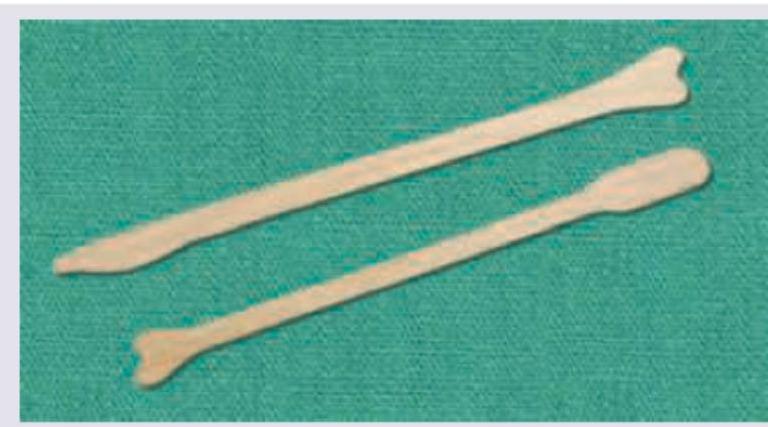
All of the following may predispose to Endometrial Carcinoma, except:
Adenocarcinoma of the cervix is associated with all of the following HPV types, except?
Which of the following is NOT a risk factor for endometrial carcinoma?
What are the typical features of dysgerminoma?
What is the most common malignancy of the body of the uterus?
A nulliparous woman presenting with abnormal vaginal bleeding is found to have abnormal endometrial histological findings. Which of the following is NOT a risk factor for uterine carcinoma?
Surgical staging is required in which of the following sex cord stromal tumors?
A 15-year-old girl presents with left lower abdominal pain. She has noted recent enlargement of her breasts. Her last menstrual period was 10 weeks ago. She denies having had sexual intercourse. Serum levels of human chorionic gonadotropin (hCG) are markedly elevated. Which of the following is the most likely diagnosis?
According to FIGO staging, women diagnosed with choriocarcinoma with metastasis to the lungs will be staged under which stage?
What is the characteristic feature of fallopian tube cancer?
Explanation: **Explanation:** The development of Endometrial Carcinoma (specifically Type I) is primarily driven by **unopposed estrogenic stimulation**, which leads to endometrial hyperplasia and subsequent malignancy. **Why Oral Contraceptives (OCPs) are the correct answer:** Combined Oral Contraceptive pills contain both estrogen and **progesterone**. Progesterone counteracts the proliferative effect of estrogen on the endometrium, inducing secretory changes and eventual thinning (atrophy). Long-term use of OCPs is a well-established **protective factor**, reducing the risk of endometrial cancer by approximately 50%. This protection persists for many years even after discontinuing the medication. **Analysis of Incorrect Options:** * **Unopposed Estrogen:** This is the most significant risk factor. Conditions like PCOS, estrogen-secreting tumors (Granulosa cell tumors), or estrogen-only HRT lead to continuous endometrial proliferation. * **Radiation:** Pelvic radiation (e.g., for cervical cancer) is a known risk factor for developing secondary uterine malignancies, particularly uterine sarcomas and occasionally endometrial carcinomas. * **Tamoxifen therapy:** While Tamoxifen acts as an anti-estrogen in the breast, it acts as a **partial agonist (estrogenic effect)** on the uterus. This stimulates the endometrium and increases the risk of hyperplasia and carcinoma. **High-Yield Clinical Pearls for NEET-PG:** * **Protective Factors:** OCPs, Multiparity, Smoking (decreases estrogen levels, though harmful otherwise), and Physical activity. * **Lynch Syndrome (HNPCC):** The most common inherited susceptibility for endometrial cancer; patients require annual screening biopsies starting at age 35. * **Obesity:** Adipose tissue converts androstenedione to estrone via the aromatase enzyme, leading to high endogenous estrogen levels.
Explanation: **Explanation:** The primary distinction in HPV classification is between **low-risk** and **high-risk** types. Cervical adenocarcinoma, like squamous cell carcinoma, is an HPV-mediated malignancy caused by persistent infection with high-risk HPV types. **Why HPV 11 is the correct answer:** HPV 11 (along with HPV 6) is a **low-risk HPV type**. These types are non-oncogenic and are primarily associated with benign lesions such as **Condyloma Acuminata** (genital warts) and Recurrent Respiratory Papillomatosis. They do not integrate into the host genome to cause malignant transformation; therefore, HPV 11 is not associated with adenocarcinoma of the cervix. **Analysis of Incorrect Options:** * **HPV 16 & 18:** These are the most common high-risk types globally. While HPV 16 is the most common cause of squamous cell carcinoma, **HPV 18** has a specific predilection for the glandular epithelium and is disproportionately associated with **adenocarcinoma**. * **HPV 51:** This is classified as a high-risk HPV type. Along with types 31, 33, 35, 45, 52, and 58, it is known to be oncogenic and can lead to cervical malignancies, including adenocarcinoma. **High-Yield Clinical Pearls for NEET-PG:** * **Most common HPV in Adenocarcinoma:** HPV 18 (followed by HPV 16). * **Most common HPV in Squamous Cell Carcinoma:** HPV 16. * **Screening:** Adenocarcinoma is harder to detect via Pap smear than squamous cell carcinoma because it arises within the endocervical canal. * **Vaccination:** The Quadrivalent vaccine (Gardasil) covers 6, 11, 16, 18; the Nonavalent vaccine adds 31, 33, 45, 52, 58.
Explanation: The fundamental pathophysiology of Type I Endometrial Carcinoma is **unopposed estrogenic stimulation**, which leads to endometrial hyperplasia and subsequent malignancy. **1. Why Multiparity is the correct answer:** Multiparity is actually a **protective factor**, not a risk factor. During pregnancy, the body is in a state of high progesterone dominance. Progesterone counteracts the proliferative effects of estrogen on the endometrium, inducing secretory changes and "thinning" the lining. Each pregnancy provides a prolonged break from the proliferative effects of the menstrual cycle, thereby reducing the lifetime risk of endometrial cancer. **2. Why the other options are incorrect (Risk Factors):** * **Obesity:** Adipose tissue contains the enzyme **aromatase**, which converts adrenal androgens (androstenedione) into estrone (estrogen). This peripheral conversion leads to chronic high estrogen levels. * **Early Menarche:** Starting menstruation at a young age (and similarly, late menopause) increases the total number of ovulatory cycles and the lifetime duration of exposure to endogenous estrogen. * **Unopposed Estrogen Therapy:** Administering estrogen without a progestogen (in women with an intact uterus) directly stimulates endometrial proliferation, significantly increasing the risk of hyperplasia and carcinoma. **High-Yield Clinical Pearls for NEET-PG:** * **PCOS:** A common cause of chronic anovulation leading to unopposed estrogen and increased risk. * **Tamoxifen:** A SERM used in breast cancer; it acts as an antagonist in the breast but an **agonist** in the uterus, increasing endometrial cancer risk. * **Lynch Syndrome (HNPCC):** The most common hereditary cause; these patients require prophylactic hysterectomy by age 40–45. * **Protective Factors:** Combined Oral Contraceptive Pills (COCPs), smoking (decreases estrogen levels, though not recommended), and physical activity.
Explanation: **Explanation:** **Dysgerminoma** is the most common malignant germ cell tumor of the ovary, analogous to seminoma in the testis. 1. **Why Option A is Correct:** While most malignant germ cell tumors are strictly unilateral, **Dysgerminoma** is the exception where **bilateral involvement** occurs in about **10–15%** of cases. However, the vast majority (85–90%) still present as a **unilateral** mass, making it the most "typical" presentation among the choices provided. 2. **Why Other Options are Incorrect:** * **B. Post-menopausal:** Dysgerminomas typically occur in **young women and adolescents** (75% occur between ages 10–30). They are rare after age 50. * **C. Virilising:** Dysgerminomas are generally **hormonally inert**. Virilization is characteristic of Sertoli-Leydig cell tumors. If a dysgerminoma shows hormonal activity (like elevated hCG), it is usually due to syncytiotrophoblastic giant cells, leading to precocious puberty or pregnancy-like symptoms, not virilization. * **D. Cut section gritty:** The cut surface of a dysgerminoma is typically **solid, fleshy, and cream-colored/grey-pink**. A "gritty" sensation is characteristic of tumors with calcification, such as a **Gonadoblastoma** or Serous Psammoma bodies. **High-Yield Clinical Pearls for NEET-PG:** * **Tumor Markers:** Elevated **LDH** (most specific), Alkaline Phosphatase (ALP), and occasionally hCG. AFP is always normal. * **Association:** Highly associated with **gonadal dysgenesis** (Swyer Syndrome). * **Radiosensitivity:** It is the only germ cell tumor that is **highly radiosensitive**, though fertility-sparing surgery followed by chemotherapy (BEP regimen) is the current standard of care. * **Microscopy:** Characteristic "fried-egg" appearance (large cells with clear cytoplasm) separated by fibrous septa containing **lymphocytes**.
Explanation: **Explanation:** **Endometrial carcinoma** is the most common malignancy of the female genital tract in developed countries and the most common malignancy of the **body of the uterus** worldwide. 1. **Why Adenocarcinoma is correct:** The uterine body is lined by the endometrium, which is a glandular epithelium. Therefore, the vast majority (approximately 80-90%) of endometrial cancers are **Adenocarcinomas**, specifically the **Endometrioid type**. These are typically estrogen-dependent and arise from endometrial hyperplasia. 2. **Why other options are incorrect:** * **Adenoacanthoma:** This is a historical term for an adenocarcinoma with squamous metaplasia. While it occurs in the uterus, it is considered a subtype/variant of adenocarcinoma, not the most common primary form. * **Squamous cell carcinoma (SCC):** While SCC is the most common cancer of the **cervix**, it is extremely rare as a primary malignancy of the uterine body. * **Sarcoma:** Uterine sarcomas (e.g., Leiomyosarcoma, Endometrial Stromal Sarcoma) arise from the myometrium or connective tissue. They are aggressive but account for less than 5% of all uterine body uterine malignancies. **NEET-PG High-Yield Pearls:** * **Most common symptom:** Postmenopausal bleeding (PMB). Any PMB must be investigated via endometrial biopsy or D&C to rule out malignancy. * **Risk Factors:** Obesity (most significant), nulliparity, late menopause, and Unopposed Estrogen therapy (PCOS, Granulosa cell tumors, Tamoxifen use). * **Protective Factors:** Combined Oral Contraceptive Pills (COCPs) and smoking (due to decreased estrogen levels, though not clinically recommended). * **Lynch Syndrome (HNPCC):** Associated with a significantly high lifetime risk of endometrial adenocarcinoma.
Explanation: **Explanation:** The primary driver for the most common type of uterine carcinoma (Type I Endometrioid Adenocarcinoma) is **unopposed estrogen**. Estrogen promotes endometrial proliferation, while progesterone acts as a protective agent by inducing differentiation and shedding. **Why "Late onset of menarche" is the correct answer:** Early menarche (starting periods at a young age) and late menopause increase the total number of ovulatory cycles and the duration of lifetime exposure to estrogen. Therefore, **early menarche** is a risk factor, while **late onset of menarche** is actually a protective factor against uterine carcinoma. **Analysis of Incorrect Options:** * **Endometrial Hyperplasia:** Specifically, atypical hyperplasia is a direct precursor to endometrial cancer. Complex atypical hyperplasia carries a nearly 30% risk of progression to malignancy. * **Obesity:** This is a major risk factor. In obese postmenopausal women, adipose tissue contains the enzyme **aromatase**, which converts adrenal androgens (androstenedione) into estrone (estrogen), leading to chronic unopposed estrogen levels. * **Tamoxifen:** While it acts as an anti-estrogen in the breast, it has a **pro-estrogenic (agonist) effect** on the endometrium, increasing the risk of hyperplasia and carcinoma. **High-Yield Clinical Pearls for NEET-PG:** * **PCOS and Nulliparity:** Both are significant risk factors due to chronic anovulation (lack of progesterone). * **Lynch Syndrome (HNPCC):** The most common genetic predisposition; these patients require prophylactic hysterectomy by age 40–45. * **Protective Factors:** Combined Oral Contraceptive Pills (COCPs), smoking (decreases estrogen levels, though not recommended), and multiparity. * **Most common histological type:** Endometrioid adenocarcinoma.
Explanation: **Explanation:** In gynecologic oncology, the management of ovarian tumors depends heavily on their malignant potential. According to FIGO guidelines, **all malignant ovarian tumors require formal surgical staging** (including peritoneal washings, total hysterectomy, bilateral salpingo-oophorectomy, omental biopsy, and pelvic/para-aortic lymph node sampling). **1. Why Granulosa Cell Tumor (GCT) is correct:** Granulosa cell tumors are the most common type of malignant sex cord-stromal tumors. Although they are often "low-grade" and slow-growing, they are considered **clinically malignant** with the potential for local spread and late recurrence. Therefore, formal surgical staging is mandatory to determine the extent of the disease and guide adjuvant therapy. **2. Why the other options are incorrect:** * **Thecoma:** These are almost exclusively **benign** tumors. Surgical staging is not required; simple excision or oophorectomy is curative. * **Sertoli-Leydig Cell Tumor (Well-differentiated):** While Sertoli-Leydig tumors can be malignant, the **well-differentiated** subtype is considered benign. Only moderately or poorly differentiated types require staging. * **Gynandroblastoma:** This is an extremely rare tumor containing both male and female elements. While it has malignant potential, it is so rare that it is not the standard "textbook" answer for staging requirements compared to the common GCT. **Clinical Pearls for NEET-PG:** * **Tumor Marker:** Inhibin (specifically Inhibin B) is the most sensitive marker for Granulosa cell tumors. * **Histology:** Look for **Call-Exner bodies** (small follicles filled with eosinophilic material) and "coffee-bean" nuclei. * **Association:** GCTs produce estrogen, often leading to **endometrial hyperplasia** or carcinoma. Always evaluate the endometrium in these patients. * **Staging:** Most GCTs (approx. 70-90%) are diagnosed at **Stage I**.
Explanation: **Explanation:** The clinical presentation of a **15-year-old** with abdominal pain, secondary sexual characteristics (breast enlargement), amenorrhea, and **markedly elevated serum hCG**—while denying sexual activity—points toward a **Nongestational Choriocarcinoma**. 1. **Why Choriocarcinoma is correct:** Choriocarcinoma is a highly malignant germ cell tumor (GCT) that secretes massive amounts of hCG. In a young, pre-coital girl, this is a "nongestational" germ cell tumor arising from the ovary. The high hCG levels mimic pregnancy (amenorrhea) and stimulate estrogen production, leading to precocious puberty or breast enlargement. 2. **Why other options are wrong:** * **Hydatidiform mole:** While it causes high hCG and amenorrhea, it is a gestational event requiring fertilization. The patient denies sexual intercourse. * **Mature cystic teratoma:** The most common benign germ cell tumor (Dermoid cyst). It is usually asymptomatic and does not secrete hCG. * **Serous cystadenocarcinoma:** An epithelial ovarian tumor typically seen in postmenopausal women; it does not secrete hCG. **High-Yield Clinical Pearls for NEET-PG:** * **Tumor Markers:** Always correlate GCTs with markers: **Dysgerminoma** (LDH), **Yolk Sac Tumor** (AFP), **Choriocarcinoma** (hCG), and **Immature Teratoma** (AFP/LDH). * **Nongestational vs. Gestational:** Nongestational choriocarcinoma has a poorer prognosis and is less sensitive to chemotherapy compared to the gestational variety. * **Precocious Puberty:** In a young girl with an adnexal mass and signs of puberty, think of Choriocarcinoma (hCG) or Granulosa Cell Tumor (Estrogen).
Explanation: **Explanation:** Gestational Trophoblastic Neoplasia (GTN), which includes choriocarcinoma, is staged using the **FIGO (International Federation of Gynecology and Obstetrics) anatomical staging system**. This system is unique because it categorizes the extent of disease spread regardless of the primary site’s size. * **Why Stage III is correct:** According to FIGO, **Stage III** is defined as GTN extending to the **lungs**, with or without genital tract involvement (vagina, uterus, or adnexa). Lung metastasis is the most common site of distant spread in choriocarcinoma, usually occurring via the hematogenous route. **Analysis of Incorrect Options:** * **Stage I:** The disease is strictly confined to the **uterus**. * **Stage II:** The disease extends outside the uterus but is limited to other **genital structures** (vagina, ovaries, broad ligament, or fallopian tubes). * **Stage IV:** This represents advanced metastatic disease involving **other distant sites** such as the brain, liver, kidneys, or gastrointestinal tract. **High-Yield Clinical Pearls for NEET-PG:** * **WHO Scoring System:** Anatomical staging is always accompanied by the **WHO Modified Prognostic Scoring System (FIGO Score)**. A score of 0–6 is "Low Risk," while $\geq$7 is "High Risk." * **Commonest Site:** The most common site of metastasis in GTN is the **lungs** (Stage III), followed by the **vagina** (Stage II). * **Diagnosis:** Choriocarcinoma is a clinical/biochemical diagnosis based on rising $\beta$-hCG levels; a biopsy is generally **contraindicated** due to the high risk of life-threatening hemorrhage from these hypervascular tumors. * **Chest X-ray:** Often shows characteristic "cannonball" or "snowstorm" opacities in Stage III disease.
Explanation: Primary fallopian tube carcinoma is a rare gynecological malignancy, but it presents with a classic clinical triad known as the **Latzko’s Triad**: intermittent profuse watery vaginal discharge, pelvic pain, and a palpable pelvic mass. ### **Explanation of the Correct Answer** The hallmark feature is **Hydrops Tubae Profluens**. This occurs when the fimbrial end of the fallopian tube is occluded, causing secretions from the tumor to accumulate and distend the tube (forming a hydrosalpinx). When the pressure overcomes the resistance of the uterine end of the tube, the fluid suddenly drains through the uterus and out of the vagina. This results in the characteristic **profuse, watery, or serosanguinous discharge**, which often leads to the relief of pelvic pain and a decrease in the size of the pelvic mass. ### **Why Other Options are Incorrect** * **B. Hemorrhage:** While postmenopausal bleeding can occur, it is less specific than the classic watery discharge. * **C. Pain:** Pain is a component of Latzko’s triad (colicky pain due to tubal distension), but it is not as pathognomonic or "characteristic" as the specific nature of the discharge. * **D. Sepsis:** This is a late complication of neglected cases or secondary infections (pyosalpinx), not a primary diagnostic feature. ### **NEET-PG High-Yield Pearls** * **Latzko’s Triad:** Intermittent watery discharge, colicky pain, and pelvic mass. * **Most Common Histology:** Serous adenocarcinoma (similar to ovarian cancer). * **Precursor Lesion:** STIC (Serous Tubal Intraepithelial Carcinoma), often found in the fimbrial end. * **Association:** Strongly linked with **BRCA1 and BRCA2** mutations. * **Management:** Staging and treatment are identical to epithelial ovarian cancer (Cytoreductive surgery + Carboplatin/Paclitaxel).
Cervical Cancer
Practice Questions
Endometrial Cancer
Practice Questions
Ovarian Cancer
Practice Questions
Vulvar and Vaginal Cancer
Practice Questions
Gestational Trophoblastic Disease
Practice Questions
Screening for Gynecologic Cancers
Practice Questions
Principles of Gynecologic Oncology Surgery
Practice Questions
Radiation Therapy in Gynecologic Malignancies
Practice Questions
Chemotherapy in Gynecologic Oncology
Practice Questions
Palliative Care in Gynecologic Oncology
Practice Questions
Get full access to all questions, explanations, and performance tracking.
Start For Free