Which of the following is the single most important parameter in semen analysis to assess chances of conception in an infertile male?
Teratospermia refers to
Tuberculosis endometritis causes infertility by which of the following mechanisms?
Male infertility is typically considered to occur if the sperm count is less than what value?
Which of the following is NOT a treatment for cervical infertility?
Which is the most common uterine malformation associated with infertility?
Intrauterine insemination (IUI) is indicated for all except:
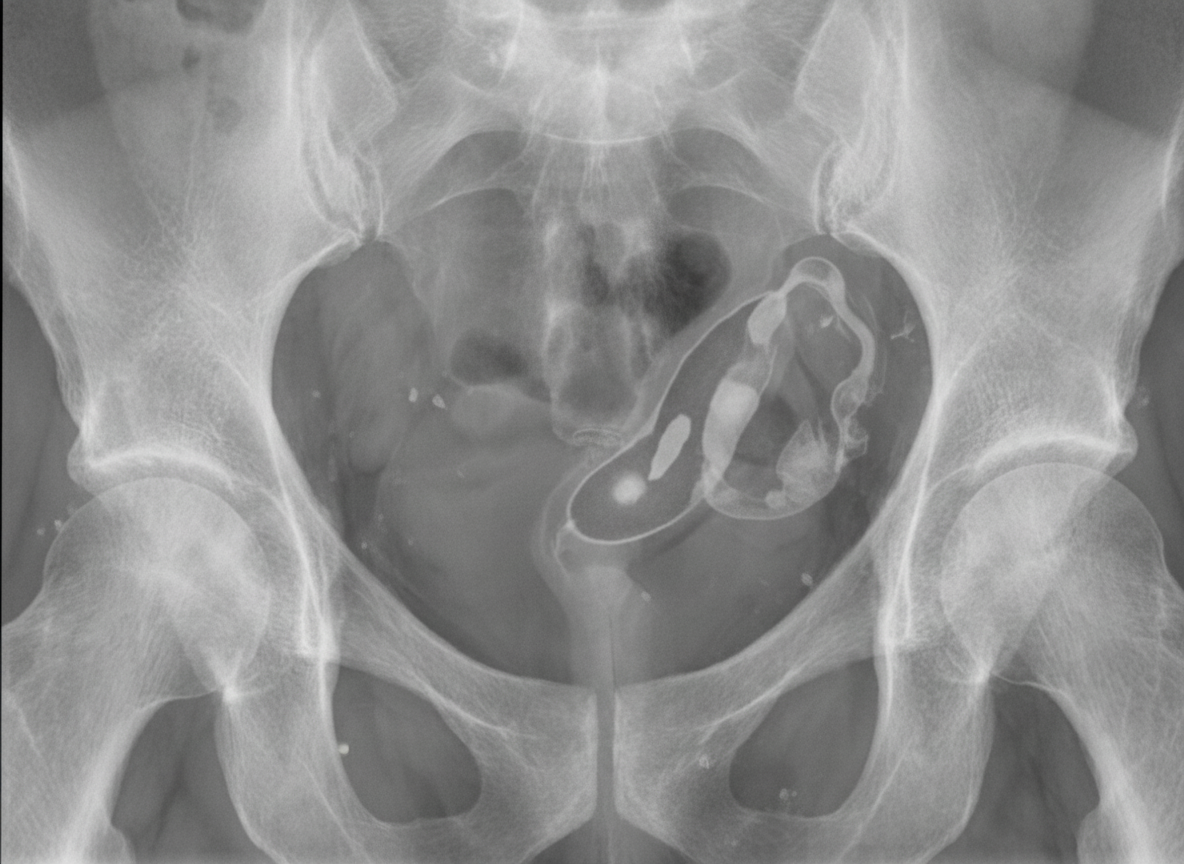
A young woman presented with infertility. Hysterosalpingogram shows beaded fallopian tubes with clubbing of the ampullary end. What is the most likely diagnosis?
A couple's semen analysis report shows oligospermia. Which of the following medications can be given to increase sperm count?
A woman with infertility presents with bilateral cornual block on hysterosalpingography (HSG). What is the next best investigation for management?
Explanation: **Explanation:** In the evaluation of male infertility, while all parameters of a semen analysis are important, **Sperm Morphology** (specifically using Kruger’s Strict Criteria) is considered the single most significant predictor of a sperm's ability to fertilize an oocyte. **1. Why Morphology is Correct:** Morphology reflects the overall health of the spermatogenesis process. A sperm with normal morphology is more likely to have an intact acrosome (necessary for penetrating the zona pellucida) and stable chromatin. According to the WHO 5th Edition criteria, a "normal" sample requires only **≥4%** normal forms. Studies have shown that even if the count is high, poor morphology (teratozoospermia) significantly reduces the chances of natural conception and success in IVF. **2. Why Other Options are Incorrect:** * **Motility (A):** While essential for the sperm to reach the egg, motility can be transiently affected by recent illness, heat, or abstinence periods. It is the second most important factor but less predictive of fertilization potential than morphology. * **Volume (C):** Semen volume primarily reflects the secretory function of the seminal vesicles and prostate. Low volume may suggest ductal obstruction or retrograde ejaculation but does not directly correlate with the sperm's functional quality. * **Sperm Count (D):** A high count does not guarantee fertility if the sperm are non-functional or malformed. Many men with low counts (oligozoospermia) can still conceive if morphology and motility are superior. **High-Yield Clinical Pearls for NEET-PG:** * **WHO 5th Edition (2010) Lower Reference Limits:** * Volume: ≥1.5 mL * Total Count: ≥15 million/mL * Total Motility: ≥40% (Progressive: ≥32%) * Morphology: ≥4% (Kruger’s Strict Criteria) * **Azoospermia:** Absence of sperm in ejaculate (requires centrifugation to confirm). * **Asthenozoospermia:** Reduced sperm motility. * **Teratozoospermia:** Reduced percentage of morphologically normal sperm.
Explanation: **Explanation:** **Teratospermia** (or Teratozoospermia) is defined as the presence of sperm with abnormal morphology in the semen. According to the **WHO 6th Edition (2021) criteria**, a sample is classified as teratozoospermic if **less than 4%** of the spermatozoa have normal morphology (using Kruger’s strict criteria). This condition directly impacts fertility as structural defects (e.g., pinheads, double tails, or coiled tails) hinder the sperm's ability to penetrate the cervical mucus or fertilize the oocyte. **Analysis of Options:** * **Option A (Correct):** Teratospermia specifically refers to "morphology." The prefix "Terato-" comes from the Greek word for "monster/malformation." * **Option B (Incorrect):** Decreased sperm count is termed **Oligozoospermia** (defined as <16 million/ml or <39 million per ejaculate). * **Option C (Incorrect):** Decreased sperm motility is termed **Asthenozoospermia** (defined as <32% progressive motility or <40% total motility). * **Option D (Incorrect):** The complete absence of semen is termed **Aspermia**. (Note: This is different from *Azoospermia*, which is the absence of sperm in the ejaculate). **High-Yield Clinical Pearls for NEET-PG:** * **Globozoospermia:** A specific type of teratospermia characterized by "round-headed" sperm lacking an acrosome; it is a genetic cause of primary male infertility. * **Necrozoospermia:** A condition where all sperm in the ejaculate are dead (non-viable). * **Leukocytospermia:** Presence of >1 million WBCs/ml of semen, indicating infection. * **Normal Semen pH:** 7.2 to 8.0 (Alkaline). A low pH (<7.0) with azoospermia suggests obstructive causes like congenital bilateral absence of the vas deferens (CBAVD).
Explanation: **Explanation:** Genital Tuberculosis (GTB) is a significant cause of secondary infertility in developing countries. The correct answer is **A** because TB affects the female reproductive tract in a descending fashion, primarily targeting the fallopian tubes and the endometrium. 1. **Mechanism of Infertility:** * **Tubal Factor (Most Common):** The fallopian tubes are affected in almost 100% of cases. Chronic inflammation leads to hydrosalpinx, "beaded" appearance, and eventually complete tubal blockage or "pipestem" tubes. * **Endometrial Factor:** The endometrium is involved in about 50-60% of cases. Chronic tubercular endometritis leads to the destruction of the basal layer of the endometrium, resulting in intrauterine adhesions (**Asherman’s Syndrome** or Netter’s Syndrome). This renders the endometrium non-receptive to implantation. **Analysis of Incorrect Options:** * **Option B:** While tubal blockage is a major factor, it is incomplete because it ignores the significant role of endometrial destruction (Asherman’s), which is a hallmark of TB infertility. * **Options C & D:** TB is a chronic inflammatory disease; it does not typically interfere with the Hypothalamic-Pituitary-Ovarian axis to cause **anovulation**. Ovulation usually remains preserved unless there is rare, extensive ovarian involvement. **High-Yield Clinical Pearls for NEET-PG:** * **Most common site:** Fallopian tube (100%) > Endometrium (50-60%) > Ovaries (20-30%). * **Gold Standard Diagnosis:** Endometrial biopsy for Histopathology (showing giant cells/granulomas) and Culture (Lowenstein-Jensen medium). * **Hysterosalpingography (HSG) findings:** "Beaded tube," "Golf-hole ostia," or "Lead pipe/Pipestem appearance." * **Prognosis:** Even after successful Antitubercular Therapy (ATT), the conception rate remains low due to permanent structural damage to the cilia and endometrium.
Explanation: **Explanation:** The correct answer is **20 million/ml**. This value is based on the traditional **WHO (World Health Organization) criteria** for semen analysis. While the most recent WHO 6th edition (2021) has lowered the lower reference limit for sperm concentration to **15 million/ml**, most standard medical examinations and NEET-PG questions still frequently utilize the classic threshold of 20 million/ml to define **Oligozoospermia** (low sperm count). **Analysis of Options:** * **A, B, and C (100, 75, 50 million/ml):** These values are well within the normal physiological range. A "normal" sperm concentration is generally considered to be anywhere from 15 million to over 200 million per milliliter. Therefore, these thresholds do not indicate infertility. * **D (20 million/ml):** This is the established clinical cutoff. When the count falls below this level, the probability of natural conception significantly decreases, categorizing the condition as male-factor infertility. **High-Yield Clinical Pearls for NEET-PG:** * **Oligozoospermia:** Sperm count < 15–20 million/ml. * **Azoospermia:** Total absence of spermatozoa in the ejaculate (must be confirmed after centrifugation). * **Asthenozoospermia:** Reduced sperm motility (< 40% total motility or < 32% progressive motility). * **Teratozoospermia:** Reduced percentage of morphologically normal sperm (< 4% based on Kruger’s strict criteria). * **Aspermia:** Complete absence of ejaculate. * **Fructose Test:** If azoospermia is present, checking for fructose helps differentiate between obstructive (fructose negative) and non-obstructive (fructose positive) causes, as fructose is produced in the seminal vesicles.
Explanation: **Explanation:** **Cervical infertility** occurs when the cervical mucus is hostile to sperm (due to antisperm antibodies) or when the mucus is insufficient/thick, preventing sperm from entering the upper reproductive tract. **Why Clomiphene Citrate is the Correct Answer:** Clomiphene citrate is an **ovulation-inducing agent**, not a treatment for cervical factors. In fact, Clomiphene has a known **anti-estrogenic effect** on the cervix. It often causes the cervical mucus to become thick, scanty, and "hostile," which can actually *contribute* to cervical infertility rather than treating it. Therefore, it is contraindicated as a solution for this specific condition. **Analysis of Other Options:** * **Condom for 3 months:** This is a classic treatment for **immunological cervical infertility**. By using condoms, the woman’s system is no longer exposed to specific sperm antigens, allowing the titer of antisperm antibodies in the cervical mucus to decrease. * **Intrauterine Insemination (IUI):** This is the **gold standard** treatment. IUI bypasses the "cervical barrier" entirely by depositing washed, concentrated sperm directly into the uterine cavity. * **GIFT:** Similar to IUI, GIFT bypasses the cervix by placing gametes directly into the fallopian tubes, effectively overcoming any cervical hostility. **NEET-PG High-Yield Pearls:** * **Post-Coital Test (Huhner Test):** Historically used to diagnose cervical infertility (performed 2–12 hours after intercourse during the mid-ovulatory phase). A "poor" result shows <5–10 motile sperm per high-power field. * **Hostile Mucus:** Often seen in patients on Clomiphene; switching to Letrozole (an aromatase inhibitor) is preferred as it does not deplete estrogen receptors in the cervix. * **First-line treatment:** For most cases of persistent cervical factor infertility, **IUI** is the preferred clinical approach.
Explanation: **Explanation:** The **Septate Uterus** is the most common congenital uterine anomaly associated with infertility and adverse pregnancy outcomes. It results from the failure of resorption of the midline uterovaginal septum (composed of fibroelastic tissue) after the fusion of the Müllerian ducts. **Why Septate Uterus is the Correct Answer:** The primary reason for infertility and recurrent pregnancy loss in septate uterus is the **poor vascularity** of the septum. When an embryo implants on the septum, the inadequate blood supply leads to implantation failure or early spontaneous abortion. Among all Müllerian anomalies, the septate uterus has the highest association with reproductive failure (approximately 60-90%). Crucially, it is the only anomaly that can be corrected hysteroscopically (Septal Resection), which significantly improves fertility rates. **Analysis of Incorrect Options:** * **Bicornuate Uterus:** Caused by partial failure of fusion of the Müllerian ducts. While it increases the risk of malpresentation and preterm labor, it is less commonly associated with primary infertility compared to the septate uterus. * **Unicornuate Uterus:** Results from the failed development of one Müllerian duct. It is associated with a higher risk of ectopic pregnancy (in the rudimentary horn) and preterm birth, but it is statistically less frequent than septate anomalies. * **Uterus Didelphys:** Complete failure of fusion resulting in two separate uteri and cervices. It has the best reproductive prognosis among the major anomalies and is rarely a primary cause of infertility. **High-Yield Clinical Pearls for NEET-PG:** * **Most common Müllerian anomaly overall:** Septate Uterus. * **Anomaly with the worst obstetric outcome:** Septate Uterus. * **Investigation of Choice (IOC):** MRI is the gold standard; however, 3D Ultrasound is highly sensitive. * **Gold Standard to differentiate Septate from Bicornuate:** Laparoscopy (to visualize the external fundal contour; septate has a flat/convex fundus, while bicornuate has a cleft >1cm).
Explanation: **Explanation:** Intrauterine Insemination (IUI) is a fertility procedure where processed sperm is placed directly into the uterus, bypassing the cervical barrier. While IUI is commonly used in clinical practice for various conditions, this question tests the **primary/absolute indications** versus conditions where its efficacy is less definitive or where it serves as a secondary option. **Why "Unexplained Infertility" is the correct answer:** In the context of strict indications, IUI alone is not the primary treatment for unexplained infertility. Evidence suggests that IUI without ovarian stimulation (Natural Cycle IUI) offers no significant benefit over timed intercourse for these couples. The standard of care for unexplained infertility is **Superovulation (SO) + IUI** or IVF. Therefore, among the choices provided, it is the least "direct" indication for IUI as a standalone procedure. **Analysis of Incorrect Options:** * **Male Factor Infertility:** This is a primary indication. IUI helps by concentrating motile sperm and placing them closer to the fallopian tubes, overcoming mild to moderate oligospermia or asthenospermia. * **Erectile Dysfunction (ED):** IUI is indicated when vaginal intercourse is not possible due to ED, premature ejaculation, or retrograde ejaculation, provided the semen parameters are adequate. * **Cervical Factor Infertility:** IUI is the treatment of choice here as it directly bypasses hostile cervical mucus or anatomical cervical defects that prevent sperm penetration. **High-Yield Clinical Pearls for NEET-PG:** * **Prerequisites for IUI:** At least one patent fallopian tube (confirmed by HSG/Laparoscopy) and a minimum Total Motile Sperm Count (TMSC) of 5–10 million. * **Timing:** IUI is typically performed 34–36 hours after hCG "trigger" injection. * **Success Rate:** Approximately 10–15% per cycle; usually, 3–6 cycles are attempted before moving to IVF.
Explanation: **Explanation:** The clinical presentation and Hysterosalpingogram (HSG) findings are classic for **Genital Tuberculosis (TB)**. In the female genital tract, the fallopian tubes are the most commonly affected site (90-100%). **Why Tuberculosis is the Correct Answer:** The "beaded" appearance on HSG occurs due to multiple strictures along the length of the tube caused by granulomatous inflammation. "Clubbing" of the ampullary end occurs when the fimbriae are destroyed and the distal end becomes occluded and dilated (hydrosalpinx). Other characteristic HSG findings in TB include a "Lead pipe" appearance (rigid tubes), "Tobacco pouch" appearance, and "Golf hole" ostia. **Analysis of Incorrect Options:** * **A & B (Gonococcal and Chlamydial Infections):** These are common causes of Pelvic Inflammatory Disease (PID). While they cause tubal blockage and hydrosalpinx, they typically result in a smooth, dilated tube rather than the irregular, beaded appearance characteristic of TB. * **D (Herpes Genitalis):** This is a viral infection (HSV-2) that primarily causes painful external genital vesicles and ulcers. It does not typically involve the fallopian tubes or cause structural changes visible on HSG. **NEET-PG High-Yield Pearls:** * **Most common site of Genital TB:** Fallopian tubes (bilateral). * **Most common symptom:** Infertility, followed by menstrual irregularities (usually oligomenorrhea or amenorrhea due to endometrial destruction/Asherman’s). * **Gold Standard Diagnosis:** Endometrial biopsy for histopathology (granulomas) and TB culture/PCR. * **Schick’s Sign:** A specific HSG finding in TB showing calcified lymph nodes or pelvic calcifications.
Explanation: **Explanation:** The correct answer is **FSH (Follicle-Stimulating Hormone)**. **1. Why FSH is correct:** Spermatogenesis is primarily regulated by the Hypothalamic-Pituitary-Gonadal axis. FSH plays a critical role by binding to receptors on **Sertoli cells** within the seminiferous tubules. This stimulation induces the production of Androgen Binding Protein (ABP), which maintains high local concentrations of testosterone necessary for sperm production. In clinical practice, exogenous FSH (or hMG) is used to treat hypogonadotropic hypogonadism to directly stimulate the germinal epithelium and increase sperm count in oligospermic men. **2. Why the other options are incorrect:** * **LH (Luteinizing Hormone):** While LH stimulates **Leydig cells** to produce testosterone, it does not directly stimulate the seminiferous tubules. While testosterone is essential for spermatogenesis, LH alone is usually insufficient to restore a normal sperm count in the absence of FSH. * **Estrogen:** High levels of estrogen exert negative feedback on the hypothalamus and pituitary, inhibiting the release of GnRH, FSH, and LH. This would suppress, rather than increase, sperm production. * **Progesterone:** Similar to estrogen, progesterone can inhibit the gonadotropin axis and is not used to treat male infertility. **Clinical Pearls for NEET-PG:** * **Sertoli Cells:** "Nursing cells" stimulated by **FSH** (FSH = Follicle/Sperm stimulating). * **Leydig Cells:** Stimulated by **LH** to produce testosterone (L = Leydig/Luteinizing). * **Oligospermia Definition:** Sperm count **<15 million/ml** (WHO 2010/2021 criteria). * **Clomiphene Citrate:** Often used off-label in male infertility to increase endogenous FSH/LH by blocking estrogen feedback.
Explanation: **Explanation:** The correct answer is **Laparoscopy and chromotubation**. **1. Why Laparoscopy and Chromotubation is the correct answer:** Hysterosalpingography (HSG) has a high false-positive rate for proximal (cornual) tubal occlusion, often caused by **tubal spasms** during the procedure or debris/mucus plugs. Laparoscopy with chromotubation is the **gold standard** for evaluating tubal patency. It allows for a definitive diagnosis by bypassing the effects of pain-induced spasms (as it is done under general anesthesia) and provides a direct visual assessment of the pelvic anatomy, including endometriosis or adhesions that HSG might miss. **2. Why other options are incorrect:** * **Tuboplasty (A):** Surgical repair is only considered after a definitive diagnosis of permanent anatomical blockage is made. It is not an investigation. * **In vitro fertilization (B):** While IVF is the definitive treatment for bilateral tubal block, it is premature to proceed to expensive ART without confirming that the block is real and not just a spasm. * **Hydrotubation (C):** This is an outdated, blind procedure with low diagnostic accuracy and a high risk of infection; it has been largely replaced by HSG and laparoscopy. **Clinical Pearls for NEET-PG:** * **Gold Standard for Tubal Patency:** Laparoscopy and chromotubation. * **First-line Investigation for Infertility:** Semen analysis (Male); HSG (Female - Tubal factor). * **Cornual Spasm:** The most common cause of a "false" bilateral cornual block on HSG. * **Management Flow:** If HSG shows cornual block $\rightarrow$ Repeat with selective salpingography or proceed to Laparoscopy. If Laparoscopy confirms irreversible block $\rightarrow$ IVF is the treatment of choice.
Reproductive Physiology
Practice Questions
Evaluation of the Infertile Couple
Practice Questions
Male Factor Infertility
Practice Questions
Female Factor Infertility
Practice Questions
Ovulatory Disorders
Practice Questions
Tubal and Peritoneal Factors
Practice Questions
Uterine Factors
Practice Questions
Unexplained Infertility
Practice Questions
Assisted Reproductive Technologies
Practice Questions
Psychological Aspects of Infertility
Practice Questions
Get full access to all questions, explanations, and performance tracking.
Start For Free