Infertility can be defined as:
What is the typical rise in basal body temperature (BBT) after ovulation?
Time taken for capacitation of sperms is?
Decreased motility of the fallopian tube is seen in which condition?
A post-coital test shows non-motile sperms in the cervical smear and motile sperms in the posterior fornix. What does this suggest?
Infertility issues associated with leiomyoma can be addressed by which of the following?
A 35-year-old female patient presents to the clinic for evaluation of her fertility status. She has been trying to conceive for over a year without success. Which of the following is the single best test for assessing her ovarian reserve?
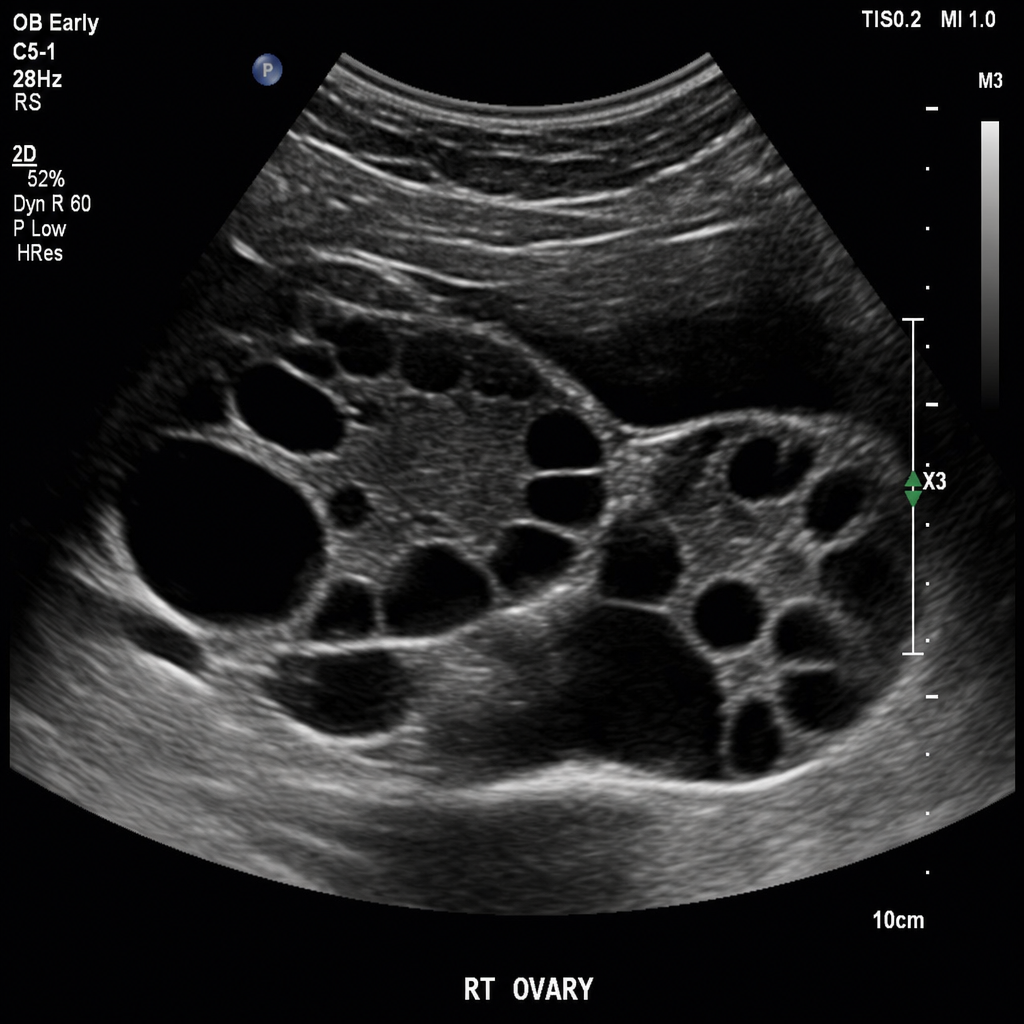
What is the likely diagnosis for the given image?
Ovarian drilling is done in which of the following conditions?
A 30-year-old P3L3 female presents in Gynaecology emergency with acute abdominal pain and vaginal bleeding of short duration (1 hour). She gives history of tubal ligation after birth of third child. On examination, right adnexal tenderness was found and os was closed. What is the probable diagnosis?
Explanation: **Explanation:** Infertility is clinically defined by the **World Health Organization (WHO)** and the **American Society for Reproductive Medicine (ASRM)** as the failure to achieve a clinical pregnancy after **12 months (1 year)** or more of regular, unprotected sexual intercourse. The underlying medical concept is based on **fecundability** (the probability of achieving pregnancy in a single menstrual cycle). In a healthy couple, the cumulative pregnancy rate is approximately 85% at the end of one year. Therefore, failure to conceive within this timeframe warrants a clinical evaluation. **Analysis of Options:** * **Option A & B:** These timeframes (2 or 3 years) are outdated. Waiting this long delays diagnosis and treatment, which is critical as female fertility declines significantly with age. * **Option D:** "Marriage" is a social construct, not a biological one. The definition specifically requires **unprotected intercourse**. A couple could be married for years but using contraception or living apart, which would not meet the criteria for infertility. **High-Yield Clinical Pearls for NEET-PG:** * **Age Factor:** If the female partner is **>35 years old**, the evaluation should begin after only **6 months** of unprotected intercourse due to the rapid decline in ovarian reserve. * **Primary vs. Secondary:** *Primary infertility* refers to couples who have never conceived; *Secondary infertility* refers to those who have had at least one prior pregnancy (regardless of the outcome). * **Fecundability Rate:** In a normal fertile couple, the fecundability is roughly **20% per month**. * **Immediate Evaluation:** Evaluation should start immediately (regardless of time) if there is a known history of endometriosis, PCOS, tubal disease, or male factor infertility.
Explanation: **Explanation:** The basal body temperature (BBT) chart is a traditional, non-invasive method used to track ovulation. The physiological basis for the rise in temperature is the thermogenic effect of **Progesterone**, which acts directly on the hypothalamus. 1. **Why Option A is correct:** Following ovulation, the ruptured follicle transforms into the corpus luteum, which secretes progesterone. This causes a sustained rise in the basal body temperature of approximately **0.4°F to 0.6°F (typically cited as 0.5°F)**. This shift occurs 1–2 days after the LH surge and persists for the duration of the luteal phase. 2. **Why other options are incorrect:** * **Option B (1.0°F):** While a 1-degree rise can occur in some individuals, it is not the standard "typical" minimum rise required to confirm ovulation. * **Option C & D (Celsius):** A rise of 0.5°C to 1.0°C is mathematically higher than the standard 0.5°F. In Celsius, the typical rise is approximately **0.2°C to 0.3°C**. Choosing these options would overestimate the physiological shift. **High-Yield Clinical Pearls for NEET-PG:** * **Biphasic Pattern:** A normal ovulatory cycle shows a biphasic BBT curve (lower in the follicular phase, higher in the luteal phase). A monophasic curve indicates anovulation. * **Timing:** BBT is a **retrospective** indicator of ovulation; it tells you that ovulation *has occurred*, making it less useful for timing intercourse in the current cycle compared to LH kits. * **Measurement:** Temperature must be taken immediately upon waking, before any physical activity, using a sensitive basal thermometer. * **Nadir:** A slight dip in temperature (the nadir) may be seen just before the progesterone-induced rise, corresponding to the day of ovulation.
Explanation: **Explanation:** **Capacitation** is the final step of sperm maturation that occurs within the female reproductive tract (primarily in the uterus and fallopian tubes). It involves the removal of the protective glycoprotein coat and seminal plasma proteins from the plasma membrane overlying the acrosomal region of the spermatozoa. 1. **Why 6-8 hours is correct:** According to standard medical textbooks (like *Williams Obstetrics* and *Dutta’s Textbook of Gynecology*), the physiological process of capacitation takes approximately **7 hours** (range of **6-8 hours**). This time is essential for the sperm to undergo biochemical changes, such as increased membrane fluidity and calcium influx, which lead to "hyperactivation" and the ability to undergo the acrosome reaction upon contact with the zona pellucida. 2. **Why other options are incorrect:** * **2-4 and 4-6 hours:** These durations are too short for the complete biochemical remodeling required for a sperm to become fertile. * **8-10 hours:** While sperm can survive in the female tract for up to 48–72 hours, the specific process of capacitation is usually completed within the 7-hour window. **High-Yield Clinical Pearls for NEET-PG:** * **Site of Capacitation:** Female genital tract (Uterus and Fallopian tube). * **Result of Capacitation:** Hypermotility of sperm and the ability to undergo the **Acrosome Reaction**. * **In-Vitro Fertilization (IVF):** In ART, capacitation is artificially induced by washing sperms in specific media to remove inhibitory seminal factors. * **Sequence of Events:** Capacitation → Acrosome Reaction → Fusion with Oocyte (Fertilization).
Explanation: **Explanation:** **Kartagener syndrome** is a subset of **Primary Ciliary Dyskinesia (PCD)**, an autosomal recessive disorder characterized by a structural defect in the **dynein arms** of cilia. Cilia are essential for movement in various parts of the body, including the respiratory tract and the fallopian tubes. In the fallopian tubes, ciliary action is responsible for the transport of the ovum toward the uterus. Dysfunction or decreased motility of these cilia leads to impaired tubal transport, significantly increasing the risk of **ectopic pregnancy** and **infertility**. **Analysis of Options:** * **Kartagener syndrome (Correct):** Defined by the triad of **situs inversus, bronchiectasis, and chronic sinusitis**. The underlying ciliary immotility directly causes decreased fallopian tube motility. * **Churg-Strauss syndrome:** Now known as Eosinophilic Granulomatosis with Polyangiitis (EGPA), this is a small-vessel necrotizing vasculitis associated with asthma and eosinophilia; it does not affect ciliary function. * **Noonan syndrome:** A genetic condition characterized by short stature, heart defects (pulmonary stenosis), and distinct facial features. It is often called "Pseudo-Turner" but does not involve tubal motility. * **Turner syndrome (45, XO):** Characterized by **streak ovaries** and primary amenorrhea due to accelerated oocyte atresia. While it causes infertility, the mechanism is ovarian failure, not tubal dysmotility. **High-Yield NEET-PG Pearls:** * **PCD Triad:** Bronchiectasis, Sinusitis, and Infertility (due to immotile sperm in males and ciliary dyskinesia in females). * **Kartagener Triad:** PCD + Situs Inversus. * **Diagnosis:** Screening via nasal nitric oxide levels; definitive diagnosis via electron microscopy (showing absent dynein arms) or genetic testing.
Explanation: **Explanation:** The **Post-Coital Test (PCT)**, or Sims-Huhner test, evaluates the interaction between the sperm and the cervical mucus. It is performed 2–12 hours after intercourse during the ovulatory phase. **Why "Faulty Coital Practice" is correct:** In this scenario, the presence of **motile sperms in the posterior fornix** confirms that ejaculation occurred and the male partner is fertile (ruling out azoospermia). However, the presence of **non-motile sperms in the cervical smear** indicates that the sperm failed to penetrate the cervical mucus effectively while still alive. When semen is deposited incorrectly (e.g., due to improper positioning or premature ejaculation), the sperm remain in the acidic environment of the vagina for too long. The vaginal pH is lethal to sperm; if they do not enter the alkaline cervical mucus quickly, they lose motility. Thus, finding live sperm in the pool (fornix) but dead sperm in the cervix suggests a delivery issue rather than a biological defect. **Analysis of Incorrect Options:** * **Immunological defect:** This would typically present as "shaking" or "vibratory" motion of sperm (agglutination) within the cervical mucus, rather than total non-motility. * **Hypospadias:** While this can cause infertility, it usually results in a complete absence of sperm in both the cervix and the fornix because the semen is deposited outside the vaginal vault. * **Azoospermia:** This is ruled out because motile sperms were identified in the posterior fornix. **High-Yield Pearls for NEET-PG:** * **Timing:** PCT must be done in the **pre-ovulatory phase** (estrogen peak) when mucus is thin and watery (Spinnbarkeit phenomenon). * **Normal PCT:** Defined as >5–10 motile sperms per high-power field (HPF). * **Current Status:** The PCT has largely been replaced by more reliable semen analysis and anti-sperm antibody titers in modern infertility workups.
Explanation: ### Explanation **Correct Answer: C. GnRH agonist** **Medical Concept:** Uterine leiomyomas (fibroids) can cause infertility by distorting the uterine cavity, obstructing tubal ostia, or creating a hostile endometrial environment for implantation. **GnRH agonists** (e.g., Leuprolide) are the most effective medical management for addressing infertility-related fibroids because they induce a state of **hypogonadotropic hypogonadism**. This leads to a significant reduction in estrogen levels, causing the fibroids to shrink by 30–50% within 3 months. Shrinkage can restore normal pelvic anatomy or, more commonly, make surgical intervention (myomectomy) easier and safer by reducing intraoperative blood loss. **Analysis of Incorrect Options:** * **A & B (COCPs and DMPA):** While these hormonal methods are excellent for managing heavy menstrual bleeding (HMB) associated with fibroids, they are **contraceptive** in nature. Therefore, they cannot be used to address infertility in a patient actively seeking conception. * **D (Ulipristal):** Ulipristal acetate (a Selective Progesterone Receptor Modulator) is effective in shrinking fibroids. However, it is primarily used for preoperative management of symptoms. In the context of infertility, GnRH agonists remain the classic "gold standard" medical bridge to surgery in exam patterns, and Ulipristal has faced regulatory restrictions due to concerns regarding liver toxicity. **High-Yield Clinical Pearls for NEET-PG:** * **Location matters:** Submucosal fibroids (FIGO Type 0, 1, 2) have the strongest association with infertility and must be removed (Hysteroscopic Myomectomy). * **GnRH Agonist Effect:** Initial "flare-up" occurs for the first 7–10 days before downregulation. * **Add-back therapy:** If GnRH agonists are used for >6 months, add-back estrogen/progesterone is required to prevent bone mineral density loss and vasomotor symptoms. * **Surgery:** Myomectomy remains the definitive treatment for infertility caused by fibroids.
Explanation: ***Anti-Müllerian hormone (AMH)***- **AMH** is currently considered the single **best test** for assessing ovarian reserve because it is produced by **granulosa cells** of pre-antral and small antral follicles, directly correlating with the size of the **remaining follicle pool**.- It can be measured reliably at **any time** during the menstrual cycle or even while using oral contraceptives, providing a highly stable and convenient assessment compared to cycle-dependent hormones.*Follicle-stimulating hormone (FSH) on day 3*- While commonly used, day 3 **FSH levels** are less sensitive than AMH because they reflect the degree of **luteal-follicular axis feedback** rather than the absolute number of follicles.- FSH levels are subject to significant **cycle-to-cycle variability**, and elevated readings often represent an already **advanced stage** of ovarian decline.*Estradiol on day 3*- Day 3 **Estradiol** is primarily measured to exclude premature follicle recruitment (which could suppress FSH), but it is a **poor independent predictor** of ovarian reserve.- Estradiol levels fluctuate greatly and high levels can **falsely mask** elevated FSH readings, limiting its utility as a primary diagnostic tool.*Serum inhibin levels on day 5*- **Inhibin B** is produced by developing follicles and reflects ovarian reserve, but it exhibits significant **menstrual cycle variability**, making interpretation challenging.- It is considered a **secondary marker**; it is less standardized and has lower predictive accuracy for future fertility compared to **AMH**.
Explanation: ***Genital TB*** - The image displays multiple small, yellowish-white nodules, known as **tubercles**, scattered on the peritoneal surfaces and adnexa. This finding is a classic laparoscopic sign of **peritoneal tuberculosis**. - Genital tuberculosis often presents with infertility, menstrual irregularities, or chronic pelvic pain, and the diagnosis is often confirmed by identifying these **caseating granulomas** on biopsy. *Normal fallopian tube* - A normal fallopian tube appears as a smooth, mobile, pinkish structure without any surface lesions, adhesions, or inflammation. - The adnexal structures in the image are clearly abnormal, showing multiple surface nodules inconsistent with normal anatomy. *Hydrosalpinx* - A hydrosalpinx is characterized by a distally blocked fallopian tube that becomes dilated and filled with serous fluid, appearing as a translucent, **sausage-shaped** structure. - While genital TB can cause tubal blockage, the primary finding here is the presence of **tubercles**, not the characteristic gross distension of a hydrosalpinx. *Endometriosis* - Endometriosis typically presents as **"powder-burn" lesions** (dark blue or black), red implants, or "chocolate cysts" (**endometriomas**) on the pelvic organs. - The yellowish, solid nodules seen in the image are characteristic of **tuberculous granulomas** and differ in appearance from typical endometriotic implants.
Explanation: ***Polycystic ovarian syndrome (PCOS)*** - **Ovarian drilling (laparoscopic ovarian diathermy)** is a surgical treatment specifically indicated for **clomiphene-resistant PCOS** - The procedure involves creating multiple small perforations in the ovarian capsule using diathermy or laser - **Mechanism:** Destroys androgen-producing ovarian stroma, reduces serum LH and androgens, restores ovulation in 50-70% of cases - **Indications:** Failed medical management with clomiphene citrate, as an alternative to gonadotropin therapy - Advantages include lower multiple pregnancy risk compared to gonadotropins *Incorrect: Endometriosis* - Treated with laparoscopic excision/ablation of endometriotic deposits, not ovarian drilling - May involve ovarian cystectomy for endometriomas *Incorrect: Ovarian tumor* - Requires surgical excision (cystectomy or oophorectomy) based on pathology - Drilling would be inadequate and inappropriate for tumor management *Incorrect: Ovarian hyperstimulation syndrome (OHSS)* - Iatrogenic complication of ovulation induction with gonadotropins or IVF - Managed conservatively with fluid management, monitoring, and supportive care - Not a surgical condition requiring ovarian drilling
Explanation: ***Ectopic pregnancy*** - This patient presents with **acute abdominal pain** and **vaginal bleeding** of short duration, with right adnexal tenderness and a closed os, highly suggestive of an ectopic pregnancy even after a tubal ligation. Tubal ligation does not provide 100% protection against pregnancy. - The history of **tubal ligation** increases the risk for ectopic pregnancy, as fertilization can still occur with the ovum implanting outside the uterus. *Complete abortion* - A complete abortion would typically involve the **passage of all products of conception**, after which the pain and bleeding would subside, and the os would generally be closed or closing. - This patient's symptoms are more acute and localized to the **adnexa**, which is less typical for a complete abortion occurring in a non-pregnant uterus (given the tubal ligation). *Pelvic inflammatory disease* - **Pelvic inflammatory disease (PID)** usually presents with **vaginal discharge/cervicitis**, **fever**, and bilateral abdominal pain. - While adnexal tenderness can be present, the acute onset with vaginal bleeding in a patient post-tubal ligation makes ectopic pregnancy a more concerning and probable diagnosis. *Appendicitis* - **Appendicitis** typically presents with **right lower quadrant pain** that often migrates from the periumbilical region, but usually lacks vaginal bleeding or adnexal tenderness. - The combination of **vaginal bleeding** and adnexal tenderness points away from appendicitis and more towards a gynecological origin.
Reproductive Physiology
Practice Questions
Evaluation of the Infertile Couple
Practice Questions
Male Factor Infertility
Practice Questions
Female Factor Infertility
Practice Questions
Ovulatory Disorders
Practice Questions
Tubal and Peritoneal Factors
Practice Questions
Uterine Factors
Practice Questions
Unexplained Infertility
Practice Questions
Assisted Reproductive Technologies
Practice Questions
Psychological Aspects of Infertility
Practice Questions
Get full access to all questions, explanations, and performance tracking.
Start For Free