What does asthenospermia mean?
Subfertility is most likely seen in which of the following conditions?
The post-coital test is used to detect all of the following, except:
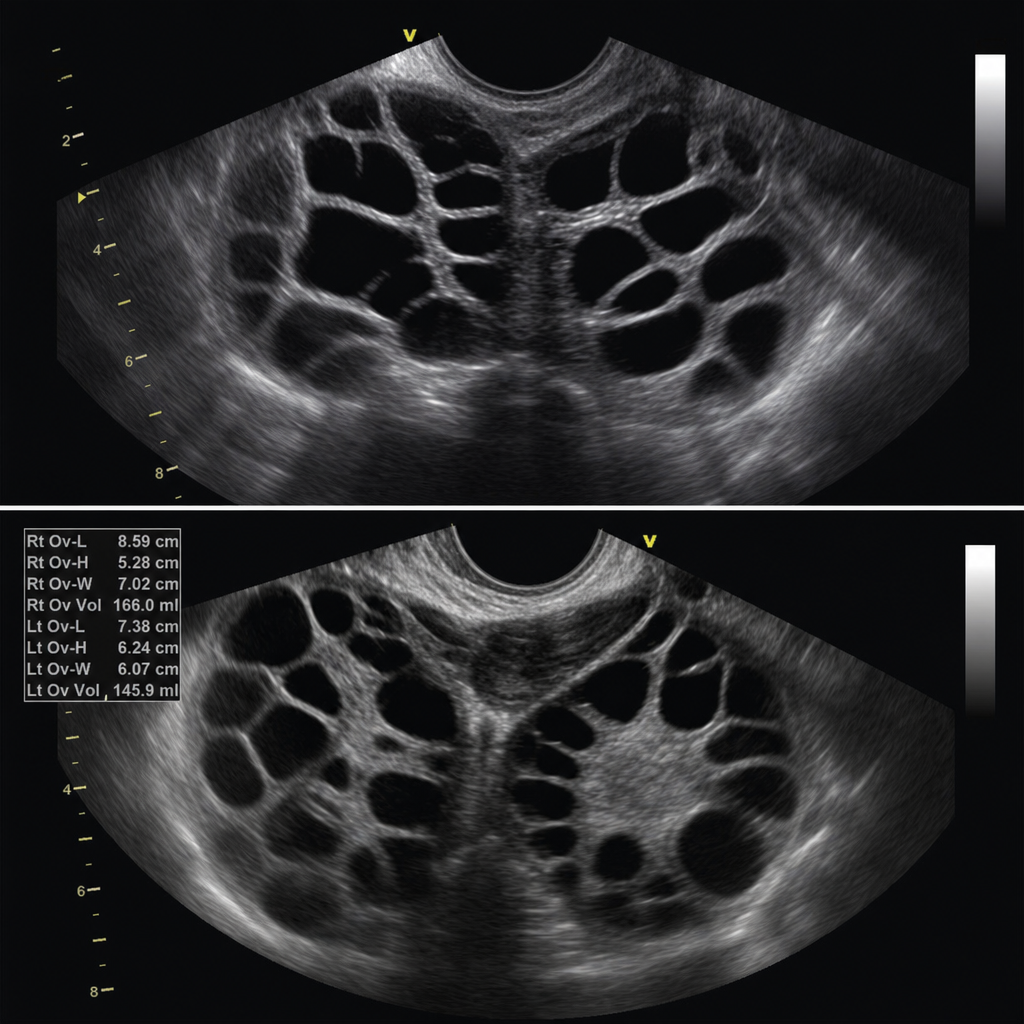
Which of the following is a predisposing factor for developing ovarian hyperstimulation syndrome during in vitro fertilization procedures?
Intracytoplasmic sperm injection is indicated in cases of male infertility with a sperm count less than which of the following thresholds?
In vitro fertilization is indicated in which of the following conditions?
Which of the following is an obsolete method for testing tubal patency?
Which of the following is NOT an assisted reproduction technique?
Which of the following is NOT an indication for in vitro fertilization and implantation in the uterus?
Best prognosis for reversibility is seen in which type of tubal blockage?
Explanation: **Explanation:** **Asthenospermia** (or asthenozoospermia) refers to a **reduction in the motility of sperms**. For a male to be fertile, a significant percentage of sperm must exhibit "progressive motility" to travel through the female reproductive tract and reach the oocyte. According to the WHO (2021) criteria, asthenozoospermia is diagnosed when **less than 40%** of total sperm are motile or **less than 32%** show progressive motility. **Analysis of Incorrect Options:** * **Option A (Failure of formation):** This is termed **Aspermatogenesis**, where the germinal epithelium fails to produce sperm. * **Option B (No spermatozoa in semen):** This is **Azoospermia**. It can be obstructive (blockage in the ductal system) or non-obstructive (testicular failure). * **Option C (Sperm count < 20 million/ml):** This is **Oligospermia**. Note that the updated WHO criteria now define the lower limit of a normal sperm concentration as **15 million/ml**. **Clinical Pearls for NEET-PG:** * **Teratospermia:** Presence of >96% abnormal sperm morphology (i.e., <4% normal forms). * **Necrospermia:** All sperms in the ejaculate are dead (non-viable). * **Globozoospermia:** A rare condition where sperm have round heads and lack an acrosome, making them unable to fertilize an egg. * **Oligo-astheno-teratozoospermia (OAT) Syndrome:** A common clinical finding where all three parameters (count, motility, and morphology) are subnormal. * **Varicocele** is the most common reversible cause of asthenospermia and oligospermia.
Explanation: **Explanation:** The relationship between uterine leiomyomas (fibroids) and subfertility depends primarily on their **location** rather than their size. **Why Submucosal Leiomyoma is the Correct Answer:** Submucosal fibroids (FIGO Types 0, 1, and 2) are the most significant contributors to subfertility. They distort the endometrial cavity, leading to: 1. **Impaired Implantation:** Alteration of the endometrial receptivity and local inflammatory changes. 2. **Mechanical Obstruction:** Potential blockage of the tubal ostia. 3. **Abnormal Contractility:** Interference with the rhythmic uterine contractions required for sperm transport. Surgical removal (Myomectomy) of submucosal fibroids is clinically proven to significantly improve pregnancy and live birth rates. **Analysis of Incorrect Options:** * **Pedunculated & Subserosal Leiomyomas:** These grow toward the serosal surface (outer layer) of the uterus. Since they do not distort the endometrial cavity or affect the lining where implantation occurs, they generally have **no impact** on fertility. * **Cervical Leiomyoma:** While these can rarely cause dyspareunia or mechanical obstruction of the cervical canal, they are far less common and less frequently associated with primary subfertility compared to submucosal types. **High-Yield Clinical Pearls for NEET-PG:** * **FIGO Classification:** Submucosal fibroids are FIGO 0, 1, and 2. Intramural fibroids (>50% in the wall) are FIGO 3 and 4. * **Intramural Fibroids:** These may decrease fertility if they are large (>4 cm) or distort the cavity, but submucosal fibroids carry the highest risk. * **Best Imaging:** Transvaginal Ultrasound (TVS) is the initial investigation; **Saline Infusion Sonohysterography (SIS)** is the gold standard for diagnosing cavity distortion. * **Treatment of Choice for Infertility:** Hysteroscopic Myomectomy for submucosal fibroids.
Explanation: The **Post-Coital Test (PCT)**, also known as the Sims-Huhner test, is a traditional clinical tool used to evaluate the interaction between spermatozoa and cervical mucus. ### **Explanation of the Correct Answer** **A. Fallopian tube blockage:** This is the correct answer because the PCT is specifically designed to assess the **cervical factor** of infertility. It evaluates the environment of the cervix and the ability of sperm to survive and migrate through the mucus. It provides no information regarding the patency of the Fallopian tubes. Tubal patency is instead evaluated using tests like **Hysterosalpingography (HSG)**, Sonohysterosalpingography (SSG), or Diagnostic Laparoscopy (the gold standard). ### **Analysis of Incorrect Options** * **B. Abnormalities in cervical mucus:** The PCT assesses the quality of the mucus (Spinnbarkeit, ferning, and cellularity) at the time of ovulation. Hostile mucus (e.g., antisperm antibodies) can be detected if sperm are found dead or immobile. * **C & D. Sperm count, morphology, and motility:** While not a replacement for a formal Semen Analysis, the PCT observes the number of motile sperm per high-power field (HPF) within the mucus. It confirms whether sperm are being deposited correctly and if they can maintain progressive motility in the female reproductive tract. ### **High-Yield Clinical Pearls for NEET-PG** * **Timing:** The test must be performed during the **pre-ovulatory phase** (LH surge) when estrogen levels are high and mucus is most receptive. * **Interpretation:** A "normal" test usually requires **>10-20 motile sperm per HPF**. * **Current Status:** The PCT has largely been replaced in modern fertility workups by more reliable tests (like IUI and Semen Analysis) due to its high false-positive rate and poor predictive value for pregnancy. * **Invasive Gold Standard for Tubes:** Laparoscopic Chromopertubation.
Explanation: **Explanation:** **Ovarian Hyperstimulation Syndrome (OHSS)** is an iatrogenic complication of systemic ovulation induction, characterized by increased capillary permeability leading to a fluid shift from the intravascular space to the "third space" (peritoneum, pleura, pericardium). **Why Option B is Correct:** The pathophysiology of OHSS is driven by the over-secretion of **Vascular Endothelial Growth Factor (VEGF)** from multiple follicles in response to hCG. **High serum estradiol levels** (typically >2500–3000 pg/mL) serve as a direct biochemical marker of excessive follicular recruitment and activity. Elevated estradiol is the most reliable predictor of an impending hyper-response, signaling that the ovaries are primed to release massive amounts of vasoactive substances upon the administration of the hCG "trigger." **Analysis of Incorrect Options:** * **Option A:** Embryo transfer occurs *after* the stimulation phase. While pregnancy (which produces endogenous hCG) can worsen or prolong OHSS (Late OHSS), the number of embryos transferred does not inherently cause the syndrome. * **Option C:** **Younger age** (<35 years) is a risk factor, not older age. Younger women have a higher follicular reserve and more active granulosa cells. * **Option D:** While **Polycystic Ovary Syndrome (PCOS)** is a major risk factor, the question asks for a predisposing factor *during* the procedure. High estradiol is the acute physiological indicator of risk during the stimulation cycle itself. (Note: In some contexts, PCOS is a risk factor, but biochemical markers like Estradiol and AMH are more specific predictors of the immediate syndrome). **NEET-PG High-Yield Pearls:** * **Key Mediator:** VEGF (increases vascular permeability). * **Risk Factors:** Low BMI, PCOS, high AMH, young age, and high follicle count (>15–20 follicles). * **Prevention:** Use of GnRH antagonist protocols, "coasting" (withholding gonadotropins), or using a GnRH agonist trigger instead of hCG. * **Classification:** Severe OHSS is marked by ascites, pleural effusion, hemoconcentration (Hct >55%), and electrolyte imbalances.
Explanation: **Explanation:** The correct answer is **C. 5 million/ml**. **1. Underlying Medical Concept:** Intracytoplasmic Sperm Injection (ICSI) is an advanced form of Assisted Reproductive Technology (ART) where a single sperm is injected directly into a mature oocyte. While traditional In-Vitro Fertilization (IVF) requires a sufficient concentration of motile sperm to achieve spontaneous fertilization in a dish, ICSI bypasses these barriers. According to standard clinical guidelines (including WHO and ESHRE), ICSI is specifically indicated in cases of **severe male factor infertility**, defined as a sperm concentration of **less than 5 million/ml**. Below this threshold, the success rates of conventional IVF drop significantly due to poor fertilization. **2. Analysis of Incorrect Options:** * **A and B (3 and 4 million/ml):** While ICSI is certainly performed at these levels, they do not represent the established clinical "threshold" or cutoff point used to define the transition from IVF to ICSI indication. * **D (6 million/ml):** This value is above the severe oligospermia threshold. Patients with counts between 5–15 million/ml (mild to moderate oligospermia) may first be candidates for Intrauterine Insemination (IUI) or conventional IVF, depending on motility and morphology. **3. High-Yield Clinical Pearls for NEET-PG:** * **Absolute Indications for ICSI:** Obstructive/Non-obstructive azoospermia (using TESA/PESA), severe oligospermia (<5 million/ml), severe teratozoospermia, and previous failed fertilization with conventional IVF. * **WHO 2021 (6th Ed) Semen Analysis Norms:** * Lower Reference Limit for Concentration: **15 million/ml**. * Total Motility: **40%**. * Normal Morphology: **4%** (Kruger’s strict criteria). * **Azoospermia:** The complete absence of sperm in the ejaculate; ICSI is the only biological option for these patients using surgically retrieved sperm.
Explanation: **Explanation:** **In Vitro Fertilization (IVF)** is a technique where fertilization occurs outside the body. The primary medical concept behind IVF is to bypass the fallopian tubes. Therefore, **Tubal pathology** (e.g., bilateral tubal block, hydrosalpinx, or post-salpingectomy) is the classic and most common indication for IVF. Since the natural site of fertilization (the ampulla of the tube) is non-functional, the egg and sperm are united in a lab setting, and the resulting embryo is transferred directly into the uterus. **Analysis of Incorrect Options:** * **Uterine dysfunction:** IVF requires a functional uterus for embryo implantation. If the uterus is absent or severely dysfunctional (e.g., Asherman syndrome or severe adenomyosis), IVF alone will not result in pregnancy; surrogacy or uterine transplant would be required. * **Ovarian pathology:** While IVF can be used in cases of diminished ovarian reserve, "ovarian pathology" is a broad term. If the ovaries cannot produce viable oocytes, IVF cannot be performed unless donor eggs are used. * **Azoospermia:** For obstructive or non-obstructive azoospermia, the treatment of choice is **ICSI (Intracytoplasmic Sperm Injection)** rather than conventional IVF. In ICSI, a single sperm is injected directly into the oocyte, which is necessary when sperm counts are zero or extremely low. **High-Yield Clinical Pearls for NEET-PG:** * **First IVF baby:** Louise Brown (1978); in India: Kanupriya Agarwal (Durga). * **Indications for IVF:** Bilateral tubal block (Gold Standard), unexplained infertility, failed IUI, and severe endometriosis. * **Indications for ICSI:** Severe male factor infertility (Azoospermia, severe oligospermia) and previous IVF failure. * **Step-wise IVF process:** Controlled ovarian hyperstimulation → Trigger (hCG/GnRH agonist) → Oocyte retrieval (34–36 hours post-trigger) → Fertilization → Embryo transfer (Day 3 or Day 5/Blastocyst).
Explanation: **Explanation:** The correct answer is **Rubin’s test**, which is now considered an obsolete method for assessing tubal patency. **1. Why Rubin’s Test is Obsolete:** Rubin’s test involves the insufflation of carbon dioxide ($CO_2$) into the uterine cavity through the cervix. If the tubes are patent, the gas enters the peritoneal cavity, causing irritation of the diaphragm and resulting in referred shoulder pain (positive sign). It has been discarded because it is associated with a high rate of false results (due to tubal spasms), carries a risk of air embolism, and, most importantly, provides no information about the anatomy of the tubes or which specific side is blocked. **2. Analysis of Other Options:** * **Hysterosalpingogram (HSG):** This remains the **first-line screening investigation** for tubal patency. It involves injecting radiopaque dye under fluoroscopy, allowing for the visualization of the uterine contour and the site of any tubal obstruction. * **Chromo salpingogram (Chromopertubation):** This is the **Gold Standard** for testing tubal patency. It is performed during laparoscopy by injecting Methylene blue or Indigo carmine dye through the cervix and observing its spill from the fimbrial ends. **Clinical Pearls for NEET-PG:** * **Gold Standard for Tubal Patency:** Laparoscopy with Chromopertubation. * **First-line Investigation:** HSG (performed in the pre-ovulatory phase, Day 7–10). * **Sonnohysterosalpingography (SSG):** A radiation-free alternative using saline and ultrasound to check for "spill" in the Pouch of Douglas. * **Key Contraindication for HSG:** Active pelvic infection or pregnancy.
Explanation: **Explanation:** The distinction between **Assisted Reproductive Technology (ART)** and other fertility treatments lies in the handling of the **oocyte**. According to the standard clinical definition (CDC and WHO), ART includes all fertility treatments in which **both eggs and sperm are handled outside the body**. 1. **Why Artificial Insemination (AI) is the correct answer:** Artificial Insemination (including IUI - Intrauterine Insemination) involves the deposition of washed sperm into the female reproductive tract. Since the **oocytes are never removed from the woman’s body** and fertilization occurs *in vivo*, it is categorized as a fertility treatment but **not** as ART. 2. **Why the other options are incorrect:** * **IVF and ET (In Vitro Fertilization and Embryo Transfer):** This is the gold standard of ART. Oocytes are aspirated, fertilized in a lab, and the resulting embryo is transferred to the uterus. * **GIFT (Gamete Intrafallopian Transfer):** Both eggs and sperm are handled outside and then injected into the fallopian tube. Because the oocytes are handled, it is classified as ART. * **ZIFT (Zygote Intrafallopian Transfer):** Similar to IVF, but the fertilized egg (zygote) is transferred into the fallopian tube instead of the uterus. It involves extracorporeal handling of oocytes, thus it is ART. **High-Yield Clinical Pearls for NEET-PG:** * **Success Rates:** IVF-ET generally has higher success rates than GIFT or ZIFT. * **Prerequisite for GIFT/ZIFT:** At least one fallopian tube must be patent and functional. * **ICSI (Intracytoplasmic Sperm Injection):** The most common ART procedure used for severe male factor infertility. * **OHSS (Ovarian Hyperstimulation Syndrome):** The most serious complication of the controlled ovarian stimulation used in ART.
Explanation: **Explanation:** The core objective of **In Vitro Fertilization (IVF)** is to facilitate fertilization outside the human body when natural conception is impossible. **1. Why "Tubal Block" is the correct answer (in the context of this specific question):** There appears to be a technical nuance in the question's phrasing. While **bilateral tubal block** is historically the *classic* indication for IVF (as it bypasses the fallopian tubes), this question likely focuses on the hierarchy of treatment. For many patients with tubal factor infertility, **tubal reconstructive surgery** (tuboplasty) is considered the primary surgical alternative before proceeding to IVF. However, in modern clinical practice, IVF is the gold standard for tubal block. *Note: In some older question banks, if a condition can be treated via simpler means or surgery, it may be framed as "not an absolute indication" compared to irreversible factors.* **2. Analysis of Incorrect Options:** * **Azoospermia & C. Oligospermia:** These represent male factor infertility. When sperm count is severely low (oligospermia) or absent in the ejaculate (azoospermia—requiring TESA/MESA), natural fertilization is impossible. IVF with **ICSI (Intracytoplasmic Sperm Injection)** is the definitive indication here. * **Anovulation:** If a patient fails to conceive despite multiple cycles of ovulation induction (e.g., Clomiphene, Gonadotropins) and IUI, IVF is the next logical step to ensure controlled oocyte retrieval and fertilization. **Clinical Pearls for NEET-PG:** * **First IVF Baby:** Louise Brown (1978); India’s first: Kanupriya Agarwal (Durga). * **Absolute Indications for IVF:** Bilateral salpingectomy, irreversible tubal damage, and severe male factor infertility. * **ICSI** is the treatment of choice for **severe male factor infertility** (sperm count <5 million/ml). * **OHSS (Ovarian Hyperstimulation Syndrome)** is the most serious complication of the controlled ovarian stimulation phase of IVF.
Explanation: **Explanation:** The success of tubal re-anastomosis (reversal of tubal ligation) depends primarily on the **diameter of the tubal lumen** and the **length of the healthy tube** remaining. **1. Why Isthmic-Isthmic (Option A) is Correct:** The isthmus is the narrowest part of the fallopian tube with a thick muscular wall. When a blockage is located here, the luminal diameters of both the proximal and distal segments are **equal and narrow**. This "size match" allows for precise surgical alignment and suturing, resulting in the highest patency rates (up to 80-90%) and the best prognosis for pregnancy. **2. Analysis of Incorrect Options:** * **B. Isthmic-ampullary type:** This involves a "size mismatch." The isthmus has a narrow lumen, while the ampulla is significantly wider and more thin-walled. This discrepancy makes surgical reconstruction technically difficult and reduces success rates compared to isthmic-isthmic repair. * **C. Ampullary-interstitial type:** The interstitial part is embedded within the uterine wall. Replanting the tube into the uterus (tubocornual anastomosis) is surgically complex and carries a higher risk of uterine rupture in subsequent pregnancies. * **D. Ampullary-fimbrial type:** Damage to the fimbria (the finger-like projections responsible for ovum pickup) carries the **worst prognosis**. Even if the tube is made patent, the loss of the delicate ciliary action and fimbrial mechanism usually results in permanent functional infertility. **Clinical Pearls for NEET-PG:** * **Best site for reversal:** Isthmic-Isthmic. * **Worst site for reversal:** Fimbrial (Ampullary-fimbrial). * **Prerequisite for surgery:** A minimum residual tubal length of **4–5 cm** is required for a good functional outcome. * **Gold Standard Investigation:** Hysterosalpingography (HSG) is used initially to locate the site of block, but **Laparoscopy** is the gold standard to assess the health of the distal tube and fimbria before planning reversal.
Reproductive Physiology
Practice Questions
Evaluation of the Infertile Couple
Practice Questions
Male Factor Infertility
Practice Questions
Female Factor Infertility
Practice Questions
Ovulatory Disorders
Practice Questions
Tubal and Peritoneal Factors
Practice Questions
Uterine Factors
Practice Questions
Unexplained Infertility
Practice Questions
Assisted Reproductive Technologies
Practice Questions
Psychological Aspects of Infertility
Practice Questions
Get full access to all questions, explanations, and performance tracking.
Start For Free