Thyroxine binding globulin (TBG) is increased in:
Which of the following is NOT associated with Wernicke's encephalopathy?
A 26-week pregnant female presents with hypertension for the first time. There is no proteinuria. What is the most likely diagnosis?
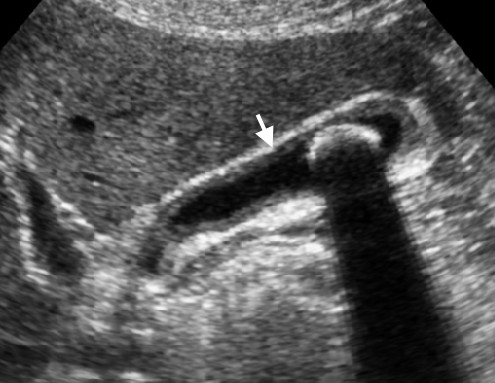
What condition is associated with the sign seen in the given USG?
A G1 P0 woman at 36 weeks presents with newly diagnosed gestational diabetes. What is the most appropriate initial management?
In a pregnant woman with hyperemesis gravidarum and abnormal thyroid function tests showing hyperthyroidism, which hormone is likely elevated?
A 35-year-old woman at 12 weeks of gestation presents with severe nausea and vomiting, weight loss, and dehydration. What is the diagnosis?
Consider the following statements regarding HCG : 1. HCG is a glycoprotein with two subunits α and β. 2. HCG levels reach the maximum between the 60th and 70th day in a normal pregnancy. 3. HCG is secreted by the syncytiotrophoblast. Which of the statements given above is/are correct ?
Which of the following markers is not used in quadruple test for antenatal detection of Down syndrome?
Which of the following is a criterion for infant at risk?
Explanation: ***Pregnancy*** - Estrogen levels are elevated during **pregnancy**, which leads to an increase in the synthesis of **TBG** by the liver. - Increased TBG binds more thyroid hormone, reducing free thyroid hormone levels, which then stimulates the thyroid gland to produce more. *Cancer chemotherapy* - Many **chemotherapeutic agents** can damage the liver or interfere with protein synthesis, potentially leading to a *decrease* in TBG and other plasma proteins. - Chemotherapy can also induce **hypothyroidism** directly or indirectly, which may alter thyroid hormone binding. *Nephrotic syndrome* - **Nephrotic syndrome** is characterized by significant proteinuria, where plasma proteins, including **TBG**, are lost through the kidneys in the urine. - This leads to a *decrease* in serum TBG levels, which can affect total thyroid hormone measurements but typically does not cause overt thyroid dysfunction due to compensatory mechanisms. *Glucocorticoid therapy* - **Glucocorticoids** (e.g., prednisone, dexamethasone) are known to *decrease* the hepatic synthesis of **TBG**. - This reduction in TBG can lead to lower total thyroid hormone levels without necessarily indicating thyroid gland dysfunction, as free thyroid hormone levels often remain normal.
Explanation: **Cogwheel rigidity** - **Cogwheel rigidity** is a characteristic sign of **Parkinson's disease** due to increased muscle tone [2], not Wernicke's encephalopathy. - Wernicke's encephalopathy is primarily associated with **thiamine deficiency**, affecting brain regions involved in eye movement, balance, and cognition [3]. *Alteration in mental function* - **Confusion**, **disorientation**, and **memory impairment** are common presentations of Wernicke's encephalopathy due to its impact on **thalamic** and **hypothalamic** function. - This symptom complex is a key component of the Wernicke's triad. *6th nerve palsy* - **Ophthalmoplegia**, including **6th nerve palsy** (abducens nerve palsy), is a classic sign of Wernicke's encephalopathy, often presenting as **nystagmus** [1] or gaze palsies. - This ocular abnormality is a direct result of thiamine deficiency affecting brainstem oculomotor nuclei [3]. *Ataxia* - **Ataxia**, particularly a wide-based gait, is a hallmark feature of Wernicke's encephalopathy [1], stemming from damage to the **cerebellum** and **vestibular system** [1]. - This symptom contributes significantly to the characteristic triad of Wernicke's, along with ocular abnormalities and mental status changes [3].
Explanation: ***Hypertension diagnosed after 20 weeks of gestation without proteinuria*** - This scenario describes **gestational hypertension**, defined as new-onset hypertension (≥140/90 mmHg) presenting *after* 20 weeks of gestation, without associated proteinuria or other signs of preeclampsia. - The patient's presentation at **26 weeks** with **no proteinuria** directly aligns with the diagnostic criteria for gestational hypertension. *Hypertension diagnosed before 20 weeks of gestation* - This description corresponds to **chronic hypertension**, meaning the hypertension was present *before* pregnancy or diagnosed *before* 20 weeks of gestation. - The question explicitly states the hypertension is presenting for the **first time** and the gestational age is **26 weeks**, ruling out chronic hypertension. *Hypertension with proteinuria or end-organ damage* - This definition describes **preeclampsia**, which involves new-onset hypertension *after* 20 weeks accompanied by significant **proteinuria** or signs of **end-organ damage** like renal insufficiency, liver dysfunction, or thrombocytopenia. - The patient specifically has **no proteinuria**, making preeclampsia an unlikely diagnosis based on the provided information. *Hypertension with seizures* - This refers to **eclampsia**, a severe complication of preeclampsia characterized by the development of **generalized tonic-clonic seizures** in a pregnant patient with preeclampsia, unrelated to other brain conditions. - The patient in this case is not experiencing seizures; therefore, eclampsia is not the correct diagnosis.
Explanation: ***Spina bifida*** - The ultrasound image displays the **"lemon sign"** (frontal bone indentation), which is a classic indicator of **spina bifida** on antenatal ultrasound. - The lemon sign is caused by **scalloping of the frontal bones** due to caudal displacement of brain tissue (Arnold-Chiari malformation type II) secondary to an open spinal defect. - This sign is most commonly seen in the **second trimester** and is associated with neural tube defects. *Anencephaly* - **Anencephaly** presents with absence of the cranial vault and cerebral hemispheres on ultrasound. - The characteristic finding is the **"frog-eye appearance"** with protruding orbits, not frontal bone scalloping. - This is incompatible with life and has a distinctly different ultrasound appearance. *Dandy-Walker malformation* - **Dandy-Walker malformation** shows an enlarged posterior fossa with cystic dilatation of the fourth ventricle and hypoplasia of the cerebellar vermis. - It may present with the **"banana sign"** (cerebellar compression), but not the lemon sign. - This is a posterior fossa abnormality, not associated with frontal bone changes. *Encephalocele* - **Encephalocele** presents as a herniation of brain tissue and meninges through a cranial defect, typically occipital. - Ultrasound shows a **cystic mass protruding from the skull**, not frontal bone indentation. - While it's a neural tube defect, it has a different ultrasound appearance than the lemon sign.
Explanation: ***Diet control (Medical Nutrition Therapy)*** - For newly diagnosed gestational diabetes, **lifestyle modifications**, primarily **dietary changes**, are the **first-line treatment** per ACOG and ADA guidelines - Medical nutrition therapy (MNT) aims to control blood glucose levels through proper nutrition and should be attempted for **1-2 weeks** before considering pharmacologic interventions - Target goals: Fasting glucose <95 mg/dL, 1-hour postprandial <140 mg/dL, 2-hour postprandial <120 mg/dL *Induction of labor* - **Induction of labor** is typically considered for gestational diabetes if there are concerns about **fetal macrosomia** (EFW >4000-4500g), **poor glycemic control despite treatment**, or other maternal-fetal complications - Generally considered at **39-40 weeks** in well-controlled GDM or earlier with complications - Not the initial management for a new diagnosis at 36 weeks without additional concerning features *Oral hypoglycemics* - **Metformin** or **glyburide** may be used as second-line agents when **dietary management fails** to achieve adequate glycemic control after 1-2 weeks - Metformin is increasingly preferred as it does not cross the placenta as readily as glyburide - They are **not the initial step** in management *Insulin* - **Insulin therapy** is indicated when **dietary modifications alone** are insufficient in maintaining target blood glucose levels - Also preferred if oral agents are contraindicated or fail to achieve glycemic targets - Represents a **secondary intervention** when primary non-pharmacological methods are inadequate
Explanation: ***hCG*** - Elevated levels of **human chorionic gonadotropin (hCG)** are strongly associated with **hyperemesis gravidarum** due to its structural similarity to **TSH**. - High hCG can bind to TSH receptors in the thyroid gland, leading to transient but significant **hyperthyroidism**. *Estradiol* - Estrogen levels do increase throughout pregnancy, but elevated **estradiol** is not primarily implicated in the direct cause of hyperemesis gravidarum or the associated transient hyperthyroidism. - While it contributes to pregnancy physiology, there's no direct pathway linking high estradiol to thyroid dysfunction in this context. *Progesterone* - **Progesterone** levels rise steadily during pregnancy to maintain the uterine lining and prevent contractions. - However, progesterone does not directly cause hyperemesis gravidarum or the thyroid function test abnormalities seen in this condition. *TSH* - In a state of **hyperthyroidism**, as suggested by positive thyroid function tests, **TSH (thyroid-stimulating hormone)** levels would typically be **suppressed or low**, not elevated. - The high hCG acts as a TSH mimetic, stimulating the thyroid directly and hence reducing pituitary TSH secretion.
Explanation: ***Hyperemesis gravidarum*** - This condition is characterized by **severe, persistent nausea and vomiting** during pregnancy, often leading to **weight loss** and **dehydration**. - It typically begins in the first trimester, peaking around 9-13 weeks, consistent with the patient's 12 weeks gestation. *Preeclampsia* - Preeclampsia usually manifests after **20 weeks of gestation** with symptoms like **hypertension**, **proteinuria**, and sometimes edema, which are not described here. - While preeclampsia can cause vomiting in severe cases, the primary symptoms are blood pressure and kidney-related. *Acute fatty liver of pregnancy* - This is a rare and severe liver disorder that typically occurs in the **third trimester** of pregnancy. - It presents with symptoms like nausea, vomiting, abdominal pain, and jaundice, but the timing is inconsistent with this patient's presentation. *Gastroenteritis* - While gastroenteritis causes nausea, vomiting, and dehydration, it is typically an **acute, self-limiting infection** and wouldn't be specifically tied to the pregnancy itself without further evidence of infection. - The severity and chronicity suggested by "severe nausea and vomiting" and "weight loss" are more indicative of hyperemesis gravidarum in a pregnant woman.
Explanation: ***Correct: 1, 2 and 3*** - **Human Chorionic Gonadotropin (HCG)** is a **glycoprotein hormone** composed of **alpha (α) and beta (β) subunits**, making statement 1 correct - HCG is primarily secreted by the **syncytiotrophoblast** cells of the placenta, confirming statement 3 - In a normal pregnancy, HCG levels typically **peak between 60-70 days (8-10 weeks)** after the last menstrual period, supporting statement 2 - All three statements are factually accurate regarding HCG structure, secretion, and physiological levels *Incorrect: 2 and 3 only* - This option incorrectly excludes statement 1 about HCG being a glycoprotein with α and β subunits - The structural composition of HCG as a heterodimeric glycoprotein is a fundamental characteristic *Incorrect: 1 and 2 only* - This option incorrectly excludes statement 3 about syncytiotrophoblast being the source of HCG - The syncytiotrophoblast is the outer layer of the trophoblast responsible for HCG secretion *Incorrect: 1 and 3 only* - This option incorrectly excludes statement 2 about HCG peak timing during pregnancy - Understanding that HCG peaks at 8-10 weeks (60-70 days) is crucial for monitoring early pregnancy
Explanation: ***Estradiol*** - **Estradiol** is a primary **estrogen** produced by the ovaries and placenta but is **not** one of the four markers included in the **quadruple screen** for Down syndrome. - The quadruple screen typically measures levels of **alpha-fetoprotein (AFP)**, **unconjugated estriol (uE3)**, **human chorionic gonadotropin (hCG)**, and **inhibin A**. *Inhibin* - **Inhibin A** is one of the four components of the **quadruple screen** for Down syndrome. - In pregnancies affected by Down syndrome, inhibin A levels are typically **elevated**. *AFP* - **Alpha-fetoprotein (AFP)** is a key component of the **quadruple screen**. - In a Down syndrome pregnancy, maternal serum AFP levels are typically **lower** than normal. *ss-hCG* - **Beta-human chorionic gonadotropin (β-hCG)** is a specific subunit of hCG and is one of the four markers in the **quadruple screen**. - In pregnancies with Down syndrome, maternal serum β-hCG levels are usually **elevated**.
Explanation: ***Preeclampsia in pregnancy*** - **Preeclampsia** is a serious pregnancy complication characterized by high blood pressure and signs of damage to another organ system, most often the liver and kidneys. - Infants born to mothers with preeclampsia are at **significantly higher risk** for complications including **preterm birth**, **intrauterine growth restriction (IUGR)**, low birth weight, respiratory distress syndrome, and perinatal mortality. - This is a **universally recognized criterion** for identifying high-risk infants in maternal-child health programs and NICU protocols. - Such infants require close monitoring and specialized care from birth. *Has not taken 100 days folic acid* - Periconceptional **folic acid supplementation** (ideally starting 3 months before conception and continuing through early pregnancy) reduces the risk of **neural tube defects** in the fetus. - While lack of folic acid supplementation increases the risk of congenital anomalies during pregnancy, this historical factor alone does not classify the infant as "at risk" after birth unless an actual neural tube defect or other complication is present. - This is primarily a **pregnancy risk factor** rather than a postnatal infant risk criterion. *Malpresentation during birth* - **Malpresentation** (e.g., breech, transverse lie, face presentation) increases the risk of birth complications such as **birth asphyxia**, **birth trauma**, cord prolapse, and difficult delivery. - While malpresentation is recognized as a risk factor during delivery and such infants may require closer initial monitoring, **preeclampsia** represents a more comprehensive and persistent risk affecting multiple organ systems and long-term outcomes. - In the context of identifying high-risk infants for follow-up programs, maternal preeclampsia is a more significant criterion than malpresentation alone (assuming no birth complications occurred). *Working mothers* - A mother's employment status does not inherently classify an infant as "at risk" from a medical or developmental standpoint. - While **socioeconomic factors** and access to care can impact infant health, simply being a working mother is not a direct medical criterion for defining an infant as high-risk.
Get full access to all questions, explanations, and performance tracking.
Start For Free