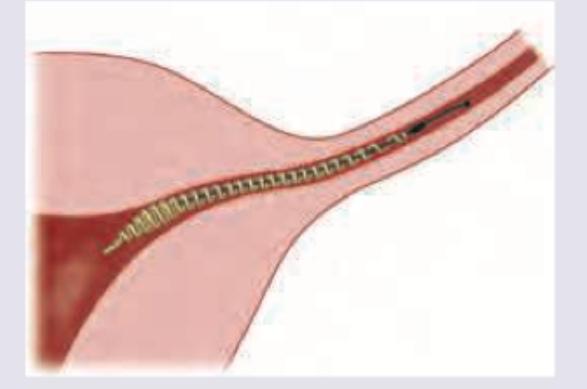
The contraception method shown below is made of:
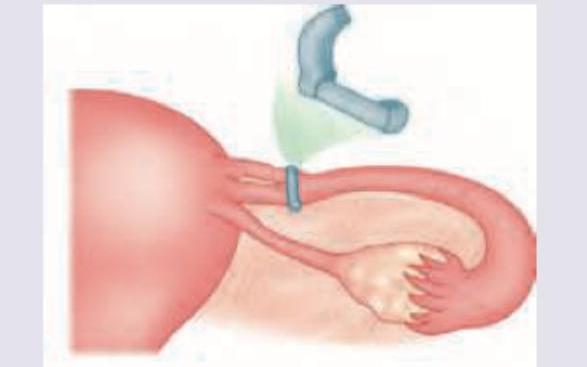
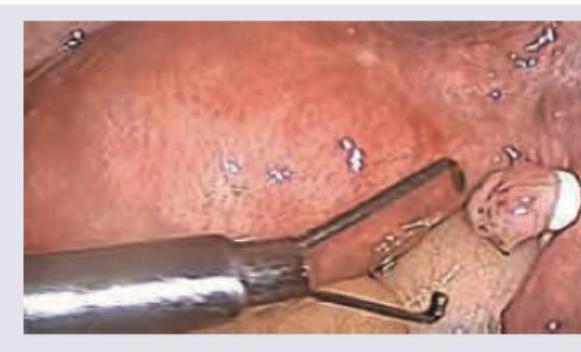
Identify the laparoscopic tubal sterilization shown below.
What is the method of contraception shown below?
A 25 -year-old lady is undergoing the following procedure for an unplanned conception. The maximum pressure generated during the procedure is: (DNB Pattern 2018)
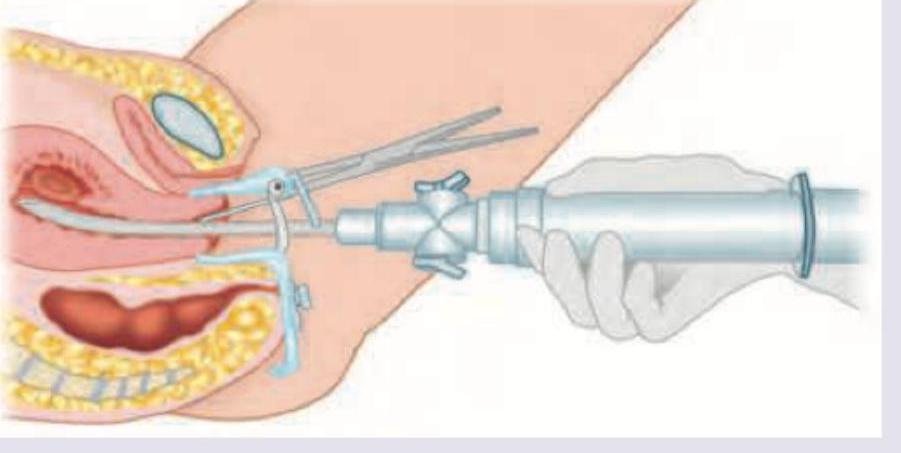
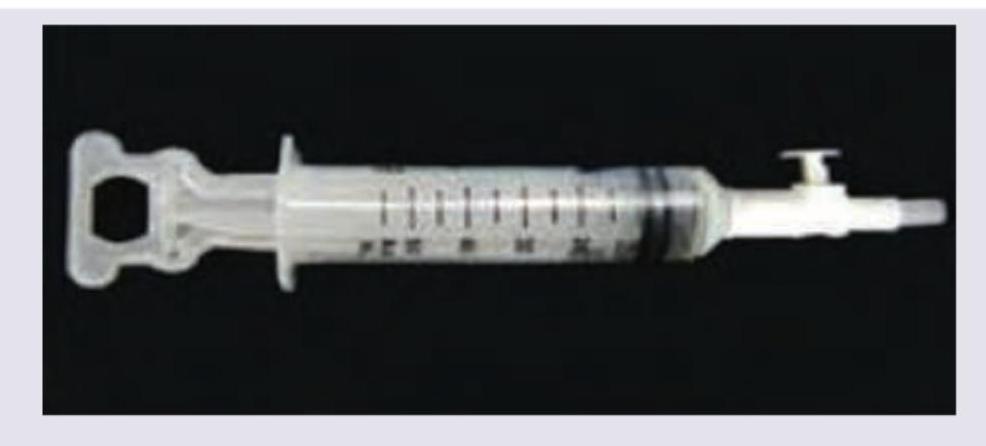
The following instrument is used for performing aspiration of uterine cavity within days of a missed period in a woman with previously normal cycle: (DNB Pattern 2018)
The most popular technique of tubal ligation is :
Which of the following statements regarding female sterilization is correct? 1. It can be done 24 - 48 hours following delivery. 2. Ideal time for interval ligation is luteal phase preceding menstruation. 3. It can be combined with medical termination of pregnancy. 4. It is a preventive measure against serous ovarian cancer. Select the correct answer using the code given below:
A 27-year-old recently married female comes to family planning clinic requesting for long term reversible contraception. Which one of the following is the best suited option for her ?
Which of the following are the absolute contraindications for the use of combined oral contraceptive pills ? 1. Severe hypertension 2. Pregnancy 3. Diabetes with retinopathy 4. Gall bladder disease Select the correct answer using the code given below :
Indication for removal of IUDs include which of the following ? 1. Perforation of uterus 2. Pregnancy with device in situ 3. One year after menopause 4. Persistent migraine Select the correct answer using the code given below :
Explanation: ***Molybdenum-cobalt steel alloy*** - The image displays the Essure device, which used a **molybdenum-cobalt steel alloy** for its inner core, providing structural integrity. - The outer fibers of the device were made of **polyethylene terephthalate**, inducing a localized inflammatory response to cause tubal occlusion, but the question specifically asks about the core material. *Quinacrine pellet* - Quinacrine is a drug used in **nonsurgical sterilization** but is delivered as a pellet, not as a coiled device as depicted. - This method involves placing quinacrine pellets directly into the uterus to induce scarring and block the fallopian tubes, which is a different mechanism and appearance. *Quinacrine pellet with LNG* - While quinacrine is mentioned above for non-surgical sterilization, a combination with **levonorgestrel (LNG)** in a single pellet form for this specific purpose is not a standard or widely recognized contraceptive method that matches the device shown. - LNG is a progestin commonly found in hormonal IUDs and implants, but not typically associated with the quinacrine pellet method for tubal occlusion. *Nickel-titanium steel alloy* - While **nickel-titanium alloys** (like nitinol) are used in various medical devices due to their shape memory and superelastic properties, the **Essure device** specifically used a molybdenum-cobalt steel alloy for its core. - Other medical implants might use nickel-titanium, but it is not the primary material for the device shown in the image.
Explanation: ***Filshie clip*** - The image clearly displays a **clip** being applied to the fallopian tube, which is characteristic of the **Filshie clip** method of tubal sterilization. - Filshie clips are widely used due to their **high efficacy** and ability to be applied with minimal tissue damage. *Falope ring* - A Falope ring, also known as a Yoon ring, involves placing a **silastic band** to create a loop of the fallopian tube. The image does not show a looped tube with a ring. - This method typically causes a segment of the tube to become **necrotic** and atrophy, severing continuity. *Hulka clip* - The Hulka clip is a spring-loaded clip that is typically **smaller and more rounded** at the ends compared to the clip shown in the image. - It also involves occlusion of the fallopian tube but has a distinct appearance from the Filshie clip. *Pomeroy's technique* - Pomeroy's technique is a method of tubal ligation where a loop of the fallopian tube is **ligated and then excised**, which is a surgical procedure rather than the application of a device. - This method results in a **severed and separated** fallopian tube, unlike the clip shown in the image.
Explanation: ***Bipolar electrocoagulation*** - The image shows a **bipolar forceps** grasping and coagulating a fallopian tube. The characteristic **blackened, constricted appearance** of the tube segment is indicative of tissue coagulation. - This method uses **high-frequency electrical current** passed between two electrodes (the jaws of the forceps) to cause **thermal damage** and occlude the fallopian tube. *Pomeroy's technique* - This technique involves **ligating a loop** of the fallopian tube with absorbable suture and then **excising the looped segment**. - The image does not show a ligated and excised segment, nor the presence of sutures. *Parkland technique* - The Parkland technique involves **ligating two segments** of the fallopian tube at a distance from each other and then **resecting the intervening segment**. - This method results in a gap between the ligated ends, which is not depicted in the image. *Falope ring* - The Falope ring method involves applying a **small silicone band** or ring to a **knuckled loop** of the fallopian tube, causing necrosis and occlusion. - The image clearly displays grasping forceps and electrocoagulation, **not the application of a ring**.
Explanation: ***400-600 mm Hg*** - This range of negative pressure is typically generated during **manual vacuum aspiration (MVA)**, which is depicted in the image. MVA is a common method for early pregnancy termination. - The MVA syringe creates a vacuum for aspiration of uterine contents, and this pressure range is effective for safe and complete evacuation. *100-200 mm Hg* - This pressure range is generally **too low** for effective and complete uterine aspiration in an MVA procedure. - Insufficient vacuum may lead to incomplete abortion, requiring further intervention. *200-400 mm Hg* - While higher than 100-200 mm Hg, this range might still be **suboptimal** for ensuring complete removal of uterine contents during MVA. - The generally accepted effective pressure is higher to maximize success rates and minimize complications. *600-800 mm Hg* - This pressure range is typically **higher than necessary** for MVA and could potentially increase the risk of uterine injury or perforation. - Excessive vacuum pressure is not associated with improved outcomes and may be more dangerous.
Explanation: ***14 days*** - Manual vacuum aspiration (MVA) is an effective and safe method for **early uterine cavity aspiration** following a missed period. - It is typically performed when the gestational age is very early, often within **1-2 weeks** (around 14 days) of a missed period, ensuring the uterine contents are minimal. *28 days* - While MVA can be performed at 28 days (4 weeks) after a missed period, it represents a slightly later stage where the pregnancy is more established. - The procedure is safest and most effective in the earliest stages of pregnancy; 14 days post-missed period represents an **earlier and often preferred window**. *42 days* - At 42 days (6 weeks) after a missed period, the gestational sac and fetal pole are more developed. - While still possible, MVA at this stage may involve a **larger volume of aspirated tissue** and potentially a slightly higher risk compared to very early aspiration. *72 days* - 72 days (around 10 weeks) after a missed period indicates a **more advanced pregnancy**. - At this stage, other methods like **dilation and curettage (D&C)** might be preferred over MVA due to the increased size of the gestational contents.
Explanation: ***Pomeroy Technique*** - The **Pomeroy technique** is the most widely performed method of tubal ligation due to its simplicity, ease of execution, and high efficacy. - It involves lifting a loop of the fallopian tube, ligating its base, and then excising the looped segment, leading to clear separation of the tubal ends. *Madlener Operation* - The Madlener operation involves crushing and ligating a loop of the **fallopian tube** without excising any segment. - This method has a higher failure rate compared to the Pomeroy technique due to the possibility of recanalization. *Uchida method* - The **Uchida method** is a more complex technique that involves injecting a solution into the subserosal layer of the fallopian tube to separate the mucosa and muscularis, followed by excision of a segment and burying the proximal end. - It is known for its high effectiveness but is less commonly performed due to its technical complexity. *Cornual resection* - **Cornual resection** involves removing a portion of the fallopian tube where it enters the uterine wall (the cornua). - This procedure is technically more challenging and is associated with a higher risk of complications, including hemorrhage, making it less popular as a primary method for sterilization.
Explanation: ***1, 3 and 4*** - Female sterilization can indeed be performed **24-48 hours postpartum** because the fundus is still high, making the fallopian tubes easily accessible. - Female sterilization can be safely **combined with medical termination of pregnancy**, offering a convenient option for women who desire permanent contraception after an abortion. - **Tubal ligation has been shown to reduce the risk of ovarian cancer** by approximately 30%, likely by preventing carcinogens from ascending through the tubes or by altering ovarian blood supply and hormone levels. - **Opportunistic salpingectomy** (removal of fallopian tubes during sterilization) provides even greater protection against high-grade serous ovarian cancer, as many such cancers originate in the fimbrial end of the fallopian tube. *1, 2 and 3* - While statements 1 and 3 are correct, **statement 2 is incorrect**. The ideal time for interval tubal ligation is the **follicular phase (early proliferative phase)**, typically within the **first 7 days of the menstrual cycle**, NOT the luteal phase preceding menstruation. - Performing sterilization in the early follicular phase minimizes the risk of an **undiagnosed early pregnancy**, as this is shortly after menstruation when pregnancy is least likely. *1, 2 and 4* - While statements 1 and 4 are correct, **statement 2 is incorrect**. The luteal phase is NOT the ideal time for interval sterilization because this is when pregnancy risk is highest. - The **follicular phase** is preferred to ensure the woman is not pregnant at the time of the procedure. *2, 3 and 4* - While statements 3 and 4 are correct, **statement 2 is incorrect**. Standard practice recommends interval tubal ligation during the **follicular phase (days 1-7 of cycle)**, not the luteal phase. - The luteal phase carries a risk of operating on an early, undiagnosed pregnancy.
Explanation: ***Nexplanon*** - This **etonogestrel implant** offers highly effective, **long-acting reversible contraception (LARC)** for up to three years, making it an excellent choice for a young woman seeking a long-term option. - It has a failure rate of less than 0.1% and is **progestin-only**, avoiding estrogen-related risks. *Combined oral contraceptives* - While effective, these require **daily adherence**, which might not be ideal for someone specifically requesting *long-term* and *reversible* contraception without daily commitment. - They also carry a slightly higher risk of **venous thromboembolism (VTE)** compared to progestin-only methods. *Diaphragm* - This is a **barrier method** requiring proper insertion, removal, and use with spermicide for each act of intercourse, making it less convenient for *long-term reversible* contraception. - Its typical use failure rate is significantly higher (around 12%) compared to LARC methods. *Chhaya* - Chhaya, or Saheli, is a **non-steroidal oral contraceptive** taken twice a week for the first three months, then once a week. - While it is a contraceptive option, it still requires regular weekly adherence and is not considered a **long-acting reversible contraceptive (LARC)** like an implant or IUD.
Explanation: ***Correct: 1, 2 and 3*** - According to **WHO Medical Eligibility Criteria (MEC) Category 4**, the absolute contraindications for combined oral contraceptive pills include **severe hypertension** (systolic ≥160 mmHg or diastolic ≥100 mmHg, or with vascular disease), **pregnancy** (COCs are unnecessary and contraindicated), and **diabetes with vascular complications** including retinopathy, nephropathy, or neuropathy. - These conditions carry unacceptable health risks with COC use: severe hypertension increases risk of **stroke and myocardial infarction**, pregnancy makes contraception unnecessary, and diabetes with retinopathy risks **worsening microvascular complications** and thrombotic events. - **Reference**: WHO MEC Category 4 conditions represent absolute contraindications where the risks outweigh any benefits. *Incorrect: 2, 3 and 4* - This incorrectly includes **gallbladder disease** as an absolute contraindication while excluding severe hypertension. - Gallbladder disease (current or history) is classified as **WHO MEC Category 2-3** (relative contraindication requiring clinical judgment), not Category 4. - COCs may slightly increase cholesterol saturation in bile, but this does not constitute an absolute contraindication. *Incorrect: 1, 2 and 4* - This omits **diabetes with retinopathy**, which is a well-established absolute contraindication. - Diabetes with microvascular complications (retinopathy, nephropathy, neuropathy) or disease duration >20 years is **WHO MEC Category 3/4** due to increased cardiovascular and thrombotic risk with estrogen-containing contraceptives. - It also incorrectly includes gallbladder disease as an absolute contraindication. *Incorrect: 1, 3 and 4* - This excludes **pregnancy**, which is the most fundamental contraindication for any contraceptive method. - While COCs are not significantly teratogenic, their use in pregnancy is medically unnecessary and classified as WHO MEC Category 4. - This option also incorrectly includes gallbladder disease, which is only a relative contraindication requiring monitoring, not an absolute prohibition.
Explanation: ***Correct Answer: 1, 2 and 4*** **Statement 1 - Perforation of uterus:** ✅ **Valid indication** - Uterine perforation is a serious complication where the IUD punctures the uterine wall - This is an **absolute indication** for immediate removal to prevent further damage, infection, or injury to adjacent organs - Requires prompt surgical intervention **Statement 2 - Pregnancy with device in situ:** ✅ **Valid indication** - IUD should be removed if the strings are visible and removal is feasible - Removal reduces risks of **spontaneous abortion** (50% vs 25%), **septic abortion**, **preterm labor**, and **chorioamnionitis** - If strings are not visible, removal attempts may cause more harm than leaving it in place **Statement 4 - Persistent migraine:** ✅ **Valid indication (especially for hormonal IUDs)** - Relevant primarily for **levonorgestrel-releasing IUDs** (LNG-IUS) - Some women experience exacerbated or new-onset migraines due to hormonal fluctuations - Persistent or worsening migraines, especially **migraines with aura**, may warrant IUD removal - Less relevant for copper IUDs which have no hormonal effects *Statement 3 - One year after menopause:* ❌ **NOT an absolute indication** - While general guidelines suggest removal 1 year after menopause (if inserted after age 40), this is **NOT mandatory** - **Copper IUDs** can remain in place until age 55 if inserted after age 40, providing continued contraception - **LNG-IUS** may be retained for **endometrial protection** in women receiving estrogen replacement therapy - Removal is only necessary if the device is past its effective lifespan or causing symptoms - The decision should be individualized based on patient circumstances
Natural Family Planning Methods
Practice Questions
Barrier Methods
Practice Questions
Hormonal Contraceptives
Practice Questions
Intrauterine Devices
Practice Questions
Emergency Contraception
Practice Questions
Permanent Contraception Methods
Practice Questions
Contraception in Special Populations
Practice Questions
Contraceptive Counseling
Practice Questions
Side Effects and Complications of Contraceptives
Practice Questions
Future Contraceptive Technologies
Practice Questions
Get full access to all questions, explanations, and performance tracking.
Start For Free