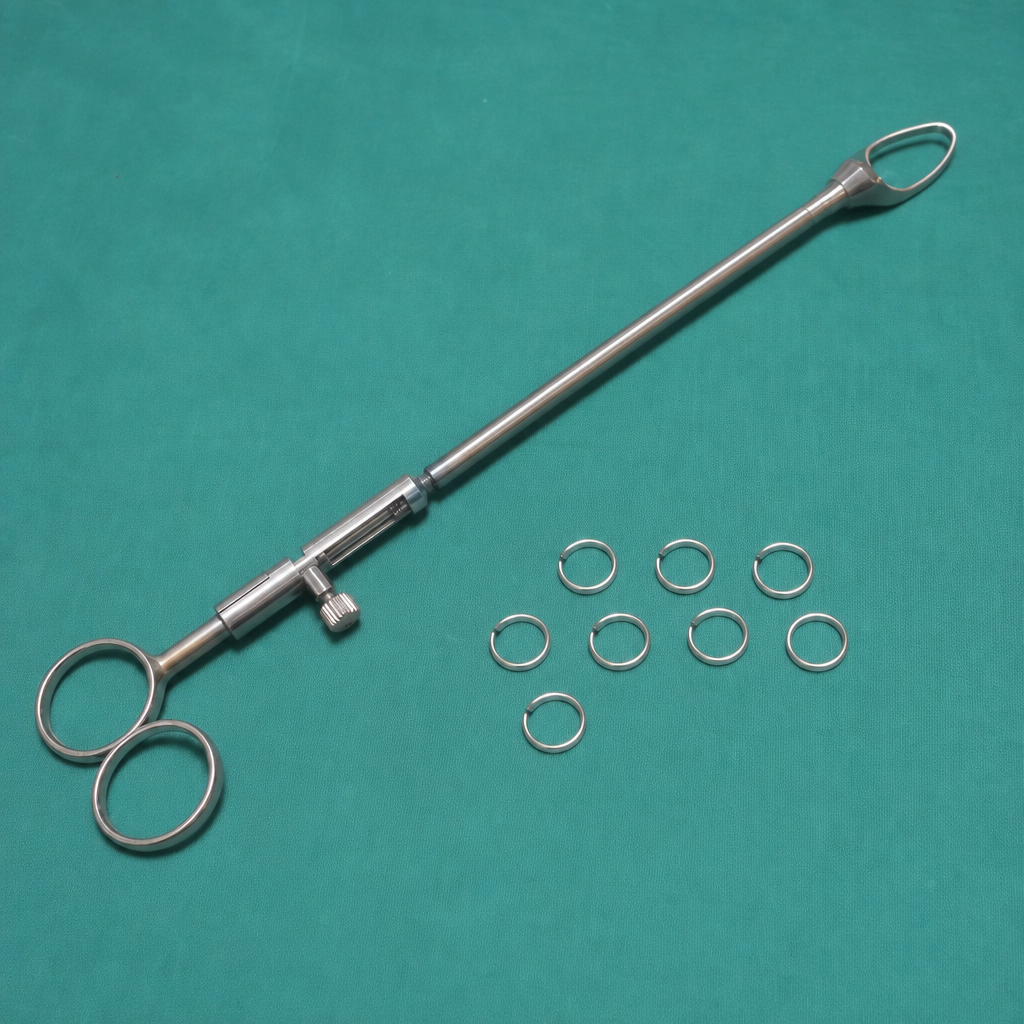
Which one of the following statements regarding Centchroman is not true?
In a non-breastfeeding woman, what is the use of combined oral contraceptive pills during the first three weeks following delivery?
Oral contraceptive pills are useful in preventing all of the following conditions except:
Which of the following is the principle disadvantage of depot progestin?
Which of the following is an exception to the guidelines for correct Nuchal translucency measurement?
Implanon contains which of the following hormones?
Progesterone-only pills act by which of the following mechanisms?
What is the mechanism of action of spermicides?
What is a Dutch cap?
Which contraceptive method can prevent cervical cancer?
Explanation: **Explanation:** Centchroman (Ormeloxifene) is a unique pharmacological agent used in contraception and the management of dysfunctional uterine bleeding. **Why Option C is the correct answer (The False Statement):** Centchroman is **not a hormone**. It is a **Non-Steroidal**, Selective Estrogen Receptor Modulator (SERM). Unlike traditional oral contraceptive pills (OCPs) that contain synthetic estrogen and progesterone, Centchroman is a chemical derivative (benzopyran) that modulates estrogen receptors without the metabolic side effects associated with steroid hormones. **Analysis of other options:** * **Option A (It is estrogenic):** This is technically true in a tissue-specific context. As a SERM, it has **weak estrogenic** effects on the vagina and bones but potent **anti-estrogenic** effects on the uterus and breasts. * **Option B (Acts on the endometrium):** True. Its primary contraceptive mechanism is preventing the normal preparation of the endometrium for implantation. It creates an "asynchrony" between ovulation and endometrial receptivity, making the environment hostile for a fertilized ovum. * **Option D (Developed in India):** True. It was developed by the **Central Drug Research Institute (CDRI), Lucknow**. It is marketed under the brand name **Saheli** and is included in the National Family Planning Program as **Chhaya**. **High-Yield Clinical Pearls for NEET-PG:** * **Dosage Schedule:** 30 mg twice weekly for the first 3 months, followed by once weekly (the "3-month loading dose" rule). * **Side Effects:** The most common side effect is a **delay in the menstrual cycle** (prolonged cycles), which occurs in about 8% of users. * **Contraindications:** Polycystic Ovarian Syndrome (PCOS), cervical dysplasia, and recent history of jaundice or liver disease. * **Benefit:** It does not suppress ovulation in most cycles and has no effect on lactation, making it an excellent choice for postpartum contraception.
Explanation: **Explanation:** The correct answer is **Relative contraindication (Option A)**. The primary medical concern during the early postpartum period is the significantly increased risk of **Venous Thromboembolism (VTE)**. Pregnancy and the immediate postpartum period are hypercoagulable states. Combined Oral Contraceptive Pills (COCPs) contain estrogen, which further increases the synthesis of clotting factors and platelet aggregation. According to the **WHO Medical Eligibility Criteria (MEC)** for contraceptive use: * **< 21 days postpartum:** COCPs are generally avoided due to the peak risk of VTE. In non-breastfeeding women without additional risk factors, it is classified as **MEC Category 3** (Risks usually outweigh advantages), which constitutes a **relative contraindication**. * **21–42 days postpartum:** Risk diminishes; it becomes MEC Category 2 (Advantages outweigh risks) if no other VTE risk factors exist. * **> 42 days postpartum:** MEC Category 1 (No restriction). **Analysis of Incorrect Options:** * **B. Absolute contraindication:** This is reserved for MEC Category 4 (e.g., history of deep vein thrombosis or current breast cancer). While avoided, COCPs are not strictly "forbidden" if no other options exist, though they are clinically discouraged. * **C. Indicated:** COCPs are not the first-line choice immediately postpartum due to the safety profile mentioned above. * **D. Not required:** While ovulation is delayed, it can occur as early as 25 days postpartum in non-breastfeeding women. Therefore, contraception is required before the first menses, typically starting at 3 weeks. **High-Yield Clinical Pearls for NEET-PG:** * **Progestogen-only pills (POPs):** These are MEC Category 1 (Safe) for non-breastfeeding women immediately postpartum as they do not increase VTE risk. * **Lactational Amenorrhea Method (LAM):** Only reliable if the woman is exclusively breastfeeding, remains amenorrheic, and is < 6 months postpartum. * **Best time to start COCPs:** In non-breastfeeding women, the standard recommendation is to start at **3 weeks (21 days)** postpartum.
Explanation: Combined Hormonal Contraceptives (OCPs) offer significant non-contraceptive health benefits, but their relationship with breast cancer is a critical exception. ### **Why Option A is Correct** **Carcinoma of the Breast:** Most epidemiological studies indicate that OCPs do not protect against breast cancer. In fact, there is a slight, transient increase in the relative risk of breast cancer among current and recent users. This risk is thought to be due to the stimulatory effect of exogenous estrogen and progestogen on breast tissue. The risk returns to baseline approximately 10 years after discontinuing the pill. ### **Why Other Options are Incorrect** * **Carcinoma of the Ovary (B):** OCPs are highly protective against epithelial ovarian cancer. By suppressing ovulation ("ovarian rest"), they reduce repetitive trauma to the ovarian epithelium. Using OCPs for 5 years reduces the risk by 50%, and this protection persists for up to 15–20 years after cessation. * **Pelvic Inflammatory Disease (C):** OCPs reduce the risk of symptomatic PID. The progestogen component thickens the cervical mucus, creating a barrier that prevents the upward migration of pathogens into the upper reproductive tract. * **Anemia (D):** OCPs regulate the menstrual cycle and reduce the volume and duration of menstrual flow (withdrawal bleeding). By preventing menorrhagia, they significantly reduce the incidence of iron-deficiency anemia. ### **High-Yield NEET-PG Pearls** * **Protective Effects:** OCPs reduce the risk of **Endometrial cancer** (by 50%), **Ovarian cancer**, **Colorectal cancer**, and **Benign breast disease** (e.g., fibroadenoma). * **Increased Risks:** OCPs are associated with an increased risk of **Cervical cancer** (especially with >5 years of use) and **Hepatic adenoma**. * **Medical Eligibility Criteria (MEC 4):** OCPs are strictly contraindicated in patients with current breast cancer, undiagnosed vaginal bleeding, or a history of thromboembolism.
Explanation: **Explanation:** Depot Medroxyprogesterone Acetate (DMPA), commonly known as the "Antara" program injection in India, is a long-acting injectable contraceptive. **Why Option D is Correct:** The most significant clinical disadvantage and the leading cause of discontinuation for DMPA is **menstrual irregularity**. Initially, users experience unpredictable spotting or breakthrough bleeding. With prolonged use, the endometrium becomes atrophic, leading to **amenorrhea** (seen in 50-70% of users at one year). Furthermore, DMPA causes **prolonged anovulation**; there is a significant delay in the return of fertility, averaging **7 to 9 months** after the last injection, as the drug takes time to clear from the systemic circulation. **Analysis of Incorrect Options:** * **A. Weight gain:** While a common side effect (average 1.5–2 kg in the first year), it is often manageable and less likely to cause immediate discontinuation compared to unpredictable bleeding. * **B. Breast tenderness:** This is a minor progestogenic side effect that usually subsides after the first few months. * **C. Depression:** Though reported by some users, large-scale studies have not conclusively proven a direct causal link between DMPA and clinical depression. **High-Yield Clinical Pearls for NEET-PG:** * **Mechanism of Action:** Primarily inhibits ovulation by suppressing the LH surge. It also increases cervical mucus viscosity. * **Dosage:** 150 mg intramuscularly (IM) every 3 months (12 weeks). * **Black Box Warning:** Long-term use is associated with a reversible decrease in **Bone Mineral Density (BMD)**. It is generally advised not to use it for more than 2 years if other options are available. * **Non-contraceptive benefit:** Reduces the risk of endometrial cancer and iron-deficiency anemia (due to amenorrhea).
Explanation: **Explanation:** The measurement of **Nuchal Translucency (NT)** is a critical screening tool for chromosomal abnormalities (like Down Syndrome) performed between **11 to 13 weeks 6 days** of gestation. **Why Option C is the Exception:** The correct technique for placing calipers is **perpendicular** to the long axis of the fetal neck, not parallel. The calipers must be placed **"on-to-on"** (inner border to inner border) at the widest part of the translucency. Placing them parallel would result in an inaccurate measurement of the fluid thickness. **Analysis of Other Options:** * **Option A (Midsagittal Plane):** This is a mandatory requirement. The tip of the nose, the rectangular shape of the palate, and the translucent diencephalon must be visible to ensure a true midline view. * **Option B (Neutral Position):** The fetal head must be neutral. Hyperextension can falsely increase the NT measurement, while hyperflexion can falsely decrease it. * **Option D (Amnion Separation):** It is vital to distinguish the nuchal skin from the amniotic membrane, as both appear as thin white lines. Measuring the distance to the amnion instead of the skin would lead to a false-positive result. **High-Yield Clinical Pearls for NEET-PG:** * **Ideal Gestational Age:** 11 weeks to 13 weeks 6 days (CRL must be **45 mm to 84 mm**). * **Abnormal Cut-off:** Generally, NT **>3.5 mm** is considered abnormal and is associated with trisomies and structural defects (especially **Congenital Heart Disease**). * **Nasal Bone:** Absence of the nasal bone in the same midsagittal scan further increases the risk of Trisomy 21.
Explanation: **Explanation:** **Implanon** is a long-acting reversible contraceptive (LARC) consisting of a single-rod subdermal implant. The correct answer is **Desogestrel** (specifically its active metabolite, **Etonogestrel**). 1. **Why Desogestrel is correct:** Implanon contains 68 mg of Etonogestrel, which is the biologically active metabolite of the third-generation progestin, Desogestrel. It works primarily by suppressing ovulation via the hypothalamic-pituitary-ovarian axis and thickening cervical mucus to prevent sperm penetration. It provides highly effective contraception for up to 3 years. 2. **Why other options are incorrect:** * **Ethinyl estradiol:** This is a synthetic estrogen used in combined oral contraceptive pills (COCPs). Implanon is a progestogen-only method; it does not contain estrogen, making it safe for women with contraindications to estrogen (e.g., breastfeeding or history of thromboembolism). * **Levonorgestrel:** While Levonorgestrel is a common progestin used in LARCs, it is found in the **Jadelle** (2-rod) and **Norplant** (6-rod) systems, as well as hormonal IUCDs (Mirena). It is not the component of Implanon. **High-Yield Clinical Pearls for NEET-PG:** * **Nexplanon:** This is the newer version of Implanon. It contains the same hormone (Etonogestrel) but is **radio-opaque** (visible on X-ray) and has a modified applicator to prevent deep insertion. * **Failure Rate:** The Pearl Index of the Etonogestrel implant is approximately **0.05**, making it the most effective reversible contraceptive method available (even more than vasectomy). * **Side Effects:** The most common reason for discontinuation is **irregular menstrual bleeding** (amenorrhea or frequent spotting). * **Insertion Site:** It is inserted subdermally in the non-dominant upper arm, specifically in the sulcus between the biceps and triceps.
Explanation: **Explanation:** Progesterone-only pills (POPs), often referred to as the "Mini-pill," primarily function by altering the female reproductive tract's environment rather than consistently suppressing the hypothalamic-pituitary-ovarian axis. **1. Why Option A is Correct:** The **primary mechanism of action** of POPs is the **thickening and hypertrophy of cervical mucus**. Under the influence of continuous low-dose progesterone, the mucus becomes scanty, thick, and viscous (hostile). This creates a physical barrier that prevents sperm penetration into the upper reproductive tract. **2. Analysis of Incorrect Options:** * **Option B (Inhibiting ovulation):** While this is the primary mechanism for Combined Oral Contraceptive Pills (COCPs) and injectable progesterones (DMPA), POPs only inhibit ovulation in approximately 40–60% of cycles. Therefore, it is not their *primary* or most reliable mechanism. * **Option C (Aseptic inflammation):** This is the mechanism of action for **Intrauterine Devices (IUDs)**, particularly non-medicated ones like Lippes Loop or Copper-T, which trigger a foreign body reaction in the endometrium. * **Option D (Destruction of the embryo):** This is incorrect as contraceptives act to prevent fertilization or implantation; they are not abortifacients. **High-Yield NEET-PG Pearls:** * **Endometrial Changes:** POPs also cause endometrial atrophy, making the lining unfavorable for implantation (secondary mechanism). * **Half-life:** POPs have a very short half-life; they must be taken at the **same time every day**. A delay of more than **3 hours** is considered a "missed pill." * **Ideal Candidate:** POPs are the contraceptive of choice for **lactating mothers** (as they do not suppress milk production) and women in whom estrogen is contraindicated (e.g., history of DVT or smokers >35 years).
Explanation: **Explanation:** Spermicides are chemical barrier methods of contraception. The most commonly used active ingredient is **Nonoxynol-9**, a surfactant. **1. Why the correct answer is right:** The primary mechanism of action involves the **disruption of the sperm cell membrane (lipoprotein surface)**. As a surfactant, Nonoxynol-9 reduces surface tension, causing the cell membrane to break down. This leads to the loss of sperm motility and eventual cell death (spermicidal effect). By immobilizing the sperm, it prevents them from ascending the female genital tract to reach the ovum. **2. Why the incorrect options are wrong:** * **Option A:** Activating acrosomal enzymes would actually facilitate fertilization (the acrosome reaction is necessary for sperm to penetrate the egg). Spermicides aim to inhibit, not promote, this process. * **Option B:** While some metabolic interference may occur, the primary and definitive action is physical membrane disruption, not specific inhibition of glucose transport enzymes. * **Option C:** Spermicides do not function by altering vaginal enzymes; however, they may temporarily alter vaginal pH or microflora, which is a side effect rather than the primary contraceptive mechanism. **3. NEET-PG High-Yield Pearls:** * **Active Ingredient:** Nonoxynol-9 is the most common; others include Octoxynol-9 and Menfegol. * **Failure Rate:** High when used alone (Typical failure rate ~28%). It is best used in combination with barriers like condoms or diaphragms. * **Clinical Caution:** Frequent use of Nonoxynol-9 can cause vaginal/cervical irritation and epithelial disruption, which may **increase the risk of HIV and STI transmission**. * **Application:** Must be placed high in the vagina near the cervix at least 10–15 minutes before intercourse.
Explanation: ### Explanation **Correct Answer: A. Diaphragm** The **diaphragm** is a barrier method of contraception consisting of a shallow, dome-shaped silicone or latex cup with a flexible rim. It is designed to be inserted into the vagina before intercourse to cover the cervix, preventing sperm from entering the uterus. It is historically and clinically referred to as the **"Dutch cap"** because it was popularized by Dutch physicians in the late 19th century. **Why the other options are incorrect:** * **B. Condom:** These are sheath-like barriers (male or female). The male condom is the most common barrier method but is never referred to as a "cap." * **C. Vaginal sponge:** This is a small, circular device made of polyurethane foam containing spermicide (e.g., Today sponge). While it acts as a barrier, it is distinct from the structural design of a diaphragm. * **D. Vaginal ring:** This usually refers to the **NuvaRing**, a hormonal contraceptive delivery system. It does not act as a physical barrier to sperm and is not a "cap." **High-Yield Clinical Pearls for NEET-PG:** * **Mechanism:** Acts as a mechanical barrier; must be used with **spermicidal jelly** for maximum efficacy. * **Usage:** It must be left in place for at least **6 hours** after the last act of intercourse but should not be left for more than 24 hours. * **Contraindication:** It should not be used during menstruation or in women with a history of **Toxic Shock Syndrome (TSS)**. * **Side Effects:** Increased risk of **Urinary Tract Infections (UTIs)** due to pressure on the urethra. * **Comparison:** Do not confuse the Dutch cap (Diaphragm) with the **Cervical Cap (Check cap)**, which is smaller, more rigid, and fits directly over the cervix by suction.
Explanation: **Explanation:** **1. Why Condom is the Correct Answer:** Cervical cancer is primarily caused by persistent infection with high-risk strains of **Human Papillomavirus (HPV)**, a sexually transmitted infection (STI). Condoms act as a mechanical barrier that reduces the skin-to-skin and mucosal transmission of HPV during intercourse. By preventing the primary cause (HPV infection), condoms serve as a protective factor against the development of cervical intraepithelial neoplasia (CIN) and subsequent cervical cancer. **2. Analysis of Incorrect Options:** * **Oral Contraceptive Pills (OCPs):** Combined OCPs are actually associated with a **slight increase** in the risk of cervical cancer if used for more than 5 years. This is likely due to hormonal influences on the transformation zone and the fact that users are less likely to use barrier protection. (Note: OCPs are *protective* against Ovarian and Endometrial cancers). * **Mini Pills (Progestogen-Only Pills):** These do not provide protection against STIs/HPV and have no documented protective effect against cervical cancer. * **Tubectomy:** This is a permanent surgical sterilization method. While some studies suggest it may slightly reduce the risk of *ovarian* cancer (by preventing the migration of precursors from the fallopian tubes), it has no effect on the pathogenesis of cervical cancer. **3. NEET-PG High-Yield Pearls:** * **Dual Protection:** Condoms are the only contraceptive method that provides "dual protection" (prevention of both pregnancy and STIs/HIV). * **OCP Cancer Profile:** * *Decreases risk of:* Ovarian, Endometrial, and Colorectal cancers. * *Increases risk of:* Cervical and Breast cancers. * **Primary Prevention of Cervical Cancer:** The most effective primary prevention is the **HPV Vaccine** (e.g., Gardasil), while condoms are a significant secondary behavioral intervention.
Natural Family Planning Methods
Practice Questions
Barrier Methods
Practice Questions
Hormonal Contraceptives
Practice Questions
Intrauterine Devices
Practice Questions
Emergency Contraception
Practice Questions
Permanent Contraception Methods
Practice Questions
Contraception in Special Populations
Practice Questions
Contraceptive Counseling
Practice Questions
Side Effects and Complications of Contraceptives
Practice Questions
Future Contraceptive Technologies
Practice Questions
Get full access to all questions, explanations, and performance tracking.
Start For Free