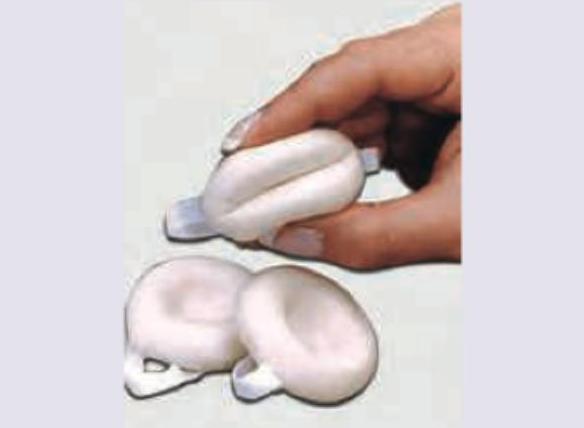
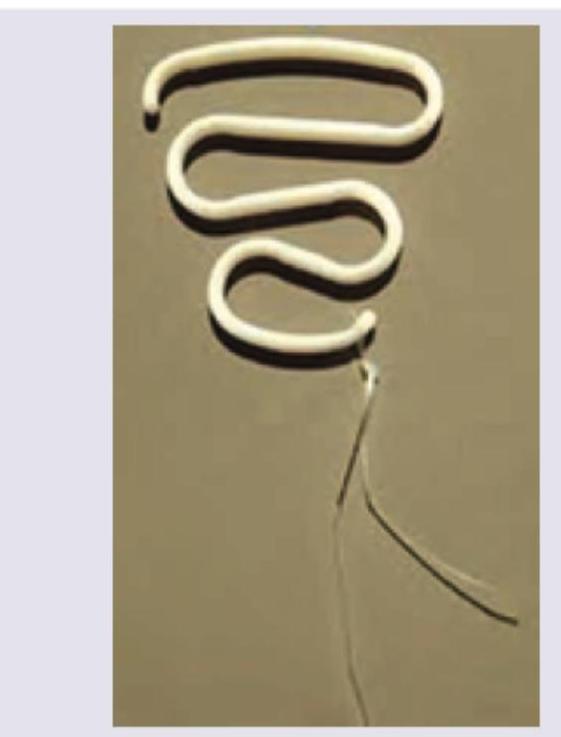
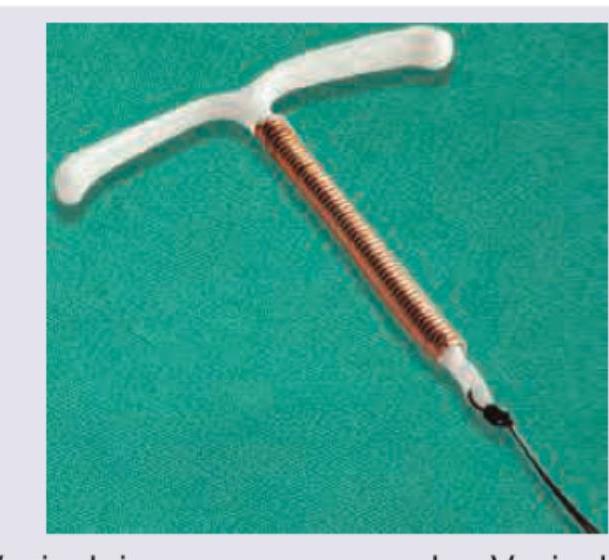
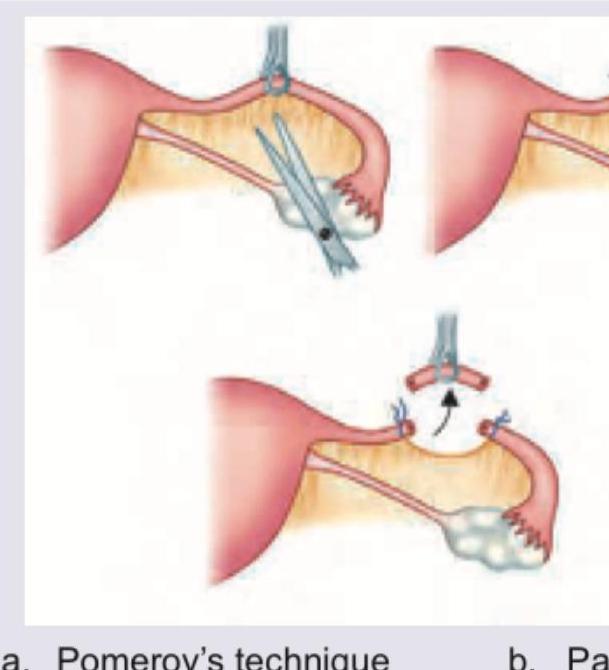
Incidence of ectopic pregnancy is highest with which of the following contraceptive methods?
Which of the following is a spermicidal agent?
Which of the following is the best explanation for the mechanism of action of the intrauterine device (IUD)?
Which of the following is a third-generation Intrauterine Contraceptive Device (IUCD)?
Which of the following is NOT a barrier contraceptive?
What is the coil memory of a CuT380A IUD device?
Which of the following is important in the calculation of the Pearl Index?
The 'banana sign' and 'lemon sign' are associated with which fetal anomaly?
What is an absolute contraindication for Norplant?
What is the best hormonal contraceptive for a patient with sickle cell anemia?
Explanation: **Explanation:** The risk of ectopic pregnancy in relation to contraception is a common point of confusion. To answer this correctly, one must distinguish between **absolute risk** and **relative risk**. **1. Why Progestogen-only contraceptives (POCs) are correct:** While all contraceptives reduce the *absolute* number of pregnancies (and thus the absolute number of ectopic pregnancies), if a pregnancy **does** occur while using POCs (especially Progestogen-only pills or Levonorgestrel implants), the **relative risk** that the pregnancy will be ectopic is highest. This is because progestogens decrease fallopian tube motility and ciliary action, slowing the transport of the ovum. If fertilization occurs, the delayed transport leads to implantation within the tube rather than the uterus. **2. Analysis of Incorrect Options:** * **Oral Contraceptive Pills (OCPs):** Combined OCPs primarily work by inhibiting ovulation. Since no egg is released, the risk of any pregnancy (intrauterine or ectopic) is extremely low. * **Copper T and Multiload IUCDs:** These are highly effective at preventing pregnancy by creating a sterile inflammatory response in the endometrium. While a failure of an IUCD carries a higher relative risk of being ectopic compared to no contraception, the risk is statistically lower than that seen with Progestogen-only methods. **Clinical Pearls for NEET-PG:** * **Highest Absolute Risk:** The highest absolute risk of ectopic pregnancy is in women using **no contraception** (because the total number of pregnancies is highest). * **Highest Relative Risk:** If a woman becomes pregnant while using a method, the highest percentage of those pregnancies being ectopic occurs with **Progestogen-only pills (POPs)** and **Progestogen-releasing IUDs (Mirena)**. * **Protective Effect:** All modern contraceptives are technically "protective" against ectopic pregnancy compared to using nothing, but POCs are the "least protective" in this specific regard.
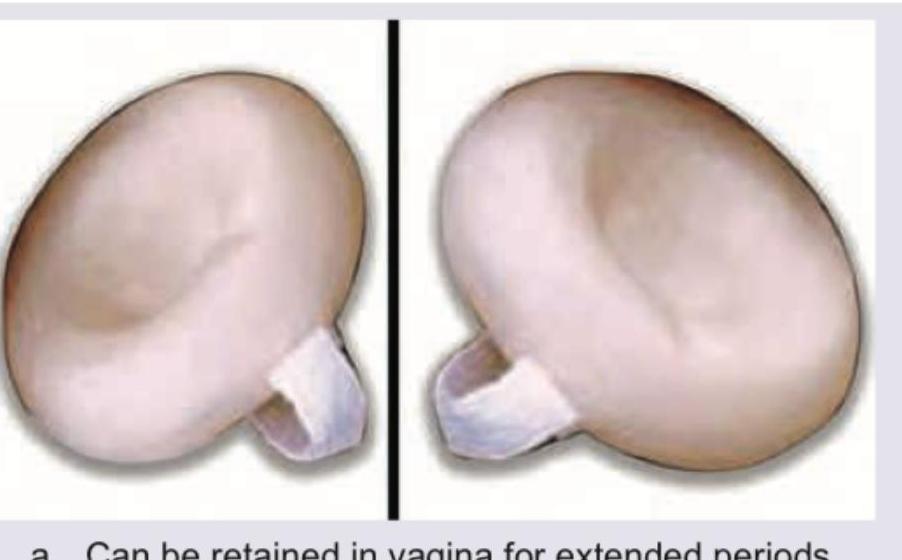
Explanation: **Explanation:** Spermicides are chemical barrier methods of contraception that work by disrupting the cell membrane of the spermatozoa, leading to their immobilization and death. **Why "All of the above" is correct:** The primary mechanism of action for most chemical spermicides is the use of **surfactants**. These agents lower surface tension and destroy the lipoprotein layer of the sperm's cell membrane. * **Nonoxynol-9:** This is the most widely used spermicidal agent globally. It is a non-ionic surfactant that acts rapidly upon contact with sperm. * **Menfegol:** This is a foaming agent (often used in vaginal tablets) that acts as a potent spermicide by disrupting the sperm membrane. * **Octoxynol-9:** Similar to Nonoxynol, it is a surfactant used in various contraceptive creams and jellies. **Clinical Pearls for NEET-PG:** * **Mechanism:** Spermicides are **cytotoxic**; they kill sperm by damaging the cell membrane (acrosome and midpiece). * **Failure Rate:** When used alone, spermicides have a high failure rate (Pearl Index of ~18–28 per 100 woman-years). They are most effective when used in combination with mechanical barriers like condoms or diaphragms. * **HIV/STI Risk:** Contrary to older beliefs, Nonoxynol-9 does **not** protect against HIV or STIs. In fact, frequent use can cause vaginal/cervical irritation and micro-abrasions, potentially **increasing** the risk of HIV transmission. * **Forms:** They are available as foams, jellies, creams, tablets (e.g., Today), and soluble films. They must be inserted into the vagina 10–15 minutes before intercourse to be effective.
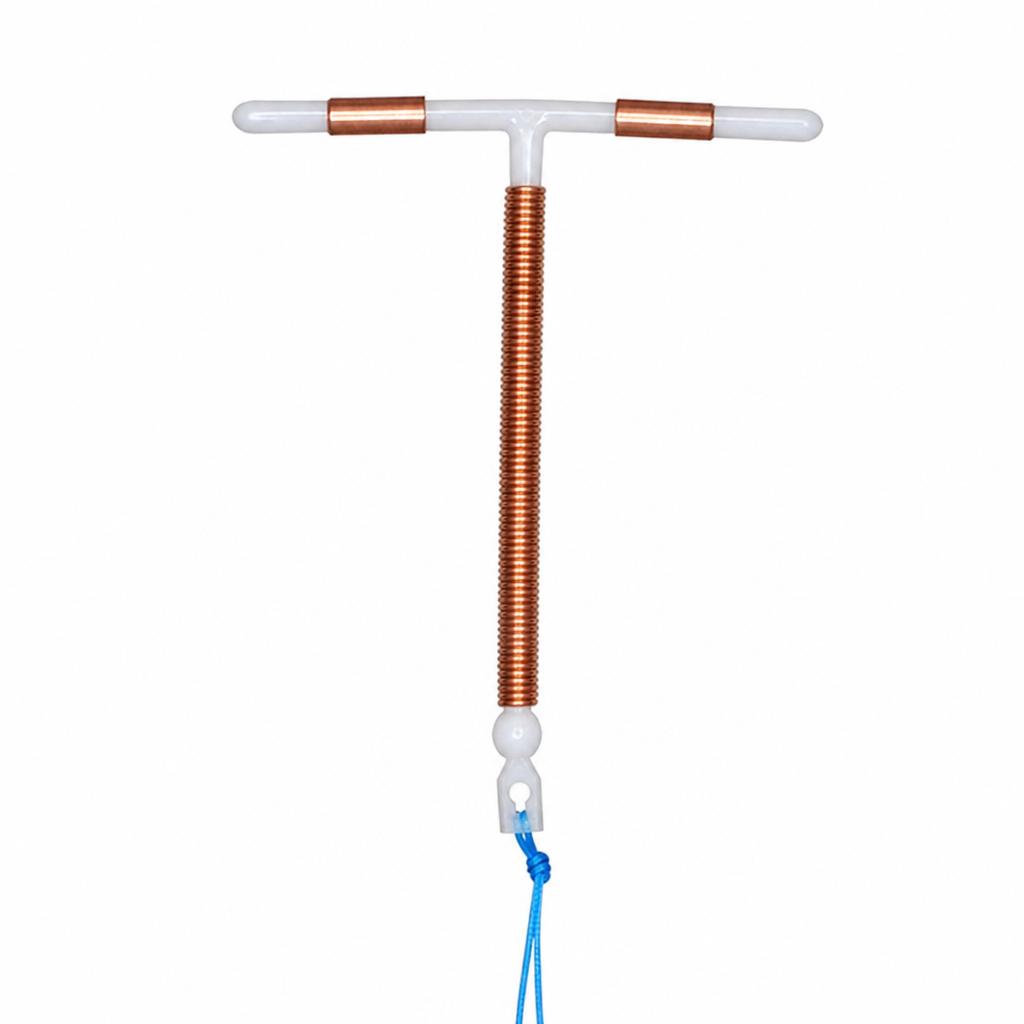
Explanation: ### Explanation **1. Why Option D is Correct:** The primary mechanism of action for non-hormonal intrauterine devices (like the Cu-T 380A) is the induction of a **sterile inflammatory response** within the uterine cavity. The presence of a foreign body (the IUD) triggers a local biochemical reaction characterized by an increase in polymorphonuclear leukocytes, macrophages, prostaglandins, and enzymes. This environment is toxic to both sperm and the blastocyst, effectively preventing fertilization and, if fertilization occurs, preventing implantation. Copper ions specifically enhance this effect by acting as a spermicide and inhibiting sperm motility. **2. Why Other Options are Incorrect:** * **Option A:** While IUDs may slightly alter tubal motility, they do not cause "hyperperistalsis" to accelerate oocytes. The main effect is on the intrauterine environment and sperm viability. * **Option B:** The inflammatory response is **sterile** (abacterial). While there is a transient risk of infection during insertion (PID), the long-term contraceptive effect is not due to bacterial endometritis. * **Option C:** Although IUDs can cause side effects like menorrhagia (heavy bleeding), the mechanism is not "early abortion" via sloughing. IUDs are primarily **pre-fertilization** contraceptives. **3. NEET-PG High-Yield Pearls:** * **Most Common Side Effect:** Bleeding (Menorrhagia) is the #1 reason for discontinuation. * **Most Common Complication:** Pain. * **Ideal Time for Insertion:** During menstruation or within 10 days of the cycle (to ensure the patient is not pregnant and the cervix is slightly dilated). * **Cu-T 380A:** The "Gold Standard" non-hormonal IUD; effective for **10 years**. * **LNG-IUS (Mirena):** Works primarily by thickening cervical mucus and causing endometrial atrophy; it is the treatment of choice for Idiopathic Menorrhagia.
Explanation: **Explanation:** Intrauterine Contraceptive Devices (IUCDs) are classified into generations based on their composition and mechanism of action. **Mirena** is a third-generation IUCD because it is a **hormone-releasing system**. Unlike earlier versions, third-generation devices combine the mechanical effect of an IUD with the continuous release of a progestogen (Levonorgestrel, 20 µg/day). This provides superior contraceptive efficacy and non-contraceptive benefits, such as reducing menstrual blood loss. **Analysis of Options:** * **Option B (Mirena):** Correct. It is the prototype of the third generation (Hormonal IUCDs). Other examples include Progestasert and LNG-20. * **Options A, C, and D:** These are all **second-generation IUCDs**. * **CuT 380A:** A high-load copper device (380 $mm^2$ surface area) with a 10-year lifespan. * **ML CuT 250:** A Multiload device with 250 $mm^2$ of copper. * **Copper 7:** A first-generation copper device (now largely obsolete). **High-Yield Clinical Pearls for NEET-PG:** * **Generations:** * 1st Gen: Non-medicated/Inert (e.g., Lippes Loop). * 2nd Gen: Medicated with Copper (e.g., CuT 200, 380A, Nova T). * 3rd Gen: Medicated with Hormones (e.g., Mirena, LNG-IUD). * **Mechanism of Mirena:** Primarily causes cervical mucus thickening and endometrial atrophy; it is the **Gold Standard** for treating Menorrhagia (DUB). * **Ideal Candidate:** Multiparous women in a stable monogamous relationship. * **Failure Rate:** Mirena has the lowest failure rate (0.2%), comparable to sterilization.
Explanation: **Explanation:** The correct answer is **Centchroman** because it is a **hormonal/pharmacological** contraceptive, not a mechanical barrier. **1. Why Centchroman is the correct answer:** Centchroman (marketed as **Saheli** or **Chhaya**) is a Non-Steroidal, Non-Hormonal Oral Contraceptive Pill. It belongs to the class of **Selective Estrogen Receptor Modulators (SERMs)**. It works by preventing the implantation of the blastocyst by altering the endometrial receptivity (asynchrony between the embryo and endometrium). Since it does not physically block the sperm from reaching the ovum, it is not a barrier method. **2. Why the other options are incorrect:** * **A. Diaphragm:** A mechanical barrier device made of latex or silicone that is inserted into the vagina to cover the cervix. * **C. Condom:** The most common mechanical barrier method (available for both males and females) that prevents sperm from entering the female reproductive tract. * **D. Today:** This is the brand name for a **Vaginal Contraceptive Sponge**. It acts as a triple barrier: it provides a physical block to the cervix, absorbs semen, and contains the spermicide Nonoxynol-9. **High-Yield Clinical Pearls for NEET-PG:** * **Centchroman Dosage:** It is a "Once-a-week" pill. The schedule is twice a week for the first 3 months, followed by once a week thereafter. * **Drug of Choice:** Centchroman is the contraceptive of choice for lactating mothers and women where steroidal pills are contraindicated. * **Barrier Methods & STIs:** Barrier methods (specifically condoms) are the only contraceptives that provide protection against Sexually Transmitted Infections (STIs) and HIV. * **Failure Rate:** Barrier methods generally have a higher failure rate (Pearl Index) compared to hormonal methods due to user dependency.
Explanation: **Explanation:** The correct answer is **5 minutes (Option D)**. **Understanding the Concept:** The CuT380A is a T-shaped intrauterine device (IUD) made of polyethylene. To facilitate insertion through the cervix, the horizontal arms of the "T" must be folded down and tucked into the insertion tube. **Coil memory** refers to the property of the plastic frame to return to its original "T" shape once released from the tube. If the IUD remains folded inside the insertion tube for longer than **5 minutes**, the plastic undergoes "stress relaxation," losing its memory. This prevents the arms from fully expanding once inside the uterine cavity, significantly increasing the risk of **expulsion** or **malposition**, which compromises contraceptive efficacy. **Analysis of Options:** * **A, B, and C (2, 3, and 4 minutes):** These timeframes are within the safe window. While the device will retain its memory if kept in the tube for this long, the maximum threshold established by clinical guidelines (WHO and manufacturer protocols) is 5 minutes. * **D (5 minutes):** This is the standard clinical cutoff. Practitioners are advised not to load the IUD into the inserter until the cervix is visualized and the sound has been performed to ensure the device is not loaded for more than 5 minutes. **High-Yield Clinical Pearls for NEET-PG:** * **CuT380A Lifespan:** 10 years (FDA approved). * **Surface Area:** The "380" signifies 380 $mm^2$ of copper wire and sleeves. * **Ideal Insertion Time:** During menstruation or within 10 days of the LMP (to ensure the patient is not pregnant and the cervical os is slightly dilated). * **Mechanism:** Primarily spermicidal; it causes a sterile inflammatory response in the endometrium. * **Emergency Contraception:** CuT380A is the most effective method of emergency contraception if inserted within 5 days of unprotected intercourse.
Explanation: The **Pearl Index** is the most common method used in clinical trials to report the effectiveness of a contraceptive method. It calculates the number of unintended pregnancies per 100 woman-years of exposure. ### Why the Correct Answer is Right The formula for the Pearl Index is: $$\text{Pearl Index} = \frac{\text{Total Accidental Pregnancies} \times 1200}{\text{Total Months of Exposure (Usage)}}$$ * **Total Accidental Pregnancies (Numerator):** This is the core variable representing "method failure" or "user failure." Without the number of pregnancies, the failure rate cannot be determined. * **1200:** This constant represents 100 women over 12 months (1 year). ### Why Other Options are Wrong * **A. Number of abortions:** The Pearl Index tracks *conception* (accidental pregnancy), regardless of the outcome (birth, miscarriage, or abortion). * **C. Socioeconomic status:** While this may influence contraceptive choice or compliance in a population study, it is not a mathematical variable in the Pearl Index formula. * **D. Total gestational period:** The index measures the time the woman was *at risk* of conceiving while using the method, not the duration of the pregnancy itself. ### High-Yield Clinical Pearls for NEET-PG * **Interpretation:** A lower Pearl Index indicates a more effective contraceptive method. * **Most Effective:** Implants (e.g., Nexplanon) have the lowest Pearl Index (~0.05). * **Least Effective:** Barrier methods and natural methods (e.g., Rhythm method) have higher Pearl Indices. * **Limitation:** The Pearl Index often decreases over time because "high-fertility" couples conceive early, leaving "low-fertility" couples in the study longer. * **Alternative:** The **Life Table Analysis** is considered more accurate than the Pearl Index as it calculates failure rates at specific intervals (e.g., at 6 months, 12 months).
Explanation: ### Explanation The **'banana sign'** and **'lemon sign'** are classic sonographic markers of **Open Neural Tube Defects (ONTDs)**, specifically **Spina Bifida**. These signs occur due to the leakage of cerebrospinal fluid (CSF) through the spinal defect, leading to a downward displacement of the hindbrain (Arnold-Chiari II malformation). * **Lemon Sign:** This refers to the inward scalloping of the frontal bones of the fetal skull. It occurs because the loss of CSF reduces intracranial pressure, causing the pliable frontal bones to collapse inward. * **Banana Sign:** This describes the characteristic shape of the cerebellum when it is pulled downward into the posterior fossa (herniation). The cerebellum loses its typical "dumbbell" shape and becomes curved like a banana, often obliterating the cisterna magna. #### Why the other options are incorrect: * **B. Hydrops fetalis:** This is characterized by abnormal fluid accumulation in at least two fetal compartments (e.g., ascites, pleural effusion, skin edema). It does not typically involve these specific cranial deformities. * **C. Multiple gestation:** Ultrasound findings here focus on the number of gestational sacs, chorionicity (e.g., 'T-sign' or 'Lambda sign'), and amnionicity. * **D. Intrauterine demise (IUD):** Radiographic signs of fetal death include **Spalding’s sign** (overlapping of skull bones) and **Robert’s sign** (gas in the fetal heart/vessels), not the lemon or banana signs. #### High-Yield Clinical Pearls for NEET-PG: * **Lemon sign** is most reliable in the second trimester (before 24 weeks) but may disappear later as the skull bones ossify. * **Banana sign** is a more specific and sensitive marker for Spina Bifida than the lemon sign. * **Maternal Serum Alpha-Fetoprotein (MSAFP):** Elevated levels are the primary biochemical screening tool for ONTDs. * **Folic Acid:** 400 mcg/day (standard) or 4 mg/day (high risk) preconceptionally prevents 70% of NTDs.
Explanation: **Explanation:** **Norplant** is a long-acting reversible contraceptive (LARC) consisting of six levonorgestrel-releasing implants. As a progestogen-only method, its contraindications are similar to those of the Progestogen-Only Pill (POP) and the Levonorgestrel Intrauterine System (LNG-IUS). 1. **Why Acute Thrombophlebitis is Correct:** Active or acute thromboembolic disorders (including acute thrombophlebitis, Deep Vein Thrombosis, or Pulmonary Embolism) are **absolute contraindications** for Norplant. Although progestogens have a significantly lower risk of inducing coagulation changes compared to estrogen, they are still avoided in the presence of an active clot to prevent any potential exacerbation of the thrombotic state. 2. **Why Other Options are Incorrect:** * **Hypertension:** This is a relative contraindication. While estrogens are strictly avoided in severe hypertension, progestogen-only methods like Norplant are often the preferred choice for hypertensive women requiring hormonal contraception. * **Diabetes Mellitus:** Norplant does not significantly alter carbohydrate metabolism. It is considered safe for diabetic patients, though they should be monitored for minor changes in insulin sensitivity. * **Hypercholesterolemia:** While progestogens can slightly decrease HDL levels, hyperlipidemia is a relative contraindication, not an absolute one. **High-Yield Clinical Pearls for NEET-PG:** * **Absolute Contraindications for Norplant:** Pregnancy, undiagnosed abnormal uterine bleeding, active thromboembolic disease, acute liver disease/tumors, and known or suspected breast cancer. * **Mechanism of Action:** Primarily thickens cervical mucus (preventing sperm penetration) and suppresses ovulation in about 50% of cycles. * **Duration:** Norplant (6 capsules) provides protection for **5 years**. * **Common Side Effect:** The most common reason for discontinuation is **irregular menstrual bleeding** (spotting or breakthrough bleeding).
Explanation: ### Explanation **Correct Answer: B. Progestogen-Only Pill (POP)** **Why it is correct:** In patients with Sickle Cell Anemia (SCA), the primary goal of contraception is to avoid triggers for vaso-occlusive crises (VOC). **Progestogens** (specifically POPs, DMPA, or implants) are the preferred hormonal choice because they have been shown to **reduce the frequency and intensity of painful crises**. The underlying mechanism involves the stabilization of the red blood cell membrane, which inhibits the sickling process. Additionally, progestogens reduce menstrual blood loss, helping to manage the chronic anemia often seen in these patients. **Why the other options are incorrect:** * **A. Oral Contraceptive Pill (OCP):** Combined OCPs contain estrogen. Estrogen is generally avoided or used with caution in SCA because it is pro-thrombotic. Since SCA is already a hypercoagulable state with a high risk of stroke and thromboembolism, adding estrogen increases the risk of vascular complications. * **C. Copper T (Cu-T):** While not hormonal, the Copper T often causes increased menstrual bleeding (menorrhagia) and dysmenorrhea. In a patient with baseline hemolytic anemia, any increase in blood loss can worsen their clinical status. * **D. None of the above:** Incorrect, as POPs are a recognized and recommended option. **High-Yield Clinical Pearls for NEET-PG:** * **DMPA (Depot Medroxyprogesterone Acetate)** is often cited in literature as the "gold standard" for SCA because it significantly reduces VOC, but among the options provided, POP is the best hormonal choice. * **WHO Eligibility Criteria (MEC):** Progestogen-only methods are **MEC Category 1** (no restriction) for Sickle Cell Disease. * **Levonorgestrel Intrauterine System (LNG-IUS)** is also an excellent choice as it reduces menstrual blood loss significantly. * **Avoid Estrogen:** Always remember that Estrogen + Sickle Cell = Increased Risk of Thrombosis.
Natural Family Planning Methods
Practice Questions
Barrier Methods
Practice Questions
Hormonal Contraceptives
Practice Questions
Intrauterine Devices
Practice Questions
Emergency Contraception
Practice Questions
Permanent Contraception Methods
Practice Questions
Contraception in Special Populations
Practice Questions
Contraceptive Counseling
Practice Questions
Side Effects and Complications of Contraceptives
Practice Questions
Future Contraceptive Technologies
Practice Questions
Get full access to all questions, explanations, and performance tracking.
Start For Free